
Beyond Fun: Matching Games for Kids' Growth
 By Speech Blubs Team•Jan 19, 2026•20 min.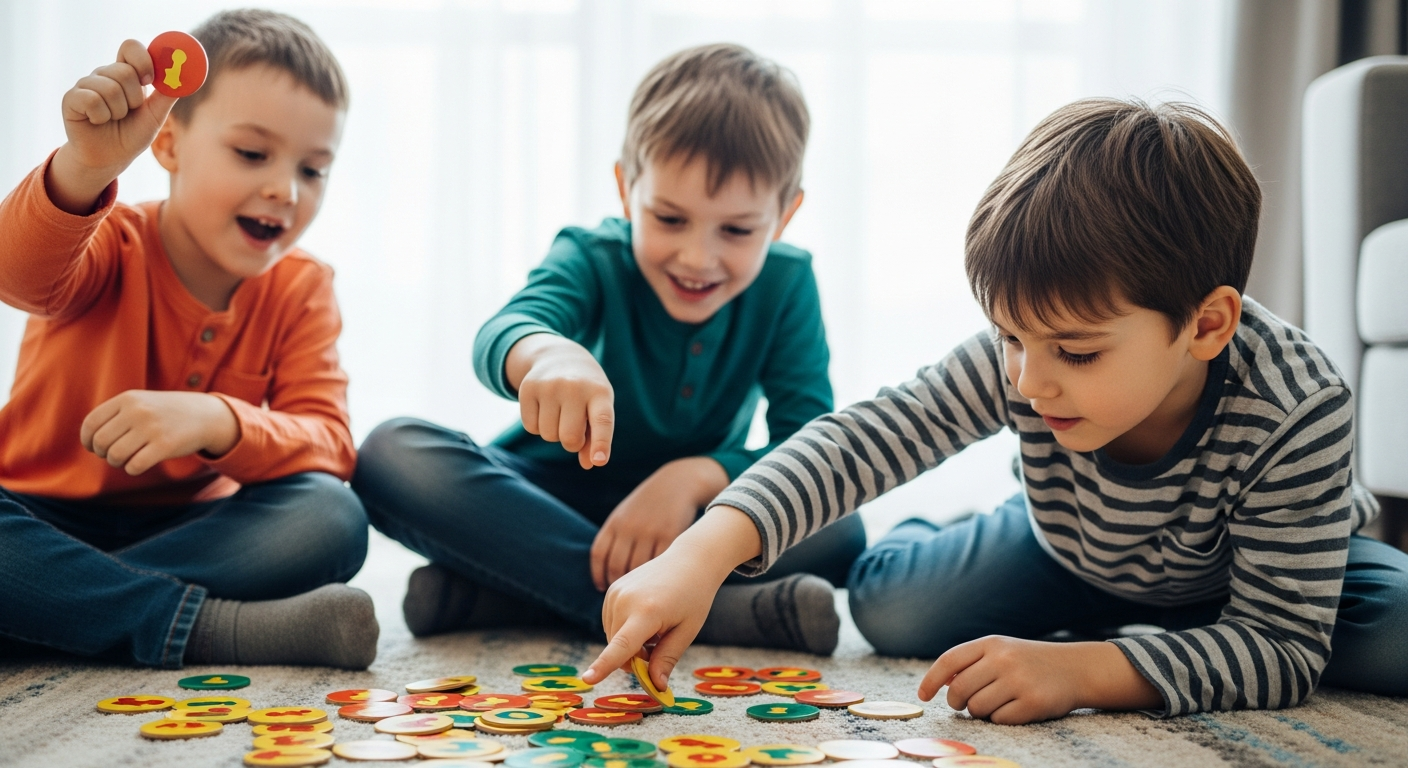
Table of Contents
- Introduction
- The Undeniable Power of Matching Games for Early Development
- Types of Fun Matching Games for Kids
- Speech Blubs: Transforming Matching into Meaningful Communication
- Creating Your Own Fun Matching Games at Home
- Maximizing the Benefits: Tips for Parents
- When to Consider Extra Support
- Speech Blubs: Your Partner in Playful Learning and Development
- Conclusion
- FAQ
Imagine a game where your child is laughing, fully engaged, and unknowingly building crucial skills for their future. What if we told you that game could be as simple as matching two identical pictures? Far from being just a casual pastime, fun matching games for kids are powerful tools for cognitive development, language acquisition, and even social-emotional growth. In a world brimming with digital distractions, these seemingly simple activities offer a rich, interactive experience that supports a child's holistic learning journey. This comprehensive guide will explore the profound benefits of matching games, delve into various ways to incorporate them into your child's routine, and reveal how innovative tools like Speech Blubs transform these foundational concepts into powerful speech and language development opportunities. Our main message is clear: play is paramount, and purposeful play, like engaging in matching games, is a cornerstone of early childhood development, laying the groundwork for confident communication.

Introduction
Have you ever watched a child intently focus on sorting objects, connecting puzzle pieces, or finding pairs in a deck of cards? That deep concentration, that spark of recognition when they make a match, is more than just adorable; it’s a tiny victory in their developmental journey. In a landscape often dominated by passive entertainment, the vibrant, interactive world of fun matching games for kids stands out as a beacon of active learning. These games aren't just about keeping little ones entertained for a few minutes; they are fundamental building blocks that lay the groundwork for critical thinking, memory retention, and, perhaps most importantly, communication skills. This post aims to illuminate the incredible power of matching games, offering parents practical insights, creative ideas, and demonstrating how a scientifically-backed approach, like that found in the Speech Blubs app, can amplify these benefits, helping your child to truly "speak their minds and hearts." We believe that by understanding the "why" and "how" of matching games, you can transform everyday play into extraordinary learning experiences, fostering connection and growth right in your home.
The Undeniable Power of Matching Games for Early Development
Matching games might seem deceptively simple, but their impact on a child's development is profound and multi-faceted. They tap into a child's natural curiosity and desire to make sense of the world, offering a playful avenue for learning fundamental cognitive and linguistic skills.
Cognitive Foundations: Building a Sharper Mind
At their core, matching games are mental workouts for young brains. They engage several key cognitive functions:
- Memory Enhancement: The most obvious benefit is improved short-term and working memory. Children must remember the location of hidden cards or objects, strengthening their ability to recall information. The more they play, the more adept they become at strategizing and remembering, directly impacting their ability to retain new vocabulary or instructions.
- Attention and Concentration: In an age of constant stimulation, matching games require sustained focus. Children learn to tune out distractions, concentrate on the task at hand, and persist until they find all the pairs. This sustained attention is a vital precursor for academic learning and everyday tasks.
- Visual Discrimination: Matching games hone a child's ability to notice subtle differences and similarities between objects, pictures, or patterns. This skill is crucial for early literacy (distinguishing between letters like 'b' and 'd') and mathematical concepts (recognizing shapes or patterns).
- Problem-Solving Skills: As children progress to more complex matching games, they begin to develop strategies. Should they flip cards systematically? Or focus on remembering the location of specific items? This encourages logical thinking and strategic planning.
- Categorization and Classification: Many matching games involve grouping items by color, shape, size, or type. This helps children develop early categorization skills, a foundational concept for organizing information and understanding relationships in the world around them.
Language Development: More Than Just Words
While often associated with memory, matching games are unsung heroes for language and speech development. They create natural opportunities for conversation, vocabulary expansion, and practicing expressive language.

- Vocabulary Acquisition: As children identify and match objects or pictures, parents can name them aloud, enriching their vocabulary. "You found the red apple! Now, where is the other red apple?" This repetition and context make new words stick.
- Descriptive Language: Beyond naming, matching games encourage descriptive language. "This car is blue and fast." "That elephant is big and gray." Children learn to use adjectives and expand their sentence structure.
- Turn-Taking and Conversational Skills: Many matching games are played with others, inherently teaching turn-taking – a critical social and conversational skill. This interaction fosters dialogue, asking questions ("Is it this one?"), and responding ("No, try again!").
- Auditory Processing: Some matching games involve sounds, challenging children to match identical sounds, thus improving their auditory discrimination and processing skills, which are essential for understanding speech.
- Pre-Linguistic Skills: For younger children or those with emerging language, matching games can help develop pre-linguistic skills like joint attention (looking at the same object as an adult) and imitation, which are foundational for speech production.
Social-Emotional Growth: Learning Life's Lessons Through Play
Beyond academics, matching games nurture a child's emotional intelligence and social skills:
- Patience and Resilience: Children learn to be patient, waiting for their turn and not getting discouraged if they don't find a match immediately. They build resilience by trying again after an unsuccessful attempt.
- Learning to Win and Lose: These games provide safe spaces to experience winning and losing graciously, understanding that participation and effort are as important as the outcome.
- Confidence Building: Each successful match is a small win, boosting a child's confidence in their abilities and encouraging them to tackle more challenging tasks.
- Shared Experience and Connection: Playing matching games together creates joyful bonding moments between children and caregivers. These shared experiences are invaluable for building strong family connections and positive associations with learning.
Types of Fun Matching Games for Kids
The world of matching games is vast and varied, ranging from classic physical cards to interactive digital experiences. Each type offers unique benefits and engagement opportunities.
Classic Memory Match (Card Games)
The timeless memory game, where cards are laid face down, and players flip two at a time to find a match, is a gold standard.
- Benefits: Excellent for visual memory, turn-taking, and concentration.
- Real-world scenario: For a child just starting to recognize animals, a memory game with colorful animal pictures provides a fun way to reinforce names and sounds. As they flip a card and see a cow, you can say "Moo!" and encourage them to repeat it. If they struggle to find the match, you can subtly guide them, saying, "Where else have we seen a cow?"
- Tips: Start with fewer cards for younger children and gradually increase the number as their memory improves. Use themes that genuinely interest your child – whether it's dinosaurs, vehicles, or fairy tale characters.
Object-to-Object Matching
This involves matching real objects, which adds a tactile and multi-sensory dimension to the game.
- Benefits: Develops visual discrimination, categorization, and fine motor skills.
- Examples: Matching socks from the laundry pile, pairing shoes, finding identical toy cars, or sorting blocks by color or shape.
- Tips: Turn chores into games! "Let's find all the red socks and put them together!"
Picture-to-Object or Picture-to-Word Matching
This step introduces abstraction and is crucial for pre-reading and early literacy skills.
- Benefits: Bridges the gap between concrete objects and their representations, builds vocabulary, and introduces early phonics.
- Examples: Matching a picture of an apple to a real apple, or later, matching a picture of "cat" to the word "CAT."
- Tips: Create your own! Print pictures of household items or animals, then have your child match them to the actual items or to written words (for older kids).
Sound Matching Games
These games focus on auditory discrimination, an essential skill for speech development.
- Benefits: Improves listening skills, auditory memory, and the ability to differentiate between sounds.
- Examples: Using opaque containers filled with different items (rice, beans, coins) and shaking them to find matching sounds. Or, identifying animal sounds and matching them to pictures of the animals.
- Real-world scenario: A child might struggle to differentiate between the 's' and 'sh' sounds. Playing a game where they listen to words and match them to corresponding pictures (e.g., 'sock' vs. 'shock') can help them train their ear.
Pattern Recognition and Sequencing
While not strictly "matching," these games involve identifying and replicating patterns, which is a higher-level cognitive skill built upon matching.
- Benefits: Develops logical thinking, prediction, and foundational math skills.
- Examples: Creating a pattern with blocks (red, blue, red, blue) and asking your child to continue it, or matching sequences of actions.
Speech Blubs: Transforming Matching into Meaningful Communication
At Speech Blubs, we understand that play is the most powerful learning tool for children. Our mission is to empower children to "speak their minds and hearts," providing an immediate, effective, and joyful solution for the 1 in 4 children who need speech support. Our company was born from the personal experiences of our founders, who all grew up with speech problems and created the tool they wished they had. We seamlessly blend scientific principles with play into one-of-a-kind "smart screen time" experiences, offering a screen-free alternative to passive viewing (like cartoons) and a powerful tool for family connection.
We leverage the fundamental principles of matching and imitation through our unique "video modeling" methodology. Children learn by watching and imitating their peers – real children demonstrating speech sounds, words, and phrases. This isn't just about matching pictures; it's about matching facial expressions, mouth movements, and vocalizations, triggering mirror neurons in the brain that are essential for learning and imitation. Our method is backed by science, placing us in the top tier of speech apps worldwide. You can explore the research behind our approach on our research page.
How Speech Blubs Utilizes the Power of "Matching" for Speech
While you won't find traditional "memory match" cards within Speech Blubs, the core concept of matching is deeply embedded in our learning philosophy and activities, guiding children towards successful communication:
- Matching Sounds and Mouth Movements: Our "Sounds" section is a prime example. Children watch a video of a peer making a specific sound, like "mmm" for monkey. Their task is to match their own mouth movements and vocalizations to what they see. This visual and auditory matching is crucial for articulation. For a child struggling with specific phonemes, this visual "matching" cue is invaluable.
- Matching Words to Objects/Actions: In our "Words" sections, children learn new vocabulary by matching the spoken word (modeled by a peer) to the accompanying visual representation and action. For example, they might see a child saying "jump" while jumping, prompting them to match the sound to the action.
- Category Matching and Vocabulary Building: Sections like "Animal Kingdom" or "Yummy Time" encourage children to explore vocabulary within specific categories. While not a direct "memory game," children are constantly matching the names of animals or foods to their visual representations and sounds. For a parent whose 3-year-old "late talker" loves animals, the "Animal Kingdom" section offers a fun, motivating way to practice "moo" and "baa" sounds, mimicking the children on screen and matching the sound to the animal.
- Matching Emotions and Social Cues: In our "Guess the Emotion" section, children learn to identify and match various facial expressions with the correct emotion (happy, sad, angry). This helps develop emotional literacy and social communication skills, which are fundamental for understanding and expressing oneself effectively.
- Interactive Contexts for "Matching": When children play in Speech Blubs, they are guided by fun characters and receive immediate feedback, reinforcing their attempts to match spoken words and actions. This interactive engagement ensures that learning feels like a game, making the process joyful and rewarding.
By making the process of imitation a playful "matching" game, we build confidence, reduce frustration, and develop key foundational skills for communication. It's purposeful, engaging, and always with the implicit understanding of adult co-play and support. Our interactive approach is designed to be a powerful supplement to a child's overall development plan and, when applicable, professional therapy. We encourage you to experience the difference for yourself. Download Speech Blubs on the App Store or Google Play to begin!
Creating Your Own Fun Matching Games at Home
You don't need fancy toys or apps to harness the power of matching games (though Speech Blubs makes it incredibly easy and effective!). Many opportunities for playful learning are likely already present in your home.
DIY Card Games
- Print and Play: Find free printable templates online, or simply use index cards. Draw or print pairs of animals, shapes, colors, or familiar objects. Laminate them for durability.
- Family Photo Match: Print two copies of family photos (or photos of pets!). This adds a personal touch and can be highly engaging for children.
- Word & Picture Match: For older preschoolers or kindergarteners, create cards with simple words (e.g., "dog") and matching pictures.
Nature Walks and Outdoor Play
- Leaf Match: Collect different types of leaves during a walk. Back home, sort them into matching pairs based on shape, size, or color.
- Rock Match: Find interesting rocks and try to find a similar one. Describe their textures and colors.
- Cloud Shapes: Look up at the sky and try to "match" cloud shapes to animals or objects. This sparks imagination and descriptive language.
Household Item Matching
- Sock Sorting: A classic! Have your child help sort laundry by matching pairs of socks. Narrate the process: "You found two blue socks!"
- Utensil Pairs: Match forks, spoons, or knives in the kitchen drawer.
- Toy Sorting: Match pairs of toy cars, building blocks by color, or animal figures.
- Sensory Bin Match: Create a sensory bin with rice or pasta and hide pairs of small objects. Children dig to find the matches, engaging their tactile senses.
Maximizing the Benefits: Tips for Parents
The way you interact during matching games can significantly amplify their developmental impact. Remember, your presence and engagement are just as important as the game itself.
- Co-Play is Key: Active participation from a parent or caregiver transforms a simple game into a rich learning experience. Sit with your child, play together, and model enthusiasm. This isn't just about watching them; it's about sharing the experience.
- Narrate, Describe, Ask Questions: Don't just point. Talk about what you see: "Oh, you found the shiny red car! Is it the same as this shiny red car?" Ask open-ended questions: "What color is this?" "What sound does a cow make?" "Where do you think the other ______ is?"
- Start Simple, Increase Difficulty Gradually: Begin with a small number of pairs (e.g., 4-6 cards) and familiar items. As your child's confidence and skills grow, you can add more cards, introduce more abstract images, or require more complex matching criteria.
- Celebrate Effort, Not Just Wins: Focus on the process of playing and trying, rather than just the outcome. Praise their concentration, their problem-solving attempts, and their perseverance. "I love how hard you're thinking about where that card might be!"
- Integrate into Daily Routines: Look for opportunities to turn everyday tasks into matching games, as with sock sorting or grocery shopping (matching items on a list to what's in the cart).
- Follow Your Child's Lead: If your child loses interest in a particular game, don't push it. Switch to another activity or take a break. Learning should always be enjoyable.
- Use Diverse Themes: Keep things fresh by varying the themes of your matching games. Animals, vehicles, fruits, shapes, letters, numbers – a wide range of themes keeps children engaged and expands their general knowledge.
When to Consider Extra Support
While matching games and apps like Speech Blubs offer incredible developmental benefits, it's natural for parents to wonder if their child needs more specialized support. Every child develops at their own pace, but sometimes a little extra guidance can make a big difference. If you have concerns about your child's speech or language development – perhaps they are not meeting age-appropriate milestones, have difficulty articulating sounds, or struggle with understanding instructions – it’s always wise to seek clarification.
We've developed a preliminary screener that can help you gauge your child's developmental progress. It's a quick 3-minute screener with just 9 simple questions that provides an assessment and a personalized next-steps plan. It's a great tool for parents who are uncertain or seeking validation. You can take our quick 3-minute preliminary screener to get a simple assessment and a free 7-day trial of Speech Blubs today. Remember, early intervention can be incredibly impactful, and tools like Speech Blubs are designed to supplement professional therapy and support a child's journey towards confident communication.
Speech Blubs: Your Partner in Playful Learning and Development
We believe that every child deserves the chance to communicate confidently and joyfully. At Speech Blubs, we are committed to providing an accessible, engaging, and effective tool that makes learning to speak an adventure. Our app is a testament to blending scientific methodology with the fun of play, offering a "smart screen time" solution that supports both children and their families. Many parents have seen remarkable progress in their children's communication skills and confidence. You can see what other parents are saying about their child's success with Speech Blubs on our testimonials page.
Ready to empower your child's speech and language journey? Getting started with Speech Blubs is easy and offers incredible value. We want to be transparent about our pricing to build your trust:
- Monthly Plan: For $14.99 per month, you get access to our core features, designed to provide consistent support for your child's speech development.
- Yearly Plan: This is by far our most popular and recommended option, offering superior value at just $59.99 per year. This breaks down to an incredible $4.99 per month, allowing you to save 66% compared to the monthly plan!
Choosing the Yearly plan isn't just about saving money; it unlocks a full suite of exclusive, high-value features designed to maximize your child's progress:
- 7-Day Free Trial: Only with the Yearly plan can you enjoy a full week of access to all our features, absolutely free. This allows you and your child to explore the app, understand our methodology, and see the engagement firsthand before making a commitment. The Monthly plan does not include this free trial.
- The Extra Reading Blubs App: Included exclusively with the Yearly plan, Reading Blubs is a fantastic companion app designed to support early literacy skills, further enhancing your child's language development journey.
- Early Access to New Updates: Yearly subscribers get first dibs on all new features, activities, and content, ensuring your child always has fresh, exciting ways to learn.
- 24-Hour Support Response Time: We prioritize our Yearly plan members with faster, dedicated support to ensure you get assistance whenever you need it.
We strongly encourage you to choose the Yearly plan to get the free trial and the full suite of features that will truly accelerate your child's communication growth. It's the smartest choice for comprehensive, long-term support. Ready to get started? Create your account and begin your 7-day free trial today! Or, find us directly on the Apple App Store or Google Play Store to download the app and unlock a world of joyful learning.
Conclusion
Fun matching games for kids are far more than simple entertainment; they are dynamic tools that sculpt young minds, sharpen memory, and build a strong foundation for language and communication. From boosting cognitive skills like visual discrimination and problem-solving to fostering crucial social-emotional growth through patience and turn-taking, these games offer a holistic approach to early childhood development. By engaging in these activities, whether with DIY cards, household items, or through innovative digital platforms, you’re not just passing the time – you’re actively participating in your child's growth and empowering them with essential life skills.
At Speech Blubs, we've harnessed the power of matching and imitation through our unique video modeling approach, turning "smart screen time" into an engaging, effective pathway to confident speech. Our app provides a scientifically backed, playful solution for children needing speech support, allowing them to learn by joyfully imitating their peers. The investment in your child’s communication journey is one of the most valuable you can make. Take the first step towards unlocking your child's full communication potential today. We invite you to experience the difference for yourself. Start your 7-day free trial now by choosing our Yearly plan – you'll not only get a week of full access but also unlock Reading Blubs and exclusive features at the best value. Download Speech Blubs from your app store or sign up for your free trial on our website and begin a joyful journey of learning and connection.
FAQ
Q1: What are the primary developmental benefits of fun matching games for kids?
A: Fun matching games significantly boost a child's cognitive development by enhancing memory, attention, and visual discrimination. They also foster language skills through vocabulary acquisition and descriptive language, and support social-emotional growth by teaching patience, turn-taking, and resilience. Essentially, they help children think sharper, communicate better, and develop important life skills in a playful way.
Q2: How does Speech Blubs incorporate the concept of matching games into its app?
A: Speech Blubs leverages the core concept of matching through its unique "video modeling" methodology. Children learn by "matching" the mouth movements, facial expressions, and vocalizations of their peers shown in videos. This applies to matching sounds for articulation, matching words to objects and actions for vocabulary, and even matching emotions for social cues. This active imitation is a powerful form of matching that builds foundational speech and language skills.
Q3: Is Speech Blubs suitable for children with specific speech delays, or just for general development?
A: Speech Blubs is designed as a powerful tool for both general speech and language development and as a supplement for children with specific speech delays. Our founders created the app from their personal experiences with speech problems, aiming to provide an effective solution for the 1 in 4 children who need support. While it doesn't replace professional therapy, it offers a scientifically-backed, engaging method to practice and reinforce communication skills, working hand-in-hand with a child's overall development plan.
Q4: What's the best way to get started with Speech Blubs and what are the pricing options?
A: The best way to get started with Speech Blubs is by choosing our Yearly plan, which costs $59.99 per year (equating to just $4.99/month, saving you 66% compared to the Monthly plan). The Yearly plan includes a 7-day free trial, the Reading Blubs app, early access to updates, and 24-hour support. The Monthly plan is $14.99 per month and does not include these extra benefits or the free trial. We highly recommend starting with the Yearly plan to enjoy the free trial and full suite of features. You can download the app from the Apple App Store or Google Play Store.
About the author