
Big Fun, Small Fuss: Easy Crafts for Large Groups of Kids
 By Speech Blubs Team•Jan 13, 2026•29 min.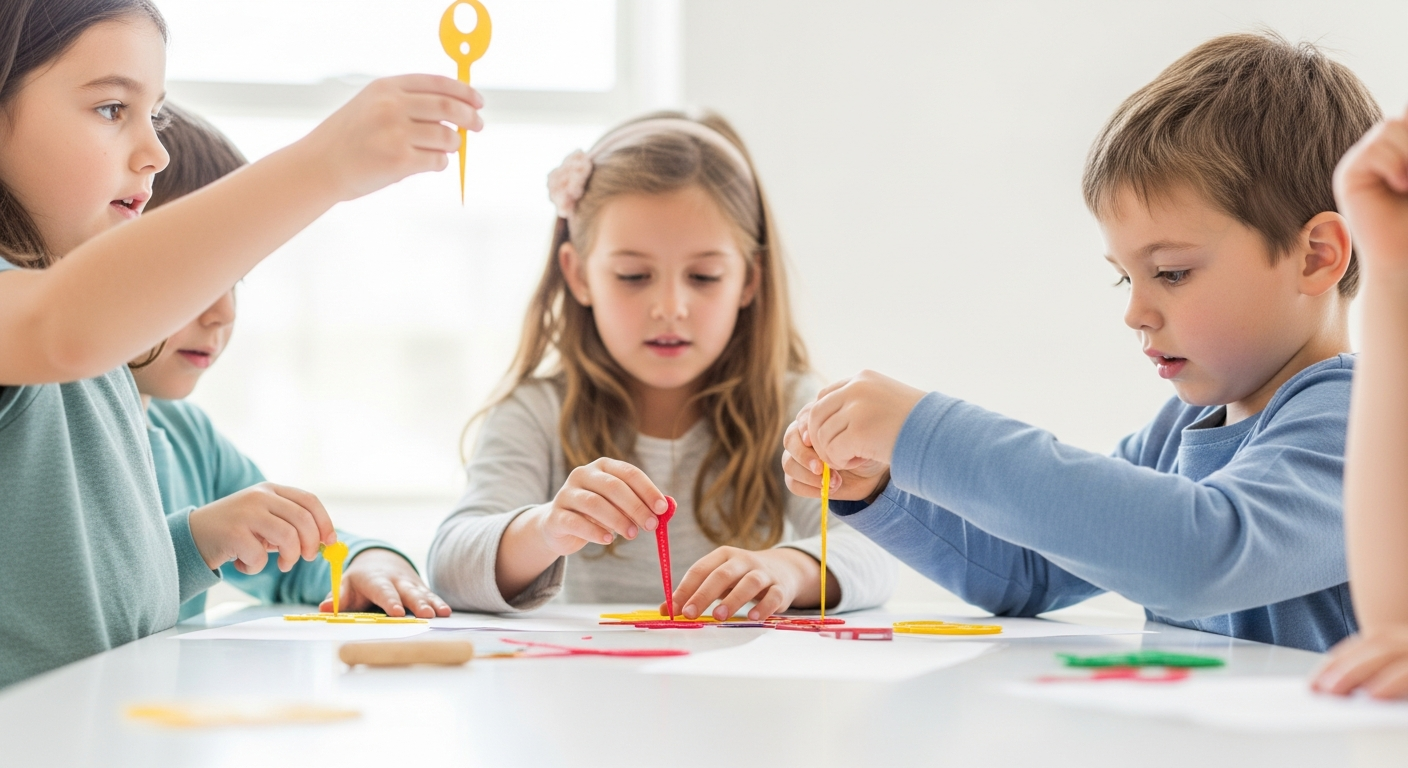
Table of Contents
- The Power of Group Crafting: More Than Just Glue and Glitter
- Overcoming the Crowd Control Challenge: Strategies for Success
- The Essentials: What You Really Need for Group Crafting
- Our Favorite Easy Crafts for Large Groups (with Developmental Insights)
- Enhancing Communication Through Play: The Speech Blubs Approach
- Making the Most of Speech Blubs: Value and Features
- Tips for a Smooth Sailing Craft Session
- Conclusion
- Frequently Asked Questions About Group Crafts & Communication Development
Remember the sheer delight of a child's face lighting up as they create something with their own hands? Now multiply that by ten, twenty, or even fifty! Hosting a craft session for a large group of children can seem like a daunting prospect, evoking images of chaotic glitter explosions and impossible clean-ups. Yet, it also holds the promise of immense joy, collaborative learning, and screen-free engagement. In a world where digital distractions often compete for children's attention, providing tangible, hands-on creative outlets is more crucial than ever. When children gather to craft, they aren't merely making an object; they're forging connections, refining essential skills, and discovering the profound satisfaction of self-expression.
At Speech Blubs, we are deeply committed to empowering children to speak their minds and hearts, and we understand that communication blossoms through a multitude of enriching experiences, including creative play. Our company was born from the personal journeys of our founders, who, having navigated speech challenges themselves, envisioned and built the very tool they wished they had—an immediate, effective, and joyful solution for the 1 in 4 children who need speech support. We blend scientific principles with the magic of play, creating one-of-a-kind "smart screen time" experiences that offer a meaningful alternative to passive viewing, fostering powerful family connection. Just as our unique video modeling methodology helps children learn complex communication skills by watching and imitating their peers, group crafting provides a dynamic environment for learning through observation, interaction, and joyful making. This comprehensive guide will transform your approach to large-group crafting, offering foolproof ideas, practical tips, and insights into how these activities foster holistic development, including crucial communication skills. Get ready to turn potential pandemonium into a playground of imagination and shared masterpieces!

The Power of Group Crafting: More Than Just Glue and Glitter
Beyond the immediate fun, group crafting offers a treasure trove of developmental advantages, mirroring the holistic growth we champion at Speech Blubs. We believe that every interaction, every playful exploration, contributes to a child's ability to express themselves confidently and clearly. When children engage in group crafts, they’re not just passing time; they’re building foundational skills that extend far beyond the art table.
Fostering Essential Communication and Social Skills
Group crafts are a natural laboratory for developing crucial social-emotional intelligence. Imagine a scenario where a child, perhaps a 'late talker' who is usually hesitant to engage verbally, finds themselves needing a specific color of marker that another child is using. This seemingly simple interaction becomes a powerful lesson in:
- Turn-Taking and Sharing: Learning to wait their turn, politely ask for a shared item, and understand that resources are finite yet shareable. This direct experience with reciprocity is fundamental for conversational flow.
- Collaboration and Teamwork: Even if each child is creating their own unique piece, they are part of a collective activity, sharing space, tools, and ideas. They learn to observe, offer help, and appreciate the diverse creations of their peers.
- Verbal and Non-Verbal Communication: Crafting provides countless prompts for communication. A child might point to a desired item, use a simple phrase like "My turn?" or describe their creation. For those expanding their vocabulary, describing colors, shapes, and actions during a craft session offers rich, contextualized practice.
- Problem-Solving: "How do I make this piece stick?" "Which part goes here?" Children engage in practical problem-solving, often discussing solutions with peers or adults. This encourages analytical thinking and the articulation of challenges and potential fixes.
- Building Confidence: Successfully completing a craft, especially with the support and interaction of a group, instills a strong sense of accomplishment. Presenting their finished item or even just describing the process boosts self-esteem and encourages further engagement. This is critical for children developing their communication, as confidence can significantly impact their willingness to speak up.
Sharpening Fine Motor and Cognitive Abilities
The very act of crafting is a workout for little hands and minds. These physical and cognitive benefits are indispensable for overall development:

- Fine Motor Coordination: Holding a paintbrush, carefully cutting a shape, manipulating small beads, or peeling a sticker all demand precise fine motor control. These are the same muscles that are crucial for writing, buttoning clothes, and, importantly, for the intricate movements of the mouth and tongue required for clear articulation.
- Creativity and Imagination: With a diverse array of materials and an open invitation to create, children are encouraged to let their imaginations soar. There's no single "right" way to make a craft, fostering innovative thinking and self-expression.
- Following Instructions and Adapting: Whether it’s a structured craft with step-by-step directions or an open-ended exploration, children practice listening, interpreting, and executing instructions. They also learn to adapt when a material isn't available or an idea needs tweaking, developing mental flexibility.
- Sensory Exploration: The tactile experience of clay, the smell of glue, the visual stimulation of vibrant colors, the sound of paper crinkling – crafts engage multiple senses, enhancing sensory processing and awareness.
- Early STEM Concepts: Without even realizing it, kids engage with basic science and engineering. Mixing colors introduces elements of chemistry. Building structures with craft sticks or paper explores physics. Recognizing patterns and counting supplies touches on mathematical concepts. This hands-on, experiential learning is at the heart of what we offer at Speech Blubs, transforming abstract ideas into tangible, understandable experiences.
Ultimately, group crafting creates shared memories and strengthens bonds. The laughter, the occasional mishap, the shared excitement of a finished project – these moments contribute to a rich tapestry of childhood experiences. For families, it's an opportunity to connect, free from screens, engaging in meaningful interactions that support a child’s journey toward confident communication. Just as we strive to create joyful learning moments within our app, group crafts provide a powerful space for family connection and shared discovery.
Overcoming the Crowd Control Challenge: Strategies for Success
The thought of orchestrating a craft session for a bustling crowd of children might, for some, evoke a slight tremor of anxiety. Visions of tangled yarn, widespread glitter, and debates over who gets the last blue pipe cleaner are understandable. However, with thoughtful planning and strategic setup, these challenges can be transformed into smooth, enjoyable, and genuinely educational experiences. At Speech Blubs, we understand the importance of making learning accessible and manageable for parents and caregivers, and the same principles apply to successful group crafting.
Navigating Space and Setup for Optimal Flow
One of the biggest hurdles in group crafting is simply managing the physical environment.
- Designate Zones for Different Stages: Think of your craft area as having a 'materials hub,' a 'creation station,' and a 'drying/display zone.' This structured flow prevents bottlenecks and reduces chaos. For example, one table can be where children collect their pre-portioned supplies, another where they actually build or decorate, and a third, out-of-the-way spot for drying projects.
- Utilize Vertical Space: Small tables can quickly become cluttered. Tiered displays, multi-level stands, or even simple shoeboxes turned on their sides can organize small items like beads, buttons, or markers, making them easily accessible without monopolizing surface area.
- Protect Your Surfaces – and Your Sanity: Disposable tablecloths (old shower curtains, newspapers, or large rolls of craft paper work wonderfully) are your best friend. They protect tables from paint, glue, and general crafting residue, making cleanup exponentially easier.
- Consider Floor and Outdoor Space: Don't limit creativity to tabletops. If weather permits, take messy activities like large-scale painting or sidewalk chalk creations outdoors. Indoors, lay down old sheets or tarps for floor-based projects, giving kids more room to spread out and less chance of bumping elbows.
Smart Sourcing: Supplies that Won't Break the Bank or Your Spirit
Cost and complexity of materials are frequent concerns. Our aim, like yours, is to provide accessible, high-quality experiences, and that extends to craft supplies.
- Bulk Buy the Basics: Prioritize staples that can be used across multiple crafts. Think construction paper, glue sticks, washable markers, kid-safe scissors, and tempera paints. Wholesale stores, dollar stores, and online craft suppliers often offer these at significant discounts when purchased in bulk.
- Embrace Recyclables: Your "junk drawer" and recycling bin are goldmines! Cardboard tubes (paper towel/toilet paper rolls), egg cartons, plastic bottles, bottle caps, and fabric scraps are fantastic for open-ended projects. They're free, abundant, and encourage creative problem-solving as children transform everyday objects.
- Opt for Multi-Purpose Materials: Select supplies that can serve several functions. For instance, yarn can be used for weaving, making hair for puppets, stringing beads, or simply decorating. Cotton balls can be clouds, snow, or animal fur. This versatility reduces the number of different items you need to buy and store.
- Pre-Measure and Kit It Up: For projects requiring specific quantities of small items (like a certain number of beads or a specific length of string), pre-portioning them into small cups or baggies can save immense time and prevent arguments during the actual session. For larger groups, having "kits" ready for each child makes distribution smooth and fair.
Managing the Dynamics: Keeping All Ages Engaged
Large groups often mean a wide age range, each with different skill levels and attention spans.
- Open-Ended Crafts are Key: These are activities where there's no single "right" outcome. Instead of prescriptive instructions, offer a collection of materials and a general theme (e.g., "make a monster," "decorate a picture frame"). This allows younger children to engage at a simpler level (e.g., just gluing shapes) while older children can add intricate details or more complex designs.
- Provide Simple, Visual Instructions: For any structured craft, rely heavily on visual aids. A finished example, step-by-step pictures, or even a quick demonstration can be more effective than verbal instructions, especially for visual learners or those with developing listening skills.
- Embrace the Process, Not Just the Product: Shift the focus from creating a "perfect" item to enjoying the act of making. Encourage experimentation, celebrate unique interpretations, and praise effort. This reduces pressure and fosters a love for creativity.
- Have Backup Activities for Early Finishers: A pile of coloring pages, simple puzzles, or a basket of LEGOs can be a lifesaver for children who complete their craft quickly and need something else to do while others finish up.
By approaching group crafting with these strategies, you’ll find that hosting a session for many children can be incredibly rewarding, filled with genuine engagement and vibrant creativity, rather than overwhelming chaos. And remember, the shared experience and the conversations sparked during these activities are invaluable for building communication skills, much like the targeted practice offered through Speech Blubs.
The Essentials: What You Really Need for Group Crafting
When preparing for a large group of budding artists, the secret lies in choosing versatile, affordable, and readily available supplies. The goal is to minimize stress for organizers while maximizing creative freedom for the kids. Think about items that can be used in numerous ways and purchased in bulk without a hefty price tag. Here's a rundown of the essential components that will form the backbone of your group craft sessions:
Foundational Crafting Staples
- Paper, Paper, and More Paper:
- Construction Paper: A rainbow of colors is essential. Available in large packs, it's perfect for cutting, folding, gluing, and drawing.
- White Card Stock or Heavy Paper: Ideal for projects that need a sturdier base, like cards, frames, or paper puppets.
- Newspaper or Craft Paper Rolls: Indispensable for protecting surfaces and for large-scale drawing or painting.
- Adhesives:
- Glue Sticks: Less messy than liquid glue for most paper-based projects, quick-drying, and easy for small hands to manage.
- Washable School Glue (Liquid): Essential for heavier materials like fabric scraps, beads, or for making "ooey gooey" projects. Buy in bulk bottles and pour into small, individual containers if needed.
- Masking or Washi Tape: Great for securing pieces, adding decorative flair, or for kids who prefer tape over glue.
- Coloring Tools:
- Washable Markers: A must-have for vibrant, mess-friendly coloring. Keep a large assortment of colors readily available.
- Crayons: Durable and great for younger children.
- Tempera Paints: Non-toxic, washable, and available in large bottles. Provide brushes of various sizes or encourage finger painting for sensory fun. Consider "tempera cakes" (solid paint pucks) for less mess.
- Chalk or Sidewalk Chalk: Perfect for outdoor, large-scale art.
- Cutting & Shaping Tools:
- Kid-Safe Scissors: Essential for developing fine motor skills. Ensure you have enough for the group or plan for shared stations.
- Paper Punches: Simple squeeze punches add decorative elements easily and are great for fine motor practice.
- Pre-Cut Shapes: To save time and accommodate younger children, have some basic shapes (circles, squares, stars) pre-cut.
Versatile Embellishments and Recycled Treasures
This is where creativity truly shines, and where you can significantly cut down on costs by embracing what you already have.
- Yarn and String Scraps: Perfect for hair on puppets, stringing beads, creating mobiles, or adding textural details. Collect leftover bits from knitting or other projects.
- Buttons: A fantastic sensory and decorative item. Scour thrift stores or use old clothing buttons.
- Pony Beads: Inexpensive, colorful, and great for stringing, gluing, or adding weight to mobiles.
- Fabric Scraps: Leftover pieces from sewing projects, old clothes cut into squares, or discount bundles from craft stores can become clothing for dolls, textural elements, or collage pieces.
- Craft Sticks (Popsicle Sticks): Inexpensive and endlessly versatile for building structures, making puppets, or as bases for other crafts.
- Pipe Cleaners (Chenille Stems): Bendable, colorful, and excellent for developing fine motor skills and creative shaping.
- Googly Eyes: Instantly bring characters to life and add a touch of whimsy to any creation.
- Stickers: Always a crowd-pleaser, providing an easy way to decorate and personalize projects.
- Nature Finds: Collected leaves, small twigs, pebbles, or shells can add a unique, organic touch to crafts.
- Cardboard Tubes (Toilet Paper/Paper Towel Rolls): The ultimate free, versatile craft material for puppets, telescopes, animals, or building blocks.
- Egg Cartons: Easily transformed into caterpillars, flowers, or building components.
- Small Cardboard Boxes (Shoeboxes, Cereal Boxes): Excellent for creating robots, houses, or stages for puppets.
The key is to offer a wide array of materials, but not necessarily an overwhelming quantity of each. Presenting supplies in an organized, inviting way encourages children to explore and experiment, transforming simple items into extraordinary creations. This approach not only makes crafting affordable and manageable but also teaches children resourcefulness and imaginative thinking.
Our Favorite Easy Crafts for Large Groups (with Developmental Insights)
Now for the fun part! Drawing inspiration from successful group activities and our own commitment to engaging, hands-on learning, we've compiled a list of easy crafts perfectly suited for large groups. Each idea prioritizes simplicity, affordability, and the potential for open-ended creativity, ensuring every child can participate and succeed, fostering confidence and joy – qualities that are paramount for communication development.
Open-Ended & Imaginative Play Crafts
These crafts are fantastic for sparking storytelling and pretend play, naturally encouraging expressive language.
- Clothespin People or Puppets:
- Supplies: Wooden clothespins, Sharpies or markers, fabric scraps, yarn, washi tape, glue.
- Why it works: Children can color faces, add clothes with fabric or tape, and create unique characters. Simple for young children to just color, more intricate for older kids to build. These become instant props for imaginative play and dialogue.
- Developmental Insight: Encourages narrative skills as children invent personalities and stories for their figures. For a child working on their first words, they can practice naming the colors used or describing their character’s 'happy' or 'silly' face.
- Artsy Mail Creation:
- Supplies: Envelopes (various sizes), card stock, paper scraps, stickers, markers, highlighters, scissors, glue sticks, optional paper punches.
- Why it works: Kids love stuffing and decorating envelopes. It’s highly open-ended; they can make cards, decorate letters, or create secret messages. A great "come and go" activity.
- Developmental Insight: Promotes early literacy skills, writing (even if just scribbles), drawing, and the concept of communication through correspondence. Children can describe who they are sending mail to and what they’re putting inside, fostering descriptive language.
- Monster Puppets (Sock or Paper Bag):
- Supplies: Old socks or paper bags, googly eyes, yarn, fabric scraps, glue, markers, buttons.
- Why it works: Transforms simple items into vibrant characters. Highly customizable, allowing each child's unique vision to come to life.
- Developmental Insight: Fantastic for imaginative play, character development, and storytelling. Children can give their monsters names, voices, and personalities, practicing different vocalizations and expanding their vocabulary through role-play. This direct engagement helps children externalize thoughts and emotions, a key step in speaking their minds and hearts.
- Goofy Robots:
- Supplies: Small cardboard boxes (cereal boxes, tissue boxes), aluminum foil, bottle caps, construction paper, pipe cleaners, glue, markers, stickers.
- Why it works: Kids can assemble and decorate robots using various recycled materials, exploring shapes and textures.
- Developmental Insight: Encourages spatial reasoning, creativity, and naming parts of the body or describing actions. Children can describe their robot's special powers or what sounds it makes, building rich vocabulary.
Sensory & Fine Motor Focused Crafts
These activities are excellent for developing the hand-eye coordination and dexterity crucial for speech articulation, while also offering rich sensory input.
- Homemade Clay / Salt Dough Creations:
- Supplies: Flour, salt, water (for salt dough); baking soda, cornstarch, water, food coloring (for homemade clay).
- Why it works: Inexpensive, non-toxic, and provides a wonderful tactile experience. Kids can mold, shape, and decorate their creations.
- Developmental Insight: Superb for sensory exploration and strengthening hand muscles, which indirectly supports the oral motor skills needed for speech. Children can describe the texture ('squishy,' 'smooth'), the shapes they are making, or the actions ('roll,' 'squish'), enhancing descriptive language.
- Ooey Gluey Suncatchers:
- Supplies: Clear glue, food coloring, plastic lids or clear plastic sheets, toothpicks.
- Why it works: Low-mess, mesmerizing, and produces beautiful, vibrant results. Kids can experiment with color mixing.
- Developmental Insight: Develops fine motor control through squeezing glue and swirling colors with a toothpick. Offers opportunities to discuss colors and light.
- Wooden Bead and Button Mobiles:
- Supplies: Dyed wooden beads (easy to dye with liquid watercolor), pony beads, buttons, craft wire (pre-cut with a stopper bead), small twigs.
- Why it works: Stringing beads is excellent for fine motor skills and pattern recognition. Each mobile will be unique.
- Developmental Insight: Enhances fine motor skills and hand-eye coordination. Children can count beads, describe colors and shapes, and explain how their mobile moves, building vocabulary and conceptual understanding.
- Salt Painting (Firework Theme or Abstract):
- Supplies: Card stock (dark colors work best), school glue, table salt, liquid watercolors or watered-down tempera paints, paintbrushes.
- Why it works: A magical activity where colors spread along the salt, creating beautiful textures. Inexpensive and engaging.
- Developmental Insight: A great sensory experience (texture of salt, flow of paint). Promotes fine motor control with glue and brush. Sparks discussions about colors and patterns.
Practical & Purposeful Crafts
These crafts result in items children can use, giving them a sense of accomplishment and further opportunities for conversation.
- Flower Pens:
- Supplies: Plain pens, artificial flowers (small), floral tape.
- Why it works: Simple, useful, and adds a personal touch to an everyday item.
- Developmental Insight: Refines fine motor skills through wrapping tape. Sparks conversation about nature and gifting.
- Beachy Creature Feet / Custom Flip-Flops:
- Supplies: Plain flip-flops, colorful craft foam, scissors, glue, permanent markers, optional glitter glue.
- Why it works: Kids love to personalize clothing. Open-ended design allows for individual creativity.
- Developmental Insight: Encourages design thinking, color choice, and fine motor cutting/gluing. Children can describe their 'creature' or 'design,' practicing descriptive language.
- Decorate a Time Capsule:
- Supplies: Cardboard tubes (like oatmeal canisters), construction paper, markers, stickers, glue, photos, small mementos.
- Why it works: A meaningful project that creates a memory keepsake.
- Developmental Insight: Encourages narrative skills as children think about what represents them now and what they want to remember. Great for discussing concepts of past, present, and future, building complex sentence structures.
Outdoor & Large-Scale Creations
When you have lots of space and energetic kids, these crafts are perfect for letting loose and exploring.
- Easy Sidewalk Paint / DIY Sidewalk Chalk:
- Supplies: Cornstarch, water, food coloring (for paint); powdered plaster, water, liquid tempera paint (for chalk).
- Why it works: Transforms the driveway or patio into a giant canvas. Mess is easily washed away.
- Developmental Insight: Encourages large motor movements and gross motor skills. Offers a massive canvas for collaborative storytelling through drawings. Children can describe their murals or the shapes they're making, fostering rich expressive language in an expansive setting.
- Paint with Bubbles:
- Supplies: Dish soap, water, non-toxic liquid paint, straws, paper.
- Why it works: A magical, sensory experience that creates unique abstract art. Best done outdoors.
- Developmental Insight: Encourages breath control (blowing bubbles) which can be beneficial for speech production. Provides opportunities to discuss colors, shapes, and the science of bubbles.
These activities, while seemingly simple, are rich with opportunities for children to learn, grow, and communicate. They offer a wonderful complement to the targeted communication practice we provide at Speech Blubs, creating a holistic environment for your child’s development.
Enhancing Communication Through Play: The Speech Blubs Approach
As we've explored the world of group crafting, it becomes clear that playful, hands-on activities are incredibly powerful tools for development, naturally fostering communication skills. This philosophy is at the very core of Speech Blubs. We believe that empowering children to "speak their minds and hearts" is not just about correcting speech sounds, but about building confidence, fostering a love for communication, and reducing the frustration often associated with speech challenges.
Our journey began with a very personal connection: our founders all grew up with speech problems. They created Speech Blubs to be the immediate, effective, and joyful solution they wished they had – a tool designed for the 1 in 4 children who need speech support. We achieve this by blending scientific principles with engaging, play-based activities, transforming screen time from a passive experience into a one-of-a-kind "smart screen time" adventure.
We understand that you, as parents and caregivers, are constantly seeking enriching alternatives to passive screen viewing, like cartoons, and tools that can strengthen family connections. That’s precisely what Speech Blubs offers. Our unique methodology, "video modeling," is rooted in proven science and leverages the power of mirror neurons. Children learn by watching and imitating real peers on screen, making the learning process natural, engaging, and less intimidating than practicing with an adult. This approach transforms challenging communication tasks into fun, imitative play, encouraging children to repeat words, sounds, and phrases in a supportive environment.
Imagine a child who might be a 'late talker' or struggling with articulation. While engaging in a group craft like making 'Clothespin People,' they are developing fine motor skills and imaginative play. Afterwards, they could turn to Speech Blubs, open our app, and explore sections like 'Animal Kingdom' or 'Amazing Animals' where they can watch and imitate other children making animal sounds like 'moo,' 'baa,' or 'roar.' This provides a safe, motivating space to practice vocalizations related to their craft, building confidence and expanding their vocabulary. For a child who created a 'Monster Puppet,' our 'Wild Animals' or 'Yummy Time' sections offer opportunities to practice different sounds and exclamations, enhancing their expressive range in a playful context.
Our commitment to blending play with purpose has garnered significant recognition. Our methods are backed by science, placing us in the top tier of speech apps worldwide. You can delve deeper into the research behind Speech Blubs to understand how our approach supports children's communication development. We constantly hear from parents whose children have blossomed with our app, fostering not just clearer speech but also a greater willingness to communicate. You can also read more about these heartwarming parent success stories and testimonials on our website.
While Speech Blubs is a powerful tool, we always emphasize realistic expectations. Our goal is to foster a love for communication, build confidence, reduce frustration, and develop key foundational skills – not to promise guaranteed outcomes overnight. It's a journey, and our app serves as a robust supplement to your child's overall development plan and, when applicable, professional therapy. The activities within our app are designed to be enjoyed with adult co-play and support, transforming screen time into valuable, interactive learning moments for the whole family.
Making the Most of Speech Blubs: Value and Features
Choosing the right resources for your child's development is a significant decision, and we believe in transparency and value. At Speech Blubs, we are dedicated to making our scientifically-backed, engaging speech support accessible to families. We offer flexible plans to suit your needs, but one clearly stands out as the best value for your family.
Our Pricing Plans: Choose Your Path to Confident Communication
We offer two straightforward subscription options for Speech Blubs:
- Monthly Plan: For those who prefer month-to-month flexibility, our plan is $14.99 per month.
- Yearly Plan: This is our most popular and highly recommended option, priced at $59.99 per year. When you break it down, this is an incredible value, costing just $4.99 per month!
The Unbeatable Value of the Yearly Plan
The Yearly plan isn't just a smart financial choice; it's the best way to unlock the full potential of Speech Blubs and maximize your child's communication journey. By choosing the Yearly plan, you save a remarkable 66% compared to the monthly option. But the benefits extend far beyond savings:
- 7-Day Free Trial: The Yearly plan is the only option that includes a full 7-day free trial. This allows you and your child to explore our extensive library of activities, experience our video modeling in action, and see firsthand how engaging and effective Speech Blubs can be, completely risk-free.
- Bonus Reading Blubs App: As an exclusive perk of the Yearly plan, you'll also gain access to our companion Reading Blubs app (available via the App Store link for Speech Blubs, which includes both once subscribed yearly). This additional resource supports early literacy, sound-letter recognition, and reading readiness, creating a comprehensive learning ecosystem for your child.
- Early Access to New Updates: Be among the first to experience our latest features, activities, and improvements. We're constantly evolving and adding new content to keep learning fresh and exciting.
- Priority 24-Hour Support Response Time: With the Yearly plan, you receive expedited customer service. Our dedicated support team is ready to assist you promptly, ensuring any questions or concerns are addressed within 24 hours.
In contrast, the Monthly plan does not include the 7-day free trial, the Reading Blubs app, early access to updates, or priority support. It's a basic access option without the premium benefits.
We truly believe the Yearly plan provides the most comprehensive and rewarding experience for both children and parents. It’s an investment in your child's confident communication and joyful learning, offering unparalleled value and an extended period for them to blossom at their own pace.
Ready to see the difference Speech Blubs can make? We encourage you to start with the Yearly plan and claim your 7-day free trial today. You can download Speech Blubs from the App Store or get it on Google Play to begin your family's journey to clearer, more confident communication.
Tips for a Smooth Sailing Craft Session
Even with the best ideas and supplies, a successful group craft session hinges on thoughtful facilitation. These practical tips will help you navigate the activity with ease, ensuring a joyful and productive experience for everyone involved.
- Preparation is Paramount:
- Pre-cut, Pre-sort, Pre-pour: Whenever possible, cut paper, fabric, or string into usable sizes beforehand. Sort materials into individual containers or small piles for each child or small group. Pour paints or glue into smaller, easy-to-manage cups to minimize spills and waste. This might seem like extra work, but it dramatically reduces chaos during the activity itself.
- Set Up Stations: If space allows, create separate stations for different parts of a multi-step craft (e.g., a cutting station, a gluing station, a decorating station). This helps manage flow and reduces congestion.
- Clear and Concise Instructions:
- Show, Don't Just Tell: Demonstrate each step clearly and slowly. Visuals (a finished example, step-by-step pictures) are incredibly helpful, especially for younger children or visual learners.
- Keep it Simple: Use direct, action-oriented language. Break down complex crafts into smaller, manageable steps.
- Repeat as Needed: Be prepared to repeat instructions patiently, especially with a large group.
- Circulate and Engage:
- Be Present: Move around the room, offering encouragement, answering questions, and providing assistance.
- Ask Open-Ended Questions: Instead of just "What are you making?", try "Tell me about your design!" or "What inspired you to choose those colors?" This encourages descriptive language and creative thinking.
- Help with Challenges: Some children might need help with cutting, opening a glue stick, or understanding a step. Be ready to lend a hand without taking over their project.
- Embrace the Mess (and Plan for It):
- Lay Down Protection: We can’t stress this enough – disposable tablecloths, newspapers, or old sheets are essential.
- Designate a Cleanup Zone: Have a clear spot for dirty brushes, empty glue sticks, and trash.
- Wet Wipes are Your Friend: Keep a supply of wet wipes or a damp cloth nearby for quick hand and surface cleanups.
- Manage Expectations: Remind yourself and the children that a little mess is part of the creative process!
- Focus on the Process, Not Just the Product:
- Celebrate Effort and Individuality: Praise their creativity, their focus, and their unique choices, rather than judging the "perfection" of the finished product. No two crafts will (or should!) look exactly alike.
- Encourage Peer Appreciation: Foster an environment where children appreciate each other's work and offer positive comments.
By implementing these tips, you'll create an environment where children feel supported, inspired, and confident to explore their creativity, all while building valuable skills in a fun, collaborative setting. These moments of guided play and communication are truly invaluable, setting the stage for expressive, confident children.
Conclusion
From the joyous chaos of glitter to the quiet concentration of little hands at work, facilitating easy crafts for large groups of kids is a deeply rewarding experience. We've explored how these activities are far more than just fun and games; they are powerful catalysts for social-emotional growth, fine motor skill development, creative expression, and vital communication practice. By choosing open-ended projects, preparing your materials thoughtfully, and embracing the process with empathy and encouragement, you can transform any group gathering into a vibrant hub of learning and connection.
At Speech Blubs, our mission is to empower every child to "speak their minds and hearts," and we see these hands-on, interactive experiences as crucial stepping stones on that journey. Whether it's the imaginative storytelling sparked by a monster puppet or the fine motor dexterity honed by stringing beads, every activity contributes to a child's readiness and confidence in communication. Our app is designed to complement these real-world experiences, providing a joyful, scientifically-backed "smart screen time" solution that supports your child's speech and language development through engaging video modeling and peer imitation.
Don't let the thought of a crowd deter you from unleashing a wave of creativity. The benefits of shared crafting, combined with targeted support, are immense, building not just beautiful objects but also confident, communicative children.
Ready to give your child the tools to express themselves fully? We invite you to explore Speech Blubs and witness the joy of their communication journey. The best way to start is by choosing our Yearly plan, which offers unparalleled value and exclusive features. You’ll save 66%, gain access to the bonus Reading Blubs app, and enjoy a full 7-day free trial to experience everything we have to offer.
Take the first step towards empowering your child's voice today. Download Speech Blubs on the App Store or find us on Google Play, and choose the Yearly plan to unlock the full suite of features that will help your child confidently speak their mind and heart!
Frequently Asked Questions About Group Crafts & Communication Development
Q1: What are the easiest crafts for a very diverse age group (e.g., toddlers to 10-year-olds)?
A1: The most successful crafts for diverse age groups are open-ended projects that allow for various levels of complexity. Ideas like "Artsy Mail," "Monster Puppets" (using socks or paper bags), or "Clothespin People" are excellent. Younger children can focus on simple coloring, gluing, and basic assembly, while older children can add intricate details, write stories, or create more complex designs. Providing a wide array of materials and emphasizing creativity over a specific outcome ensures everyone feels successful.
Q2: How can I minimize mess when doing crafts with a large group?
A2: Minimizing mess starts with preparation and smart material choices. Always cover tables with disposable tablecloths or newspapers. Pre-portion paints and glues into small, individual containers to prevent spills. Choose glue sticks over liquid glue when possible. Designate a specific "messy zone" for activities like painting, and have wet wipes or damp cloths readily available for quick cleanups. Outdoor crafts like "Sidewalk Paint" are also great for contained mess.
Q3: How do crafts contribute to a child's speech and language development?
A3: Crafts are incredibly beneficial for speech and language development as they stimulate multiple areas of growth. They enhance fine motor skills, which are foundational for oral motor control and articulation. They encourage communication through sharing materials, turn-taking, and discussing creations. Crafts spark imagination, which fuels storytelling and descriptive language. When children talk about what they're making, the colors they're using, or the characters they're inventing, they are actively practicing vocabulary, sentence structure, and narrative skills. Tools like Speech Blubs can further support this by providing targeted practice with sounds and words related to their creative play.
Q4: My child is shy and doesn't participate much in group activities. How can Speech Blubs help them build confidence?
A4: For children who are shy in group settings, Speech Blubs offers a low-pressure, engaging environment to practice communication skills. Our unique video modeling method allows children to learn by watching and imitating their peers, fostering a sense of connection without the immediate demand of a live social interaction. This can build their confidence in speech sounds, words, and phrases in a comfortable setting. This newfound confidence can then translate into a greater willingness to participate and express themselves in group craft sessions and other social situations. Taking our quick 3-minute preliminary screener can also provide insights and a personalized plan to support your child's communication journey.
About the author