
Birthday Blast: Fun Kids Games for Party Success
 By Speech Blubs Team•Jan 28, 2026•26 min.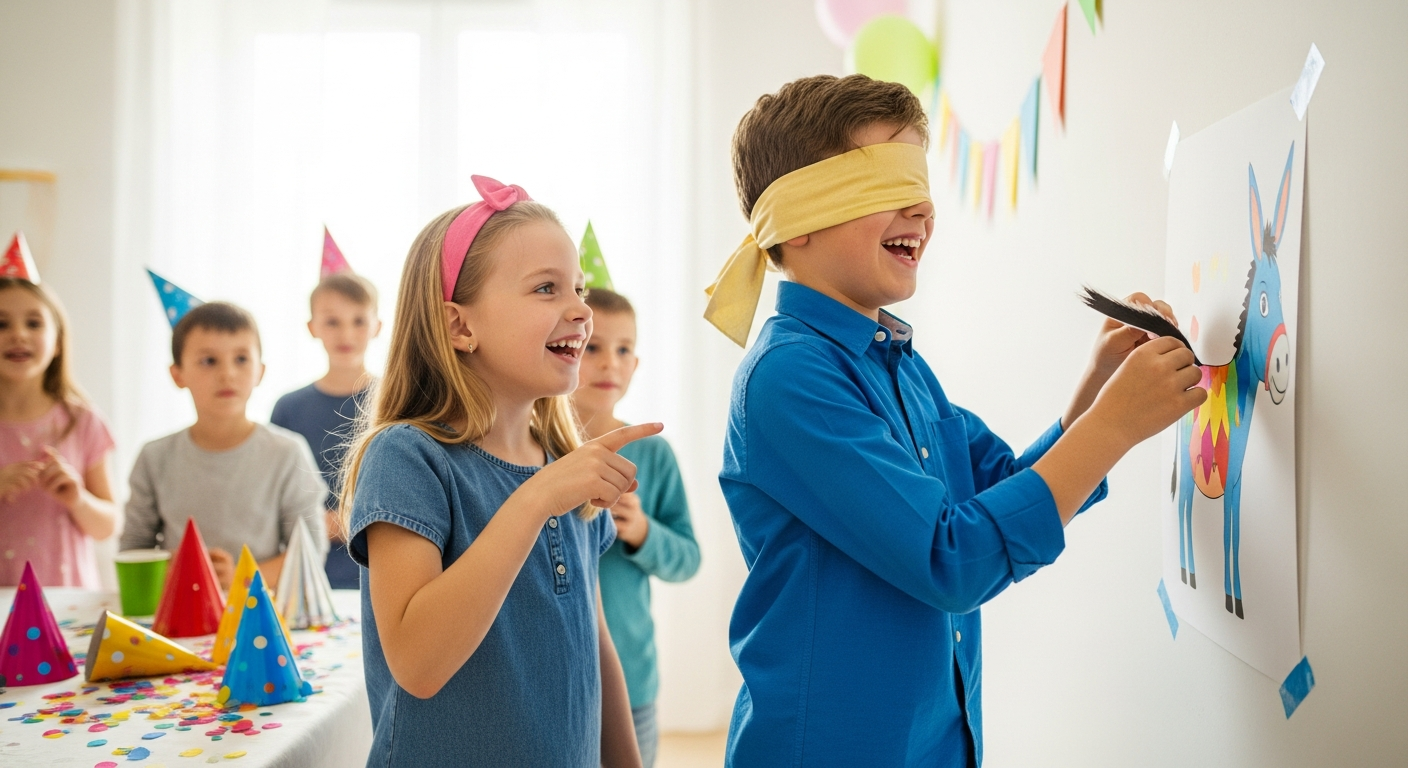
Table of Contents
- The Power of Play: Why Games Matter Beyond Just Fun
- Setting the Stage: Planning for Party Game Success
- Classic Kids' Party Games That Never Go Out of Style
- Active & Energetic Games for Burning Off Party Steam
- Brain-Boosting & Creative Games for Little Thinkers
- Cooperative & Social Games for Building Connections
- Integrating Speech & Language Development into Party Play
- Speech Blubs: Your Partner in Communication Confidence
- Conclusion
- Frequently Asked Questions (FAQ)
The air crackles with anticipation, the cake is ready, and a gaggle of energetic children bursts through the door, ready for fun. Every parent dreams of a birthday party filled with joyful laughter, excited chatter, and unforgettable memories. Yet, we've all experienced those moments of awkward silence, where kids aren't quite sure how to connect, or a shy child lingers on the sidelines, wanting to join but unsure how to start. The secret to transforming a gathering into a vibrant hub of interaction isn't just about decorations or treats; it's about the magic of well-chosen games.
This blog post is your ultimate guide to selecting and facilitating fantastic birthday party games that do more than just entertain. We'll explore a wide array of engaging activities, from time-honored classics to creative new twists, ensuring every child feels included, empowered, and eager to communicate. We understand that party games are powerful tools for fostering essential communication, social skills, and building confidence. We'll delve into how these playful experiences lay the groundwork for a child's ability to "speak their minds and hearts," creating an environment where every little voice can shine. Get ready to discover how thoughtful game selection can transform your next birthday bash into a celebration of connection and development.

The Power of Play: Why Games Matter Beyond Just Fun
At its core, a child's birthday party is a celebration of growth and connection. While balloons and cake certainly bring joy, it's the shared experiences and interactions that truly make lasting memories. Games, in particular, are not merely time-fillers; they are dynamic platforms for holistic child development, fostering skills that extend far beyond the party's duration.
More Than Just Entertainment: Developmental Benefits of Party Games
When children engage in structured play, they are unknowingly honing a vast array of crucial developmental skills:
- Social-Emotional Development: Games teach invaluable lessons in cooperation, turn-taking, sharing, and empathy. They learn to navigate winning and losing with grace, celebrate others' successes, and offer encouragement during challenges. These are fundamental building blocks for healthy relationships.
- Cognitive Benefits: Following rules, problem-solving, strategic thinking, and memory recall are all inherent aspects of most party games. From figuring out clues in a scavenger hunt to remembering patterns in a memory game, children's brains are actively engaged and stimulated.
- Physical Coordination: Many games involve running, jumping, balancing, and fine motor skills. Activities like relay races or obstacle courses enhance gross motor skills, while handling small objects in a craft game improves dexterity.
- Language and Communication Skills: This is where games truly shine as powerful developmental tools. Children practice articulating desires ("My turn!"), understanding and following multi-step instructions, asking clarifying questions, cheering on teammates, and expressing their thoughts and feelings. They learn the nuances of verbal and non-verbal communication in a fun, low-pressure setting. For a child who might be a "late talker" or struggles with social interactions, a party game provides a structured context for practicing these vital exchanges. They learn to listen to peers, imitate actions, and respond to social cues—all crucial for building confident communication.
At Speech Blubs, we believe deeply in the transformative power of play. Our mission is to empower children to "speak their minds and hearts," and we understand that true communication blossoms when children feel confident and engaged. Our company was born from the personal experiences of our founders, who all grew up with speech problems and created the tool they wished they had. We are committed to providing an immediate, effective, and joyful solution for the 1 in 4 children who need speech support, blending scientific principles with play into one-of-a-kind "smart screen time" experiences. We provide a screen-free alternative to passive viewing (like cartoons) and a powerful tool for family connection. The skills children develop with Speech Blubs—like imitating sounds, forming words, and understanding social contexts—directly translate into more confident and joyful participation in social situations like birthday parties. If you're curious about your child's communication development, we encourage you to take our quick 3-minute preliminary screener. It offers a simple assessment and a next-steps plan, and even includes a free 7-day trial of our app.

Setting the Stage: Planning for Party Game Success
A successful party game lineup doesn't happen by accident. It requires thoughtful planning and an understanding of your young guests. By considering a few key factors, you can create an environment where every game is a hit and every child has a blast.
Key Considerations for Game Selection
- Age Appropriateness: This is paramount. What thrills a three-year-old will bore a ten-year-old, and what challenges a ten-year-old might overwhelm a preschooler. Tailor your games to the age range of the majority of your guests. For mixed-age parties, consider offering a couple of options or simplifying rules for younger participants.
- Space and Location:
- Indoors: Limited space means choosing games that require less running or can be played while seated. Think memory games, charades, or "Pass the Parcel." Be mindful of breakable items!
- Outdoors: Open spaces are perfect for active games like relay races, scavenger hunts, or tag. Ensure you have enough room for children to run safely and consider weather conditions.
- Materials and Preparation: Some games require minimal supplies (music for musical chairs), while others need a bit more DIY effort (a homemade piñata, scavenger hunt clues). Gather all your materials in advance to avoid last-minute scrambling. Having backup activities or printable games ready to go is always a smart move, just in case a planned game falls flat or you need an extra time-filler.
- Party Size:
- Small Groups: Games that require close interaction or individual turns work well.
- Large Groups: Team-based games or activities where everyone can participate simultaneously can help manage a larger crowd and prevent anyone from feeling left out.
- Theme Integration: If you have a party theme, consider adapting games to fit it. A "Pirate Treasure Hunt" or "Superhero Obstacle Course" adds an extra layer of excitement and creativity.
- The "Backup Plan" Philosophy: Always have a few extra games or activities in your back pocket. You never know which games will be instant hits and which might not quite capture the group's attention. Being prepared with alternatives ensures the fun never stops.
Classic Kids' Party Games That Never Go Out of Style
Some games are classics for a reason: they are simple, engaging, and universally loved. These time-tested activities are perfect for bringing joy and fostering communication at any birthday party.
1. Musical Chairs (or Musical Hats!)
This vibrant game gets everyone on their feet and ready for some friendly competition.
- How to Play: Arrange chairs in a circle, one less than the number of players. Play upbeat music while children walk around the chairs. When the music stops, everyone scrambles for a seat. The child left standing is out, a chair is removed, and the game continues until one winner remains. A fun twist is "Musical Hats," where hats are placed in a circle, and children grab a hat when the music stops.
- Communication & Development: Musical Chairs teaches children about listening for cues (the music stopping), quick decision-making, and navigating social dynamics in a fast-paced environment. They practice turn-taking (even if it's competitive turn-taking for a seat!) and expressing excitement or disappointment in a controlled setting. It's a great way to encourage non-verbal communication as they jockey for position. For children practicing attention and auditory processing, this game is wonderfully stimulating.
2. Hide and Seek
A universal favorite, Hide and Seek is a simple game with endless fun.
- How to Play: One person (the "seeker") counts to a designated number while others hide. The seeker then searches for the hidden players. The first person found becomes the next seeker, or a variation where a tagged player becomes the seeker. For safety, establish clear boundaries for hiding spots.
- Communication & Development: This game encourages auditory attention (listening for the seeker), spatial reasoning (finding good hiding spots), and planning. Children practice verbalizing their role ("Ready or not, here I come!") and expressing excitement when found or when they find others. It's a great way to use and understand prepositions and descriptive language ("I'm behind the couch!" or "Look under the table!"). For younger children, it's an introduction to sequential play and predicting outcomes.
3. Pin the Tail on the Donkey (or anything!)
This classic blindfolded game guarantees giggles.
- How to Play: A large picture of an animal (like a donkey) is taped to a wall. Each child is blindfolded, spun around a few times, and then attempts to pin a cut-out "tail" (with tape or a sticker) in the correct spot. The closest one wins. You can get creative and adapt this to your party theme – "Pin the Crown on the Princess," "Pin the Eye on the Monster," or "Pin the Star on the Spaceship."
- Communication & Development: This game enhances spatial awareness and fine motor skills. Children practice following verbal instructions while blindfolded ("Take three steps forward, turn left") and describing their actions or observations. It fosters empathy as they watch others attempt the task and laugh together in a supportive way. The anticipation and shared laughter are fantastic for social bonding and emotional expression.
4. Piñata
A vibrant tradition that brings a burst of excitement and treats!
- How to Play: A decorated cardboard piñata filled with candy and small toys is hung from a sturdy spot. Blindfolded children take turns trying to break it open with a stick, often after being spun around. Once it breaks, everyone rushes to collect the goodies. Safety tip: Ensure a wide clearing around the piñata when someone is swinging the stick, and supervise closely. You can even make your own piñata for a budget-friendly option.
- Communication & Development: Beyond the physical coordination and sensory experience, the piñata fosters patience and turn-taking as children wait for their turn. They practice cheering and encouraging the person swinging, and later, negotiating and sharing the collected treats. It's a fantastic opportunity for expressive language as they exclaim over the candy and practice descriptive words for the prizes found inside.
Active & Energetic Games for Burning Off Party Steam
When children have boundless energy, the best thing to do is embrace it! These games are perfect for getting kids moving, laughing, and working together.
1. Relay Races
Relay races are fantastic for teamwork and channeling competitive energy constructively.
- How to Play: Divide children into teams. Each team member completes a task before the next person starts. Ideas include:
- Egg-and-Spoon Race: Balance an egg (real or plastic) on a spoon while racing.
- Three-Legged Race: Two teammates tie one leg together and race.
- Sack Race: Jump in burlap sacks to the finish line.
- Water Relay: Transfer water from one bucket to another using sponges or small cups.
- Communication & Development: Relay races are a masterclass in teamwork and collaboration. Children learn to give and follow instructions clearly, strategize with their teammates, and offer verbal encouragement. The competitive aspect teaches them about sportsmanship and handling both wins and losses. For children developing their ability to sequence actions and remember multi-step directions, the structure of a relay race is incredibly beneficial. They'll be vocalizing encouragement and planning their moves together.
2. Obstacle Course
A custom-built challenge designed for your party guests!
- How to Play: Create a series of physical challenges. For younger children, this could involve crawling under blankets draped over chairs, stepping through hula hoops, walking on a low balance beam (a plank of wood or even a rope on the ground), or throwing beanbags into a bucket. For older kids, incorporate jumping hurdles, weaving through cones, or more complex tasks. Time each child or team to add a competitive element.
- Communication & Development: Obstacle courses encourage problem-solving and spatial awareness. Children practice following a sequence of instructions and often need to ask for help or clarify rules. When playing as teams, they engage in collaborative problem-solving and verbal encouragement. It's a great way to introduce and reinforce action verbs and prepositions as they navigate "over," "under," "through," and "around" obstacles.
3. Limbo
How low can you go? This simple game is always a hit.
- How to Play: Two adults hold a broomstick or pole horizontally. Children take turns trying to pass underneath the stick by bending backward, without touching the stick or falling. Lower the stick incrementally after each round. Play some fun music!
- Communication & Development: Limbo enhances gross motor skills, body awareness, and balance. Children practice listening to instructions about how to pass under the stick. The shared laughter and encouragement as everyone tries to go lower fosters a wonderful sense of social bonding and positive reinforcement. They might describe their technique or cheer on their friends, using simple yet expressive language.
4. Tag Variations (e.g., Zombie Tag, Freeze Tag)
High-energy chases that encourage creative movement.
- How to Play: In "Zombie Tag," a few players start as "zombies" who can only move with stiff legs and arms, trying to tag others. When tagged, players also become zombies. In "Freeze Tag," tagged players freeze until unfrozen by a teammate.
- Communication & Development: Tag games improve cardiovascular health and agility. They teach children about following rules, quick decision-making, and spatial awareness. The various roles (tagger, runner, frozen player) require children to understand and communicate their status. They might strategize verbally with teammates or call out warnings to avoid being tagged. These games are excellent for practicing impulse control and turn-taking within a dynamic environment.
5. Water Balloon Games / Marshmallow Gun War
Perfect for warm weather or backyard fun, these messy games guarantee excitement.
- How to Play:
- Water Balloon Toss: Teams toss balloons back and forth, stepping back after each successful catch. The last team with an unbroken balloon wins.
- Water Balloon Fight: Simply let kids loose with a bucket of water balloons for pure, unadulterated fun.
- Marshmallow Gun War: Give each child a mini marshmallow shooter and a bag of mini marshmallows. Set up "bases" or targets for a fun, harmless battle. (Lay down a tarp for easier cleanup!)
- Communication & Development: These games are fantastic for sensory play (the feel of the water, the squish of marshmallows) and gross motor skills. They encourage teamwork and strategy (especially in a "war" scenario). Children practice vocalizing excitement, calling out targets, and negotiating boundaries of play. The sheer joy of these activities promotes positive social interactions and shared laughter, creating a context where communication feels natural and easy.
Brain-Boosting & Creative Games for Little Thinkers
Not all fun involves running! These games challenge children's minds, encouraging problem-solving, observation, and creative thinking.
1. Scavenger Hunts (Indoor, Outdoor, or Photo)
A thrilling quest for hidden treasures or clues.
- How to Play: Create a list of items for children to find, or clues that lead them from one location to the next, culminating in a "treasure" (party favors, treats). For an "Indoor Treasure Hunt," hide clues around your home. A "Photo Scavenger Hunt" is great for older kids in a mall or park, where they take pictures of specific items.
- Communication & Development: Scavenger hunts are superb for problem-solving, reading comprehension (for clue-readers), and observational skills. When played in teams, they foster collaboration and negotiation as children discuss where to search next. They practice describing objects, asking questions about clues, and verbalizing their thought processes. For children who are building vocabulary, finding and naming different items on the list is a natural and engaging way to reinforce language.
2. Riddle Balloon Game
A playful combination of riddles and popping!
- How to Play: Before the party, write simple riddles on slips of paper and their answers on separate slips. Place one slip (either a riddle or an answer) into each balloon before inflating. Give each child a few balloons and a pin. They pop the balloons, collect the slips, and then work together to match the riddles to their correct answers.
- Communication & Development: This game is fantastic for critical thinking, listening comprehension, and vocabulary development. Children practice reading aloud, explaining their reasoning for matching a riddle to an answer, and collaborating verbally to solve the puzzles. It encourages active listening as they hear their friends' riddles and try to recall answers.
3. Kim's Game (Memory Game)
A quiet game that sharpens observation skills.
- How to Play: Place a collection of small, varied items (a toy car, a button, a crayon, a leaf, etc.) on a tray. Allow children one minute to observe the tray intently. Then, cover the tray and ask them to write down or verbally list as many items as they can remember.
- Communication & Development: Kim's Game is excellent for boosting visual memory and attention to detail. Children practice descriptive language as they recall and name items. It encourages turn-taking in verbalizing their lists and fosters active listening as they hear what others remembered. For children working on expanding their vocabulary, this game provides a concrete context for learning and using new words.
4. Minute to Win It Games
Quick, hilarious challenges using everyday items.
- How to Play: Set up a series of short, timed challenges where children have one minute to complete a task. Examples include:
- Cookie Face: Move a cookie from the forehead to the mouth using only facial muscles.
- Stack 'Em Up: Stack a pyramid of plastic cups.
- Penny Drop: Drop pennies into a water bottle from a specific height.
- Communication & Development: These games are fantastic for problem-solving under pressure, fine motor skills, and hand-eye coordination. They are incredibly entertaining and generate a lot of laughter and playful verbalization. Children might narrate their attempts, cheer on others, or express frustration in a fun, lighthearted way. The simple, direct instructions of these games make them accessible and engaging for a wide range of ages, reinforcing listening and following directions.
Cooperative & Social Games for Building Connections
Some of the most cherished party moments come from games that encourage children to interact, bond, and create shared experiences.
1. Pass the Parcel
A gentle, suspenseful game perfect for younger children.
- How to Play: Wrap a small prize (or several small prizes) in multiple layers of wrapping paper. Children sit in a circle and pass the "parcel" around while music plays. When the music stops, the child holding the parcel unwraps one layer. The game continues until the last layer is unwrapped, and that child gets the main prize. Small treats can be hidden in other layers for everyone.
- Communication & Development: This game is excellent for teaching patience, turn-taking, and anticipation. Children practice listening for cues (the music starting and stopping) and understanding simple rules. They express excitement with each unwrapped layer and learn to manage disappointment if they don't get the final prize. It's a wonderful opportunity for shared social experience and gentle interaction.
2. Glow in the Dark Balloon Stomp
A visually stimulating and energetic game for low-light fun.
- How to Play: Crack glow sticks and place one inside each inflated balloon. Tie a balloon to each player's ankle with a short string. Turn off the lights (or play in a dimly lit area). The goal is to stomp on and pop other players' balloons while protecting your own. The last player with an intact balloon wins.
- Communication & Development: This game enhances spatial awareness, agility, and reaction time. The unique glow-in-the-dark element adds a sensory dimension, sparking excitement and awe. Children practice verbal strategy ("Get him!", "Watch out!"), negotiation (sometimes forming temporary alliances), and expressive vocalizations as balloons pop. It's a fantastic way to encourage active, imaginative play and shared sensory experience.
3. Candy Bar Game / Donut on a String
Motivating games with a sweet reward.
- How to Play:
- Candy Bar Game: Place a variety of candy bars on a table. Players take turns rolling a die. If they roll a specific number (e.g., a 6 or a 1), they get to pick a candy bar. Add a twist where they can "steal" from others.
- Donut on a String: Hang donuts from a string at mouth height. Children race to eat their donut using only their mouths (no hands!).
- Communication & Development: These games build patience, strategic thinking (for the candy bar game), and fine motor control (for the donut game). Children practice verbalizing their choices ("I'll take that one!") and expressing delight when they succeed. The donut game, in particular, elicits a lot of laughter and shared amusement, fostering positive social bonds and lighthearted communication through silly faces and exclamations.
4. Food Fight (with shaving cream and popcorn!)
A controlled, messy, and hilarious experience.
- How to Play: Seat children in a circle, providing each with a shower cap topped with a dollop of shaving cream and a bowl of popcorn. On "go," they gently (or not so gently!) throw popcorn at each other's shaving cream-covered heads. A tarp underneath is highly recommended for easy cleanup.
- Communication & Development: This game is purely about joy, laughter, and sensory fun. It provides a rare opportunity for controlled chaos and releasing inhibitions in a safe environment. Children practice expressing extreme delight, calling out playfully, and engaging in shared silliness. While not directly speech-focused, the sheer amount of positive emotional expression and social bonding created here forms a fantastic foundation for children to feel comfortable and confident in their social interactions, paving the way for more open communication.
Integrating Speech & Language Development into Party Play
Every single game discussed above offers a unique opportunity to nurture a child's speech and language skills. As parents and caregivers, we have the power to maximize these moments.
How to Foster Communication During Games
- Model Language: Narrate what's happening ("Oh, you're crawling under the table!"), describe actions ("She's running fast!"), and use expressive vocabulary ("What a magnificent tower!").
- Ask Open-Ended Questions: Instead of "Did you have fun?" try "What was your favorite part of the game?" or "How did you figure out that clue?" This encourages more than a yes/no answer.
- Encourage Turn-Taking Beyond the Game: Just as games have turns, so does conversation. Gently prompt children to listen when others are speaking and wait for their opportunity to contribute.
- Celebrate All Attempts: Focus on effort and participation, not just winning. Acknowledge when a child uses a new word, asks a question, or clearly states a rule. This builds confidence, reducing the fear of speaking.
- Adapt Rules for Inclusion: If a child is struggling, simplify a rule or provide extra support. The goal is participation and connection, not perfect execution.
For parents whose children need a little extra support with communication, Speech Blubs is designed to be a powerful companion, preparing them for these joyful interactions. Our unique approach of teaching complex communication skills through our "video modeling" methodology means children learn by watching and imitating their peers. This active learning process, recognized for its effectiveness, is far more engaging than passive screen time and directly translates to real-world interactions.
Imagine a child who is learning new action verbs or animal sounds through Speech Blubs' interactive videos. At a party, during an obstacle course, they might confidently exclaim "Jump!" or "Run!" as they navigate the course. Or, during "Pin the Tail on the Donkey," they might use the directional words they practiced in the app. For a parent whose 3-year-old struggles with requesting items, the app's interactive games can build that foundation. Then, at the party, when the piñata breaks, they might confidently say, "I want candy!" instead of pointing or getting frustrated.
We know that some children, especially those needing speech support, might find large group settings overwhelming. Speech Blubs helps build the foundational skills and confidence in a safe, engaging way at home, making them more ready and willing to participate and "speak their minds and hearts" when it comes to social events. Our approach is backed by extensive research, placing us in the top tier of speech apps worldwide with a high MARS scale rating. We're proud to offer a tool that helps bridge the gap between learning and confident real-world communication.
Ready to see how Speech Blubs can make a difference for your child? Download Speech Blubs on the App Store or get Speech Blubs on Google Play and start your free 7-day trial today!
Speech Blubs: Your Partner in Communication Confidence
At Speech Blubs, we are dedicated to providing an immediate, effective, and joyful solution for children's speech and language development. We believe every child deserves the chance to express themselves fully, and our app is designed to make that journey fun and engaging.
We understand that choosing the right tools for your child's development is a significant decision. That's why we strive for transparency and offer flexible plans to suit your family's needs.
Our Membership Options: Unlocking Your Child's Potential
- Monthly Plan: For just $14.99 per month, you gain access to our core Speech Blubs app, packed with thousands of interactive activities designed to boost speech and language skills.
- Yearly Plan: This is by far our best value! For only $59.99 per year, you unlock a comprehensive suite of benefits. This breaks down to just $4.99 per month, allowing you to save a remarkable 66% compared to the monthly option.
Why the Yearly Plan is the Best Choice:
Choosing the Yearly Plan not only provides significant savings but also grants you access to exclusive, high-value features designed to supercharge your child's learning journey:
- 7-Day Free Trial: Only with the Yearly Plan do you get to experience the full power of Speech Blubs with a 7-day free trial. It’s the perfect way to explore all the features and see the difference it can make for your child, completely risk-free.
- Includes the Extra Reading Blubs App: Expand your child's literacy skills with the inclusion of our companion app, Reading Blubs. This provides an integrated approach to language development, from speech to early reading.
- Early Access to New Updates: Be among the first to explore new games, activities, and features as soon as they're released, ensuring your child always has fresh content.
- 24-Hour Support Response Time: Get priority access to our dedicated customer support team, with a guaranteed response within 24 hours for any questions or assistance you might need.
The Monthly Plan does not include the 7-day free trial, the Reading Blubs app, early access to updates, or the priority 24-hour support response time. We truly believe the Yearly Plan offers an unparalleled value package that will provide the most comprehensive support for your child's speech and language journey.
Don't miss out on the full suite of benefits. Start your child's path to confident communication today. We encourage you to opt for the Yearly plan to begin with your free trial and unlock all the amazing features. Create your account and start your 7-day free trial today! See what other parents are saying about their child's success with Speech Blubs by reading our testimonials.
Conclusion
A child's birthday party is a precious opportunity to celebrate, connect, and foster growth. By thoughtfully selecting and facilitating engaging games, you're not just providing entertainment; you're creating rich environments for social-emotional development, cognitive growth, and, most importantly, confident communication. From the boisterous energy of a relay race to the quiet concentration of a memory game, each activity serves as a stepping stone for children to practice listening, speaking, understanding, and interacting with their peers. These joyful moments build the confidence and skills necessary for them to "speak their minds and hearts" in all aspects of life.
Remember, the goal is not perfection, but participation and connection. Focus on fostering a love for communication, building confidence, reducing frustration, and creating those precious, joyful family learning moments. Whether through classic games or innovative new activities, you're providing invaluable experiences that will resonate long after the last piece of cake is eaten.
Empower your child to shine at every party and in every conversation. Ready to give your child the tools to become a more confident and joyful communicator? We invite you to experience the transformative power of Speech Blubs. Download Speech Blubs on the App Store or get Speech Blubs on Google Play today! Make sure to select the Yearly Plan to unlock your 7-day free trial, gain access to the Reading Blubs app, and enjoy all the exclusive features that make it the best value for your child's development. Let's make every word count!
Frequently Asked Questions (FAQ)
Q1: How many games should I plan for a birthday party?
A1: It's always better to have too many games than too few! Aim for 4-6 main games for a 2-3 hour party, with a few extra "backup" activities or simple fillers like bubbles or a craft station. This allows flexibility if a game isn't a hit or if kids need a change of pace.
Q2: What if some children don't want to participate in games?
A2: Never force a child to play. Offer gentle encouragement, model enthusiasm yourself, and ensure there's a low-pressure area where they can observe. Sometimes, seeing their peers having fun, or being given a small, non-demanding role (like being the music stopper for musical chairs) can draw them in naturally. Focus on creating an inviting atmosphere rather than strict compliance.
Q3: How can I ensure all ages are included at a party with mixed age groups?
A3: Plan a mix of games: some for younger kids, some for older, and some that can be easily adapted. For example, a scavenger hunt can have simpler clues for younger children and more complex ones for older kids working on the same team. Team-based games often help bridge age gaps, allowing older children to mentor younger ones.
Q4: How does Speech Blubs help prepare my child for social interactions like party games?
A4: Speech Blubs uses interactive video modeling to help children build foundational speech and language skills in a fun, engaging way. By practicing imitation, vocabulary, and sentence formation within the app, children develop the confidence to use these skills in real-world social settings. This prepares them to understand instructions, express desires, ask questions, and engage playfully with peers, making them more confident and joyful participants in party games and other social interactions.
About the author