
Bloomin' Fun: Easy Flower Crafts for Kids to Grow Big Talkers
 By Speech Blubs Team•Jan 13, 2026•19 min.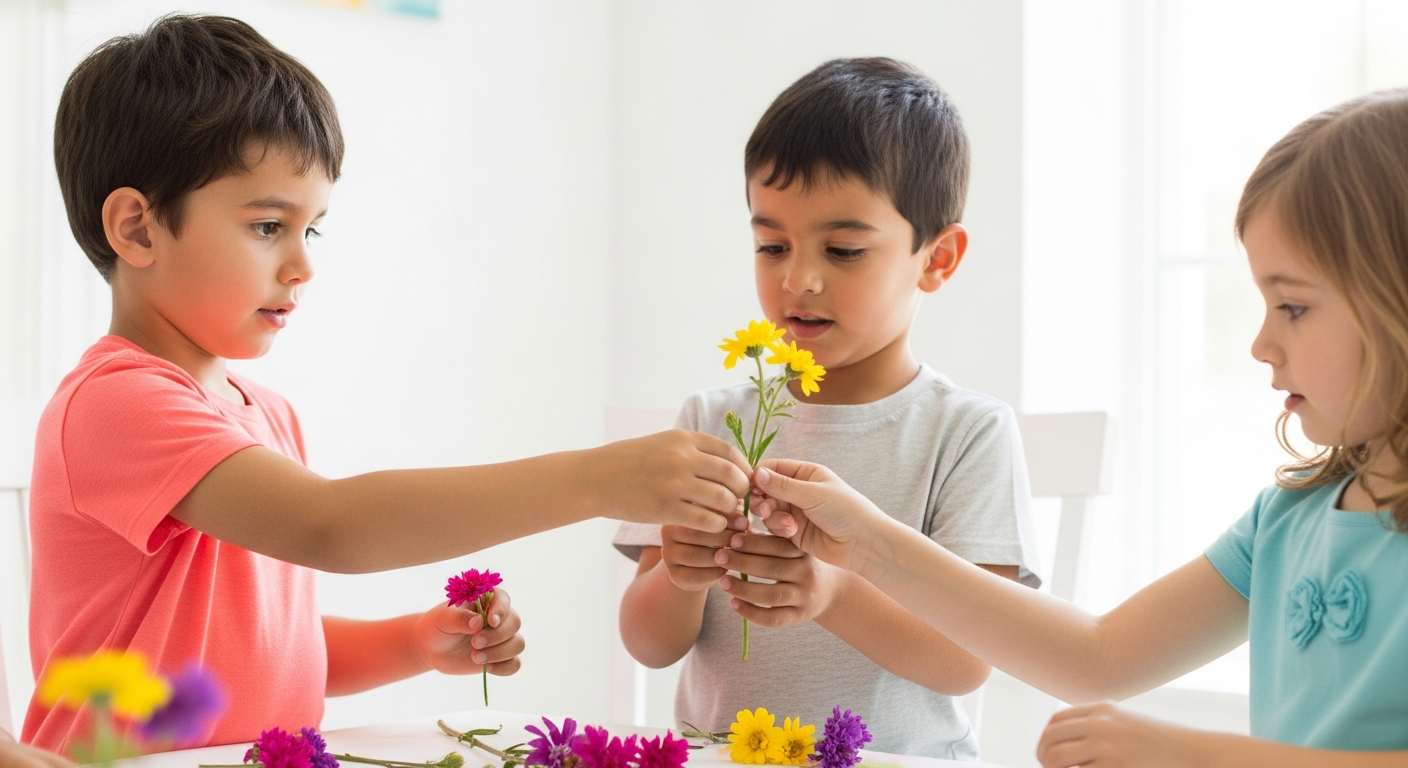
Table of Contents
- The Developmental Magic of Flower Crafts
- Integrating Speech & Language Learning with Flower Crafts
- Easy Flower Crafts for Kids: A Blooming Collection
- Making it a Family Affair: Tips for Crafting Together
- Beyond the Craft: Extending the Learning
- How Speech Blubs Helps Children Speak Their Minds and Hearts
- Realistic Expectations & Joyful Journeys
- Conclusion
- FAQ
Introduction
Imagine a quiet afternoon, sunlight streaming through the window, and the joyous giggle of your child as they proudly hold up a brightly colored, slightly lopsided paper flower. It’s more than just a craft; it's a moment of connection, creativity, and a powerful opportunity for growth. While the vibrant petals and cheerful stems might be the immediate appeal, easy flower crafts for kids offer a profound impact on a child's development, particularly in fostering essential speech and language skills. In a world increasingly dominated by passive screens, engaging in hands-on activities like crafting flowers provides a sensory-rich, interactive alternative that ignites imagination and encourages communication. This post will delve into why flower crafts are not just fun but fundamental, exploring a bouquet of simple projects using various materials, and illustrating how these joyful creations can become powerful springboards for language development. We'll also discover how tools like Speech Blubs can seamlessly complement these tactile experiences, empowering your child to "speak their minds and hearts" with confidence and joy.

The Developmental Magic of Flower Crafts
Crafting isn't just about the final product; it's about the journey. When children engage in easy flower crafts, they're not just making something pretty; they're building a foundation for a myriad of developmental milestones.
Fine Motor Skills: The Delicate Dance of Creation
From snipping paper with child-safe scissors to carefully gluing a petal, grasping a paint brush, or threading yarn through a cardboard loom, flower crafts are a workout for tiny hands. These activities refine crucial fine motor skills, enhancing hand-eye coordination and dexterity. This precision is vital for tasks like writing, dressing, and even articulating sounds later on. The steady hand needed to poke holes for a dandelion threading board or the careful manipulation required for pressed flower art all contribute to this development.
Sensory Exploration: A Feast for the Senses
Flowers, whether real or crafted, offer a rich sensory experience. Children engage with different textures – the crinkle of paper, the stickiness of glue, the softness of a pom-pom, the smooth coolness of a painted surface, or the rough texture of a twig. They might even experience the subtle scents of real flowers if incorporated. This multi-sensory input is crucial for brain development, helping children to process information and make connections between their actions and sensory feedback. Imagine the joy of touching soft tissue paper for a suncatcher or squishing paint for a fingerprint flower!
Language Development: Blossoming Communication
Perhaps one of the most significant benefits, especially for us at Speech Blubs, is the immense potential for language development inherent in flower crafts. Every step of the crafting process offers a chance to introduce new vocabulary, practice following instructions, and engage in descriptive conversation.
- Vocabulary Expansion: Naming colors ("red," "yellow," "green stem"), shapes ("round," "oval," "spiky"), sizes ("big," "small," "tiny"), textures ("smooth," "rough," "sticky"), and action verbs ("cut," "glue," "paint," "fold," "press," "thread") naturally enriches a child's lexicon.
- Following Instructions: Simple multi-step directions ("First, cut the petals. Then, glue them onto the stem.") are excellent for developing auditory processing and comprehension skills.
- Descriptive Language: Encouraging children to describe their creations ("My flower is bright pink and sparkly!") fosters adjective use and more complex sentence structures.
- Storytelling and Imagination: A crafted flower isn't just a flower; it can become part of a garden, a gift for a fairy, or an element in an imaginary story, prompting narrative skills.
- Asking and Answering Questions: Parents can engage children with questions like, "What color should we use next?" or "Can you find the glue?" promoting interactive communication.
For a parent whose 3-year-old "late talker" loves bright colors, creating a vibrant paper plate flower might offer a fun, motivating way to practice "red," "blue," and "sticky." The tactile engagement provides a concrete context for new words, making them easier to grasp and recall.

Cognitive Benefits: Thinking Outside the Pot
Crafts stimulate problem-solving skills. What happens if the glue is too sticky? How can we make the petals stand up? Children learn to plan, adapt, and make decisions. They develop creativity by choosing colors, materials, and designs. Understanding cause and effect—like how pounding flowers transfers color onto paper—also comes into play. These cognitive exercises lay the groundwork for academic success and critical thinking.
Emotional and Social Growth: Sharing the Garden
Crafting encourages patience and perseverance, especially when a project requires multiple steps or fine detail. The sense of accomplishment upon completing a flower craft boosts self-esteem and confidence. When done together, these activities foster social skills like sharing materials, taking turns, and collaborating, strengthening family bonds and creating cherished memories. It's a joyful, low-pressure way for children to express themselves and connect with caregivers.
Integrating Speech & Language Learning with Flower Crafts
At Speech Blubs, we believe in turning everyday moments into powerful learning opportunities. Flower crafts are perfect for this, offering organic ways to embed speech and language practice.
Talking Through the Process: A Narrative Approach
As you craft, narrate your actions and your child's actions. "I am cutting the green stem." "You are gluing the yellow petals on top." This consistent verbal modeling helps children associate words with actions and objects.
- Action Verbs: Use a wide range of verbs related to crafting: cut, glue, paint, fold, press, stamp, tear, stick, draw, color, mix, shape, bend, sprinkle, smooth.
- Descriptive Adjectives: Encourage children to describe what they see, feel, and create: bright, soft, sticky, rough, smooth, colorful, tiny, huge, pretty, sparkly, wobbly.
- Prepositions and Spatial Concepts: Practice words like on, under, next to, inside, outside, in front, behind, above, below while arranging craft pieces.
- Quantity and Counting: "How many petals do we need?" "Let's count the pom-poms."
- Sequencing: "What do we do first? What comes next? What's the last step?" This is excellent for developing narrative skills and understanding sequential order.
For children who might be struggling with verbal imitation, pairing the physical action of crafting with vocalization can be incredibly effective. For instance, as a child stamps a pom-pom into paint, you can model the "tap, tap, tap" sound or the word "stamp!" This multi-sensory input can make new sounds and words more accessible. This is precisely why we developed the Speech Blubs app. Our unique video modeling methodology, where children learn by watching and imitating their peers, provides a safe, engaging, and scientifically-backed environment to practice these very skills. It's a screen-free alternative to passive viewing like cartoons, offering "smart screen time" that sparks interaction.
Easy Flower Crafts for Kids: A Blooming Collection
Let's dive into some fantastic, easy flower crafts for kids, categorized by materials and showcasing their developmental benefits. Remember, the goal is interaction, not perfection!
Paper Power: Simple Flower Crafts with Paper
Paper is a versatile and readily available material, perfect for young crafters.
- Simple 3D Paper Flowers: Using basic construction paper, children can cut circles or petal shapes, then fold and glue them to create multi-dimensional flowers. This activity is fantastic for developing scissor skills, understanding geometric shapes, and practicing words like "fold," "cut," and "glue." You can discuss "how many petals" or "what color" each layer will be.
- Paper Straw Tulips: Brightly colored paper straws make wonderful stems for paper tulips. Kids can cut out simple tulip shapes, decorate them, and then glue or tape them to the straws. This is great for fine motor skills (cutting, manipulating tape), color recognition, and discussing the parts of a flower ("stem," "petals," "leaf").
- Printable Paper Daffodils: Many online resources offer printable daffodil templates. Children can practice cutting along lines, coloring, and then assembling the parts. This builds confidence in following visual instructions and offers opportunities to name colors and practice action words.
- Spring Tulip Suncatchers: Using tissue paper and contact paper, children can create stunning suncatchers. Tearing and arranging tissue paper helps with fine motor skills and sensory exploration of textures. They can describe the "crinkly" paper and the "bright" colors when held up to the light. This is an engaging visual activity that can prompt a lot of descriptive language.
Recycled Riches: Eco-Friendly Flower Creations
Give "trash" a new life by transforming recycled materials into beautiful blooms. This teaches children about sustainability while fostering creativity.
- Egg Carton Flower Crafts: Cardboard egg cartons are surprisingly versatile! Children can cut apart the individual cups, trim the edges to form petals, paint them vibrant colors, and then attach a pipe cleaner or paper straw stem. This is excellent for scissor skills, painting, color naming, and discussing "upcycling" or "reusing." You can ask, "How many bumps did we cut?"
- Recycled Newspaper Flower Craft: Tear or cut strips of newspaper, paint them with watercolors, and then roll or fold them into flower shapes. The unique texture of the newspaper beneath the paint makes for an interesting visual. This encourages tearing skills (great for younger kids!), painting, and discussion of textures.
- Pencil Shavings Flower Art: Collect pencil shavings and glue them onto paper to form flower petals. This unique texture provides a wonderful sensory experience and encourages creative thinking about materials. Children can describe the "curly" or "pointy" shavings.
- Recycled Plastic Flower Art Project: Clean plastic bottles or containers can be cut (adult assistance needed for safety) and painted to create sturdy, lasting flowers. This merges art with a simple science lesson on materials and transformation. Discuss shapes and how the plastic "bends" or "stays strong."
Painted Petals: Artistic Flower Projects
Painting offers a free-form, expressive way to create flowers, engaging different muscle groups and senses.
- Watercolor Flowers: Simple yet stunning. Children can draw flower outlines with a pen or crayon (or freehand paint) and then fill them with watercolors. This is wonderful for color mixing, exploring how water and paint interact, and using descriptive words for colors ("light blue," "dark green").
- Fingerprint/Thumbprint Snapdragon Flowers or Dandelions: Dip a finger or thumb in paint and create petals or dandelion puffs. This sensory, tactile activity is perfect for even the youngest crafters. Count the "dots," name the colors, and practice "press," "lift," and "stamp."
- Flower Pom-Pom Painting: Attach a pom-pom to a clothespin to create a unique painting tool. Kids can dip the pom-pom in paint and stamp it onto paper to create textured flower shapes. This is fantastic for fine motor control (pinching the clothespin), sensory input (soft pom-pom), and practicing repetitive sounds ("stamp, stamp, stamp").
Paper Plate Perfection: Round & Ready Flower Crafts
Paper plates provide a sturdy, pre-shaped base for countless flower creations.
- Weaving Sunflower Seeds Flower: Cut slits around the edge of a paper plate and weave yarn or ribbon through them, creating a woven "sunflower." Glue real or paper sunflower seeds in the center. This is excellent for fine motor skills, pattern recognition, and counting. You can talk about "over" and "under."
- Paper Plate Splat Paint Tulip: Fold a paper plate in half, put blobs of paint on one side, and then fold it again to "splat" the paint, creating a symmetrical tulip. This is a fun way to explore symmetry, cause-and-effect, and color mixing. Talk about "folding," "squeezing," and "opening."
- Paper Plate Calla Lily Flower Craft: Cut a spiral from a paper plate, then roll and glue it to form a unique calla lily shape. This requires more intricate cutting and rolling, boosting fine motor skills and spatial reasoning. Discuss "rolling," "spirals," and "curls."
Nature's Bounty: Found Object Flower Crafts
Head outdoors to gather natural elements for these truly organic flower crafts.
- Pressed Flower Sun Catchers / Art: Collect small, flat flowers and leaves, press them between heavy books (or use a flower press), and then arrange them on contact paper or glue them onto paper. This activity teaches patience, observation, and appreciation for nature. Children can describe the "delicate" petals and "tiny" leaves.
- Twig and Flower Crowns: Gather flexible twigs to form a base, then weave in fresh flowers, leaves, and other natural adornments. This craft encourages outdoor exploration, fine motor skills (weaving, tying), and imaginative play. You can discuss the different "textures" of the leaves and twigs.
- Nature Weaving: Create a simple loom from cardboard or sticks and thread yarn or string. Then, weave collected flowers, leaves, and grasses into the loom. This is a fantastic sensory activity, excellent for fine motor skills, and an opportunity to name many different natural elements.
- Pounded Flower Art: Place fresh flower petals and leaves on a piece of fabric or paper, cover with another layer of paper, and then gently pound with a hammer or mallet. The natural pigments transfer to the surface, creating beautiful, ephemeral art. This is a unique cause-and-effect activity that can also be quite satisfying! Talk about "pounding," "smashing," and "making colors."
- Dandelion Threading Board: Cut shapes from cardboard (like a flower or an animal) and poke holes in it. Take it outside and let your child thread dandelion stems or other small flower stems through the holes. This is an exceptional activity for developing fine motor skills, hand-eye coordination, and concentration, perfect for toddlers and preschoolers.
Mixed Media Magic: Combining Materials for Floral Fun
These crafts encourage creative problem-solving by blending different textures and materials.
- Coffee Filter Flowers: Flatten coffee filters, let children color them with washable markers, then spray with water. Watch as the colors bleed and mix! Once dry, scrunch and layer them into beautiful, watercolor-esque flowers. This teaches about color blending, absorption, and transformation.
- Spring Cupcake Liner Flowers: Use colorful cupcake liners, flattened and layered, to create multi-petaled flowers. Add a button or pom-pom center. This is great for layering, pattern recognition, and fine motor skills (gluing small items).
- Yarn Flower Craft: Wind colorful yarn around a cardboard shape or create yarn pom-poms to form the fluffy centers or petals of flowers. This is excellent for fine motor winding, texture exploration, and color matching.
- Pipe Cleaner Spring Flower Cards: Bend and twist pipe cleaners into flower shapes (petals, stems) and glue them onto cards. Pipe cleaners offer a unique tactile experience and are fantastic for developing hand strength and dexterity. Discuss "bending," "twisting," and "soft" or "fuzzy" textures.
Making it a Family Affair: Tips for Crafting Together
These crafts aren't just activities; they're opportunities for connection.
- Preparation is Key: Gather all materials before you start. A clear workspace minimizes frustration. Involve your child in choosing colors or materials to give them ownership.
- Participate and Model: Sit with your child and do the craft alongside them. Model the actions and language you want to encourage. Don't just instruct; engage!
- Focus on the Process, Not Perfection: The goal is exploration and enjoyment, not a museum-worthy masterpiece. Praise effort and creativity, not just the outcome.
- Talk, Talk, Talk: Narrate your actions, ask open-ended questions ("What do you think will happen if...?"), and encourage your child to describe their work. This is where the magic of language development truly happens.
- Patience and Flexibility: Some days, your child might only want to glue for two minutes, and that's okay. Follow their lead and keep it fun.
- Clean-up Together: Involve your child in putting away supplies. This teaches responsibility and reinforces the entire cycle of an activity.
Beyond the Craft: Extending the Learning
The learning doesn't stop when the glue dries.
- Display with Pride: Hang their creations, put them in a vase, or use them to decorate cards. Acknowledging their effort boosts self-esteem.
- Read All About It: Follow up with flower-themed books. "The Tiny Seed" by Eric Carle or "Planting a Rainbow" by Lois Ehlert are wonderful choices to reinforce vocabulary and concepts.
- Nature Walks: Take a walk to observe real flowers, comparing them to their crafted versions. "Look, a real yellow tulip, just like the one you made!"
- Gift-Giving: Encourage children to give their crafted flowers as gifts for birthdays or special occasions, fostering generosity and social awareness.
How Speech Blubs Helps Children Speak Their Minds and Hearts
Engaging in hands-on activities like flower crafts is invaluable, and at Speech Blubs, we are committed to providing complementary tools that further empower children's communication journey. Our mission is to empower children to "speak their minds and hearts," a commitment born from the personal experiences of our founders, who all grew up with speech problems and created the tool they wished they had. We understand the immediate need for effective, joyful speech support for the 1 in 4 children who require it.
While hands-on activities like crafting provide a rich environment for foundational skill development, our app offers a unique blend of scientific principles and play through "smart screen time." Instead of passive viewing, our "video modeling" methodology encourages active learning. Children learn by watching and imitating their peers, stimulating mirror neurons and making speech practice engaging and effective. This interactive approach provides a powerful tool for family connection, complementing the tactile experiences of crafting.
We've designed Speech Blubs to be an accessible and empowering resource for families. We believe in transparency and providing exceptional value.
Our plans are structured as follows:
- Monthly Plan: Priced at $14.99 per month.
- Yearly Plan: Our most popular and best-value option, at just $59.99 per year. This breaks down to an incredible $4.99/month, allowing you to save 66% compared to the monthly option.
The Yearly Plan isn't just more affordable; it's packed with exclusive, high-value features designed to give your child the best possible experience:
- A 7-day free trial: Experience the full power of Speech Blubs before committing.
- The extra Reading Blubs app: Double the fun and learning with our companion reading app.
- Early access to new updates: Be the first to enjoy new features and content.
- 24-hour support response time: Get quick assistance whenever you need it.
The Monthly plan, unfortunately, does not include these additional benefits. We encourage you to choose the Yearly plan to unlock the 7-day free trial and the complete suite of features for your child's communication journey. With a 4.7-star rating and over 3 million downloads, our methodology is backed by science, placing us in the top tier of speech apps worldwide. You can explore our research to learn more.
Realistic Expectations & Joyful Journeys
While Speech Blubs is a powerful tool, it's essential to remember that it's a supplement to your child's overall development plan and, when applicable, professional therapy. We don't promise your child will be giving public speeches in a month. Instead, we focus on the benefits of the process: fostering a love for communication, building confidence in expressing thoughts and feelings, reducing frustration associated with speech difficulties, developing key foundational skills, and creating joyful family learning moments.
Unsure if your child could benefit from speech support? Take our quick 3-minute preliminary screener to get a simple assessment and a free 7-day trial. You can also read what other parents are saying about their child's success with Speech Blubs.
Conclusion
Easy flower crafts for kids are far more than just pretty decorations; they are vibrant, multi-faceted learning experiences that nurture development across numerous domains, with a particular emphasis on vital speech and language skills. From honing fine motor control and stimulating sensory exploration to expanding vocabulary and fostering imaginative storytelling, each petal and stem offers a unique opportunity for growth and connection. By integrating these hands-on activities with intentional conversation and complementary tools like Speech Blubs, parents can create a rich, supportive environment where children can truly blossom.
So, gather your craft supplies, head outdoors for some natural treasures, and embark on a blooming adventure with your little one. Remember, every snip, glue, and splash of paint is a step towards a more confident, communicative child. Ready to see your child’s communication skills flourish? Download Speech Blubs on the App Store or Google Play to begin your journey. For the best value and access to all exclusive features, including a 7-day free trial and the Reading Blubs app, make sure to select the Yearly Plan when you create your account today!
FAQ
Q1: What age group are these flower crafts suitable for?
A1: Many of these easy flower crafts can be adapted for a wide range of ages, from toddlers (with more adult assistance for cutting) to older children who can handle more intricate steps. Activities like tearing paper, stamping with pom-poms, or threading dandelions are perfect for preschoolers, while cutting complex shapes, detailed painting, and weaving suit older kids. Always supervise younger children, especially with scissors or small parts.
Q2: How do flower crafts specifically help with speech development?
A2: Flower crafts create natural opportunities for language. Children learn new vocabulary (colors, shapes, textures, action verbs like "cut," "glue," "fold"), practice following multi-step instructions, and engage in descriptive language (e.g., "This flower is bright yellow and feels soft"). The hands-on nature provides concrete contexts for words, making them easier to understand and use. Parents can narrate actions and ask open-ended questions to encourage conversation.
Q3: What basic materials should I have on hand for easy flower crafts?
A3: A good starter kit includes construction paper, tissue paper, child-safe scissors, glue sticks or liquid glue, paints (tempera or watercolors), paintbrushes, pipe cleaners, pom-poms, cotton balls, and recycled items like egg cartons, paper plates, and newspaper. Don't forget natural elements gathered from outdoors like leaves, twigs, and small flowers!
Q4: How can Speech Blubs complement hands-on crafts?
A4: Speech Blubs reinforces the foundational speech and language skills your child develops through crafts. While crafting, your child practices words and actions in a real-world context. With Speech Blubs, they can then practice imitating those same words and sounds through our engaging video modeling with peers, building their confidence and strengthening articulation. It offers "smart screen time" that actively engages your child's communication muscles, making it a powerful supplement to your child's overall developmental journey. Download Speech Blubs now to combine the joy of crafting with targeted speech practice.
About the author