
Boost Brainpower: Fun Memory Games for Kids
 By Speech Blubs Team•Jan 19, 2026•20 min.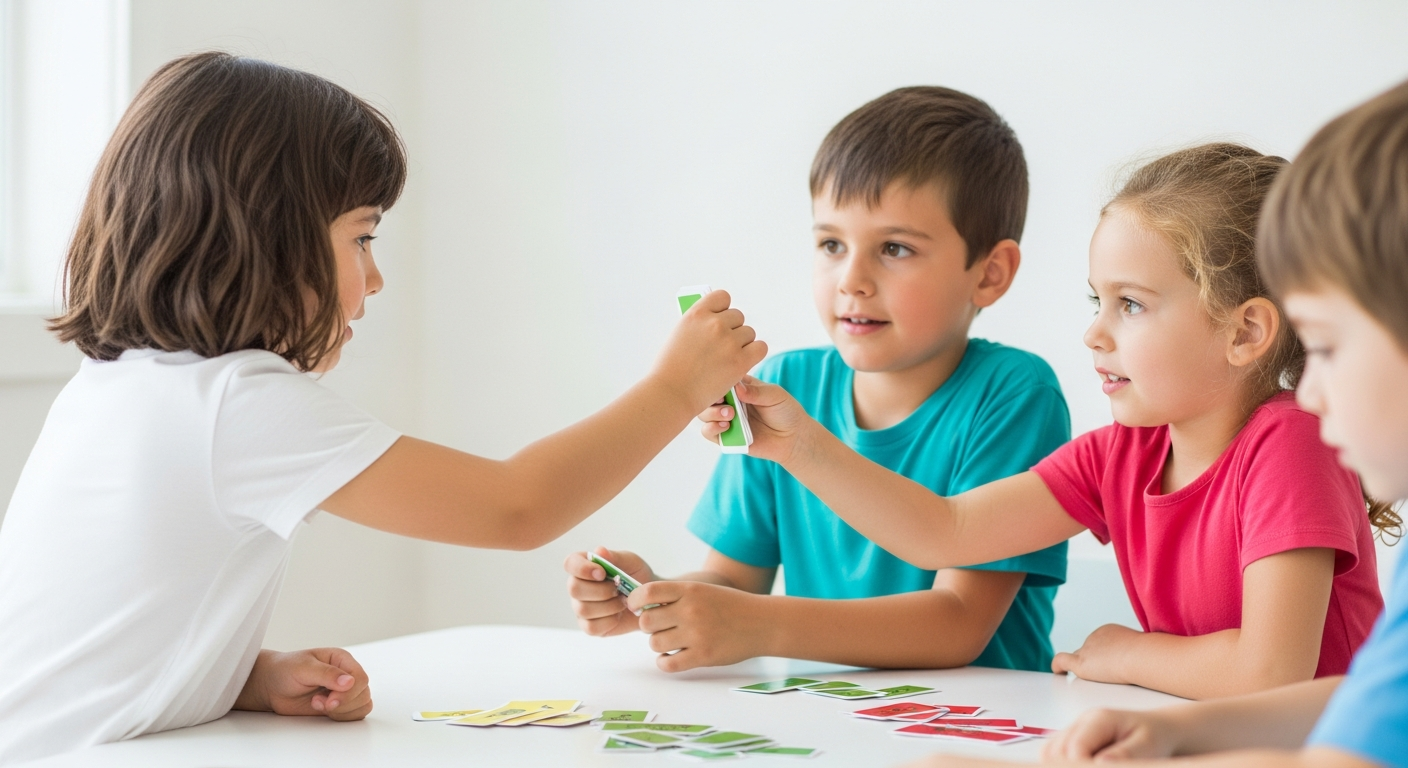
Table of Contents
- Why Memory Games are More Than Just Fun
- Classic Tabletop & Hands-On Memory Boosters
- Verbal & Auditory Memory Adventures
- Creative & Visual Memory Challenges
- Board Games for Strategic Memory Enhancement
- Trivia Games for Knowledge Recall
- Integrating "Smart Screen Time" with Speech Blubs
- Choosing the Right Tools for Your Child's Journey
- Conclusion
- FAQs
Ever found yourself wondering how to genuinely engage your child beyond passive screen time, all while nurturing vital skills for their future? You're not alone. In a world brimming with distractions, helping children develop strong memory skills isn't just about academic success; it's about building a foundation for confident communication, problem-solving, and a lifelong love of learning. Memory is the silent architect behind everything from following multi-step directions to remembering new vocabulary words. It allows children to connect ideas, retrieve information, and make sense of their world. This post will dive deep into a treasure trove of exciting and effective fun memory games for kids that not only entertain but also significantly enhance cognitive development, paving the way for them to speak their minds and hearts with clarity and confidence. We'll explore a variety of play-based activities, from classic tabletop games to interactive digital experiences, highlighting how these simple yet powerful tools can transform everyday moments into opportunities for profound growth.

Why Memory Games are More Than Just Fun
Memory is not a single skill but a complex interplay of various cognitive functions. When children engage in memory games, they are actively strengthening different types of recall—visual, auditory, spatial, and short-term—which are critical for learning and daily functioning. These games foster concentration, attention to detail, and problem-solving abilities. Think about it: a child remembering the sequence in a game is honing the very skill needed to remember a story's plot or a math equation's steps.
At Speech Blubs, we understand this profound connection between cognitive development and communication. Our mission is to empower children to "speak their minds and hearts," a goal deeply intertwined with their ability to recall and process information effectively. Our company was born from the personal experiences of our founders, who all grew up with speech problems and created the tool they wished they had—a tool that blends scientific principles with play. We are committed to providing an immediate, effective, and joyful solution for the 1 in 4 children who need speech support, and memory games are a cornerstone of this approach. We believe in providing "smart screen time" experiences that are a screen-free alternative to passive viewing, making learning an active and engaging family activity.
Let's explore a wide array of fun memory games for kids that you can incorporate into your child's routine today.
Classic Tabletop & Hands-On Memory Boosters
These games leverage tangible objects and direct interaction, making them ideal for younger children and for developing foundational memory skills.
Matching Card Games
How to Play: Lay out a grid of cards face down. These cards can feature pictures, colors, shapes, or even vocabulary words. Players take turns flipping over two cards, trying to find a matching pair. If the cards match, the player keeps them and takes another turn. If not, they flip them back over, and the next player tries. The goal is to remember where specific cards are located.

Memory Skills Enhanced: Visual memory, sustained attention, visual recognition, and spatial memory. This game is fantastic for all ages, as you can adjust the number of cards and the complexity of the images. For younger kids, start with fewer, more distinct pairs.
Why It's Great: This simple activity is a powerful way to build focus. For a child learning new words, using cards with an image on one and the corresponding word on the other can be an excellent way to reinforce vocabulary and improve visual memory.
What's Missing?
How to Play: Place several distinct items on a tray or table. Give your child a minute or so to observe and memorize the items. Then, cover the items and secretly remove one. Uncover the tray and ask your child to identify what's missing. You can increase the difficulty by removing more items or using less obvious objects.
Memory Skills Enhanced: Visual recall, attention to detail, and observation skills.
Why It's Great: This game sharpens a child’s ability to pay close attention and notice small changes. It’s also easily adaptable: try it with fewer objects for toddlers or more complex arrays for older children.
The Cup Game
How to Play: Place a small object (like a coin or a button) under one of three upside-down cups. Shuffle the cups around, and then ask your child to point to the cup where they believe the object is hidden.
Memory Skills Enhanced: Visual tracking, concentration, and short-term memory.
Why It's Great: Beyond memory, this game also develops hand-eye coordination and visual focus. For children who might struggle with sustained attention, the quick, engaging nature of this game can be very motivating.
Sensory Bin Memory Play
How to Play: Fill a bin with various items that offer different textures, shapes, and sizes (e.g., smooth stones, fluffy pom-poms, crinkly leaves, hard blocks). Allow your child to explore the bin with their hands. Then, ask them to close their eyes and identify an object just by touch. You can also hide a specific object and ask them to find it, or remove one after they've explored and ask them what's missing.
Memory Skills Enhanced: Tactile memory, sensory discrimination, and recall abilities.
Why It's Great: This multi-sensory approach is excellent for children who learn best through touch and exploration. It's a wonderful way to engage different parts of the brain in memory formation.
Puzzle Building
How to Play: Simply put together a jigsaw puzzle! Start with age-appropriate puzzles and gradually increase the number of pieces.
Memory Skills Enhanced: Short-term memory, visual-spatial reasoning, problem-solving, and pattern recognition.
Why It's Great: Puzzles require remembering what a piece looks like, where it might fit, and the overall image. This process strengthens working memory, which is crucial for holding information in mind while performing other tasks.
Simon Says
How to Play: This classic game involves one leader giving commands, prefaced with "Simon says." Players must only follow commands that start with "Simon says." For example, "Simon says touch your nose" should be followed, but "Touch your toes" should not.
Memory Skills Enhanced: Auditory memory, listening comprehension, and inhibitory control (the ability to stop oneself from doing something).
Why It's Great: While primarily a listening game, it subtly works on remembering the "rule" (only follow if "Simon says") and the specific command. It’s particularly beneficial for younger children to build attention and auditory processing skills. You can even find online "Simon Says" memory games that target specific cognitive functions.
Verbal & Auditory Memory Adventures
These games focus on spoken words and sounds, helping children improve their ability to recall sequences and details from auditory input.
Shopping List Recall
How to Play: Start by saying, "I went shopping and bought a [item]." The next person repeats your item and adds their own. The chain continues, with each player recalling the entire list in order before adding a new item.
Memory Skills Enhanced: Auditory memory, sequential recall, and active listening.
Why It's Great: This game can grow with your child. For preschoolers, start with 2-3 items. For older kids, you can make the list longer or introduce categories (e.g., "I went to the zoo and saw a..."). It’s a fantastic game for car rides!
Suitcase Packing Recall
How to Play: Similar to the shopping list game, but with a travel theme. "I am going on a trip, and in my suitcase, I will pack a [item]." Each player repeats the growing list and adds one new item.
Memory Skills Enhanced: Auditory memory, sequential recall, and creative thinking.
Why It's Great: The thematic context makes it engaging, and coming up with new items encourages imagination. It’s also a great way to talk about planning and travel.
Memory Story Chain
How to Play: One person starts a sentence, such as, "I went to the park and saw a bird." The next person repeats the sentence and adds to it: "I went to the park and saw a bird and tripped over a rock." This continues around the group, building an increasingly long and often silly story.
Memory Skills Enhanced: Auditory memory, sequencing, and language skills.
Why It's Great: This game encourages active listening and creative expression. It also helps children understand narrative structure and reinforces vocabulary. Keeping sentences short for younger children prevents it from becoming overwhelming.
Music Memory
How to Play: Play a familiar song and suddenly stop it. Ask your child to sing or hum the next line, or to recall what happened just before you stopped. For older children, you can ask them to identify instruments or repeat a specific rhythm.
Memory Skills Enhanced: Auditory memory, rhythmic recall, and sound discrimination.
Why It's Great: Music engages multiple areas of the brain and is a powerful tool for memory. This activity strengthens aural memory and can also spark an interest in music. At Speech Blubs, we use musical instrument games to improve aural memory and decision-making skills, showcasing how sound can be a fantastic memory aid.
The Name Game
How to Play: Great for groups or even just two people. The first person says their name and an adjective that starts with the same letter (e.g., "Brave Ben"). The next person repeats the previous person's name and adjective, then adds their own ("Brave Ben, Joyful Jenny"). This continues, building a chain of names.
Memory Skills Enhanced: Auditory memory, phonological awareness, and social recall.
Why It's Great: This not only boosts memory but also encourages peer bonding and helps children learn each other's names in a fun, memorable way.
Creative & Visual Memory Challenges
These games help children focus on details, patterns, and arrangements, enhancing their ability to store and retrieve visual information.
Picture Drawing by Memory
How to Play: Show your child a detailed picture (e.g., a photograph, a busy scene illustration) for about a minute. Then hide it and ask them to draw everything they can remember from it.
Memory Skills Enhanced: Visual memory, attention to detail, and fine motor skills.
Why It's Great: This exercise goes beyond simple recognition; it requires children to truly encode the visual information and then recall it actively. It can be fascinating to see what details they prioritize or remember most vividly.
Classroom Mix-up / What's Changed?
How to Play: For home, select a room and have your child observe it carefully for a minute. Then, ask them to leave the room while you subtly move or change 3-5 items (e.g., move a cushion, turn a picture frame, hide a toy). When they return, they must identify what has changed.
Memory Skills Enhanced: Visual memory, observation skills, and attention to detail.
Why It's Great: This engages children's natural curiosity and sharpens their ability to notice their environment. It’s an easy, no-prep game for any day.
Memory Map / Find the Places
How to Play: Show your child a simple map (e.g., a neighborhood map, a floor plan, a diagram of a system like the water cycle) for a few minutes. Then, remove it and ask them to recreate it from memory, filling in as many details as they can.
Memory Skills Enhanced: Spatial memory, visual recall, and understanding of relationships between elements.
Why It's Great: This is particularly beneficial for older children, helping them develop a strong sense of spatial awareness and the ability to visualize complex information. We feature memory board games for kids like "Find the Places" that specifically empower spatial and long-term memory, teaching geographical information in a fun way.
Face Memory Test
How to Play: Show a series of faces (from a magazine, flashcards, or a game) to your child. After a short period, mix them with new faces and ask your child to identify the ones they saw before.
Memory Skills Enhanced: Visual memory, facial recognition, and verbal memory if you ask them to name features.
Why It's Great: Recognizing and remembering faces is a crucial social skill. We offer engaging face memory games designed to improve these skills, enhancing visual memory, verbal memory, and visual attention.
Board Games for Strategic Memory Enhancement
Board games offer a fantastic way to blend entertainment with significant cognitive benefits, especially for improving memory and strategic thinking. They’re a wonderful way for families to connect and learn together.
Chess
Memory Skills Enhanced: Strategic memory, working memory (remembering possible moves and opponent's responses), and planning.
Why It's Great: For older children, chess is a masterclass in memory and foresight. It requires remembering how each piece moves, anticipating several steps ahead, and recalling past game states.
Rummikub
Memory Skills Enhanced: Pattern recognition, numerical sequencing, and short-term memory (remembering tiles played and available).
Why It's Great: This game helps children develop flexible thinking and the ability to manipulate numbers and colors in sequences and groups.
Scrabble
Memory Skills Enhanced: Vocabulary recall, spelling, and strategic memory (remembering letter values and board bonuses).
Why It's Great: Scrabble is excellent for language development alongside memory, encouraging children to tap into their vast vocabulary to form words.
Ticket to Ride
Memory Skills Enhanced: Remembering routes, card combinations, and opponents' strategies.
Why It's Great: This game combines geographical knowledge with strategic planning, demanding players remember their goals while adapting to the plays of others.
Letter Game
Memory Skills Enhanced: Vocabulary, short-term memory, and sustained attention.
Why It's Great: Games focused on letters, like those found in memory board games for kids, help children to develop their vocabulary and improve their ability to focus for longer periods.
Fun Numbers
Memory Skills Enhanced: Math skills, focus, and numerical memory.
Why It's Great: Integrating numbers into memory games can make math practice enjoyable. It helps children retain numerical sequences and understand mathematical concepts more deeply.
Trivia Games for Knowledge Recall
Trivia games are excellent for quick thinking, general knowledge recall, and often encourage learning new facts in a fun, competitive environment.
Trivial Pursuit (Kids' Editions)
Memory Skills Enhanced: General knowledge recall across various categories (history, science, geography, entertainment).
Why It's Great: Kid-friendly versions make this classic accessible, turning learning into a lively competition and encouraging retrieval of long-term memory.
I Should Have Known That
Memory Skills Enhanced: Recall of common knowledge and facts learned in school or everyday life.
Why It's Great: This game challenges players on facts they "should" know, making it a fun way to test and reinforce general understanding and tap into long-term memory.
All of Us
Memory Skills Enhanced: Recall of information across diverse topics and cultures.
Why It's Great: This game promotes cultural awareness and broadens a child’s general knowledge, reinforcing memory across a wide range of subjects.
Beat the Parents
Memory Skills Enhanced: Recall of kid-related information, fostering intergenerational interaction and boosting confidence.
Why It's Great: Designed to engage both children and adults, this game is fun and encourages kids to recall information they've learned, often surprising parents with their knowledge!
Guess in 10
Memory Skills Enhanced: Problem-solving, critical thinking, and memory recall based on clues.
Why It's Great: Children must remember the clues given and use logical deduction to make informed guesses, significantly improving information processing abilities.
Integrating "Smart Screen Time" with Speech Blubs
While hands-on games are invaluable, purposeful digital tools can also be incredibly effective for memory development. At Speech Blubs, we've designed our app to be a powerful, interactive resource that transforms screen time into "smart screen time," actively engaging children rather than allowing passive viewing. Our approach is rooted in scientific methodology, focusing on what we call "video modeling."
The Power of Video Modeling
Children are natural imitators. Our app uses video modeling, where children learn by watching and imitating their real-life peers on screen. This taps into mirror neurons in the brain, making the learning process highly effective and enjoyable. When a child sees another child demonstrating a word, a sound, or a memory task, it creates a powerful learning experience that reinforces retention.
Speech Blubs Activities that Boost Memory
Our app features a variety of activities specifically designed to enhance memory, seamlessly integrated into fun, engaging themes:
- Face Memory Game: Within Speech Blubs, children engage in activities that improve visual memory, verbal memory, and visual attention by recalling and matching faces.
- Match-Up: Our matching games are tailored to boost short-term memory, visual attention, and naming skills. Children actively work to pair items, reinforcing their recall.
- Memory Cards: Similar to classic matching games but with an interactive twist, these activities improve visual scanning, planning, and spatial memory skills through engaging digital cards.
- Musical Instruments Game: We leverage the power of sound to improve auditory and visual memory. Children learn to associate sounds with instruments and recall musical sequences.
- Color Memory Game Simon: A digital twist on the classic "Simon Says," this game uses colors and sounds to enhance short-term memory, sustained attention, and aural memory skills, making it one of our most effective short-term memory games for kids.
- "Animal Kingdom" and Thematic Sections: For a parent whose 3-year-old 'late talker' loves animals, the "Animal Kingdom" section offers a fun, motivating way to practice 'moo' and 'baa' sounds, while simultaneously boosting memory through associating sounds with images of animals. This makes learning engaging and meaningful.
Our app is not just about isolated games; it's a comprehensive tool for developing communication skills that inherently rely on strong memory functions. When a child learns new words, understands concepts, and forms sentences, they are constantly drawing upon their memory. We’ve earned a top-tier MARS scale rating because our methodology is backed by science, making us a trusted partner in your child's developmental journey. See for yourself what other parents are saying about their child's success with Speech Blubs.
Remember, the goal is not guaranteed outcomes like "your child will be giving public speeches in a month." Instead, we focus on fostering a love for communication, building confidence, reducing frustration, developing key foundational skills, and creating joyful family learning moments. Speech Blubs is a powerful supplement to a child's overall development plan and, when applicable, professional therapy, always with the understanding of adult co-play and support.
Ready to explore these engaging memory-boosting activities with your child? You can download Speech Blubs on the App Store or Google Play to begin your journey.
Choosing the Right Tools for Your Child's Journey
Investing in your child's cognitive and communication development is one of the most important decisions you can make. When considering tools like Speech Blubs, we want to be transparent about our options so you can choose what works best for your family.
We offer two main plans for Speech Blubs:
- Monthly Plan: Priced at $14.99 per month. This plan provides access to the core Speech Blubs app.
- Yearly Plan: Our most popular and recommended option, priced at $59.99 per year. This breaks down to just $4.99 per month, allowing you to save 66% compared to the monthly plan!
Why the Yearly Plan is the Best Choice
The Yearly plan isn't just about saving money; it offers a significantly enhanced experience with exclusive, high-value features designed to maximize your child's progress:
- 7-Day Free Trial: Only with the Yearly plan do you get a full 7-day free trial, giving you ample time to explore all the features and see the positive impact of Speech Blubs firsthand.
- The Extra Reading Blubs App: Unlock an entire second app, Reading Blubs, included at no additional cost. This sister app further supports literacy development, working hand-in-hand with speech and language skills.
- Early Access to New Updates: Be among the first to experience new games, activities, and features as soon as they are released.
- 24-Hour Support Response Time: Get priority support with faster response times for any questions or assistance you might need.
The Monthly plan, by contrast, does not include these valuable benefits. For the most comprehensive, cost-effective, and feature-rich experience, the Yearly plan is the clear superior choice.
Unsure if your child could benefit? Take our quick 3-minute preliminary screener to get a simple assessment and a free 7-day trial when you opt for the Yearly plan.
Conclusion
Memory games are far more than just time-fillers; they are fundamental building blocks for your child's cognitive development, directly impacting their ability to learn, communicate, and thrive. From the tactile engagement of sensory bins to the strategic thinking required in board games, and the "smart screen time" experiences offered by Speech Blubs, every activity is an opportunity to strengthen vital recall, focus, and problem-solving skills. By embracing these fun memory games for kids, you’re not just providing entertainment; you’re nurturing confidence, reducing frustration, and empowering your child to "speak their minds and hearts" with clarity and joy.
We at Speech Blubs are dedicated to being your partner in this incredible journey, providing scientifically-backed, engaging tools that make learning an adventure for the whole family. We encourage you to experience the difference our unique video modeling approach can make.
Ready to embark on this enriching path with your child? Create your account and begin your 7-day free trial today! Remember to select the Yearly plan to unlock your free trial, the bonus Reading Blubs app, early access to new content, and priority support—the best value for your child's bright future. You can also download the Speech Blubs app directly from your app store.
FAQs
How do memory and matching games for kids benefit cognitive development?
Memory and matching games stimulate various mental skills crucial for cognitive development. They enhance memory retention, concentration, attention to detail, and problem-solving abilities. Additionally, they improve visual perception and spatial awareness. When played in groups, they also foster social interaction, communication skills, and teamwork.
What age range are memory and matching games suitable for?
Memory and matching games are incredibly versatile and suitable for a wide age range. Typically, children as young as 2-3 years old can start with simple matching activities. These games continue to offer valuable cognitive benefits for preschoolers, school-aged children, teenagers, and even adults, with complexity adjusted to suit different skill levels.
Can memory and matching games for kids be played solo or are they typically multiplayer?
Memory and matching games can be enjoyed in both solo and multiplayer formats. Many games, especially digital ones or card matching activities, allow individuals to challenge themselves independently. However, multiplayer versions provide wonderful opportunities for social interaction, friendly competition, and cooperative gameplay, making them ideal for family engagement.
How does Speech Blubs specifically enhance memory skills through its app?
Speech Blubs utilizes a unique video modeling approach where children learn by observing and imitating peers, which naturally boosts visual and auditory memory. Our app features dedicated activities like Face Memory Games, Match-Up challenges, and Color Memory Game Simon, all designed to improve short-term memory, visual attention, aural memory, and sustained focus. These engaging and interactive experiences are woven into the app's comprehensive language development program.
About the author