
Boost Speech & Play: Fun Backyard Games for Kids
 By Speech Blubs Team•Jan 19, 2026•21 min.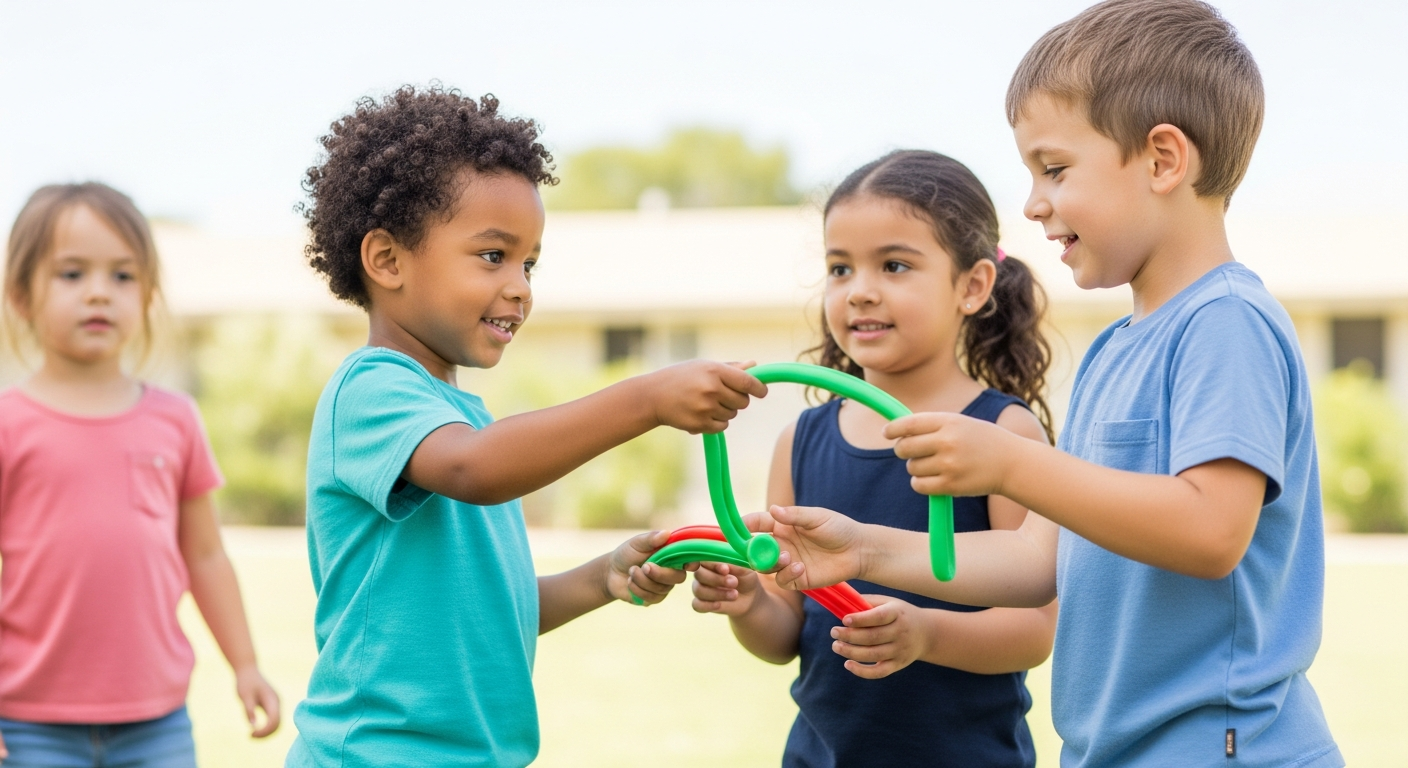
Table of Contents
- Introduction
- Why Backyard Play Matters: More Than Just Fun
- No-Prep, Imagination-Driven Backyard Games
- Classic Games with a Twist for Communication
- Games Requiring Simple Props for Enhanced Learning
- Boosting Communication with Speech Blubs: Our Unique Approach
- Making Backyard Play a Family Tradition
- Choosing Your Speech Blubs Plan: Get the Best Value!
- Conclusion
- FAQ
Do you ever find yourself gazing out the window, wishing your child would trade screen time for green time? In an age dominated by digital entertainment, the simple joy of outdoor play can sometimes feel like a lost art. Yet, the backyard isn't just a patch of grass; it's a vibrant stage for growth, discovery, and connection. This post isn't just about suggesting activities; it's about transforming your backyard into a dynamic learning environment where kids can thrive physically, socially, and, yes, even linguistically. We'll dive into a treasure trove of fun backyard games for kids that are not only entertaining but also subtly nurture crucial developmental skills, paving the way for confident communicators and imaginative thinkers, all while creating cherished family memories.
Introduction
There's a universal truth for parents: the longing for our children to experience the freedom and joy of playing outdoors. The fresh air, the sunshine, the endless possibilities of a wide-open space – these are ingredients for childhood magic. But sometimes, despite the best intentions, those initial forays into the backyard can be met with the dreaded "I'm bored!" cry. It's a common challenge, but one that's easily overcome with a little inspiration and a dash of creativity. This article is your guide to rekindling that outdoor spark, offering a comprehensive collection of fun backyard games that go beyond simple entertainment. We’ll explore how these activities naturally support cognitive development, enhance social skills, and crucially, provide rich opportunities for speech and language growth. By the end, you'll have a toolkit of engaging ideas to turn your backyard into an adventurous learning hub, reinforcing that playful interaction is a cornerstone of a child's overall development.

Why Backyard Play Matters: More Than Just Fun
The benefits of outdoor play extend far beyond simply burning off excess energy. When children engage with the natural environment and open spaces, they unlock a cascade of developmental advantages that are difficult to replicate indoors. These experiences are fundamental to building a strong foundation for both physical and cognitive well-being.
Physical Prowess and Coordination
Backyard games are a fantastic way to develop essential physical skills. Running, jumping, throwing, climbing – these activities strengthen muscles, improve cardiovascular health, and refine gross motor skills. A game of tag requires agility and speed, while tossing a beanbag targets hand-eye coordination. These aren't just isolated movements; they're integrated actions that teach children how their bodies move in space, enhancing balance and proprioception. Regular outdoor play also contributes significantly to a child's overall physical health, helping to build strong bones and maintain a healthy weight.
Igniting Imagination and Cognitive Growth
Beyond the physical, the backyard is a prime location for cognitive development. Unlike structured indoor environments, the unpredictable nature of outdoor play encourages problem-solving and critical thinking. How do you build a fort that won't collapse? How can you make a ball go farther? These spontaneous challenges foster creativity and resilience. Children learn to adapt to different terrains, weather conditions, and the ever-changing dynamics of group play. They invent stories, create elaborate rules for their games, and transform ordinary objects into extraordinary props. This imaginative engagement is vital for developing flexible thinking and the ability to process complex ideas.
Cultivating Social and Emotional Intelligence
Playing together in the backyard is a powerful lesson in social dynamics. Children learn to negotiate, share, take turns, and resolve conflicts. They experience the highs of teamwork and the lows of losing, all within a safe, supportive environment. These interactions build empathy, teach self-regulation, and help children understand different perspectives. For example, during a game of "Hide-and-Seek," children learn about fairness, patience, and how to respect boundaries. These social experiences are critical for developing emotional intelligence and building healthy relationships.

The Speech & Language Connection in Outdoor Play
Perhaps less obvious, but equally profound, is the impact of backyard play on speech and language development. Every interaction, every game, and every imaginative scenario presents a unique opportunity for communication. Children use language to:
- Express Ideas: "Let's make our fort a secret castle!"
- Give Instructions: "You run over there, and I'll count!"
- Ask Questions: "Where should we hide the treasure?"
- Describe Actions and Objects: "The red ball rolled under the bush."
- Negotiate and Problem-Solve: "No, you can't be 'It' again, it's my turn!"
- Narrate Stories: Describing the adventures they're having during pretend play.
For a child who might be a "late talker" or struggling with expressive language, the open-ended nature of backyard play provides a low-pressure environment to practice new words and phrases. The excitement of the game can be a powerful motivator for verbalization. These organic, joyful communication moments complement the structured learning a child might experience with a tool like Speech Blubs, helping them to generalize the skills they’re building and apply them in real-world scenarios. We believe that integrating playful activities into daily routines creates a holistic approach to fostering communication confidence.
No-Prep, Imagination-Driven Backyard Games
Sometimes the best games are the ones that require nothing more than a child's imagination and the open space of your backyard. These activities are fantastic for encouraging creativity, independent thinking, and rich language development, often with minimal effort from parents beyond setting the stage.
Obstacle Course Adventures: A Path to Expressive Language
Creating a backyard obstacle course is a fantastic way for kids to engage both their bodies and minds. It doesn't require specialized equipment; simply gather items you already have: pillows, jump ropes, hula hoops, old tires, blankets, buckets, or even patio furniture. The magic happens when you encourage your child to design the course themselves and narrate their journey through it.
- How to Play: Challenge your children to build a course using found objects. Once constructed, encourage them to describe each "obstacle" and how they will overcome it. "First, I have to leap over the gnarly log, then crawl through the dark tunnel." You can time them, or simply enjoy watching their creative movement.
- Developmental Link: This game is a goldmine for gross motor skills, planning, and problem-solving. Linguistically, it promotes descriptive language (adjectives like "gnarly," "dark," "slippery"), action verbs ("leap," "crawl," "jump," "balance"), and spatial concepts ("over," "through," "under," "around"). For a child working on multi-step directions, you can give them instructions for a course you design, or have them give you instructions for theirs.
Nature Scavenger Hunts: Expanding Vocabulary One Find at a Time
A scavenger hunt transforms your backyard into a giant search-and-find puzzle, perfect for developing observation skills and expanding vocabulary.
- How to Play: Create a list of things for your child to find. This can be simple (a green leaf, a smooth rock, a feather) or more complex (something crinkly, something that smells sweet, something fuzzy). For an alphabet hunt, list letters A-Z and challenge them to find something starting with each letter (e.g., "A" for ant, "B" for bug). For a color hunt, list colors and find objects that match.
- Developmental Link: This game is excellent for vocabulary expansion, teaching new words related to nature and senses. It also enhances observation skills, categorization, and the ability to follow specific instructions. Encourage your child to describe what they found, why they chose it, and where they found it, reinforcing prepositions and descriptive adjectives. It’s a wonderful opportunity for call-and-response communication, asking "What did you find?" and encouraging a detailed answer.
Fort Building Fantasies: Engineering and Narrative Skills
Few childhood memories are as cherished as building a fort. It’s a timeless activity that harnesses imagination and teamwork.
- How to Play: Provide a variety of materials: old sheets, blankets, large cardboard boxes, pillows, clothespins, and even small branches or logs. The goal is to build a structure that can serve as a secret hideout, a castle, a spaceship, or anything else they can dream up.
- Developmental Link: Fort building taps into spatial reasoning, engineering principles (even rudimentary ones!), and collaborative problem-solving. Crucially, it fuels imaginative play and narrative development. Children often create elaborate stories around their forts, developing characters, plots, and dialogue. This sustained imaginative play is incredibly beneficial for expressive language, allowing children to practice different voices, negotiate roles, and build complex storylines. For a parent whose child is learning to express multi-word phrases, asking "What kind of fort is this?" or "Who lives here?" can elicit wonderfully creative and language-rich responses.
Classic Games with a Twist for Communication
Many traditional backyard games can be transformed into powerful tools for language development simply by emphasizing the communication aspects within them.
Simon Says: Sharpening Auditory Processing and Action Verbs
"Simon Says" isn't just about following directions; it's a fantastic exercise in listening carefully and understanding specific commands.
- How to Play: One person is "Simon" and gives commands, always prefacing them with "Simon Says." Players only follow commands that start with "Simon Says." If "Simon" says "Jump!" and a player jumps, they're out. If "Simon Says, jump!" and they jump, they're safe.
- Developmental Link: This game is superb for developing auditory processing skills – the ability to hear, understand, and remember spoken instructions. It builds vocabulary for action verbs ("jump," "run," "skip," "crawl," "wave") and helps children learn to follow multi-step directions ("Simon Says, touch your toes then clap your hands"). For children learning to imitate sounds and words, the clear, repeated commands in "Simon Says" can be a gentle way to encourage verbal imitation. This focus on listening and imitation skills mirrors our approach at Speech Blubs, where our video modeling methodology leverages the power of peer imitation to build new sounds and words.
Untangle: Teamwork, Direction-Giving, and Spatial Language
This cooperative game is guaranteed to elicit giggles and encourage clear communication.
- How to Play: A group of kids stands in a circle, close together. Everyone reaches both hands into the center and grabs two different hands from two different people. The goal is for the group to untangle themselves into a single circle without letting go of anyone's hands.
- Developmental Link: "Untangle" is a fantastic problem-solving activity that demands verbal collaboration. Children must communicate directions clearly ("Lift your arm over my head," "Can you step under this arm?"), negotiate movements ("Wait, if I go this way..."), and use spatial language ("over," "under," "through," "left," "right"). It fosters active listening as players need to understand and respond to each other's instructions. This game is particularly beneficial for children who need practice with expressive and receptive language related to spatial concepts and sequencing.
Theme Tag: Building Vocabulary and Quick Recall
A fun twist on classic tag, "Theme Tag" adds a cognitive layer that challenges vocabulary recall.
- How to Play: Choose a theme, such as "animals," "foods," or "colors." The person who is "It" chases the others. To avoid being tagged, a player must quickly say a word that fits the chosen theme (e.g., if the theme is "animals," they might shout "lion!" or "zebra!"). They cannot repeat a word that's already been used in that round.
- Developmental Link: This game is excellent for expanding vocabulary, quick word retrieval, and categorization skills. It encourages children to think on their feet and access their mental lexicon. For kids who are working on specific word categories or building their expressive vocabulary, "Theme Tag" makes learning fun and dynamic. It also promotes active listening to ensure they don't repeat words.
Games Requiring Simple Props for Enhanced Learning
While imagination is key, a few simple props can open up a whole new world of backyard fun, providing structured opportunities for learning and communication.
Hula Hoop Challenges: Coordination, Counting, and Descriptive Language
Hula hoops are incredibly versatile and can be used for much more than just waist-hooping.
- How to Play:
- Hula Hoop Contest: Who can hula hoop the longest? This encourages counting (of rotations or time).
- Target Practice: Lay hoops on the ground and have kids toss beanbags or balls into them, assigning points to different hoops. This involves counting and simple math.
- Obstacle Elements: Incorporate hoops into a DIY obstacle course as tunnels to crawl through, rings to jump over, or pathways to step inside.
- "River" Crossing: Lay several hoops in a line. Kids must step only inside the hoops to avoid the "lava" or "river."
- Developmental Link: Hula hoop games enhance gross motor skills, balance, and coordination. When used for target practice, they teach number recognition and counting. Describing movements ("I went through the blue hoop") boosts spatial language and adjectives. The open-ended nature of hula hoops encourages children to invent their own games, fostering creativity and the language of rule-making.
Bean Bag Toss: Numeracy, Turn-Taking, and Requesting
Beanbag toss is a classic for a reason – it’s simple, satisfying, and easy to adapt for various skill levels.
- How to Play: Set up targets of varying difficulty and assign points to each. Use buckets, cardboard boxes, or even drawn chalk circles. Kids take turns tossing beanbags, aiming for the highest score. You can play individually or in teams.
- Developmental Link: This game is excellent for developing hand-eye coordination and fine motor control. It naturally teaches basic numeracy (counting points, adding scores), concepts of greater/lesser, and fair play. Crucially, it reinforces turn-taking, an essential social skill and a foundation for conversational exchanges. Children will use language to request ("My turn!"), express excitement ("I got five points!"), and understand simple rules ("You get three throws"). For a child working on requesting, you can set it up so they have to ask for the beanbag or for another turn.
Bocce Ball/Croquet: Strategic Language and Sportsmanship
These gentler lawn games offer a wonderful way to introduce strategy and refine communication.
- How to Play: Both bocce ball and croquet involve aiming to get your ball closest to a target or through a series of wickets. They require precision and a bit of strategy.
- Developmental Link: These games promote fine motor control and spatial reasoning. They encourage strategic thinking ("If I hit that ball, mine will get closer"). Children learn to follow rules, practice good sportsmanship, and verbalize their strategies or frustrations constructively. They use comparative language ("closer," "farther," "next to") and directional terms. Explaining the rules to a new player is also a great exercise in clear, sequential communication.
Four Square/Kick the Can: Rule Following, Negotiation, and Social Language
For slightly older children, these games offer more complex social dynamics and rule sets.
- How to Play:
- Four Square: Draw four squares on a hard surface. Players bounce a ball between squares, trying to eliminate opponents by making them miss. Rules can get quite intricate!
- Kick the Can: A mix of tag and hide-and-seek. One person is "It" and guards a can. Others hide. If "It" tags someone, they go to "jail." A hidden player can kick the can to free everyone.
- Developmental Link: These games are exceptional for teaching children to understand and adhere to complex rules, negotiate disagreements, and use persuasive language. They encourage teamwork, strategic planning, and the expressive language needed to explain actions, protest a call, or cheer on teammates. The dynamic nature of these games provides a rich context for spontaneous conversation and social interaction, which are vital for communication growth.
Boosting Communication with Speech Blubs: Our Unique Approach
While these backyard games provide incredible organic opportunities for speech and language development, sometimes children need a little extra support, a focused boost to help them find their voice. This is where Speech Blubs steps in, offering a powerful complement to your child's overall developmental journey.
At Speech Blubs, our mission is deeply personal: to empower children to "speak their minds and hearts." Our company was born from the personal experiences of our founders, who all grew up with speech problems and created the tool they wished they had. We understand the unique challenges and frustrations that can come with communication delays, and we are committed to providing an immediate, effective, and joyful solution for the 1 in 4 children who need speech support.
Our unique approach blends scientific principles with play, creating one-of-a-kind "smart screen time" experiences. We stand apart by offering a screen-free alternative to passive viewing (like cartoons), transforming screen time into an interactive and productive learning opportunity that also serves as a powerful tool for family connection.
The Science Behind Our Success: Video Modeling
At the core of our methodology is video modeling. This scientifically validated approach teaches complex communication skills by having children learn by watching and imitating their peers. When a child sees another child of a similar age producing a sound, word, or phrase, their mirror neurons fire, creating a powerful learning pathway. This natural inclination to imitate makes learning intuitive and incredibly effective. Our app features thousands of short, engaging video clips of real children, providing relatable and motivating examples for your child to follow. You can learn more about the science underpinning our approach on our research page.
Fostering a Love for Communication
We don't just teach words; we foster a genuine love for communication. By making learning fun, engaging, and interactive, we help children build confidence and reduce the frustration often associated with speech challenges. Our app focuses on developing key foundational skills, from articulation and vocabulary to understanding and expressing emotions, all within a playful context.
For example, a parent whose 3-year-old "late talker" loves animals will find our "Animal Kingdom" section invaluable. As their child watches other kids make "moo" and "baa" sounds, they are naturally encouraged to imitate, often finding their voice in the excitement of the activity. This makes the learning process feel less like therapy and more like play, creating joyful family learning moments that extend far beyond the screen.
It's important to set realistic expectations: Speech Blubs is a powerful supplement to your child's overall development plan and, when applicable, professional therapy. It's a tool that thrives with adult co-play and support, turning screen time into quality bonding time.
Ready to experience the difference that active, engaging, and scientifically-backed speech practice can make? Download Speech Blubs on the App Store or Google Play to begin your child's communication adventure.
Unsure if Speech Blubs is right for your child's needs? We understand that every child is unique. Take our quick 3-minute preliminary screener to get a simple assessment and a personalized next-steps plan, which also includes access to a free 7-day trial.
Making Backyard Play a Family Tradition
Integrating fun backyard games into your family routine is about more than just filling time; it's about investing in your child's holistic development and creating a reservoir of cherished memories. Consistency is key. When outdoor play becomes a regular part of your family life, children learn to anticipate and enjoy these moments, often initiating the play themselves.
Parents play a vital role in fostering this tradition. Your enthusiasm is contagious! By actively participating, asking open-ended questions, and encouraging creative thinking, you reinforce the value of play and communication. These shared experiences strengthen family bonds and provide a natural context for learning that feels effortless and joyful. The laughter, the teamwork, the imaginative stories unfolding under the open sky – these are the moments that truly matter.
This dedication to joyful family learning moments resonates deeply with our values at Speech Blubs. We believe that when learning is fun and supported by family, children flourish. You don't have to take our word for it; see what other parents are saying about their child's success and the positive impact Speech Blubs has had on their family life. Embrace the power of your backyard as a place of endless possibilities and endless growth.
Choosing Your Speech Blubs Plan: Get the Best Value!
When you're ready to enhance your child's communication journey with Speech Blubs, we offer flexible plans to suit your family's needs. We believe in transparency and want to ensure you get the most out of your experience.
Our current pricing options are:
- Monthly Plan: $14.99 per month
- Yearly Plan: $59.99 per year
While both plans provide access to our incredible library of speech-boosting activities, the Yearly plan offers significantly superior value and a wealth of exclusive benefits. By choosing the Yearly plan, you save 66% compared to paying monthly, making it the most cost-effective option for sustained progress. At just $4.99 per month when broken down, it's an investment in your child's future that won't break the bank.
Beyond the substantial savings, the Yearly plan includes high-value features designed to give your child the best possible support:
- A 7-day free trial: This allows you and your child to explore the app, experience our video modeling methodology, and see the engagement firsthand before committing.
- The extra Reading Blubs app: Unlock another powerful educational tool designed to foster early literacy skills, complementing the speech development your child gains with Speech Blubs.
- Early access to new updates: Be among the first to experience new features, games, and content as we continuously improve the app.
- 24-hour support response time: Get prompt assistance whenever you need it, ensuring a smooth and uninterrupted learning experience.
Please note that the Monthly plan does not include these additional benefits. To unlock the full suite of features and embark on a comprehensive and supported communication journey with your child, we strongly encourage you to choose the Yearly plan.
Ready to get started? Create your account and begin your 7-day free trial today and select the Yearly plan to ensure you receive all the amazing benefits and the best value for your family!
Conclusion
The backyard is more than just a patch of grass; it's an unparalleled arena for childhood development. From the exhilarating physical challenges of an obstacle course to the quiet, imaginative world of a fort, and the intricate social dances of games like "Kick the Can," outdoor play offers a rich, multi-sensory environment. These fun backyard games for kids are not only vital for physical health and cognitive growth but are also powerful catalysts for speech and language development, fostering communication, problem-solving, and social-emotional skills. Every laugh, every shouted instruction, and every shared story contributes to a child's ability to "speak their minds and hearts."
By embracing these simple yet profound activities, parents can create lasting memories while nurturing their children's potential. And for those moments when focused support for communication is desired, Speech Blubs stands ready as a playful, scientifically-backed partner. Our unique video modeling approach, empowering children to learn from their peers, transforms screen time into "smart screen time" that complements the organic learning happening in your backyard.
Don't let another day pass without tapping into the boundless potential of outdoor play. Rekindle the joy of childhood, one backyard adventure at a time, and equip your child with the confidence to express themselves fully. Ready to take the next step in fostering your child's communication skills? Download Speech Blubs today or sign up for your free trial on our website, and remember to choose the Yearly plan to unlock all the incredible features and enjoy the best value for your family!
FAQ
Q1: How do backyard games specifically help with speech development?
A1: Backyard games create natural, low-pressure opportunities for communication. Children use language to express ideas ("Let's build a tall tower!"), give instructions ("You go first, then me!"), ask questions ("Where should I hide?"), describe actions ("I'm jumping over the fence!"), and negotiate rules. This spontaneous verbalization helps expand vocabulary, improve sentence structure, and practice social communication skills like turn-taking in conversation.
Q2: My child often says "I'm bored" when I suggest outdoor play. How can I motivate them?
A2: Start by involving them in the planning! Ask them what kind of adventure they'd like to have or what materials they think would make a great fort. Introduce one new game at a time and join in initially to show enthusiasm. Having a friend over can also provide a great spark. Sometimes, simply having a healthy snack and water ready can keep their energy up and imaginations flowing for longer periods.
Q3: What kind of supervision is needed for these backyard games?
A3: The level of supervision depends on your child's age, the complexity of the game, and the safety of your backyard environment. For younger children, active parental participation is often beneficial for both safety and encouraging communication. For older kids, you might only need to supervise periodically, stepping in to help resolve conflicts or offer new ideas if play stalls. Always ensure the play area is safe and free of hazards.
Q4: How does Speech Blubs fit in with regular outdoor play?
A4: Speech Blubs acts as a powerful complement to outdoor play. While backyard games offer organic, real-world communication practice, Speech Blubs provides structured, engaging activities to target specific speech sounds, words, and language skills through our unique video modeling approach. It's "smart screen time" that reinforces and expands upon what children learn during their playtime, building foundational skills and confidence that they can then apply in their interactions during outdoor adventures. It’s about creating a balanced and holistic approach to your child’s development.
About the author