
Boosting Growth: Fun Activities Kids Adore
 By Speech Blubs Team•Jan 13, 2026•14 min.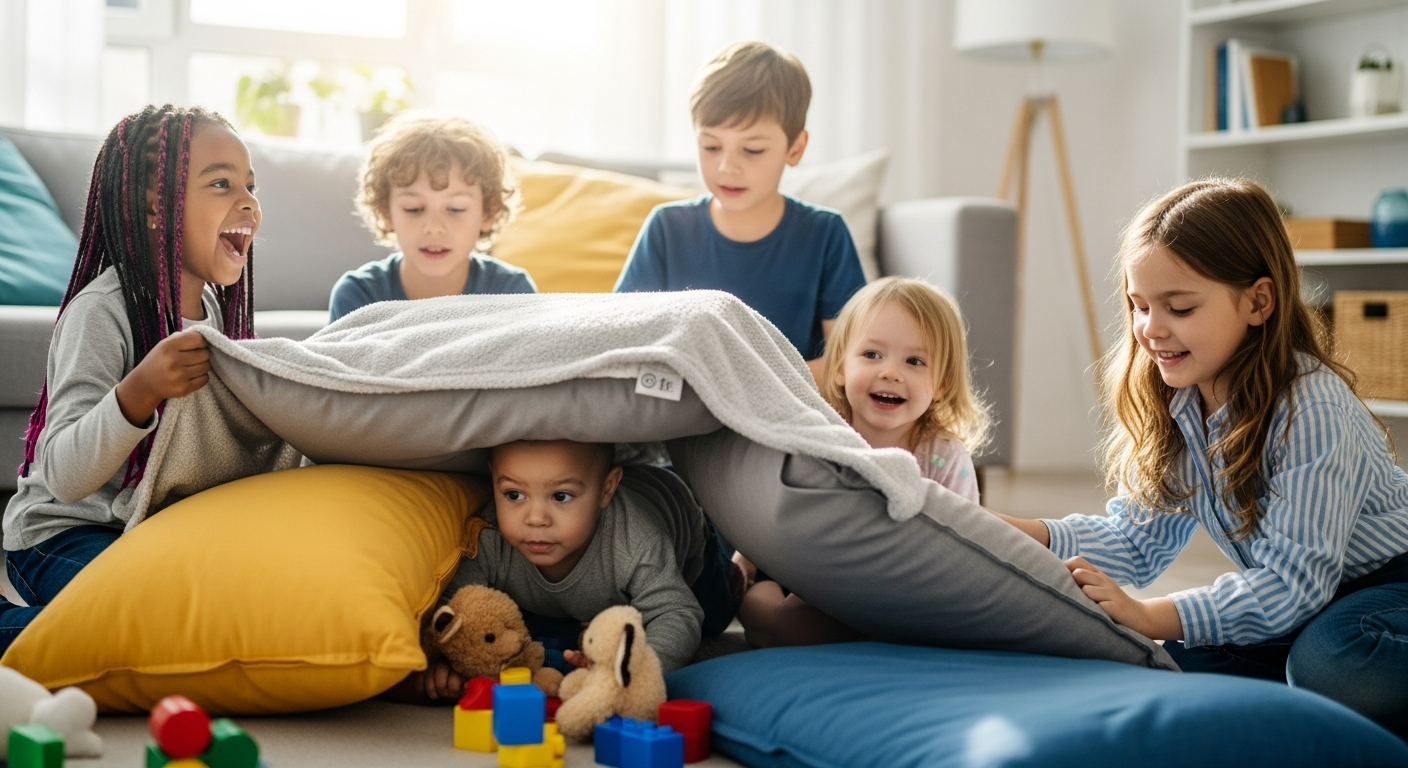
Table of Contents
- Introduction
- The Power of Play: Why Fun Activities Matter
- Beyond the Screen: Embracing Screen-Free Adventures
- Language-Rich Play: Building Communication Skills
- Integrating "Smart Screen Time" with Speech Blubs
- Fostering a Love for Communication and Learning
- Conclusion
- Frequently Asked Questions
Introduction
Do you ever find yourself staring at a whirlwind of boundless child energy, wondering how to channel it into something not just fun, but genuinely beneficial? In a world buzzing with distractions, parents often seek meaningful ways to engage their children – activities that spark joy, foster creativity, and crucially, support their developmental journey, especially when it comes to communication. It's a universal parenting quest: how to fill those precious hours with memorable experiences that go beyond mere entertainment.
This post is your comprehensive guide to a treasure trove of engaging, fun activities kids will adore, designed to transform everyday moments into powerful learning opportunities. We’ll explore a vibrant mix of screen-free adventures, creative play, and language-rich interactions, all carefully curated to nurture your child’s growth. We understand that every giggle, every curious question, and every shared discovery is a building block for confident communication. At Speech Blubs, our mission is to empower children to speak their minds and hearts, and we believe that play is the most natural pathway to achieving this. Join us as we uncover how simple, joyful activities can ignite your child’s potential, fostering a lifelong love for learning and self-expression.

The Power of Play: Why Fun Activities Matter
Children are natural explorers and learners, and play is their primary language. Engaging in fun activities isn't just about passing the time; it's a fundamental aspect of healthy child development. Through play, children develop essential cognitive, social, emotional, and physical skills. For speech and language development, structured and unstructured play provide a rich context for practicing sounds, learning new vocabulary, understanding social cues, and expressing themselves.
When children are actively engaged in something they enjoy, their brains are more receptive to new information. This heightened engagement creates the perfect environment for language acquisition and practice. Whether it’s negotiating roles in a make-believe game, describing observations during a nature walk, or imitating sounds from a beloved character, these interactions are vital. Our approach at Speech Blubs mirrors this natural learning process, blending scientific principles with play into one-of-a-kind "smart screen time" experiences that are far from passive viewing. We believe in harnessing the power of play to create meaningful learning moments.
Beyond the Screen: Embracing Screen-Free Adventures
While Speech Blubs offers powerful "smart screen time" for targeted speech development, we passionately advocate for a balance that includes plenty of screen-free playtime. These are the moments where imaginations truly soar and real-world connections are forged.
Outdoor Explorations: Nature’s Classroom
Getting outside is one of the easiest and most effective ways to engage children in fun, developmental activities. The natural world offers an endless supply of sensory experiences and opportunities for language-rich interactions.
- Nature Scavenger Hunts: Create a simple list of items for your child to find (a smooth stone, a crinkly leaf, something red, a feather). This activity builds descriptive vocabulary, observation skills, and encourages asking questions. "Look! I found a rough stick!"
- Backyard Builders: Gather sticks, stones, leaves, and mud to build miniature houses for imaginary creatures or elaborate "mud pies." This promotes imaginative play and provides opportunities to discuss shapes, sizes, and textures. "This stick is long enough for the roof!"
- Welly Wandering & Puddle Splashing: Embrace rainy days! Donning wellington boots and splashing in puddles is pure joy. Discuss the sounds the splashes make ("splash," "drip"), the feeling of the water, and what they see reflected.
- Cloud Gazing & Storytelling: Lie on your backs and watch the clouds. Ask your child what shapes they see and encourage them to tell a story about the clouds. This fosters narrative skills and abstract thinking. "That cloud looks like a giant fluffy bunny!"
- Outdoor Art: Bring washable paints or sidewalk chalk outside. Children can paint rocks, create murals on the pavement, or even use natural objects as their brushes. Talk about the colors, the actions ("swish," "dab"), and their creations.
For children who might be hesitant to communicate their outdoor discoveries, our app can provide inspiration. For example, after a nature walk, you could open the "Animals" section in Speech Blubs, where children can imitate the sounds and words for creatures they might have spotted, reinforcing their vocabulary. You can get started with Speech Blubs by downloading it on the Apple App Store or Google Play Store.

Indoor Adventures: Creativity and Connection
When the weather isn't cooperating, or you simply want to enjoy some cozy home-based fun, indoor activities offer endless possibilities for bonding and development.
- Fort Building: Transform your living room into a magical fort using blankets, pillows, and chairs. This encourages imaginative play, problem-solving, and cooperative language as you discuss construction plans. "Where should we put the roof?" "I need a big blanket!"
- Imaginative Play with Household Items: Give children a laundry basket, a few scarves, and some safe kitchen utensils. Watch as they transform into chefs, explorers, or astronauts. This type of open-ended play is fantastic for developing narrative skills and expressing abstract ideas.
- Homemade Playdough or Slime: The tactile experience of making and playing with playdough or slime is not only calming but also provides rich opportunities for descriptive language. Talk about how it feels ("sticky," "squishy," "smooth") and what you are making.
- Box Transformations: A large cardboard box is a blank canvas for a child's imagination. It can become a car, a rocket ship, a castle, or a pet house. Decorating and playing with the box encourages planning, storytelling, and fine motor skills.
- Dance Party & Musical Exploration: Put on some music and have a dance party! Encourage different movements and talk about the rhythm and tempo. You can also make DIY instruments from household items like rice in a jar or rubber bands on a shoebox, exploring sounds and music.
These indoor activities provide a wonderful backdrop for integrating communication practice. For a child learning new action verbs, playing "Follow the Leader" during a dance party can be reinforced by saying "jump," "spin," and "hop" as they perform the actions.
Language-Rich Play: Building Communication Skills
Every activity, no matter how simple, can be turned into a language-building opportunity. The key is active engagement from the parent or caregiver, asking open-ended questions, modeling language, and creating a supportive environment for communication.
The Power of Storytelling and Reading
- Reading Aloud: This is perhaps the most fundamental activity for language development. Read books with expressive voices, point to pictures, and ask questions about the story. Even for younger children, simply hearing language models helps build vocabulary and comprehension.
- Interactive Story Creation: Start a story and let your child add the next sentence or idea. You can use puppets, toys, or drawings to bring the story to life. This promotes narrative skills, imagination, and spontaneous language use.
- Picture Description: Look at pictures in books, magazines, or family photos and ask your child to describe what they see. Focus on details, actions, and emotions. "What is the little girl doing? How do you think she feels?"
Everyday Conversations and Practical Learning
- Cooking and Baking Together: The kitchen is a fantastic place for language learning. Talk about ingredients ("flour," "sugar"), actions ("mix," "stir," "pour"), and measurements. Following simple recipes helps with sequencing and understanding instructions. "First, we add the milk, then we stir."
- Chores as Opportunities: Involve children in age-appropriate chores. This teaches responsibility and provides practical vocabulary. "Let's put the clean socks in the drawer," or "Can you wipe the table?"
- "I Spy" and Guessing Games: These classic games are excellent for vocabulary development, categorization, and asking descriptive questions. "I spy with my little eye something blue and soft."
At Speech Blubs, we are deeply committed to providing an immediate, effective, and joyful solution for the 1 in 4 children who need speech support. Our company was born from the personal experiences of our founders, who all grew up with speech problems and created the tool they wished they had. We know firsthand the difference that targeted, engaging practice can make. We encourage you to explore our research-backed methodology by visiting our Research page.
Integrating "Smart Screen Time" with Speech Blubs
While screen-free play is crucial, technology, when used thoughtfully, can be a powerful ally in your child's developmental journey. Speech Blubs offers "smart screen time" experiences that are specifically designed to be interactive, educational, and engaging, providing a screen-free alternative to passive viewing like cartoons.
Our unique approach centers on video modeling, where children learn by watching and imitating their peers. This methodology is incredibly effective because children are naturally inclined to imitate other children. It’s a powerful tool for building foundational communication skills, from producing specific sounds to understanding social language.
How Speech Blubs Enhances Fun Activities: Relatable Scenarios
Let's look at how Speech Blubs can seamlessly integrate with your child's daily fun activities:
- For the Animal Lover: If your 3-year-old "late talker" adores animals and you've just been to the zoo or read an animal book, the "Animal Kingdom" section in Speech Blubs offers a fun, motivating way to practice animal sounds and names. Watching peers make "moo" or "baa" sounds can encourage your child to imitate, building confidence in sound production.
- For the Child Learning Sounds: After a session of blowing bubbles, you could transition to our "Early Sounds" section. The app features videos of other children making the "p" sound (like in "pop!") or "b" sound (like in "bubble!"), reinforcing the sounds they just experienced in real life.
- For Expanding Vocabulary: If you're building a fort and discussing "big," "small," "up," and "down," the "Guess the Word" or "My Body" sections in Speech Blubs can further expand their vocabulary through peer imitation, showing children demonstrating these concepts.
- For Social-Emotional Learning: Our "Emotions" section allows children to observe and imitate facial expressions and body language related to different feelings. This complements imaginative play scenarios where children explore emotions through role-playing.
- For Children Developing Sentences: The app guides children through forming phrases and simple sentences in various contexts, from daily routines to telling stories. This can be a great follow-up to a collaborative storytelling activity, helping them structure their thoughts into verbal expressions.
Speech Blubs provides hundreds of activities across various categories, each designed to be interactive and engaging, turning learning into a joyful experience. Parents consistently share stories of how their children have blossomed with our app. You can read inspiring success stories from other families on our Testimonials page.
We understand that you might be wondering if Speech Blubs is the right fit for your child. To help you determine if your child could benefit from our approach, we offer a quick 3-minute preliminary screener. This tool involves 9 simple questions and provides an assessment along with a personalized next-steps plan. It’s a great starting point, and it even includes a free 7-day trial of our app! Take our preliminary screener today.
Fostering a Love for Communication and Learning
The goal of all these fun activities, whether screen-free or enhanced by smart screen time like Speech Blubs, is to foster a love for communication and learning in your child. It's not about achieving perfect speech overnight, but about building confidence, reducing frustration, and developing key foundational skills.
- Celebrate Small Victories: Acknowledge and praise your child’s efforts to communicate, no matter how small. A new sound, a new word, an attempt to express a feeling – these are all steps forward.
- Be Patient and Present: Children learn best when they feel safe, supported, and truly seen. Take the time to be present during playtime, putting away distractions and giving your child your full attention.
- Lead by Example: Model clear, expressive language. Narrate your actions, describe your feelings, and engage in conversations about the world around you.
Remember, every child's journey is unique. What works for one child might need adjusting for another. The most important thing is to create a playful, loving environment where communication is encouraged and celebrated. Our commitment at Speech Blubs is to be a partner in this journey, providing tools that support both children and families in building these essential skills.
Conclusion
Engaging in fun activities with your children is more than just entertainment; it's an investment in their holistic development, especially their communication skills. From outdoor scavenger hunts and imaginative indoor play to language-rich kitchen adventures, every interaction is an opportunity for growth. When combined with innovative tools like Speech Blubs, which offers a unique blend of scientific methodology and playful "smart screen time" through video modeling, the potential for development is even greater. Our mission is to empower every child to "speak their minds and hearts," and we are dedicated to providing the tools and resources to make that a reality.
We’ve designed Speech Blubs to be an immediate, effective, and joyful solution, developed by founders who personally experienced speech challenges. We know the profound impact that confident communication can have on a child’s life.
Ready to embark on this exciting journey with your child and unlock their full communication potential? We invite you to experience the full power of Speech Blubs.
The best value for families is our Yearly plan, priced at just $59.99 per year, which breaks down to an incredible $4.99 per month – a 66% savings compared to the Monthly plan at $14.99. Choosing the Yearly plan also grants you exclusive benefits: a 7-day free trial to explore all features, access to our extra Reading Blubs app, early access to new updates, and 24-hour support response time. The Monthly plan does not include these valuable extras.
Don't miss out on these fantastic features that will enhance your child's learning experience. Start your 7-day free trial and unlock the full suite of benefits today. Choose the Yearly plan to get the best value and access to everything Speech Blubs has to offer!
Create your account and begin your 7-day free trial today!
Or, download Speech Blubs directly to your device: Download on the Apple App Store Get it on Google Play
Frequently Asked Questions
Q1: How can I make sure these activities are also helping my child’s speech development?
A1: The key is active engagement and language modeling. Narrate what you are doing, ask open-ended questions ("What do you think will happen next?"), and encourage your child to describe what they see, feel, and hear. Imitation is also crucial; model new words and sounds for your child to repeat. Speech Blubs complements this by providing structured opportunities for peer imitation through video modeling, directly targeting specific sounds, words, and phrases.
Q2: My child is a late talker. Will these fun activities be enough, or do I need professional help?
A2: Fun activities create a rich language environment that is highly beneficial for all children, including late talkers. They provide natural contexts for communication. However, if you have concerns about your child's speech development, these activities should be seen as supplemental to professional guidance. We recommend consulting with a speech-language pathologist for a personalized assessment. To help you get started, take our quick 3-minute preliminary screener for an initial assessment and next-steps plan.
Q3: How does Speech Blubs prevent screen time from becoming passive viewing?
A3: Speech Blubs is designed for "smart screen time" through its interactive video modeling approach. Instead of passively watching cartoons, children actively engage by watching and imitating real children their age. This requires active participation, vocalization, and repetition, making it a highly engaging and educational experience. Our app is a powerful tool for family connection, encouraging co-play and interaction with the content, making it far from passive.
Q4: What makes the Yearly plan for Speech Blubs a better value than the Monthly plan?
A4: The Yearly plan for Speech Blubs is significantly more cost-effective, saving you 66% compared to the Monthly plan. Beyond the financial savings, the Yearly plan unlocks a full suite of premium features including a 7-day free trial to fully explore the app, access to our complementary Reading Blubs app, early access to new updates, and a faster 24-hour response time for support. These additional benefits are designed to provide the most comprehensive and supportive experience for your child's speech development journey.
About the author