
Bright Summer Fun: Easy Beach Ball Toddler Craft Ideas
 By Speech Blubs Team•Feb 20, 2026•14 min.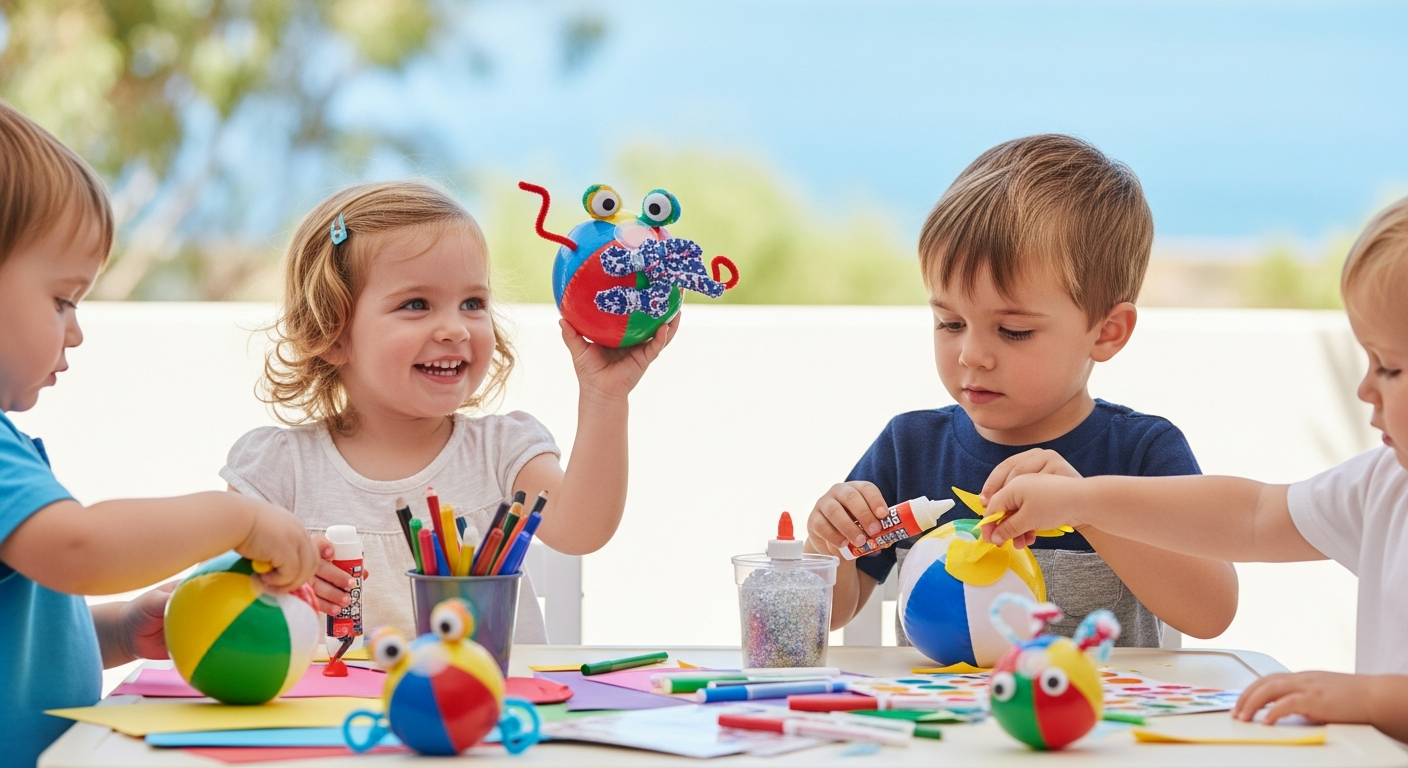
Table of Contents
- Introduction
- The Developmental Power of Play and Crafting
- Variation 1: The Classic Paper Plate Tearing Craft
- Variation 2: The Painting and Color Matching Method
- Variation 3: The "All About Me" Sensory Beach Ball
- Integrating "Smart Screen Time" into Your Crafting Day
- Why the Yearly Plan is Your Best Option
- Setting Realistic Expectations
- Vocabulary to Practice During Your Beach Ball Craft
- Expanding the Fun: More Summer Activities
- Conclusion
- FAQs
Introduction
Did you know that the same tiny muscles your child uses to tear a piece of construction paper are fundamentally linked to the neural pathways they use for speech? It’s a fascinating connection that many parents don’t realize! When we engage in a simple, hands-on activity like a beach ball toddler craft, we aren't just making a cute decoration for the refrigerator. We are actually building the foundational blocks of communication, coordination, and confidence. Summer is the perfect time to bring the vibrant colors of the seaside indoors, especially when the heat makes outdoor play a bit too intense.
In this post, we are going to dive deep into the world of summer-themed crafting. We will provide you with step-by-step instructions for three different variations of a beach ball craft, explain the "why" behind the developmental benefits, and show you how to pair these activities with "smart screen time" to supercharge your child's progress. We’ll also share how our mission at Speech Blubs—to empower every child to speak their minds and hearts—drives everything we do. By the end of this article, you’ll have a toolkit of ideas to turn a rainy afternoon or a quiet morning into a joyful, language-rich learning experience. Our goal is to show you that supporting your child’s development doesn’t have to feel like "work"; it can be as bright and bouncy as a beach ball.

The Developmental Power of Play and Crafting
At Speech Blubs, our story began with a shared experience. Our founders all grew up with various speech challenges, and they set out to create the very tool they wished they had as children. This personal history fuels our commitment to creating experiences that are effective, scientific, and, most importantly, joyful. We believe that for the 1 in 4 children who need speech support, the best way to learn is through play.
When your toddler engages in a beach ball toddler craft, they are participating in what we call multi-sensory learning. They aren't just looking at a picture; they are feeling the texture of the glue, hearing the "rip" of the paper, and seeing the bright primary colors come together. This kind of play is essential for building a love for communication. Instead of focusing on "correcting" a child, we focus on fostering an environment where they feel confident enough to try new sounds and words.
Fine Motor Skills and the Speech Connection
It might seem strange to think that hand movements affect talking, but the brain's motor cortex and the areas responsible for speech production (like Broca’s area) are neighbors. Activities that involve "pincer grasps"—like picking up small pieces of torn paper—help refine the neurological control that will later be used for articulating complex sounds.
In our beach ball toddler craft, we specifically recommend tearing paper rather than just using pre-cut shapes. Tearing requires resistance and control, strengthening the small muscles in the hands. This is a powerful tool for family connection, as you sit together, rip paper, and chat about the colors you see.
Building Vocabulary Through Action
Crafting provides a natural context for "narrated play." As you work on your craft, you can model language without it feeling like a lesson. You might say, "Look, I have the red paper. Can you find the blue paper?" or "We are putting the glue on the plate." These prepositions and adjectives are the building blocks of early sentences.

If you’re looking for a way to see where your child currently stands in their development, you can take our quick 3-minute preliminary screener. It involves 9 simple questions and provides an assessment and a next-steps plan, which is a great way to start your journey before even picking up the glue stick.
Variation 1: The Classic Paper Plate Tearing Craft
This is our favorite version because it is inexpensive, low-mess, and highly effective for fine motor development. It uses simple household items and results in a sturdy "ball" that toddlers love to carry around.
Materials You’ll Need:
- A sturdy white paper plate
- Construction paper in primary colors (Red, Yellow, Blue, Green)
- A small scrap of white paper
- A glue stick or school glue
- A pencil or marker
Step-by-Step Instructions:
- Divide the Plate: Use your pencil to draw a small circle in the very center of the paper plate. Then, draw lines from that center circle to the edge of the plate to divide it into six equal segments. It will look like a pie or a pizza!
- The Tearing Phase: Give your child the colored construction paper. Show them how to use their "crab claws" (thumb and forefinger) to tear the paper into small, bite-sized pieces. Keep each color in its own little pile.
- The Sorting Game: This is a great moment for color recognition. Ask your child, "Where does the yellow go?" Apply glue to one of the "pie" segments and have them fill it with the corresponding color of torn paper.
- Cover the White Spaces: Encourage them to fill in the segment completely. This works on spatial awareness and persistence.
- The Center Piece: Once all six segments are filled with their different colors, glue a small white circle over the very center. This covers the meeting point of the lines and gives it that iconic beach ball look!
Pro Tip for Speech: As you work, use the "Wait Time" strategy. Hold a piece of blue paper and wait for your child to look at you or make a sound before handing it over. This encourages them to initiate communication.
Variation 2: The Painting and Color Matching Method
For children who are more motivated by sensory "messy" play, a painted beach ball toddler craft is a fantastic alternative. This version focuses heavily on color matching and "smart screen time" integration.
Materials Needed:
- Paper plate
- Washable paints (the brighter, the better!)
- Paintbrushes or sponges
- Masking tape (optional, for clean lines)
How to Do It:
- Tape Off the Sections: If you want clean lines, you can use masking tape to divide the plate into segments. However, for a toddler, "free-hand" painting is often more fun and less frustrating.
- Match the App: If you are using the Speech Blubs app, head over to the "Colors" section. Let your child watch a peer say "Red," and then find the red paint to use on their plate.
- Sponge Painting: Using sponges is great for kids who struggle with the fine grip of a paintbrush. It allows them to use their whole hand to "stamp" the color onto the beach ball.
By using the app alongside the craft, you are utilizing our unique "video modeling" methodology. Children are naturally inclined to imitate their peers. Seeing another child on the screen excitedly say a word and perform an action triggers "mirror neurons" in your child’s brain, making them much more likely to try the word themselves. You can read more about the science and research behind our method to see why we are rated so highly on the MARS scale.
Variation 3: The "All About Me" Sensory Beach Ball
This version is perfect for older toddlers or preschoolers who are starting to work on "all about me" concepts. It turns the craft into a tool for self-expression and storytelling.
How to Create It:
- Personalize the Segments: Instead of just colors, assign a "meaning" to each segment of the beach ball. For example: "This red part is for your favorite food," or "The blue part is for your favorite animal."
- Texture and Touch: Use different materials for each section. You could use cotton balls for white, sand for yellow, or felt for green.
- Practical Scenario: For a parent whose 3-year-old "late talker" loves animals, you could use the "Animal Kingdom" section of our app to find their favorites. If they choose a cow for the "favorite animal" segment, you can practice the "moo" sound together while gluing down black and white spots.
This activity transforms a simple beach ball toddler craft into a conversation starter. It reduces frustration by giving the child a visual aid to help them communicate their preferences. You can see how other families have used these types of activities to find success by reading our parent testimonials.
Integrating "Smart Screen Time" into Your Crafting Day
At Speech Blubs, we are often asked about the role of technology in child development. We believe in providing an immediate, effective, and joyful solution that moves away from passive viewing (like watching cartoons) and toward active, "smart screen time."
When you use our app, you aren't just handing your child a phone to keep them quiet. You are giving them a powerful tool for family connection. We always recommend that an adult "co-plays" with the child.
How to Pair the App with Your Craft:
- Before the Craft: Watch the "First Words" or "Colors" section to get inspired.
- During the Craft: Use the app to practice the specific sounds of the materials you are using (e.g., "paper," "glue," "ball").
- After the Craft: Take a photo of your child holding their beach ball and use the fun filters in the app to celebrate their hard work!
Our approach is a powerful supplement to a child's overall development plan. While we don't suggest your child will be giving public speeches in a month, we do focus on building foundational skills and creating joyful family learning moments. For the best experience, we recommend starting a 7-day free trial on our website to explore all the features we offer.
Why the Yearly Plan is Your Best Option
We want to be transparent about how to get the most value from Speech Blubs. We offer two main paths for families:
- The Monthly Plan: At $14.99 per month, this is a good way to test the waters if you aren't sure. However, it does not include many of our premium features.
- The Yearly Plan: This is the clear best choice for most families. It costs $59.99 per year, which breaks down to just $4.99 per month.
When you choose the Yearly plan, you save 66% compared to the monthly rate, but you also get so much more. The Yearly plan includes:
- A 7-day free trial so you can try it risk-free.
- The extra Reading Blubs app, which helps transition your child from speaking to early reading skills.
- Early access to all our new updates and features.
- 24-hour support response time from our dedicated team.
By choosing the yearly option, you are making a long-term investment in your child’s communication journey. Download Speech Blubs on the App Store or Google Play today to see the difference for yourself.
Setting Realistic Expectations
As a parent, it’s natural to want to see immediate results. However, speech and language development is a marathon, not a sprint. A single beach ball toddler craft won't "fix" a speech delay, but it is one very important brick in the wall of their development.
Our mission is to foster a love for communication. We want children to feel that their "voice"—whether it's a word, a sign, or a point—is valued. By engaging in these activities, you are reducing frustration and building the confidence your child needs to keep trying. Think of the app and these crafts as a powerful duo that supports professional therapy or acts as a strong enrichment tool at home.
Vocabulary to Practice During Your Beach Ball Craft
To make this truly a "speech-themed" craft, try to incorporate these words and concepts while you play:
- Colors: Red, yellow, blue, green, white.
- Actions: Rip, tear, glue, stick, push, paint.
- Prepositions: On, under, top, middle, around.
- Social Language: "My turn," "Your turn," "Help please," "Look at this!"
If your child is at the beginning of their journey, focus just on the sounds. The "p" in paper, the "g" in glue, or the "b" in ball. Celebrate every attempt at a sound! This is how we empower them to speak their hearts.
Expanding the Fun: More Summer Activities
If your little one loved the beach ball toddler craft, why not keep the theme going? Here are a few more simple ideas:
- The "Beach" Sensory Bin: Fill a plastic bin with cornmeal (it acts like sand but is safer if tasted!), add some sea shells, and hide your paper plate beach ball under the "sand."
- Water Play: After the glue on your craft is completely dry, take a real beach ball outside for some gentle tossing. Practice saying "Up!" every time the ball goes into the air.
- Shadow Matching: Use a flashlight to make shadows of your craft on the wall. This is a great way to practice the word "light" and "dark."
All of these activities are designed to be screen-free alternatives to passive viewing, promoting movement and interaction. You can find more inspiration on our main homepage, where we share our philosophy on smart play.
Conclusion
Creating a beach ball toddler craft is a simple yet profound way to support your child’s growth this summer. From the fine motor benefits of tearing paper to the language-rich environment of naming colors and shapes, every step of the process is an opportunity for connection. At Speech Blubs, we are honored to be a part of your family's journey. We understand the challenges of speech development because we’ve been there ourselves, and we are committed to providing you with the tools to make learning joyful.
Remember, the key to success is consistency and play. By combining hands-on activities with the peer-led video modeling found in our app, you are giving your child a well-rounded support system. Whether you are dealing with a late talker, a child with a diagnosed delay, or simply a toddler who loves to learn, these moments of shared creativity are priceless.
Ready to make this summer a season of breakthroughs? We encourage you to start your 7-day free trial today by signing up on our website. Be sure to select the Yearly plan to unlock the full suite of features, including Reading Blubs and our priority support. You can also find us on the Google Play Store to get started on your mobile device. Let’s help your child speak their mind and heart, one colorful craft at a time!
FAQs
1. Is the beach ball toddler craft suitable for children with sensory sensitivities?
Yes! If your child dislikes the feeling of wet glue, you can use a glue stick or even double-sided tape. If they are sensitive to the sound of tearing paper, you can provide pre-cut pieces. The beauty of this craft is that it can be easily adapted to meet your child's specific comfort level while still providing a great learning experience.
2. How long should we spend on the craft and the app each day?
We recommend keeping sessions short and successful. For toddlers, 10 to 15 minutes of crafting followed by 5 to 10 minutes of "smart screen time" with Speech Blubs is usually the "sweet spot." It’s better to have a short, joyful session than a long one that ends in frustration.
3. What if my child just wants to scribble on the plate instead of making a beach ball?
That is perfectly okay! The goal isn't a perfect craft; it's the process of creation and the conversation that happens along the way. If they want to scribble, narrate their scribbles. "Oh, you are using the green crayon! Fast, fast, fast!" Follow their lead, and they will be much more engaged.
4. Why does the Yearly plan include the Reading Blubs app?
We believe that speech and literacy are closely linked. Once a child begins to master sounds and words, the next natural step is recognizing them in print. By including Reading Blubs in our Yearly plan, we provide a comprehensive pathway for your child's communication development, from their first words to their first sentences and beyond.
About the author