
Brighten Windows & Minds: Easy Suncatcher Crafts for Kids
 By Speech Blubs Team•Jan 13, 2026•21 min.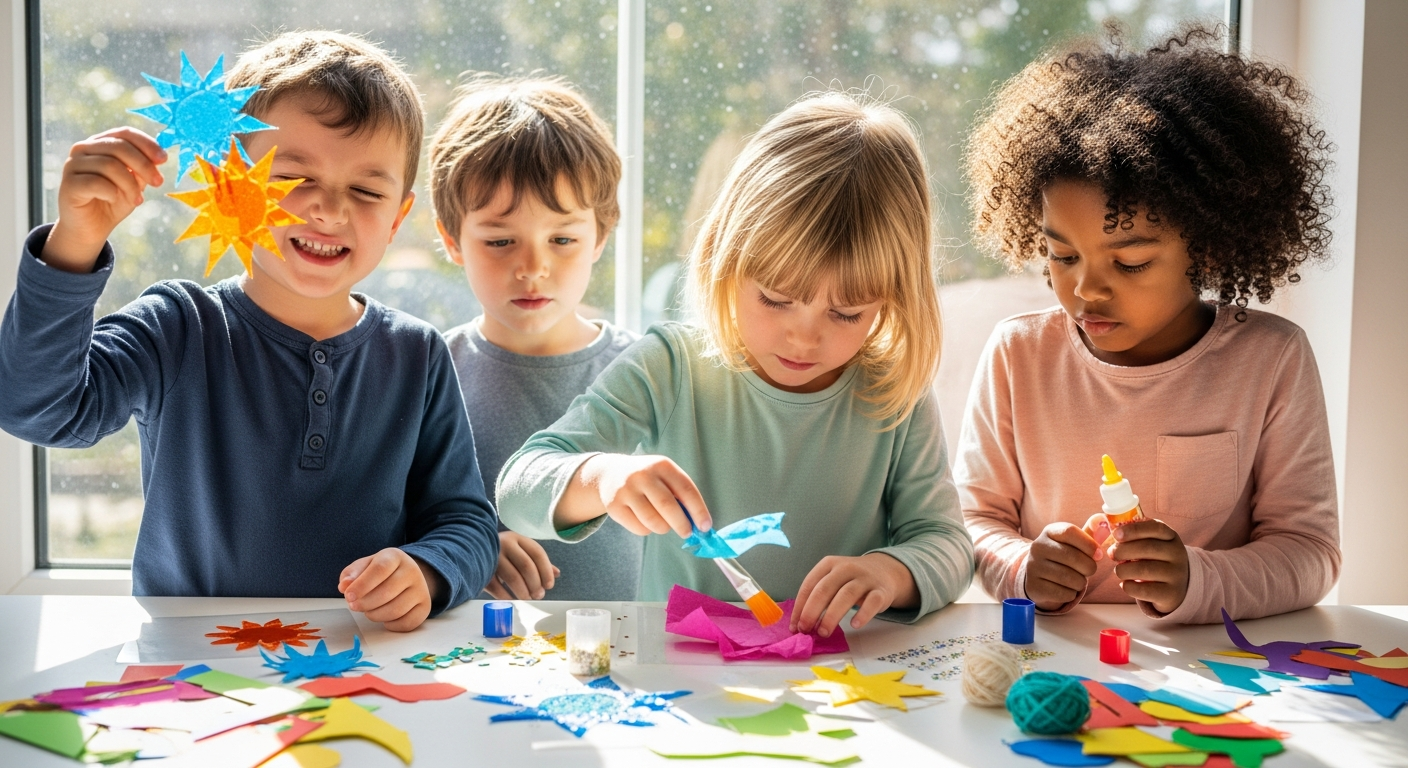
Table of Contents
- Introduction
- Why Suncatchers? More Than Just a Craft
- The Science of Play: How Crafts Boost Development
- Three Easy Suncatcher Crafts for Kids
- Beyond the Craft Table: Extending Learning with Speech Blubs
- Conclusion
- FAQ
Does your child light up when they discover a vibrant splash of color, perhaps a rainbow dancing on the wall from a prism? That inherent fascination with light and hue is a powerful springboard for learning and creativity. Crafting suncatchers isn't just a delightful way to decorate your windows; it's an incredibly enriching activity that stimulates imagination, hones fine motor skills, and provides a joyful avenue for language development. As parents, we're always seeking engaging ways to spark our children's curiosity and support their growth, and these easy suncatcher crafts offer a perfect blend of fun and foundational learning.
Introduction
Have you ever noticed how a simple ray of sunshine can transform a room, bringing warmth and vibrancy? Imagine harnessing that magic with your little one, creating dazzling suncatchers that capture light and splash color across your home. Beyond their aesthetic appeal, making suncatchers is a fantastic sensory experience and a dynamic platform for early childhood development. This blog post will guide you through three incredibly easy and captivating suncatcher crafts perfect for children of all ages, from toddlers to early elementary students. We'll delve into the developmental benefits each craft offers, from enhancing fine motor skills and color recognition to boosting vocabulary and self-expression. Moreover, we'll explore how these hands-on creative experiences beautifully complement modern, research-backed tools like Speech Blubs, empowering your child to "speak their minds and hearts" through joyful exploration and communication. Get ready to transform everyday materials into sparkling works of art and nurture your child's growing mind and voice.

Why Suncatchers? More Than Just a Craft
Suncatchers are more than just pretty decorations; they are gateways to multifaceted developmental opportunities for children. Engaging in craft activities like making suncatchers taps into several critical areas of a child's growth, offering tangible benefits that extend far beyond the finished product.
The Developmental Power of Play
At its core, crafting is about play, and play is how children learn. When a child engages in making a suncatcher, they are actively participating in a process that requires thought, decision-making, and physical manipulation. This hands-on engagement is vastly different from passive screen time, where interaction is minimal. Instead, children are challenged to think creatively, solve small problems (like how to fit pieces together), and practice patience as they work towards a goal. These are all crucial components of cognitive development.
Fine Motor Skill Development
One of the most immediate benefits of these crafts is the significant boost they give to fine motor skills. Activities like cutting tissue paper, peeling contact paper, arranging small natural items, or carefully tracing lines with glue all require precision and control of the small muscles in the hands and fingers. This is essential for future tasks such as writing, buttoning clothes, and self-feeding. For toddlers, even the act of tearing paper or picking up a leaf can be a valuable exercise in developing dexterity and hand-eye coordination.
Color and Shape Recognition
Suncatchers, by their very nature, celebrate color and light. As children select different shades of tissue paper, distinguish between various leaves, or choose their favorite marker colors, they are actively learning and reinforcing color recognition. Similarly, cutting out shapes or arranging pieces within a frame provides excellent opportunities to discuss and identify circles, squares, hearts, and other geometric forms. You can ask, "Can you find the red square?" or "Let's put the blue circle next to the yellow triangle!" This conversational approach turns the craft into an interactive learning game.

Language and Communication Opportunities
Perhaps most importantly, crafting creates a rich environment for language development. From discussing the materials ("What color is this tissue paper?") to describing the process ("First, we peel the paper, then we stick the leaves"), children are immersed in a world of new vocabulary. They learn action words (cut, stick, peel, arrange, hang), descriptive adjectives (sticky, colorful, shiny, rough, smooth), and spatial concepts (on, under, next to, inside).
For parents whose children might be experiencing speech delays or difficulties with expressing themselves, crafting provides a low-pressure, highly motivating context for practicing communication. A child might point to a preferred color, make a sound to indicate they want more glue, or articulate a simple phrase like "Red! More!" These early communication attempts are invaluable. At Speech Blubs, we understand that every sound, every word, every gesture is a step towards full expression. Our mission, born from the personal experiences of our founders who all grew up with speech challenges, is to empower children to "speak their minds and hearts." We believe that combining play with scientific principles creates immediate, effective, and joyful solutions for the 1 in 4 children who need speech support. This blend of structured support and playful exploration is what makes activities like suncatcher crafts so powerful when paired with tools like ours.
The Science of Play: How Crafts Boost Development
The benefits of hands-on crafting extend deeply into cognitive and linguistic development, aligning perfectly with modern understanding of how children learn best. This "smart screen time" approach, which Speech Blubs champions, leverages scientific principles to create truly impactful experiences for children.
Learning Through Imitation and Observation
Children are natural imitators. From their first babbling sounds to their complex social interactions, they learn by watching and mimicking those around them. This natural inclination is supported by what scientists call "mirror neurons" in the brain. These remarkable neurons fire not only when we perform an action but also when we observe someone else performing that same action. This mechanism is crucial for learning, empathy, and social connection.
When you sit down with your child to make a suncatcher, you are modeling actions, language, and problem-solving. Your child observes how you hold the scissors, how you gently peel the contact paper, or how you describe the colors. They then attempt to imitate these actions and sounds. This is the very foundation of how Speech Blubs' unique "video modeling" methodology works. Our app features thousands of real kids demonstrating sounds, words, and phrases, engaging children's mirror neurons and making learning feel like play. Just as they learn to craft by watching you, they learn to speak by watching their peers.
From Concrete to Abstract Thinking
Crafts help bridge the gap between concrete and abstract thinking. Children start with tangible materials – paper, glue, leaves – and transform them into something new and beautiful. This process of creation fosters an understanding of cause and effect ("If I cut this, it becomes two pieces") and introduces concepts of planning and execution. They learn that their actions have consequences and that they can bring their ideas to life. This ability to visualize an outcome and work towards it is a key cognitive skill that underpins academic success and creative problem-solving.
Emotional and Social Benefits
Beyond the academic, crafting provides immense emotional and social benefits. It's a wonderful opportunity for family connection, creating shared experiences and lasting memories. Working together on a project teaches cooperation, patience, and the joy of collaboration. It builds confidence as children see their ideas take shape and their creations admired. For a child who might struggle with verbal expression, seeing their artistic vision come to life can be a powerful boost to their self-esteem, reducing frustration and fostering a love for communication in all its forms. This joyful, connected learning environment is precisely what we strive to create at Speech Blubs, offering a screen-free alternative to passive viewing and a powerful tool for strengthening family bonds.
Ready to explore how fun, interactive learning can empower your child's communication journey? Download Speech Blubs on the App Store or Google Play to get started!
Three Easy Suncatcher Crafts for Kids
Let's dive into some suncatcher projects that are not only simple to make but also packed with opportunities for learning and fun. Each craft uses readily available materials and can be adapted for different age groups.
1. The Classic Contact Paper & Tissue Paper Suncatcher
This is a quintessential suncatcher craft, beloved for its simplicity and vibrant results. It’s perfect for practicing scissor skills, shape recognition, and color sorting.
Materials You’ll Need:
- Construction paper (any color, for the frame)
- Clear contact paper (sticky on one side)
- Assorted tissue paper (various colors)
- Scissors
- Marker
- Ribbon or string (for hanging)
Step-by-Step Instructions:
- Prepare Your Frame: Fold a piece of construction paper in half. With your marker, draw half of a symmetrical shape along the fold – this could be half a heart, a butterfly, a flower, or even a simple frame outline. Then, draw another outline of that shape inside the first, creating a border about ¾ inch thick. This inner line defines where you'll cut out the window for your tissue paper.
- Cut Your Frame: Carefully cut out the outer edge of your shape first, then cut out the inner outline. When you unfold the paper, you'll have a complete, symmetrical frame with a window in the middle.
- Language Tip: As you cut, talk about the lines: "We're cutting on the outside line, now the inside line. Look, it's a window!"
- Size Your Contact Paper: Place your cut-out paper frame on top of the clear contact paper (with its backing still on). Roughly outline the frame onto the paper backing of the contact paper. Cut out this contact paper shape, making it slightly larger than your paper frame – this gives you a little extra sticky surface to work with.
- First Sticky Layer: Carefully peel away the backing from one piece of contact paper. Lay it sticky-side-up on a flat surface. Take your paper frame and gently place it onto the sticky side of the contact paper, pressing it down firmly, ensuring the contact paper covers the entire "window" of the frame.
- Relatable Scenario: For a child who is a "late talker" and loves sensory play, peeling the contact paper can be a moment of surprise and delight. You can prompt them with "Sticky!" or "Peel!" and encourage them to imitate the sound or action. The satisfaction of pressing the paper frame onto the sticky surface provides positive reinforcement for their fine motor efforts.
- Prepare Your Tissue Paper: Take your assorted tissue paper and cut it into various small shapes – squares, circles, triangles, or even just strips. Layering several sheets of tissue paper together before cutting allows you to make many pieces quickly. Encourage your child to participate in tearing or cutting (with child-safe scissors), emphasizing the different colors.
- Language Tip: "Can you find all the red pieces? Let's put a yellow circle here!"
- Fill Your Suncatcher: Now for the fun part! Gently remove the contact paper backing from the other side of your frame, exposing the sticky surface that forms the window. Invite your child to place the tissue paper pieces onto the sticky area, layering them and creating their own colorful design. They can overlap colors to create new shades!
- Language Tip: Describe their actions: "You're putting a blue square on top of the green one. How pretty!"
- Seal and Trim: Once your child is happy with their design and the sticky area is covered, take a second piece of contact paper, peel off its backing, and carefully place it sticky-side-down over the entire suncatcher, sandwiching the tissue paper inside. Press firmly to seal everything. Trim any excess contact paper around the edges of your paper frame.
- Display Your Art: Punch a hole at the top of your suncatcher, thread a ribbon through, and hang it in a sunny window!
2. Nature's Window Art: Pressed Leaf & Flower Suncatchers
This craft combines a nature walk with art, encouraging observation and appreciation for the natural world. It’s wonderful for teaching about textures, colors found in nature, and seasonal changes.
Materials You’ll Need:
- Paper plates (for the frame)
- Clear contact paper
- Assorted leaves, small flowers, grass, thin twigs collected from nature
- Scissors
- Hole punch
- Yarn or ribbon
- Tape
Step-by-Step Instructions:
- Nature Hunt: Before you start crafting, embark on a "nature scavenger hunt" with your child! Collect interesting leaves, small petals from fallen flowers, blades of grass, or tiny twigs. Talk about the different textures, colors, and shapes you find. "Look at this crinkly brown leaf! This flower is so soft and pink."
- Relatable Scenario: For a child developing early vocabulary, finding a "big leaf" or a "red flower" provides concrete objects to attach new words to. Speech Blubs’ "Wild Animals" or "Outdoor Fun" categories offer a wealth of related vocabulary and sounds, making the transition from real-world objects to digital learning seamless and engaging.
- Create Your Plate Frame: Take a paper plate and carefully cut out the center, leaving a sturdy rim. This creates a natural frame for your suncatcher. You can also use construction paper to create a frame, similar to the first craft.
- Prepare Contact Paper: Cut a square of contact paper that is slightly larger than the hole in your paper plate frame. This will be the sticky base for your nature collage. Peel off the backing and attach the sticky side to the back of the paper plate frame, ensuring the sticky surface covers the entire opening.
- Arrange Your Nature Treasures: With the sticky side facing up, invite your child to arrange their collected leaves, flowers, and other natural items onto the contact paper within the plate frame. The contact paper is forgiving, so they can move pieces around until they are happy with their design.
- Language Tip: "Where should the long green grass go? How about the tiny yellow flower?"
- Seal It Up: Once the nature collage is complete, take another piece of contact paper (the same size as the first), peel off its backing, and carefully place it sticky-side-down over the entire design, sealing the nature items inside. Press firmly to remove any air bubbles.
- Hang Your Nature Art: Punch a hole at the top of your paper plate frame, thread a piece of yarn or ribbon through it, and hang your beautiful nature suncatcher in a window. Watch how the light illuminates the unique textures and colors of nature!
3. Stained Glass Magic: DIY Suncatchers with Black Glue & Markers
This craft offers a slightly more advanced but incredibly rewarding experience, resulting in suncatchers that truly mimic stained glass. It's fantastic for older preschoolers and elementary-aged children who have developed more precise fine motor control.
Materials You’ll Need:
- Transparency film (or recycled clear plastic packaging, like from toy boxes)
- Black glue (you can mix white glue with a little black acrylic paint or India ink)
- Alcohol-based markers (like Sharpies or Ohuhu markers for vibrant color)
- Scissors (to cut out designs)
- Clear double-sided tape, adhesive dots, or string (for hanging)
Step-by-Step Instructions:
- Prepare Your Black Glue: If you're making your own, pour about half a bottle of white school glue into a separate container. Add a small amount of black acrylic paint or India ink, mixing well until the glue is a consistent black color. Pour it back into the glue bottle or into a squeeze bottle for easier application. Test it on scrap paper to ensure the color is dark enough.
- Draw Your Design: On a white piece of paper, draw an outline of what you want your suncatcher to be. Think of simple, bold designs like butterflies, flowers, stars, or abstract patterns. Make the lines reasonably thick, as the glue will spread a bit. Alternatively, you can print out a coloring page template to trace.
- Language Tip: Discuss the elements of the drawing: "Let's draw a big circle for the sun's body and wavy lines for its rays!"
- Trace with Black Glue: Place a sheet of transparency film directly over your drawing. Using your black glue, carefully trace the lines of your design onto the transparency film. Try to keep the glue tip close to the surface for consistent, controlled lines. This step requires patience and a steady hand!
- Relatable Scenario: For a child working on developing pre-writing skills or who benefits from structured, sequential tasks, this craft provides a perfect opportunity. The focus on tracing lines helps improve hand control and visual motor integration. You can verbally guide them: "Slowly... follow the line... up and down."
- Dry Overnight: This is crucial! Let your black glue design dry completely overnight. This prevents smudging when you add color.
- Color Your Stained Glass: Once the black glue is dry, it's time to add color! Using your alcohol-based markers, fill in the different sections of your design. These markers will glide smoothly over the film and create a beautiful, translucent effect, just like stained glass. Encourage your child to experiment with color combinations and blending.
- Language Tip: "What color should we make the butterfly's wings? Purple and pink look lovely together!"
- Optional Detailing: For an even more vibrant look, you can add small accents or patterns with opaque acrylic markers on top of the alcohol markers. Just remember not to color the entire suncatcher with opaque markers, or the light won't shine through!
- Cut Out and Display: Once the markers are dry, carefully cut out your suncatcher design. Use clear double-sided tape or adhesive dots to stick it to a sunny window, or punch a hole and thread a string through to hang it. Prepare to be amazed by the radiant colors when the light hits it!
Beyond the Craft Table: Extending Learning with Speech Blubs
These suncatcher crafts are fantastic on their own, but their developmental benefits can be amplified when paired with the right tools. At Speech Blubs, we believe in empowering children to "speak their minds and hearts," and our app is designed to seamlessly integrate with and enhance these kinds of joyful learning experiences.
Our company was born from a very personal place; our founders all grew up facing speech challenges. They created the tool they wished they had – an immediate, effective, and joyful solution for the 1 in 4 children who need speech support. We blend scientific principles with play, transforming screen time into "smart screen time" that sparks communication.
Video Modeling: Learning Through Peers
The core of our methodology is "video modeling," where children learn by watching and imitating their peers. Just as a child observes and imitates your actions when making a suncatcher, they engage their mirror neurons when watching other children in our app. This makes learning sounds, words, and phrases feel natural and fun, not like therapy. Imagine your child making a vibrant suncatcher, and then opening Speech Blubs to explore our themed sections.
For a child who is particularly engaged by the "Colors & Shapes" aspect of suncatchers, our app offers dedicated sections that reinforce this vocabulary through interactive games and video models. If your little one loved finding "crinkly leaves" and "soft flowers" for their nature suncatcher, our "Wild Animals" or "Outdoor Fun" categories can expand their vocabulary related to the natural world. They can practice animal sounds, learn names of plants, and describe outdoor activities, building upon their real-world experiences.
A Powerful Supplement for Every Child
Speech Blubs isn't just for children with diagnosed speech delays; it's a powerful supplement for all children's overall development. It fosters a love for communication, builds confidence in expressing thoughts and feelings, and helps reduce the frustration that often comes when a child struggles to make themselves understood. We focus on developing key foundational skills in articulation, vocabulary, and social communication, all within a playful and engaging environment that encourages adult co-play and support. Our app provides a meaningful alternative to passive viewing, turning screen time into a powerful tool for family connection and interactive learning.
We are committed to providing resources that are not only fun but also scientifically sound. Our method is backed by research, placing us in the top tier of speech apps worldwide with a high MARS scale rating. Discover the research behind Speech Blubs and see why parents trust us.
Ready to Brighten Your Child's Communication Journey?
Crafting suncatchers provides a vibrant, tangible experience that sparks joy and learning. Extending that learning with Speech Blubs offers a dynamic, interactive path to strengthen communication skills and build confidence. Many parents have already seen incredible progress, sharing their stories of children finding their voice and connecting more deeply with their families. Read testimonials from other parents who have witnessed their child's communication blossom with Speech Blubs.
Unsure if your child could benefit? Take our quick 3-minute preliminary screener to get a simple assessment and a personalized next-steps plan. It involves just 9 simple questions and can provide immediate insights.
We offer flexible subscription plans to suit your family's needs:
- Monthly Plan: For $14.99 per month.
- Yearly Plan: Our best value at just $59.99 per year, which breaks down to an incredible $4.99 per month – a 66% savings compared to the monthly plan!
The Yearly Plan isn't just about saving money; it unlocks the full Speech Blubs experience and delivers maximum value. With the Yearly plan, you receive:
- A 7-day free trial to explore all our features.
- Access to the extra Reading Blubs app for comprehensive literacy support.
- Early access to exciting new updates and features.
- 24-hour support response time for any questions you may have.
The Monthly plan, while flexible, does not include these valuable extra benefits.
To get the most out of your child's communication journey and unlock all the amazing features, we highly recommend the Yearly plan. Create your account and begin your 7-day free trial today by choosing the Yearly plan! Or, for immediate access, download Speech Blubs on the App Store or Google Play and select your Yearly subscription to begin your free trial and get the full suite of features that will empower your child to shine.
Conclusion
Creating easy suncatcher crafts with your kids is more than just a delightful way to spend an afternoon; it's a powerful investment in their development. These projects enhance fine motor skills, boost color and shape recognition, and most importantly, create rich opportunities for language and communication. From the simple joy of peeling sticky paper to the satisfaction of seeing light transform their colorful creations, children gain confidence, learn through play, and forge stronger connections with you. By integrating these hands-on creative experiences with the "smart screen time" approach of Speech Blubs, you're providing a comprehensive, joyful, and scientifically-backed path for your child to explore communication. The combination of tangible crafting and interactive digital learning fosters an environment where children can truly "speak their minds and hearts."
Ready to fill your home with colorful light and your child's life with confident communication? Take the first step today! Download Speech Blubs on the App Store or Google Play and choose the Yearly plan to unlock your 7-day free trial, the Reading Blubs app, early access to new features, and 24-hour support. Don't miss out on this incredible value and the opportunity to empower your child's communication journey. Start your free trial now!
FAQ
Q1: What age group are these suncatcher crafts best suited for?
A1: These suncatcher crafts can be adapted for a wide range of ages. The Contact Paper & Tissue Paper Suncatcher and the Nature Suncatcher are excellent for toddlers and preschoolers (with adult assistance for cutting). The Black Glue & Markers Suncatcher is better suited for older preschoolers and elementary-aged children who have developed more precise fine motor control and patience for tracing. Adult supervision and participation are encouraged for all crafts to maximize learning and safety.
Q2: What are the main developmental benefits of making suncatchers with kids?
A2: Making suncatchers offers numerous developmental benefits. It enhances fine motor skills through cutting, peeling, and arranging small pieces. It boosts cognitive skills like problem-solving and creativity. It's a fantastic way to reinforce color and shape recognition. Crucially, it provides rich opportunities for language development, expanding vocabulary and encouraging communication as children describe their creations and the process.
Q3: How can I make these crafts even more educational for language development?
A3: To maximize language development, engage your child in conversation throughout the entire crafting process. Ask open-ended questions like, "What color should we use next?" or "How does that leaf feel?" Describe your own actions and observations ("I'm carefully cutting the blue square"). Encourage them to vocalize their choices or describe what they're doing. Use descriptive words (sticky, sparkly, bumpy, smooth) and prepositions (on, under, next to). After the craft is done, display it prominently and continue to talk about it: "Remember when we found this pretty flower for our suncatcher?"
Q4: How does Speech Blubs complement these hands-on crafts?
A4: Speech Blubs beautifully complements hands-on crafts by providing a dynamic, interactive platform to reinforce and expand the language skills gained through crafting. For example, if your child learned about "colors" and "shapes" while making a suncatcher, they can then explore dedicated categories in Speech Blubs that use video modeling to teach and practice related vocabulary. The app's engaging activities and peer-to-peer learning mirror the observational learning that happens during crafting, making the transition between real-world and digital learning seamless and highly effective for fostering comprehensive communication development.
About the author