
Build & Explore: Fun Engineering Activities for Kids
 By Speech Blubs Team•Jan 13, 2026•16 min.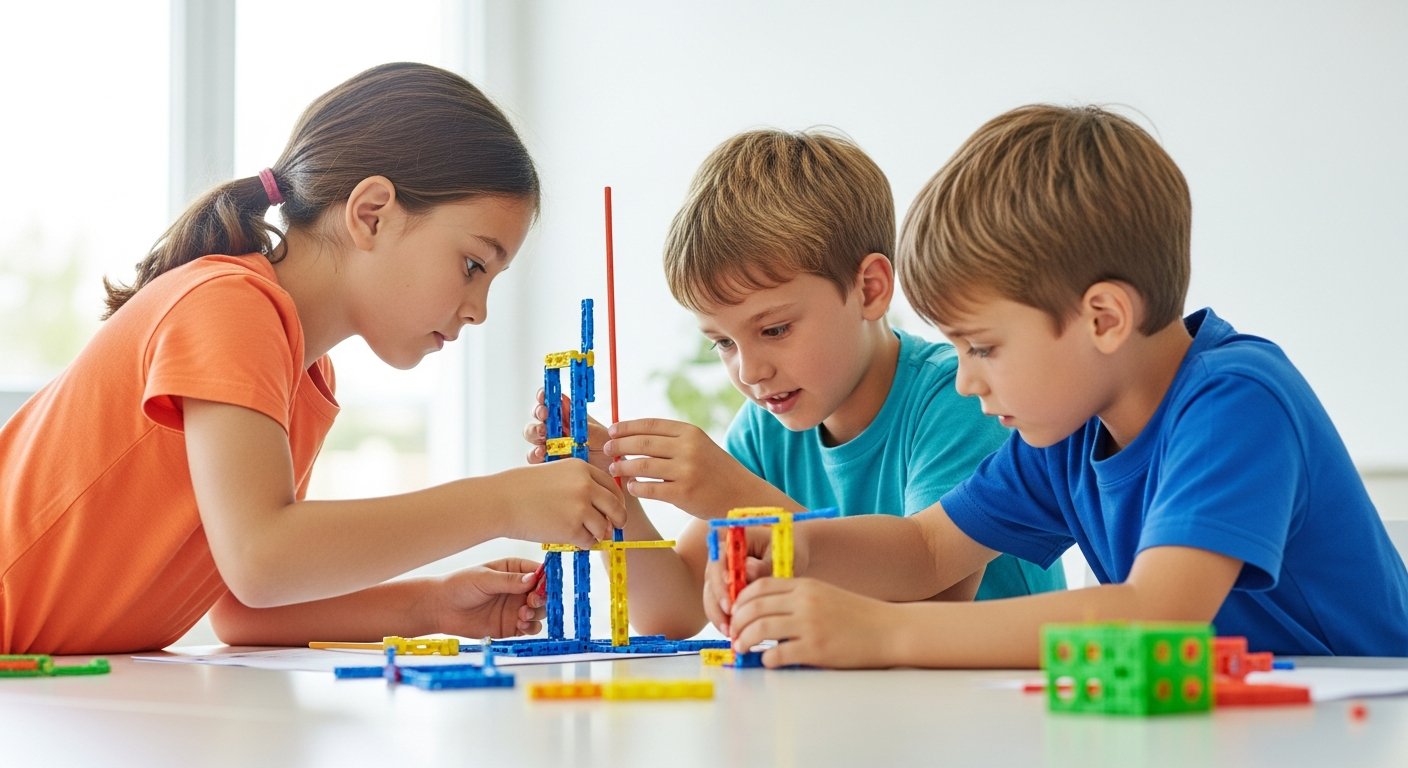
Table of Contents
- Introduction
- The Power of Play: Why Engineering Activities Are Essential for Growing Minds
- Engineering Challenges: Hands-On Fun for Every Little Builder
- Engineering and Communication: Building Bridges Between Ideas and Words
- Ready to Build Communication and Confidence?
- Conclusion
- Frequently Asked Questions (FAQ)
Introduction
Have you ever watched a child meticulously stack blocks, build a fort with blankets, or spend hours creating a ramp for their toy cars? That intense focus, the trial-and-error, the sheer joy when something finally works – that's the spirit of engineering igniting! It’s more than just play; it's a foundational process that teaches problem-solving, critical thinking, and creativity. In a world that's constantly evolving, nurturing these skills from an early age is paramount. This post isn't just about giving you a list of activities; it's about diving deep into why engineering play is so vital for children's development, how it fosters a lifelong love for learning, and how these activities seamlessly connect to other crucial developmental milestones, like speech and communication. We'll explore a variety of engaging, hands-on engineering challenges you can do right at home, using everyday materials, and discover how these adventures empower children to build not just structures, but also confidence and a voice to express their brilliant ideas.

The Power of Play: Why Engineering Activities Are Essential for Growing Minds
Children are natural-born engineers. From the moment they start exploring their environment, they're testing hypotheses, observing cause and effect, and designing solutions – even if they don't know it yet! Engineering activities provide a structured, yet incredibly fun, way to harness this innate curiosity and channel it into skill-building that extends far beyond the playroom.
When children engage in engineering projects, they're not just assembling pieces; they're actively developing a robust set of cognitive, social, and emotional skills:
- Problem-Solving and Critical Thinking: Every engineering challenge, whether it’s building a bridge that can hold weight or designing a device to carry water, presents a problem to be solved. Children learn to identify issues, brainstorm solutions, test their ideas, and refine their approaches. This iterative process builds resilience and a methodical way of thinking.
- Creativity and Innovation: Engineering encourages out-of-the-box thinking. There isn't always one "right" answer, leading children to experiment with different materials, designs, and strategies, fostering innovative minds.
- Fine Motor Skills and Hand-Eye Coordination: Activities involving building, cutting, connecting, and manipulating small objects significantly enhance dexterity and coordination, which are crucial for tasks like writing and self-care.
- Spatial Reasoning: Understanding how objects fit together, how structures balance, and how space can be utilized effectively are all part of spatial reasoning, a key component of mathematical and scientific understanding.
- Patience and Perseverance: Projects often don't work on the first try. The process of debugging, rebuilding, and trying again teaches invaluable lessons in patience and perseverance, transforming frustration into determination.
- Communication and Collaboration: Many engineering activities lend themselves perfectly to group work, whether with siblings, friends, or parents. This requires children to verbalize their ideas, listen to others, negotiate, and work together towards a common goal – all vital communication skills. For instance, explaining why a certain block should go here or asking for help to hold a blanket for a fort is a direct application of language.
At Speech Blubs, our mission is to empower children to "speak their minds and hearts," and we see a beautiful parallel between this mission and the benefits of engineering play. Just as building a strong structure requires foundational pieces, building strong communication skills requires foundational vocabulary, clear articulation, and the confidence to express thoughts. Both types of activities foster a love for learning and build the self-assurance necessary for a child to thrive. We believe that whether through hands-on building or engaging speech practice, every child deserves the tools to unlock their full potential.

Engineering Challenges: Hands-On Fun for Every Little Builder
Let's dive into some incredible, fun engineering activities that you can set up with items you likely already have around your home. Remember, the goal isn't perfection, but participation, exploration, and the joy of discovery!
Structural Engineering: Building Strong Foundations
Structural engineering is all about designing and constructing stable, strong, and functional structures like buildings, bridges, and towers. These activities introduce concepts of load-bearing, balance, and different material properties.
1. The Mighty Bridge Challenge
- Description: Challenge your child to build a bridge that can span a gap (like between two chairs or books) and hold increasingly heavy objects.
- Materials: Craft sticks, straws, cardboard, paper, tape, glue, small toys, coins, or blocks for weights.
- Skills Developed: Understanding support structures, weight distribution, stability, and the strength of different shapes (e.g., triangles are stronger than squares).
- Relatable Scenario: For a child who loves toy cars, this challenge becomes a mission to build the ultimate highway! As they try different designs and see some collapse, they might say, "It's not strong enough!" or "This one is wobbly!" This naturally encourages them to describe problems and brainstorm solutions, much like how Speech Blubs uses engaging themes to encourage descriptive language.
2. Earthquake-Resistant Tower
- Description: Construct a tower using various materials and then test its stability on a "shake table" (a piece of cardboard on top of some small balls, or simply shaking the table gently).
- Materials: Blocks, LEGOs, toothpicks, mini marshmallows, craft sticks, playdough, cardboard.
- Skills Developed: Understanding rigidity, flexibility, base stability, and how different materials react to force.
- Relatable Scenario: Imagine a child building a tower for their superhero action figures. When the "earthquake" hits, they learn which designs hold up best. This process often involves a lot of "Uh oh!" and "It fell!" prompting them to use expressive language to articulate what happened and what they need to change.
3. Spaghetti and Marshmallow Tower
- Description: A classic STEM challenge! Build the tallest possible free-standing tower using only uncooked spaghetti and marshmallows.
- Materials: Uncooked spaghetti noodles, mini marshmallows (or gumdrops/playdough for a sturdier alternative).
- Skills Developed: Understanding compression, tension, structural integrity, and the importance of a wide base and triangular supports.
- Relatable Scenario: This activity often leads to delightful frustration and breakthroughs. A child might exclaim, "Look, it's so tall!" or "This marshmallow isn't sticking!" These moments are perfect for practicing descriptive words and problem-solving phrases.
Aerospace Engineering: Reaching for the Sky
Aerospace engineering involves designing vehicles that fly or travel in space. These activities introduce principles of aerodynamics, thrust, lift, and gravity.
1. Bottle Rockets
- Description: Launch a "rocket" into the sky using a plastic soda bottle and air pressure (or water pressure).
- Materials: Empty 2-liter soda bottle, cork, bicycle pump with needle valve, water, cardboard for fins, tape. (Adult supervision crucial for launch.)
- Skills Developed: Understanding propulsion, Newton's laws of motion, force, and aerodynamics.
- Relatable Scenario: The excitement of a rocket launch is palpable! Children will naturally shout, "Blast off!" and "Higher!" as they observe the results of their design. This provides an excellent context for practicing action verbs and comparing results ("My rocket went farther!").
2. Parachute Design Challenge
- Description: Design a parachute to safely land a small toy or an egg from a height, aiming for the slowest possible descent.
- Materials: Fabric scraps, plastic bags, coffee filters, string, tape, small toy figures or plastic eggs.
- Skills Developed: Understanding air resistance, drag, gravity, and the impact of surface area on descent speed.
- Relatable Scenario: Imagine a child trying to make their favorite toy soldier "parachute" safely to the ground. They might say, "This one is too small!" or "It needs more strings!" These are opportunities to use comparative language and articulate design modifications.
Electrical Engineering: Sparking Curiosity
Electrical engineering explores electricity, electronics, and electromagnetism. These activities offer a safe and engaging introduction to how circuits work and how electricity powers our world.
1. Simple Circuit Cards
- Description: Create greeting cards or simple pictures that light up using copper tape, a coin battery, and an LED light.
- Materials: Cardstock, copper tape, coin cell batteries (CR2032), small LED lights, markers.
- Skills Developed: Basic understanding of circuits (positive and negative terminals, conductivity), problem-solving (troubleshooting if the light doesn't work), and fine motor control.
- Relatable Scenario: A child creating a light-up birthday card for a grandparent will experience immediate gratification when the light switches on. They might explain, "This is the battery," or "It has to touch here!" This builds a practical vocabulary around electronics and cause-and-effect.
2. Minion Brush Bot
- Description: Build a tiny vibrating robot using a toothbrush head, a small motor, and a battery, then watch it scoot across a surface.
- Materials: Toothbrush head, small pager motor (or vibrating motor), coin cell battery, double-sided tape or hot glue.
- Skills Developed: Introduction to robotics, vibration, basic electrical connections, and problem-solving (making the bot move straight).
- Relatable Scenario: Imagine a child gleefully watching their handmade Minion bot zip across the table. They’ll likely describe its movement: "It's fast!" or "It's wobbly!" and experiment with where to place the motor to change its path.
Simple Machines: The Building Blocks of Innovation
Simple machines (levers, pulleys, wheels and axles, inclined planes, wedges, screws) are fundamental to engineering, making work easier.
1. DIY Catapult
- Description: Build a mini catapult using craft sticks and rubber bands to launch small pom-poms or crumpled paper balls.
- Materials: Craft sticks, rubber bands, plastic spoon, small pom-poms or crumpled paper.
- Skills Developed: Understanding levers, force, trajectory, and experimentation with angles to achieve different launch distances.
- Relatable Scenario: Children adore launching things! They might cheer, "Ready, aim, fire!" or debate, "My catapult goes farther than yours!" This provides a natural context for comparative language and excited vocalizations.
2. Pulley System
- Description: Create a simple pulley system to lift small objects, demonstrating how it reduces the force needed.
- Materials: String, spools or small wheels, cardboard, a bucket or small container, objects to lift.
- Skills Developed: Understanding mechanical advantage, force, and how pulleys change the direction of force.
- Relatable Scenario: For a child who struggles to lift a heavier toy, using a pulley can be a revelation. They might say, "It's easier now!" or "Look, it goes up!" These simple phrases are powerful expressions of understanding and success.
Everyday Materials Engineering: Innovating with What You Have
This branch encourages creative problem-solving using common household items, emphasizing resourcefulness and practical application.
1. DIY Water Carrier Challenge
- Description: Design a device to carry water from one point to another with minimal spillage, using only household materials.
- Materials: Plastic bottles, cardboard, aluminum foil, tape, string, scissors, water.
- Skills Developed: Creative problem-solving, understanding containment, leak prevention, material properties, and practical application.
- Relatable Scenario: This is a fantastic challenge for a hot day! A child might discover, "This cup leaks!" or "My funnel works better!" promoting descriptive language related to materials and function.
2. Cardboard Box Ball Track
- Description: Design and build an intricate maze or track for a marble or small ball to travel through, using cardboard and other recycled items.
- Materials: Cardboard boxes, paper towel rolls, toilet paper rolls, tape, glue, marbles or small balls.
- Skills Developed: Spatial reasoning, problem-solving, understanding gravity and friction, creativity in design, and sequential thinking.
- Relatable Scenario: As the child tests their track, they'll inevitably encounter spots where the ball gets stuck or falls off. This leads to exclamations like, "It's stuck!" or "It needs a ramp here!" They're actively identifying problems and proposing solutions verbally.
Engineering and Communication: Building Bridges Between Ideas and Words
The beauty of hands-on engineering activities for kids lies not just in the structures they create, but also in the rich opportunities they provide for language and communication development. When children are immersed in these projects, they naturally engage in a variety of speech-enhancing interactions:
- Descriptive Language: "This block is tall," "The bridge feels wobbly," "I need the long straw." Engineering activities are ripe with chances to use adjectives, comparatives, and spatial prepositions.
- Sequencing and Instructions: "First, we put the base. Then, we add the walls. Last, the roof." Following and giving instructions is a core language skill, directly practiced in multi-step building projects.
- Problem-Solving Vocabulary: "It collapsed," "We need to reinforce this part," "Let's experiment with this material." These activities introduce children to a vocabulary of action and repair.
- Asking Questions and Explaining Ideas: "Why did it fall?" "How can we make it stronger?" "I think we should try this because..." Children learn to articulate their thoughts, ask for clarification, and justify their design choices.
- Collaboration and Negotiation: When working with others, children learn to share materials, take turns, express disagreement respectfully, and compromise, all of which require sophisticated communication skills.
This is precisely where Speech Blubs shines as a complementary tool. While hands-on engineering builds the context for communication, Speech Blubs provides a supportive environment for children to practice the specific speech sounds, words, and sentence structures they need to express those complex ideas. Our unique "video modeling" methodology, where children learn by watching and imitating their peers, makes learning engaging and effective. We turn screen time into "smart screen time" – a powerful tool for family connection, where you and your child can engage with over 1,500 fun activities designed to build confidence in speaking.
Our company was born from the personal experiences of our founders, who all grew up with speech problems and created the tool they wished they had. We are committed to providing an immediate, effective, and joyful solution for the 1 in 4 children who need speech support, blending scientific principles with play. Whether your child is a "late talker" who loves animals and can practice "moo" and "baa" in our "Animal Kingdom" section, or a preschooler building intricate tracks for toy cars, strong communication skills are the foundation. Unsure if your child could benefit? Take our quick 3-minute preliminary screener to get a simple assessment and a free 7-day trial by clicking here: Preliminary Screener.
We're proud that our method is backed by science, placing us in the top tier of speech apps worldwide, as detailed in our research section: Research. We believe in fostering a love for communication, building confidence, and creating joyful family learning moments, just as these engineering activities do.
Ready to Build Communication and Confidence?
Empowering your child through engineering activities and supportive speech development is an investment in their future. At Speech Blubs, we make it easy and fun to nurture their communication skills. Our app provides an abundance of engaging, interactive content designed to complement their natural curiosity and build expressive language.
We offer flexible plans to fit your family's needs, but for the ultimate value and experience, our Yearly plan is truly the best choice.
- Monthly Plan: For $14.99 per month, you get access to our core features.
- Yearly Plan: At just $59.99 per year, this plan breaks down to an incredible $4.99 per month, allowing you to save 66% compared to the monthly option!
But the savings are just the beginning. The Yearly plan also includes exclusive, high-value features designed to give your child the most comprehensive support:
- A 7-day free trial: Experience the full power of Speech Blubs before committing.
- The extra Reading Blubs app: Extend the learning with phonics-based reading activities.
- Early access to new updates: Be among the first to explore new content and features.
- 24-hour support response time: Get quick assistance whenever you need it.
The Monthly plan does not include these incredible benefits. To give your child the best possible start on their communication journey and unlock a world of learning, choose the Yearly plan.
Don't wait to empower your child to speak their mind and heart. Join thousands of parents who have seen incredible progress with Speech Blubs. See what other parents are saying about their child's success with Speech Blubs here: Testimonials.
Conclusion
Engaging in fun engineering activities with your children is a profound way to foster a love for learning, develop crucial problem-solving skills, and ignite their creativity. From constructing sturdy bridges to launching simple rockets, these hands-on experiences teach invaluable lessons in physics, design, and perseverance. More than that, they create a rich environment for verbal interaction, encouraging children to describe, question, explain, and collaborate – foundational skills for clear and confident communication.
Just as a successful engineering project is built piece by piece, a child's confidence in speaking grows with every new word, every clear sentence, and every idea they bravely share. We at Speech Blubs are here to support every step of that journey, turning everyday play into powerful learning opportunities. Empower your child to explore, build, and speak with confidence.
Ready to combine the magic of engineering play with award-winning speech development? Take the first step today! Download Speech Blubs on the Apple App Store or Google Play Store. For the best value, choose the Yearly plan during your 7-day free trial to unlock all premium features, including the Reading Blubs app and early access to new content. Let's build a brighter, more communicative future together!
Frequently Asked Questions (FAQ)
Q1: What age are these engineering activities suitable for?
A1: Many of these activities are adaptable for a wide range of ages, from preschoolers to early elementary students. Younger children will enjoy the process with more adult assistance, focusing on manipulation and simple cause-and-effect. Older children can dive deeper into design, problem-solving, and independent experimentation. Always tailor the complexity to your child's developmental stage and ensure safety with appropriate supervision.
Q2: Do I need special materials to do these engineering activities?
A2: Absolutely not! Most of the activities highlighted in this post are designed to use common household items and recycled materials. Think cardboard boxes, craft sticks, plastic bottles, paper, string, and tape. The goal is to encourage creativity and resourcefulness with what you already have, showing that impactful learning doesn't require expensive gadgets.
Q3: How do engineering activities specifically help with speech development?
A3: Engineering activities naturally foster language by providing a context for communication. Children use descriptive language ("wobbly," "tall," "smooth"), follow and give instructions ("first, then"), develop problem-solving vocabulary ("collapse," "reinforce," "experiment"), and engage in conversations about their designs, successes, and challenges. These real-world interactions strengthen their ability to express thoughts, ask questions, and collaborate, directly supporting their overall speech and language development.
Q4: How does Speech Blubs complement these hands-on engineering activities?
A4: Speech Blubs offers a dynamic and engaging platform for children to practice and reinforce the communication skills they use during engineering play. Our "video modeling" approach encourages articulation, vocabulary expansion, and sentence building through fun, interactive activities. This "smart screen time" provides targeted practice, building confidence and clarity in speech, which in turn empowers children to better articulate their engineering ideas and collaborate more effectively in their hands-on projects. It's a powerful supplement to create well-rounded, confident communicators. You can learn more about how Speech Blubs helps children speak their minds and hearts by visiting our homepage.
About the author