
Buzz into Learning: Fun Bug Activities for Kids
 By Speech Blubs Team•Jan 13, 2026•25 min.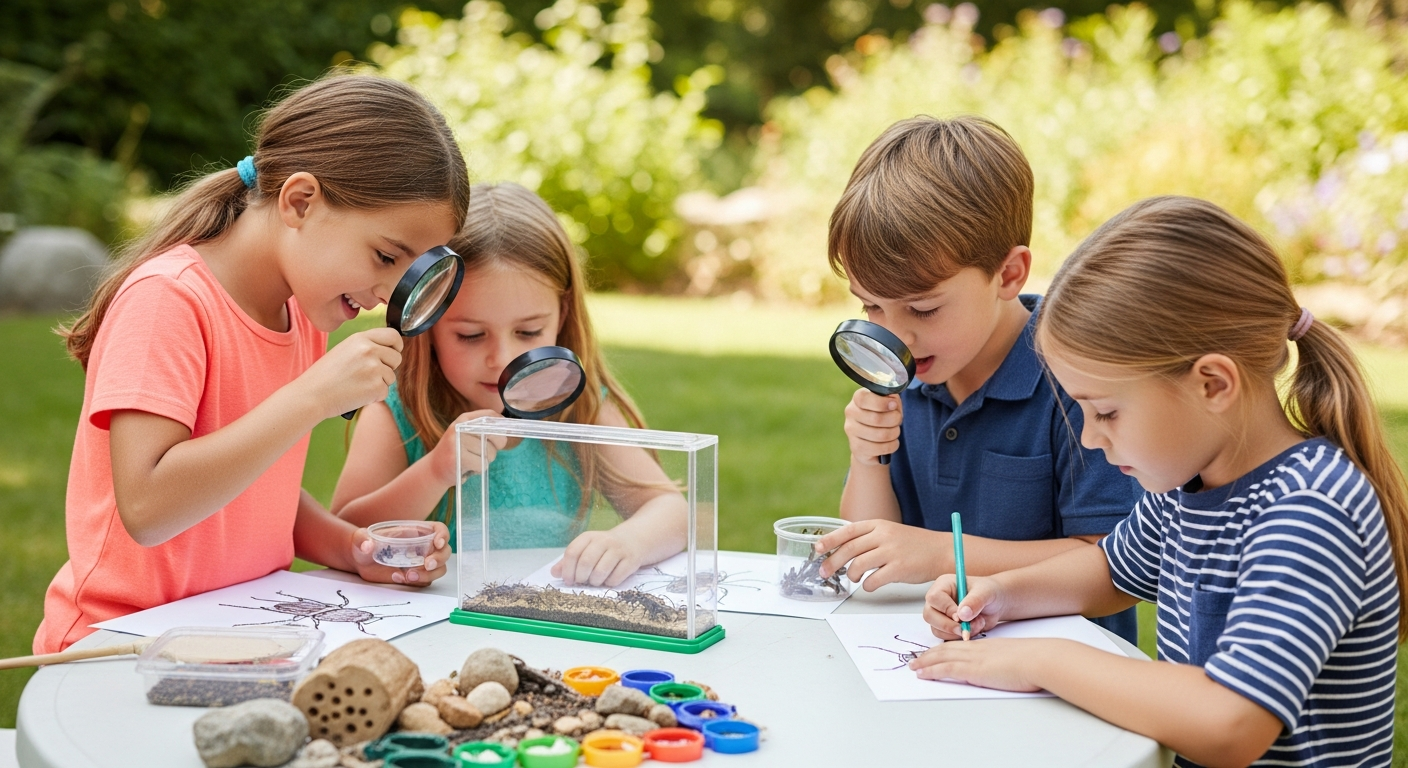
Table of Contents
- Introduction
- Why Bugs are Brilliant for Development
- Speech Blubs: Your Partner in Playful Learning
- Hands-On Bug Activities for Every Age
- Maximizing the Magic with Speech Blubs
- Unlock Full Potential with Our Yearly Plan
- Conclusion
- FAQ
Have you ever watched a child’s eyes light up at the sight of a busy ant carrying a crumb, or gasped with delight as a ladybug gently lands on their finger? The world of bugs is a tiny, fascinating universe just waiting to be explored, offering endless opportunities for wonder, discovery, and crucial developmental growth. For children, insects and spiders aren't just creepy crawlies; they are gateways to understanding nature, fostering curiosity, and building essential skills from communication to motor development.
In this comprehensive guide, we're diving into a captivating collection of fun bug activities for kids that are not only entertaining but also thoughtfully designed to nurture your child's cognitive, physical, and linguistic abilities. We believe that play is the most powerful learning tool, and through these engaging, hands-on experiences, we aim to inspire a love for communication and learning in your little one. From creative crafts to active games and mind-stretching challenges, get ready to transform bug exploration into a vibrant adventure that strengthens their connection to the natural world and their ability to express themselves.

Introduction
There's a magical moment when a child first encounters an insect – that blend of awe, curiosity, and sometimes, a little hesitant wonder. Bugs are an accessible entry point into the natural world, right in our backyards or local parks, sparking countless questions and observations. But beyond their inherent fascination, engaging with the world of insects offers a rich landscape for fostering holistic child development. From the smallest finger movements required to pick up a painted rock bug to the big leaps in language as they describe a buzzing bee, bug-themed play is a powerful catalyst for growth.
This post is dedicated to empowering parents and caregivers with a treasure trove of fun bug activities that transform simple playtime into meaningful learning experiences. We'll explore how these activities specifically target key developmental areas, from fine and gross motor skills to cognitive growth and, crucially, language and communication. At Speech Blubs, our mission is to empower children to "speak their minds and hearts," providing an immediate, effective, and joyful solution for the 1 in 4 children who need speech support. We understand the profound impact that engaging, interactive play, like these bug activities, has on a child’s journey toward confident communication. Our own journey began with founders who experienced speech challenges firsthand, leading us to create the tool we wished we had – blending scientific principles with play into one-of-a-kind "smart screen time" experiences. We are excited to share how these real-world bug adventures, combined with our unique approach, can create a powerful, connected learning environment for your child.
Why Bugs are Brilliant for Development
The humble insect, in all its myriad forms, is a perfect subject for child development. Its small scale, intriguing movements, and diverse appearances naturally draw in young learners. Engaging with bugs provides a multi-sensory experience that supports a wide range of developmental milestones.

Language Development Through Bug Play
Imagine your child observing a caterpillar munching on a leaf. This simple act can spark a cascade of language opportunities: "What is it doing?" "Where is it going?" "It's green and fuzzy!" "Is it hungry?" These questions and observations build vocabulary, encourage descriptive language, and lay the foundation for storytelling. Discussing the different parts of a bug (antennae, wings, legs), their actions (flying, crawling, jumping), and their habitats helps children connect words to real-world concepts. This active engagement with language in a meaningful context is far more effective than rote memorization. It fosters a love for communication, building confidence in expressing thoughts and feelings. Our approach at Speech Blubs mirrors this principle, using interactive methods to make language acquisition an exciting adventure.
For a child who might be a "late talker" and has a keen interest in animals, exploring bugs provides a fantastic, low-pressure way to practice sounds and words. Pointing to a picture of a bee and making a "bzzzz" sound, or identifying "ladybug" as they paint spots, transforms abstract sounds into concrete, fun experiences. This is where Speech Blubs truly shines. Our app’s "Animal Kingdom" section, for instance, offers a motivating way to practice sounds and words associated with different creatures through "video modeling." Children learn by watching and imitating their peers, a scientifically backed method that makes complex communication skills accessible and engaging. This blend of hands-on exploration and smart screen time creates a robust learning ecosystem.
Fine Motor Skills: Dexterity in Miniature Worlds
Many bug activities naturally enhance fine motor skills, which are crucial for tasks like writing, drawing, and self-care. Activities such as applying dot stickers to a ladybug cutout, carefully placing googly eyes on a bottle cap bug, or using child-safe tweezers to "rescue" plastic bugs from a sensory bin all require precision and control. These small, deliberate movements strengthen the muscles in their fingers and hands, improving hand-eye coordination.
Gross Motor Skills: Moving Like a Mayfly
Bugs also inspire active, imaginative play that builds gross motor skills. Think about imitating a grasshopper's jump, a bee's buzz, or a spider's crawl. Activities like "Swat the Bug" or "Sticky Spider Webs" involve throwing, reaching, and moving their whole body, improving balance, coordination, and spatial awareness. These movements are essential for overall physical development and provide an outlet for a child's natural energy.
Cognitive Growth: The Curious Case of the Caterpillar
Bug activities are ripe with opportunities for cognitive development. Counting the spots on a ladybug, sorting plastic bugs by color or size, or recognizing patterns in a caterpillar's segments all engage mathematical thinking. Science skills are honed through observation (what do ants eat?), prediction (where will the butterfly go?), and problem-solving (how do I get the bug out of the ice?). These activities encourage critical thinking, memory, and the ability to follow instructions, fostering a child's natural curiosity about the world around them.
Sensory Exploration: Textures and Sounds of the Garden
The world of bugs offers a rich sensory experience. Feeling the rough texture of a painted rock bug, hearing the crinkle of leaves where a beetle hides, or experiencing the coolness of ice in a "frozen bug rescue" bin all engage multiple senses. Sensory play is vital for brain development, helping children process and understand information from their environment. These experiences also help children regulate their emotions and can be incredibly calming and engaging.
Creative Expression: Artistry in Ant Hills
Finally, bug activities ignite creativity. Painting rocks to look like ladybugs, molding playdough into insects, or designing a spider web from yarn allows children to express themselves artistically. These open-ended activities encourage imagination, self-expression, and the development of unique ideas, all while building self-esteem and a sense of accomplishment.
Speech Blubs: Your Partner in Playful Learning
At Speech Blubs, we believe that every child deserves the chance to communicate freely and joyfully. Our entire company was born from the personal experiences of our founders, who all grew up with speech problems and created the tool they wished they had. We are deeply committed to providing an immediate, effective, and joyful solution for families, blending scientific principles with play into one-of-a-kind "smart screen time" experiences. We provide a screen-free alternative to passive viewing (like cartoons) and a powerful tool for family connection, complementing the wonderful hands-on activities you do with your child.
How Video Modeling Boosts Bug-Themed Learning
Our unique approach centers on "video modeling," where children learn by watching and imitating their peers. This method is incredibly effective because it taps into the power of mirror neurons in the brain, making imitation a natural and engaging pathway to learning new sounds, words, and sentences. Imagine your child, after a fun bug hunt, seeing other children in the Speech Blubs app excitedly say "butterfly," "spider," or "buzz." This peer-to-peer interaction makes learning relevant and highly motivating.
For example, if your child loves finding ladybugs, our app can reinforce vocabulary like "red," "spots," "crawl," and "bug" through interactive video prompts. If they're fascinated by bees, they can practice the "bzzzz" sound, strengthening their oral motor skills while having fun. Our app is designed to be a powerful supplement to a child's overall development plan and, when applicable, professional therapy, providing a structured yet playful environment to practice critical communication skills. The interactive nature of our app encourages active participation, making it a "smart screen time" choice that supports rather than replaces real-world interaction. Curious about the science behind our success? Explore our research page to learn more about our highly-rated methodology.
Empowering Every Child's Voice
Our dedication goes beyond just teaching words; it's about fostering a child's overall confidence and reducing the frustration that can come with communication challenges. We aim to help children develop key foundational skills that empower them to "speak their minds and hearts." The joy your child experiences exploring bugs in the garden can be amplified by the joyful learning they engage in with Speech Blubs, creating a harmonious and supportive environment for growth. Ready to take the first step in unlocking your child's communication potential? Download Speech Blubs today on the App Store or get it on Google Play.
Hands-On Bug Activities for Every Age
Now, let's dive into some incredible bug activities that you can enjoy with your child. We've grouped them by focus area, but remember, many activities offer multiple developmental benefits!
Crafty Critters: Art & Fine Motor Fun
These activities are perfect for developing fine motor skills, encouraging creativity, and exploring textures and colors.
Fingerprint Bug Count Game
This activity combines craft with early math skills. What You Will Need: Ink pads (or washable paint), paper, pen/marker, scissors, dice, contact paper (optional for laminating). Directions:
- Help your child press their finger onto an ink pad to create colorful "bug bodies" on the paper.
- Use a pen to add details like legs, antennae, and eyes to turn the fingerprints into various bugs (ladybugs, bees, ants).
- Cut out these little bug creatures.
- Draw a large "bug jar" outline on another piece of paper and cut it out.
- Optional: Laminate the bugs and jar with contact paper for durability.
- To Play: Have your child roll the dice and then count out the corresponding number of bug cutouts to place inside the "jar." This reinforces 1-to-1 correspondence and number recognition.
Bottle Cap Bugs & Bug Hunt
A quick and easy craft that leads to an exciting scavenger hunt. What You Will Need: Bottle caps, googly eyes, permanent marker, hot glue gun or double-sided tape, a cup or small container. Directions:
- Help your child draw faces and dots on the bottle caps with a marker, transforming them into various bugs.
- Attach googly eyes using hot glue (adult supervision required) or double-sided tape.
- Hide the finished bottle cap bugs around your yard or inside your home.
- Give your child the cup and send them on a "bug hunt" to find and collect all the hidden critters. This encourages observation and gross motor movement.
Egg Carton Bugs & Ants
Recycling takes on a creative bug-themed twist! What You Will Need: Cardboard egg cartons, paint, paintbrushes, wiggle eyes, pipe cleaners, pom-pom balls, craft glue. Directions:
- Cut an egg carton into segments (e.g., individual cups for small bugs, or three connected cups for an ant body).
- Let your child paint their egg carton segments in various bug colors (red for ladybugs, green for caterpillars, brown/black for ants).
- Once dry, help them glue on wiggle eyes.
- Use pipe cleaners for antennae and legs, poking them through small holes or gluing them on. Pom-poms can be used for heads or additional body parts.
- This activity promotes creativity, fine motor control, and an understanding of different bug anatomy.
Potato Stamp Ladybugs & Fingerprint Butterflies
Simple art with delightful results. What You Will Need: Potatoes, red and black washable paint, white paper, craft knife (adult use only). Directions:
- Ladybugs: Cut a potato in half. Dip the flat side in red paint and stamp it onto paper to create ladybug bodies. Once the red is dry, help your child dip their thumb or fingertip in black paint to create a head and spots. Draw antennae with a thin marker.
- Butterflies: For fingerprint butterflies, apply paint to two opposite fingertips and press them onto the paper to form the wings, then draw a body and antennae. These activities are wonderful for color recognition and developing hand-eye coordination.
Butterfly Lacing Cards
Excellent for developing pre-sewing skills and fine motor precision. What You Will Need: Cardstock or old file folders, butterfly template, hole punch, yarn or shoelaces. Directions:
- Trace or draw butterfly outlines onto sturdy cardstock or file folders.
- Help your child cut out the butterflies.
- Use a hole punch to create holes evenly spaced around the edges of the butterfly shapes.
- Provide yarn (with tape wrapped around one end to create a "needle") or shoelaces for your child to lace through the holes. This activity significantly boosts fine motor skills, hand-eye coordination, and concentration.
Rock Bug Hunt
Combine art with outdoor exploration. What You Will Need: Smooth rocks, acrylic paints, paintbrushes, permanent markers (optional), bug barn or container. Directions:
- Gather smooth rocks from your yard or a craft store.
- Help your child paint bug designs on the rocks – ladybugs, caterpillars, bees, or even abstract "alien bugs." You can add details with permanent markers once the paint is dry.
- Once the paint is completely dry, hide the rock bugs around your yard.
- Send your child on a hunt to find the rock bugs and collect them in a bug barn or designated container. This is a lovely way to encourage creativity, outdoor play, and observation skills.
Active Adventures: Gross Motor & Outdoor Exploration
These activities get kids moving, engaging their large muscle groups, and exploring their environment.
Bug Swatter / Balloon Baseball
An active game that encourages swatting and chasing. What You Will Need: Balloons, permanent marker, paper plates, popsicle sticks, tape, scissors. Directions:
- Blow up balloons and decorate them to look like flies or other flying bugs using a marker and paper cutouts taped on.
- Cut a fly swatter shape out of a paper plate (or double them up for more durability).
- Tape a popsicle stick to the paper plate swatter to create a handle.
- To Play: Toss the balloon bugs in the air and have your child use their homemade swatter to hit them, keeping them aloft or playing "balloon baseball." This is excellent for hand-eye coordination, gross motor skills, and energy release.
Sticky Spider Webs
A fun way to practice throwing and aiming. What You Will Need: Painter's tape, cotton balls or small soft toys. Directions:
- Create a "spider web" by crisscrossing painter's tape across a doorway or between two chairs, sticky side out. Ensure it’s at a height accessible for your child.
- Have your child stand a short distance away and try to throw cotton balls or small soft toys onto the sticky web.
- This activity helps develop throwing skills, aim, and gross motor coordination. It can also be adapted to have them "rescue" items from the web.
Swat the Bug (Letters/Numbers)
A dynamic activity for early literacy and numeracy. What You Will Need: Large pieces of cardboard or paper, markers, fly swatter, tape. Directions:
- Draw large bug shapes on cardboard or paper.
- Inside each bug, write a letter, number, or even a simple sight word.
- Tape the "bug targets" to a wall or spread them on the floor.
- To Play: Call out a letter, number, or word, and have your child "swat" the corresponding bug with a fly swatter. For a child learning their initial consonant sounds, you could focus on bugs like "B" for bee or "L" for ladybug, having them swat while articulating the sound. This reinforces recognition while engaging gross motor skills.
Bug Catch
Simple, active, and great for coordination. What You Will Need: Plastic balls, permanent marker, bug net. Directions:
- Use a permanent marker to draw simple bug faces or patterns on plastic balls.
- To Play: Toss the "bug balls" to your child and have them try to catch them in a bug net. You can also reverse roles. This is fantastic for hand-eye coordination, tracking skills, and gross motor movement.
Creepy Crawly Crawl
Movement-based imaginative play. What You Will Need: Just yourselves! Directions:
- Call out different bug names and encourage your child to move like them:
- Ants: Crawl on hands and knees.
- Spiders: Try a crab walk (hands and feet on floor, tummy up).
- Caterpillars: Inch forward by stretching and scrunching their body.
- Bees: Buzz around with arms out like wings.
- Grasshoppers: Jump with both feet together.
- This activity is excellent for body awareness, imagination, and developing various gross motor skills.
Pollination Parade
An imaginative game that teaches about nature. What You Will Need: Pom-poms or cotton balls ("pollen"), paper flowers (taped to the floor or tables). Directions:
- Give each child a pom-pom.
- Encourage them to pretend to be bees, buzzing around the room with their "pollen."
- They "land" on the paper flowers, dropping off their pollen and picking up new "pollen" (if you have different colored pom-poms) as they "pollinate." This fosters imaginative play, gross motor skills, and an early understanding of scientific concepts.
Bug Freeze Dance
A high-energy game with a listening component. What You Will Need: Upbeat music. Directions:
- Play some fun, upbeat music and let your child dance freely.
- When the music stops, call out a "freeze" pose related to bugs: "Freeze like a ladybug on a leaf!" or "Freeze with your wings out like a butterfly!"
- This activity is great for gross motor development, listening skills, and imaginative movement.
Bug Nature Walk
The ultimate real-world bug exploration. What You Will Need: Magnifying glass, bug catcher (optional), notebook and pencil, or camera. Directions:
- Head out to your backyard, a local park, or a nature trail.
- Encourage your child to look for bugs under rocks, on leaves, or flying through the air.
- Discuss what you see: "Look, a beetle! What color is it? How many legs does it have?"
- Emphasize looking without touching to keep both your child and the insects safe.
- They can draw observational pictures or take photos of the bugs they find. This activity builds observation skills, fosters a connection to nature, and provides countless opportunities for descriptive language and scientific inquiry.
Brainy Bugs: Cognitive & Literacy Builders
These activities engage your child's mind, developing early math, literacy, and problem-solving skills.
Bug Counting & Pattern Blocks
Engage early math skills through hands-on manipulation. What You Will Need: Printable bug jar outlines with numbers, small plastic bugs or bug cutouts, pattern blocks. Directions:
- Bug Counting: Print jar outlines with numbers (1-10) on them. Have your child count out the correct number of plastic bugs or bug cutouts to place in each jar. This models 1-to-1 correspondence.
- Pattern Blocks: Use printable mats of caterpillars, butterflies, or dragonflies. Children use colorful pattern blocks to fill in the shapes, working on spatial reasoning, shape recognition, and patterning. These activities are foundational for mathematical thinking.
Name Caterpillar
A fun way to learn name recognition and letter sequencing. What You Will Need: Two sets of large paper circles, marker, glue stick or tape. Directions:
- On one set of circles, write each letter of your child's name (one letter per circle). This will be your "guide" caterpillar.
- On the second set of circles, write the same letters of their name, but in a jumbled order.
- Lay out the guide caterpillar. Have your child match the jumbled letters to the correct letter on the guide, putting their name in order.
- For an extra challenge, have them build their name without the guide. This activity significantly helps with letter recognition and the sequential order of letters in their name.
The Very Hungry Caterpillar Story Retelling
Literacy, sequencing, and memory in one classic activity. What You Will Need: Picture cutouts of the foods from The Very Hungry Caterpillar (apple, pear, plum, etc.), a green ribbon "caterpillar." Directions:
- After reading the book, have your child use the food cutouts and the ribbon to retell the story in sequence. "First, he ate an apple. Then, two pears..."
- This activity is fantastic for comprehension, sequencing, memory, and narrative skills.
Bug Bingo Stamping Game
A playful way to practice letter or numeral recognition. What You Will Need: Printable bingo cards with bug images (each bug can have a letter or number), stampers, or bingo daubers. Directions:
- Prepare bingo cards with various letters or numbers written on or next to bug illustrations.
- Call out a letter or number, and your child stamps or daubs the corresponding spot on their card.
- This game makes learning letters and numbers interactive and exciting, strengthening recognition skills.
Ladybug Roll & Write Game
Combining fine motor and early writing practice. What You Will Need: A game die with letters or numbers written on its sides, a printable sheet with spaces to write. Directions:
- Prepare a game die by writing different letters or numbers on each side (or use stickers).
- Provide a simple printable worksheet with lines or boxes.
- Your child rolls the die and then writes the letter or number that appears in a designated space on their sheet. This is a low-pressure way to practice pre-writing skills and letter/number formation.
Bug Rhyming Game
Develop phonological awareness, a crucial pre-reading skill. What You Will Need: Printable cards with rhyming word pictures (e.g., "bee" and "tree," "bug" and "rug"). Directions:
- Lay out the picture cards.
- Have your child match the rhyming words together.
- This game helps children hear and identify rhyming sounds, which is a key component of early literacy.
Make a Bug Chart
A scientific and linguistic exploration. What You Will Need: Large chart paper, marker, pictures of an insect. Directions:
- After reading non-fiction books about an insect or watching a video, lead a discussion about what your child learned.
- On chart paper, draw the insect in the middle. Create "branches" with categories like "live," "eat," "look," and "move."
- Ask your child questions based on their learning: "Where does a bee live?" "What does a bee eat?" Write down their answers. This activity enhances comprehension, vocabulary, and organizational skills, connecting scientific observation with language.
Maximizing the Magic with Speech Blubs
While these hands-on bug activities create incredible learning opportunities, Speech Blubs can act as a powerful extension, transforming these real-world explorations into focused communication practice. Our app provides a "smart screen time" experience that supports the language and communication growth sparked by your outdoor adventures.
When to Consider Speech Blubs
If you've noticed your child struggling to express themselves, showing frustration with communication, or if you're just looking for an engaging way to boost their speech development, Speech Blubs is here to help. We understand that addressing speech concerns can feel overwhelming, but early intervention and consistent practice make a significant difference. If you're unsure if your child could benefit from structured speech support, take our quick 3-minute preliminary screener. It involves 9 simple questions and provides an assessment and a next-steps plan.
How Speech Blubs Enhances Bug Play
Imagine your child has just finished an exciting bug hunt, full of new observations and questions. With Speech Blubs, you can immediately transition to a complementary learning experience. Our interactive exercises, featuring real kids, can reinforce new bug-related vocabulary, sounds, and descriptive words. For instance, after seeing a spider on your nature walk, you can open the app and find activities that prompt your child to say "spider," practice the "s" sound, or describe its eight legs. This consistent, joyful practice helps solidify new concepts and builds confidence in expressing them. Our focus on video modeling ensures that children are actively participating, mimicking, and internalizing language in a fun, non-intimidating way.
The app's structured activities can help children practice specific speech sounds, expand their vocabulary, and even build simple sentences related to their bug adventures. This synergy between hands-on play and our evidence-based "smart screen time" creates a comprehensive and effective approach to communication development, reducing frustration and creating joyful family learning moments. See what other parents are saying about their child's success with Speech Blubs and how it has transformed their children's communication journey.
Taking the Next Step: Your Child's Communication Journey
Fostering a love for communication is a marathon, not a sprint. It's about consistent, engaging, and positive experiences. Whether it's exploring a ladybug in the garden or imitating a peer in the Speech Blubs app, every moment of active learning builds confidence and foundational skills. We are committed to empowering children and supporting parents every step of the way, providing tools that encourage children to confidently "speak their minds and hearts."
Unlock Full Potential with Our Yearly Plan
Ready to provide your child with an immersive and effective speech development tool? We offer flexible subscription plans designed to fit your family's needs, but for the best value and full access to our comprehensive features, we highly recommend our Yearly plan.
Our Monthly plan is available for $14.99 per month. However, our Yearly plan offers significant savings and enhanced benefits at just $59.99 per year, which breaks down to an incredible $4.99 per month. That's a massive saving of 66% compared to the monthly option!
But the savings are just the beginning. The Yearly plan isn't just cheaper; it includes exclusive, high-value features designed to maximize your child's progress and your peace of mind:
- A 7-day free trial: Experience the full power of Speech Blubs before committing.
- The extra Reading Blubs app: Double the fun and learning with our companion reading app.
- Early access to new updates: Be the first to try out exciting new content and features.
- 24-hour support response time: Get prompt assistance whenever you need it.
The Monthly plan, unfortunately, does not include these valuable benefits. To make the most of your child's communication journey, we encourage you to choose the Yearly plan. It's the clear best choice for comprehensive support, incredible value, and a risk-free start with the 7-day free trial.
To begin your journey toward confident communication, create your account for a free trial today and select the Yearly plan to unlock all these amazing features!
Conclusion
The world of bugs offers an incredibly rich and accessible environment for fostering curiosity, learning, and crucial developmental skills in children. From the joyful discovery of a buzzing bee to the careful observation of an ant colony, these fun bug activities provide a natural springboard for enhancing fine and gross motor skills, sparking cognitive growth, and, most importantly, nurturing language and communication. By engaging in these hands-on adventures, you're not just creating fun memories; you're building foundational abilities that empower your child to explore, question, and express themselves with confidence.
At Speech Blubs, we are passionate about supporting every child's unique communication journey. We believe that by blending engaging, real-world experiences with our scientifically backed "smart screen time" through video modeling, we can provide a powerful and joyful solution. These bug activities are a testament to the power of play, and when combined with the targeted support offered by Speech Blubs, your child can truly flourish.
Don't let another day pass without igniting your child's communication potential. Ready to embark on this exciting adventure with us? We invite you to experience the transformative power of Speech Blubs firsthand. Download Speech Blubs today on the App Store or get it on Google Play to start your 7-day free trial. Remember to select the Yearly plan to unlock all the premium features, including the Reading Blubs app and priority support, ensuring your child gets the most comprehensive and valuable support for just $4.99 a month!
FAQ
Q1: What age group are these bug activities best suited for?
A1: Most of these activities are wonderful for toddlers and preschoolers (ages 18 months to 5 years). Many can be adapted for slightly younger children with more adult assistance or made more challenging for older elementary-aged kids by adding more complex instructions or scientific inquiry elements. The key is to follow your child's interest and developmental stage.
Q2: How can I keep my child safe during outdoor bug activities?
A2: Always supervise children closely during outdoor activities. Teach them to "look, but don't touch" any unknown insects to avoid stings or bites. Encourage them to observe from a safe distance, and never put bugs in their mouths. Wash hands thoroughly after any outdoor exploration.
Q3: My child is scared of bugs. How can I introduce these activities without causing distress?
A3: Start slowly and gently. Begin with books about friendly bugs, or craft activities using cute bug illustrations rather than real insects. Focus on the beauty and wonder of bugs through art and stories. Introduce plastic or toy bugs before real ones. Always respect your child's feelings and never force them to interact with something that scares them. Positive, gradual exposure often helps overcome fears.
Q4: How does Speech Blubs specifically help with communication skills in relation to these activities?
A4: Speech Blubs complements these hands-on activities by providing structured, interactive screen time that reinforces and expands on language concepts. For instance, after a bug hunt where your child saw a butterfly, the app can offer video modeling exercises where children practice saying "butterfly," describe its colors, or imitate related sounds. This active engagement helps solidify new vocabulary, improves articulation, and builds confidence in expressing the ideas sparked by real-world exploration. Our scientifically backed approach makes learning fun and effective, helping children "speak their minds and hearts."
About the author