
Can a Speech Delay Be Fixed? A Helpful Guide for Parents
 By Speech Blubs Team•Mar 9, 2026•14 min.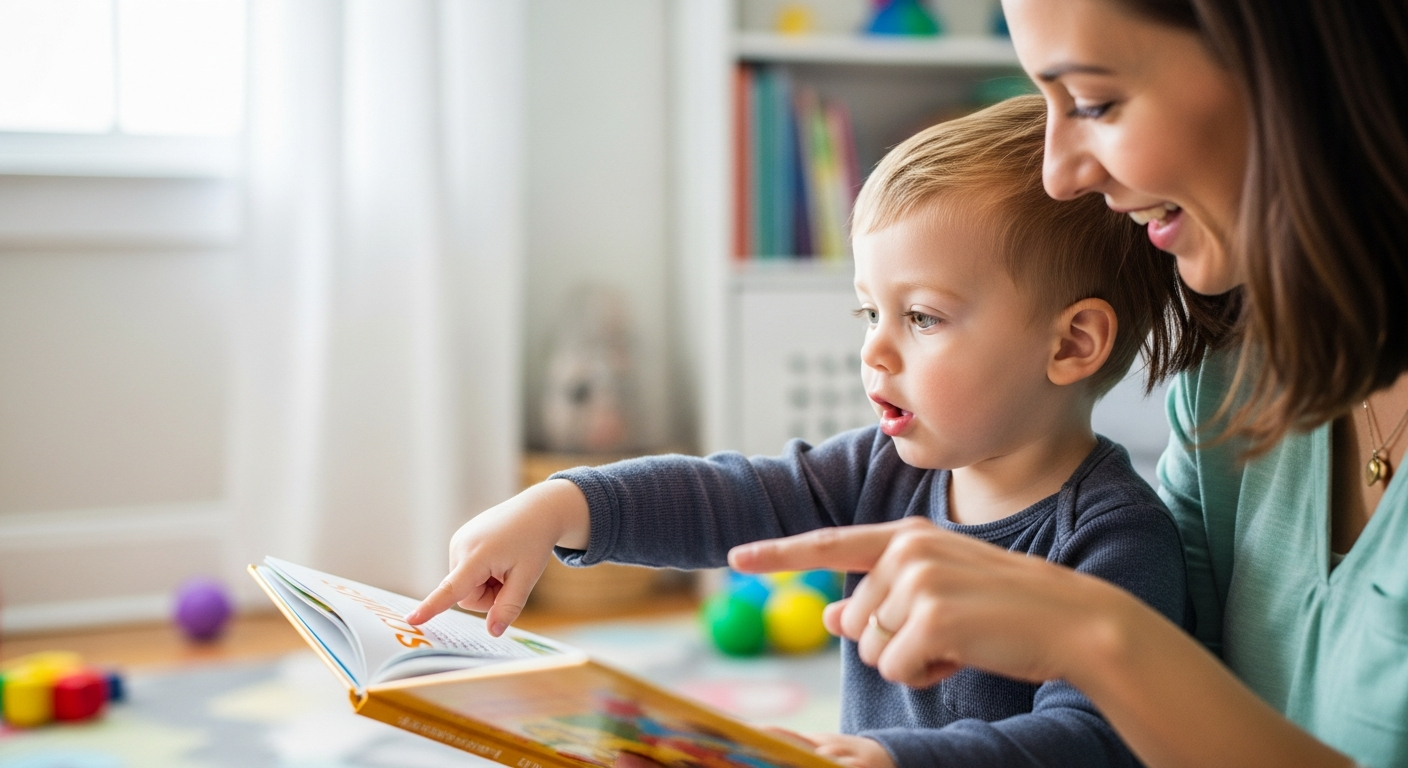
Table of Contents
- Introduction
- Understanding the Basics: Speech vs. Language
- Can a Speech Delay Be Fixed?
- Recognizing the Signs: When Should You Be Concerned?
- Common Causes of Speech and Language Delays
- The Speech Blubs Approach: Why Video Modeling Works
- Practical At-Home Strategies to Encourage Speech
- Professional Treatment: What to Expect from an SLP
- Choosing the Right Plan for Your Child's Journey
- Realistic Expectations: The Journey of Progress
- Conclusion
- FAQs
Introduction
Does it feel like you are constantly playing a guessing game with your toddler? Perhaps they point to the refrigerator and grunt, and you have to cycle through milk, juice, or a snack before finally hitting the mark. You might find yourself watching other children at the park, noticing a two-year-old chatting away while your little one remains largely silent or relies on a few repetitive sounds. It’s natural to feel a pang of worry and ask yourself the big question: can a speech delay be fixed?
The short answer is that while "fixed" might not be the word a therapist would use, speech delays are incredibly common and highly manageable. For most children, a delay isn't a permanent roadblock but a hurdle that can be cleared with the right support, patience, and tools. At Speech Blubs, we understand this journey intimately because our founders lived it. They grew up with speech problems themselves and created the tool they wished they’d had—a solution designed to turn frustration into the joy of communication.

In this post, we will explore the differences between speech and language, identify the signs that it might be time to seek help, and discuss the various causes behind these delays. We’ll also dive into practical strategies you can use at home and explain how "smart screen time" can be a powerful ally in your child’s development. Our goal is to empower you with the knowledge that while every child’s timeline is unique, your support can help them find their voice and speak their minds and hearts.
Understanding the Basics: Speech vs. Language
Before we dive into whether a delay can be "fixed," it is important to understand exactly what we are looking at. Many people use the terms "speech" and "language" interchangeably, but in the world of child development, they represent two different sets of skills.
What is Speech?
Speech refers to the actual physical act of making sounds. It involves coordination between the breath, the vocal cords, the tongue, the lips, and the jaw. When we talk about speech, we are looking at:
- Articulation: How we form specific sounds (like the "p" in "pop" or the "r" in "run").
- Voice: How we use our vocal folds and breath to make sound (considering pitch, volume, and quality).
- Fluency: The rhythm of our speech (avoiding stutters or long pauses).
A child with a speech delay might know exactly what they want to say but struggle with the mechanics of getting the sounds out clearly.
What is Language?
Language is much broader. it is the entire system of giving and receiving information. It involves understanding symbols, words, and gestures to share meaning.
- Receptive Language: This is what your child understands. Can they follow a simple direction like "put your shoes by the door"?
- Expressive Language: This is what your child can communicate. Can they put words together to ask for a drink or tell you they are tired?
If you are wondering if a speech delay can be fixed, you are often actually looking at a combination of these two areas. At Speech Blubs, we focus on both, using our scientific methodology to encourage children to imitate sounds and eventually build their vocabulary through play. If you are feeling uncertain about where your child stands, you can take our quick 3-minute preliminary screener to get an immediate assessment and a plan for next steps.

Can a Speech Delay Be Fixed?
The word "fixed" suggests that something is broken. We prefer to think of a speech delay as a detour. For many children, especially those considered "late talkers," the delay is a matter of maturation. They might just need a little more time or a more stimulating environment to catch up to their peers.
Research shows that with early intervention, many children with speech or language delays can catch up to their age-appropriate milestones before they enter kindergarten. However, the outcome depends heavily on the underlying cause. For example:
- Maturation Delays: Children who are "late bloomers" often catch up naturally or with minimal support.
- Hearing-Related Delays: Once a hearing issue (like chronic ear infections) is treated, speech often flourishes rapidly.
- Neurological or Developmental Conditions: In cases like Autism Spectrum Disorder or Cerebral Palsy, "fixing" the delay might look more like developing alternative communication strategies and making steady, long-term progress.
The key takeaway is that progress is almost always possible. By fostering a love for communication and building a child's confidence, we reduce their frustration and provide them with the foundational skills they need for life.
Recognizing the Signs: When Should You Be Concerned?
Every child develops at their own pace, but there are certain milestones that serve as "checkpoints." If your child isn't reaching these, it is a good idea to speak with your pediatrician or a speech-language pathologist (SLP).
By 12 Months
At one year old, most babies are actively trying to engage with the world. You should look for:
- Using gestures like waving "bye-bye" or pointing at objects.
- Responding to their name.
- Making a variety of sounds (babbling).
- Imitating simple sounds you make.
By 18 Months
This is often the age when parents start to notice a gap. Concerning signs include:
- Preferring gestures over vocalizations to communicate needs.
- Having difficulty imitating sounds.
- Having trouble understanding simple verbal requests (like "No" or "Come here").
- Not using at least 6-10 words spontaneously.
By 2 Years
By the second birthday, a child's communication skills usually explode. Reach out for help if they:
- Can only imitate speech or actions but don’t produce words or phrases on their own.
- Can't follow simple, one-step directions.
- Have an unusual tone of voice (e.g., sounds very nasal or raspy).
- Use only a few sounds repeatedly.
A helpful rule of thumb for clarity is that parents should understand about 50% of what a 2-year-old says and about 75% of what a 3-year-old says. If you find yourself constantly acting as a "translator" because no one else can understand your child, it might be time to download Speech Blubs on the App Store or Google Play to start supplemental practice at home.
Common Causes of Speech and Language Delays
Understanding why a delay is happening is the first step toward addressing it. It is rarely caused by anything a parent did or didn't do; usually, it is a combination of biological and environmental factors.
1. Oral-Motor Issues
Many children with speech delays have difficulty coordinating the muscles in their mouth. This might be due to an oral impairment like a short frenulum (tongue-tie) or a problem in the areas of the brain that signal the lips, tongue, and jaw to move in sync.
2. Hearing Loss
This is a very common and often overlooked cause. If a child can't hear clearly, they can't learn to imitate sounds correctly. Chronic ear infections can cause intermittent hearing loss that is just enough to disrupt language acquisition during critical windows of development.
3. Developmental and Neurological Disorders
Conditions like Autism Spectrum Disorder (ASD) often involve speech delays as a primary symptom. In these cases, the delay is often related to social communication challenges rather than just the physical act of speaking.
4. Maturation Delay (Late Bloomers)
Some kids simply have a slower "internal clock" for language. These children understand everything you say (receptive language) and have good motor skills, but their expressive vocabulary is just taking a bit longer to kick in.
The Speech Blubs Approach: Why Video Modeling Works
At Speech Blubs, we don't believe in passive screen time. We’ve all seen kids go "zombie-mode" while watching cartoons. Our mission is to provide an effective, joyful solution that turns screen time into "smart screen time."
Our unique methodology is based on video modeling. In our app, children watch videos of other children (their peers) making sounds, saying words, and performing facial exercises. This is backed by the science of mirror neurons. When a child sees a peer perform an action, the same neurons in their own brain fire as if they were doing it themselves. This creates a powerful drive to imitate.
"We provide a screen-free alternative to passive viewing and a powerful tool for family connection, helping children learn by watching and imitating their peers."
Our app is designed to be used with an adult. It isn't a digital babysitter; it’s a catalyst for you to play, laugh, and practice together. This co-play approach is essential for reducing the frustration that often comes with speech delays. You can read more about our research and methodology to see why we are rated so highly on the MARS scale.
Practical At-Home Strategies to Encourage Speech
While professional therapy is often necessary, the work you do at home is just as vital. You are your child’s first and most important teacher. Here are some strategies to help "fix" the communication gap:
Self-Talk and Parallel Talk
- Self-Talk: Narrate your own life. "I am washing the big red apple. Now I am cutting it. Crunch, crunch!" This exposes your child to vocabulary in context without placing pressure on them to respond.
- Parallel Talk: Narrate your child’s life. "You are building a tall tower! Oh no, it fell down. Boom!" This shows them that you are paying attention and provides words for the things they are already interested in.
The Power of Choices
Instead of asking open-ended questions like "What do you want to drink?", hold up two options. "Do you want milk or juice?" Wait a few seconds. This forces them to attempt a choice, whether through a word, a gesture, or a sound.
Use "Smart Screen Time" Effectively
Imagine your 3-year-old "late talker" absolutely loves animals. In the Speech Blubs app, the "Animal Kingdom" section offers a fun, motivating way to practice "moo" and "baa" sounds. Instead of just watching a cartoon cow, your child sees a real kid wearing fun digital ears making the "moo" sound. This peer-to-peer connection is much more likely to trigger an imitation response.
Creating a Language-Rich Environment
Read to your child every day, even if they aren't "listening" in the traditional sense. Use board books with bright pictures and name the objects you see. Sing songs with repetitive lyrics and hand motions (like "The Itsy Bitsy Spider"). Repetition is the key to memory and mastery.
Professional Treatment: What to Expect from an SLP
If you decide to seek professional help, a Speech-Language Pathologist (SLP) will be your guide. They will perform a comprehensive evaluation to determine your child’s strengths and areas for improvement.
Treatment might include:
- Individual Therapy: One-on-one sessions focusing on specific sound production or vocabulary building.
- Group Therapy: Helping children practice social communication with peers.
- Parent Coaching: Giving you the tools to turn everyday routines—like bath time or grocery shopping—into therapy sessions.
Remember, the goal of therapy isn't to make your child "perfect." it is to help them communicate effectively so they can share their thoughts, feelings, and needs. To see how other families have navigated this process, check out our parent testimonials.
Choosing the Right Plan for Your Child's Journey
We want to make speech support accessible and effective for the 1 in 4 children who need it. When you decide to integrate Speech Blubs into your child's routine, we offer two main paths:
- Monthly Plan: For $14.99 per month, you get full access to the Speech Blubs app and its vast library of activities.
- Yearly Plan: This is our most popular and high-value option. At $59.99 per year, it breaks down to just $4.99 per month—a massive 66% saving compared to the monthly rate.
Why the Yearly Plan is the best choice for your child:
- 7-Day Free Trial: You can explore everything we offer risk-free for a full week.
- Reading Blubs App Included: You get our extra app designed to help children transition from speaking to reading, a $14.99/month value on its own!
- Early Access: You’ll be the first to receive new updates and content.
- Priority Support: We guarantee a 24-hour response time for any questions or support needs.
Ready to get started? Create your account and begin your 7-day free trial today and see how peer modeling can spark a change in your child's communication.
Realistic Expectations: The Journey of Progress
It is important to remember that speech development is a marathon, not a sprint. We never suggest that a child will be giving public speeches in a month. Every child’s brain is wired differently, and progress often happens in "bursts."
You might go three weeks with no new words, and then suddenly, your child says five new things in a single afternoon. Our app is a powerful supplement to your child’s overall development plan and professional therapy. The goal is to foster a love for communication and build the confidence they need to keep trying, even when sounds are hard to form.
By focusing on joyful learning moments rather than strict "deadlines," you reduce the stress for both yourself and your child. When a child feels pressured, they are more likely to shut down. When they feel like they are playing, they are more likely to speak up.
Conclusion
Can a speech delay be fixed? If "fixed" means giving your child the tools, confidence, and support they need to overcome communication hurdles and thrive, then the answer is a resounding yes. Whether your child is a "late talker" who just needs a nudge or faces more complex challenges that require long-term support, there is always a path forward.
From understanding the signs of a delay to implementing strategies like parallel talk and using "smart screen time" with Speech Blubs, you have the power to make a significant impact on your child's future. Our mission is to empower children to speak their minds and hearts, and we are honored to be a part of your family’s journey.
Don't wait and wonder if your child will "just outgrow it." Early action is the most effective way to support their development. Download Speech Blubs on the Google Play Store or the App Store today to begin your journey. We highly recommend choosing our Yearly Plan to take advantage of the 7-day free trial, the bonus Reading Blubs app, and the best long-term value for your family. Let’s start talking!
FAQs
1. Does baby sign language delay speech?
No, research generally shows the opposite! Teaching baby sign language can actually reduce frustration by giving your child a way to communicate before they have the physical ability to speak. It often serves as a bridge to spoken language rather than a replacement for it.
2. Is my child’s speech delay my fault?
Absolutely not. Speech and language delays are almost never caused by anything parents do. They are usually rooted in biological factors, such as hearing issues, oral-motor coordination challenges, or developmental timelines. Your focus should be on support, not guilt.
3. How do I know if it’s a "speech" delay or a "language" delay?
A speech delay usually involves trouble making specific sounds clearly (articulation). A language delay involves trouble understanding what others say or having difficulty putting words together to express thoughts. Many children have a bit of both, which is why a professional evaluation is so helpful.
4. Can an app really help with a speech delay?
An app should never replace a human connection or professional therapy, but "smart screen time" apps like Speech Blubs are powerful supplements. By using video modeling of peers, our app triggers imitation in a way that cartoons cannot, making it a valuable tool in your at-home toolkit.
About the author