
Cheap Easy Crafts for Kids: Spark Joy & Language Development on a Budget
 By Speech Blubs Team•Jan 13, 2026•19 min.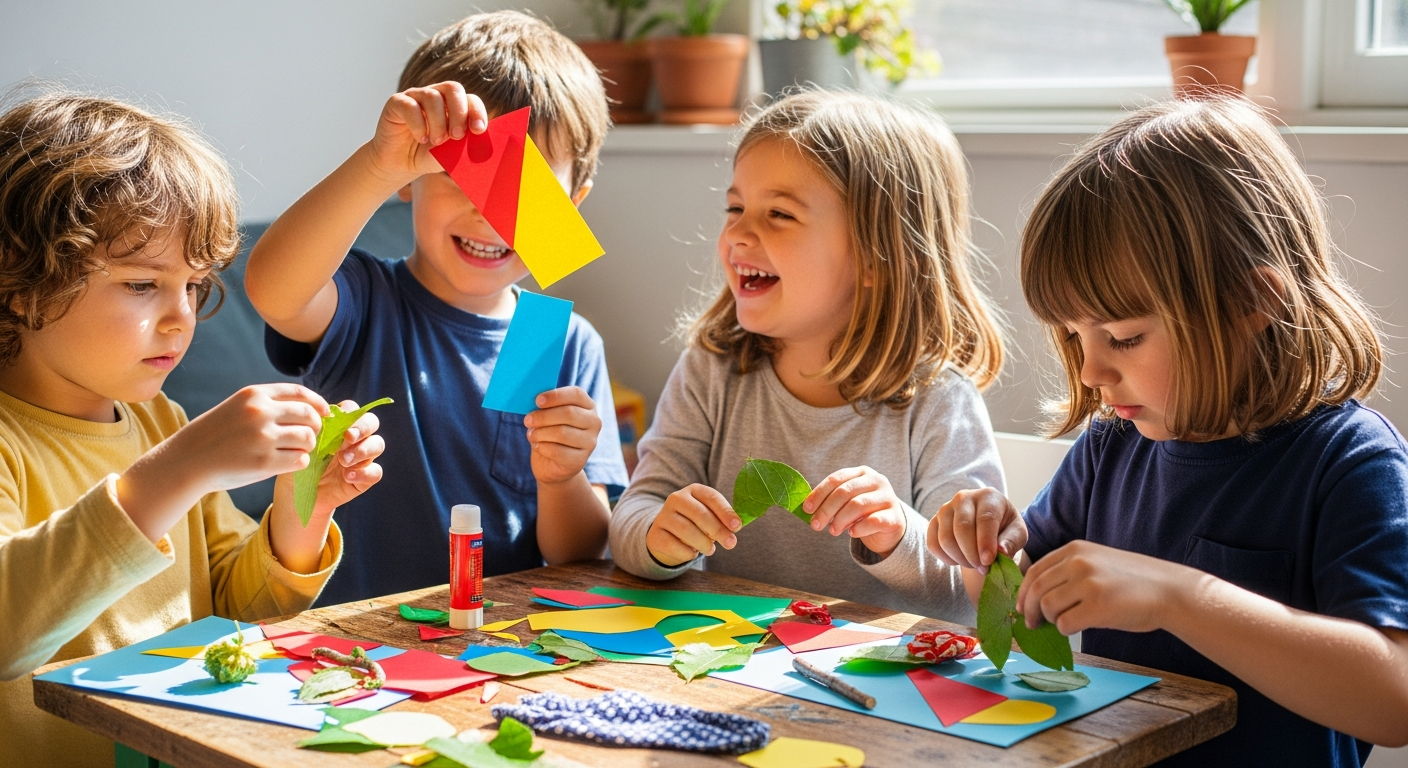
Table of Contents
- Why Crafts Are More Than Just Fun: A Developmental Powerhouse
- The Unsung Heroes of Crafting: Household Items
- Essential Low-Cost Craft Supplies
- Crafting for Communication: How Simple Projects Boost Speech & Language
- Our Favorite Cheap & Easy Crafts for Kids
- Beyond the Craft: Turning Play into Progress with Speech Blubs
- Choosing Your Path with Speech Blubs: Value and Features
- Conclusion
- FAQ
Ever feel like the creative well runs dry, or that keeping kids entertained requires an endless stream of expensive supplies? You're not alone! Many parents find themselves staring at a pile of empty toilet paper rolls, wondering how to transform them into something engaging without breaking the bank or spending hours on intricate projects. But what if we told you that these simple, budget-friendly crafts are not just boredom busters, but powerful tools for your child’s development, especially their speech and language skills?
At Speech Blubs, we understand the incredible power of play and connection. Our mission is to empower children to speak their minds and hearts, and we believe that everyday activities, like crafting, are golden opportunities for growth. This post isn't just about listing fun ideas; it's about unlocking the hidden potential in cheap easy crafts for kids to foster communication, build confidence, and create cherished family memories, all while keeping your budget in check. We'll explore how simple supplies can become springboards for language learning and share our top picks for crafts that are big on fun and impact, without the fuss.

Why Crafts Are More Than Just Fun: A Developmental Powerhouse
When children engage in crafting, they're doing more than just gluing glitter onto paper. They're developing a whole host of critical skills that form the foundation for future learning, including speech and language. These hands-on activities provide a rich, multi-sensory environment that naturally encourages communication.
Consider a simple paper plate animal craft. A child isn't just cutting and pasting; they're talking about the animal's color, size, and the sounds it makes. They're describing the process ("I'm cutting the ears!"), asking questions ("Can I have the red marker?"), and following directions ("First, glue the eyes, then draw the nose."). This constant interaction, guided by an empathetic adult, is a perfect breeding ground for language acquisition. It’s a screen-free alternative to passive viewing, making it "smart screen time" when paired with apps like Speech Blubs that focus on active engagement.
Crafts naturally promote:
- Fine Motor Skills: Cutting, gluing, painting, and manipulating small objects strengthen the tiny muscles in hands and fingers, which are vital for tasks like writing and even for the precise movements of the tongue and mouth involved in articulation.
- Problem-Solving: Deciding how to attach a piece, what color to use, or how to make something stand up encourages critical thinking.
- Creativity and Imagination: There's no "wrong" way to make art. This freedom fosters self-expression and imaginative play, which are crucial for developing narrative skills.
- Following Directions: Simple crafts often come with a sequence of steps, helping children practice receptive language and sequential memory.
- Vocabulary Expansion: Introducing new words related to colors, shapes, textures, tools, and actions ("smooth," "sticky," "snip," "fold") broadens a child's lexicon.
These benefits are amplified when parents actively participate, asking open-ended questions, narrating their actions, and encouraging their child to verbalize their thoughts and ideas. It's about turning every "I'm bored" into an opportunity for connection and learning.

The Unsung Heroes of Crafting: Household Items
The beauty of cheap easy crafts for kids lies in their accessibility. You don't need a specialty craft store trip to spark creativity. Many of the most engaging projects can be made with items you already have around your home. Think of that growing pile of empty cereal boxes, the collection of forgotten bottle caps, or even simple leaves and twigs from your backyard.
Repurposing these everyday items not only saves money but also teaches children valuable lessons about sustainability and resourcefulness. It encourages them to see potential in ordinary objects and to think creatively about how things can be transformed. This mindset is incredibly empowering and fuels innovative thinking.
Here’s a snapshot of common household items that are goldmines for crafting:
- Cardboard: Cereal boxes, shipping boxes, paper towel/toilet paper rolls – perfect for construction, masks, puppets, and structural bases.
- Paper: Old newspapers, magazines, junk mail, paper plates, construction paper scraps – ideal for cutting, collaging, folding, and drawing.
- Nature Finds: Leaves, twigs, pebbles, flowers – wonderful for sensory play, nature collages, and storytelling elements.
- Kitchen Staples: Pasta, beans, food coloring, flour, salt, cornstarch – excellent for homemade playdough, sensory bins, and edible art.
- Recyclables: Plastic bottles, bottle caps, egg cartons, old fabric scraps – endless possibilities for sculptures, instruments, and characters.
Essential Low-Cost Craft Supplies
While household items are fantastic, a small stash of basic, inexpensive craft supplies can open up even more possibilities. These items are readily available at dollar stores or discount retailers and last a long time.
Your ultimate cheap craft supply list:
- Basic Paper: Construction paper (assorted colors), white printer paper, paper plates (various sizes).
- Adhesives: Kid-safe glue sticks, liquid school glue, masking tape or painter's tape.
- Cutting Tools: Kid-safe scissors.
- Coloring Tools: Crayons, washable markers, tempera paint (primary colors).
- Embellishments (Optional, but fun!): Googly eyes, assorted pom-poms, pipe cleaners.
With these few essentials, combined with your household recyclables, you'll be ready for countless hours of creative exploration and language development.
Crafting for Communication: How Simple Projects Boost Speech & Language
Every snip, glue, and dab of paint in a craft project is an opportunity to build communication skills. At Speech Blubs, we see the link between hands-on play and language development as fundamental. Our approach, rooted in scientific principles, emphasizes active engagement, which crafts deliver in spades.
Building Vocabulary and Descriptive Language
Imagine making a "paper plate fish."
- Scenario: Your 3-year-old is a "late talker" and loves animals. You're trying to expand their vocabulary beyond basic nouns.
- Crafting in Action: As you cut out the fins, talk about the "sharp" scissors and the "smooth" paper. When gluing the scales, describe the "sticky" glue and the "shiny" glitter. Encourage your child to choose "blue" for the body and "yellow" for the fins. Ask, "What color should the scales be? Sparkly?"
- Speech Blubs Connection: This descriptive language practice complements the "Animal Kingdom" section in Speech Blubs, where children learn animal names and sounds through engaging video modeling. They see other children saying "fish" or "swim," and then they imitate. Crafting extends this learning into a tangible, interactive experience. For a child learning new words, this dual approach—hands-on creation and video modeling—reinforces comprehension and expressive language.
Following Directions and Sequencing
Most crafts involve a series of steps, perfect for practicing receptive language.
- Scenario: Your 4-year-old struggles with multi-step commands and often gets overwhelmed.
- Crafting in Action: Start with two-step directions: "First, get the blue paper, then cut a circle." As they progress, add another step: "First, glue the circle, then draw two eyes." Use visual cues and model the actions. Talk through the sequence: "What's next?" "We need to put the eyes before the mouth."
- Speech Blubs Connection: The app's structured activities implicitly guide children through sequences of actions and sounds. Just like following the steps to make a craft, children in Speech Blubs learn to follow the sequence of sounds to form words or sentences, watching their peers for cues. This builds their auditory processing and memory. If you're unsure where your child stands, take our quick 3-minute preliminary screener to get an assessment and a next-steps plan.
Encouraging Storytelling and Imaginative Play
Crafts often result in characters or props that spark imaginative play, vital for narrative development.
- Scenario: Your 5-year-old struggles to tell coherent stories or express their feelings effectively.
- Crafting in Action: After making "monster puppets" from old socks, encourage your child to give their monster a name, a voice, and a personality. "What does your monster like to eat?" "Where does your monster live?" Use the puppets to act out simple scenarios or even express emotions. This provides a safe, low-pressure way for children to experiment with language and self-expression.
- Speech Blubs Connection: This imaginative play directly feeds into the social and emotional learning fostered by Speech Blubs. Our app teaches complex communication skills like turn-taking and expressing needs, which can then be practiced through puppet shows or character play. By seeing children express themselves in our video models, your child learns to "speak their minds and hearts" with confidence.
Developing Fine Motor Skills for Speech Readiness
The intricate movements required for crafting significantly impact pre-writing and articulation.
- Scenario: Your child has difficulty with precise hand movements, impacting their ability to manipulate objects and potentially their clarity of speech.
- Crafting in Action: Activities like threading beads (made from paper straws), tearing paper into small pieces for a collage, or squeezing glue bottles all enhance fine motor control. These precise hand movements are linked to the control needed for the muscles of the tongue, lips, and jaw for clear speech.
- Speech Blubs Connection: Our app's "Mouth Gym" activities, for example, directly target these oral motor skills in a playful way. Combining these focused exercises with broader fine motor development through crafts creates a holistic approach to speech readiness.
Fostering Joint Attention and Connection
Crafting together naturally creates moments of shared focus.
- Scenario: You're looking for ways to increase your child's engagement and shared attention during activities, a precursor to successful communication.
- Crafting in Action: Sitting side-by-side, working on a "toilet paper roll animal" together, you naturally share attention on the task. "Look, I'm drawing the eyes here!" "Can you pass me the tape?" This shared focus and interaction builds crucial social communication skills.
- Speech Blubs Connection: This shared experience mirrors the "smart screen time" approach of Speech Blubs, where the app is designed to be a tool for family connection, not passive viewing. Parents are encouraged to play with their children, prompting interaction and fostering joint attention. The app becomes a powerful supplement to real-world interactions and, when applicable, professional therapy.
Our Favorite Cheap & Easy Crafts for Kids
Ready to get crafting? Here's a collection of simple, budget-friendly crafts designed to spark creativity and language development. Remember, the goal isn't a perfect outcome, but the process of creation and communication.
Paper Plate Wonders
Paper plates are incredibly versatile and cheap!
- Paper Plate Animals/Masks:
- Supplies: Paper plates, markers/crayons, construction paper scraps, glue, scissors.
- How to: Cut out ears, noses, and other features from construction paper or draw directly onto the plate. Create a lion, cat, dog, or even a monster. Cut eyeholes for a mask.
- Language Boost: Ask about animal sounds, body parts ("Where is the lion's mane?"), colors, and actions ("Roar!"). For a child working on animal sounds, mimicking a lion's "roar" while wearing a homemade mask can be incredibly motivating.
- Paper Plate Fish Craft:
- Supplies: Paper plates, paint/markers, glitter (optional), glue, construction paper.
- How to: Cut a wedge out of the plate for the mouth and use it as a tail. Decorate the plate with paint or markers. Add construction paper fins.
- Language Boost: Talk about "under the sea" animals, colors, and textures. Discuss "swimming" movements and make "glub, glub" sounds.
- Paper Plate Spin Art:
- Supplies: Paper plates, washable paint, salad spinner (adult supervision recommended).
- How to: Place a paper plate in a salad spinner. Drip various colors of paint onto the plate. Close the lid and spin!
- Language Boost: Discuss colors mixing ("What color is emerging?"), describe the action ("Spinning fast!"), and talk about the patterns created.
Toilet Paper Roll Transformations
Don't toss those cardboard tubes! They're excellent for building.
- Toilet Paper Roll Animals (Bunnies, Owls, Octopuses):
- Supplies: Toilet paper rolls, paint/markers, construction paper, googly eyes (optional), glue, scissors.
- How to: Paint or color the roll. Add ears, wings, or tentacles cut from construction paper. Glue on eyes and draw faces.
- Language Boost: Great for practicing animal names, body parts, and prepositions ("The bunny is inside the box," "The ears are on top"). For a child learning new action verbs, making a toilet paper roll octopus and pretending it's wiggling its tentacles can reinforce the word "wiggle."
- Cardboard Tube Telescope:
- Supplies: Toilet paper/paper towel roll, paint/markers, stickers.
- How to: Decorate the roll. Look through it like a telescope!
- Language Boost: Encourage descriptive observations: "What do you see far away?" "Is it big or small?" "What colors do you notice?"
Nature's Bounty Crafts
Step outside and gather some natural treasures!
- Painted Rocks:
- Supplies: Smooth rocks (collected outdoors), acrylic paint, paintbrushes.
- How to: Clean the rocks, then paint them with various colors and designs.
- Language Boost: Describe colors, shapes, and patterns. Use them for storytelling or as reward tokens, as described by a fellow parent: assign colors to desired behaviors and collect rocks in a jar for rewards. This is also a fantastic activity for expressing emotions by painting happy or sad faces.
- Leaf Rubbings & Collages:
- Supplies: Leaves (various shapes/sizes), paper, crayons (for rubbings), glue (for collages).
- How to: Place leaves under paper and rub with a crayon to reveal their texture. Or, glue leaves onto paper to create nature scenes or animals.
- Language Boost: Discuss leaf characteristics ("pointy," "smooth," "crinkly"), colors, and the seasons. Compare sizes and shapes.
Popsicle Stick & Cardboard Creations
Simple materials, big possibilities!
- Popsicle Stick Structures:
- Supplies: Popsicle sticks, glue.
- How to: Build fences, houses, or abstract sculptures by gluing sticks together.
- Language Boost: Practice positional words ("on top," "next to"), counting, and describing shapes formed.
- Cardboard Box Robots/Houses:
- Supplies: Cardboard boxes (various sizes), paint/markers, foil, bottle caps, glue, scissors.
- How to: Connect boxes with tape/glue to create a robot or small playhouse. Decorate with paint and other items.
- Language Boost: Encourage imaginative play and storytelling. "What does your robot do?" "Who lives in your house?" Practice body parts ("head," "arms," "legs") if making a robot.
Sensory & Paint Play
Engage multiple senses for richer learning.
- Homemade Finger Paint:
- Supplies: Cornstarch, sugar, salt, water, food coloring.
- How to: Mix cornstarch, sugar, and salt, then gradually add water until smooth. Divide into containers and add food coloring.
- Language Boost: Focus on sensory words: "squishy," "cold," "smooth," "colorful." Talk about the process of mixing and creating new colors.
- Sidewalk Chalk:
- Supplies: Plaster of Paris, water, liquid tempera paint/food coloring.
- How to: Mix plaster with water and add color. Pour into molds (e.g., toilet paper rolls lined with parchment paper) and let dry.
- Language Boost: Describe colors, shapes, and what you're drawing. Encourage storytelling with your sidewalk creations.
Purposeful Crafts for Organization & Gifting
Crafts with a purpose make the effort even more rewarding!
- Painted Jars for Organizing:
- Supplies: Empty glass jars, acrylic paint.
- How to: Kids can paint the jars creatively. Once dry, use them to organize crayons, pens, small toys, or craft supplies.
- Language Boost: Focus on colors and categories ("This jar is for blue crayons," "These are for small toys"). This craft directly helps a child learn to categorize, an important cognitive skill that underpins language organization.
- Homemade Cards/Gifts:
- Supplies: Paper, markers, glue, any craft scraps.
- How to: Encourage kids to create personalized cards or small artwork for friends and family.
- Language Boost: Discuss who the gift is for, what they like, and what message to convey. This fosters empathy and social communication.
- DIY Costumes:
- Supplies: Old t-shirts, construction paper, markers, tape, old fabric scraps.
- How to: With minimal sewing or just tape/glue, transform old clothes and paper into simple costumes like a superhero cape, animal ears, or a pirate eye patch.
- Language Boost: Encourage role-playing, imaginative dialogue, and storytelling. "You're a superhero! What superpower do you have?" This is fantastic for practicing conversational turns and expanding sentence length.
These are just a few ideas to get you started. Remember, the simpler the craft, often the more room there is for spontaneous interaction and language development.
Beyond the Craft: Turning Play into Progress with Speech Blubs
While these cheap easy crafts for kids are fantastic for fostering general development, sometimes children need a little extra support with their speech and language. That's where Speech Blubs comes in, blending scientific principles with joyful play to create one-of-a-kind "smart screen time" experiences.
At Speech Blubs, our company was born from the personal experiences of our founders, who all grew up with speech problems and created the tool they wished they had. We are committed to providing an immediate, effective, and joyful solution for the 1 in 4 children who need speech support. We believe every child deserves to "speak their minds and hearts."
Our Video Modeling Advantage
Our unique approach leverages "video modeling," where children learn by watching and imitating their peers. This method is incredibly powerful because children are naturally drawn to observing and copying other kids. When they see a peer engaging in an activity or saying a word, mirror neurons in their brains activate, making it easier for them to learn and imitate. It's an intuitive, engaging way to teach complex communication skills.
Smart Screen Time, Real Connection
Unlike passive viewing like cartoons, Speech Blubs offers an active, interactive experience. Our app is designed to be a powerful tool for family connection, not a babysitter. We encourage adult co-play and support, turning screen time into a shared learning adventure. Whether it's practicing animal sounds, identifying colors, or building sentences, our activities are crafted to be fun, educational, and to create joyful family learning moments.
"Our method is backed by science, placing us in the top tier of speech apps worldwide. We've observed incredible progress in children learning to communicate more clearly and confidently through our engaging activities." — Speech Blubs Research
We understand that you, as a parent, are your child's first and most important teacher. Speech Blubs is here to empower you with tools and activities that complement your efforts, providing a playful, structured way to boost language development. See what other parents are saying about their child's success with Speech Blubs by visiting our testimonials page.
Choosing Your Path with Speech Blubs: Value and Features
We offer flexible subscription plans to fit your family's needs, designed to give you the most value and features possible.
Our two main plans are:
- Monthly Plan: $14.99 per month.
- Yearly Plan: $59.99 per year, which breaks down to just $4.99 per month!
The Yearly plan is our clear best choice and offers significantly more value. By choosing the Yearly plan, you save a remarkable 66% compared to the monthly option. But the savings are just the beginning!
The Yearly plan includes:
- A 7-day free trial: Experience the full power of Speech Blubs before committing.
- The extra Reading Blubs app: Double the fun and learning with our complementary reading app.
- Early access to new updates: Be the first to enjoy our latest features and content.
- 24-hour support response time: Get quick answers and assistance whenever you need it.
The Monthly plan does not include these incredible benefits. We highly recommend the Yearly plan to unlock the full suite of features and maximize your child's communication journey.
Ready to provide your child with an engaging, research-backed tool for speech and language development? Don't miss out on the best value and exclusive features.
You can create your account and begin your 7-day free trial today by selecting the Yearly plan. Or, if you prefer to dive straight in, download Speech Blubs directly from the Apple App Store or Google Play Store and start your free trial there!
Conclusion
Engaging in cheap easy crafts for kids is so much more than a way to pass the time; it’s an investment in their holistic development. From strengthening fine motor skills to expanding vocabulary and fostering imaginative play, every simple project offers a wealth of learning opportunities. When we as parents actively participate, narrating the process, asking questions, and encouraging expression, these humble crafts become powerful springboards for speech and language growth.
Remember, the goal isn't to create a masterpiece, but to enjoy the process, connect with your child, and facilitate their communication journey. And for those moments when you want a structured, scientifically-backed tool to complement these hands-on activities, Speech Blubs is here. Our unique video modeling methodology and "smart screen time" approach empower children to find their voice and speak their hearts.
Don't let budget or complexity hold you back. Grab those paper plates, empty toilet paper rolls, and a handful of crayons, and embark on a crafting adventure that's rich in learning and joy.
Ready to give your child the tools to confidently express themselves? Start your journey today! Choose the Yearly plan to unlock your 7-day free trial, access the Reading Blubs app, and enjoy all the premium features Speech Blubs has to offer. Download Speech Blubs now on the App Store or Google Play to empower your child's voice.
FAQ
Q1: What are the best cheap craft supplies to keep on hand?
A1: The most versatile and inexpensive supplies include paper plates, construction paper, toilet paper/paper towel rolls, basic glue (stick and liquid), kid-safe scissors, washable markers, crayons, and tempera paint. Collecting recyclables like cardboard boxes and bottle caps, along with natural items like leaves and twigs, further expands your options at no cost.
Q2: How do crafts specifically help with speech and language development?
A2: Crafts provide a rich context for language. Children learn new vocabulary (colors, shapes, textures, action verbs), practice following multi-step directions, develop fine motor skills crucial for articulation, and engage in imaginative play that fosters storytelling and social communication. Joint attention during crafting also builds foundational communication skills.
Q3: My child seems disinterested in crafts. How can I make them more engaging?
A3: Start with very simple, open-ended crafts where there's no "right" way to do it. Focus on the process, not the product. Incorporate your child's interests – if they love dinosaurs, make a dinosaur craft. Keep sessions short, make it a shared activity, and most importantly, model enthusiasm and narration. Speech Blubs can help spark interest by linking playful activities to communication goals.
Q4: How does Speech Blubs fit in with hands-on crafting?
A4: Speech Blubs acts as a powerful supplement to hands-on play. While crafts develop general communication skills, Speech Blubs offers targeted, engaging activities for specific speech and language goals using our unique video modeling. It reinforces vocabulary, articulation, and expressive language in a fun, interactive "smart screen time" environment, turning screen time into a shared learning experience that complements your crafting efforts.
About the author