
Choo-Choo! 20+ Engaging Toddler Train Activities for Learning
 By Speech Blubs Team•Feb 23, 2026•15 min.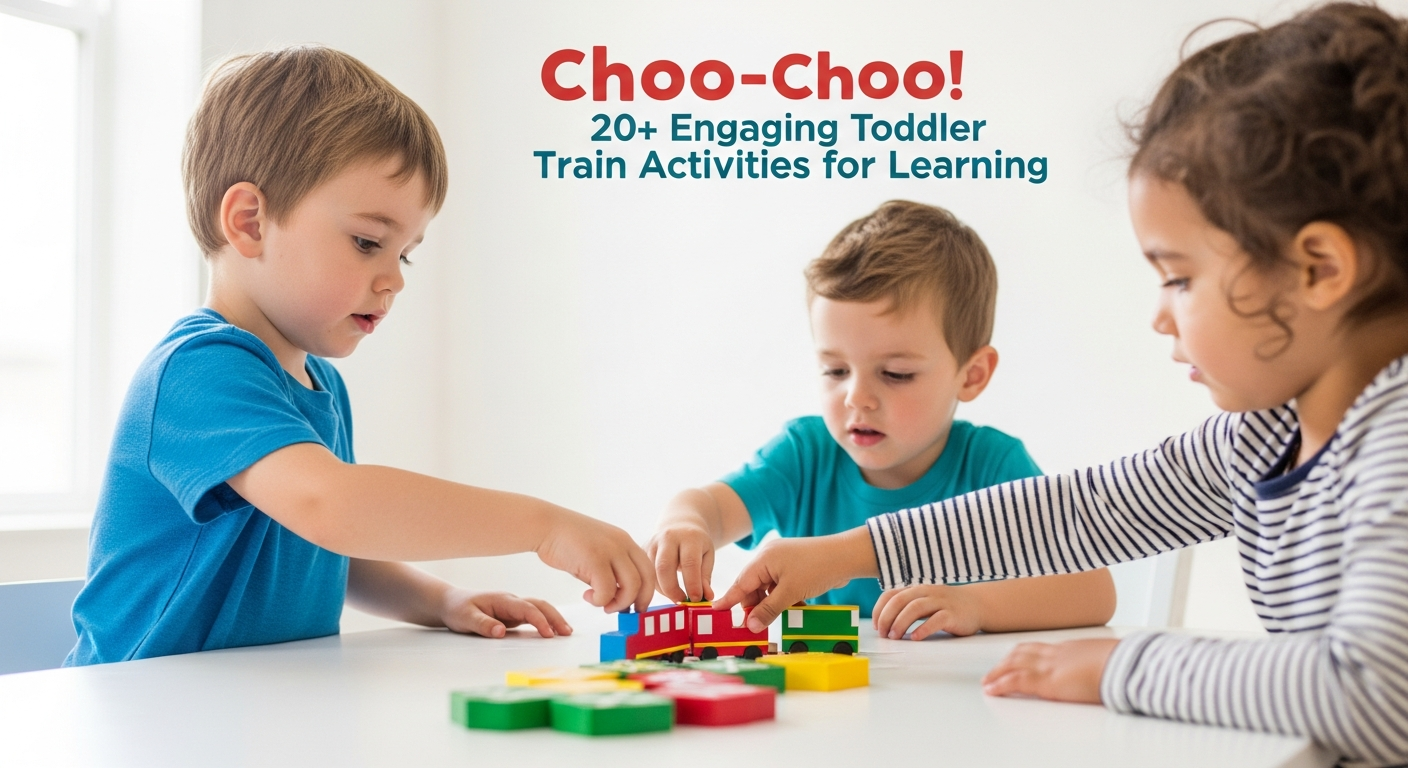
Table of Contents
- Introduction
- The Power of Play-Based Learning
- Creative Arts and Toddler Train Activities
- Movement and Gross Motor Train Games
- STEM-Focused Toddler Train Activities
- Sensory Play: All Aboard the Senses!
- Literacy and Language Activities
- Incorporating Smart Screen Time with Speech Blubs
- Practical Scenarios: How to Use These Activities
- Tips for Success with Toddler Train Activities
- Why 1 in 4 Children Need Speech Support
- Conclusion
- Frequently Asked Questions
Introduction
Did you know that for many toddlers, the rhythmic "chugga-chugga" of a locomotive is one of the very first complex sound patterns they attempt to mimic? There is something undeniably magnetic about trains for young children. Whether it’s the bright colors of the cars, the powerful "toot-toot" of the whistle, or the satisfying way the tracks click together, trains capture the imagination like few other things can. At Speech Blubs, we see this fascination as a golden opportunity. We believe that when a child is truly interested in something—like a fleet of colorful steam engines—learning stops feeling like work and starts feeling like a joyful adventure.
In this post, we are going to explore a massive variety of toddler train activities that go far beyond just pushing a toy across the floor. We will dive into creative crafts, sensory play, STEM-based experiments, and movement games designed to boost your child's vocabulary, fine motor skills, and social confidence. Our mission is to empower children to "speak their minds and hearts," and we’ve found that using a child’s natural interests is the fastest way to get them talking.

By the end of this article, you will have a full "toolbox" of play ideas to keep your little engineer engaged for weeks. We’ll also show you how to integrate these activities with "smart screen time" to create a well-rounded developmental plan. Our main message is simple: through play and connection, you can help your child build the foundational communication skills they need to thrive.
The Power of Play-Based Learning
Before we jump into the activities, it’s important to understand why trains are such a powerful tool for development. For a toddler, a train isn't just a vehicle; it’s a series of cause-and-effect relationships. "If I push this, it moves." "If I unhook this, the car stays behind." These are the building blocks of logical thinking.
At Speech Blubs, our founders grew up with speech challenges themselves. They created the tool they wished they had—one that blends scientific principles with the pure joy of play. This same philosophy applies to the activities we suggest. When you sit on the floor and play trains with your child, you aren't just "passing time." You are modeling language, encouraging eye contact, and building a secure bond.
If you are ever unsure where your child stands in their development, you can take our quick 3-minute preliminary screener. It involves 9 simple questions and provides an assessment and next-steps plan to help you support your little one’s journey.
Creative Arts and Toddler Train Activities
Crafting is a fantastic way to work on fine motor skills and following directions. When children create their own "locomotives," they take pride in their work, which boosts their confidence.
1. The Classic Egg Carton Train
This is a favorite in our community because it uses simple, recycled materials.
- What you need: An empty egg carton, paint, string or pipe cleaners, and some bottle caps for wheels.
- How to do it: Cut the egg carton into individual cups. Let your toddler paint each cup a different color. This is a great time to practice color names! Once dry, poke a small hole in the front and back of each cup and link them together with pipe cleaners.
- Developmental Tip: Use this to practice "sequencing." Ask your child, "Which car comes first? Which one is at the end?" This helps with early math and logic skills.
2. Toilet Paper Roll Whistles
Every conductor needs a whistle!

- How to do it: Have your child decorate a cardboard tube with stickers or crayons. Punch a small hole near one end. Secure a piece of wax paper over the end with a rubber band.
- Why it works: Blowing through the hole to make a "Toot-Toot" sound is excellent for oral motor development. It encourages children to control their breath, which is a foundational skill for clear speech.
3. Footprint Freight Trains
For a sensory-filled art project, try making a footprint train.
- How to do it: Paint the bottom of your child's foot with washable paint and press it onto a long piece of paper. Each footprint becomes a train car!
- Speech Connection: While doing this, narrate the process. "Cold paint! Squishy toes! Press down... 1, 2, 3!" This "parallel talk" technique is something we often encourage parents to use alongside our video modeling methodology, where children learn by watching and imitating their peers.
Movement and Gross Motor Train Games
Toddlers have a lot of energy, and "chugging" around the house is a perfect way to burn it off while practicing social cues.
4. The Human Train
This is a classic for a reason. Have everyone in the family line up, holding the waist of the person in front.
- The Goal: Walk around the house like a train. The "Engine" (the leader) decides the speed.
- Social Skill: This teaches children about "following" and "leading." It also requires them to pay attention to the person in front of them, fostering social awareness.
5. Conductor Says
This is a train-themed twist on "Simon Says." The "Conductor" (you or your child) gives orders like "Conductor says... blow your whistle!" or "Conductor says... chug slowly!"
- Why we love it: It’s an engaging way to practice receptive language—the ability to understand and follow instructions. For a child who might be a "late talker," focusing on following one-step directions is a huge win.
6. "Loose Caboose"
In this game, the children form a train and move around. One person is the "Loose Caboose" who tries to gently tag the end of the train.
- The Lesson: This game is great for teaching the concept of "stop" and "go." When the conductor shouts "Red Light!", the train must freeze. Developing this kind of impulse control is vital for toddler development.
STEM-Focused Toddler Train Activities
Trains provide a natural introduction to science, technology, engineering, and math (STEM). You don't need a lab—just some tracks and a bit of curiosity.
7. The Science of Train Wheels
Ever wonder why trains don't just slide off the tracks? You can demonstrate this with a simple "Cup Experiment."
- The Setup: Tape two disposable cups together at their bases (making a >< shape). Then tape another two cups together at their rims (making a <> shape).
- The Experiment: Create a small "track" using two rulers or yardsticks on an incline. Try to roll both sets of cups down. Your child will see that the second set (the conical shape) stays on the track much better.
- Connection: This introduces the concept of "shape and function." It’s a sophisticated concept taught in a very simple, hands-on way.
8. Magnetic Magic
Many wooden train sets use magnets to connect the cars.
- Activity: Give your child two train cars and ask them to try and connect them. If they push the same poles together, the cars will "push" away.
- Language Opportunity: Use words like "push," "pull," "stick," and "magic." Exploring these physical sensations helps solidify the meaning of these action words.
9. Bridge Building Challenge
Use blocks, books, or cardboard boxes to create bridges for the train tracks.
- The Challenge: "Can we build a bridge high enough for the big engine to go under?"
- Skills: This works on spatial awareness and problem-solving. For a parent whose 3-year-old loves building, this is a perfect way to introduce words like "under," "over," "through," and "bridge."
Sensory Play: All Aboard the Senses!
Sensory play is essential for toddlers as it helps build nerve connections in the brain’s pathways.
10. The Ice Train
Freeze small plastic train toys in ice cube trays.
- The Play: Put the "ice trains" in a sensory bin. Provide warm water and droppers.
- The Conversation: Talk about "cold," "melting," "wet," and "hard." Sensory experiences provide a rich vocabulary that is easy for children to remember because they are physically feeling the words.
11. Edible Snack Trains
Learning is always better when there are snacks involved!
- How to do it: Use celery sticks or rectangular crackers as the base of the cars. Use round crackers or grapes for the wheels. Use cream cheese or peanut butter (if safe) as the "glue."
- The Benefit: Following a "recipe" to build the train is another great way to practice sequencing and fine motor skills. Plus, talking about the different tastes (salty, sweet, crunchy) adds to their sensory vocabulary.
12. Sandbox Railroads
Take the train play outside! Building tracks in the sand or dirt adds a layer of resistance that helps build hand strength.
- Activity: Encourage your child to "dig a tunnel" or "build a mountain" for the tracks.
Literacy and Language Activities
We can easily turn a love for trains into a love for reading and letters.
13. The Alphabet Train
- How to do it: Label each train car with a letter of the alphabet using masking tape or stickers.
- The Game: Ask your child to "deliver" the letter 'B' to the station.
- The Speech Blubs Way: We often suggest matching these physical activities with our app. For instance, after your child finds the letter 'B', you can open the Speech Blubs app and find a word that starts with that letter. To see how our method has helped thousands of families, you can read our parent testimonials.
14. Train Songs and Fingerplays
Music is a powerful mnemonic for language.
- Song Idea: "Engine, Engine Number Nine, running on Chicago Line..." or "I’ve Been Working on the Railroad."
- The Benefit: The rhythm and rhyme of songs help children predict what comes next, which is a key skill for both speech and reading.
15. Storytime: "The Little Engine That Could"
This classic book is perfect for teaching "perseverance" and the "I think I can" attitude.
- Engagement Tip: While reading, let your child make the "Choo-Choo" sounds every time the train moves. This keeps them active in the story rather than just being a passive listener.
Incorporating Smart Screen Time with Speech Blubs
While physical play is vital, we also know that parents need effective tools for those moments when they need a little help. This is where Speech Blubs comes in. We offer a "screen-free alternative" to passive viewing (like mindless cartoons) by providing interactive, "smart screen time."
Our unique approach uses video modeling. In the app, your child will see other children (not cartoons) making sounds and saying words. This triggers "mirror neurons" in the brain, encouraging your child to imitate what they see. If your child is obsessed with transportation, they will love finding the "things that go" in our various sections.
We want to be transparent about our pricing because we value the trust of our community. We offer two main plans:
- Monthly Plan: $14.99 per month.
- Yearly Plan: $59.99 per year.
The Yearly Plan is the clear best choice for families. Not only does it break down to just $4.99 per month (a 66% saving!), but it also includes high-value features that the monthly plan does not:
- A 7-day free trial so you can explore everything with zero risk.
- The Reading Blubs app, which is a perfect next step for toddlers transitioning into early reading.
- Early access to new updates and a 24-hour support response time from our team.
Ready to see how video modeling can help your little one? You can download Speech Blubs on the App Store or Google Play to begin your journey.
Practical Scenarios: How to Use These Activities
Let’s look at how these toddler train activities might look in a real-life situation.
Imagine a parent, Sarah, whose 2-year-old son, Leo, is a "late talker." Leo loves his wooden train set but mostly plays silently. Sarah decides to try the "Bridge Building Challenge" (Activity #9). As they build, Sarah uses the app's video modeling to show Leo a peer saying the word "bridge." Then, as they push the train over the blocks, Sarah says, "Over the bridge! Whoosh!"
By combining the physical toy, the visual model from the app, and the verbal narration from his mom, Leo is getting a multi-sensory learning experience. He’s not being pressured to speak; he’s being invited into a joyful, "smart screen time" session that supplements his overall development. This is how we foster a love for communication and reduce frustration for both parent and child.
Tips for Success with Toddler Train Activities
To get the most out of these play ideas, keep these three things in mind:
- Follow Their Lead: If your child wants to use the train tracks as a "fence" for their toy cows, go with it! Play is most effective when the child is in the driver's (or conductor's) seat.
- Focus on the Process, Not the Product: The egg carton train might look like a mess of paint and glue, and that’s okay. The value is in the painting, the sticking, and the talking that happened while making it.
- Keep it Short and Sweet: Toddlers have short attention spans. It’s better to do 5 minutes of high-quality, connected play than to try and force a 30-minute activity.
Why 1 in 4 Children Need Speech Support
It is a common statistic that roughly 1 in 4 children will face some form of speech or language delay. This can be a stressful realization for parents. Our goal at Speech Blubs is to provide an immediate, effective, and joyful solution. Whether you are using our activities at home or working with a professional speech-language pathologist, our app serves as a powerful supplement.
Our founders’ personal experiences drive everything we do. We understand the frustration of not being understood. By blending scientific methodology with the world of play, we are helping children build foundational skills like imitation, turn-taking, and sound production.
If you are curious about the science that backs our app, you can explore our research page. We are proud to be rated highly on the MARS scale and to be a trusted resource for parents worldwide.
Conclusion
From building egg carton locomotives to conducting "Conductor Says" in the living room, toddler train activities offer a world of developmental benefits. These activities help foster a love for communication, build confidence, and create joyful family learning moments. Whether your child is just starting to babble or is starting to put sentences together, using their natural interest in trains is a fantastic way to support their growth.
We invite you to make Speech Blubs a part of your daily routine. By combining these hands-on activities with our "smart screen time" experiences, you are giving your child a head start in their communication journey.
"At Speech Blubs, we believe every child has a story to tell. Our mission is to give them the tools to tell it."
Ready to start your journey? Create your account and begin your 7-day free trial today. Remember to select the Yearly plan to get the best value, including the 7-day free trial, the Reading Blubs app, and exclusive early updates. Let's get those wheels turning!
Frequently Asked Questions
What are the best toddler train activities for speech development?
Activities that involve "toot-toot" sounds, like the toilet paper whistle, or rhythmic songs like "Engine, Engine Number Nine" are excellent. These encourage oral motor control and help children practice the sound patterns necessary for speech. Combining these with the Speech Blubs app's video modeling allows children to see other kids making these sounds, which encourages imitation.
At what age can my child start doing train crafts?
Most toddlers can start simple train crafts around 18 months to 2 years old with adult supervision. For example, painting an egg carton or sticking foam "wheels" onto a paper train are great for this age group. Always ensure that any small parts (like buttons or beads) are securely glued or avoided to prevent choking hazards.
How can I make train play more educational?
You can turn train play into a STEM lesson by experimenting with track inclines or using magnets. You can also make it a literacy lesson by labeling cars with letters or numbers. The key is to narrate what is happening—use words like "fast," "slow," "under," and "stop" to build their vocabulary while they play.
Is the Speech Blubs app a replacement for speech therapy?
No, Speech Blubs is designed to be a powerful supplement to a child’s overall development plan and, when applicable, professional therapy. It provides a fun, engaging way for children to practice sounds and words at home through video modeling. If you have concerns about your child's speech, we always recommend consulting with a professional and using our preliminary screener as a first step.
About the author