
Choosing the Right Toddler Activity Kit for Your Child
 By Speech Blubs Team•Mar 18, 2026•15 min.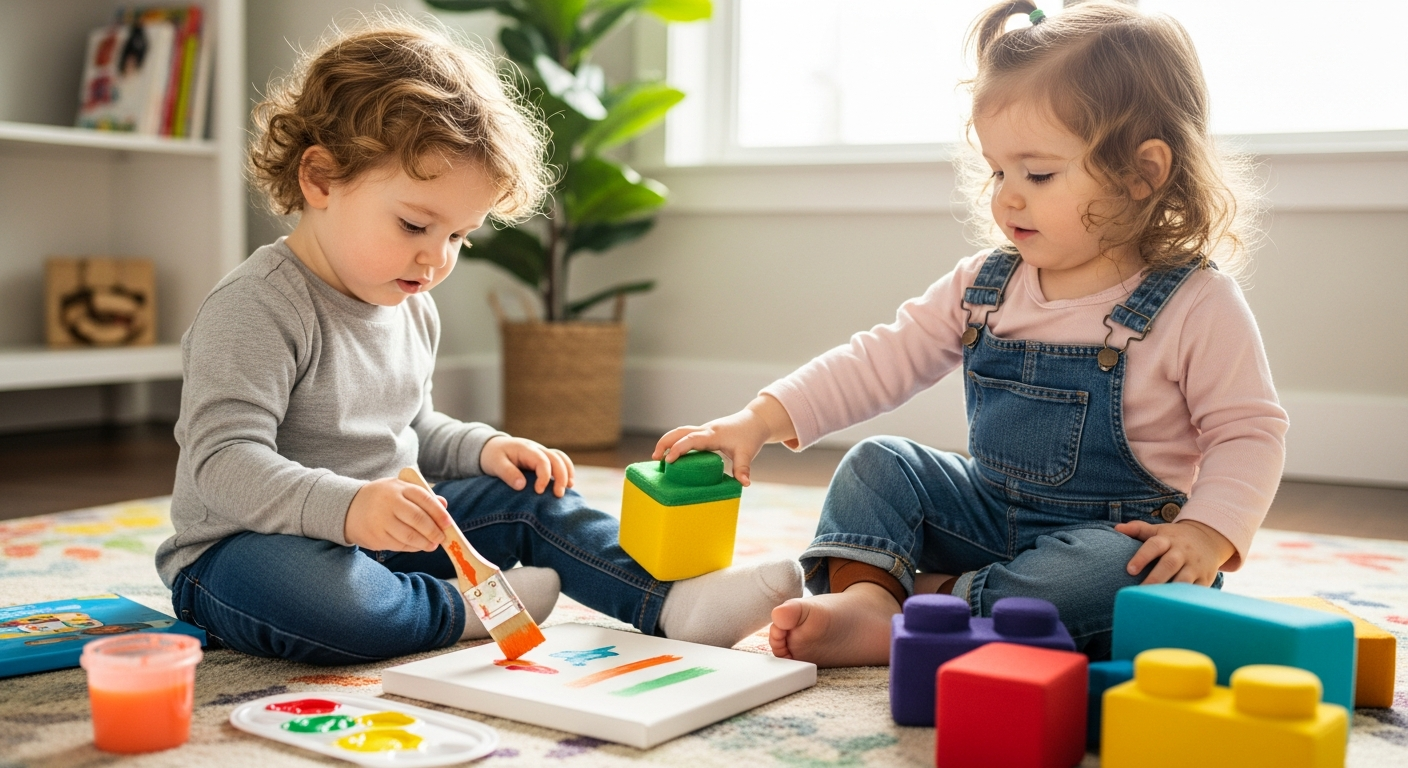
Table of Contents
- Introduction
- What Exactly Is a Toddler Activity Kit?
- The Vital Link Between Play and Speech
- Exploring Different Types of Activity Kits
- Why We Believe in "Smart Screen Time"
- Integrating Physical Kits with Speech Blubs
- Transparency in Our Pricing and Plans
- Building a Play Routine that Works
- Realistic Expectations for Your Child's Progress
- The Speech Blubs Story: Why We Do What We Do
- How to Choose Your First Kit
- The Value of the Yearly Subscription
- Conclusion
- FAQ
Introduction
Did you know that between the ages of one and three, a toddler’s brain creates up to one million new neural connections every single second? It is a period of explosive growth, where every touch, sound, and interaction shapes the way they see the world. As parents, we often find ourselves standing in the middle of a toy aisle or scrolling through endless online shops, wondering which toy will actually help our child reach those vital milestones. This is where the concept of a toddler activity kit comes into play. These kits are more than just a box of toys; they are curated experiences designed to foster curiosity, build motor skills, and, most importantly, encourage communication.
In this post, we will explore what makes a toddler activity kit effective, the different types of kits available to suit your child’s unique personality, and how you can combine physical play with "smart screen time" to create a holistic learning environment. We will also dive into how we at Speech Blubs support this developmental journey by bridging the gap between tactile play and vocal expression. Our goal is to help you move away from the frustration of "passive" toys and toward a lifestyle of joyful, intentional play. By the end of this article, you will have a clear roadmap for selecting the best tools to help your child find their voice.

The core message here is simple: play is the work of childhood. When we provide our children with the right tools—whether that is a physical sensory bin or an interactive digital experience—we are giving them the keys to "speak their minds and hearts."
What Exactly Is a Toddler Activity Kit?
At its simplest, a toddler activity kit is a collection of materials and instructions centered around a specific developmental theme. Instead of buying a single toy that might only hold a child’s attention for five minutes, a kit provides a variety of ways to engage with a concept. For instance, a kit focused on "colors" might include silk scarves, wooden blocks, a matching game, and a book.
The beauty of these kits is that they take the guesswork out of parenting. We know how busy life can be. Between work, meal prep, and the general chaos of toddlerhood, finding the time to research exactly which skills your 24-month-old should be working on is a tall order. A well-designed kit does that heavy lifting for you. It ensures that the activities are age-appropriate, safe, and aligned with what experts call "scaffolded learning"—where each new skill builds on the one before it.
We believe that the best activity kits are those that encourage "open-ended play." This means the items can be used in multiple ways, allowing your child’s imagination to take the lead. A cardboard box in a kit isn't just a box; it's a spaceship, a drum, or a house for a stuffed animal. This flexibility is crucial for cognitive development and is a principle we carry over into our digital tools as well.
The Vital Link Between Play and Speech
One of the most common questions we hear from parents is: "How do I get my toddler to talk more?" The answer almost always involves play. Speech doesn't happen in a vacuum; it is the result of a child wanting to share an experience, a need, or a joy with someone else.
When a child engages with a toddler activity kit, they are constantly practicing the building blocks of language. For example:

- Joint Attention: When you and your child look at the same object together, you are creating a foundation for communication.
- Receptive Language: Following simple instructions like "put the red ball in the basket" helps them understand words before they can say them.
- Expressive Language: As they get excited about a discovery, they are motivated to use sounds or words to describe what they see.
If you are ever unsure where your child stands in their development, taking a quick 3-minute preliminary screener can provide a helpful assessment. It consists of 9 simple questions and provides a next-steps plan to help you tailor your play activities to your child's specific needs.
Exploring Different Types of Activity Kits
Not every toddler is the same. Some children crave the tactile sensation of mud and sand, while others are fascinated by how things fit together. Understanding your child's "play style" will help you choose the right toddler activity kit.
Sensory-Based Kits
These kits focus on the five senses. They often include materials like playdough, water beads, scented markers, or textured fabrics. Sensory play is essential because it builds nerve connections in the brain’s pathways, which lead to the child’s ability to complete more complex learning tasks. It also supports language development by giving you hundreds of descriptive words to model, such as "squishy," "cold," "rough," or "slimy."
STEAM Kits (Science, Technology, Engineering, Art, and Math)
It might seem early to think about "engineering" for a two-year-old, but STEAM at this age is all about cause and effect. A STEAM-focused toddler activity kit might involve building a simple bridge for toy cars or experimenting with color mixing in water. These activities foster critical thinking and problem-solving skills. They teach children that it’s okay to try, fail, and try again—a mindset that is vital for learning new speech sounds.
Creative and Art Kits
Artistic expression is a wonderful way for toddlers to communicate their feelings before they have the vocabulary to do so. These kits often include finger paints, thick crayons, and easy-to-use stamps. The focus here is on the process, not the final product. As your child creates, you can narrate their actions: "You are making a big, blue circle!" This narration is a powerful form of language modeling.
Why We Believe in "Smart Screen Time"
In a world filled with passive screen time—where kids sit and stare at bright cartoons—it is understandable why many parents are hesitant to introduce digital tools. However, we at Speech Blubs believe there is a middle ground called "smart screen time."
Our mission is to empower children to communicate effectively, and we do this by blending scientific principles with the joy of play. We see our app as a digital toddler activity kit. Just as a physical kit provides tools for the hands, our app provides tools for the voice.
Our approach is rooted in "video modeling." Scientific research shows that children learn best by watching and imitating their peers. In our app, your child will see videos of other children making sounds, saying words, and performing facial exercises. This peer-to-peer connection triggers "mirror neurons" in the brain, making the child much more likely to try the sound themselves. You can read more about the scientific research behind our methodology to see why this is so effective.
Integrating Physical Kits with Speech Blubs
The magic happens when you combine the tactile experience of a physical kit with the targeted speech practice of our app. This "co-play" approach ensures that screen time isn't an isolating experience but a bridge to deeper family connection.
Scenario: The Animal Lover
Imagine you have a 3-year-old who is a "late talker" but is absolutely obsessed with animals. You might purchase a toddler activity kit that includes plastic farm animals and a small barn.
- Start with the App: Open the "Animal Kingdom" section in Speech Blubs. Let your child watch a peer make a "Moo" sound.
- Move to Physical Play: Grab the toy cow from your activity kit. Mimic the "Moo" together.
- Reinforce: Use the app's fun filters to turn your child into a cow on the screen, adding a layer of humor and joy to the learning process.
This transition from the digital peer to the physical toy helps generalize the skill. They aren't just learning a sound in an app; they are learning to communicate about the world around them. To see how this has worked for thousands of other families, check out our parent testimonials.
Scenario: The Little Builder
If your child loves building blocks and puzzles, you can use these tools to practice "functional" words.
- App Practice: Use the "Early Sounds" section of Speech Blubs to practice sounds like "Uh-oh!" or "Up!"
- Kit Practice: As you build a tower together using your activity kit, use the word "Up" every time you add a block. When the tower inevitably falls, shout "Uh-oh!"
- The Result: The child begins to associate the vocalization with the action, reducing frustration and building confidence.
Transparency in Our Pricing and Plans
We want to be a reliable partner in your child's development, and that starts with clear, honest communication about our services. At Speech Blubs, we offer two main paths to support your family's journey.
- The Monthly Plan: For $14.99 per month, you get full access to our main Speech Blubs app. This is a great way to test the waters and see how your child responds to our video modeling technique.
- The Yearly Plan (Best Value): Our yearly plan is $59.99 per year, which breaks down to just $4.99 per month. This is a 66% savings compared to the monthly rate.
We strongly recommend the Yearly Plan because it is designed for long-term success and includes several exclusive, high-value features that the monthly plan does not:
- 7-Day Free Trial: You can explore everything we offer risk-free for a full week.
- Reading Blubs App: As a bonus, you get our Reading Blubs app, which focuses on early literacy and phonics—the perfect next step as your child's speech improves.
- Priority Support: You receive a 24-hour response time from our support team and early access to all new content updates.
Choosing the Yearly Plan ensures that you have a comprehensive suite of tools at your fingertips as your child grows. Ready to see the difference for yourself? You can create your account and begin your 7-day free trial today.
Building a Play Routine that Works
Consistency is the secret ingredient in any developmental plan. A toddler activity kit isn't very helpful if it stays tucked away in a closet, and a speech app won't work if it’s only used once a month. Here is how you can build a sustainable routine:
1. The Power of 15 Minutes
You don't need hours of dedicated "instruction" time. In fact, toddlers learn best in short, high-energy bursts. Aim for 15 minutes of dedicated play with your activity kit or Speech Blubs each day. This keeps the experience fresh and exciting rather than feeling like a chore.
2. Follow the Child’s Lead
If your child is more interested in the box the kit came in than the toy inside, that’s okay! Follow their curiosity. If they want to spend 20 minutes looking at the "Giant Wheels" section of the app because they love trucks, let them. Engagement is the most important factor for learning.
3. Narrate Everything
Be the "sportscaster" of your child's life. Whether you are using a physical kit or the Speech Blubs homepage to find new activities, talk about what you are doing. "I am picking up the blue block. It is very smooth. Now it's your turn!"
4. Create a "Yes" Space
Set up a specific area in your home where your child is allowed to be messy with their kits. Having a dedicated space for their toddler activity kit tells the child that their play is important and valued.
Realistic Expectations for Your Child's Progress
It is important to remember that every child develops at their own pace. While we provide powerful tools to support this growth, our focus is on the journey, not just the destination. We don't promise that your child will be giving public speeches in a month. Instead, we focus on:
- Building Confidence: Reducing the frustration that comes from not being able to communicate.
- Fostering a Love for Learning: Making sure that "smart screen time" and tactile play are joyful experiences.
- Developing Foundational Skills: Strengthening the mouth muscles and cognitive pathways necessary for clear speech.
Our app is a supplement to your child's overall development. For children with significant delays, we always recommend using Speech Blubs in conjunction with professional speech-language therapy. Think of us as your "home practice" kit that keeps the momentum going between therapy sessions.
The Speech Blubs Story: Why We Do What We Do
The founders of Speech Blubs didn't just decide to make an app because it was a good business idea. They lived it. All our founders grew up with speech problems and know firsthand the struggle of feeling misunderstood. They created the tool they wished they had when they were kids—something that felt like a game rather than a medical intervention.
Today, we are proud to provide a solution for the 1 in 4 children who need speech support. We are committed to making our tools accessible, effective, and, above all, fun. When you choose a toddler activity kit or sign up for our app, you aren't just buying a product; you are joining a community of parents and experts dedicated to helping every child find their voice.
How to Choose Your First Kit
If you are feeling overwhelmed by the choices, start small. Look for a toddler activity kit that aligns with your child's current interests.
- If they love water: Look for a "Messy Play" or water-themed kit.
- If they are always "helping" in the kitchen: A play-food or "junior chef" kit is perfect.
- If they love animals: A farm or zoo-themed kit will be a hit.
Once you have your physical kit, complement it by downloading Speech Blubs on the App Store or getting it on Google Play. Having both tools ready to go will give you a "toolbox" of options for those rainy afternoons or long car rides.
The Value of the Yearly Subscription
We often get asked if the Yearly plan is really worth it. In addition to the cost savings, consider the "peace of mind" factor. Development isn't a straight line; it has peaks and valleys. Having a year-long subscription means you don't have to worry about monthly renewals or losing access during a critical developmental leap.
Plus, the inclusion of the Reading Blubs app in the Yearly plan is a game-changer. Speech and reading are two sides of the same coin. By the time your child has mastered the sounds in Speech Blubs, they will be perfectly primed to start identifying letters and sounds in Reading Blubs. It is a complete literacy and communication package for less than the cost of a single session with a private specialist in many areas.
Conclusion
A toddler activity kit is a wonderful investment in your child’s future. It provides the tactile, hands-on experiences that young brains crave while offering you a structured way to engage with your little one. By pairing these physical activities with the science-backed, peer-led video modeling of Speech Blubs, you are creating a powerhouse environment for language development.
Our mission is to help your child speak their mind and heart. We believe that play should be joyful, family time should be connected, and every child deserves the chance to be heard. Don't wait for "someday" to start supporting your child's communication skills.
Take the first step today. We encourage you to choose our Yearly plan to take advantage of the 7-day free trial, the bonus Reading Blubs app, and our most comprehensive support features. Whether you download Speech Blubs on the App Store or Google Play, you are giving your child a gift that will last a lifetime.
FAQ
1. What is a toddler activity kit?
A toddler activity kit is a curated box of age-appropriate toys, materials, and guided activities designed to support specific developmental milestones, such as fine motor skills, sensory processing, and language development. They provide a convenient, expert-backed way for parents to engage in intentional play.
2. When should I start using an activity kit with my child?
Most activity kits are designed for children starting around 12 to 18 months, though there are options for younger infants. The key is to choose a kit that matches your child's current developmental stage, ensuring the activities are challenging enough to be engaging but not so difficult that they cause frustration.
3. How does Speech Blubs complement physical play kits?
Speech Blubs acts as a "digital activity kit" that focuses specifically on speech and language. While physical kits handle the tactile and motor aspects of play, Speech Blubs uses peer-to-peer video modeling to encourage vocal imitation. Using them together—for example, practicing animal sounds in the app while playing with toy animals—reinforces learning through multiple senses.
4. Are digital activity kits safe for toddlers?
Yes, when they are designed as "smart screen time." Unlike passive cartoons, a digital tool like Speech Blubs is interactive, educational, and designed to be used with a parent. We focus on active participation and imitation, providing a screen-free alternative to the typical mindless viewing that many parents worry about.
About the author