
Christmas Card Activity for Kids: Boost Speech & Joy
 By Speech Blubs Team•Dec 19, 2025•19 min.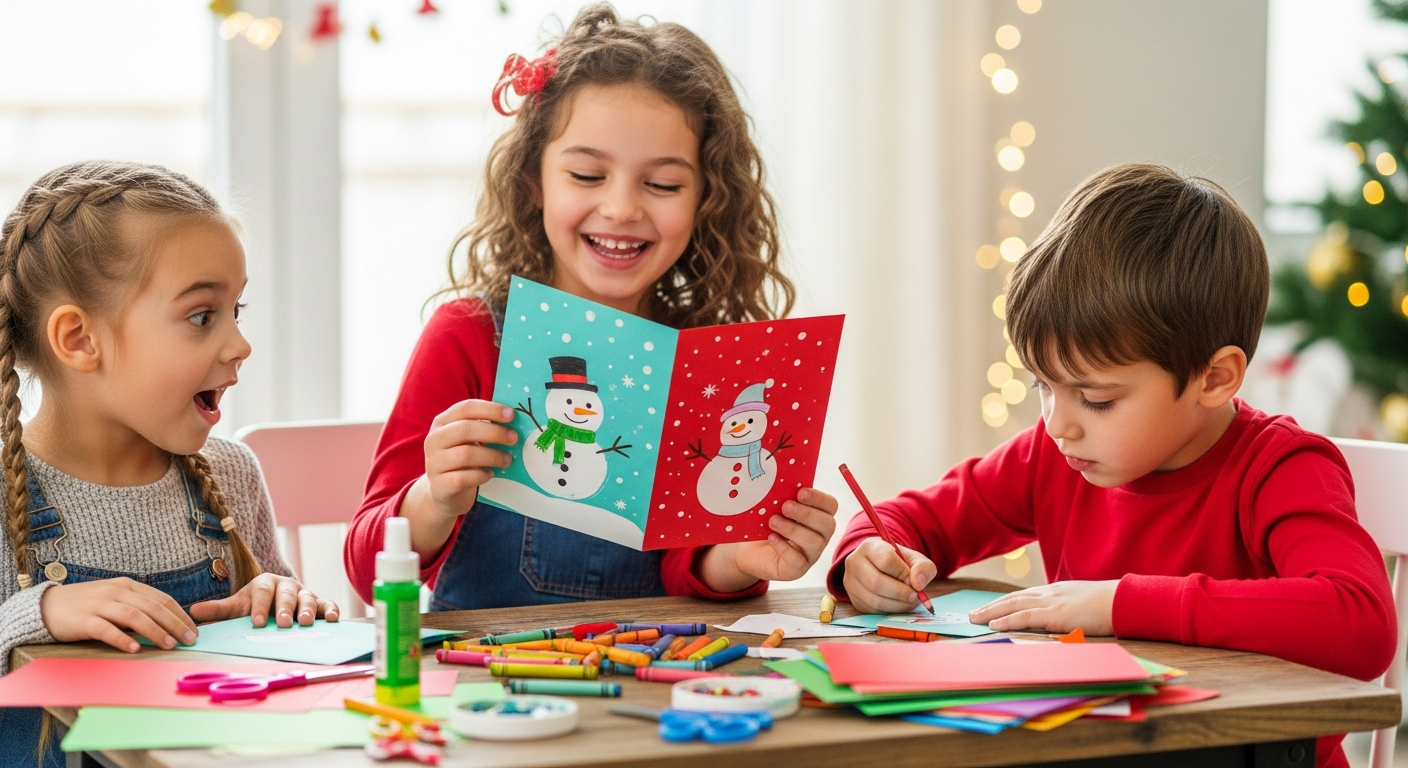
Table of Contents
- Introduction
- The Magic of Holiday Crafting: More Than Just a Card
- Unwrapping the Developmental Benefits of Christmas Card Activities
- Christmas Card Activity Ideas for Every Age and Stage
- Making It a Speech-Boosting Experience: Our Expertise in Action
- Integrating Speech Blubs into Your Christmas Card Fun
- Tips for a Stress-Free Crafting Session
- Beyond Christmas Cards: Year-Round Communication Growth
- Conclusion
- FAQ
Introduction
The holiday season is a magical time, filled with sparkling lights, festive music, and heartwarming traditions. But beyond the glitter and cheer, it's also a golden opportunity for connection, creativity, and incredible developmental growth for our children. Have you ever noticed how a simple craft activity can transform into a bustling hub of conversation, laughter, and learning? This is especially true when we delve into a beloved holiday tradition: creating Christmas cards. Far more than just a piece of paper, a thoughtful Christmas card activity for kids offers a unique blend of creative expression, fine motor skill development, and powerful language-building opportunities. In this comprehensive guide, we'll explore why crafting Christmas cards is such a valuable activity for children of all ages, how it naturally supports speech and language development, and how we at Speech Blubs can seamlessly integrate into your festive fun, empowering your child to "speak their minds and hearts" this holiday season and beyond.

The Magic of Holiday Crafting: More Than Just a Card
At first glance, a child making a Christmas card might seem like a simple art project. But for children, especially those navigating the exciting world of language acquisition, these activities are rich with developmental potential. The act of creating something with their own hands, with a specific recipient in mind, engages multiple areas of their growing minds and bodies. It's a journey from imagination to tangible expression, fostering not just artistic flair but also crucial cognitive, social-emotional, and, most importantly, communication skills.
For parents whose children are showing signs of a speech delay or simply need a boost in their communication journey, structured play like Christmas card making becomes an invaluable tool. It provides a natural, low-pressure environment to practice new words, refine existing ones, and build confidence in expressing themselves. This aligns perfectly with our mission at Speech Blubs. Our company was born from the personal experiences of our founders, who all grew up with speech problems and created the tool they wished they had—a joyful solution for the 1 in 4 children who need speech support. We believe that learning to communicate should be fun and empowering, and festive crafts are a fantastic example of this principle in action.
Unwrapping the Developmental Benefits of Christmas Card Activities
A simple Christmas card activity offers a surprisingly vast array of developmental benefits. Let's explore how these festive crafts can become powerful tools for growth.
Boosting Language and Communication Skills
The most direct benefit of Christmas card making, especially for children focused on speech development, lies in its capacity to spark conversation and introduce new vocabulary.
- Vocabulary Expansion: Think of all the words associated with Christmas cards: Santa, reindeer, snowman, tree, star, glitter, glue, paper, scissors, red, green, sparkle, give, send, love, happy holidays. As children engage with these materials and themes, they naturally encounter and learn new words. Parents can actively narrate the process ("We're putting red glitter on Santa's hat!") to reinforce these terms.
- Descriptive Language: Encourage your child to describe their creations. "Tell me about your card. What colors did you use? What is happening in the picture?" This prompts them to use adjectives and expand their sentences. For a child who might be a "late talker," even a single word like "sparkly!" is a huge step.
- Narrative Skills: Who is the card for? What message do they want to send? Crafting a card involves a mini-story – the intention, the creation, the message, and the recipient's joy. This helps children understand sequence and purpose in communication.
- Social Communication: Discussing the recipient ("Grandma will love this!") teaches children about audience, empathy, and the social aspects of communication. It encourages them to think about how their words and actions impact others.
- Sound Practice: The words associated with Christmas crafts are often rich in specific sounds. For instance, "Santa" for the 'S' sound, "tree" for 'TR' blends, "gift" for 'G' and 'F'. This natural exposure provides excellent opportunities for sound practice without making it feel like work.
To further amplify these benefits, consider how Speech Blubs uses "video modeling" methodology. Children learn by watching and imitating their peers, making the learning process engaging and effective. Imagine your child making a card and then watching a video of another child saying "Merry Christmas" or "Happy Holidays" on our app. This powerful approach helps solidify new words and phrases in a fun, interactive way.

Enhancing Fine Motor Skills
Crafting Christmas cards is a workout for little hands and fingers, essential for future writing and self-care skills.
- Cutting: Using child-safe scissors strengthens hand muscles, improves hand-eye coordination, and develops bilateral coordination (using both hands together).
- Gluing: Squeezing glue bottles or spreading glue sticks requires precise hand movements and pressure control.
- Drawing and Writing: Holding crayons, markers, and pencils refines grip and prepares children for pre-writing and writing skills. Even scribbling is a crucial step!
- Sticking and Placing: Manipulating stickers, small decorations, or carefully placing cut-out shapes enhances pincer grasp and precision.
Sharpening Cognitive Abilities
Beyond the tangible output, the mental processes involved in card making are incredibly beneficial.
- Planning and Sequencing: Before starting, children might think, "First I'll draw, then I'll cut, then I'll glue." This pre-planning builds executive function skills.
- Problem-Solving: What if the glitter spills? How do I make the star stick? These small challenges encourage creative thinking and adaptability.
- Creativity and Imagination: Christmas cards are a blank canvas for self-expression. Children can dream up unique designs, choose colors, and let their imaginations soar.
- Following Directions: Listening to instructions ("First, fold the paper in half," or "Make sure to write your name") helps children develop auditory processing and comprehension.
Nurturing Social-Emotional Development
Crafting with a purpose fosters important social and emotional growth.
- Empathy and Giving: Making a card for someone special teaches children about expressing love, appreciation, and the joy of giving.
- Patience and Persistence: Some crafts take time. Children learn to focus, work through challenges, and take pride in completing a project.
- Family Bonding: Crafting together creates cherished memories, strengthens family connections, and provides a relaxed setting for conversation and interaction. This is where "smart screen time" from Speech Blubs shines – it’s a tool for connection, not passive viewing, and perfectly complements hands-on family activities.
Christmas Card Activity Ideas for Every Age and Stage
No matter your child's age or developmental stage, there's a Christmas card activity perfectly suited for them. Remember, the goal is participation and fun, not perfection!
Toddlers (1-3 Years): Exploring Textures and Sounds
For our youngest crafters, the focus is on sensory exploration, cause and effect, and introducing basic words. Keep it simple, safe, and supervised.
- Fingerprint Lights Card: Provide cardstock and washable paint in festive colors. Let them dip their fingers and press to create "lights" along a drawn string. Speech focus: "Light," "red," "green," "dot," "press," "more."
- Sticker & Stamp Cards: Offer large, easy-to-peel Christmas stickers and chunky stamps with simple holiday shapes (star, tree, Santa). Speech focus: "Stick," "stamp," "star," "tree," "up," "down."
- Glitter Glue Doodles: Supervised use of glitter glue to make simple swirls or lines. Toddlers love the sparkle! Speech focus: "Sparkle," "shiny," "squeeze," "line."
For a parent whose 2-year-old is just beginning to explore sounds and simple words, trying a "fingerprint lights" card offers a perfect, low-pressure way to practice words like "red," "green," and "light" as they create. You can model the sounds, and they can imitate. For additional support, consider downloading Speech Blubs on the App Store or Google Play Store to reinforce these words through engaging video modeling before or after your crafting session.
Preschoolers (3-5 Years): Developing Creative Expression
Preschoolers can handle a bit more complexity and enjoy expressing their ideas. Focus on activities that build on fine motor skills and encourage simple storytelling.
- Handprint Santa/Reindeer Cards: Paint their hand and press it onto cardstock to create a Santa beard or reindeer antlers. Add details with markers. Speech focus: "Hand," "Santa," "reindeer," "ho-ho-ho," "antlers," "nose," "eyes."
- Simple Cut-and-Paste Collage Cards: Provide pre-cut shapes (trees, stars, circles) or let them practice cutting simple lines. Glue them onto cards to create festive scenes. Speech focus: "Cut," "glue," "shape," "big," "small," "tree," "snow," "present."
- Scribble Art Cards: Let them scribble freely with crayons or markers. Then, you can cut out a Christmas shape (like a star or bell) from their scribbled paper and glue it onto a contrasting card. Speech focus: "Draw," "color," "my art," "star," "bell."
Imagine a 4-year-old proudly showing you their handprint reindeer. This is a perfect moment to ask, "What sound does a reindeer make?" or "Where is the reindeer going?" If your child is working on specific sounds, our app can help. For instance, if they're struggling with the 'R' sound in "reindeer," our extensive library of sound-specific exercises can provide targeted practice. Take our quick 3-minute preliminary screener to understand your child's communication needs and get a personalized next-steps plan.
Early Elementary (5-7 Years): Crafting with Purpose
Children in this age group can follow multi-step instructions, have better control over tools, and enjoy personalizing their creations.
- Pop-Up Christmas Tree Cards: Guide them through simple folding and cutting to make a 3D pop-up element inside the card. Speech focus: "Fold," "cut," "pop up," "inside," "outside," "decorate," "branches."
- Button & Pom-Pom Cards: Provide a variety of buttons and pom-poms for them to glue onto cards, creating textures and designs (e.g., snowman with button eyes, pom-pom berries). Speech focus: "Button," "soft," "round," "stick," "snowman," "decorate."
- Personalized Messages: Encourage them to write their own simple holiday greetings. Provide examples and help with spelling. Speech focus: "Write," "message," "dear," "from," "love," "Merry Christmas," "Happy Holidays."
For a child learning to write their own messages, practicing the individual sounds and words they want to include can be invaluable. Our app features activities that help with letter sounds and early reading skills, laying a strong foundation for writing. When they're ready to write "Merry Christmas," the confidence gained from our app's exercises can make all the difference. Get started today by creating your Speech Blubs account and begin your 7-day free trial.
Older Elementary (7+ Years): Advanced Techniques and Thoughtful Expressions
Older children can handle more intricate designs and express more complex thoughts. This is where their creativity truly shines, and their messages become more profound.
- Layered Scene Cards: Teach them to create depth by layering different cut-out elements to form a detailed Christmas scene (e.g., a snowy village, a stable scene). Speech focus: "Layer," "foreground," "background," "texture," "perspective," "shadow."
- Origami Element Cards: Introduce simple origami folds (like a star or a small Christmas tree) to incorporate into their card design. Speech focus: "Fold," "crease," "shape," "origami," "triangle," "square."
- Poetry & Story Cards: Encourage them to write a short poem or a small festive story inside their card, expressing their unique holiday wishes. Speech focus: "Poem," "rhyme," "story," "express," "feelings," "gratitude."
At this stage, communication often moves beyond basic words to more nuanced expression. Our app, particularly with the included Reading Blubs app available with our Yearly plan, can further enhance their literacy skills, making writing poems and stories even more accessible and enjoyable. This combination of hands-on crafting and interactive app engagement provides a holistic approach to language development. Many parents have shared their success stories; you can read their testimonials here.
Making It a Speech-Boosting Experience: Our Expertise in Action
The key to maximizing the speech and language benefits of any Christmas card activity lies in active engagement and intentional interaction from adults. Here’s how to turn crafting into a powerful communication session, mirroring the principles we embrace at Speech Blubs.
Engage in Conversation
- Ask Open-Ended Questions: Instead of "Do you like it?", try "What do you like most about your card?" or "Tell me about this part." This encourages more than a yes/no answer.
- Narrate Your Actions: "I am cutting the red paper very carefully," or "Now, I'm squeezing the glue onto the star." Hearing you model language helps them learn.
- Provide Choices: "Do you want the green glitter or the gold glitter?" Giving choices encourages them to verbalize preferences.
Model Language and Expand Responses
- Expand on Their Words: If your child says "star," you can say, "Yes, a sparkly yellow star!" This models longer, more descriptive phrases.
- Repeat and Rephrase: If they point and say "tree," you can say, "That's a beautiful green Christmas tree you're making!" This validates their communication while providing a correct model.
- Introduce New Vocabulary: Use words like "festive," "gleaming," "texture," "design" to enrich their vocabulary as you craft together.
Focus on Target Sounds and Words
If your child is working on specific sounds or words (e.g., 'S' sounds, 'R' sounds, two-word phrases), gently highlight those words during the activity.
- "Can you put the stars on the card?"
- "Let's draw a snowman."
- "That's a big red bow."
At Speech Blubs, we believe in this playful, integrated approach. Our app is designed to be a powerful supplement, offering "smart screen time" experiences where children learn through engaging "video modeling." They watch other children pronounce words, making the learning process natural and fun, just like they learn from you during a craft session. This mirrors how children naturally acquire language—by observing and imitating their environment. Our scientifically backed method means we're in the top tier of speech apps worldwide, a fact we proudly stand behind. You can explore the research behind our methodology here.
Integrating Speech Blubs into Your Christmas Card Fun
Think of Speech Blubs not just as an app, but as a friendly, supportive partner in your child's communication journey. It blends seamlessly with hands-on activities like Christmas card making, creating a holistic learning environment.
- Pre-Crafting Warm-Up: Before you begin your craft, spend 10-15 minutes on Speech Blubs focusing on Christmas-themed categories or specific sounds. For example, explore our "Christmas" category to practice words like "Santa," "sleigh," "gift," or focus on the 'T' sound for "tree." This gets their vocal cords warmed up and introduces relevant vocabulary.
- Mid-Crafting Inspiration: If your child is struggling for ideas or gets stuck on a word, a quick session on the app can reignite their enthusiasm. For example, if they want to make a snowman but can't articulate "snowman," pop open Speech Blubs to watch a peer say it, then return to the craft.
- Post-Crafting Reinforcement: After the card is made, use Speech Blubs to practice describing their creation. They can point to elements on their card and try to say the words they learned or reinforced with the app. This solidifies their new vocabulary and builds confidence.
For a parent whose 3-year-old is a "late talker" and loves animals, they might start by using Speech Blubs' "Animal Kingdom" section to practice sounds and words like "moo" or "baa." Then, they could transition to making a Christmas card for a pet, using simple animal shapes and practicing those familiar sounds within a festive context. The blend of familiar and new, supported by our app's unique "video modeling," makes learning effective and joyful. Our commitment is to provide an immediate, effective, and joyful solution for children, turning screen time into "smart screen time" that truly contributes to their development.
Unbeatable Value for Your Child's Development
We are committed to making effective speech and language support accessible to every family. That's why we offer transparent and flexible pricing options.
Our Monthly plan is $14.99 per month. It's a great way to start exploring Speech Blubs.
However, for the best value and a truly comprehensive experience, we highly recommend our Yearly plan, which is just $59.99 per year. This breaks down to an incredible $4.99 per month, allowing you to save 66% compared to the monthly option!
The Yearly plan isn't just cheaper; it also unlocks exclusive, high-value features designed to give your child the most robust support:
- A 7-day free trial: Experience the full power of Speech Blubs before committing. The Monthly plan does not include a free trial.
- The extra Reading Blubs app: This complementary app provides a head start on reading skills, further enhancing your child's literacy journey.
- Early access to new updates: Be the first to enjoy new features and content.
- 24-hour support response time: Get prompt assistance whenever you need it.
Choosing the Yearly plan means investing in your child's continuous growth with the full suite of our tools. It's the clear best choice for sustained progress and comprehensive learning.
Ready to embark on this speech-boosting journey with us? Download Speech Blubs on the App Store or Google Play Store today! To unlock your 7-day free trial and all the exclusive features, remember to select the Yearly plan during sign-up.
Tips for a Stress-Free Crafting Session
To ensure your Christmas card activity is joyful and productive, a little preparation goes a long way.
- Gather Materials in Advance: Have all your paper, scissors, glue, glitter, markers, and decorations ready before you start. This minimizes interruptions and keeps the flow going.
- Set Realistic Expectations: The goal is connection and communication, not a museum-worthy masterpiece. Celebrate effort and creativity over perfection.
- Create a Dedicated Space: Lay down newspaper or a washable mat to protect your surfaces. A designated crafting zone helps kids focus.
- Allow for Independent Choices: Let your child choose colors, shapes, and what to draw. This fosters independence and ownership of their creation.
- Focus on the Process, Not Just the Product: Emphasize the fun of cutting, gluing, and talking, rather than just the finished card.
- Keep It Short and Sweet: Adjust the activity length to your child's attention span. A few minutes of focused fun is better than a long, frustrating session.
- Emphasize Adult Co-Play and Support: Your presence and engagement are crucial. Sit with them, talk with them, and make your own card alongside them!
Beyond Christmas Cards: Year-Round Communication Growth
The skills honed during a Christmas card activity for kids — from fine motor control to vocabulary building, narrative development, and social-emotional understanding — are foundational and transferable. They are not just for the holidays but contribute to your child's overall communication competence throughout the year.
At Speech Blubs, we are dedicated to supporting this continuous growth. Our app offers a diverse range of activities and themes that cater to various developmental needs, making it a valuable tool year-round. From practicing everyday words to mastering complex sentences, we are here to provide consistent, engaging, and scientifically-backed support. We believe that every child deserves the opportunity to "speak their minds and hearts," and we are committed to providing the resources to make that a reality.
Conclusion
Creating Christmas cards with your children is far more than just a holiday craft; it's a powerful avenue for nurturing their development in numerous ways, especially in speech and language. From expanding vocabulary and refining fine motor skills to fostering creativity and social-emotional growth, these festive activities offer a rich, engaging environment for learning. By actively participating, asking questions, and modeling language, parents can transform a simple crafting session into an invaluable speech-boosting experience.
When combined with the innovative "smart screen time" of Speech Blubs, which utilizes "video modeling" to make learning fun and effective, your child receives a truly comprehensive approach to communication development. We are passionate about empowering children to find their voice, and we've built a tool designed by experts who understand the journey firsthand. Don't let this holiday season pass without embracing these joyful opportunities for growth.
Ready to make this holiday season, and every season, a time of communication breakthroughs for your child? Start your journey today! Download Speech Blubs on the App Store or Google Play Store and access your 7-day free trial. Remember to select the Yearly plan during sign-up to unlock exclusive features like the Reading Blubs app and save 66% on your subscription. Give your child the gift of confident communication – it’s a present that truly lasts a lifetime.
FAQ
Q1: What age is best to start Christmas card activities for speech development?
A1: You can start introducing simple Christmas card activities as early as 1-2 years old. For toddlers, focus on sensory play like finger painting, stickers, or simple stamping. These activities encourage basic vocabulary (colors, textures, actions) and build foundational fine motor skills. As children grow, the activities can become more complex, aligning with their developing language and motor abilities.
Q2: How can I ensure my child actually talks during the card-making process?
A2: The key is active engagement and creating a conversational environment. Ask open-ended questions like "What are you making here?" or "Who is this card for?" Narrate your own actions ("I'm putting on a sparkly star!") and offer choices ("Do you want the red or green paper?"). Follow their lead and expand on their utterances, gently modeling new words and longer sentences without pressuring them to repeat.
Q3: My child gets frustrated easily with crafts. How can I make Christmas card activities more enjoyable?
A3: Keep it simple and focus on the process, not perfection. Prepare all materials beforehand, so they can jump right into creating. Break down tasks into small, manageable steps. If they show signs of frustration, take a break or switch to a different, less challenging part of the activity. Remember, your calm and encouraging presence is key. Celebrate their effort and creativity, no matter the outcome. Sometimes, a quick, engaging session on Speech Blubs can help reset their focus and build confidence before returning to the craft.
Q4: How does Speech Blubs specifically help with the communication skills practiced during Christmas card making?
A4: Speech Blubs complements Christmas card activities by providing targeted practice for many of the skills used. For example, our app's "video modeling" helps children learn and practice new vocabulary (like "star," "tree," "gift") and specific sounds through imitation. Our themed categories, including holiday ones, reinforce relevant words. The app helps build confidence in speaking, which then translates into more enthusiastic communication during hands-on activities. With the Yearly plan, the Reading Blubs app further supports literacy, aiding in writing personalized card messages.
About the author