
Christmas Craft Gifts for Kids: Fun for Little Hands & Voices
 By Speech Blubs Team•Dec 22, 2025•17 min.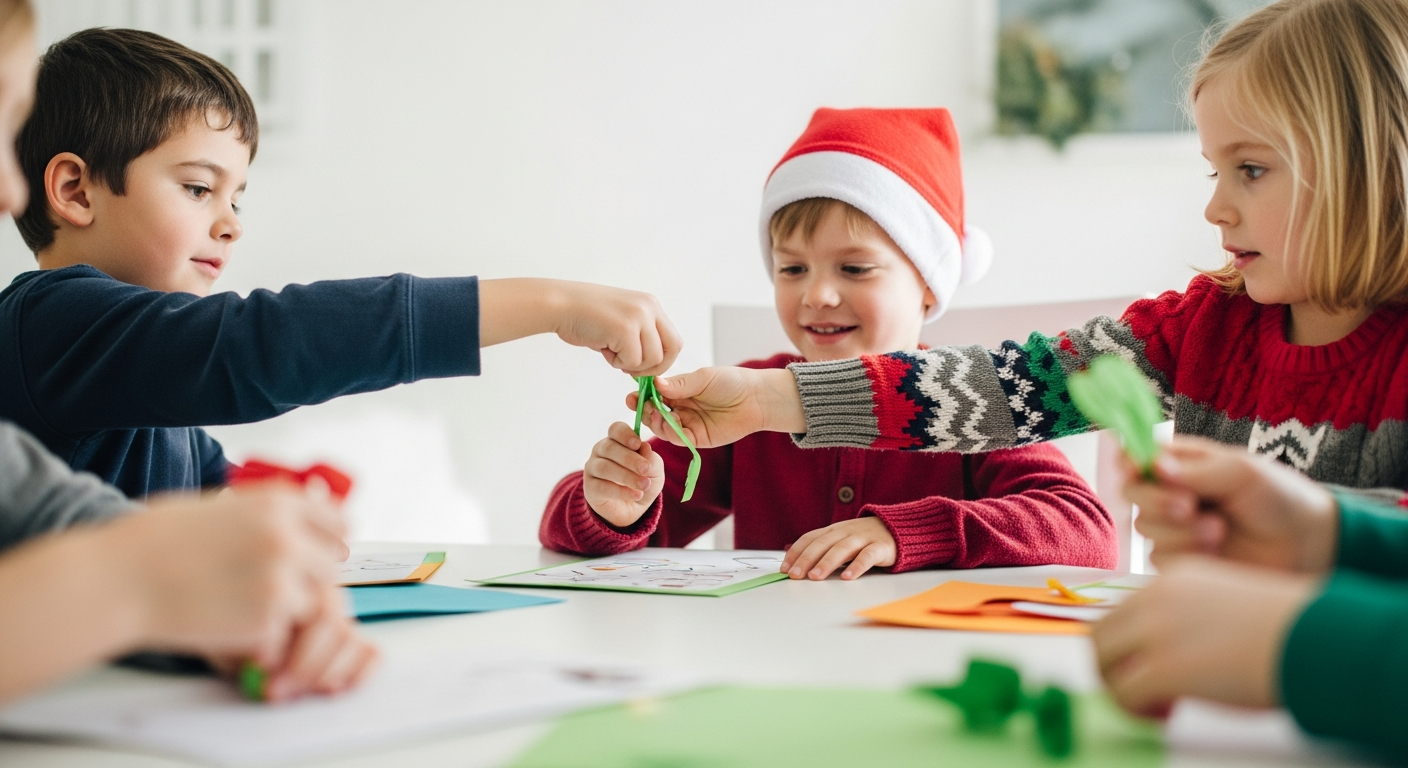
Table of Contents
- The Magic of Handmade Gifts and Child Development
- Crafting Connections: How DIY Gifts Boost Speech & Language Skills
- Delightful Christmas Craft Gifts for Kids (and Their Growing Voices!)
- Making the Most of Crafting for Communication
- Partnering with Speech Blubs for Enhanced Development
- Conclusion
- Frequently Asked Questions (FAQ)
Introduction
The holiday season twinkles with magic, a time when homes glow with festive lights, kitchens fill with the scent of gingerbread, and the air hums with anticipation. Amidst the flurry of gift-buying and festive preparations, there's an enduring charm in a handmade present – something created with love, imagination, and the unique touch of a child. These aren't just gifts; they're cherished keepsakes that capture a moment in time, reflecting a child's creativity and effort. But what if these joyful crafting sessions could do more than just create beautiful gifts? What if they could also become powerful opportunities to nurture your child's speech and language development?
At Speech Blubs, we believe in turning everyday moments into extraordinary learning experiences. Our mission is to empower children to speak their minds and hearts, and we understand firsthand the transformative power of communication. Our founders, all of whom experienced speech challenges as children, created Speech Blubs to be the tool they wished they had—an immediate, effective, and joyful solution for the 1 in 4 children who need speech support. This holiday season, we're excited to show you how making personalized Christmas craft gifts can be a fantastic way to blend scientific principles with play, creating "smart screen time" experiences and, just as importantly, fostering beautiful family connections and communication skills. This post will guide you through delightful Christmas craft ideas for kids, highlighting how each activity naturally integrates speech and language practice, transforming holiday crafting into a developmental wonderland.

The Magic of Handmade Gifts and Child Development
There's something incredibly special about receiving a gift crafted by little hands. It carries a personal touch that store-bought items simply can't replicate. For children, the act of making a gift is equally profound. It fosters a sense of accomplishment, boosts self-esteem, and teaches them the joy of giving. Beyond these heartwarming benefits, crafting is a powerhouse for development, engaging multiple senses and skills simultaneously.
Why Crafts Are More Than Just Fun
Engaging in craft activities offers a rich tapestry of developmental advantages for children:
- Fine Motor Skills: Cutting, gluing, painting, molding, and drawing all refine the small muscles in the hands and fingers. These skills are crucial not only for writing and self-care but also for the precise movements required for speech articulation.
- Cognitive Development: Following instructions, problem-solving when things don't go as planned, and making creative choices all stimulate cognitive growth. Children learn about cause and effect, shapes, colors, and textures.
- Sensory Exploration: The tactile experience of different materials—smooth paper, bumpy glitter, squishy clay, sticky glue—provides rich sensory input, helping children understand and categorize their world.
- Emotional Expression: Crafting offers a safe and creative outlet for children to express their feelings, ideas, and personalities. Giving a handmade gift is a powerful act of love and generosity.
- Patience and Persistence: Some crafts require multiple steps and a bit of waiting (for glue to dry, paint to set). This helps children develop patience and the ability to persevere through a task to see it to completion.
These foundational skills are all interconnected with language development. A child who can precisely manipulate small objects is building dexterity that can translate to improved control over the tongue, lips, and jaw muscles essential for clear speech. A child who can express themselves creatively is more likely to want to communicate their ideas verbally.

Crafting Connections: How DIY Gifts Boost Speech & Language Skills
Making Christmas craft gifts isn't just a quiet, creative endeavor; it's a dynamic stage for language development. Every snip, stick, and stroke offers a chance for conversation, instruction, description, and storytelling.
Unlocking Language Through Creative Play
Here’s how crafting naturally stimulates various aspects of speech and language:
- Vocabulary Expansion: As you introduce new materials (e.g., "glitter," "yarn," "felt," "pinecone") and actions (e.g., "sprinkle," "glue," "cut," "fold"), children learn new words in context. Describing the properties of these materials—"sticky," "rough," "shiny," "soft"—further enriches their lexicon.
- Following Instructions: Craft recipes provide excellent opportunities for practicing receptive language. "First, get the red paper. Next, cut a circle. Then, glue it here." Breaking down multi-step instructions into smaller, manageable chunks helps children develop their ability to listen and comprehend.
- Expressive Language: Encourage children to narrate their actions ("I'm cutting the paper"), describe what they're making ("It's a sparkly star!"), or explain their choices ("I picked blue because it's my favorite color"). This builds sentence structure and fluency.
- Asking and Answering Questions: "What color should we use next?" "Where does this piece go?" "Who is this gift for?" Engaging in these question-and-answer exchanges is fundamental for conversational skills.
- Social Communication: When crafting with siblings or parents, children practice turn-taking ("My turn to glue, your turn to hold"), sharing materials, and negotiating ideas. These are vital pre-linguistic and social language skills.
- Pre-Reading Skills: Recognizing colors, shapes, and patterns, understanding sequences, and even beginning to identify letters on craft supplies or instruction cards, all contribute to early literacy.
For parents whose children might be experiencing a speech delay or are just beginning their language journey, these activities are invaluable. They create a low-pressure, highly engaging environment where communication feels natural and fun.
The Speech Blubs Approach: A Perfect Partner for Crafting
At Speech Blubs, we believe in harnessing the power of play and connection. Our unique "video modeling" methodology, where children learn by watching and imitating their peers, is scientifically backed and highly engaging. Imagine a child crafting a sparkly star, then watching a peer on the Speech Blubs app confidently say "star!" or "sparkly!" This combination creates a rich learning environment that reinforces new vocabulary and sounds. Our app provides a screen-free alternative to passive viewing like cartoons, offering "smart screen time" that truly educates and connects families. We are committed to providing an immediate, effective, and joyful solution for the 1 in 4 children who need speech support, blending scientific principles with play.
Delightful Christmas Craft Gifts for Kids (and Their Growing Voices!)
Here are some wonderful, easy-to-make Christmas craft gifts, complete with tips on how to integrate speech and language practice into each step. Remember, the goal isn't perfection, but participation and joyful communication!
1. Personalized Ornaments: Keepsakes for Years to Come
Ornaments are classic Christmas gifts and provide endless opportunities for creative expression.
Handprint/Footprint Ornaments
These capture a child's size at a specific moment, making them truly precious.
- Materials: Salt dough (flour, salt, water), air-dry clay, or non-toxic paint, ribbon, glitter (optional).
- Speech & Language Focus:
- Vocabulary: "Dough," "soft," "squishy," "roll," "press," "print," "finger," "thumb," "paint," "dry," "ribbon," "sparkly."
- Following Instructions: "First, roll the dough. Next, press your hand. Then, use the straw to make a hole."
- Descriptive Language: "How does the dough feel? Is it cold? Is it smooth?" "Look at your tiny fingers!"
- Relatable Scenario: For a parent whose toddler is learning body parts, making a handprint ornament is perfect. As you press their hand into the clay, you can label "hand," "fingers," "palm," and have them try to repeat. After it dries, they can paint each finger a different color, practicing "red finger," "blue finger." This activity builds both vocabulary and fine motor coordination, which supports pre-speech development.
Painted Wooden Ornaments
Simple wooden shapes can be transformed into beautiful works of art.
- Materials: Plain wooden ornaments (stars, trees, bells), non-toxic acrylic paints, paintbrushes, glitter, glue.
- Speech & Language Focus:
- Colors: Name and identify colors as children pick them. "Which color is that? Red! Can you say 'red'?"
- Actions: "Paint," "dip," "brush," "mix," "dry."
- Shapes: "Star," "tree," "bell."
- Turn-Taking: "My turn to paint the star, your turn to paint the tree."
- Sequence: "First, we paint the green. Then, we add the red dots."
- Integrating Speech Blubs: After painting an animal ornament, launch the "Animal Kingdom" section of Speech Blubs. Your child can watch other kids make animal sounds and practice saying "moo," "baa," or "roar," linking the physical craft to engaging video modeling. Download Speech Blubs on the App Store or Get Speech Blubs on Google Play to explore fun categories like this.
2. Homemade Cards & Gift Tags: Spreading Festive Cheer
Personalized cards and tags add a thoughtful touch to any gift.
- Materials: Cardstock, construction paper, crayons, markers, stamps, stickers, glue, glitter, safety scissors.
- Speech & Language Focus:
- Pre-Writing Skills: Holding crayons, scribbling, drawing shapes. Even young children can "write" their name or draw a picture for the recipient.
- Storytelling: "What picture are you drawing for Grandma? Tell me about it." Encourage them to describe their drawing.
- Recipient Identification: "Who is this card for? What do we want to tell them?"
- Describing Actions: "I am cutting the paper. I am sticking the sticker."
- Relatable Scenario: For a child working on social greetings or expressing emotions, creating a holiday card is perfect. You can prompt them: "What do we say to Aunt Sarah for Christmas? 'Happy Christmas!'" or "What does this drawing show? 'I love you!'" This helps them connect words to feelings and social contexts.
3. Edible Gifts: Delicious Learning Opportunities
Baking and decorating cookies or making hot chocolate mixes are multi-sensory experiences ripe with language chances.
Decorated Christmas Cookies
- Materials: Pre-baked sugar cookies (or bake them together!), icing, sprinkles, candies.
- Speech & Language Focus:
- Action Verbs: "Mix," "stir," "pour," "spread," "sprinkle," "eat."
- Quantifiers: "More," "less," "all," "some." "Do you want more sprinkles?"
- Sensory Words: "Sweet," "crunchy," "soft," "cold" (icing).
- Predicting: "What do you think will happen if we add too much icing?"
- Sequence: "First, spread the icing. Then, add the sprinkles."
- Integrating Speech Blubs: After making and decorating star-shaped cookies, use Speech Blubs to reinforce the word "star." Our app features various categories that can easily tie into everyday activities, making learning continuous and fun.
Homemade Hot Chocolate Mix Jars
- Materials: Mason jars, cocoa powder, sugar, mini marshmallows, chocolate chips, candy canes.
- Speech & Language Focus:
- Ingredient Names: "Cocoa," "sugar," "marshmallows," "chips."
- Measurements: "Scoop," "spoonful," "cup."
- Descriptive Language: "The marshmallows are fluffy! The chocolate chips are tiny."
- Procedural Language: Explaining the steps for assembly and for making the hot chocolate. "First, put cocoa. Then, sugar. Last, marshmallows."
- Relatable Scenario: For a child who struggles with using multi-word phrases, making this mix allows for repeated practice of "more marshmallows," "big scoop," "my turn." Each addition to the jar is a chance to prompt a phrase or word.
4. Small Keepsakes: Meaningful Mementos
These crafts are simple but deeply personal, perfect for gifting.
Jar Lanterns/Votives
- Materials: Glass jars, tissue paper, glue (diluted with water), battery-operated tea lights.
- Speech & Language Focus:
- Colors & Shapes: Identify and describe the tissue paper pieces.
- Textures: "Sticky glue," "smooth jar," "crinkly paper."
- Position Words: "On," "under," "inside," "outside." "Put the paper on the jar." "The light goes inside."
- Cause and Effect: "If we put the light inside, what happens?" "It glows!"
Painted Rocks
- Materials: Smooth rocks, acrylic paints, paintbrushes, clear sealant.
- Speech & Language Focus:
- Descriptive Language: "Rough," "smooth," "hard," "cold," "heavy."
- Colors & Designs: "What are you painting? A red heart? A blue star?"
- Imagination: "What story does your rock tell?"
- Relatable Scenario: A child who is hesitant to speak might find a painted rock a safe way to express themselves visually. You can then gently prompt language by asking "Tell me about your rock," or "What is this part?" helping them to vocalize their creative choices.
5. Nature-Inspired Crafts: Bringing the Outdoors In
Using elements from nature connects children to their environment and provides unique textures and shapes.
Pinecone Critters/Ornaments
- Materials: Pinecones, googly eyes, felt scraps, pom-poms, pipe cleaners, glue.
- Speech & Language Focus:
- Nature Vocabulary: "Pinecone," "twig," "leaf," "branch."
- Animal Names/Sounds: If making critters (e.g., owl, squirrel), practice corresponding animal sounds.
- Descriptive Words: "Spiky," "brown," "big," "small," "fluffy" (pom-poms).
- Action Verbs: "Find," "glue," "attach," "decorate."
- Integrating Speech Blubs: Found a cool pinecone outside? Before or after crafting, you can explore the outdoors or "Animals" category within Speech Blubs to reinforce related vocabulary. Our app is designed to complement real-world experiences with engaging, interactive learning. Start your 7-day free trial here and discover how easy it is to integrate fun learning into your family's routine.
Making the Most of Crafting for Communication
To truly maximize the speech and language benefits of these Christmas craft gifts, consider these strategies:
- Follow Your Child's Lead: While you might have an end goal in mind, let your child explore and experiment. Their interests will drive their engagement and, consequently, their desire to communicate.
- Narrate and Describe: Be a language model. Continuously describe what you're doing, what your child is doing, and the materials you're using. "I'm cutting the shiny paper now." "You are putting sticky glue on the red star."
- Ask Open-Ended Questions: Instead of questions with a simple "yes" or "no" answer, ask questions that encourage more elaborate responses. "What should we do next?" "How does that feel?" "Tell me about your picture."
- Wait and Listen: Give your child ample time to process your questions or statements and formulate their response. Don't rush to fill the silence.
- Expand on Their Utterances: If your child says "blue," you can expand it to "Yes, that's a big blue star!" or "You want more blue paint." This models more complex language without correcting them.
- Embrace Mistakes: If a craft doesn't turn out "perfectly," focus on the process and the effort. "Oh, the glitter spilled! What should we do now? Maybe we can sweep it up!" This models problem-solving language.
- Connect to Speech Blubs: After a crafting session, reinforce newly learned words or sounds with our app. For example, if you made animal-themed ornaments, revisit the "Animal Kingdom" section. This powerful combination of hands-on learning and video modeling can accelerate progress. Our unique approach of teaching complex communication skills through children watching and imitating their peers is backed by scientific research, placing us in the top tier of speech apps worldwide. You can learn more about our methodology on the Speech Blubs website.
Partnering with Speech Blubs for Enhanced Development
At Speech Blubs, we are deeply committed to providing an immediate, effective, and joyful solution for families navigating speech and language development. Our app offers hundreds of activities that blend scientific principles with play, designed to empower children to "speak their minds and hearts." We know that parents are looking for tools that truly make a difference, and our award-winning app provides just that – "smart screen time" that educates, engages, and strengthens family bonds.
We encourage you to explore Speech Blubs as a powerful supplement to your child's overall development plan. Whether your child is a late talker, needs help with articulation, or is just building their vocabulary, Speech Blubs offers targeted activities that are fun and effective. Our platform leverages the power of peer imitation through video modeling, making learning an intuitive and positive experience.
We understand that you want the best for your child, and we strive for transparency and value. Here's how you can access Speech Blubs:
- Monthly Plan: For $14.99 per month, you get access to our core features.
- Yearly Plan: This is by far our best value at $59.99 per year, which breaks down to just $4.99 per month. You save a remarkable 66% compared to the monthly plan!
Why choose the Yearly Plan? It's not just about savings. The Yearly plan unlocks a whole suite of exclusive, high-value features:
- A 7-day free trial to explore everything Speech Blubs has to offer before committing.
- Access to the extra Reading Blubs app, designed to further enhance early literacy skills.
- Early access to new updates and a prioritized 24-hour support response time for any questions you might have.
The Monthly plan does not include these incredible benefits, so we highly recommend the Yearly plan to get the full Speech Blubs experience and the best value for your family.
Ready to see the difference Speech Blubs can make? We invite you to take our quick 3-minute preliminary screener to get a simple assessment and a personalized next-steps plan. It’s a great way to understand if your child could benefit from our app, and it’s completely free!
You can also See what other parents are saying about their child's success stories with Speech Blubs. Our app is a powerful tool for building confidence, reducing frustration, and creating joyful family learning moments.
Conclusion
The holiday season is a perfect time to slow down, connect with loved ones, and engage in meaningful activities. Crafting Christmas gifts with your children offers a unique opportunity to create cherished memories while simultaneously nurturing their speech and language development. From expanding vocabulary and following instructions to boosting fine motor skills and fostering self-expression, every painted pinecone and decorated cookie becomes a stepping stone on their communication journey.
By embracing these festive crafting ideas, you’re not just making gifts; you’re building a foundation for your child to speak their minds and hearts. And with Speech Blubs as your partner, you have an immediate, effective, and joyful solution to support their growth even further. So gather your glitter, glue, and little helpers, and get ready for a holiday season filled with creativity, connection, and countless opportunities for language to flourish.
Ready to empower your child's voice and bring more joyful learning into your home this holiday season? Don't wait! Start your 7-day free trial today by creating your account and downloading the app. Be sure to select the Yearly plan to get the free trial and unlock all the amazing features, including the Reading Blubs app and priority support! You can also find us directly on the app stores: Download Speech Blubs on the App Store Get Speech Blubs on Google Play
Frequently Asked Questions (FAQ)
Q1: How young can a child be to start making these Christmas craft gifts?
A1: Many simple crafts are suitable for toddlers as young as 18 months to 2 years old, with significant adult supervision and assistance. Activities like painting with fingers, simple gluing of large items, or squishing salt dough are great for very young children. As children get older, they can handle more complex tasks like cutting with safety scissors and following multi-step instructions. The key is to choose age-appropriate crafts and focus on the process and sensory experience rather than the perfect outcome.
Q2: My child is a late talker; how can crafts specifically help them with communication?
A2: For late talkers, crafts provide a concrete, hands-on context for language. They offer numerous opportunities for modeling language ("sticky glue," "red paper"), practicing receptive language (following simple commands like "Give me the blue crayon"), and encouraging expressive language through sounds, single words, and eventually phrases (e.g., "more glue," "my turn," "up"). The engaging nature of crafting reduces pressure and makes communication feel natural and fun. Paired with Speech Blubs' video modeling, where they can imitate sounds and words from their peers, crafts create a rich, multi-sensory learning environment that supports speech development.
Q3: How does Speech Blubs fit in with crafting activities?
A3: Speech Blubs beautifully complements crafting activities by reinforcing new vocabulary and sounds learned during hands-on play. For example, if you're making animal-themed ornaments, you can then use the "Animal Kingdom" section of Speech Blubs to practice animal sounds and names. If you're decorating a star, you can find the word "star" in our app to reinforce its pronunciation. Our "smart screen time" provides targeted, engaging practice with video modeling, where children learn by imitating their peers. This combination of physical activity and interactive digital learning creates a powerful and enjoyable approach to speech and language development.
Q4: What if my child isn't interested in crafting? Are there other ways to encourage speech during the holidays?
A4: Not all children are natural crafters, and that's perfectly fine! There are many other holiday-themed activities that can encourage speech. You can try baking cookies (focus on ingredients and actions), singing Christmas carols (practicing rhythm and sounds), decorating the tree (describing ornaments and colors), or reading holiday stories (asking questions, discussing characters). Any activity that involves shared attention, communication, and interaction can be a language-building opportunity. Speech Blubs also offers a wide variety of engaging themes beyond crafts, ensuring there's always something to spark your child's interest and encourage communication.
About the author