
Christmas Craft Gifts for Kids: Joyful DIY Ideas
 By Speech Blubs Team•Dec 22, 2025•21 min.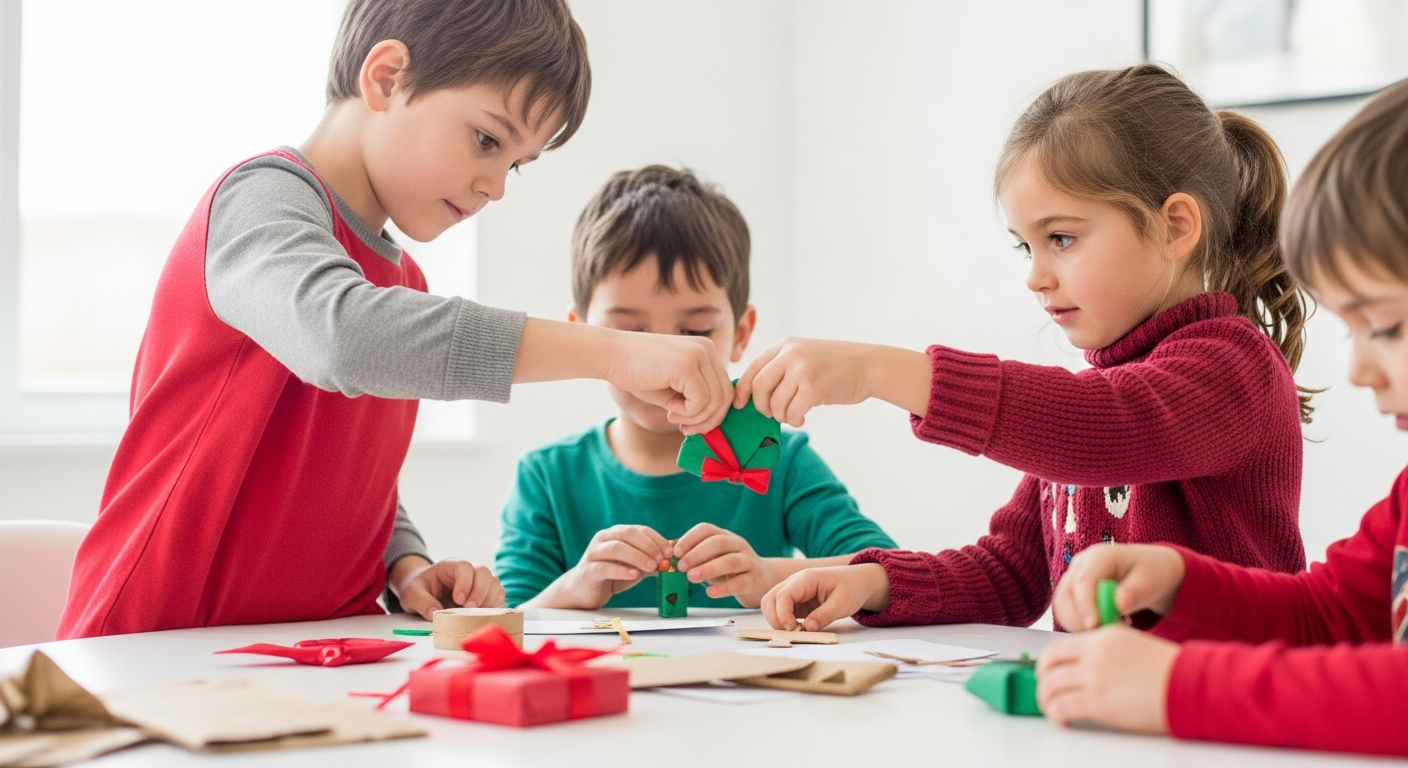
Table of Contents
- Introduction
- Why Handmade Christmas Gifts from Kids Are So Special
- Crafting for Different Age Groups: Tailoring the Fun
- Top Christmas Craft Gift Ideas for Kids
- Making Craft Time a Communication Opportunity
- Tips for a Stress-Free & Joyful Crafting Experience
- Considering Speech Blubs for Enhanced Communication
- Conclusion
- FAQ
Introduction
As the festive season approaches, the air fills with the scent of pine, gingerbread, and the warmth of anticipation. For many families, Christmas is a time of giving, and while store-bought gifts certainly have their place, there’s an unparalleled magic in receiving a present handcrafted by little hands. Imagine the beaming face of a child as they proudly present a gift they’ve made themselves, a unique creation imbued with their effort and love. These aren't just gifts; they are cherished memories, tangible expressions of affection that speak volumes.
This holiday season, let's explore a wonderful world where glitter, glue, and childlike imagination combine to create unforgettable treasures. In this comprehensive guide, we'll delve into a myriad of delightful Christmas craft gift ideas suitable for children of all ages. More than just a list of projects, we'll also discover how the act of crafting itself becomes a powerful catalyst for growth, learning, and, most importantly, communication. From boosting fine motor skills to sparking rich conversations, crafting offers a holistic developmental experience. Get ready to transform everyday materials into extraordinary gifts and witness the joy of your child creating something truly special for their loved ones.

Why Handmade Christmas Gifts from Kids Are So Special
There’s something inherently heartwarming about a handmade gift, especially when it comes from a child. It’s a testament to effort, creativity, and a genuine desire to give. These aren’t items found on a shelf; they are unique expressions of a child’s personality and affection, making them priceless keepsakes.
Beyond the Store-Bought: The Value of Effort and Love
In a world increasingly dominated by mass-produced items, a handmade gift stands out. It carries the imprint of the child's touch, their burgeoning skills, and their personal investment. When a grandparent receives a hand-painted ornament or a parent unwraps a picture frame decorated by their child, they're not just getting an object; they're receiving a piece of their child's heart, a snapshot of their development, and a memory of shared moments. This personal touch fosters deeper connections and creates lasting emotional value that no store-bought item can replicate.
Developmental Benefits of Crafting
Engaging in crafts offers a wealth of developmental advantages for children. It’s a multi-sensory activity that stimulates various areas of growth:
- Fine Motor Skills: Cutting with scissors, gluing small pieces, painting delicate strokes, and stringing beads all require precision and control, strengthening the small muscles in their hands and fingers.
- Creativity and Imagination: Crafts provide a canvas for children to express their unique ideas, experiment with colors and textures, and bring their imaginative visions to life. There's no right or wrong way, fostering a sense of artistic freedom.
- Problem-Solving: From figuring out how to attach a wobbly pipe cleaner to choosing the right color combination, children encounter mini-challenges that require them to think critically and adapt.
- Following Instructions: Many crafts involve multi-step processes, which helps children learn to follow directions, sequence actions, and complete tasks from beginning to end.
- Patience and Persistence: Crafting often requires time and effort. Children learn the value of seeing a project through, even when it gets a little tricky, developing patience and resilience.
Fostering Communication and Connection
Perhaps one of the most significant, yet often overlooked, benefits of crafting is its power to stimulate communication and strengthen family bonds. Craft time is naturally interactive, creating a relaxed environment where conversations flow easily.

Consider a parent whose 3-year-old is a "late talker" and might struggle with initiating conversations. Sitting together to make a sparkly Christmas ornament can transform into a rich language-learning opportunity. "What color glitter should we use for the star? Red or green?" "Let's put some glue here. Can you say 'glue'?" "Wow, that's a big, shiny star!" These simple interactions provide a natural context for introducing new vocabulary, practicing sounds, and encouraging spontaneous speech.
At Speech Blubs, our mission is to empower children to "speak their minds and hearts," and activities like crafting are perfect complements to that goal. As children create, they often want to describe what they are doing, explain their choices, or tell stories about their creations. This is where language truly blossoms. For children needing extra support, this interactive play makes communication feel less like a chore and more like an integral part of a joyful activity.
Crafting for Different Age Groups: Tailoring the Fun
Choosing the right craft for your child's age is key to ensuring it's enjoyable, engaging, and developmentally appropriate. We want to foster success, not frustration!
Toddler-Friendly Crafts (Ages 1-3): Simple Joys
For our youngest crafters, the focus is on sensory experiences, simple actions, and safe materials. Supervised exploration is paramount.
- Handprint/Footprint Ornaments: These are timeless keepsakes. Use non-toxic paint on cardstock, salt dough, or oven-bake clay. Let them press their hand or foot, then you can add details like glitter, names, and dates.
- Painted Rocks: Collect smooth rocks, provide chunky brushes and washable paints. Let them explore colors and textures. Once dry, you can seal them and give them as paperweights or garden decorations.
- Basic Collages: Offer large, pre-cut shapes of colored paper, fabric scraps, cotton balls, and a safe, stick-glue. Encourage them to stick things down however they like, focusing on the action of "glue" and naming the items.
Communication Tip: During these simple crafts, use a lot of parallel talk and self-talk. "Mama is putting on the red paint. Red!" "You are pressing your hand down. Push! Push!" "Look at the soft cotton! Soft!" Our video modeling methodology, which uses real children demonstrating sounds and words, can beautifully mirror these early language learnings by showing kids how sounds are made and words are used in context.
Preschooler Power Crafts (Ages 3-5): Emerging Skills
Preschoolers are developing more fine motor control and can handle slightly more complex, multi-step projects. They love to see their creations take shape.
- Pasta Necklaces/Ornaments: Dye pasta (like rotini or ditalini) with food coloring and rubbing alcohol, then let them string it onto yarn or pipe cleaners. This is fantastic for fine motor practice.
- Decorated Picture Frames: Provide plain wooden or cardboard frames, child-safe paint, stickers, sequins, and glue. They can personalize these for family members, adding a favorite photo later.
- Pipe Cleaner Creations: Pipe cleaners are incredibly versatile. Children can bend them into festive shapes like candy canes, stars, or even little stick figures. Adding beads to pipe cleaners is another great activity.
- Salt Dough Ornaments: Mix flour, salt, and water, then roll out the dough and let children use cookie cutters. Bake them, then paint and decorate. These make wonderful tree decorations.
Communication Tip: Encourage sequencing by talking through the steps: "First, we roll the dough. Then, we use the star cutter." Ask open-ended questions: "What color do you think Grandma would like for her frame?" For preschoolers who might be struggling with expressing these ideas or building their vocabulary, our app offers engaging activities to build foundational communication skills, making these crafting conversations richer and more rewarding. Ready to explore a joyful way to boost your child's speech? Download Speech Blubs on the App Store or Google Play today!
Early Elementary Artistry (Ages 5-8): Independent Creators
Children in this age group can often follow more detailed instructions and take pride in personalizing their gifts. They're ready for projects that allow for more creativity and independence.
- DIY Bath Bombs/Sugar Scrubs: With adult supervision, children can measure and mix ingredients for simple bath bombs or sugar scrubs. They love choosing scents and colors, and the recipients will adore the homemade pampering gift. Package them in small jars with handmade labels.
- Painted Canvas Art: Provide small canvases, acrylic paints, and brushes. Encourage them to create abstract art, landscapes, or even portraits for a special person.
- Personalized Mugs: Use ceramic paint pens (oven-bake to set) to decorate plain white mugs. Children can draw pictures, write names, or add festive designs.
- Friendship Bracelets: Learning to braid or tie knots to create friendship bracelets is a classic and rewarding activity, perfect for gifting to friends, siblings, or even adults.
Communication Tip: These crafts offer fantastic opportunities for children to describe processes, explain their design choices, and anticipate the recipient's reaction. "I'm making a blue and green pattern because those are Uncle Tom's favorite colors." If your child struggles with clarity of speech or structuring their ideas, our app can provide a supportive environment to practice these skills. Unsure if your child could benefit from speech support? Take our quick 3-minute preliminary screener to get a simple assessment and a free 7-day trial.
Big Kid Masterpieces (Ages 8-12+): Skill-Building Projects
Older children are capable of more intricate techniques and longer-term projects. These crafts often teach new skills and result in truly impressive gifts.
- Simple Sewing Projects: Learn basic hand-stitching to create felt animals, small pouches, or decorative pillows. This teaches patience and precision.
- Candle Making: Using soy wax flakes, wicks, and essential oils, children can safely (with strict adult supervision for heating wax) create beautiful scented candles. They can personalize the containers and scents.
- Personalized Journals or Notebooks: Decorate plain notebooks with fabric, paper, paint, or even simple binding techniques. These make thoughtful gifts for anyone who loves to write or draw.
- Miniature Dioramas: Using shoeboxes, construction paper, small figures, and natural elements, children can create tiny scenes – a Christmas village, a winter wonderland, or a favorite storybook setting.
Communication Tip: Advanced crafts encourage detailed planning, problem-solving discussions, and the articulation of complex instructions. "I need to cut this fabric precisely here so the seams line up." These conversations are vital for cognitive and linguistic development. At Speech Blubs, we are committed to providing an immediate, effective, and joyful solution for the 1 in 4 children who need speech support. Our focus is on blending scientific principles with play, ensuring every child can express themselves fully.
Top Christmas Craft Gift Ideas for Kids
Let's dive into some specific ideas, categorized by who might receive these wonderful homemade gifts.
For Grandparents & Family
Grandparents especially treasure anything handmade by their grandchildren. These gifts often become cherished family heirlooms.
- Photo Gifts:
- Decorated Picture Frames: As mentioned above, a simple wooden or cardboard frame becomes a personalized masterpiece. Children can paint, glue on small shells, beads, or even dried pasta shapes around the frame. Insert a favorite family photo.
- Photo Albums/Scrapbooks: For older kids, a simple blank photo album can be decorated with festive paper, stickers, and drawings. They can then help select and arrange family photos, adding captions.
- Photo Ornaments: Print small photos, cut them into shapes, and glue them onto cardstock or craft foam. Decorate with glitter, ribbons, and a loop for hanging.
- Handprint/Footprint Keepsakes:
- Canvas Art: Use non-toxic acrylic paint to create handprint wreaths, Santa beards, reindeer, or even "mistletoes" on a small canvas. Add names and dates.
- Personalized Mugs or Plates: Special ceramic paints or markers can be used to capture a child's handprint or fingerprint art on a functional item. Follow instructions for baking to set the paint.
- Personalized Artwork:
- Original Drawings or Paintings: Frame a child’s unique piece of art. Even abstract scribbles from a toddler can be wonderfully meaningful when presented as a "masterpiece."
- Clay Sculptures: Air-dry clay or oven-bake clay can be molded into small figures, bowls, or decorative items. Children can paint them once dry or baked.
For Teachers & Friends
Thoughtful, handmade gifts are a wonderful way for children to show appreciation to their teachers and friends.
- Handmade Cards with Personal Messages: Encourage children to draw a picture, write their name, and for older kids, write a personal message of gratitude or friendship. Using festive stamps, glitter, and stickers adds a special touch.
- Decorated Bookmarks: Cut cardstock into bookmark shapes. Children can decorate them with drawings, stickers, stamps, or even by attaching a tassel made from embroidery floss.
- Small Painted Canvases or Magnets: Tiny canvases (2x2 or 3x3 inches) can be painted with miniature scenes or abstract designs. Once dry, magnets can be glued to the back for a fridge decoration.
- DIY Keychains: Using shrink plastic (Shrinky Dinks), children can draw and color designs, punch a hole, and then watch them magically shrink in the oven. Attach to a keychain ring. Alternatively, beads and string can be used to create beaded keychains.
Edible Gifts (with adult supervision)
Making and sharing edible treats is a classic holiday tradition. These gifts are always a hit and teach children about baking and presentation.
- Decorated Cookies/Cupcakes: Bake sugar cookies or cupcakes (or buy plain ones to simplify). The real fun comes in the decorating! Provide frosting, sprinkles, candies, and let children unleash their creativity. Package them in festive bags or boxes.
- Homemade Hot Chocolate Mix in a Jar: Layer cocoa powder, sugar, mini marshmallows, and chocolate chips in a clean mason jar. Kids can decorate the jar with ribbons and a handmade tag that includes mixing instructions.
- "Reindeer Food": A magical mix for Christmas Eve! Combine oats, a touch of edible glitter, and birdseed (optional). Children can scoop the ingredients into small bags and decorate the bags with drawings of reindeer. The tag can read, "Sprinkle this outside on Christmas Eve to help guide Santa's reindeer!"
Making Craft Time a Communication Opportunity
Beyond the joy of creation, craft time is an incredible setting for nurturing communication skills. It's a natural environment for learning and growth, especially when adults actively engage with children.
The Power of Parallel Talk & Self-Talk
As you craft alongside your child, narrate what you're doing and what they are doing. "Mama is cutting the red paper. Snip, snip!" "You are making a big, blue swirl with your paintbrush. Swish! Swish!" This models language without pressure, expanding their vocabulary and helping them connect words to actions and objects.
Asking Open-Ended Questions
Instead of questions that elicit a simple "yes" or "no," ask questions that encourage description and thought.
- "What color should we use next and why?"
- "How does that glitter feel in your hand?"
- "Tell me about what you're making for Grandma."
- "What do you think is the trickiest part of this project?"
Building Vocabulary
Introduce new words related to the craft.
- Actions: Cut, glue, paste, paint, draw, press, sprinkle, stir, fold, mix.
- Textures: Smooth, bumpy, sticky, rough, soft, sparkly.
- Shapes & Colors: Circle, square, triangle, oval, rectangle; shimmering gold, bright red, deep blue.
- Tools: Scissors, paintbrush, glue stick, glitter, yarn, ribbon.
Sequencing & Following Directions
Many crafts require a sequence of steps. Talk through these steps explicitly. "First, we need to put the glue on the paper. Then, we can sprinkle the glitter." For older children, you can give multi-step instructions and have them repeat them back. This is fundamental for listening comprehension and expressive language.
Describing & Explaining
Encourage your child to describe their finished product or the steps they took. "Tell me about your shiny blue star. What did you use to make it?" This helps them organize their thoughts and articulate their ideas clearly.
The Speech Blubs Difference: "Smart Screen Time" for Skill Building
While hands-on crafting is invaluable, we understand that modern parents often seek complementary tools. This is where Speech Blubs shines, offering what we call "smart screen time"—a powerful, interactive, and joyful alternative to passive viewing experiences like cartoons.
At Speech Blubs, we provide a structured yet playful environment designed to build critical communication skills. Our unique "video modeling" methodology is backed by science and uses real children demonstrating sounds, words, and phrases. Children learn by watching and imitating their peers, a natural and highly effective way to acquire new language. This is akin to having a virtual crafting buddy who encourages communication, making language learning fun and engaging.
We were born from the personal experiences of our founders, who all grew up with speech problems and created the tool they wished they had. We are committed to providing an immediate, effective, and joyful solution for the 1 in 4 children who need speech support, blending scientific principles with play into one-of-a-kind experiences.
Whether your child is a "late talker" struggling with first words, has difficulty with specific sounds, or needs help building sentences, Speech Blubs provides targeted activities that reduce frustration and build confidence. It’s a powerful supplement to a child’s overall development plan and, when applicable, professional therapy, making communication a source of joy, not stress. We’re proud that our method is backed by science, placing us in the top tier of speech apps worldwide. You can learn more about our research and scientific approach here.
Tips for a Stress-Free & Joyful Crafting Experience
Crafting with kids should be fun for everyone. A little preparation can go a long way in making the experience positive and memorable.
- Set Realistic Expectations: Remember, it's about the process, not perfection. A wobbly tree or a smudged handprint often hold more charm than a flawless creation. Embrace the unique artistry of your child.
- Gather Supplies Ahead of Time: Nothing derails a craft session faster than realizing you're missing a key ingredient. Lay out all materials before you start.
- Prepare Your Workspace: Cover tables with old newspapers, a plastic tablecloth, or even an old bedsheet. Have wet wipes and paper towels ready for quick clean-ups.
- Embrace the Mess: Crafts often involve glitter, glue, and paint. Acknowledge that a little mess is part of the creative process and try not to stress too much about it. Dress children in old clothes.
- Focus on the Connection, Not Just the Craft: The conversations, laughter, and shared moments are far more valuable than the finished product. Use this time to bond and communicate.
- Display Their Work Proudly: Showcasing your child's creations, whether on the fridge or as actual gifts, boosts their self-esteem and encourages future creativity.
Considering Speech Blubs for Enhanced Communication
As you nurture your child's creativity through crafting, remember that developing their communication skills is equally important. At Speech Blubs, our mission is to empower children to "speak their minds and hearts," giving them the confidence to express themselves fully in all aspects of life, including telling you all about their amazing Christmas creations.
We blend scientific principles with play, offering a screen-free alternative to passive viewing and a powerful tool for family connection. Our unique video modeling methodology, where children learn by watching and imitating their peers, teaches complex communication skills in an engaging and effective way. Parents often share incredible success stories, and you can see what other parents are saying about their child's success with Speech Blubs here.
We believe in transparency and providing exceptional value for families. Here's a look at our plans:
- Monthly Plan: For $14.99 per month, you get access to our core app features.
- Yearly Plan: This is our most popular and value-packed option at just $59.99 per year. That breaks down to an incredible $4.99 per month, allowing you to save 66% compared to the monthly plan!
Choosing the Yearly plan isn't just about saving money; it unlocks a richer, more comprehensive experience:
- 7-Day Free Trial: Only with the Yearly plan do you get to try Speech Blubs completely free for a week to see the magic for yourself.
- Extra Reading Blubs App: Gain full access to our complementary Reading Blubs app, designed to further support literacy development.
- Early Access to New Updates: Be among the first to experience new features and content.
- 24-Hour Support Response Time: Get priority support when you need it most.
The Monthly plan does not include these valuable extra benefits. We strongly encourage you to choose the Yearly plan to maximize your child's learning journey and enjoy all the exclusive features designed to accelerate their progress. It's an investment in your child's future, helping them find their voice and connect with the world.
Ready to provide your child with joyful, effective speech support? Create your Speech Blubs account today and select the Yearly plan to start your 7-day free trial and unlock the full suite of features!
Conclusion
This Christmas, let's move beyond the ordinary and embrace the extraordinary joy of handmade gifts. Crafting with your children is more than just an activity; it's an investment in their development, a canvas for their creativity, and a powerful tool for fostering communication. From boosting fine motor skills and problem-solving abilities to creating cherished family memories, the benefits are truly boundless. The simple act of a child creating a gift for a loved one instills pride, empathy, and a profound understanding of the spirit of giving.
As you embark on these festive crafting adventures, remember that every snip of the scissors, every dab of glue, and every colorful stroke of paint is an opportunity for connection and communication. And for those moments when you seek to further empower your child’s voice, Speech Blubs is here to support you. We combine the power of scientific methodology with engaging, peer-to-peer video modeling to make speech development fun and accessible. Our mission is to help every child speak their minds and hearts, building confidence and fostering a lifelong love for communication.
Give your child the gift of creativity and the lifelong skill of confident communication this holiday season. We invite you to experience the magic of Speech Blubs firsthand. Download Speech Blubs on the App Store or Google Play and select our Yearly plan to unlock your 7-day free trial and all the exclusive features. It's the best way to start your child's journey towards clearer, more confident speech, bringing even more joy to your family's holiday season and beyond.
FAQ
Q1: What are the best Christmas craft gifts for toddlers to make?
A1: For toddlers (ages 1-3), focus on simple, sensory-rich crafts that involve basic actions and non-toxic materials. Handprint or footprint ornaments made from salt dough or painted on cardstock are always cherished keepsakes. Painted rocks, basic collages with pre-cut shapes and stick glue, or decorating large paper cutouts with cotton balls are also excellent choices. These activities help develop fine motor skills and provide natural opportunities for introducing new vocabulary, which can be further supported by apps like Speech Blubs.
Q2: How can I make crafting with my child less messy and more enjoyable?
A2: To ensure a more stress-free crafting experience, preparation is key! Start by covering your workspace with old newspapers, a plastic tablecloth, or an old bedsheet. Have all supplies laid out and ready before you begin. Dress your child in old clothes or an art smock. Embrace the fact that some mess is inevitable and part of the creative process, but having wet wipes and paper towels nearby for quick clean-ups can help manage it. Remember, the focus is on the joy of creating and connecting, not on perfection or pristine cleanliness.
Q3: What communication skills can children develop through crafting?
A3: Crafting is a fantastic way to boost various communication skills. It provides natural opportunities for vocabulary expansion (naming colors, shapes, tools, actions, textures), practicing sequencing (following multi-step instructions), and developing descriptive language (explaining what they're making and why). Parents can encourage parallel talk ("Mama is gluing the shiny star") and ask open-ended questions ("What do you think will happen if we mix these colors?"). For children needing extra support, tools like Speech Blubs can complement these hands-on activities by providing engaging, interactive exercises that reinforce these language concepts and build confidence.
Q4: What is the best way to get started with Speech Blubs?
A4: The best way to get started with Speech Blubs is by choosing our Yearly plan. This plan offers the most value at just $59.99 per year (equivalent to $4.99/month, saving you 66% compared to the monthly plan). With the Yearly plan, you'll gain access to a 7-day free trial, our complementary Reading Blubs app, early access to new updates, and 24-hour support response time. Simply download Speech Blubs from the App Store or Google Play Store, or create your account on our website, and select the Yearly subscription to unlock all these benefits and begin your child's joyful speech development journey.
About the author