
Christmas Crafts for Kids: Festive Fun & Language Growth
 By Speech Blubs Team•Dec 22, 2025•17 min.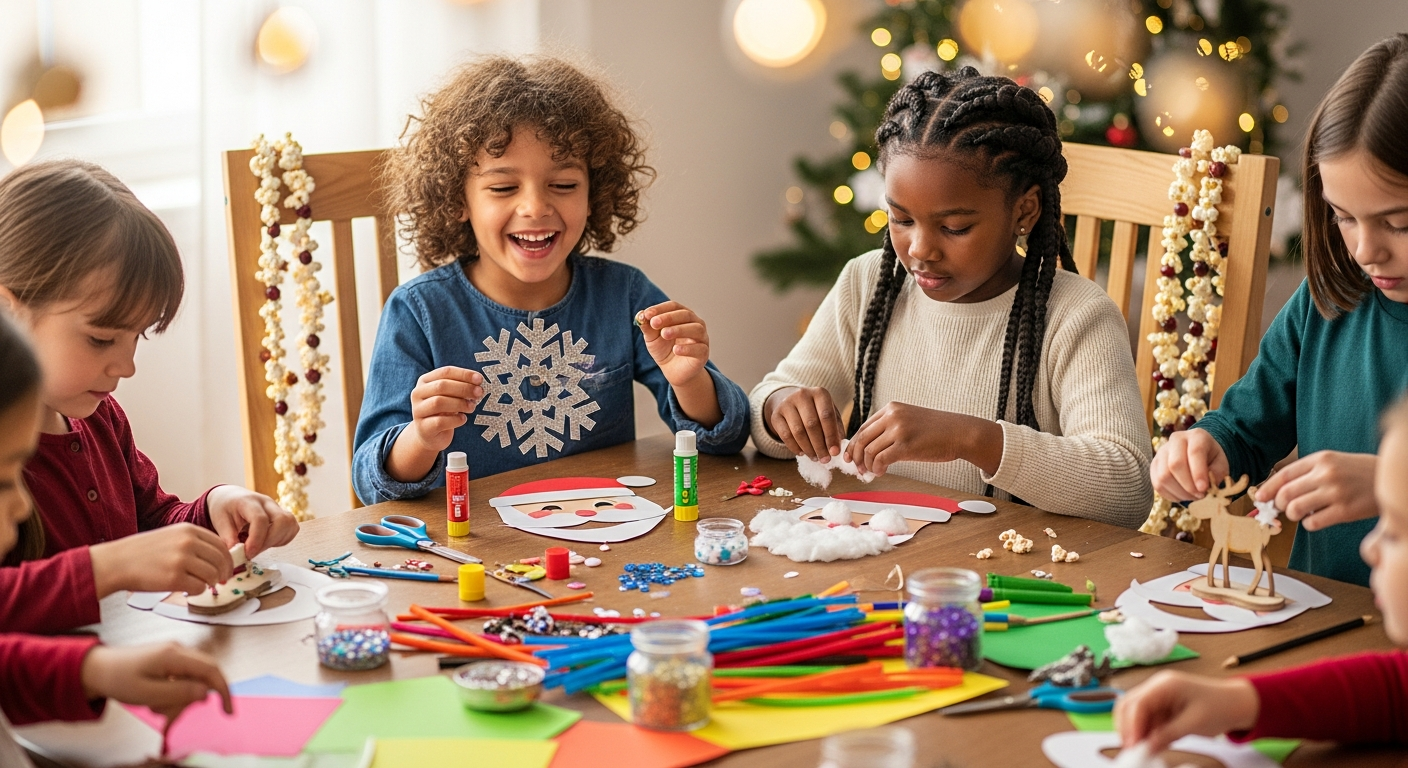
Table of Contents
- Introduction
- The Magic of Christmas Crafts for Kids
- Why Christmas Crafts Are Goldmines for Speech Development
- Crafting for Communication: Practical Tips for Parents
- Top 10 Engaging Christmas Crafts for Kids (with Language Focus)
- Integrating Speech Blubs into Your Crafting Fun
- Making the Most of Your Speech Blubs Experience
- Ready to Empower Your Child's Voice This Christmas?
- Frequently Asked Questions (FAQ)
Introduction
As the festive season approaches, children worldwide buzz with an almost palpable excitement. The air fills with the scent of pine, gingerbread, and the promise of magical moments. For many parents, this time of year brings a wonderful opportunity to create lasting memories with their little ones through shared activities. But what if these beloved holiday traditions could also be powerful tools for your child's development, especially for their speech and language skills? Imagine transforming a simple crafting session into a dynamic learning playground where every snip, glue, and sprinkle contributes to building vocabulary, refining articulation, and boosting communication confidence. This blog post isn't just about making pretty decorations; it's about harnessing the joy of Christmas crafts to naturally foster essential speech and language development in children, offering practical ideas and showing how readily available resources, like our interactive Speech Blubs app, can amplify this learning, ensuring your child not only speaks their mind but also their heart this holiday season.

The Magic of Christmas Crafts for Kids
Christmas crafts are far more than just pleasant pastimes. They are rich, multi-sensory experiences that engage children on numerous developmental levels. From the tactile sensation of glitter and glue to the visual delight of vibrant colors and the cognitive challenge of following instructions, crafting offers a holistic environment for growth.
More Than Just Fun: Cognitive and Motor Skills
When a child sits down to make a Christmas ornament, they're not just creating. They're developing crucial cognitive skills like problem-solving (How do I attach this exactly?), planning (What should I do first?), and spatial reasoning (Where will this piece fit?). Simultaneously, their fine motor skills get a fantastic workout. Holding scissors, squeezing glue bottles, manipulating small beads, and painting with a brush all contribute to the dexterity needed for writing and even for the precise movements of the mouth and tongue involved in articulation.
Language-Rich Environment: Naming, Describing, Sequencing
A crafting session is inherently a language-rich environment. There are countless opportunities for naming objects (paper, glue, ribbon), describing attributes (shiny, soft, bumpy, red, green), and following sequences ("First, we cut the circle, then we glue on the eyes"). This natural setting removes the pressure often associated with explicit language drills, allowing children to absorb and practice language organically.
Family Bonding: Creating Memories, Shared Experiences
Perhaps one of the most heartwarming aspects of Christmas crafting is the opportunity for family connection. Working side-by-side on a shared project creates a space for meaningful interactions, laughter, and conversation. These moments of connection aren't just about emotional well-being; they provide invaluable social communication practice, fostering turn-taking, active listening, and the joy of collaboration. These shared experiences become cherished memories, reinforcing the positive associations with communication and learning.

Why Christmas Crafts Are Goldmines for Speech Development
Engaging in festive crafts offers unique advantages for a child's speech and language development, turning everyday materials into powerful learning tools. The hands-on nature of crafting provides concrete experiences that aid in comprehension and expression, making abstract language concepts more tangible.
Vocabulary Expansion
Every craft project introduces a wealth of new words. Think about the materials: glitter, felt, yarn, pinecone, cookie cutter. Consider the actions: cut, glue, paint, decorate, tie, sprinkle. And the descriptions: sparkly, sticky, smooth, rough, bright, tiny, huge. Parents can explicitly name these items and actions, helping children associate words with their physical counterparts and build a robust vocabulary.
- Relatable Scenario: Imagine a child who is a "late talker" and struggles with action verbs. When making a Santa craft, you might say, "Let's glue the cotton ball to Santa's beard!" or "Time to cut the red paper for his hat!" Each action provides a clear, visual cue for the verb, making it easier for the child to understand and imitate.
Descriptive Language
Christmas crafts are perfect for practicing descriptive language. Encourage your child to use adjectives and adverbs to talk about their creations.
- "Tell me about your ornament. Is it shiny? Is it round? What color is that bright red star?"
- "How does the fluffy cotton feel? Is it soft?"
- Relatable Scenario: If your child tends to use single words, gently guide them to expand their descriptions. Instead of just "star," you can ask, "What kind of star is it? Is it a yellow star? A sparkly star? A big star?" This encourages them to combine words and think more deeply about attributes.
Following Directions & Sequencing
Most crafts involve multiple steps, making them ideal for practicing following directions and understanding sequencing.
- "First, we need to draw the reindeer's head. Then, we'll glue on his antlers. Finally, we'll add his bright red nose."
- Using words like first, next, then, finally helps children grasp the order of events, a critical skill for both communication and academic success.
- Relatable Scenario: For a child who has difficulty with multi-step instructions, break them down. Give one instruction at a time, waiting for them to complete it before giving the next. "Cut the paper." (Wait) "Now, glue it here." As they gain confidence, you can gradually increase the number of steps.
Social Communication & Turn-Taking
Crafting together naturally encourages social interaction. Children learn to share materials ("Can I have the blue glitter, please?"), ask for help ("Mommy, I need help cutting this!"), and express their preferences ("I want my tree to have purple stars!"). These are foundational elements of effective social communication. Taking turns with a shared pair of scissors or a glue stick also reinforces vital social skills.
Fine Motor Skills & Pre-Writing
The intricate movements involved in crafting, such as cutting with scissors, tearing paper, squeezing glue, threading beads, and painting, are excellent for developing fine motor skills. These skills are not only crucial for writing readiness but also for oral motor control, which is directly linked to articulation. Stronger, more coordinated small muscles in the hands can often correlate with improved muscle control in the mouth, tongue, and jaw, which are essential for producing clear speech sounds.
Problem-Solving & Creativity
Christmas crafts provide an open canvas for children to express their creativity and develop problem-solving skills. What if the glue isn't holding? How can we make this ornament stand up? These small challenges encourage flexible thinking and adaptation, empowering children to find their own solutions and fostering a sense of accomplishment.
Crafting for Communication: Practical Tips for Parents
To maximize the language-boosting potential of your Christmas crafting sessions, consider these simple yet effective strategies:
- Narrate Everything: Talk through each step as you and your child work. "We are cutting the paper. What color is this paper? It's red! Now, we need to glue it here." Use clear, simple sentences and descriptive words.
- Ask Open-Ended Questions: Move beyond yes/no questions. Instead of "Do you like this?", ask, "What do you like about this?" or "What should we add next?" "How does the glitter feel?" "Tell me about your reindeer." This encourages more elaborate responses and critical thinking.
- Model Language: Speak clearly and slowly, articulating words fully. Repeat new words or phrases multiple times in different contexts. If your child says "dat" for "that," you can respond by modeling the correct sound: "Yes, that is a beautiful star!" without directly correcting them.
- Encourage Imitation: Many young children learn by imitating. If you say a new word like "sparkle," encourage them to say it too. "Can you say 'sparkle'?" This direct imitation practice is a cornerstone of how children acquire new sounds and words, and it's a technique that's effectively mirrored in our Speech Blubs app.
- Be Patient and Follow Their Lead: Allow for mess and exploration. The goal is engagement and communication, not perfection. If your child wants to use a material differently than intended, embrace their creativity and use it as an opportunity for more conversation.
- Take Breaks and Reflect: After a craft, take a moment to admire the creation. Talk about the process: "Remember when we mixed the paint? That was messy fun!" This helps solidify new vocabulary and sequencing concepts.
Top 10 Engaging Christmas Crafts for Kids (with Language Focus)
Here are some fantastic Christmas craft ideas, specifically designed with language development in mind, to get you started:
1. DIY Ornament Extravaganza
Gather construction paper, glitter, glue, pipe cleaners, pom-poms, and ribbons. Let your child cut out shapes like stars, circles, or trees. Decorate them with various materials.
- Language Focus: Naming shapes (star, circle, triangle), colors (red, green, gold), textures (bumpy, smooth, rough, fluffy), actions (cut, glue, sparkle, hang), prepositions (on, under, beside). "Let's glue the shiny star on top of the tree ornament!"
2. Cotton Ball Santa Craft
You'll need red construction paper for Santa's hat and body, cotton balls for his beard and trim, glue, and googly eyes.
- Language Focus: Body parts (beard, hat, eyes, nose), describing (soft, white, round, jolly), prepositions (on, under, inside), actions (stick, roll, paste). "The cotton balls are so soft! We will stick them on Santa's beard."
3. Handprint Reindeer Art
Paint your child's hand brown and press it onto paper. Once dry, add googly eyes, a red pom-pom nose, and drawn antlers to turn the thumbprint into a reindeer.
- Language Focus: Animal names (reindeer), body parts (antlers, nose, eyes), actions (paint, stamp, draw), expressing feelings (happy, sleepy reindeer). "Look, your hand made a brown reindeer! It has big antlers and a red nose."
4. Salt Dough Ornaments
Mix flour, salt, and water to create a dough. Use Christmas cookie cutters to make shapes. Bake, then paint and decorate.
- Language Focus: Sequencing (mix, roll, cut, bake, paint), sensory words (sticky, smooth, hard, soft), kitchen vocabulary (flour, salt, dough, oven), shapes (star, bell, tree). "First, we mix the ingredients. Then, we roll the dough. What shape should we cut next?"
5. Paper Plate Christmas Tree
Cut a paper plate in half, paint it green, and decorate with sequins, glitter, pom-poms, or small cut-out shapes.
- Language Focus: Shapes (triangle, circle), colors (green, red, silver), numbers (count the sequins), actions (paint, glue, stick, decorate). "How many sparkly stars should we glue on our green tree?"
6. Gingerbread Man Decoration
Cut gingerbread man shapes from brown paper. Provide markers, buttons, yarn, and fabric scraps for decorating.
- Language Focus: Describing features (round eyes, big buttons), stories (read "The Gingerbread Man"), actions (draw, tie, button, stick). "Let's give our gingerbread man blue buttons and a yarn scarf!"
7. Candy Cane Reindeer
Turn a candy cane upside down. Glue googly eyes and a small red pom-pom nose to the curved part. Twist brown pipe cleaners around the straight ends for antlers.
- Language Focus: Naming objects (candy cane, reindeer), colors (red, white, brown), counting (how many eyes?), actions (twist, wrap, glue). "We're going to twist these brown pipe cleaners to make antlers for our candy cane reindeer."
8. Popcorn Garland
String popcorn (air-popped, unsalted) and fresh cranberries onto a needle and thread (with adult supervision).
- Language Focus: Sequencing (pop, thread, string), sensory words (crunchy, soft, smooth), fine motor terms (thread, string), colors (white, red). "First, we pop the corn. Next, we thread the white popcorn and red cranberries."
9. Pinecone Animals/Ornaments
Collect pinecones and provide felt, googly eyes, small pom-poms, and glue to turn them into owls, hedgehogs, or simply decorate them with glitter for ornaments.
- Language Focus: Nature vocabulary (pinecone, forest), animal names (owl, hedgehog), descriptive words (spiky, rough, soft), actions (collect, glue, stick). "This spiky pinecone will be a perfect body for our fluffy owl!"
10. Christmas Card Making
Provide cardstock, markers, crayons, stickers, glitter, and other decorative elements. Encourage your child to create cards for family and friends.
- Language Focus: Social communication (Who is this card for? What should we write?), expressing sentiments (happy, love, joy), descriptive writing, colors, shapes. "What a beautiful red and green card! What message should we write for Grandma?"
Integrating Speech Blubs into Your Crafting Fun
At Speech Blubs, we believe that learning should be immediate, effective, and joyful. Our mission is to empower children to "speak their minds and hearts," a commitment born from the personal experiences of our founders, who all grew up with speech problems and created the tool they wished they had. We are dedicated to providing a solution for the 1 in 4 children who need speech support, blending scientific principles with play into one-of-a-kind "smart screen time" experiences. We provide a screen-free alternative to passive viewing (like cartoons) and a powerful tool for family connection.
Video Modeling: Learning from Peers
Just as children learn during crafting by watching and imitating their parents, Speech Blubs utilizes a unique "video modeling" methodology. Children learn complex communication skills by watching and imitating their peers, who are natural and relatable teachers. This isn't passive screen time; it's active engagement. When your child is making a handprint reindeer, you could then transition to Speech Blubs.
- Relatable Scenario: After making a handprint reindeer, you might say, "That's a fantastic reindeer! Let's see if we can find more animals on Speech Blubs and practice their sounds." You can open the app, go to the "Animal Kingdom" section, and practice saying "reindeer" or imitating animal sounds, reinforcing the vocabulary learned during the craft. This seamless connection between hands-on play and app engagement makes learning robust and fun. You can explore the science behind our method to understand why video modeling is so effective.
Interactive Activities Beyond the Craft
Speech Blubs offers a vast library of interactive activities that complement the language skills practiced during crafting.
- If your child is working on a craft involving specific colors, you can then switch to Speech Blubs' "Colors" section to reinforce that vocabulary.
- If they're struggling with action verbs during a "cut and paste" activity, the app's "Actions" category provides a fun way to practice these words with peers.
- For children who are learning to follow multi-step directions, the app's structured games and story sequences provide excellent practice.
Our app turns screen time into "smart screen time," encouraging children to actively participate and communicate, fostering a love for communication and building confidence. It’s a powerful supplement to your child's overall development plan and, when applicable, professional therapy, creating joyful family learning moments.
Making the Most of Your Speech Blubs Experience
To fully unlock the potential of Speech Blubs, we encourage parents to consider our Yearly plan. This option isn't just about significant savings; it's about providing the most comprehensive and supportive experience for your child's communication journey.
The Power of the Yearly Plan
Our pricing is designed to provide maximum value and flexibility. While we offer a Monthly plan for $14.99 per month, the Yearly plan is by far the best choice for families committed to long-term development.
For just $59.99 per year, the Yearly plan breaks down to an incredible $4.99 per month, allowing you to save 66% compared to the monthly subscription. This substantial saving means more consistent, stress-free access to our extensive library of activities throughout the year.
Beyond the cost savings, the Yearly plan includes exclusive, high-value features:
- A 7-day free trial: This allows you to experience the full app and see the magic of Speech Blubs with your child before committing. The Monthly plan does not include this trial.
- The extra Reading Blubs app: An additional app dedicated to early reading skills, perfectly complementing the speech and language development in Speech Blubs. This is a powerful bonus feature not available with the Monthly plan.
- Early access to new updates and 24-hour support response time: Get the newest features first and enjoy priority support for any questions or assistance you might need. The Monthly plan does not offer these priority benefits.
Choosing the Yearly plan ensures your child has uninterrupted access to a wealth of engaging content, supported by continuous updates and dedicated assistance. It’s an investment in their communication future that truly delivers.
Adult Co-Play
Remember, Speech Blubs is a powerful tool, but it's most effective when used with active adult participation. Just like with crafting, sitting alongside your child, engaging with the app together, and praising their efforts amplifies the learning. Your encouragement and interaction turn every session into a valuable shared experience, helping them build confidence and reducing frustration as they develop key foundational skills.
Ready to Empower Your Child's Voice This Christmas?
This holiday season, let's turn festive crafting into an extraordinary opportunity for language growth. The joy of creating, combined with the power of guided conversation and interactive tools, can significantly boost your child's speech and communication skills. These precious moments spent together, crafting and connecting, build more than just ornaments – they build confidence, articulate expressions, and a lifelong love for communication.
If you're wondering if your child could benefit from a little extra support, why not take our quick 3-minute preliminary screener? It involves 9 simple questions and provides an assessment and next-steps plan, offering immediate value. You can also read success stories from other parents who have witnessed their children blossom with Speech Blubs.
Don't let this holiday season pass without giving your child the gift of confident communication. Download Speech Blubs on the App Store or Download Speech Blubs on Google Play today! To unlock the full suite of features, including the valuable 7-day free trial, the Reading Blubs app, and priority support, make sure to select the Yearly plan. Start your 7-day free trial and create your account now and begin a joyous journey of discovery and communication with your child this Christmas.
Frequently Asked Questions (FAQ)
Q1: What age group are these Christmas crafts suitable for?
A1: Most of these crafts are adaptable for toddlers (with supervision) up to early elementary school children. The complexity can be adjusted based on your child's age and developmental stage. For younger children, focus on simpler tasks like sticking and painting, while older children can handle cutting and more intricate designs. The key is to encourage participation and communication at their individual level.
Q2: How can I encourage my child to talk more during crafting if they are shy or reluctant?
A2: Start by narrating your own actions and observations ("I am cutting the red paper. It's so bright!"). Use comments more than direct questions, which can feel less pressure. Offer choices ("Do you want the blue glitter or the silver glitter?"). Model sounds and words, and use positive reinforcement for any attempts at communication, no matter how small. Remember to keep it fun and stress-free.
Q3: Can Speech Blubs really help with articulation if my child is struggling with specific sounds?
A3: Yes, Speech Blubs is designed with activities specifically targeting sound production and articulation. Our unique video modeling feature allows children to watch and imitate peers producing sounds and words, which can be incredibly effective. While Speech Blubs is a powerful supplemental tool, we always recommend consulting with a speech-language pathologist if you have significant concerns about your child's articulation.
Q4: Is the Speech Blubs Yearly plan truly better value than the Monthly plan?
A4: Absolutely! The Yearly plan offers significantly better value. At $59.99 per year, it breaks down to just $4.99 per month, which is 66% less than the Monthly plan's $14.99. Crucially, the Yearly plan also includes a 7-day free trial, the valuable Reading Blubs app, and priority access to updates and support, all of which are not included in the Monthly plan. It provides a more comprehensive and cost-effective solution for consistent speech and language development.
About the author