
Christmas Crafts for Kids: Fun Ideas for Festive Family Learning
 By Speech Blubs Team•Dec 22, 2025•21 min.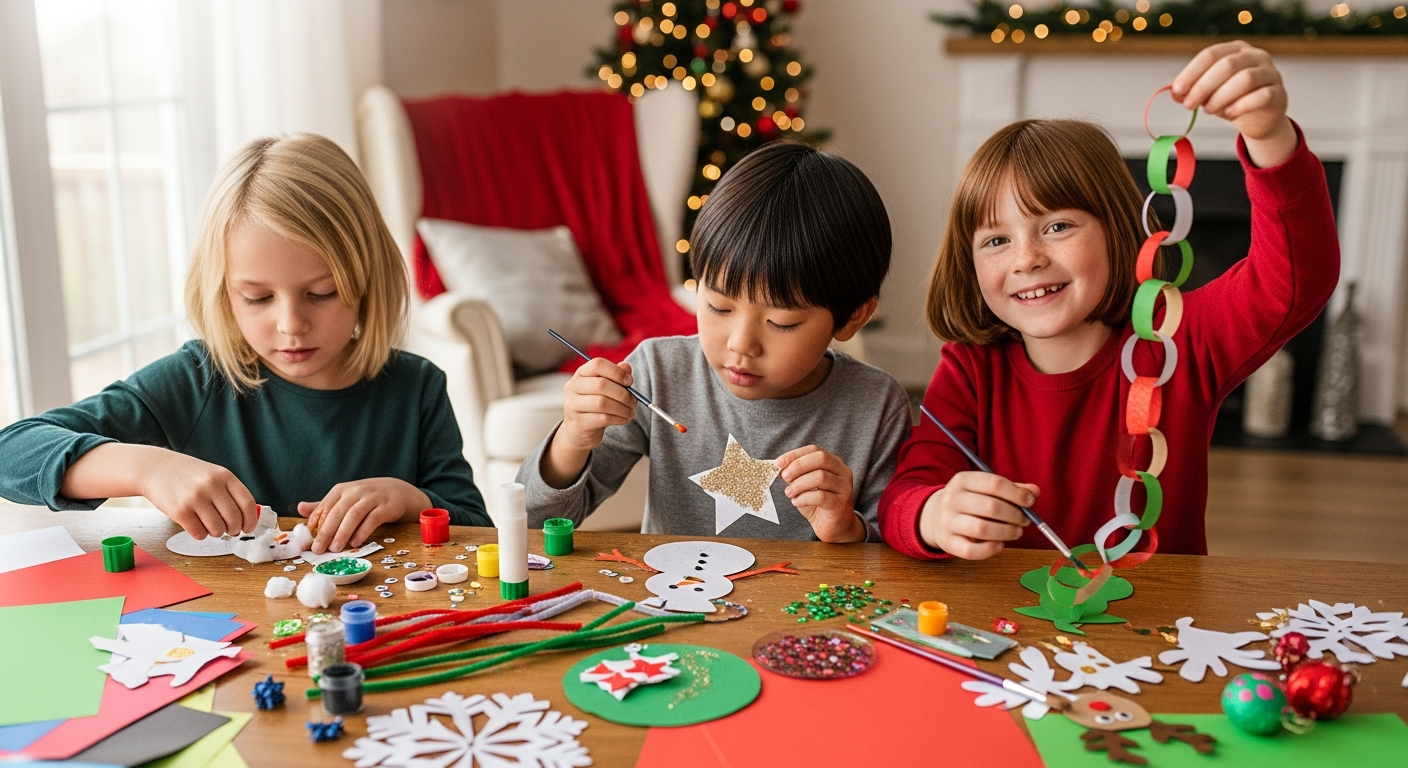
Table of Contents
- Introduction
- The Magic of Christmas Crafting: More Than Just Fun
- Why Christmas Crafts Are Secret Speech & Language Builders
- Top Christmas Craft Ideas for Every Age and Skill Level
- Making the Most of Craft Time for Communication
- Boosting Language Beyond the Craft Table: Our Approach at Speech Blubs
- Seamlessly Integrating Speech Blubs into Your Child's Learning Journey
- Investing in Your Child's Voice: Speech Blubs Plans
- Conclusion
- FAQ
Introduction
The air begins to chill, festive lights twinkle, and a sense of wonder settles over everything. For children, Christmas is a magical time, brimming with anticipation, joy, and countless opportunities for creative expression. Imagine your child's eyes lighting up as they transform simple materials into a sparkling ornament or a cheerful Santa. These aren't just moments of holiday fun; they are powerful learning experiences disguised as play. While the glitter and glue might seem like mere entertainment, engaging in arts and crafts for kids for Christmas offers a treasure trove of developmental benefits, especially for building essential speech and language skills.
In this comprehensive guide, we'll dive deep into why Christmas crafting is such a valuable activity for your child's growth. We'll explore a variety of engaging craft ideas suitable for different ages and skill levels, uncovering how each snip, paste, and stroke contributes to vocabulary expansion, instruction following, and expressive language. Most importantly, we'll show you how to maximize these joyful moments to foster communication, transforming craft time into a natural language-rich environment. At Speech Blubs, we believe in empowering children to "speak their minds and hearts," and we know that hands-on activities like Christmas crafts are a wonderful complement to a holistic approach to language development. We're here to help you unlock the potential in every festive creation, ensuring that this holiday season is not only merry but also profoundly educational.

The Magic of Christmas Crafting: More Than Just Fun
Christmas crafts hold a special place in holiday traditions, weaving together creativity, family time, and the joy of giving. Beyond the immediate delight, these activities are incredibly beneficial for a child's overall development. They engage multiple senses, refine fine motor skills, spark imagination, and perhaps most crucially, lay a rich foundation for communication.
Think about the sensory experience: the rough texture of a pinecone, the stickiness of glue, the bright shimmer of glitter, the scent of cinnamon sticks. These tactile and olfactory inputs provide a wealth of information for a child's developing brain, forming connections and enriching their understanding of the world. When a child manipulates materials – cutting paper, shaping dough, painting a picture – they are actively developing their fine motor skills, crucial for tasks like writing, self-feeding, and dressing. This dexterity, built through repetitive, purposeful movements, supports the intricate coordination required for clear speech articulation.
Moreover, crafting fosters a sense of accomplishment and boosts self-esteem. When a child proudly displays their handmade ornament or gift, they're not just showing off a craft; they're showcasing their effort, creativity, and growing capabilities. This positive reinforcement encourages further exploration and engagement, creating a virtuous cycle of learning and confidence-building.
For us at Speech Blubs, we understand that play is a child's primary language, and structured, engaging play like crafting is a powerful catalyst for speech and language development. The very act of creating something tangible from disparate parts naturally encourages a child to describe their actions, label materials, and discuss their ideas. This organic language use is precisely what we aim to cultivate, making every craft session a valuable opportunity for growth.
Why Christmas Crafts Are Secret Speech & Language Builders
It might not be immediately obvious, but those seemingly simple holiday craft sessions are actually powerful workshops for language acquisition and speech refinement. Every step, from planning to execution, offers a unique opportunity to boost a child's communication skills.

Vocabulary Expansion
Crafting introduces a rich array of new words in a meaningful, hands-on context. Imagine decorating a gingerbread house: your child isn't just seeing a "sprinkle"; they're touching it, placing it, and hearing you say "tiny, colorful sprinkle" as they do. This multi-sensory experience cements vocabulary far more effectively than simply hearing a word in isolation.
Consider the diverse vocabulary that naturally arises:
- Materials: Glitter, glue, ribbon, paint, paper, pipe cleaners, cotton balls, buttons, felt, yarn, pinecones, beads.
- Colors & Shapes: Red, green, gold, silver, star, circle, square, triangle.
- Actions: Cut, paste, glue, draw, paint, sprinkle, stick, fold, twist, tie, thread, poke, press, squeeze.
- Descriptive Words: Sparkly, sticky, soft, rough, smooth, shiny, dull, big, small, tiny, sweet, crunchy, messy.
- Christmas-Specific Terms: Reindeer, Santa, elf, snowflake, ornament, wreath, garland, present, stocking, candy cane, sleigh.
By actively using these words while engaged in a fun activity, children build a robust internal dictionary.
Following Instructions
Craft projects are inherently sequential. "First, we spread the glue, then we sprinkle the glitter." This natural progression is excellent for developing a child's ability to understand and follow multi-step instructions – a critical skill for both academic success and daily life. You can model this by verbally breaking down each step, making it explicit and easy to comprehend. This also helps with executive functioning skills, such as planning and organization.
Descriptive Language
Once a craft is complete, the fun isn't over. This is a prime opportunity for your child to describe their creation. "Tell me about your reindeer! What color is his nose? Is he flying?" Encouraging them to articulate what they made, how they made it, and what they like about it builds their ability to use descriptive adjectives, formulate sentences, and express their unique perspective. It transforms a passive observation into an active language exercise.
Questioning & Answering
Craft time is a natural conversation starter. Parents can ask open-ended questions like, "What color should we use for Santa's hat?" or "Where do you think this snowflake should go?" This encourages children to think, make choices, and respond verbally. For children who may be hesitant speakers, asking questions that require a simple choice ("Do you want red or green?") can be a great starting point, gradually leading to more complex answers.
Social Communication
When crafting with siblings or friends, children learn vital social communication skills. They practice sharing materials ("Can I have the blue crayon next?"), taking turns, negotiating ideas ("What if we put the eyes here instead?"), and expressing frustration or excitement appropriately. These interactions are fundamental for developing pragmatic language – the social rules of communication.
Emotional Expression
The pride and joy a child experiences from creating something with their own hands are invaluable. Crafting offers an outlet for self-expression, allowing children to convey emotions and ideas non-verbally, and then verbally describe those feelings. "I'm so happy with my sparkly star!" This connection between feeling and articulating helps children develop emotional literacy.
These are the foundational skills that Speech Blubs also focuses on. Our mission is to provide an immediate, effective, and joyful solution for the 1 in 4 children who need speech support, blending scientific principles with play. We leverage "smart screen time" that guides children through activities and exercises designed to build on these very same communication fundamentals. Just as you guide them through a craft, our app guides them through engaging, interactive language development.
Top Christmas Craft Ideas for Every Age and Skill Level
No matter your child's age or current developmental stage, there’s a Christmas craft out there that can be both fun and language-enriching. Remember, the goal isn't perfection but participation and communication.
Toddler & Preschooler Friendly Crafts (Ages 1-4)
For our youngest crafters, the focus should be on simple actions, sensory exploration, and immediate gratification. These activities are perfect for introducing basic vocabulary and simple instructions.
- Handprint/Footprint Ornaments:
- Materials: Non-toxic paint, salt dough or craft clay, ribbon, glitter (optional).
- Activity: Press your child's hand or foot into soft clay or paint it and stamp it onto paper or a flat ornament.
- Language Focus: "Hand," "foot," "paint," "press," "red," "green," "soft," "squish." Describe the sensation: "It's cold!" "It's squishy!"
- Relatable Scenario: For a parent whose 2-year-old is a "late talker" and loves physical interaction, making a handprint ornament offers a fantastic opportunity to practice simple words. As you paint their hand, you can say "paint," "red," "hand." When they press it down, "push," "print." The tactile input helps cement the word-object association. "Wow! Big handprint!" can expand on their initial sounds or words.
- Cotton Ball Santa Craft:
- Materials: Red construction paper (for hat), peach or brown paper (for face), cotton balls, glue stick, googly eyes.
- Activity: Glue cotton balls onto Santa’s hat and beard area.
- Language Focus: "Cotton," "soft," "white," "glue," "Santa's beard," "hat." "Stick," "pull," "fluffy."
- Tip: Encourage the child to "pull" the cotton balls apart to make smaller pieces, introducing the action word.
- Paper Plate Wreaths:
- Materials: Paper plate (center cut out), green paper (torn into pieces), glue, red pom-poms or construction paper "berries."
- Activity: Have your child tear green paper into small pieces and glue them around the paper plate ring. Add "berries."
- Language Focus: "Tear," "glue," "green," "circle," "wreath," "berry," "round." "Rough," "smooth." "Sticky."
- Tip: Tearing paper is excellent for fine motor development and can be described as "rip" or "tear."
School-Aged Kids (Ages 5-8)
These crafts can involve more steps, require finer motor control, and allow for greater creativity and storytelling.
- DIY Christmas Cards/Gift Tags:
- Materials: Construction paper, markers, crayons, stickers, glitter glue, stamps.
- Activity: Design personalized cards or gift tags for family and friends.
- Language Focus: "Draw," "write," "fold," "decorate," "message," "who is it for?" Encourage them to dictate a message if they're not writing yet. Discuss specific holiday greetings.
- Relatable Scenario: For a child who struggles with explaining their thoughts or using descriptive language, creating a card for grandma provides a natural prompt. "What do you want to draw for Grandma?" "Tell me about this picture." You can help them formulate a simple message, practicing sentence structure and vocabulary related to expressing affection.
- Pinecone Ornaments:
- Materials: Pinecones, small pom-poms, glitter, glue, pipe cleaners, string.
- Activity: Decorate collected pinecones to hang on the tree.
- Language Focus: "Pinecone," "nature," "rough," "sticky," "sparkly," "decorate," "hang." "Small," "big." Discuss where pinecones come from.
- Tip: This is a great craft for linking to nature and introducing words related to the outdoors.
- Popsicle Stick Christmas Trees:
- Materials: Green popsicle sticks, glue, small sequins, beads, a star sticker.
- Activity: Arrange popsicle sticks into a tree shape, glue, and decorate.
- Language Focus: "Stick," "triangle," "pointy," "decorate," "count" (how many sticks?), "sequin," "star." "Top," "bottom."
- Tip: Talk about the geometric shapes and practice counting the decorations.
- Gingerbread House Decorating:
- Materials: Pre-baked gingerbread house kit or cookies, frosting, candies, sprinkles.
- Activity: Assemble and decorate a gingerbread house or individual gingerbread cookies.
- Language Focus: "Frosting," "sweet," "sticky," "gingerbread," "candy," "decorate," "arrange," "plan." Discuss "roof," "walls," "door," "window."
- Relatable Scenario: A child struggling with sequencing or retelling a story can benefit immensely here. "First, we put on the frosting. Then what do we do? What candy goes next?" This helps them practice ordering events and using temporal words. The array of candies provides opportunities for color and shape identification and descriptive words like "chewy," "crunchy," "round," and "stripey."
Family Collaboration Projects (All Ages)
These projects are fantastic for promoting teamwork, shared experiences, and extended conversations.
- Paper Chains Countdown:
- Materials: Construction paper (red, green, white), glue stick or stapler.
- Activity: Create long paper chains by linking paper strips, each representing a day until Christmas. Remove one link each day.
- Language Focus: "Link," "chain," "count," "wait," "Christmas is coming!" Practice numbers as you count down the days. Discuss anticipation.
- Tip: This craft builds excitement and provides a tangible way to understand the concept of "counting down."
- Homemade Gift Ideas (e.g., Jar Mixes):
- Materials: Mason jars, dry ingredients for cookies/cocoa, ribbon, gift tags.
- Activity: Layer ingredients in a jar, attach instructions, and decorate.
- Language Focus: "Measure," "pour," "layer," "recipe," "ingredient," "gift," "share." Discuss "sweet," "warm," "delicious." Practice reading/dictating the instructions.
- Tip: This introduces the language of cooking and following simple recipes.
- Christmas Garland from Recycled Materials:
- Materials: Empty toilet paper rolls, bottle caps, old magazines, yarn, glue, paint.
- Activity: Cut, paint, and string together various recycled items to create a unique garland.
- Language Focus: "Recycle," "reuse," "transform," "string," "pattern," "design." Discuss sustainability and creativity.
- Tip: A great opportunity to teach about environmental consciousness and resourcefulness.
Making the Most of Craft Time for Communication
Engaging in arts and crafts for kids for Christmas is naturally beneficial, but with a few intentional strategies, you can transform these moments into truly powerful speech and language development sessions.
- Be Present and Engage: Put away your phone and sit at your child's eye level. Show genuine interest in what they are doing and creating. Your undivided attention sends a powerful message that their efforts and their voice matter.
- Narrate and Describe: Be your child's personal commentator! Verbally describe what you are doing, what they are doing, and what you see. "I'm squeezing the yellow glue," "You're cutting the red paper carefully," "Look, your tree is sparkly!" This provides a rich model for language use and exposes them to new vocabulary in context.
- Ask Open-Ended Questions: Instead of questions that elicit a simple "yes" or "no," ask questions that encourage elaboration. Instead of "Do you like it?", try "Tell me about your snowflake!" or "What's your favorite part of this ornament and why?" "What should we do next?" empowers them to think and plan verbally.
- Expand on Their Words: If your child says a single word, expand on it. If they say "tree," you can respond with, "Yes, a tall green Christmas tree!" or "It's a beautiful sparkly tree!" This models longer sentences and introduces new descriptive words.
- Follow Their Lead: While you can guide the activity, allow your child to make choices and lead parts of the process. If they want to put the reindeer's nose on its ear, let them! This fosters independence and gives them ownership, making them more likely to talk about their unique creation.
- Celebrate Efforts, Not Just Perfection: Focus on the process, the joy of creating, and the effort, rather than the finished product's artistic merit. Phrases like "You worked so hard on that!" or "I love how you chose those colors!" build confidence and encourage persistence.
- Encourage Pretend Play: Once the crafts are done, use them as props for imaginative play. Your gingerbread house can become home to tiny dolls, or your handprint Santa can visit other toys. Pretend play is a cornerstone of language development, encouraging storytelling and complex communication.
Remember, these interactions should feel natural and joyful, not like a test. The goal is to create a fun, language-rich environment where communication flows effortlessly.
Boosting Language Beyond the Craft Table: Our Approach at Speech Blubs
While hands-on activities like Christmas crafts are incredibly beneficial for developing foundational communication skills, we understand that sometimes children need a little extra support and targeted practice. That's where Speech Blubs comes in. Our mission, born from our founders' personal experiences growing up with speech problems, is to empower children to "speak their minds and hearts" by providing the immediate, effective, and joyful tool they wished they had. We are committed to supporting the 1 in 4 children who need speech support, ensuring that every child has the opportunity to find their voice.
We believe in blending scientific principles with engaging play, creating one-of-a-kind "smart screen time" experiences. Unlike passive viewing (like cartoons), Speech Blubs actively involves your child, making screen time a powerful tool for family connection and learning. Our unique methodology, backed by rigorous scientific research and highly rated on the MARS scale, revolves around video modeling. Children learn by watching and imitating their peers – real children demonstrating words, sounds, and actions. This taps into the brain's mirror neuron system, making learning intuitive and highly effective, much like how a child naturally learns by imitating parents during a craft session.
We've designed our app to be a screen-free alternative to passive viewing and a powerful supplement to your child's overall development plan. Many parents wonder if their child could benefit from speech support. If you're uncertain, we invite you to take our quick 3-minute preliminary screener. It involves 9 simple questions and provides an immediate assessment along with a personalized next-steps plan, and even includes a free 7-day trial of Speech Blubs. It's a risk-free way to gain clarity and discover how we can help.
Seamlessly Integrating Speech Blubs into Your Child's Learning Journey
Think of Speech Blubs not as an isolated activity, but as a powerful extension of the language-rich environment you create through activities like Christmas crafts. The skills your child develops with glitter and glue can be reinforced and expanded with our app.
For example, after a fun session making animal-themed Christmas ornaments, you can transition to the "Animal Kingdom" section within Speech Blubs. Your child has just practiced saying "reindeer" or "bear" while crafting; now they can see and imitate other children making animal sounds and words, solidifying that vocabulary in a new, engaging context. Similarly, if you focused on action words like "cut," "paste," or "draw" during craft time, our app offers numerous sections that help children learn and imitate action words, boosting their verb vocabulary and understanding of movement.
Our approach isn't just about repetition; it's about providing diverse, motivating contexts for language practice. From building foundational sounds to developing complex sentences, Speech Blubs offers a structured yet playful pathway to stronger communication. We provide a vast library of activities, organized by sound, word, and theme, ensuring there's always something fresh and relevant to your child's interests and developmental needs.
Many parents have shared incredible stories of their children's progress. Don't just take our word for it; read inspiring testimonials from parents just like you, who have seen their children's confidence soar and their communication skills blossom with Speech Blubs.
We understand that every child's journey is unique, and our goal is to be a supportive partner along the way. While we cannot guarantee specific outcomes like "your child will be giving public speeches in a month," we are dedicated to fostering a love for communication, building confidence, reducing frustration, developing key foundational skills, and creating joyful family learning moments. Speech Blubs is a powerful supplement to a child's overall development plan and, when applicable, professional therapy, always thriving with adult co-play and support.
Investing in Your Child's Voice: Speech Blubs Plans
We are deeply committed to making effective speech and language support accessible to every family. To get started and explore the full potential of Speech Blubs, we offer flexible subscription plans designed to fit your needs, with the Yearly plan offering the most value and features.
Our plans are straightforward:
- Monthly Plan: For just $14.99 per month, you get access to our core Speech Blubs app. This plan is simple and flexible, but it does not include a free trial, nor does it come with the additional benefits of our Yearly plan.
- Yearly Plan: Our most recommended and valuable option is the Yearly plan, priced at $59.99 per year. This breaks down to an incredible value of just $4.99 per month, allowing you to save 66% compared to the monthly subscription!
The Yearly plan is not only significantly more affordable but also comes packed with exclusive, high-value features that truly enhance your child's learning experience:
- 7-Day Free Trial: Try before you commit! The Yearly plan includes a full 7-day free trial, giving you and your child ample time to explore all the engaging activities and see the benefits firsthand. The Monthly plan does not include this trial.
- Extra Reading Blubs App: Exclusively with the Yearly plan, you'll gain access to our companion Reading Blubs app, further supporting your child's literacy development.
- Early Access to New Updates: Be among the first to experience new features, content, and improvements as we continuously evolve the Speech Blubs experience.
- 24-Hour Support Response Time: Get priority support with a guaranteed response within 24 hours, ensuring your questions and concerns are addressed promptly.
We believe that empowering your child's communication journey should be easy and accessible. The Yearly plan is designed to provide the best possible value, comprehensive features, and peace of mind for parents.
Ready to empower your child's voice this holiday season and beyond? Download Speech Blubs from the App Store or get it on Google Play and choose the Yearly plan to unlock the free trial and the full suite of features today! Alternatively, you can create your account on our website to start your free trial.
Conclusion
As the festive season approaches, embracing arts and crafts for kids for Christmas offers far more than just holiday decorations; it provides a vibrant, engaging, and joyful pathway to nurturing your child's speech and language development. From expanding vocabulary with glitter and glue to building confidence through storytelling about their creations, every craft session is an opportunity for profound learning and cherished family bonding. These hands-on activities lay essential groundwork, fostering curiosity, fine motor skills, and the invaluable ability to express thoughts and feelings.
At Speech Blubs, we understand the magic of learning through play. Our scientifically backed approach, utilizing video modeling and "smart screen time," seamlessly complements these real-world experiences, providing a powerful, immediate, and effective solution for children needing speech support. By blending joyful play with targeted language practice, we empower children to truly "speak their minds and hearts."
This Christmas, make every craft count, knowing that you're not just creating ornaments, but also building a foundation for lifelong communication. And when you're ready to amplify those efforts and provide your child with an engaging, expert-designed tool, we invite you to discover Speech Blubs. Start your 7-day free trial today by signing up on our website or downloading the app from the App Store or Google Play. Remember to choose the Yearly plan to unlock the free trial, our bonus Reading Blubs app, and continuous support, ensuring the best value and a truly comprehensive learning journey for your child. Give the gift of communication this Christmas – a gift that lasts a lifetime.
FAQ
Q1: What age ranges are these Christmas crafts suitable for? A1: The crafts highlighted in this post are designed to be adaptable for a wide range of ages, from toddlers and preschoolers (1-4 years old) with simpler, sensory-focused activities like handprint ornaments, to school-aged children (5-8 years old) who can engage in more detailed projects like gingerbread house decorating or DIY gift tags. Many, like paper chain countdowns or homemade gift mixes, are fantastic for family collaboration, allowing different age groups to contribute according to their abilities. The key is to adapt the complexity and level of adult supervision to match your child's developmental stage.
Q2: How do arts and crafts specifically help with speech and language development? A2: Arts and crafts are incredibly beneficial for speech and language development in multiple ways. They naturally expand vocabulary by introducing new words for materials (e.g., "glitter," "ribbon"), actions (e.g., "cut," "paste"), and descriptive terms (e.g., "sparkly," "sticky"). Crafting also strengthens a child's ability to follow multi-step instructions, use descriptive language to talk about their creations, and practice social communication skills like sharing and taking turns. Moreover, the tactile and sensory aspects help cement word meanings, while the joy of creation encourages expressive language and confidence.
Q3: Is Speech Blubs a replacement for professional speech therapy? A3: No, Speech Blubs is designed to be a powerful supplement to, not a replacement for, professional speech therapy. We provide an immediate, effective, and joyful solution for families, offering scientifically backed activities that build foundational speech and language skills. For children with diagnosed speech disorders or significant delays, a certified speech-language pathologist provides individualized assessment and intervention. Speech Blubs can significantly enhance the progress made in therapy sessions by offering consistent, engaging practice at home, and empowering parents to actively participate in their child's language journey. If you're unsure about your child's needs, consider taking our quick 3-minute preliminary screener.
Q4: How can I try Speech Blubs and what is the best plan? A4: You can easily try Speech Blubs by downloading the app from the Apple App Store or Google Play Store, or by creating an account directly on our website. We highly recommend our Yearly Plan at $59.99 per year (just $4.99/month), as it offers the best value. This plan includes a 7-day free trial, access to our companion Reading Blubs app, early access to new updates, and 24-hour support response time. The Monthly Plan ($14.99/month) does not include these additional benefits or a free trial.
About the author