
Christmas Fun Activities for Kids: Spark Joy & Communication
 By Speech Blubs Team•Dec 19, 2025•18 min.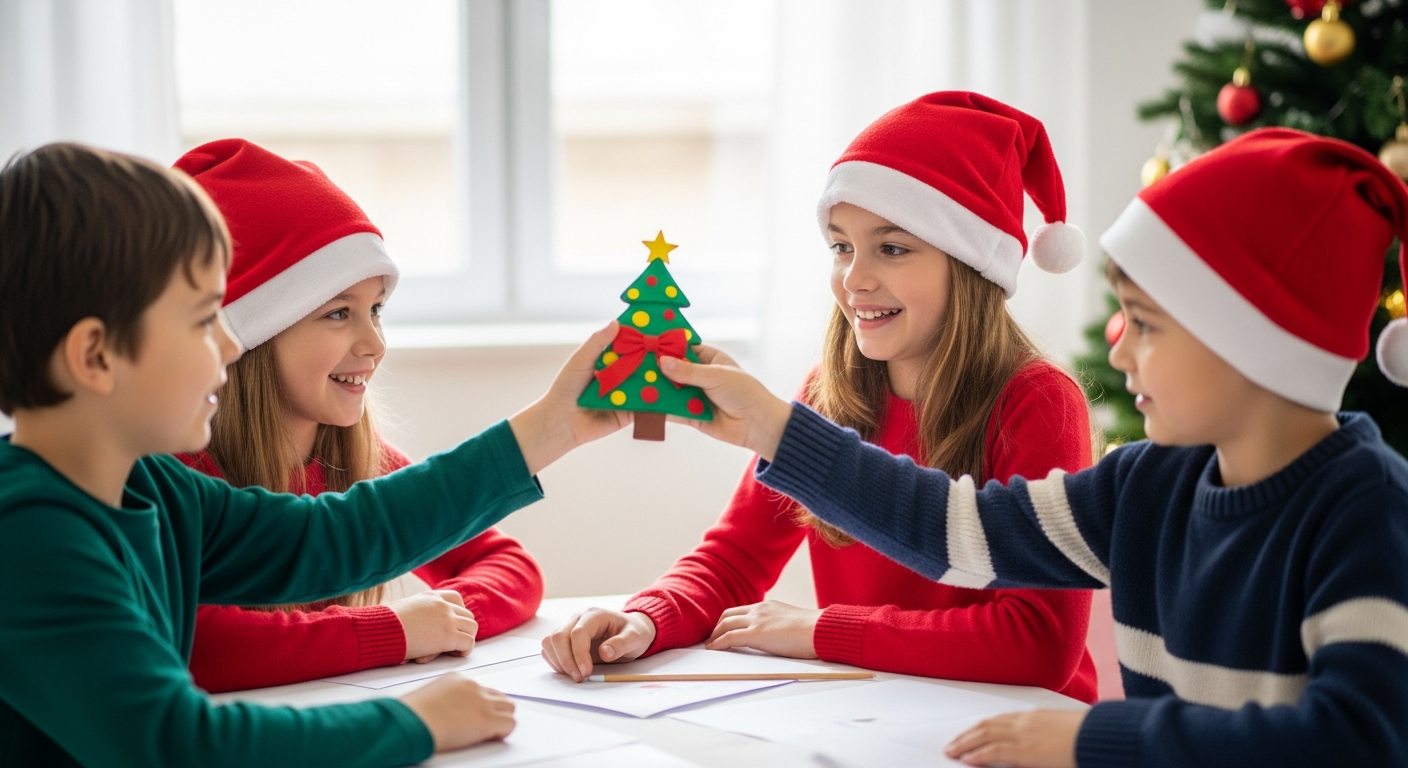
Table of Contents
- The Magic of Christmas: More Than Just Presents
- Creative Crafts: Building Skills & Stories
- Sweet Treats & Kitchen Fun: A Feast for the Senses and Speech
- Sensory Wonderland: Engaging All Five Senses
- Storytelling & Imaginative Play: Weaving Tales Together
- Musical Moments: Singing Our Way to Speech Confidence
- Outdoor Winter Adventures: Embracing the Chill
- The Gift of Giving: Fostering Empathy and Connection
- Making the Most of Screen Time: Smart Choices for Speech Development
- How Speech Blubs Joins Your Family Christmas Journey
- Unlocking More with Speech Blubs: Our Value & Pricing
- Conclusion
- Frequently Asked Questions (FAQ)
The holiday season often feels like a whirlwind of twinkling lights, festive music, and delicious treats. For many children, it's a time of boundless excitement, wonder, and perhaps a touch of overwhelming sensory input. But beyond the glitter and gifts, Christmas offers a unique and invaluable opportunity for families to connect, create lasting memories, and, crucially, foster significant growth in their children's communication skills. It's a period ripe with natural conversation starters, opportunities for expression, and engaging activities that inherently encourage language development.
At Speech Blubs, we understand that every interaction is a chance to build confidence and nurture a child's ability to "speak their minds and hearts." Our mission was born from personal experience; our founders all grew up navigating speech challenges and created the very tool they wished they had. We know that engaging children in joyful, meaningful activities is paramount, especially when those activities naturally support their linguistic journey. This comprehensive guide delves into a delightful array of Christmas fun activities for kids, designed not just to entertain, but to subtly and effectively boost their speech, language, and social-emotional development, turning festive moments into powerful learning experiences. We'll explore how these joyful traditions can become rich opportunities for communication, helping your child build foundational skills while having the most wonderful time of the year.

The Magic of Christmas: More Than Just Presents
Christmas is a season steeped in tradition, and these rituals, whether grand or simple, provide predictable structures that can be incredibly beneficial for young children learning to communicate. The anticipation, the shared experiences, and the repetitive nature of some holiday activities offer consistent contexts for practicing new words, understanding social cues, and expressing desires and emotions. It’s a time when families naturally spend more time together, creating an environment rich in back-and-forth communication, which is the bedrock of language development.
Think about the simple act of decorating the Christmas tree. It's not just hanging ornaments; it's an opportunity for descriptive language ("sparkly," "round," "heavy"), positional words ("on top," "underneath"), following instructions ("put the red ball on the bottom branch"), and retelling events ("remember last year when..."). These are the organic, joyful moments that Speech Blubs champions, demonstrating how everyday interactions can become powerful learning experiences. We believe in harnessing these natural, play-based learning moments to help children thrive, providing a complementary approach to traditional therapy or a strong foundation for early communicators.
Creative Crafts: Building Skills & Stories
Crafting is a cornerstone of Christmas fun, offering tactile engagement and a tangible sense of accomplishment. Beyond the finished product, the process of creating provides countless opportunities for speech and language development.
Ornament Making: Decorations That Speak Volumes
Whether it's salt dough ornaments, painted pinecones, or personalized baubles, making ornaments is a fantastic activity.
- Vocabulary Expansion: Introduce words like "glitter," "shiny," "sticky," "smooth," "rough," "paint," "draw," "cut," "glue."
- Following Directions: "First, spread the glue, then sprinkle the glitter." This helps children practice sequencing and auditory processing.
- Descriptive Language: Encourage your child to describe their creation. "What color is that star? Is it sparkly? What will it look like on the tree?"
- Narration: As they hang the ornaments, talk about the story behind each one. "This is the ornament you made when you were two!"
DIY Christmas Cards: Spreading Holiday Cheer
Creating handmade cards for family and friends allows children to engage in meaningful communication.

- Fine Motor Skills & Pre-Writing: Cutting, gluing, drawing, and holding crayons strengthen the small muscles essential for speech articulation and writing.
- Purposeful Communication: Discuss who the card is for and what message they want to convey. Help them dictate or write simple greetings.
- Social Reciprocity: Understanding that their efforts bring joy to others fosters empathy and social awareness, crucial for effective communication.
These activities are not just about making pretty things; they're about the conversations that happen alongside them, the choices made, the frustrations overcome, and the joy shared. For parents whose children might be struggling with verbal expression, these hands-on crafts provide a low-pressure environment to encourage sounds, words, and gestures. Just as our app uses interactive video modeling to teach complex communication skills through imitation, these craft activities encourage children to observe, imitate, and express themselves in their own unique ways. If you're looking for more ways to engage your child's developing communication skills through play, consider taking our quick 3-minute preliminary screener to get a simple assessment and a personalized next-steps plan.
Sweet Treats & Kitchen Fun: A Feast for the Senses and Speech
The kitchen becomes a hub of activity during Christmas, and involving children in baking and cooking offers a multi-sensory experience that's incredibly beneficial for language development.
Baking Christmas Cookies: A Recipe for Words
From mixing the dough to decorating, every step is a language lesson.
- Sequencing & Verbs: "First, we add the flour, then we mix. What do we do next?" This reinforces action verbs and the concept of order.
- Vocabulary: Introduce kitchen tools ("whisk," "rolling pin"), ingredients ("vanilla," "cinnamon"), and descriptive words for taste and texture ("sweet," "crunchy," "soft").
- Sensory Language: Encourage children to describe what they see, smell, feel, and taste. "How does the dough feel? Is it sticky? What does the gingerbread smell like?"
- Following Multi-Step Directions: This is a fantastic opportunity to practice listening comprehension, vital for classroom success and daily interactions.
Decorating Gingerbread Houses: Creative Construction & Collaboration
This iconic activity is a rich source of communication opportunities.
- Problem-Solving & Negotiation: Deciding where to put the candy, sharing decorations, and working together to build can spark natural conversations and teach compromise.
- Spatial Concepts: "Put the gumdrop on top of the roof," "place the candy cane next to the door."
- Colors, Shapes, & Sizes: Identify different candies and elements, categorizing them and describing their attributes.
Remember, the goal isn't a perfect gingerbread house, but the shared experience and the communication that blossoms from it. These activities naturally lead to joyful family learning moments, a core tenet of our philosophy at Speech Blubs. We've seen firsthand how incorporating play into learning helps children overcome communication barriers, as evidenced by the testimonials from parents who've used our app to support their child's development.
Sensory Wonderland: Engaging All Five Senses
The Christmas season is a feast for the senses, providing natural opportunities for rich descriptive language and sensory exploration.
Scented Playdough or Ornaments: Aromatic Adventures
Create homemade playdough with festive scents like peppermint, cinnamon, or gingerbread. You can also make scented ornaments with dried oranges and cloves.
- Smell Vocabulary: "Sweet," "spicy," "minty," "warm," "fresh." Talk about what each scent reminds them of.
- Tactile Exploration: Describe the playdough's texture: "squishy," "soft," "cold," "smooth."
- Emotional Connection: Discuss how certain smells make them feel – "This smells like Grandma's house!"
Christmas Sensory Bins: Hidden Treasures
Fill a bin with dried cranberries, cinnamon sticks, pinecones, jingle bells, small plastic ornaments, and scoops or tongs.
- Discovery & Description: As your child explores, encourage them to describe what they find and how it feels, sounds, and smells.
- Prepositional Phrases: "The bell is under the pinecone," "The cranberry is next to the scoop."
- Imaginative Play: These bins can spark open-ended play scenarios, fostering narrative skills.
These sensory activities engage multiple parts of the brain, creating stronger neural pathways for language acquisition. For children who are "late talkers" or have speech delays, experiencing language through multiple senses can be particularly impactful. Our app is designed with a similar multi-sensory approach, using visual and auditory cues to make learning fun and effective. Ready to explore a tool that combines science and play? Download Speech Blubs on the App Store or Google Play to begin your free trial.
Storytelling & Imaginative Play: Weaving Tales Together
Stories are the fabric of communication, and Christmas provides a rich tapestry for imaginative play and narrative development.
Reading Christmas Books: A Cozy Tradition
Curling up with festive books is a beloved tradition that builds literacy and vocabulary.
- Vocabulary & Comprehension: Introduce new words and discuss the plot, characters, and emotions in the story.
- Predicting & Inferring: "What do you think will happen next?" "How do you think the character feels?"
- Retelling: Encourage your child to retell parts of the story in their own words, a key skill for narrative development.
Creating Christmas Stories: Collaborative Narratives
Beyond reading, make up your own stories. Use Christmas-themed puppets, figurines, or even just your imaginations.
- Sequencing Events: "What happened first? Then what?"
- Character Development: "Who is the main character? What do they want?"
- Expressing Emotions: "How does Santa feel when he delivers presents?" This helps children connect words to feelings.
Imaginative play is a powerful catalyst for language, allowing children to experiment with different voices, roles, and scenarios. This creative freedom mirrors the safe and encouraging environment we foster at Speech Blubs, where children learn by imitating their peers in a playful, engaging context. Our unique "video modeling" methodology utilizes this natural inclination to learn by watching and imitating, making complex communication skills accessible and fun.
Musical Moments: Singing Our Way to Speech Confidence
Music and rhythm are intrinsically linked to language development. Christmas carols are a perfect way to harness this connection.
Singing Christmas Carols: Joyful Repetition
Singing together is a fantastic way to practice speech sounds, rhythm, and intonation.
- Auditory Discrimination: Differentiating between sounds and words.
- Articulation & Pronunciation: The repetitive nature of songs helps children practice specific sounds in a fun, low-pressure way.
- Memory & Sequencing: Remembering lyrics and song order.
- Emotional Expression: Singing allows children to express joy, wonder, and other emotions through sound.
Creating Christmas "Music": Homemade Instruments
Make shakers with rice in plastic bottles, drums from pots and pans, or even just clap and stomp along to music.
- Rhythm & Beat: Develop a sense of timing, which is important for the flow of speech.
- Cause and Effect: "If I shake it, it makes a sound!"
- Collaboration: Play music together, taking turns leading and following the beat.
Music is a universal language, and during Christmas, it fills the air. Embracing these musical moments can significantly enhance phonological awareness and verbal expression. Our app provides a screen-free alternative to passive viewing, encouraging active participation and interaction, much like singing and playing music together. We believe in providing an immediate, effective, and joyful solution for the 1 in 4 children who need speech support, blending scientific principles with play into one-of-a-kind "smart screen time" experiences. Learn more about the science behind our method on our research page.
Outdoor Winter Adventures: Embracing the Chill
Even when it's cold, getting outside offers unique opportunities for exploration and language use.
Christmas Light Viewing: A Dazzling Vocabulary Boost
Bundling up to drive or walk around to see Christmas lights is a simple yet magical activity.
- Descriptive Language: "Look at the blinking lights!" "That house has giant inflatable Santa!" Use words like "bright," "dim," "colorful," "sparkling," "steady," "moving."
- Size & Shape: Point out different light displays and talk about their attributes.
- Emotional Responses: "How do the lights make you feel? Happy? Excited?"
Snow Day Fun (if applicable): Winter Wonderland Words
If you're lucky enough to have snow, embrace it!
- Action Verbs: "Roll," "pack," "throw," "slide," "build," "melt."
- Sensory Words: "Cold," "fluffy," "wet," "slippery," "crunchy."
- Problem-Solving: Building a snowman together involves planning and communication.
Outdoor play, even in winter, offers a different sensory experience than indoor activities, encouraging a new range of vocabulary and descriptive language. These real-world experiences create strong foundations for understanding and using language in context.
The Gift of Giving: Fostering Empathy and Connection
Christmas is also a time for teaching the joy of giving, fostering empathy and social-emotional skills that are crucial for effective communication.
Wrapping Presents Together: A Lesson in Anticipation
Involve your child in wrapping gifts for others.
- Action Verbs: "Cut," "fold," "tape," "wrap," "tie."
- Size & Shape: "Is this a big present or a small one?" "What shape is it?"
- Anticipation & Theory of Mind: Discuss who the gift is for and how happy they will be to receive it. "Grandma will love this!"
Helping Others: Acts of Kindness
Participate in charitable activities, like donating toys, making cards for seniors, or volunteering at a food bank.
- Empathy & Compassion: Talk about why it's important to help others and how it makes people feel.
- Social Language: Practice polite phrases like "please" and "thank you" when interacting with others.
- Narrative Skills: Discuss the experience afterwards. "What did we do today? Who did we help?"
These activities teach children that communication isn't just about expressing their own needs but also about understanding and responding to the needs of others. They build a foundation of social awareness, which is key to reciprocal conversations and building strong relationships. Our focus at Speech Blubs is on empowering children to express themselves fully, which includes understanding the social nuances of communication.
Making the Most of Screen Time: Smart Choices for Speech Development
In today's world, screen time is often part of a child's day, even during the holidays. The key is to make it "smart screen time" – active, engaging, and purposeful, rather than passive.
Many traditional screen time activities, like watching cartoons, involve passive viewing. But what if screen time could be an active learning experience, fostering communication and connection? This is where Speech Blubs steps in. Our app is designed to transform screen time from a solitary, passive activity into an interactive, educational, and often co-played experience.
Instead of your child simply watching a screen, with Speech Blubs, they are actively engaging, imitating, and responding. Our unique approach uses "video modeling," where children watch and imitate their peers on screen. This method taps into mirror neuron systems in the brain, making learning incredibly effective and intuitive. Children learn new sounds, words, and phrases by seeing and hearing real kids their age, which is far more engaging than simply listening to an adult.
We provide a wide range of themed sections, from "Animal Kingdom" to "Yummy Mouth Gym" and "When I Grow Up," all designed to build foundational speech and language skills. For a parent whose 3-year-old 'late talker' loves animals, the 'Animal Kingdom' section offers a fun, motivating way to practice 'moo' and 'baa' sounds, identify animals, and expand vocabulary in a playful, interactive way. Our app encourages turn-taking, repetition, and immediate feedback, turning screen time into a powerful tool for development, not a distraction. We encourage adult co-play to enhance the experience, fostering family connection while building essential communication skills.
How Speech Blubs Joins Your Family Christmas Journey
At Speech Blubs, we believe in the power of joyful learning and family connection. Our app is designed to be a powerful supplement to your child's overall development plan, and when applicable, professional therapy. We understand that progress is a journey, not a destination, and we focus on fostering a love for communication, building confidence, reducing frustration, and creating joyful learning moments for your entire family.
Our scientifically-backed methodology has placed us in the top tier of speech apps worldwide, recognized for our commitment to effectiveness and engaging content. But more than just the science, it's about making a difference in the lives of children and their families. We want to empower every child to "speak their minds and hearts," and we're committed to providing an immediate, effective, and joyful solution for the 1 in 4 children who need speech support. Our app offers over 1,500 activities, including articulation exercises, early reading practice, and language skills development, all presented through engaging "smart screen time" experiences that are miles away from passive cartoon viewing.
If you’re wondering if Speech Blubs could be a good fit for your family, why not take our quick 3-minute preliminary screener? It involves just 9 simple questions and provides an assessment along with a personalized next-steps plan, and even a free 7-day trial!
Unlocking More with Speech Blubs: Our Value & Pricing
We believe in making our comprehensive tools accessible to as many families as possible. That's why we offer transparent and flexible pricing plans, designed to suit your family's needs while providing incredible value.
We offer two main subscription options:
- Monthly Plan: For just $14.99 per month, you can access a wealth of speech and language development activities.
- Yearly Plan: This is our most popular and value-packed option at $59.99 per year. This breaks down to just $4.99 per month, meaning you save 66% compared to the monthly plan!
The Yearly Plan isn't just cheaper; it's a complete package designed to give your child the best possible support and provide you with exclusive benefits:
- 7-Day Free Trial: The Yearly plan begins with a full 7-day free trial, giving you ample time to explore all the features and see the amazing impact on your child's communication. The Monthly plan does not include this trial.
- Extra Reading Blubs App: Exclusively with the Yearly plan, you also get access to our companion Reading Blubs app, further supporting early literacy skills and complementing your child's speech development journey.
- Early Access to New Updates: Yearly subscribers get to experience our latest features and content first.
- 24-Hour Support Response Time: Enjoy priority customer support with a guaranteed 24-hour response time for any questions or assistance you might need.
We highly recommend choosing the Yearly plan to unlock these incredible savings and exclusive features, ensuring your child benefits from the full suite of our innovative tools. It’s an investment in your child’s future, empowering them to communicate with confidence and joy.
Conclusion
The Christmas season is a precious time, filled with warmth, wonder, and countless opportunities for connection. By approaching these festive moments with intentionality, we can transform simple Christmas fun activities for kids into powerful catalysts for speech and language development. From baking cookies and crafting ornaments to singing carols and reading stories, every interaction becomes a chance to build vocabulary, practice sounds, strengthen social skills, and foster a lifelong love for communication.
At Speech Blubs, we are honored to be a part of your family's journey, providing tools that blend scientific principles with joyful play. We believe in empowering every child to find their voice and express themselves fully. This Christmas, as you create cherished memories, remember that every shared laugh, every simple conversation, and every moment of connection is a building block in your child's communicative growth.
Ready to make this Christmas a season of joyful communication and progress? Begin your child's journey today. Create your account and start your 7-day free trial today. Remember to choose the Yearly plan to unlock the free trial, save 66%, and gain access to exclusive features like the Reading Blubs app and priority support! Download Speech Blubs on the App Store or Google Play and start discovering the magic of "smart screen time" that truly empowers your child's speech and language development.
Frequently Asked Questions (FAQ)
Q1: How can Christmas activities specifically help my child with speech delays?
A1: Christmas activities are rich in natural opportunities for communication. Activities like baking, crafting, and storytelling encourage vocabulary expansion, following directions, descriptive language, turn-taking, and emotional expression. The festive context makes these learning experiences fun and less like "work," increasing engagement and motivation for children with speech delays.
Q2: What if my child is shy or resistant to participate in these activities?
A2: It's important to approach activities with a playful, no-pressure attitude. Start small, allow your child to observe first, and participate alongside them. Offer choices ("Do you want to decorate with red glitter or green?"). Focus on the process and fun, not the perfect outcome. Our Speech Blubs app uses video modeling, allowing children to learn by watching and imitating peers, which can be a comforting and engaging starting point for shy children.
Q3: How does Speech Blubs fit into our family's holiday plans?
A3: Speech Blubs is designed for "smart screen time," offering short, engaging, and interactive sessions that can complement your holiday fun. Instead of passive screen use, our app provides active, speech-focused activities that build on the communication skills practiced during real-world Christmas activities. It's a fantastic tool for reinforcing learning and can be used for quick, focused practice sessions, even amidst holiday busyness.
Q4: What's the best way to get started with Speech Blubs?
A4: The best way to get started is by signing up for our Yearly plan, which includes a free 7-day trial and gives you access to all our premium features, including the extra Reading Blubs app. You can create your account directly on our website or download the app from the Apple App Store or Google Play Store to begin your trial and discover how we can help your child speak their mind and heart.
About the author