
Christmas Ornament Kids Craft: Fun for Little Hands & Voices
 By Speech Blubs Team•Dec 22, 2025•19 min.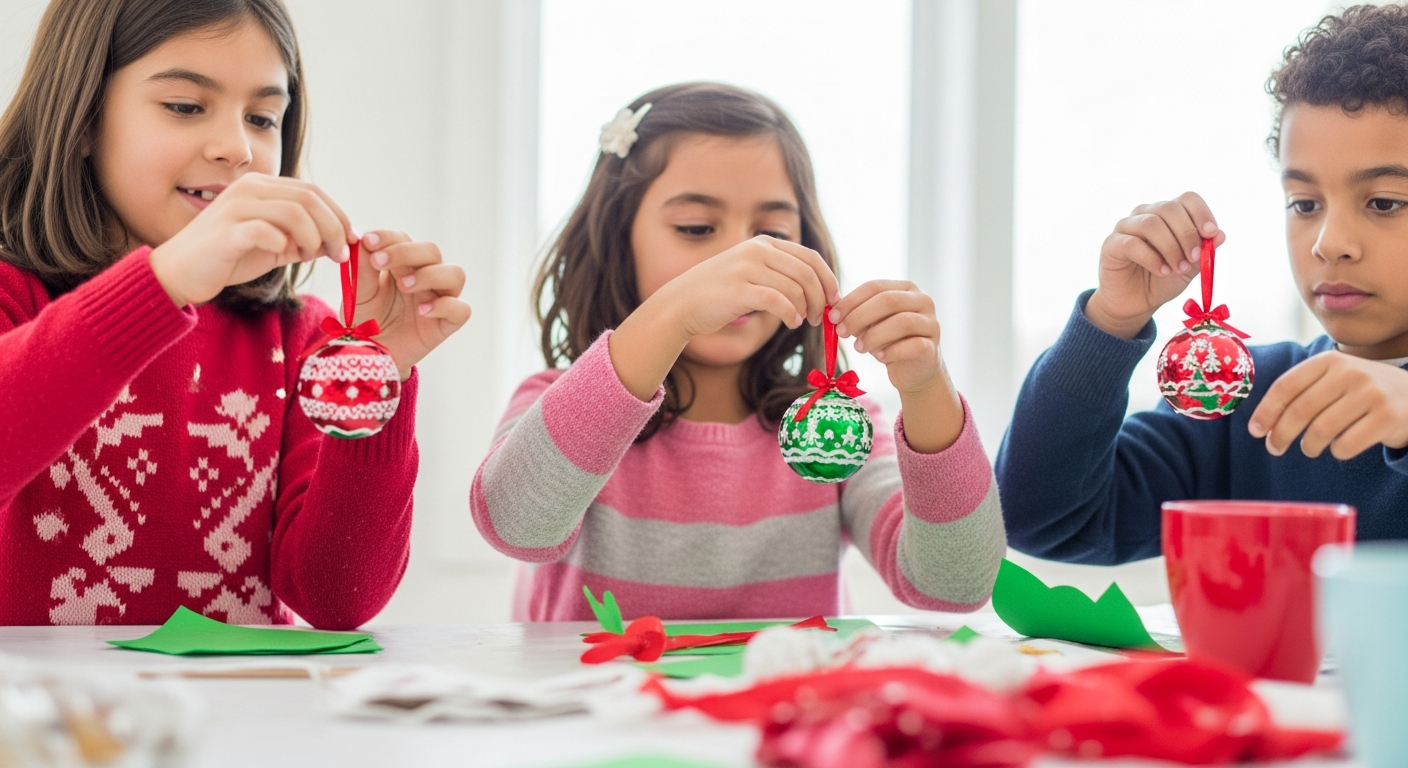
Table of Contents
- Introduction
- More Than Just Glitter: The Developmental Power of Christmas Crafts
- The Speech Blubs Difference: Smart Screen Time for Little Voices
- Top Christmas Ornament Kids Craft Ideas for Speech Development
- Integrating Speech Blubs into Your Craft Time
- Setting Realistic Expectations & Empowering Parents
- The Value of Speech Blubs: Clear Pricing and Exclusive Features
- What Parents Are Saying & Our Scientific Foundation
- Conclusion
- FAQ Section
Introduction
The holiday season often swirls by in a blur of twinkling lights, festive music, and the joyful chaos of family gatherings. For many of us, the most cherished moments are those spent creating traditions, especially with our children. Imagine a cozy afternoon, glitter scattered across the table, little hands carefully gluing, painting, and shaping materials into unique treasures. These aren't just decorations; they're memories in the making, and surprisingly, they're also powerful platforms for fostering your child's speech and language development.
This blog post will dive deep into the wonderful world of Christmas ornament kids' crafts. We’ll explore not only how to make beautiful, handmade ornaments that will adorn your tree for years to come but also how each craft activity serves as a unique opportunity to build crucial communication skills. We believe that learning should be joyful and integrated into everyday life, especially during special times like the holidays. Together, we'll discover how these festive activities can empower your child to speak their minds and hearts, creating precious family connections along the way.

More Than Just Glitter: The Developmental Power of Christmas Crafts
At first glance, a child meticulously decorating a paper plate or carefully rolling salt dough might just seem like a fun way to pass the time. But beneath the surface of colorful chaos and sticky fingers lies a rich tapestry of developmental benefits that extend far beyond aesthetics. Christmas crafts are a multi-sensory playground for growing minds and bodies, offering profound advantages in several key areas:
Sensory Exploration and Fine Motor Skills
Crafting inherently engages multiple senses. Children feel the smooth texture of clay, the stickiness of glue, the softness of cotton balls, and the gritty sparkle of glitter. These tactile experiences contribute significantly to their sensory integration. Simultaneously, activities like cutting with child-safe scissors, threading beads, painting intricate designs, or tearing paper into small pieces are fantastic workouts for fine motor skills. These are the small, precise movements of the hands and fingers that are essential for tasks like writing, buttoning clothes, and eventually, articulating sounds clearly.
Creativity and Self-Expression
Crafts provide an open canvas for imagination. There’s no single "right" way to decorate a star or sculpt a reindeer, allowing children to express their unique perspectives and feelings. This freedom of expression boosts confidence and fosters a sense of accomplishment. When a child proudly presents their handmade ornament, they’re not just showing off a decoration; they’re sharing a piece of their creativity and identity.
Emotional Connection and Family Tradition
Crafting together during the holidays strengthens family bonds. It's dedicated time, away from screens and distractions, where conversations flow naturally, and laughter is shared. These shared experiences create lasting memories and instill a sense of tradition. Year after year, as you hang these handmade ornaments, each piece tells a story, sparking conversations about past Christmases and the journey of your child’s growth.

A Natural Launchpad for Speech and Language Development
Perhaps one of the most exciting, yet often overlooked, benefits of craft time is its incredible potential for speech and language development. Every step of a craft project is ripe with opportunities for communication:
- Vocabulary Expansion: Introducing new words like "texture," "sparkle," "smooth," "rough," "fold," "glue," "attach," "decorate," "ribbon," "bauble," "tinsel."
- Following Instructions: "First, we mix the dough, then we roll it flat." This helps with auditory processing and sequential understanding.
- Descriptive Language: Encouraging children to describe their choices: "I chose the shiny red glitter because it looks like Santa's sleigh!"
- Sequencing and Storytelling: Explaining the steps they took to make the ornament or creating a story about the character they've crafted.
- Question Asking and Answering: "What color should we paint this?" "Can I have more glue, please?"
- Sound Production: Practicing specific sounds associated with craft items (e.g., "snip-snip" for scissors, "pop" for bubbles in glue, "s-s-smooth" for clay).
This rich environment, where learning happens organically through play, is precisely what we champion at Speech Blubs. We believe that truly empowering children to communicate involves blending scientific principles with joyful, engaging experiences – just like making Christmas ornaments.
The Speech Blubs Difference: Smart Screen Time for Little Voices
At Speech Blubs, we understand the incredible power of play and connection in a child's developmental journey. Our mission is deeply personal: we want to empower every child to truly speak their minds and hearts. Our company was born from the personal experiences of our founders, who all grew up with speech problems and created the tool they wished they had. We are committed to providing an immediate, effective, and joyful solution for the 1 in 4 children who need speech support, transforming passive screen time into a powerful tool for active learning and family connection.
We achieve this through our unique "video modeling" methodology. Instead of watching cartoons, children in our app learn by watching and imitating their peers. This approach leverages mirror neurons in the brain, making speech acquisition feel natural and engaging. It’s a screen-free alternative to passive viewing, focusing on active participation and mimicking real children, which has been scientifically proven to be highly effective. To learn more about our innovative approach and the science behind it, we invite you to explore our main Speech Blubs homepage.
Now, let's get those little hands busy with some festive ornament crafts designed to inspire both creativity and communication!
Top Christmas Ornament Kids Craft Ideas for Speech Development
Here are some wonderful Christmas ornament craft ideas, complete with materials, simple steps, and specific tips to boost speech and language skills. Remember, the goal is always interaction and engagement, not perfection!
1. Salt Dough Ornaments: A Tactile and Verbal Feast
Salt dough is a classic for a reason. It's inexpensive, easy to make, and wonderfully tactile, providing ample opportunities for descriptive language and sequencing.
Materials:
- 1 cup salt
- 2 cups all-purpose flour
- 1 cup warm water (adjust as needed)
- Cookie cutters (Christmas shapes: stars, trees, gingerbread men)
- Drinking straw
- Baking sheet and parchment paper
- Paints, glitter, brushes, glue, permanent markers (for decorating)
- Ribbon or string for hanging
Simple Steps:
- Mix: In a large bowl, combine salt and flour. Gradually add warm water, mixing until a firm, pliable dough forms. If it's too sticky, add a little more flour; if too dry, add a touch more water.
- Roll: On a lightly floured surface, help your child roll out the dough to about 1/4-inch thickness.
- Cut: Use cookie cutters to cut out festive shapes.
- Hole: Use a straw to poke a hole at the top of each ornament for hanging.
- Bake: Place ornaments on a parchment-lined baking sheet. Bake at 250°F (120°C) for 2-3 hours, or until completely hard. Let cool completely.
- Decorate: Once cooled, let the creativity flow! Paint, add glitter, glue on small beads, or draw designs.
- Hang: Thread a ribbon through the hole to hang your masterpiece.
Speech Development Tips:
- Vocabulary: Focus on action words ("mix," "roll," "cut," "bake," "paint"), descriptive words ("smooth," "sticky," "hard," "sparkly"), and object names ("flour," "salt," "star," "tree").
- Sequencing: Verbally walk through the steps: "First, we mix the ingredients. Next, we roll the dough. Then, we cut the shapes." Ask your child, "What's next?"
- Shape Recognition: Name each cookie cutter shape as you use it. "This is a star! Can you make a star?"
- Sensory Language: Encourage descriptions of how the dough feels ("It's so soft and smooth! Now it's a bit sticky.").
2. Pom-Pom Character Ornaments: Colorful Characters and Sounds
These fuzzy little creations are fantastic for practicing colors, counting, and imaginative play, especially if you turn them into tiny animals or characters.
Materials:
- Assorted pom-poms (various sizes and colors)
- Pipe cleaners
- Googly eyes
- Craft glue
- Small felt scraps (for ears, noses, wings)
- Ribbon or string
Simple Steps:
- Choose a Body: Select a large pom-pom for the main body of your character.
- Add Details: Glue smaller pom-poms for heads, snouts, or tails. Add googly eyes.
- Shape Features: Cut small shapes from felt for ears, wings, or noses and glue them on. Bend pipe cleaners for antlers, arms, or legs.
- Loop for Hanging: Create a loop from a small piece of ribbon or a pipe cleaner and glue it securely to the top of the ornament.
Speech Development Tips:
- Colors & Counting: "How many red pom-poms do we need? Let's count them: one, two, three!"
- Animal Sounds: If making animals (reindeer, polar bear, robin), practice their sounds. For a parent whose child loves making animal noises, creating a fluffy pom-pom owl offers a chance to practice "hoo hoo" while gluing on the googly eyes.
- Prepositions: "Put the eye on the head. Glue the small pom-pom next to the big one."
- Imaginative Play: Encourage your child to give their character a name and a story. "What does your fluffy friend like to do?"
3. Cinnamon Stick Bundle Ornaments: Aromatic Vocabulary
These simple, fragrant ornaments appeal to the sense of smell and offer opportunities for descriptive language.
Materials:
- Cinnamon sticks (3-5 per ornament)
- Ribbon or twine
- Small embellishments (tiny pinecones, dried orange slices, small bells, star anise)
- Craft glue
Simple Steps:
- Bundle: Gather 3-5 cinnamon sticks together.
- Tie: Securely tie them together with ribbon or twine, leaving extra length for a hanging loop.
- Decorate: Glue small embellishments onto the bundle.
- Hang: Form a loop with the extra ribbon and hang.
Speech Development Tips:
- Sensory Description: "What does it smell like? Is it spicy? Is it warm?"
- Action Verbs: "Tie the ribbon. Glue the bell. Smell the cinnamon."
- Size & Shape: "Is this cinnamon stick long or short? This bell is so tiny!"
4. Pinecone Animals & Characters: Nature's Little Storytellers
Bringing nature indoors for crafting helps children connect with their environment while inspiring imaginative tales.
Materials:
- Pinecones (collected from outdoors, ensure they're clean and dry)
- Felt scraps in various colors
- Googly eyes
- Mini pom-poms
- Craft glue
- Ribbon or string
Simple Steps:
- Choose a Pinecone: Select a pinecone that will serve as the body of your animal or character.
- Add Features: Cut shapes from felt for ears, wings, beaks, or hats. Glue them onto the pinecone.
- Eyes & Nose: Attach googly eyes and a small pom-pom for a nose.
- Hanging Loop: Glue a loop of ribbon to the top of the pinecone for hanging.
Speech Development Tips:
- Storytelling: Encourage your child to create a story about their pinecone character. "Where does Mr. Pinecone live? What does he like to eat?"
- Prepositions: "Put the eyes on the pinecone. Glue the hat on top."
- Animal Names/Sounds: If making a specific animal, practice its name and sound. "This is a little owl! What sound does an owl make? Hoo-hoo!"
- Descriptive Words: Describe the pinecone itself: "It's bumpy! It's brown! It's a little bit poky!"
5. Popsicle Stick Ornaments: Building Blocks of Language
Popsicle sticks are versatile and allow for the creation of geometric shapes or simple figures, perfect for practicing basic concepts.
Materials:
- Popsicle sticks (regular or jumbo)
- Craft glue
- Paints, glitter, buttons, small beads, sequins
- Ribbon or string
Simple Steps:
- Build a Shape: Glue popsicle sticks together to form shapes like stars (5 sticks), snowflakes (3-4 sticks glued in a criss-cross), or small fences. Let dry completely.
- Decorate: Paint the shapes, then add glitter, buttons, or beads.
- Hanging Loop: Glue a loop of ribbon to the back for hanging.
Speech Development Tips:
- Shapes & Colors: "We need five sticks to make a star! What color should we paint this triangle?"
- Counting: Count the sticks as you use them. Count the buttons you glue on.
- Actions: "Glue the sticks. Paint the star. Stick on the glitter."
- Asking for Help/Items: "Can I have another blue button, please?"
6. Handprint/Footprint Ornaments: Personalized Memories and Body Awareness
These timeless keepsakes capture a moment in time and are wonderful for talking about body parts and personal growth.
Materials:
- Air-dry clay OR child-safe acrylic paint and clear plastic/glass ornaments
- Ribbon or string
- Optional: Glitter, permanent markers
Simple Steps (Clay Version):
- Roll Clay: Roll out a section of air-dry clay to about 1/2-inch thickness.
- Press Print: Help your child firmly press their hand or foot into the clay to make an imprint.
- Cut Shape: Use a knife (adult-only) to cut around the handprint/footprint or into a simple circle/oval shape.
- Hole: Poke a hole at the top with a straw.
- Dry & Decorate: Let the clay dry completely (check package instructions). Once dry, decorate with paint, glitter, or write your child's name and year.
- Hang: Thread a ribbon through the hole.
Simple Steps (Paint Version):
- Paint Hand/Foot: Carefully paint your child's hand or foot with a thin layer of child-safe paint.
- Imprint on Ornament: Gently press the painted hand/foot onto a clear plastic or glass ornament.
- Dry & Decorate: Let the paint dry completely. You can add details with a marker, glitter, or write the name and year.
- Hang: Add a ribbon if needed.
Speech Development Tips:
- Body Parts: "This is your hand! Show me your fingers." "This is your foot!"
- Actions & Sensations: "Press down! How does the clay feel? Is it cold? Is it ticklish?"
- Time & Growth: Talk about how small their hand or foot was and how much it will grow. "Look how tiny your hand was this year!"
- Descriptive Words: "Your handprint is unique! It's special!"
7. Bead & Pipe Cleaner Ornaments: Precision and Pattern Recognition
These crafts are excellent for developing fine motor skills and encouraging discussions about colors, patterns, and counting.
Materials:
- Pipe cleaners (various colors)
- Assorted pony beads (various colors and shapes)
- Optional: Small bells
Simple Steps:
- Thread: Encourage your child to thread beads onto a pipe cleaner.
- Shape: Bend the beaded pipe cleaner into festive shapes like candy canes, stars, or wreaths. Twist the ends together to secure the shape.
- Add a Hanger: If not already part of the shape, tie a loop of string or ribbon to hang.
Speech Development Tips:
- Colors & Counting: "Let's put a red bead, then a green bead! How many beads are on your pipe cleaner now?"
- Patterning: Introduce simple patterns: "Red, green, red, green! What comes next?"
- Fine Motor Instructions: "Thread the bead. Bend the pipe cleaner. Twist the ends."
- Spatial Concepts: "Put the bead on the pipe cleaner. Push it down."
Integrating Speech Blubs into Your Craft Time
While these crafts are wonderful on their own, pairing them with the engaging activities in the Speech Blubs app can amplify their developmental impact. Here's how:
- Before Crafting: Explore related sections in the Speech Blubs app. If you're making animal ornaments, watch the "Animal Kingdom" section to warm up with animal sounds and names. If you're creating shaped ornaments, review the "Shapes" category. This exposure helps pre-teach vocabulary and sounds in a fun, interactive way. For a parent whose 3-year-old 'late talker' loves animals, the "Animal Kingdom" section offers a fun, motivating way to practice 'moo' and 'baa' sounds before crafting a cow ornament.
- During Crafting: Use the app's sound library for inspiration. If you're making a reindeer, open Speech Blubs to practice "reindeer" or "deer" and its associated sounds. Encourage your child to imitate the video models, then apply those sounds or words to their crafting process. Our video modeling approach means children see their peers, which naturally encourages imitation and practice.
- After Crafting: Use the app's recording feature! Encourage your child to talk about their finished ornament. "Tell me about your shiny star!" This provides a fantastic opportunity to practice new vocabulary in context and allows you to track their progress and celebrate their achievements.
Remember, Speech Blubs is a powerful tool designed to complement and enhance your child's overall development plan. It's about fostering a love for communication, building confidence, and creating joyful family learning moments.
Setting Realistic Expectations & Empowering Parents
It's natural to hope for quick progress, but speech and language development is a journey, not a race. When engaging in crafts or using Speech Blubs, focus on the process, not just the perfect outcome. Praise your child's effort, their willingness to try new things, and their attempts to communicate, no matter how small. These positive affirmations build confidence and reduce frustration.
At Speech Blubs, we believe in empowering children to speak their minds and hearts, creating a foundation for a lifetime of confident communication. Our app is designed to be a powerful supplement to a child's overall development plan and, when applicable, professional therapy. It's about providing consistent, engaging exposure to speech practice in a way that feels like play.
Unsure if your child could benefit from speech support? We understand that sometimes it's hard to tell. Take our quick 3-minute preliminary screener to get a simple assessment and a free 7-day trial. It involves just 9 simple questions and provides an immediate next-steps plan.
The Value of Speech Blubs: Clear Pricing and Exclusive Features
We believe in transparency and providing exceptional value to families. Understanding the investment you're making in your child's communication journey is important.
Speech Blubs offers two primary subscription plans:
- Monthly Plan: For $14.99 per month.
- Yearly Plan: For $59.99 per year. This breaks down to just $4.99 per month, which is a fantastic saving!
Why the Yearly Plan is the Best Value:
The Yearly plan is clearly the superior choice, offering not just significant savings but also exclusive, high-value features designed to maximize your child's learning experience:
- Save 66%: By choosing the Yearly plan, you save a remarkable 66% compared to the monthly option.
- 7-Day Free Trial: Only the Yearly plan includes a generous 7-day free trial, allowing you to experience the full benefits of Speech Blubs risk-free.
- Extra Reading Blubs App: Gain access to our Reading Blubs app, further enhancing your child's literacy development.
- Early Access to New Updates: Be among the first to explore new content and features as soon as they're released.
- 24-Hour Support Response Time: Enjoy prioritized customer support, ensuring your questions are answered quickly.
The Monthly plan does not include these valuable benefits. To unlock the full potential of Speech Blubs and access these exclusive features, we strongly encourage you to choose the Yearly plan.
What Parents Are Saying & Our Scientific Foundation
Thousands of parents around the world have witnessed the positive impact of Speech Blubs on their children's communication skills. Their stories are a testament to our app's effectiveness. You can read more about their heartwarming experiences and success stories on our testimonials page.
Our unique video modeling approach isn't just intuitive; it's backed by solid scientific principles. Research into mirror neurons and imitative learning forms the foundation of our methodology. This commitment to evidence-based practice is why Speech Blubs has been recognized globally, placing us in the top tier of speech apps worldwide with high ratings on the MARS scale. Dive deeper into the science that makes Speech Blubs so effective by visiting our research page.
Conclusion
This holiday season, let's transform simple Christmas ornament kids' crafts into powerful opportunities for connection, creativity, and communication. From the tactile joy of salt dough to the imaginative world of pinecone characters, each activity is a chance to enrich your child's vocabulary, strengthen their fine motor skills, and build confidence in expressing themselves. These handmade treasures will not only adorn your tree but also symbolize the growth and cherished moments shared as a family.
By blending the joy of crafting with the innovative, research-backed methods of Speech Blubs, you're providing a comprehensive approach to fostering your child's communication skills. We’re committed to providing the tool our founders wished they had – an immediate, effective, and joyful solution for children who need speech support.
Ready to embark on this magical journey of discovery and development with your child? Transform screen time into smart, interactive learning! Don't miss out on the full suite of features and the incredible value. We encourage you to choose our Yearly plan, which includes a 7-day free trial, the Reading Blubs app, early access to updates, and dedicated 24-hour support.
Start building beautiful memories and strong communication skills today! Download Speech Blubs on the App Store or Google Play to begin your 7-day free trial with the Yearly plan, or create your account on our website and start your free trial today!
FAQ Section
Q1: What age group are these Christmas ornament crafts best for?
A1: Most of these crafts are suitable for toddlers (2-3 years old) with significant adult assistance, preschoolers (3-5 years old) with moderate help, and early elementary children (6-8 years old) who can work more independently. Always supervise young children, especially with small parts like beads or googly eyes.
Q2: How can crafts specifically help with speech development?
A2: Crafts create a natural, engaging environment for language practice. They encourage vocabulary expansion (materials, actions, descriptions), foster the ability to follow multi-step instructions, promote descriptive language, and offer opportunities for storytelling about the creations. The interactive nature of crafting with a caregiver provides a relaxed setting for communication practice.
Q3: Is Speech Blubs a substitute for professional speech therapy?
A3: No, Speech Blubs is designed to be a powerful supplement to a child's speech and language development plan. While it offers engaging, evidence-based activities that can significantly support progress, it is not intended to replace personalized professional speech therapy when it is clinically indicated. We recommend consulting with a speech-language pathologist if you have significant concerns about your child's development.
Q4: How do I get the most out of Speech Blubs and these crafts?
A4: Maximize the benefits by actively engaging with your child during both crafting and app use. Narrate your actions, ask open-ended questions, encourage imitation, and use the app’s recording features. By consistently integrating these joyful activities into your routine and taking advantage of the Yearly plan’s full features, you create a rich, supportive environment for your child's communication growth.
About the author