
Christmas Plate Crafts: Festive Fun for Little Talkers
 By Speech Blubs Team•Dec 22, 2025•25 min.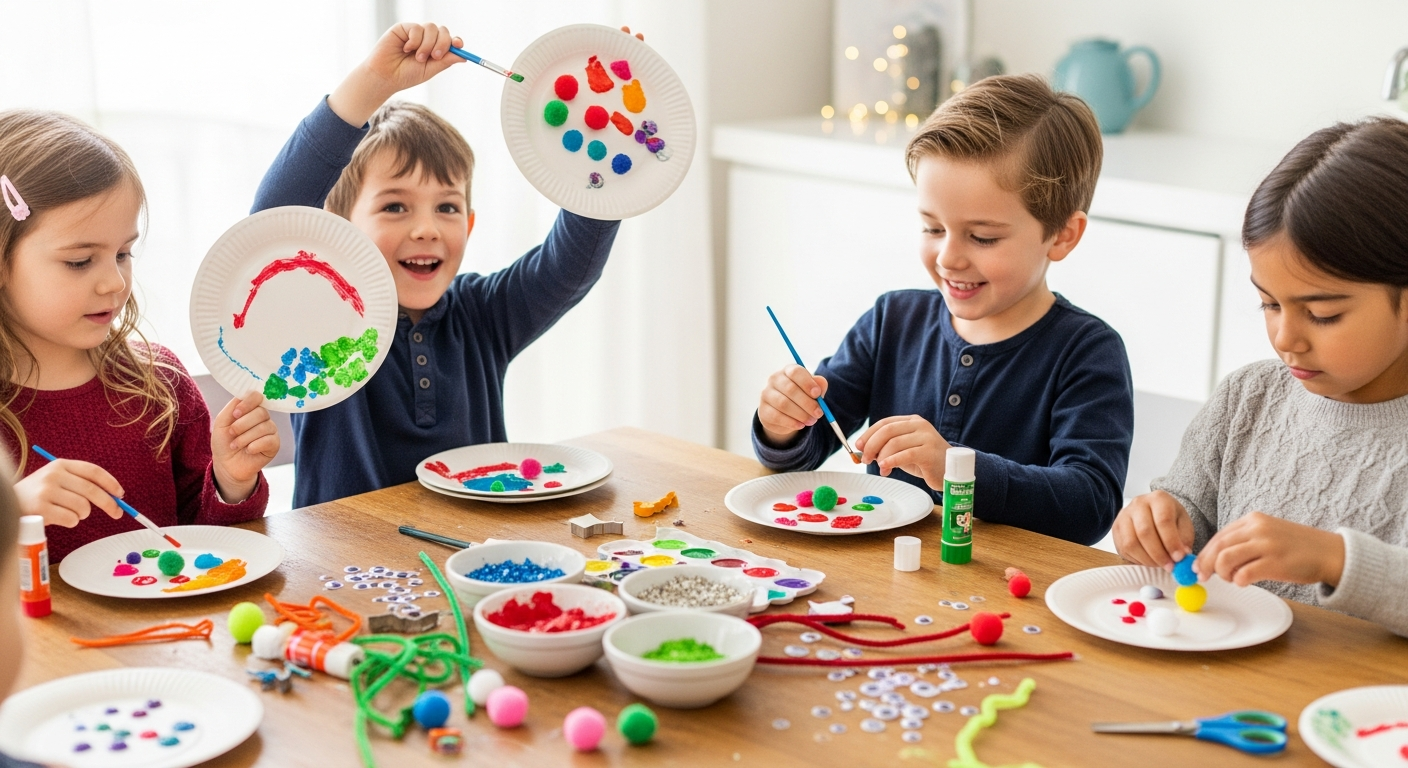
Table of Contents
- Introduction
- Why Crafts Are More Than Just Fun: A Developmental Perspective
- Essential Tips for Crafting with Communication in Mind
- Our Favorite Christmas Plate Crafts for Kids (with Language Opportunities)
- Maximizing Language Development During Craft Time
- Beyond the Craft Table: Continuing the Language Journey with Speech Blubs
- Making the Most of Your Speech Blubs Experience: Plans and Value
- Conclusion
- FAQ
Introduction
As the holiday season twinkles into view, a special kind of magic fills the air, promising warmth, joy, and precious moments with our little ones. What better way to capture this enchantment than by diving into a world of creativity and color? Imagine your child’s eyes lighting up as they transform a simple plate into a festive masterpiece – a cheerful Santa, a sparkling tree, or a jolly reindeer. These aren't just crafts; they are gateways to wonder, fostering imagination, fine motor skills, and, most importantly, powerful opportunities for communication.
In a world brimming with digital distractions, finding activities that truly engage a child’s mind and encourage verbal expression can feel like searching for a hidden treasure. But fear not, for the humble paper plate holds immense potential! This post will guide you through a sleigh-full of delightful Christmas plate crafts, each thoughtfully designed to naturally encourage speech and language development in children of all ages. We'll explore how these hands-on projects become dynamic learning experiences, nurturing not just artistic talent but also vocabulary, comprehension, and conversational skills. Our mission at Speech Blubs is to empower children to speak their minds and hearts, and we firmly believe that engaging, play-based activities like these Christmas crafts lay a fantastic foundation for confident communication. Get ready to transform ordinary plates into extraordinary language-boosting adventures!

Why Crafts Are More Than Just Fun: A Developmental Perspective
At first glance, a child gluing cotton balls onto a paper plate might seem like just a fun way to pass the time. However, beneath the glitter and glue, a profound developmental process is unfolding. Crafting is a multi-sensory activity that engages various parts of a child's brain, contributing significantly to their cognitive, emotional, and physical growth. For us at Speech Blubs, we recognize that play is the most powerful form of learning, and these hands-on activities are a perfect example of this principle in action.
The Holistic Benefits of Creative Play
- Fine Motor Skills Development: Holding crayons, manipulating glue sticks, cutting paper, and placing small decorations all require precise hand-eye coordination and strengthen the small muscles in the fingers and hands. These skills are crucial for tasks like writing, self-feeding, and dressing.
- Cognitive Development: Crafting involves planning, problem-solving, and following instructions. Children learn about cause and effect ("If I put too much glue, it gets messy"), sequencing ("First we cut, then we glue"), and spatial reasoning ("Where does the nose go on the snowman's face?").
- Emotional Expression and Regulation: Crafts provide a safe outlet for children to express their feelings, ideas, and creativity. The sense of accomplishment they feel upon completing a project boosts self-esteem and confidence. It also teaches patience and perseverance, especially when a craft doesn't go exactly as planned.
- Sensory Exploration: The varying textures of paper, cotton, glitter, and fabric provide rich sensory input. Talking about these sensations—"This cotton is soft!" or "The glitter is so sparkly!"—is an excellent way to introduce new vocabulary and descriptive language.
- Language and Communication Skills: This is where Christmas plate crafts truly shine as powerful tools for development. Every step of the crafting process is ripe with opportunities for verbal interaction, making them invaluable for boosting speech and language.
Crafting as a Language Catalyst
When children engage in crafts, they are naturally exposed to and encouraged to use a wide range of language skills:

- Vocabulary Expansion: Introducing new words related to colors (scarlet, crimson), shapes (oval, crescent), textures (bumpy, smooth), tools (scissors, paintbrush), and actions (snip, dab, stick).
- Following Directions: "First, glue the beard, then add the eyes." This helps develop receptive language skills and auditory memory.
- Descriptive Language: Encouraging children to describe what they are seeing, doing, and feeling ("The paint is sticky," "My reindeer has shiny red nose").
- Questioning and Answering: "What color should we use?" "Where does the star go?" "Why do you like that color?"
- Narrating and Sequencing: Describing the steps they are taking as they create their masterpiece, "I am cutting," "Now I am gluing."
- Social Communication: When crafting with a parent or sibling, children practice turn-taking, sharing materials, and expressing needs or preferences.
At Speech Blubs, we are deeply committed to harnessing the power of play-based learning to support children's communication journeys. Just as these crafts offer a screen-free alternative for joyful family connection and learning, our app provides "smart screen time" experiences that blend scientific principles with play. We believe that empowering children to communicate their unique thoughts and feelings starts with engaging, meaningful interactions, both on and off the screen. Ready to integrate more language-rich activities into your child's routine? You can download Speech Blubs today on the App Store or Google Play to explore a world of interactive learning.
Essential Tips for Crafting with Communication in Mind
Before we dive into the specific craft ideas, let's set the stage for a truly language-rich crafting experience. It’s not just about what you make, but how you make it, and the conversations you foster along the way. Our philosophy at Speech Blubs emphasizes active engagement from caregivers, transforming passive activities into dynamic learning opportunities.
Creating a Language-Rich Environment During Craft Time
- Narrate Your Actions (and Theirs!): Talk about everything you're doing and everything your child is doing. "I'm cutting the paper," "You are gluing the eyes," "Look, the paint is wet!" This provides a constant stream of descriptive language and action verbs.
- Ask Open-Ended Questions: Instead of "Do you want red glue?" try "What color glue should we use for Santa's hat?" or "How do you think we can make our snowman look happy?" This encourages more than a yes/no response and promotes critical thinking.
- Encourage Imitation: If your child is making a specific sound or word, gently model it for them to imitate. For instance, while decorating a reindeer, make a "neigh" sound and encourage them to copy, or say "Rrr-reindeer!" and invite them to try. This strategy mirrors the video modeling methodology at the heart of Speech Blubs, where children learn by watching and imitating their peers.
- Expand on Their Words: If your child says "star," you can expand it to "Yes, a sparkly yellow star!" or "That's a big star for the top of the tree." This helps them learn to combine words and understand more complex sentences.
- Follow Their Lead: Let your child guide the creative process as much as possible. If they want to put the reindeer's nose on its ear, go with it! This fosters independence and allows for organic conversations about their choices. "Oh, you put Rudolph's nose on his ear! That's a silly reindeer!"
- Praise Effort, Not Just the Outcome: Focus on their participation and attempts at communication rather than just the final product. "I love how you tried to cut the paper!" "You did a great job telling me you needed more glue!"
Materials Preparation and Safety
- Gather Everything First: Before you start, lay out all your materials within easy reach. This minimizes interruptions and keeps the focus on the activity.
- Talk About the Tools: Introduce each tool and its function. "These are scissors, we use them to cut paper," or "This is glitter, it makes things sparkle."
- Discuss Textures and Colors: Engage their senses by talking about what each material feels like (soft cotton, bumpy pipe cleaners, smooth paper) and its color.
- Supervise Carefully: Especially with younger children, always supervise when using scissors, glue, or small embellishments to ensure safety.
Age-Appropriate Adaptations
- For Toddlers (1-2 years): Focus on simple actions like tearing paper, sticking pre-cut shapes, finger painting, and large motor movements. Keep instructions to one or two steps. The goal is sensory exploration and basic vocabulary.
- For Preschoolers (3-5 years): They can handle more complex cutting (with child-safe scissors), gluing, and drawing. Introduce concepts like sequencing and counting. Encourage more descriptive language and simple sentences.
- For School-Aged Children (6+ years): They can follow multi-step instructions, design their own crafts, and use more intricate materials. Challenge them with storytelling about their creation and asking them to explain their process.
By incorporating these simple yet powerful strategies, you'll transform your Christmas plate craft sessions into highly effective speech and language-boosting experiences. These valuable interactions lay a strong foundation for children's communication confidence. For a deep dive into the research that supports our methods, and to understand how Speech Blubs consistently ranks among the top speech apps globally, you can discover the science behind our approach.
Our Favorite Christmas Plate Crafts for Kids (with Language Opportunities)
Now, let's roll up our sleeves and get crafty! Each of these Christmas plate crafts is designed not only for festive fun but also to be a fantastic springboard for language development. Remember to use the communication tips we just discussed throughout each project.
1. Paper Plate Santa Claus
Who doesn't love jolly Old Saint Nick? This classic craft is excellent for practicing descriptive words and identifying body parts.
- Materials: Paper plate, red construction paper (for hat), pink or peach paper (for face), cotton balls (for beard/hat trim), googly eyes, red pom-pom (for nose), glue stick, scissors.
- Steps:
- Glue the pink/peach paper to the center of the plate for Santa's face.
- Cut a red triangle for Santa's hat and glue it to the top of the plate.
- Glue cotton balls along the bottom edge of the hat and to create a fluffy beard.
- Attach googly eyes and the red pom-pom nose.
- Draw a big, happy smile!
- Language Focus:
- Vocabulary: "Red hat," "white beard," "round nose," "googly eyes," "fluffy," "soft," "glue," "cut."
- Concepts: "Top," "bottom," "middle," "big," "small."
- Action Verbs: "Glue," "cut," "stick," "draw."
- Sounds: Encourage "Ho ho ho!"
- Questions: "Where does Santa's nose go?" "What color is his hat?" "How does Santa feel?" (Happy!)
2. Sparkling Christmas Tree Plate
Decorating a Christmas tree is a festive tradition, and making one is just as fun! This craft encourages counting and descriptive vocabulary related to decorations.
- Materials: Green paper plate (or white plate painted green), glitter, sequins, small pom-poms, star sticker or cutout, glue.
- Steps:
- If using a white plate, paint it green first and let it dry.
- Apply glue in a zig-zag or tree shape on the plate.
- Sprinkle glitter over the glue, then shake off the excess.
- Glue on sequins, pom-poms, or other small decorations as ornaments.
- Place a star sticker or cutout at the top.
- Language Focus:
- Vocabulary: "Green tree," "sparkly," "shiny," "ornaments," "star," "decorate," "sprinkle," "glue."
- Concepts: "Many," "few," "on top," "all around."
- Counting: "How many ornaments did we put on?"
- Sensory: "Rough," "smooth," "sparkly."
3. Reindeer Plate with Antlers
Rudolph, with his shining nose, is a beloved Christmas character. This craft is perfect for discussing body parts and using action verbs.
- Materials: Brown paper plate, brown construction paper (for ears), pipe cleaners (for antlers), red pom-pom (for nose), googly eyes, glue.
- Steps:
- Cut two ear shapes from brown paper and glue them to the top sides of the plate.
- Twist two pipe cleaners into antler shapes and glue or tape them behind the ears.
- Attach googly eyes.
- Glue the red pom-pom in the center for Rudolph's bright nose.
- Draw a mouth.
- Language Focus:
- Vocabulary: "Brown plate," "pointy antlers," "red nose," "wiggly eyes," "ears," "glue," "bend," "twist."
- Body Parts: "Nose," "eyes," "ears," "antlers."
- Action Verbs: "Cut," "glue," "twist," "bend," "stick."
- Concepts: "Big," "small," "up," "down."
- Sounds: Encourage "neigh" or "sniff."
4. Snowman Plate Faces
Building a snowman often involves talking about feelings and different features. This craft helps children identify and express emotions.
- Materials: White paper plate, construction paper scraps (orange for carrot nose, black for eyes/mouth), buttons, glue.
- Steps:
- Cut an orange triangle for the carrot nose and black circles/shapes for eyes and a mouth.
- Glue the eyes, nose, and mouth onto the plate to create a snowman's face.
- Use buttons for a "button smile" or a scarf decoration.
- Challenge your child to create a "happy snowman," a "silly snowman," or a "surprised snowman" by changing the features.
- Language Focus:
- Vocabulary: "White plate," "orange nose," "black eyes," "buttons," "round," "long," "happy," "sad," "silly," "surprised."
- Emotions: Discuss how different arrangements of features can show different feelings.
- Shapes: "Circle," "triangle."
- Action Verbs: "Glue," "place," "make."
- Questions: "How does your snowman feel?" "What kind of mouth should we give him?"
5. Angel Plate with Wings
Angels are a gentle symbol of Christmas, and this craft offers a chance to talk about grace and lightness.
- Materials: Paper plate (for face), small paper plate or doily (for wings), yellow paper (for hair), markers, glue.
- Steps:
- Draw a simple face on the paper plate.
- Cut a doily or a smaller paper plate in half and glue the halves to the back of the main plate for wings.
- Cut strips of yellow paper for hair and glue them around the top edge of the plate.
- Add a halo if desired!
- Language Focus:
- Vocabulary: "Angel," "wings," "halo," "fluffy," "yellow hair," "draw," "glue," "sing."
- Concepts: "Soft," "light," "up," "down."
- Action Verbs: "Draw," "glue," "cut."
- Sounds: Encourage soft singing or "shhh" sounds.
6. Christmas Wreath Plate
Wreaths are a lovely way to welcome the holiday spirit. This craft is great for practicing prepositions and colors.
- Materials: Paper plate with the center cut out (to form a ring), green construction paper (for leaves), red pom-poms or buttons (for berries), glue.
- Steps:
- Cut many leaf shapes from green paper.
- Glue the green leaves all around the paper plate ring, overlapping them to create a full wreath.
- Glue red pom-poms or buttons onto the wreath as berries.
- Add a small bow if you like!
- Language Focus:
- Vocabulary: "Wreath," "leaves," "berries," "green," "red," "round," "glue," "overlap."
- Prepositions: "All around," "on top," "in the middle."
- Counting: "How many berries do you see?"
- Concepts: "Many," "few."
7. Gingerbread Man Plate
The delightful smell of gingerbread brings joy to the holidays. This craft involves decorating and using sensory words.
- Materials: Brown paper plate, white puff paint (or glue with white glitter), small buttons, sequins, or sprinkles (non-edible), markers.
- Steps:
- Draw the outline of a gingerbread man on the brown plate, or simply use the whole plate as the face.
- Use puff paint to draw "icing" details like eyes, mouth, and buttons.
- Glue on buttons, sequins, or sprinkles for extra decoration.
- Let it dry completely.
- Language Focus:
- Vocabulary: "Gingerbread man," "brown," "icing," "sweet," "spicy" (discuss smell), "decorate," "dot," "smooth."
- Body Parts: "Arms," "legs," "head" (if drawing full body).
- Action Verbs: "Draw," "dot," "decorate," "squeeze."
- Sensory: "Bumpy," "smooth," "sweet (smell)."
8. Elf Plate
Elves are Santa's helpful little friends! This craft is wonderful for talking about characteristics and actions.
- Materials: Paper plate (for face), red and green felt or construction paper (for hat and ears), small bell, googly eyes, marker, glue.
- Steps:
- Draw an elf face on the paper plate.
- Cut a pointy elf hat from red or green paper and glue it to the top.
- Cut two pointy elf ears and glue them to the sides of the plate.
- Glue on googly eyes.
- Attach a small bell to the tip of the elf's hat.
- Language Focus:
- Vocabulary: "Elf," "pointy hat," "jingle bell," "funny," "happy," "ears," "eyes," "glue," "ring," "shake."
- Action Verbs: "Draw," "glue," "ring," "shake," "help."
- Sounds: "Jingle, jingle!"
- Concepts: "Big," "small," "up," "down."
These crafts are not just about creating beautiful decorations; they are about creating joyful, language-rich moments. For a parent whose child is just beginning to explore sounds, making a "Rrr-reindeer" and practicing the "R" sound in "red nose" can be incredibly motivating. For a child who struggles with following instructions, building a "Snowman Plate Face" step-by-step ("First eyes, then nose!") provides a concrete, visual way to practice receptive language.
These hands-on activities are a powerful supplement to a child's overall development plan. When combined with the engaging, scientifically-backed approach of Speech Blubs, children gain even more opportunities to develop essential communication skills. Our app provides hundreds of activities, from sound imitation to storytelling, all designed to make learning fun and effective. You can create your account and begin your 7-day free trial today by visiting our web sign-up page or by searching for Speech Blubs in your app store.
Maximizing Language Development During Craft Time
The true magic of integrating language learning into crafting isn't in the specific craft, but in the intentional interactions you create. Think of yourself as your child’s primary speech and language model, guiding them through a vibrant world of words. These strategies will help you transform every snip, glue, and sprinkle into a powerful communication moment.
Be a Narrator, Not Just a Guide
As you craft, continuously narrate your actions and describe what your child is doing.
- "I am cutting the red paper for Santa's hat."
- "You are spreading the glue. Is it sticky?"
- "Look! We have a sparkly star for the top of our tree."
This rich, descriptive language provides a constant input of new words and sentence structures.
Ask Engaging, Open-Ended Questions
Move beyond simple yes/no questions. Encourage your child to think, describe, and express their preferences.
- Instead of: "Do you want green?"
- Try: "What color would you like for our Christmas tree's leaves?"
- Instead of: "Is this sticky?"
- Try: "How does the glue feel on your fingers?"
- "Tell me about your reindeer. What's special about him?"
- "What do you think will happen if we add more glitter?"
These questions prompt longer responses and encourage vocabulary use.
Encourage Imitation and Echoing
For children who are still developing their verbal skills, imitation is key. If your child says a sound or a word, echo it back, then encourage them to say it again, perhaps adding a new word.
- Child: "Glue!"
- Parent: "Yes, glue! Can you say 'sticky glue'?"
- Child: "Tree!"
- Parent: "A green tree! Can you say 'green tree'?"
This reinforces correct pronunciation and expands their vocabulary.
Expand and Elaborate on Their Utterances
When your child speaks, even in single words, take the opportunity to expand their thought into a full sentence or add more detail.
- Child: "Santa hat."
- Parent: "Yes, a big red Santa hat! We're putting it on Santa's head."
- Child: "Snowman happy."
- Parent: "That's right! Your snowman looks very happy with his big smile!"
This models proper sentence structure and introduces more complex concepts.
Introduce New Vocabulary and Concepts
Craft time is perfect for naturally integrating new words.
- Adjectives: "Bumpy," "smooth," "shiny," "rough," "fluffy," "dull," "vibrant."
- Verbs: "Dab," "snip," "fold," "twist," "squish," "spread," "attach."
- Prepositions: "Under," "over," "next to," "between," "above," "below."
- Concepts: "First/next/last," "more/less," "big/small," "same/different."
Focus on the "Process," Not Just the "Product"
While a beautiful finished craft is rewarding, the real developmental value lies in the journey. Talk about the steps, the choices, and the challenges. Celebrate their effort and engagement. If a craft doesn't look perfect, that's okay! The goal is communication and learning, not artistic perfection.
By weaving these strategies into your Christmas plate craft sessions, you're not just creating decorations; you're building strong communication foundations. For parents who are unsure about their child's speech development or looking for guidance, our quick 3-minute preliminary screener is a fantastic starting point. It offers a simple assessment and a personalized next-steps plan, along with a free 7-day trial of Speech Blubs to explore how our app can further support your child's journey.
Beyond the Craft Table: Continuing the Language Journey with Speech Blubs
While hands-on activities like Christmas plate crafts are incredibly valuable for fostering communication, they often thrive when complemented by structured, engaging learning tools. This is where Speech Blubs steps in, providing a seamless extension of the language journey that begins at your craft table. We believe in synergy: combining the tangible joy of creative play with the focused, scientific methodology of our app creates a truly comprehensive approach to speech development.
The Synergy of Hands-On Play and "Smart Screen Time"
Imagine a scenario: your 3-year-old "late talker" loves animals, and you've just made a reindeer plate. You practiced sounds like "mmm" for "moo" (if it were a cow) or "rrr" for "reindeer" and talked about the color "brown." After the craft, you transition to Speech Blubs. In our "Animal Kingdom" section, your child sees real children modeling the sounds and actions of a reindeer or other favorite animals. This visual and auditory imitation reinforces the sounds and vocabulary they've just explored in a playful, interactive way. This is not passive viewing; this is "smart screen time," designed for active engagement and family connection.
How Speech Blubs Complements Your Child's Development
- Video Modeling Methodology: Our unique approach centers around children learning by watching and imitating their peers. Just as a child might watch you craft and then imitate your actions, our app presents thousands of engaging videos where real children demonstrate sounds, words, and phrases. This leverages the power of mirror neurons, making learning natural and effective.
- Engaging, Diverse Content: Themes explored in your Christmas crafts—like animals, shapes, colors, and emotions—are all vibrantly brought to life within the Speech Blubs app. Our wide array of activities covers everything from early sounds and words to more complex sentences and social skills, ensuring there's always something new and exciting to learn.
- Parental Involvement: Speech Blubs is designed for co-play. We encourage parents to actively participate, prompting, praising, and expanding on their child's responses. This fosters meaningful interactions, just like during craft time, strengthening the parent-child bond and reinforcing learning. We are a tool for family connection, offering a screen-free alternative to passive viewing (like cartoons) and a powerful tool for joyful learning.
- Structured Practice, Joyful Learning: While crafts are free-form, Speech Blubs offers structured exercises that target specific speech and language skills. This focused practice, combined with the app’s playful interface, helps children build foundational skills and gain confidence without even realizing they’re "working."
- Born from Personal Experience: Our company was born from the personal experiences of our founders, who all grew up with speech problems and created the tool they wished they had. This deep understanding drives our commitment to providing an immediate, effective, and joyful solution for the 1 in 4 children who need speech support.
- Tracking Progress and Building Confidence: As your child engages with Speech Blubs, you can observe their progress, celebrate milestones, and witness their confidence blossom. This positive reinforcement encourages them to continue their communication journey, empowering them to "speak their minds and hearts."
Whether you're crafting a jolly Santa or exploring the sounds of the "Animal Kingdom" with Speech Blubs, every moment of engaged interaction is a step forward in your child's communication development. Ready to see the difference for yourself? You can download Speech Blubs on the App Store or Google Play today and begin your family's journey toward confident communication.
Making the Most of Your Speech Blubs Experience: Plans and Value
We believe that every child deserves the opportunity to communicate confidently, and we’re committed to making our effective and joyful solution accessible. When you decide to join the Speech Blubs family, we want to ensure you get the absolute best value and the most comprehensive experience possible.
We offer two main plans, and we want to be transparent about what each provides:
- Monthly Plan: $14.99 per month.
- This plan offers flexibility for those who prefer a month-to-month commitment. It provides access to the core Speech Blubs app.
- Please note: This plan does not include the 7-day free trial, the extra Reading Blubs app, early access to new updates, or 24-hour support response time.
- Yearly Plan: $59.99 per year.
- This is by far our most popular and value-packed option, breaking down to just $4.99 per month!
- Save 66% compared to the monthly plan!
- Exclusive, High-Value Features Included:
- A 7-day free trial: Experience the full power of Speech Blubs before you commit.
- The extra Reading Blubs app: Double the learning! This bonus app provides another fantastic resource for your child's literacy journey.
- Early access to new updates: Be the first to enjoy new features and content.
- 24-hour support response time: Get prompt assistance whenever you need it.
Choosing the Yearly plan isn't just about saving money; it's about unlocking the complete Speech Blubs ecosystem, designed to maximize your child's learning potential and provide you with unparalleled support. It’s the ultimate way to truly empower your child to speak their minds and hearts.
To ensure you receive the free trial and the full suite of benefits, we strongly encourage you to choose the Yearly plan when you sign up. Ready to start your child’s communication adventure with the best value and all our exclusive features? Choose the Yearly plan and start your free trial today!
Conclusion
As the holiday season draws near, inviting us to create cherished memories, remember that the simplest activities can hold the profoundest developmental benefits. Christmas plate crafts are far more than just decorations; they are vibrant catalysts for communication, engaging little hands and minds in a symphony of colors, textures, and words. From describing Santa's "fluffy" beard to counting "sparkly" ornaments on a tree, each craft offers a unique opportunity to build vocabulary, refine receptive language, and encourage expressive speech. These moments of shared creativity, full of laughter and discovery, lay a powerful foundation for confident self-expression.
We at Speech Blubs are dedicated to supporting every child's journey to confident communication. Just as these festive crafts provide joyful, screen-free learning moments, our app offers "smart screen time" experiences rooted in scientific principles and designed for active parental involvement. We believe that whether your child is giggling over a craft or imitating sounds in our app, every interaction is a step towards empowering them to speak their minds and hearts. Our founders, having personally navigated speech challenges, built Speech Blubs as the tool they wished they had – an immediate, effective, and joyful solution for children needing speech support.
Don't let another day pass without igniting your child's potential. Begin their journey toward more confident and joyful communication today. To experience the full range of features and benefits, including the additional Reading Blubs app and priority support, we encourage you to choose our Yearly plan. This not only offers incredible value but also includes a 7-day free trial, giving you ample time to discover the magic of Speech Blubs firsthand.
Download Speech Blubs on the App Store or Google Play now, or create your account on our website and select the Yearly plan to unlock your free trial. Let’s make this holiday season, and every season, a time of growth, connection, and confident communication for your child.
FAQ
Q1: What age group are these Christmas plate crafts best for?
These crafts are wonderfully versatile and can be adapted for children from toddlerhood (around 18 months) all the way through early elementary school (7-8 years). For toddlers, focus on simple actions like tearing paper, large gluing, and finger painting, with adults doing most of the cutting. Preschoolers can handle more steps, use child-safe scissors (with supervision), and engage in more descriptive conversations. Older children can take on more intricate designs, develop their own ideas, and explain their creative process in greater detail, making them perfect for boosting language skills across various developmental stages.
Q2: How can I adapt these crafts for children with special needs or developmental delays?
Adapting crafts for children with special needs involves focusing on their individual strengths and challenges. You can simplify steps, use adaptive tools (like easy-grip scissors or squeeze bottles for glue), provide visual schedules or step-by-step pictures, and offer hand-over-hand assistance. For children with sensory sensitivities, you might choose materials with familiar textures or gradually introduce new ones. The key is to celebrate every effort, offer ample praise, and prioritize the communicative interaction over the perfect outcome. Remember, every attempt at communication, no matter how small, is a step forward.
Q3: How often should we do crafts to help with language development?
Consistency is more important than frequency. Engaging in crafts once or twice a week with a clear focus on language interaction can be highly beneficial. Even short, 15-20 minute sessions can provide rich language opportunities. The most important aspect is making these sessions enjoyable and interactive, ensuring they are filled with narration, open-ended questions, and opportunities for your child to express themselves. The goal is to create a positive association with language and learning, which then carries over into other daily activities and supplementary tools like Speech Blubs.
Q4: How does Speech Blubs really help with communication skills beyond crafts?
Speech Blubs offers a structured, engaging, and scientifically-backed approach to communication development that complements hands-on activities like crafting. Our core "video modeling" methodology allows children to learn by watching and imitating their peers in thousands of fun, interactive videos. This targets a wide range of skills, from articulating specific sounds and expanding vocabulary to forming sentences and understanding social communication cues. It's not passive screen time; it's designed for active parental involvement, fostering connection and providing focused practice for key speech and language milestones. Many parents have seen remarkable progress; you can read testimonials from other parents who have used Speech Blubs to empower their children.
About the author