
Colorful Celebrations: Easy Diwali Crafts for Kids
 By Speech Blubs Team•Jan 13, 2026•19 min.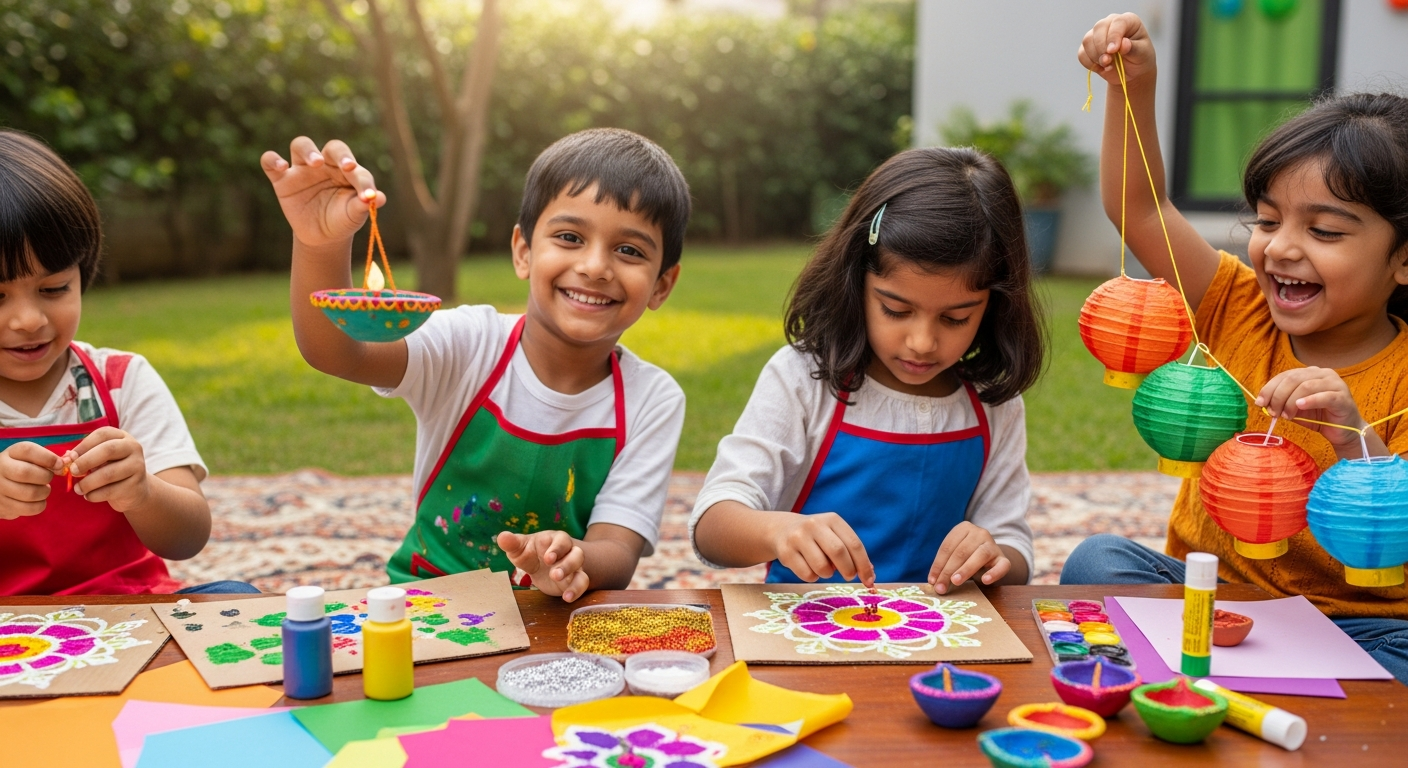
Table of Contents
- Introduction
- Understanding Diwali: The Festival of Lights
- The Developmental Power of Diwali Crafts
- A Collection of Easy Diwali Crafts for Kids
- Beyond Crafting: Continued Communication Growth
- Conclusion
- FAQ
Introduction
As the crisp autumn air arrives and the days shorten, a magnificent festival of light, joy, and hope emerges: Diwali. More than just a holiday, Diwali is a powerful reminder of the triumph of light over darkness and good over evil, celebrated with vibrant decorations, delicious sweets, and heartwarming family gatherings. For children, it's a magical time filled with stories, new experiences, and endless opportunities for creativity.
Engaging your child in Diwali crafts isn't just about making pretty decorations; it's a rich tapestry of learning and bonding. These activities offer a unique way to introduce them to cultural traditions while simultaneously nurturing crucial developmental skills, from fine motor coordination to imaginative play and, importantly, communication. In this comprehensive guide, we'll explore a dazzling array of easy Diwali crafts perfectly suited for little hands, providing practical tips, creative ideas, and showing you how these joyful endeavors can become powerful moments for speech and language development. Get ready to illuminate your home and your child's world with the spirit of Diwali, crafting cherished memories one joyful project at a time.

Understanding Diwali: The Festival of Lights
Diwali, also known as Deepavali, is one of the most important and celebrated festivals in India and among Hindu, Sikh, Jain, and some Buddhist communities worldwide. Its name, derived from the Sanskrit word "Deepavali," literally means "row of lights," and it truly lives up to that name with countless diyas (clay lamps), lanterns, and fireworks illuminating homes and communities.
This five-day festival typically falls in October or November, coinciding with the new moon in the Hindu lunar calendar, and symbolizes new beginnings and the victory of good over evil. Each day carries its own significance and traditions:
- Day 1 (Dhanteras): Marks the start of Diwali with prayers to Lakshmi, the goddess of wealth, and is considered an auspicious time for new purchases.
- Day 2 (Naraka Chaturdashi or Choti Diwali): Celebrates Lord Krishna's victory over the demon Narakasura.
- Day 3 (Lakshmi Puja): The main day of Diwali, when families gather to perform prayers to Lakshmi and Ganesha, exchange gifts, share feasts, and light fireworks.
- Day 4 (Govardhan Puja): Commemorates Lord Krishna lifting the Govardhan Hill.
- Day 5 (Bhai Dooj): A day dedicated to celebrating the bond between brothers and sisters.
Throughout the festival, homes are cleaned and decorated, rangoli (intricate floor art) designs are created, and delicious sweets and savories are prepared and shared. It's a time for families to come together, reflect on positive changes, and spread happiness. Introducing children to these traditions through hands-on activities like crafting can help them understand the cultural richness and universal messages of light, hope, and community that Diwali embodies.
The Developmental Power of Diwali Crafts
Engaging in craft activities during Diwali is much more than just keeping little hands busy; it's a profound way to support a child's holistic development. As parents and caregivers, we often seek activities that are both fun and enriching, and crafting perfectly fits this description. Here's a closer look at the myriad benefits these simple projects offer:

Cultivating Cultural Connection and Understanding
For many families, Diwali crafts are a cherished tradition, a bridge connecting generations and cultures. By creating diyas, rangolis, and lanterns, children actively participate in the festival, learning about its symbols and stories in a tangible way. This hands-on experience fosters a deeper appreciation for diverse traditions, promoting empathy and a broader worldview from a young age. Discussing the meaning behind each craft—like the diya symbolizing light and knowledge, or rangoli welcoming good fortune—enriches their understanding and makes the celebration more meaningful.
Enhancing Fine Motor Skills and Hand-Eye Coordination
Most craft activities involve intricate movements that are fantastic for developing fine motor skills. Cutting paper, tearing small pieces, gluing, drawing patterns with a Q-tip, or rolling salt dough all require precision and control. These actions strengthen the small muscles in the hands and fingers, which are crucial for later skills like writing, buttoning clothes, and using utensils. The coordination between what a child sees and what their hands do (hand-eye coordination) is also sharpened, as they learn to guide materials accurately. For instance, carefully placing glitter on a design or molding clay into a specific shape refines this vital skill.
Fostering Creativity and Imagination
Diwali crafts provide a canvas for boundless imagination. While we offer templates and ideas, children are encouraged to choose their own colors, add their unique embellishments, and interpret designs in their own way. This freedom of expression boosts confidence and allows them to see themselves as capable creators. They learn to think flexibly, solve small creative problems (e.g., "What if I use buttons instead of gems?"), and bring their unique visions to life, all of which are foundational for imaginative play and innovative thinking.
Sensory Exploration
Many Diwali crafts naturally engage multiple senses. The feel of soft paper, the stickiness of glue, the texture of salt dough, the vibrant colors of paint, and even the subtle scent of paper or clay all contribute to a rich sensory experience. Sensory play is incredibly important for brain development, helping children process information and understand the world around them. Exploring different materials and textures during crafting can be calming and help children develop a greater tolerance for various sensory inputs.
Boosting Communication and Language Skills
This is where crafting truly shines as a developmental powerhouse, particularly for speech and language. While children are immersed in creative play, they are also engaging in a natural language-rich environment.
- Vocabulary Expansion: As you craft together, you can introduce new words: "sticky glue," "smooth paper," "sparkling glitter," "fold," "cut," "twist," "decorate." Describing the colors, shapes, and textures they use builds their descriptive vocabulary.
- Following Multi-Step Directions: Many crafts involve a sequence of steps. "First, cut the circle. Next, glue the pieces. Then, decorate with gems." Practicing these instructions helps children develop their auditory processing skills and ability to follow sequential commands, which is essential for learning and everyday tasks.
- Descriptive Language and Narration: Encourage your child to talk about their creation: "Tell me about your diya! What colors did you use? Why did you choose those?" This prompts them to use descriptive language, articulate their choices, and even narrate the process of making their craft.
- Turn-Taking and Social Interaction: Crafting with an adult or another child encourages turn-taking, sharing materials, and collaborative communication. These social interactions are vital for developing conversational skills and understanding social cues.
At Speech Blubs, we are deeply committed to empowering children to "speak their minds and hearts." Our company was born from the personal experiences of our founders, who all grew up with speech problems and created the tool they wished they had. We are dedicated to providing an immediate, effective, and joyful solution for the 1 in 4 children who need speech support. We understand that impactful learning happens through engagement and play. Our app transforms passive screen time into a powerful, interactive tool for family connection, utilizing a unique "smart screen time" approach. This focus on imitation and turn-taking, observing and then doing, is at the heart of our Speech Blubs app, where children learn by watching and mimicking their peers through our unique video modeling methodology. Just as children imitate actions in a craft, they can imitate sounds and words, building their confidence in communication.
Unsure if your child could benefit from a little extra support? Take our quick 3-minute preliminary screener to get a simple assessment and a free 7-day trial. It's a great first step towards understanding your child's unique communication journey.
A Collection of Easy Diwali Crafts for Kids
Let's dive into some delightful and easy Diwali crafts that will light up your home and provide wonderful opportunities for learning and connection. Remember, adult supervision is always recommended, especially when using scissors or glue.
1. Dazzling Diya Creations
Diyas (clay lamps) are synonymous with Diwali, symbolizing light, knowledge, and prosperity. These crafts offer fantastic ways to explore shapes, colors, and textures.
Paper Plate Diyas
This is a classic for a reason – it's incredibly versatile and accessible!
Materials: Paper plates, paint (washable tempera or acrylic), glitter, glue, sequins, child-safe scissors, LED tea lights (optional). Instructions:
- Cut a paper plate in half. One half will form the base of your diya.
- Take the other half and cut it into a flame shape, or several smaller flame shapes.
- Have your child paint the paper plate base in vibrant colors. Discuss the colors as they paint: "You're using bright red! That's a warm color."
- Once dry, glue the flame shape(s) onto the back of the paper plate half.
- Decorate with glitter, sequins, or any other shiny embellishments. This step is excellent for practicing precision and fine motor control.
- Place an LED tea light in front of the flame for a safe glow. Speech & Language Tip: Ask questions like, "What color should we use next?" or "Can you make your diya sparkle?" This encourages choice-making and descriptive language. For a child learning early words, point to the plate and say "plate," then "paint," reinforcing vocabulary.
Torn Paper Diyas
A simple, textural craft that develops fine motor skills.
Materials: Construction paper in various colors, glue stick, diya template (draw one yourself or print), cardstock. Instructions:
- Print or draw a simple diya outline onto cardstock.
- Have your child tear small pieces of colored construction paper. This tearing action is excellent for strengthening hand muscles.
- Apply glue to sections of the diya template.
- Guide your child to stick the torn paper pieces onto the template, filling in the diya shape. Encourage them to mix and match colors. Speech & Language Tip: Talk about the action: "Tear, tear, tear!" or "Stick the paper on!" Use words like "rough" or "smooth" to describe the paper.
Salt Dough or Air-Dry Clay Diyas
A wonderful sensory experience for little hands.
Materials: Salt dough (flour, salt, water) or air-dry clay, paint, glitter, small gems, LED tea lights. Instructions:
- Help your child roll the dough or clay into a ball.
- Gently press an LED tea light into the center to create an indentation for the lamp.
- Allow your child to decorate the edges of the diya by pressing in patterns, using small playdough tools, or adding texture.
- Let the diya air dry completely (salt dough can also be baked at a low temperature).
- Once dry and hard, paint and decorate your diya with colors and gems. Speech & Language Tip: This is great for practicing action words: "Roll," "squish," "press," "paint," "decorate." You can also discuss how the dough "feels" and if it's "hard" or "soft."
2. Radiant Rangoli Art
Rangoli designs, traditionally made on floors to welcome prosperity, are bursts of color and pattern. These crafts help with spatial reasoning and creativity.
Torn Paper Rangoli
Another fantastic way to utilize torn paper for a vibrant effect.
Materials: Large sheet of black or dark construction paper, various colored construction paper, glue stick, pencil. Instructions:
- Lightly draw a simple rangoli pattern (circles, flowers, geometric shapes) onto the dark construction paper.
- Have your child tear small pieces of colored paper.
- Apply glue to sections of the drawn pattern.
- Guide your child to fill in the pattern with the torn paper pieces, creating a beautiful textured mosaic. Speech & Language Tip: As your child fills in sections, discuss the patterns: "Can you make a red circle here?" or "We need more yellow for this flower." This helps with spatial concepts and color recognition. Building patterns also implicitly supports sequencing and organizational skills, which underpin effective communication.
Paper Plate Rangoli
Easy and adaptable, perfect for young children.
Materials: Paper plates, paint, markers, glitter glue, sequins, buttons, small pom-poms. Instructions:
- Provide your child with a paper plate.
- Encourage them to draw or paint concentric circles, lines, or flower petals on the plate.
- Once the paint is dry, they can decorate their rangoli with glitter glue, stick on sequins, or arrange buttons and pom-poms to create intricate patterns. Speech & Language Tip: Work on shape vocabulary ("circle," "square," "triangle") and positional words ("in the middle," "around the edge"). For a parent whose child is just beginning to explore colors and patterns, making a vibrant paper plate rangoli provides a perfect opportunity to practice naming 'red,' 'yellow,' and 'blue,' building descriptive vocabulary while also developing pattern recognition.
3. Luminous Lanterns & Torans
Lanterns and Torans (decorative door hangings) add to the festive atmosphere, symbolizing warmth and welcome.
Simple Paper Lanterns
A classic craft that teaches about folding and symmetry.
Materials: Construction paper (various colors), ruler, pencil, child-safe scissors, glue stick, string. Instructions:
- Fold a sheet of construction paper in half lengthwise.
- On the folded edge, draw lines perpendicular to the fold, about 1 inch apart, stopping about 1 inch from the opposite edge.
- Help your child cut along these lines.
- Unfold the paper, then bring the two shorter ends together and glue them to form a cylinder.
- Cut a thin strip of paper for a handle and glue it to the top.
- Decorate the lantern with glitter, stickers, or drawings. Speech & Language Tip: Working together on a paper lantern craft provides an excellent opportunity to practice following multi-step directions. As you guide your child, you can use clear, simple commands like "Fold the paper in half," then "Cut along the lines," strengthening their comprehension and sequencing abilities. You can also discuss what a "lantern" is used for, expanding their world knowledge.
Pattern Paper Torans
Create beautiful decorative hangings for doorways.
Materials: Colorful paper, string, child-safe scissors, glue stick, hole punch. Instructions:
- Cut out various shapes (leaves, flowers, circles) from colorful paper. You can trace cookie cutters for consistency.
- Have your child decorate each shape with crayons, markers, or glitter.
- Punch a hole at the top of each shape.
- Thread the shapes onto a string, alternating colors or patterns. Create a long string of these decorations to hang over a doorway. Speech & Language Tip: Practice color names and shape names. Discuss patterns ("red, yellow, red, yellow"). Ask, "Where will we hang our toran?" to introduce positional words.
4. Sparkling Fireworks & Rockets (Safe Versions!)
Celebrate the joy of fireworks safely with these creative crafts.
Q-Tip Firework Painting
A great way to create a burst of color and refine fine motor control.
Materials: Black construction paper, various colors of paint, Q-tips. Instructions:
- Pour small amounts of different colored paints onto a palette or paper plate.
- Show your child how to dip a Q-tip into the paint and then press it onto the black paper, fanning out the Q-tip to create a "burst" effect.
- Encourage them to make many colorful "fireworks" across the paper. Speech & Language Tip: This is perfect for practicing sound effects like "Boom!" or "Pop!" as they create each firework. You can also work on action words like "dip," "press," and descriptive words like "bright" or "colorful."
Sensory Firework Tray
Engage multiple senses with this imaginative play activity.
Materials: Large tray, black beans or rice (as a base), sparkly pipe cleaners, small glittery balls, LED tea lights, small toy figures. Instructions:
- Fill the tray with black beans or rice to create a "night sky" base.
- Add sparkly pipe cleaners bent into starburst shapes, glittery pom-poms, and small LED tea lights.
- Encourage your child to explore the textures, arrange the "fireworks," and engage in imaginative play with small figures celebrating Diwali. Speech & Language Tip: This tray provides a rich environment for imaginative storytelling. Ask open-ended questions like, "What are the people doing at the festival?" or "What sounds do the fireworks make?" This fosters narrative skills and encourages creative expression.
5. Cultural Characters & Stories
Bring the stories of Diwali to life through crafts.
Ramayana Printable Puppets
Engage in storytelling and dramatic play.
Materials: Ramayana character printables (readily available online), cardstock, child-safe scissors, craft sticks or popsicle sticks, glue stick, markers. Instructions:
- Print out images of characters from the Ramayana story (Lord Rama, Sita, Lakshman, Hanuman, Ravana) onto cardstock.
- Help your child cut out the characters.
- Decorate the characters with markers or crayons.
- Glue each character onto a craft stick to create puppets.
- Use the puppets to retell the story of Rama's victory over Ravana. Speech & Language Tip: This activity is a fantastic way to develop narrative skills. Encourage your child to retell the story in their own words, use different voices for each character, and talk about the sequence of events. Storytelling builds vocabulary, sequencing, and expressive language.
Beyond Crafting: Continued Communication Growth
While these Diwali crafts offer incredible opportunities for communication development, consistent and engaging practice is key for sustained growth. At Speech Blubs, we believe that every child deserves the chance to communicate confidently and joyfully. We are committed to providing an immediate, effective, and joyful solution for children who need speech support. Our app, recognized for its scientific foundation and high MARS scale rating, is designed to make speech practice fun, intuitive, and highly effective. See what other parents are saying about their child's success with Speech Blubs and discover how we can help your child.
Our unique approach, blending scientific principles with play into one-of-a-kind "smart screen time" experiences, makes learning complex communication skills feel like a game. We provide a screen-free alternative to passive viewing (like cartoons) and a powerful tool for family connection, ensuring that screen time is purposeful and beneficial. Our core methodology, video modeling, allows children to learn by watching and imitating their peers, a proven method for speech development.
We offer flexible plans to suit your family's needs:
- Monthly Plan: For $14.99 per month, you get access to our core features.
- Yearly Plan: For just $59.99 per year, you can save 66% compared to the monthly plan, breaking down to just $4.99 per month! This is truly the best value.
The Yearly plan isn't just cheaper; it also includes exclusive, high-value features designed to give your child the most comprehensive support:
- A 7-day free trial to experience the full app before committing.
- Access to the extra Reading Blubs app, further enhancing literacy skills.
- Early access to new updates, ensuring your child always has the latest tools.
- 24-hour support response time, so you always have help when you need it.
The Monthly plan does not include these incredible benefits. We encourage you to choose the Yearly plan to get the free trial and the full suite of features that will truly empower your child's communication journey.
Ready to empower your child's communication journey? Start your 7-day free trial today by choosing our Yearly plan and unlock the full suite of features designed to help your child thrive.
Conclusion
Diwali is a magical time of year, filled with light, stories, and the warmth of family. By engaging in easy Diwali crafts for kids, you're not just creating festive decorations; you're creating invaluable opportunities for cultural learning, skill development, and cherished memories. From the joyful process of crafting a vibrant diya to telling stories with Ramayana puppets, each activity is a step towards nurturing your child's creativity, fine motor skills, and, most importantly, their communication abilities. These moments of co-play, where you talk, describe, and interact, lay a strong foundation for a confident communicator.
At Speech Blubs, we believe in supporting every child's voice. Our mission is to provide an empowering, joyful, and effective solution that helps children "speak their minds and hearts." We invite you to continue this journey of growth and discovery with us.
Don't wait to give your child the gift of confident communication. Download Speech Blubs on the App Store or Google Play and begin your journey toward a brighter, more articulate future for your little one. Remember, selecting the Yearly plan offers the best value, including a 7-day free trial and the Reading Blubs app, giving your child access to a world of communication possibilities. If you're ready to dive in and explore how we can help your child find their voice, you can also create your account on our website. Let's light up their world with words this Diwali and beyond!
FAQ
1. What age group are these Diwali crafts best for?
Many of these crafts are adaptable for various age groups! Simpler activities like torn paper crafts, Q-tip painting, and basic paper plate decorations are great for toddlers (2-3 years old) with adult assistance. Preschoolers (3-5 years old) can tackle more detailed painting, gluing, and simple cutting. Older children (6+) might enjoy more intricate designs, multi-step projects like paper lanterns, or even creating puppets for storytelling. The key is to supervise and adjust the complexity to your child's developmental stage.
2. How do these crafts help with my child's speech and language development?
Diwali crafts provide a rich, natural environment for language learning. As you craft together, you can introduce new vocabulary (colors, shapes, textures, materials), practice following multi-step directions, encourage descriptive language ("My diya is sparkly and red!"), and foster narrative skills by discussing the stories behind Diwali. This interactive co-play creates meaningful contexts for communication, making learning fun and effective.
3. What common household items can I use for these Diwali crafts?
You'd be surprised how many everyday items can be transformed into beautiful Diwali crafts! Look around for paper plates, toilet paper rolls, construction paper, old newspapers or magazines for tearing, cotton swabs (Q-tips), popsicle sticks, glue, paint, markers, glitter, sequins, buttons, and even dry rice or beans for sensory bins. Many recipes for salt dough use basic kitchen ingredients like flour, salt, and water. Creativity is key, and using what you have on hand makes crafting accessible and eco-friendly.
4. How can Speech Blubs further support my child's communication growth?
Speech Blubs complements hands-on activities by providing structured, engaging, and scientifically-backed speech and language practice. Our app uses a unique video modeling methodology, where children learn by observing and imitating their peers, transforming screen time into "smart screen time." It offers a wide range of interactive activities, sounds, and words, targeting various speech development areas, from first sounds and words to more complex sentences. It’s a powerful supplement to your child's overall development plan and, when applicable, professional therapy, building confidence and fostering a love for communication in a fun, accessible way. You can explore a 7-day free trial when you choose our Yearly plan!
About the author