
Cozy Winter Fun: Easy Kids Winter Crafts for Learning and Connection
 By Speech Blubs Team•Jan 13, 2026•17 min.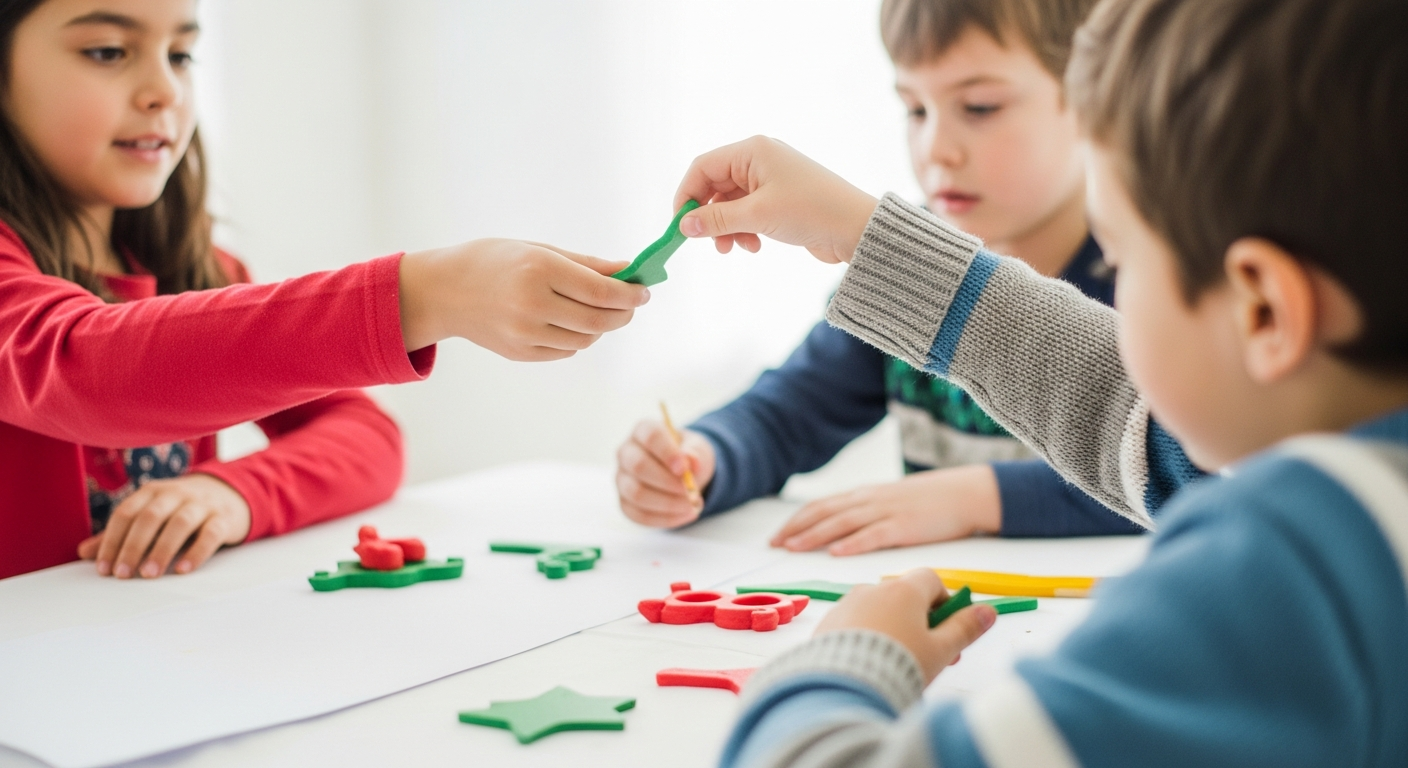
Table of Contents
- Why Winter Crafts Are More Than Just Fun: Developmental Superpowers
- Our Favorite Easy Winter Crafts for Every Age
- Bringing Language to Life with Every Craft: The Speech Blubs Way
- Is Speech Blubs Right for Your Child? Take Our Quick Screener!
- Join Our Community: The Science Behind Speech Blubs
- Unlock the Full Potential with Speech Blubs: Pricing and Value
- Conclusion
- Frequently Asked Questions About Winter Crafts & Child Development
As the days grow shorter and a gentle chill fills the air, many of us find ourselves seeking cozy indoor activities to share with our children. While the allure of screens can be strong, there's a unique magic in the simple joy of creating together. Imagine your child's delight as they transform everyday materials into shimmering snowflakes, friendly snowmen, or a whimsical winter wonderland, all while building crucial developmental skills. These moments aren't just about making pretty things; they're powerful opportunities for growth, discovery, and deep connection.
This post will guide you through a delightful collection of easy kids winter crafts, perfect for children of all ages. We'll explore how these hands-on activities do more than just entertain—they become vibrant playgrounds for strengthening fine motor skills, sparking imagination, enriching sensory experiences, and, most importantly, fostering robust language and communication abilities. At Speech Blubs, we believe in empowering children to speak their minds and hearts, and we've seen firsthand how blending scientific principles with play creates one-of-a-kind "smart screen time" experiences. Join us as we dive into a world where glue, glitter, and giggles pave the way for confident communication.

Why Winter Crafts Are More Than Just Fun: Developmental Superpowers
Crafting offers a treasure trove of developmental benefits, far beyond simply keeping little hands busy. Each snip, stick, and dab contributes to a child's holistic growth, laying crucial groundwork for academic success and, vitally, for effective communication.
Boosting Fine Motor Skills
The intricate movements involved in crafting are essentially a workout for little fingers and hands. Activities like cutting with child-safe scissors, peeling stickers, gripping a paintbrush, twisting pipe cleaners, or carefully placing small beads all demand precision and control. These actions strengthen the small muscles in the hands and wrists, improve hand-eye coordination, and develop dexterity. These "pre-writing" skills are fundamental not only for learning to hold a pencil and write but also for developing the oral motor control needed for clear speech articulation. The ability to manipulate small objects translates to better control over the tongue, lips, and jaw.
Sparking Creativity and Imagination
Crafts, especially those with an open-ended approach, are fertile ground for imagination. When children are given materials and a general theme, but the freedom to explore, they engage in problem-solving and divergent thinking. A simple paper plate can become a polar bear mask, a snowy owl, or a shimmering snow globe. This creative freedom encourages children to think outside the box, experiment with different textures and colors, and express their unique ideas. This imaginative play often comes with rich inner monologues or external narrations, prompting children to describe their creations, tell stories about them, and develop more complex narrative skills.
Enhancing Sensory Exploration
Many winter crafts offer a delightful multisensory experience. Think about the soft fluffiness of cotton balls used to make snow, the cool, smooth feel of glitter glue, the satisfying crunch of dried leaves or twigs, or the squishy texture of homemade playdough. Engaging multiple senses simultaneously helps children build a richer understanding of their world. When they describe what they feel ("It's sticky!"), see ("Look at the sparkly blue!"), or even smell ("This pinecone smells like Christmas!"), they are actively building their vocabulary and connecting sensory input with language. This holistic learning approach creates stronger neural pathways for memory and understanding.

Building Language and Communication Skills
Perhaps one of the most significant, yet often overlooked, benefits of crafting is its profound impact on language development. Every step of a craft activity presents opportunities for communication:
- Following Directions: "First, we glue the stick, then we add the button." This strengthens listening comprehension and sequential processing.
- Requesting and Naming: "Can I have the red pom-pom?" or "I need more glue." Children learn to articulate their needs and identify objects.
- Describing Actions and Outcomes: "I'm cutting the paper," "My snowman is smiling," "This feels smooth." They practice using verbs, adjectives, and forming complete sentences.
- Vocabulary Expansion: Introducing new words related to the craft (e.g., "flake," "icicle," "mitten," "brittle," "shimmer," "texture," "template," "arctic," "hibernate").
- Social Communication: When crafting with others, children learn to share materials, collaborate on ideas, ask questions, and express their preferences, all vital social-pragmatic skills.
At Speech Blubs, we understand that learning language should be a joyful and interactive experience. Our founders, who grew up with speech problems themselves, created the tool they wished they had—a solution that blends scientific principles with play. Just as children learn by watching and imitating their peers during crafting, our unique "video modeling" methodology in the app allows children to learn complex communication skills by observing and imitating other children on screen. This mirrors natural learning processes and turns screen time into "smart screen time," fostering engagement and reducing frustration.
Our Favorite Easy Winter Crafts for Every Age
Now, let's get those creative juices flowing! We’ve curated a selection of simple, engaging winter crafts, perfect for sparking imagination and fostering language at various developmental stages. Remember, the goal isn't perfection, but participation and connection. Always encourage adult co-play and support to maximize the learning and bonding opportunities.
For Our Littlest Crafters (Toddlers & Preschoolers)
These crafts are designed for little hands and minds, focusing on tactile experiences, simple steps, and immediate gratification. They are wonderful for introducing new vocabulary and practicing basic directives.
Cotton Ball Snowman Cards
- Materials: Blue or black construction paper (for the sky), cotton balls, glue stick, markers (orange for nose, black for eyes/mouth), small twigs (optional, for arms).
- Simple Steps:
- Help your child tear or pull apart cotton balls.
- Guide them to glue three cotton balls onto the paper to form a snowman body.
- Add smaller cotton balls for a snowy ground or a hat.
- Draw eyes, a carrot nose, and a smiling mouth with markers.
- (Optional) Glue on tiny twigs for arms.
- Language Benefits: "Soft," "fluffy," "sticky," "cold," "round." Practice body parts: "eyes," "nose," "mouth," "arms." Follow directions: "First glue, then draw." Introduce prepositions: "on top," "next to." Encourage describing their snowman: "My snowman is big!"
DIY "Snow" Playdough or Sensory Bin
- Materials for Playdough: 2 cups flour, ½ cup salt, 2 tbsp cream of tartar, 2 tbsp cooking oil, 1.5 cups boiling water, glitter (optional).
- Materials for Sensory Bin: Large shallow bin, cotton balls, white rice, small plastic arctic animals, scoops, small cups.
- Simple Steps (Playdough):
- Mix dry ingredients in a bowl.
- Add oil and boiling water (adult supervision essential!).
- Stir until combined, then knead until smooth (be careful, it will be hot initially). Add glitter if desired.
- Simple Steps (Sensory Bin):
- Fill the bin with cotton balls and/or white rice.
- Add arctic animals, scoops, and cups.
- Let your child explore freely.
- Language Benefits: This is a sensory language explosion! For playdough, describe "squishy," "smooth," "sticky," "cold," "soft." For the sensory bin, name animals ("polar bear," "penguin," "seal"), actions ("scoop," "pour," "hide"), and create simple narratives ("The bear is sleeping in the snow"). Discuss temperatures: "cold," "warm."
Handprint Polar Bears or Penguins
- Materials: White paper, white washable paint, black construction paper, googly eyes, orange/yellow markers or construction paper scraps.
- Simple Steps:
- Help your child paint their palm and fingers with white paint.
- Press their hand onto white paper, fingers together (for a polar bear) or slightly spread (for a penguin).
- Once dry, cut out the handprint.
- Glue onto a black construction paper background.
- Add googly eyes, a small orange triangle for a beak/nose, and drawn details.
- Language Benefits: Body awareness: "hand," "fingers," "palm." Animal sounds and names. Action words: "paint," "press," "cut," "glue." Describe the animal's features: "fuzzy," "round," "black and white." This also creates a lovely keepsake, prompting discussions about memories.
Creative Crafts for Growing Kids (Preschool & Early Elementary)
These crafts offer a bit more complexity, encouraging scissor skills, following multi-step directions, and engaging in more detailed descriptive language.
Paper Plate Winter Wreaths
- Materials: Paper plates, green and blue construction paper, glue, child-safe scissors, glitter, cotton balls, pre-cut snowflake shapes or winter stickers.
- Simple Steps:
- Help your child cut out the center of a paper plate, leaving a ring.
- Tear or cut strips of green or blue construction paper and glue them around the plate ring to create a leafy or icy base.
- Decorate the wreath with glitter, cotton balls (for snow), and snowflake cut-outs or stickers.
- Language Benefits: Practice scissor skills and shape recognition ("circle," "ring," "star"). Learn new action words: "tear," "strip," "decorate." Discuss patterns and sequencing: "What should we add next?" Describe colors and textures: "sparkly," "fluffy."
Craft Stick Snowflakes
- Materials: Popsicle sticks (natural or pre-colored white/blue), liquid glue, glitter, beads, small buttons, pipe cleaners.
- Simple Steps:
- Glue three or four popsicle sticks together at their centers to form a star or snowflake shape. Let dry.
- Once dry, apply glue to the sticks and sprinkle generously with glitter, or glue on small beads and buttons to create unique patterns.
- Bend small pieces of pipe cleaner into spirals or curls and glue them on for extra sparkle.
- Language Benefits: Spatial reasoning: "cross," "middle," "points." Counting the sticks and decorations. Color naming and sorting beads/buttons. Using descriptive adjectives: "prickly," "shiny," "symmetrical."
Tape Resist Winter Trees
- Materials: White paper or watercolor paper, painter's tape, blue/purple/green watercolors or tempera paint, salt (optional).
- Simple Steps:
- Help your child tear small strips of painter's tape to create the outline of bare tree trunks and branches on the paper.
- Paint over the entire paper, including the tape, using cool winter colors like blues, purples, and greens.
- (Optional) While the paint is still wet, sprinkle a little salt over the painted areas to create a snowy, crystalline effect.
- Once dry, carefully peel off the tape to reveal the white tree outlines.
- Language Benefits: Concepts of "negative space" and "outline." Action words: "tear," "stick," "paint," "peel." Discuss colors and shades: "light blue," "dark purple." Describe the appearance of the trees: "bare," "tall," "wintery." The "magic" of revealing the white trees sparks excitement and descriptive language. For a child who is learning to articulate 's' sounds, creating a 'snowy scene' can be a playful way to practice words like 'snow,' 'sled,' and 'sparkle' while engaging their hands and eyes. Then, they can reinforce these sounds in our app's 'Sounds & Rhymes' section, practicing with their Blub pals!
Paper Luminaries
- Materials: White or light-colored paper bags (lunch bag size), child-safe scissors, hole punch, winter-themed stickers, markers, battery-operated tea lights.
- Simple Steps:
- Decorate the paper bags with winter drawings, stickers, or by punching holes in snowflake patterns.
- For a truly enchanting effect, cut out simple shapes (stars, moons, snowflakes) from the bag.
- Once decorated, place a battery-operated tea light inside each bag.
- Arrange them along a windowsill or mantelpiece for a soft, warm glow.
- Language Benefits: Simple cutting and decorating practice. Discussing light and shadow, "bright" and "dim." Creating a cozy atmosphere and using descriptive words like "glowing," "soft," "warm." This is a lovely activity for teaching patience and the joy of a finished project.
Engaging Projects for Older Elementary Kids
These crafts involve more planning, intricate fine motor tasks, and opportunities for detailed expression and storytelling.
Popsicle Stick Gingerbread Houses
- Materials: Brown craft sticks, liquid glue or hot glue (adult use only!), various small decorations: buttons, sequins, small pom-poms, pipe cleaners, colored paper scraps, glitter glue.
- Simple Steps:
- Build a basic house structure by gluing craft sticks together to form walls and a roof. This may require adult assistance with hot glue for stability.
- Once the basic structure is dry, let your child unleash their creativity by decorating the house with buttons as candies, sequins as lights, pipe cleaner wreaths, and glitter glue "frosting."
- Language Benefits: Advanced planning and problem-solving skills ("How will this piece fit?"). Following multi-step instructions. Detailed descriptive language for all the small decorations. Storytelling about who lives in the gingerbread house and what happens there. This project can become a focal point for imaginative play.
Watercolor Snowflakes (Advanced)
- Materials: Heavy watercolor paper, masking fluid (optional), watercolors, small paintbrushes, coarse salt.
- Simple Steps:
- (Optional) Use masking fluid to draw intricate snowflake patterns. Let dry completely.
- Paint over the entire paper with varying shades of blue, purple, and white watercolors.
- While the paint is still very wet, sprinkle coarse salt onto the painted areas. The salt will absorb the water, creating beautiful, unique crystalline patterns.
- Once completely dry, brush off the salt. (If using masking fluid, gently rub it off to reveal white snowflake outlines.)
- Language Benefits: Experimentation with materials and techniques. Discussing color blending, transparency, and the science behind the salt effect. Using abstract and descriptive words: "ethereal," "delicate," "vibrant," "blended." Encourages observation and critical thinking about the artistic process.
Bringing Language to Life with Every Craft: The Speech Blubs Way
Every snip, every dab, every piece of glitter glued down is an opportunity to connect and communicate. Crafting naturally encourages conversation, negotiation, description, and storytelling. It builds confidence as children see their ideas come to life, fostering a love for expressing themselves. This hands-on, interactive approach perfectly aligns with the mission of Speech Blubs.
Our company was born from the personal experiences of our founders, who all grew up with speech problems and created the tool they wished they had. We are committed to providing an immediate, effective, and joyful solution for the 1 in 4 children who need speech support. Our innovative app uses "video modeling," where children learn by watching and imitating their peers, a method scientifically proven to engage mirror neurons and accelerate learning. This isn't passive viewing; it's active "smart screen time" that sparks interaction and connection, just like crafting side-by-side.
For instance, after making a "fuzzy polar bear" craft, a child might proudly say, "My polar bear is soft!" This naturally leads to practicing descriptive words. They can then transition to Speech Blubs, where the "Animal Kingdom" section can reinforce animal names, sounds, and related vocabulary, allowing them to imitate their Blub pals making "grrr" sounds or saying "bear." We believe in fostering a love for communication, building confidence, reducing frustration, developing key foundational skills, and creating joyful family learning moments. Speech Blubs is a powerful supplement to your child's overall development plan and, when applicable, professional therapy, making every moment count.
Is Speech Blubs Right for Your Child? Take Our Quick Screener!
Sometimes, as parents, we just need a little guidance to understand if our child could benefit from extra speech and language support. We've developed a simple, helpful tool to give you some clarity.
Take our quick 3-minute preliminary screener today. It involves just 9 simple questions and will provide you with an immediate assessment and a personalized next-steps plan. It's a great way to gain insight and even unlock a free 7-day trial of Speech Blubs to see the difference for yourself.
Join Our Community: The Science Behind Speech Blubs
At Speech Blubs, we are dedicated to providing resources that are not only fun but also genuinely effective. Our methods are rigorously backed by scientific principles and research, ensuring that your child receives the highest quality support. We are proud of our high MARS (Mobile App Rating Scale) score, placing us in the top tier of speech apps worldwide.
Learn more about the science that makes Speech Blubs effective and discover the evidence behind our video modeling approach. Don't just take our word for it—read inspiring testimonials from parents just like you who have seen incredible progress in their children's communication journeys.
Unlock the Full Potential with Speech Blubs: Pricing and Value
We believe in making effective speech and language support accessible to every family. That’s why we offer transparent pricing options designed to provide maximum value and flexibility.
Our Monthly Plan is available for $14.99 per month. It’s a great way to get started and explore the app's core features.
However, for the best value and to unlock a full suite of premium benefits, we highly recommend our Yearly Plan, priced at just $59.99 per year. This breaks down to an incredible $4.99 per month, allowing you to save 66% compared to the monthly subscription!
The Yearly Plan isn't just cheaper; it also includes exclusive, high-value features designed to supercharge your child's learning journey:
- A 7-day free trial: Experience the full app before committing.
- The extra Reading Blubs app: Double the learning fun with our companion reading application.
- Early access to new updates: Be the first to enjoy new features and content.
- 24-hour support response time: Get quick assistance whenever you need it.
Please note that the Monthly plan does not include these fantastic benefits. To truly experience everything Speech Blubs has to offer and ensure your child has the best possible start, choose the Yearly plan to get your free trial and the full suite of features!
Conclusion
Winter crafts offer a beautiful blend of creativity, connection, and crucial developmental benefits for children. From boosting fine motor skills and sparking imagination to enriching sensory experiences and expanding language, these simple activities lay a vital foundation for confident communication. They provide natural, joyful opportunities for children to speak their minds and hearts, building confidence and reducing frustration in their communication journey.
At Speech Blubs, we are passionate about supporting families with tools that make learning fun and effective. Our "smart screen time" approach, leveraging video modeling and peer imitation, works hand-in-hand with hands-on activities like crafting to create a comprehensive and engaging developmental experience.
Ready to bring more joy, connection, and communication into your home this winter? Download Speech Blubs today and discover how we can help your child blossom! Remember, for the best value and exclusive features like the 7-day free trial and the Reading Blubs app, choose our Yearly plan.
Download Speech Blubs on the App Store
Get Speech Blubs on Google Play
Start your 7-day free trial and create your account on our website and select the Yearly plan to unlock all the amazing benefits!
Frequently Asked Questions About Winter Crafts & Child Development
How do winter crafts specifically help with speech and language development?
Winter crafts provide rich, natural opportunities for language. Children learn new vocabulary (e.g., "snowflake," "icicle," "mitten," "sparkle"), practice following multi-step directions, describe their actions and creations ("I'm gluing the soft cotton"), and engage in conversations about their process and ideas. The fine motor skills developed during crafting also support oral motor control needed for clear articulation.
What if my child isn't interested in crafting? How can I encourage them?
Start small and keep it low-pressure. Offer a choice of two simple activities. Focus on the process, not the perfect outcome. Sometimes, participating alongside them, making your own craft, can spark their interest. Connect it to their favorite themes or characters. Remember, even just exploring materials or making a mess is a form of sensory play that's beneficial!
Are these crafts suitable for children of all ages, including very young toddlers?
Yes, many of these crafts can be adapted for various ages. For very young toddlers, focus on highly sensory activities like playdough or sensory bins, and simple gluing with large, easy-to-handle items. Ensure all materials are non-toxic and supervise closely, especially with small pieces that could be choking hazards. For older children, you can introduce more complex steps and encourage greater independence.
How can I make crafting less messy?
Preparation is key! Lay down a washable tablecloth or old newspaper. Use craft trays or old baking sheets to contain materials. Have wet wipes or a damp cloth readily available for quick clean-ups. For paint, opt for washable tempera paints. For glue, use glue sticks for less mess or put a small dollop of liquid glue on a paper plate instead of letting kids squeeze directly from the bottle. Embrace a little mess, as it's often part of the creative process!
About the author