
Crafting Confidence: 25 Fun Easy Crafts for Kids to Boost Speech & Skills
 By Speech Blubs Team•Jan 13, 2026•18 min.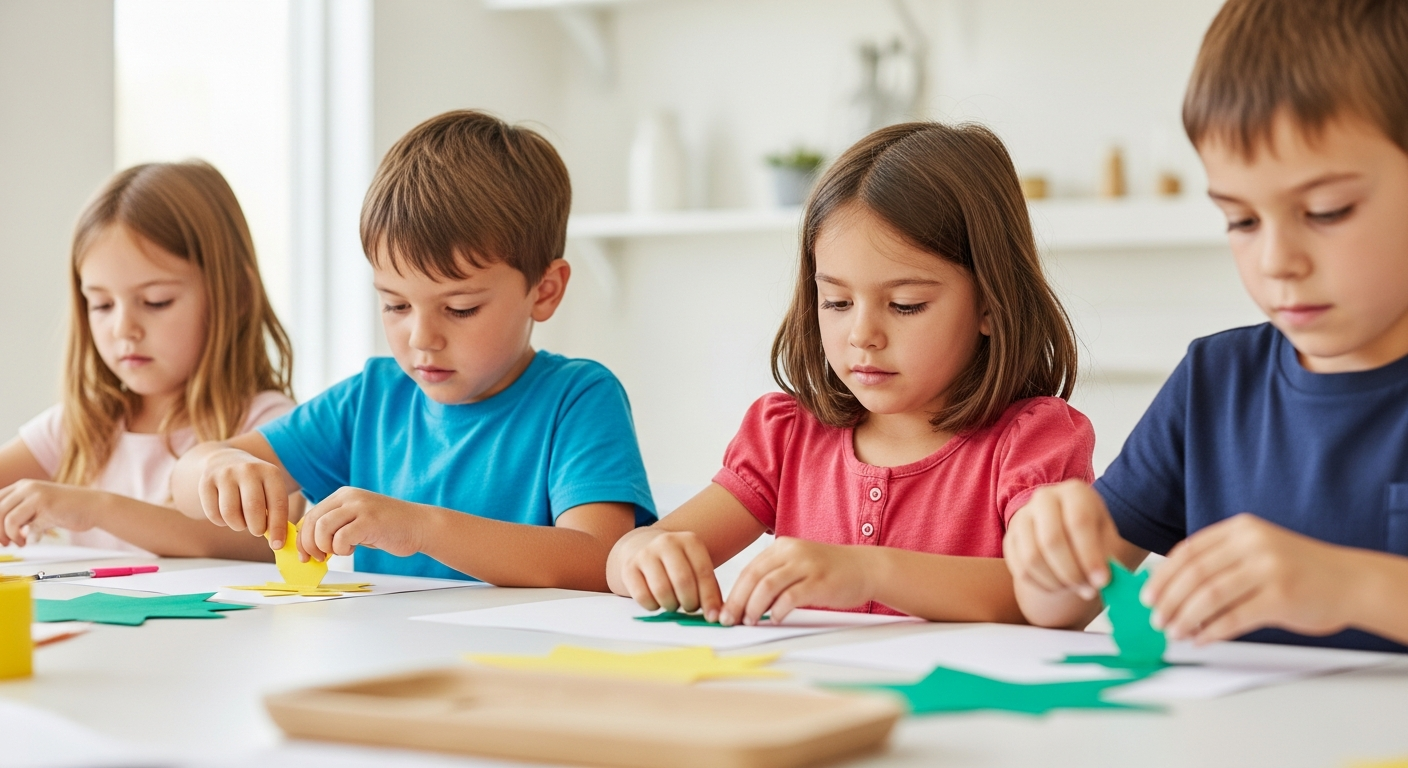
Table of Contents
- Introduction
- The Developmental Superpower of Crafting
- Crafting on a Budget: The Power of Household Items
- Our Top 25 Fun & Easy Crafts for Kids (with a Speech Blubs Twist!)
- Making Craft Time "Smart Screen Time": The Speech Blubs Connection
- Beyond the Craft: Fostering Communication and Connection
- Take the Next Step: Empower Your Child's Voice with Speech Blubs
- Conclusion
- FAQ
Introduction
"I'm bored!" How often do those two words echo through your home, especially on a rainy afternoon or a quiet weekend? As parents and caregivers, we’re constantly seeking engaging activities that don’t just fill time, but genuinely enrich our children’s lives. The good news? You likely have a treasure trove of possibilities hidden in your recycling bin or kitchen pantry right now. We're talking about the magic of crafts – simple, enjoyable projects that do far more than just keep little hands busy.
Crafting isn't just about glue and glitter; it's a powerful pathway to development, fostering creativity, problem-solving, and crucially, foundational communication skills. This blog post will dive deep into why engaging in fun easy crafts for kids is an invaluable activity for their overall growth, from fine motor coordination to confident self-expression. We'll explore how common household items can be transformed into endless opportunities for learning and connection, offering practical craft ideas and showing how these hands-on experiences beautifully complement your child's journey toward speaking their minds and hearts.

The Developmental Superpower of Crafting
At first glance, a child meticulously gluing googly eyes onto a paper plate animal might seem like simple play. But beneath the surface, a complex symphony of developmental processes is unfolding. Crafting is a holistic activity that nurtates a wide range of skills essential for growth, including those that directly impact speech and language development.
Building Fine Motor Skills: The Foundation for Communication
Think about the precision required to cut along a line, thread a bead, or squeeze a glue bottle. These actions are vital for strengthening the small muscles in a child’s hands and fingers – their fine motor skills. Why is this important for speech? Developing strong fine motor skills actually connects to the dexterity needed for the intricate movements of the tongue, lips, and jaw during speech production. Activities that refine hand-eye coordination and muscle control lay a broad foundation for all areas of development, including articulatory precision.
Key Takeaway: Activities like cutting, tearing, squeezing, and drawing during craft time enhance fine motor skills, which are surprisingly linked to the oral motor control needed for clear speech.
Cognitive Growth: Problem-Solving and Creativity Unleashed
Every craft project presents a mini-challenge. How do I make this paper stand up? What colors should I use? What happens if I mix these two paints? These questions ignite critical thinking, planning, and problem-solving skills. Children learn to follow instructions, adapt when things don't go as planned, and see a project through to completion. This cognitive flexibility and persistence are skills that transfer to learning new words, understanding complex sentences, and navigating social conversations.
Moreover, crafting is a boundless outlet for creativity. There's no single "right" way to make a monster puppet or decorate a birdhouse. This freedom encourages imaginative thinking, allowing children to express unique ideas and perspectives.

Emotional and Social Development: Connecting Through Creation
Crafting is a fantastic way to bond with your child. Sitting together, sharing materials, and working towards a common goal creates precious moments of connection. This shared experience fosters turn-taking, patience, and the joy of collaboration. For children who may struggle with verbal expression, crafting can be a non-verbal outlet, helping them communicate feelings or ideas through their creations. It can also build self-esteem as they proudly display their finished projects, boosting the confidence they need to eventually "speak their minds and hearts."
When your child is proud of their paper plate pizza, it gives you a natural opening to talk about it: "Tell me about your pizza! What toppings did you choose? Did you put on 'pepperoni' (saying the word slowly) or 'cheese' (emphasizing the 'ch' sound)?" This kind of interaction, celebrated through a craft, lays the groundwork for comfortable verbal exchange, a core aspect of our mission at Speech Blubs.
Crafting on a Budget: The Power of Household Items
One of the most appealing aspects of "fun easy crafts for kids" is that you don't need expensive, specialized supplies. Many of the best projects can be made with items you already have around the house, turning potential trash into creative treasures! This not only saves money but also teaches children about recycling and resourcefulness.
The Essential Craft Supply Checklist
Before you dive into specific projects, it’s helpful to gather a basic arsenal of versatile, inexpensive supplies. These are the workhorses of the crafting world:
- Paper Products:
- White printer paper or construction paper
- Colored construction paper (a variety pack is great)
- Paper plates (various sizes)
- Toilet paper or paper towel rolls
- Newspaper or old magazines (for collages, tearing, or protecting surfaces)
- Tissue paper
- Adhesives & Tools:
- Kid-safe glue sticks and liquid glue (PVA glue is excellent)
- Masking tape or painter's tape
- Kid-safe scissors
- Coloring & Decorating:
- Crayons, markers, or colored pencils
- Washable tempera paint (primary colors are enough to mix)
- Paintbrushes (various sizes)
- Recycled Items:
- Cardboard boxes (cereal boxes, shipping boxes)
- Plastic bottles and containers (cleaned thoroughly)
- Egg cartons
- Bottle caps
- Old socks (for puppets!)
- Miscellaneous:
- Popsicle sticks (craft sticks)
- Googly eyes (optional, but always a hit!)
- Cotton balls, pom-poms, pipe cleaners
- Yarn or string
- Small natural items (leaves, twigs, small stones collected on a nature walk)
With these items, you’re ready to unlock a world of creative possibilities without an extra trip to the store.
Our Top 25 Fun & Easy Crafts for Kids (with a Speech Blubs Twist!)
Here are 25 fantastic craft ideas, designed to be simple, engaging, and rich with opportunities for learning and communication. Remember, these are jumping-off points – encourage your child to personalize and adapt them!
Sensory & Texture Play Crafts
These crafts are wonderful for tactile exploration and introducing descriptive vocabulary.
- Homemade Clay: Make your own dough from flour, salt, and water. Kids can roll, pinch, and sculpt, building hand strength and exploring textures.
- Speech Connection: Describe the clay: "It's soft!" "It's squishy!" "Can you make a 'ball' (practice 'b' sound)?" "Let's make a 'snake' (practice 's' sound)."
- Ooey Gluey Suncatchers: Use clear glue and food coloring to create colorful designs on wax paper.
- Speech Connection: Talk about colors: "What 'color' (practice 'c' sound) is that?" "Is it 'red' (short 'e') or 'blue' (long 'u')?"
- Homemade Finger Paint: Mix cornstarch, water, and food coloring for a safe, sensory art experience.
- Speech Connection: Encourage big movements and corresponding sounds: "Swish, swish, swish!" "Smear!" "Dab, dab, dab!"
- DIY Sidewalk Chalk: Make your own vibrant chalk with plaster of Paris and tempera paint.
- Speech Connection: Draw shapes and name them: "A 'big' (practice 'b' sound) circle!" "A 'square' (practice 'sq' blend)!" Draw letters and practice their sounds.
- Paper Plate Spin Art: Use a salad spinner, paper plates, and washable paint for mesmerizing designs.
- Speech Connection: Focus on actions and sounds: "Spin! Spin! Spin!" "Round and 'round' (practice 'r' sound)!" "Fast!" "Slow!"
Imaginative Play Props
Crafts that turn into toys are fantastic for encouraging storytelling and pretend play, crucial for language development.
- Cardboard Box Robots: Transform old boxes into futuristic friends. Decorate with foil, bottle caps, and markers.
- Speech Connection: Give your robot a name! "Hello, 'Robot' (practice 'r' sound)! What does 'Robot' (repetition) say?" "Beep, boop!" "Can he 'walk' (practice 'w' sound)?"
- Dinosaur Feet: Cut out large dinosaur foot shapes from craft foam or cardboard.
- Speech Connection: Stomp around and make dinosaur sounds: "Roar!" "Stomp, stomp!" "Big 'dinosaur' (practice 'd' sound)!"
- Toilet Paper Roll Animals/Characters: Create owls, bunnies, or other creatures using toilet paper rolls, paint, and construction paper.
- Speech Connection: For a child who loves animals, making a 'moo' cow or a 'baa' sheep offers a fun, motivating way to practice these early sounds, similar to how our Speech Blubs app uses video modeling to encourage imitation.
- Paper Plate Masks: Cut eye holes in paper plates and decorate them to be animals, superheroes, or silly faces.
- Speech Connection: Encourage role-playing: "Who are 'you' (practice 'y' sound)?" "What does the 'lion' (practice 'l' sound) say?"
- Toy Camera: Use a small box, a paper roll for a lens, and markers to make a pretend camera.
- Speech Connection: Practice taking "pictures": "Say 'cheese' (practice 'ch' sound)!" "Click!" "What do you 'see' (practice 's' sound)?"
- Monster Puppets (from old socks): Decorate old socks with googly eyes, yarn, and fabric scraps.
- Speech Connection: Put on a puppet show! "The 'monster' (practice 'm' sound) is hungry!" "What does he 'want' (practice 'w' sound)?" Encourage dialogue and character voices.
- Cardboard Tube Telescope: Paint and decorate a paper towel roll.
- Speech Connection: Go on a "safari": "I 'see' (practice 's' sound) a bird!" "Look 'up' (practice 'u' sound)!"
Nature-Inspired Creations
These crafts connect children with the natural world and introduce a wealth of new vocabulary.
- Leaf Rubbings: Place leaves under paper and rub with crayons to reveal their textures.
- Speech Connection: Talk about the leaves: "This leaf is 'big' (practice 'b' sound)!" "This one is 'small' (practice 's' sound)!" "Feel the 'texture' (complex word for older kids)."
- Rock Painting: Collect smooth rocks and paint them with colorful designs.
- Speech Connection: Describe the colors and what's painted: "A 'red' (short 'e') ladybug!" "A 'blue' (long 'u') fish!"
- Nature Collage: Gather leaves, twigs, flowers, and small stones on a walk, then glue them onto paper.
- Speech Connection: Name each item collected: "A 'sticky' (practice 'st' blend) twig!" "A 'pretty' (practice 'pr' blend) flower!"
Recycled Masterpieces
Turning everyday "trash" into treasure fosters creativity and an understanding of sustainability.
- Recycled Guitar: Use a shoebox, rubber bands, and a paper towel roll for the neck.
- Speech Connection: "Strum the 'guitar' (practice 'g' sound)!" "Make 'music' (practice 'm' sound)!" Sing simple songs together.
- Toilet Paper Roll Ladybugs: Paint rolls red or black, add spots, and googly eyes.
- Speech Connection: "The 'ladybug' (practice 'l' sound) is flying!" "Up, up, up!"
- Paper Plate Pizza: Cut a circle from a paper plate, "sauce" with red paint, and add "toppings" with colored paper scraps.
- Speech Connection: Ask about toppings: "Do you want 'pepperoni' (practice multisyllabic word)?" "Yes, 'please' (practice 'pl' blend)!"
- DIY Desk Organizer: Use various sized cardboard boxes and toilet paper rolls, decorate, and assemble for storing craft supplies.
- Speech Connection: Practice prepositions: "Put the crayons 'in' the cup." "The scissors are 'next to' the glue."
- Paper Plate Fish Craft: Cut out a 'mouth' and use it as a 'tail' for a fish. Decorate with scales.
- Speech Connection: "Swim, swim, swim, little 'fish' (practice 'f' sound)!" "What 'color' (practice 'c' sound) is your fish?"
Simple Paper Fun
Paper is the ultimate versatile craft material!
- Paper Plate Flowers: Paint paper plates and cut petals, or use construction paper to make layered flowers.
- Speech Connection: Talk about the parts of a flower: "'Petals' (practice 'p' sound), 'stem' (practice 'st' blend), 'leaf' (practice 'l' sound)."
- Handprint Art: Paint your child's hand and make prints. Turn them into animals or trees.
- Speech Connection: "My 'hand' (practice 'h' sound) is painted 'blue' (long 'u')!" "Look at my 'fingers' (practice 'f' sound)!"
- Paper Bag Puppets: Decorate brown paper bags with markers, yarn, and paper scraps to create characters.
- Speech Connection: This is fantastic for narrative building. Encourage your child to tell a story using their puppet: "Once upon a 'time' (practice 't' sound)..."
- Colorful Butterflies: Fold paper, paint one side, press, and open for a symmetrical butterfly.
- Speech Connection: "The butterfly is 'flying' (practice 'fl' blend)!" "It has 'pretty' (practice 'pr' blend) wings."
- Mail a Hug: Use a large piece of paper, trace your child's outstretched arms, cut it out, and fold it into an envelope to send to a loved one.
- Speech Connection: Discuss who you're sending it to: "Grandma will love this 'hug' (practice 'h' sound)!" "It shows we 'miss' (practice 'm' sound) her!" This also helps develop empathy and social understanding.
For a child who is just starting to produce sounds or words, these crafts provide natural, low-pressure opportunities for repetition and imitation, laying the groundwork for more complex communication. Just as our preliminary screener offers insights into where your child might benefit from support, these crafts help you identify and nurture their emerging skills in a joyful setting.
Making Craft Time "Smart Screen Time": The Speech Blubs Connection
While engaging in hands-on crafts provides valuable screen-free time, we also understand the reality of today's world and how technology can be a powerful ally in child development. At Speech Blubs, we believe in "smart screen time" – an active, engaging, and scientifically-backed alternative to passive viewing. Our mission, born from the personal experiences of our founders who faced their own speech challenges, is to empower every child to "speak their minds and hearts."
Our unique approach uses video modeling, where children learn by watching and imitating their peers, effectively activating mirror neurons in the brain. This interactive method teaches complex communication skills in a joyful, motivating way. Think of how a craft can spark an interest – say, making an animal puppet – and then our app can help your child articulate the sounds and words associated with that animal, reinforcing their learning in a dynamic, engaging environment. It’s not just about drills; it’s about making communication a fun and integral part of their world.
For instance, after creating a fantastic paper plate fish, your child can explore the "Animal Kingdom" section within Speech Blubs, where they watch other children make "f-f-fish" sounds and imitate them, solidifying their speech development in a playful, supportive context. This blend of hands-on creativity and targeted digital learning creates a powerful synergy for growth. We are committed to providing an immediate, effective, and joyful solution for the 1 in 4 children who need speech support, blending scientific principles with play into one-of-a-kind "smart screen time" experiences. Many parents have shared their success stories, which you can read on our testimonials page, underscoring the real-world impact of our approach. Our methodology is not just engaging; it's backed by robust research that places us in the top tier of speech apps globally.
Beyond the Craft: Fostering Communication and Connection
The true magic of crafts extends far beyond the finished product. The real value lies in the process and the conversations it sparks.
Engage, Describe, and Question
As your child crafts, be an active participant and guide:
- Narrate: "You're cutting the 'blue' (practice 'bl' blend) paper. Now you're putting the 'glue' (practice 'gl' blend) on it."
- Describe: Use rich vocabulary to talk about colors, shapes, textures, and actions. "This glitter is so 'sparkly' (practice 'sp' blend)!" "That's a 'zigzag' (practice 'z' sound) line you're drawing."
- Ask Open-Ended Questions: "What do you think will happen next?" "Tell me about your creation." "Why did you choose that 'color' (practice 'c' sound)?"
- Encourage Choices: "Do you want 'red' (short 'e') or 'green' (practice 'gr' blend) paint?" This builds decision-making skills and provides opportunities for verbal responses.
- Practice Sounds and Words: For a child working on specific sounds, integrate them naturally. If they are making a cat, prompt "Meow!" and then gently model "C-c-cat."
These interactions transform a simple craft session into a rich language-learning environment. It’s in these moments that children connect words to actions, objects, and their own creative thoughts, fostering a love for communication and building confidence in expressing themselves.
Realistic Expectations and Continuous Support
While crafting and apps like Speech Blubs can significantly aid development, it's important to set realistic expectations. Progress is a journey, not a race. We don't promise that your child will be giving public speeches in a month, but we do commit to fostering a love for communication, building confidence, reducing frustration, developing key foundational skills, and creating joyful family learning moments. Both crafting and Speech Blubs are powerful supplements to your child's overall development plan and, when applicable, professional therapy. Always remember the implicit understanding of adult co-play and support in all these activities.
Take the Next Step: Empower Your Child's Voice with Speech Blubs
You've seen how engaging in fun easy crafts for kids can be a fantastic way to support your child's overall development, including their speech and language skills. Now, imagine combining that hands-on learning with a tool specifically designed to nurture their voice.
Speech Blubs offers a dynamic, engaging, and scientifically-backed approach to speech development through our unique video modeling methodology. We transform screen time into "smart screen time," where children actively learn by imitating their peers. It's a joyful, effective, and immediate solution for families looking to empower their children to communicate confidently.
Ready to explore how Speech Blubs can complement your child's growth journey?
You can start with our incredibly valuable Yearly Plan, which costs just $59.99 per year, breaking down to an amazing $4.99 per month. This plan offers exceptional value, allowing you to save 66% compared to the monthly option!
With the Yearly Plan, you'll unlock a full suite of benefits designed to maximize your child's progress:
- A 7-day free trial to experience the app's full potential.
- The extra Reading Blubs app to further enhance literacy skills.
- Early access to new updates and features.
- 24-hour support response time for any questions you may have.
While we do offer a Monthly Plan for $14.99 per month, it does not include the 7-day free trial, the Reading Blubs app, early access, or priority support. The Yearly Plan truly is the best choice for comprehensive support and incredible savings.
Don't let another day go by without giving your child the tools to speak their minds and hearts.
Choose the Yearly Plan to unlock the free trial and the full suite of features today!
- Create your account and begin your 7-day free trial today!
- Download Speech Blubs on the App Store!
- Get Speech Blubs on Google Play!
Conclusion
From the simplest paper plate creation to an elaborate cardboard robot, fun easy crafts for kids are a treasure trove of developmental opportunities. They nurture fine motor skills, ignite cognitive growth, foster emotional connections, and most importantly, create countless moments for language and communication to flourish. By engaging in these hands-on activities, you're not just creating art; you're building a foundation for confident self-expression.
Combine these joyful crafting experiences with the targeted support of Speech Blubs, and you create a holistic environment where your child can truly thrive. Our mission is to empower children to "speak their minds and hearts," and together, through play, conversation, and smart screen time, we can help them find their voice.
Ready to see the amazing impact for yourself? We encourage you to start your child's journey today.
Get the best value and unlock all features by choosing the Yearly Plan!
Download Speech Blubs on the App Store or Google Play to begin your 7-day free trial!
FAQ
Q1: What age group are these crafts best for?
A1: Many of these crafts are adaptable for a wide range of ages, generally from toddlers (with more adult supervision) through early elementary school (ages 3-10). The key is to modify the complexity based on your child's skill level and attention span. For instance, younger children might focus on tearing paper and gluing, while older children can handle more intricate cutting and detailed decorating.
Q2: How can I encourage my child to talk more during craft time?
A2: Create a language-rich environment! Narrate your actions ("I'm cutting the yellow circle."), describe objects and textures ("This paint is smooth and shiny!"), ask open-ended questions ("What do you want to make next?"), and offer choices ("Do you want the big button or the small button?"). Focus on sounds, actions, and simple words relevant to the craft. Remember, gentle prompts and modeling are more effective than demanding speech.
Q3: My child seems frustrated easily during crafts. How can I help?
A3: Keep it simple and focus on the process, not perfection. Choose crafts that are very easy and have no "right" or "wrong" outcome. Offer plenty of assistance, praise effort, and break tasks into small, manageable steps. If frustration sets in, take a break, or switch to a less structured activity like free drawing or sensory play. The goal is enjoyment and exploration, not a flawless finished product.
Q4: How does Speech Blubs specifically help with speech development compared to just crafting?
A4: While crafting provides a fantastic, holistic foundation for language by improving fine motor skills, cognitive development, and creating conversational opportunities, Speech Blubs offers targeted, scientifically-backed support. Our app uses video modeling, where children learn by imitating real peers, activating specific brain areas crucial for speech. It provides structured practice for sounds, words, and sentences in a fun, game-like format, making it an excellent complement to the broad developmental benefits of hands-on crafting. If you're unsure where to start, take our quick 3-minute preliminary screener to get an assessment and a plan for your child.
About the author