
Crafting Holiday Memories: Why Christmas Ornaments Are Speech Superheroes for Kids
 By Speech Blubs Team•Dec 22, 2025•20 min.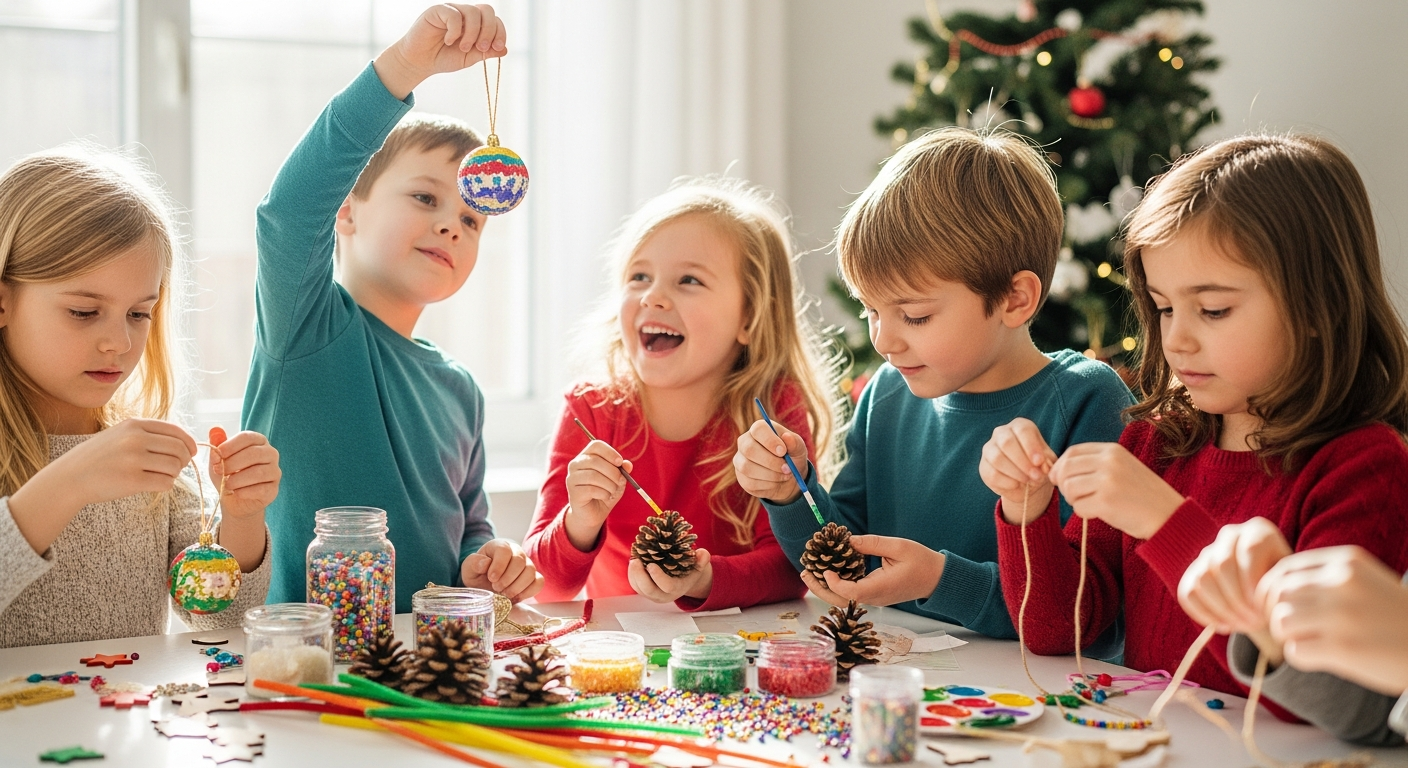
Table of Contents
- Introduction
- Beyond Decoration: The Developmental Power of Crafting
- Speech and Language Benefits Woven into Every Craft
- Seamlessly Integrating Speech Blubs into Your Holiday Crafting
- Our Favorite Christmas Ornament Crafts for Kids (with Speech Blubs Prompts!)
- Maximizing Your Speech Blubs Experience: Value and Features
- Tips for Parents: Creating a Language-Rich Crafting Environment
- When to Seek Further Support
- Conclusion
- Frequently Asked Questions (FAQ)
Introduction
The twinkling lights, the scent of pine, the joyous carols – the holiday season brings a magical atmosphere that captures the hearts of children and adults alike. But beyond the festive cheer and gift-giving, there's an often-overlooked activity that offers a wealth of developmental benefits for our little ones: making Christmas ornaments. Imagine a simple craft session transforming into a powerful opportunity for language growth, fine motor skill development, and confidence building. This isn't just about creating pretty decorations; it's about building connections, expressing creativity, and, most importantly for us at Speech Blubs, fostering crucial communication skills. In this comprehensive guide, we'll dive deep into how these delightful Christmas ornament crafts for kids can become invaluable tools for speech and language development, providing practical ideas and showing you how to enhance these moments with supportive resources. Ready to add a sprinkle of learning to your holiday sparkle? Let's transform your festive crafting into a language-rich adventure! If you're eager to start exploring interactive ways to boost your child's communication, you can download Speech Blubs on the App Store or Google Play today.

Beyond Decoration: The Developmental Power of Crafting
Christmas ornament crafts are far more than just a way to adorn your tree; they are rich, multisensory activities that stimulate various areas of a child's development. Think about the actions involved: cutting, gluing, painting, molding, describing, and sharing. Each step is a mini-lesson in itself, contributing to a child's cognitive, physical, and emotional growth.
Cognitive Development Through Crafting
Crafting ignites a child's cognitive abilities by engaging them in problem-solving, planning, and sequencing. When making an ornament, a child might need to decide what colors to use, which pieces go where, or how to make a material stick. These seemingly simple decisions build foundational thinking skills. They learn about cause and effect ("If I put too much glue, it gets messy") and spatial reasoning ("How will this piece fit here?"). Following multi-step instructions, like "First cut the circle, then glue the glitter, then add the string," strengthens their ability to comprehend and execute sequential commands – a vital skill for both academic success and daily life.
Fine Motor Skills and Hand-Eye Coordination
The intricate movements required for many ornament crafts are fantastic for developing fine motor skills. Holding a paintbrush, squeezing a glue bottle, cutting with child-safe scissors, peeling stickers, or threading a string through a bead all refine the small muscles in the hands and fingers. These skills are crucial for tasks like writing, buttoning clothes, and self-feeding. Simultaneously, crafting enhances hand-eye coordination as children guide their hands to perform precise actions based on what their eyes see, improving their dexterity and control.
Fostering Creativity and Self-Expression
Crafting offers a blank canvas for imagination. Children can choose their own colors, shapes, and materials, allowing them to express their unique ideas and personalities. There's no right or wrong way to create art, which builds confidence and encourages them to explore without fear of failure. This freedom of expression is powerful; it allows children to communicate their thoughts and feelings non-verbally, which can be particularly beneficial for children who are still developing their verbal communication skills.

Social-Emotional Learning
When crafting together, children learn valuable social-emotional skills. They practice turn-taking ("My turn for the blue glitter, then your turn"), sharing materials, and cooperating on a joint project. The act of creating something beautiful also instills a sense of accomplishment and pride, boosting self-esteem. Displaying their handmade ornament on the tree provides a tangible representation of their hard work and creativity, a wonderful source of positive reinforcement. Furthermore, the shared experience of crafting with a parent or caregiver strengthens family bonds, creating cherished memories and a supportive environment for learning.
Speech and Language Benefits Woven into Every Craft
Now, let's zero in on how Christmas ornament crafts specifically target and enhance speech and language development. Every snip, every dab of glue, and every choice of color presents a golden opportunity for rich language interaction.
Vocabulary Expansion and Naming
Crafting introduces a wealth of new words. Think about all the materials: glitter, glue, ribbon, paint, paper, pipe cleaner, cotton ball, bead, felt, yarn, pom-pom. Then there are the colors: red, green, gold, silver, blue, white. And the actions: cut, glue, paint, sprinkle, stick, fold, twist, tie, hang. As you craft, you can name each item and action, helping your child build a robust vocabulary. For example, when making a pipe cleaner candy cane, you can say, "Let's twist the red and white pipe cleaners together. Twist, twist, twist! Now it looks like a candy cane." This repetitive naming in a meaningful context helps cement new words in their minds.
Following Directions and Comprehension
Crafts are perfect for practicing multi-step directions. Start with simple one-step commands ("Get the glue"), then progress to two-step ("Get the glue and the red paper"), and eventually three-step instructions ("First, cut the star. Next, put glue on the back. Then, stick it on the blue paper"). This not only boosts their listening comprehension but also their ability to sequence actions logically. A child struggling with multi-step directions can greatly benefit from this. For a parent whose 5-year-old struggles with sequential understanding, a simple craft like making a paper chain ornament offers practical practice. "First, cut strips of paper. Then, make a loop and glue the ends. Next, link another strip through the first loop." This kind of repeated exposure in a fun, low-pressure environment can make a significant difference.
Descriptive Language and Attributes
Encourage your child to describe their creations. Ask questions like:
- "Tell me about your ornament. What colors did you use?"
- "Is it sparkly? Is it rough or smooth?"
- "How does it feel?"
- "Is it big or little?"
- "What shape is it?" This prompts them to use adjectives and expand their expressive language skills. They learn to identify and verbalize attributes like size, color, texture, and shape, which are critical for effective communication.
Turn-Taking and Conversation Skills
Crafting together naturally encourages turn-taking. "My turn to pour the glitter, then your turn." "I'll hold this, and you can glue that." These simple exchanges lay the groundwork for conversational turn-taking. Engage in back-and-forth dialogue about the craft:
- "What do you want to make next?"
- "Oh, that's a great idea! Why do you think so?"
- "What will we do if we run out of blue paint?" These interactions foster a comfortable environment for conversation, helping children practice expressing their thoughts and ideas.
Articulation Practice and Speech Sounds
Many common craft-related words contain specific speech sounds that children might be working on.
- 'G' sound: glue, glitter, green
- 'S' sound: star, sparkle, scissors, stick, smooth
- 'R' sound: red, ribbon, roll, rough
- 'K' sound: cut, craft, card You can intentionally highlight these words during crafting, providing a natural context for practicing articulation. For a child working on their 's' sounds, creating a "sparkly star" ornament offers repeated, meaningful practice of that sound. "S-s-sparkly s-s-star!"
Storytelling and Narrative Skills
Once the ornament is complete, encourage your child to tell a story about it.
- "What is this ornament's name?"
- "Where will it live on the tree?"
- "Who will see it?"
- "How did you make it?" This helps develop narrative skills, sequencing events, and using descriptive language to create a mini-story, which is a foundational skill for later literacy development.
Seamlessly Integrating Speech Blubs into Your Holiday Crafting
At Speech Blubs, we believe that learning should be joyful, immediate, and effective. Our mission is to empower children to "speak their minds and hearts," providing an accessible tool born from our founders' personal experiences with speech challenges. We created the tool they wished they had, blending scientific principles with play to offer one-of-a-kind "smart screen time" experiences. This is why our app is the perfect complement to your holiday crafting adventures, turning passive screen time into interactive learning that can be a powerful catalyst for your child's communication journey.
Our unique "video modeling" methodology allows children to learn by watching and imitating their peers. This approach leverages the power of mirror neurons, making learning natural and highly engaging.
Relatable Scenarios: How Speech Blubs Enhances Crafting
Let's look at how you can directly connect our app to your Christmas ornament crafting sessions:
Scenario 1: Boosting Early Sounds with Festive Fun
Imagine your 3-year-old is a "late talker," and you're working on early consonant sounds like 'm', 'b', and 'p'. You decide to make reindeer ornaments from pinecones, adding googly eyes and red pom-pom noses.
- Crafting Connection: As you attach the red pom-pom, you repeatedly say "red nose," "big nose," "pom-pom." You can make a "moo" sound like a reindeer (even though they don't, it's fun for practice!) or a "baa" if you're making a sheep ornament.
- Speech Blubs Integration: After the craft, transition to Speech Blubs. Head to the "Early Sounds" section or even the "Animal Kingdom" category. Your child can watch other children make 'moo' sounds or practice words starting with 'p' like 'pig' or 'pie' (related to festive treats!) which reinforces the 'p' sound from "pom-pom." They see peers making these sounds, encouraging them to imitate. Our interactive exercises make these sounds playful and less like "work."
Scenario 2: Expanding Descriptive Vocabulary
Your 4-year-old loves crafting but uses limited descriptive words. You're making shiny, glittery star ornaments.
- Crafting Connection: "Wow, look at that sparkly glitter!" "This star is so shiny!" "It's a yellow, big star!"
- Speech Blubs Integration: After the craft, open Speech Blubs and go to sections like "Colors," "Shapes," or "Actions." Your child can practice naming and describing various objects, reinforcing the adjectives used during crafting. For instance, in the "Colors" section, they can identify "yellow" items, linking back to their "yellow star" and strengthening their understanding and recall of descriptive vocabulary. Our app provides a visual and auditory feast of examples, broadening their understanding of how to describe the world around them.
Scenario 3: Mastering Multi-Step Directions
Your 5-year-old enjoys crafting but sometimes struggles to follow more than two instructions at a time. You're making layered paper ornaments, which require several steps.
- Crafting Connection: You explicitly verbalize each step: "First, we fold the paper. Then, we cut the shape. Next, we glue it to the other piece."
- Speech Blubs Integration: Speech Blubs offers various activities that involve following sequences. For example, some sections might involve a game where a child has to tap objects in a specific order or mimic a sequence of actions shown by a peer. This reinforces the cognitive skill of sequencing and following instructions, making it easier for them to apply it back to crafting and other daily tasks. Our app is a powerful tool for building these foundational cognitive skills through engaging, interactive play.
Scenario 4: Building Confidence for Expressing Ideas
A child might be hesitant to speak or share their thoughts, even when they know the words. Crafting offers a safe space for expression.
- Crafting Connection: Encourage them to choose materials, explain their choices, and describe their finished ornament. "Why did you pick that color?" "What's your favorite part?"
- Speech Blubs Integration: The peer video modeling in Speech Blubs is particularly effective here. When children see other kids confidently speaking and demonstrating, it normalizes the act of speaking and makes it less intimidating. They can practice in a supportive, judgment-free digital environment, building confidence that translates to real-world interactions. The positive feedback and encouraging design of our app help foster a love for communication and reduce frustration, creating joyful learning moments.
Our Favorite Christmas Ornament Crafts for Kids (with Speech Blubs Prompts!)
Here are some fun, easy, and highly beneficial Christmas ornament crafts, complete with speech and language prompts you can use, and how they connect to Speech Blubs.
1. Salt Dough Ornaments
Salt dough is wonderful for sensory play and holds shapes well.
- Materials: Flour, salt, water, cookie cutters, paint, glitter, string.
- Speech Prompts:
- Vocabulary: "Dough," "soft," "smooth," "roll," "cut," "star," "tree," "round," "paint," "dry," "hard."
- Directions: "First, roll the dough. Then, press the star cutter. Lift it up!"
- Descriptions: "Is your dough soft? Is the star big or little?"
- Articulation: Practice 's' in "salt," "smooth," "star." Practice 'r' in "roll."
- Speech Blubs Connection: After making various shapes, head to the "Shapes" category in Speech Blubs to reinforce naming and identifying circles, squares, and stars with our video models. You can also explore the "Colors" section when painting your finished ornaments.
2. Paper Plate Ornaments
Simple, versatile, and great for cutting and decorating.
- Materials: Paper plates, scissors, glue, glitter, pom-poms, pipe cleaners, markers.
- Speech Prompts:
- Vocabulary: "Plate," "cut," "fold," "decorate," "glue," "strip," "hole," "string."
- Directions: "Cut the plate in half. Fold it. Glue the pom-pom on top."
- Descriptions: "What color glitter will you use?" "Is your ornament round?"
- Articulation: Practice 'c' in "cut" and "craft."
- Speech Blubs Connection: If you're decorating with different objects, use Speech Blubs to practice naming those objects or their attributes. For example, if you add shiny stickers, you can use our "Descriptive Words" section to talk about "shiny" and "sticky" objects.
3. Popsicle Stick Ornaments
These are perfect for building and practicing spatial concepts.
- Materials: Popsicle sticks, glue, paint, glitter, small embellishments.
- Speech Prompts:
- Vocabulary: "Stick," "glue," "paint," "stack," "across," "together," "triangle," "square."
- Directions: "Glue one stick here, then put another stick across." "Stack them up."
- Descriptions: "How many sticks did you use?" "Is it long or short?"
- Articulation: Practice 'st' in "stick," "stack."
- Speech Blubs Connection: Our "Early Concepts" section can help reinforce spatial words like "on," "under," "across," and "together" that you use while building with popsicle sticks. This solidifies their understanding through visual examples.
4. Pinecone Critters
Bringing nature indoors for crafting adds a lovely sensory element.
- Materials: Pinecones, cotton balls, googly eyes, felt, glue, small pom-poms.
- Speech Prompts:
- Vocabulary: "Pinecone," "spiky," "soft," "eyes," "nose," "ears," "animal names" (reindeer, owl, hedgehog).
- Directions: "Glue the googly eyes on the pinecone. Stick the cotton on top for snow."
- Descriptions: "Is the pinecone rough or smooth? How does the cotton feel?"
- Articulation: Practice 'p' in "pinecone," "pom-pom." Practice 's' in "spiky," "soft."
- Speech Blubs Connection: The "Animal Kingdom" category is a natural fit here! After making your pinecone animals, watch and imitate the animal sounds and names with the children in the app. This links the tactile experience directly to verbal practice.
5. Handprint/Footprint Ornaments
A treasured keepsake and a wonderful way to talk about body parts.
- Materials: Salt dough, air-dry clay, or paint, paintbrushes.
- Speech Prompts:
- Vocabulary: "Hand," "foot," "print," "press," "paint," "squish," "my," "your."
- Directions: "Press your hand here. Gently lift it up." "Paint your hand red."
- Descriptions: "Whose handprint is this? Is your hand big or little?"
- Articulation: Practice 'h' in "hand." Practice 'p' in "print," "paint," "press."
- Speech Blubs Connection: Use our "Body Parts" category to identify and name different body parts, reinforcing the language used during the craft and expanding their understanding.
Maximizing Your Speech Blubs Experience: Value and Features
We understand that as parents, you're always looking for the best resources for your children. That's why we've designed Speech Blubs to be an immediate, effective, and joyful solution for the 1 in 4 children who need speech support. Our commitment to blending scientific principles with play ensures that your child is not just passively viewing a screen, but actively engaged in "smart screen time" that sparks communication. We also pride ourselves on offering a screen-free alternative to passive viewing experiences (like cartoons) by fostering powerful family connection through our interactive activities. Our unique video modeling methodology is backed by solid research, placing us in the top tier of speech apps worldwide.
When considering an investment in your child's communication journey, we want to be fully transparent about our pricing and the incredible value we offer.
Our Plans: Simple and Transparent
- Monthly Plan: For just $14.99 per month, you can access a wealth of interactive speech therapy content.
- Yearly Plan: This is by far our most popular and value-packed option at $59.99 per year. To put that into perspective, it breaks down to just $4.99 per month!
Why the Yearly Plan is the Best Value
Choosing the Yearly plan isn't just about saving money; it's about unlocking a complete suite of features designed to provide the most comprehensive support for your child. By opting for the Yearly plan, you save a remarkable 66% compared to the monthly subscription. But the financial savings are just the beginning!
Exclusive Benefits of the Yearly Plan:
- 7-Day Free Trial: The Yearly plan begins with a full 7-day free trial, giving you and your child ample time to explore all the amazing features and see the magic of Speech Blubs firsthand before making a commitment. This trial is not included with the Monthly plan.
- Extra Reading Blubs App: Get complimentary access to our Reading Blubs app, a fantastic companion tool that further supports early literacy development alongside speech and language skills. This valuable addition is not part of the Monthly plan.
- Early Access to New Updates: Be among the first to experience our latest content, features, and improvements. Your child will always have fresh and engaging material to explore.
- 24-Hour Support Response Time: Enjoy peace of mind knowing that our dedicated support team is ready to assist you promptly, with a guaranteed response within 24 hours.
The Monthly plan, while flexible, does not include these exclusive benefits, meaning you miss out on the free trial, the Reading Blubs app, and prioritized support. We strongly encourage parents to choose the Yearly plan to get the free trial and access the full suite of features and benefits that will truly elevate your child's learning experience. You can read testimonials from other happy parents who have seen incredible progress with Speech Blubs.
Tips for Parents: Creating a Language-Rich Crafting Environment
To truly maximize the speech and language benefits of your Christmas ornament crafts, remember these simple yet powerful strategies:
- Get Down to Their Level: Physically lower yourself to eye level with your child. This shows engagement and makes communication easier.
- Narrate Your Actions: Talk about everything you're doing: "I'm cutting the paper. Now I'm squeezing the glue. It's sticky!" This provides a constant stream of language input.
- Ask Open-Ended Questions: Instead of questions that can be answered with a simple "yes" or "no," ask questions that encourage elaboration: "What do you like about this color?" "How do you think we can make this stick?"
- Expand on Their Utterances: If your child says, "Ball!" when referring to a round ornament, you can expand by saying, "Yes, a big, red ball ornament!" This models more complex language.
- Be Patient and Encouraging: Focus on the process, not just a perfect outcome. Celebrate their effort and creativity. A positive, low-pressure environment is key for fostering communication.
- Connect to Daily Routines: Talk about where the ornament will hang, who will see it, and how it makes you feel about Christmas. This helps integrate new vocabulary into broader contexts.
- Limit Distractions: Turn off the TV or put away other devices during crafting time to ensure focused interaction.
- Model Good Speech: Speak clearly, at a moderate pace, and use correct grammar. Your child learns from watching and listening to you.
When to Seek Further Support
While crafting and apps like Speech Blubs are incredibly beneficial, it's always important to be aware of your child's developmental milestones. If you have any concerns about your child's speech and language development, it's a good idea to seek professional advice. Sometimes, a quick check can provide peace of mind or identify areas where a child might benefit from additional support. If you're unsure where to start, we offer a valuable first step: you can take our quick 3-minute preliminary screener right on our website. It involves 9 simple questions and provides you with an assessment and next-steps plan, along with a free 7-day trial of Speech Blubs to explore our resources.
Conclusion
Christmas ornament crafts for kids offer a magical blend of holiday spirit and powerful developmental opportunities. From refining fine motor skills and boosting cognitive abilities to expanding vocabulary, enhancing descriptive language, and fostering social-emotional growth, these festive activities are true speech superheroes. When paired with the engaging, scientifically-backed approach of Speech Blubs, these crafting moments become even more impactful, transforming into joyful "smart screen time" that supports your child's communication journey.
At Speech Blubs, we are committed to providing the tool we wished we had as children, empowering every child to speak their minds and hearts. This holiday season, let's create more than just beautiful ornaments; let's create a foundation for confident, joyful communication. Embrace the glitter, the glue, and the giggles, and watch your child's language skills shine as brightly as your Christmas tree.
Ready to combine the magic of holiday crafting with a proven path to better communication? Create your account and begin your 7-day free trial today and make sure to select the Yearly plan to get the free trial and unlock all the exclusive features, including the Reading Blubs app and priority support!
Frequently Asked Questions (FAQ)
Q1: What age group are these Christmas ornament crafts best suited for?
A1: Most Christmas ornament crafts can be adapted for a wide range of ages, generally from toddlers (with close supervision for small parts) through elementary school children. Simple crafts like salt dough handprints or paper plate ornaments are great for younger kids, while older children can tackle more intricate designs involving cutting, threading, or detailed painting. The key is to choose age-appropriate materials and adjust the complexity of instructions.
Q2: How can I encourage a child who is resistant to crafting?
A2: Start by letting them choose the craft, materials, or colors. Keep sessions short and focus on process over perfection. Don't force it; instead, model enthusiasm yourself. Sometimes, just having the materials available and seeing you create can spark their interest. You can also connect the craft to something they love, like making an ornament of their favorite animal or character, or promise to display it prominently on the tree. Remember, low pressure creates a more enjoyable experience.
Q3: How often should we integrate Speech Blubs with our crafting activities?
A3: The beauty of Speech Blubs is its flexibility. You can integrate it as often as feels natural and engaging for your child. A good approach is to use it as a follow-up to a crafting session, reinforcing vocabulary, concepts, or sounds that came up during the activity. For example, if you made a "star" ornament, you could then open the app and practice the 's' sound or identify other "stars" in relevant categories. Even 10-15 minutes of focused interaction with Speech Blubs can be highly beneficial when consistently applied.
Q4: My child already receives professional speech therapy. Can Speech Blubs still help?
A4: Absolutely! Speech Blubs is designed to be a powerful supplement to professional speech therapy. It provides a fun, engaging way to practice and reinforce concepts learned in therapy, bringing those lessons into the home environment. The app's video modeling allows for consistent practice of sounds and words, helping children generalize skills outside of therapy sessions. Always discuss supplemental tools with your child's speech-language pathologist to ensure they align with their therapeutic goals.
About the author