
Crafting Joy: Easy Christmas Ornaments Kids Can Make
 By Speech Blubs Team•Dec 22, 2025•20 min.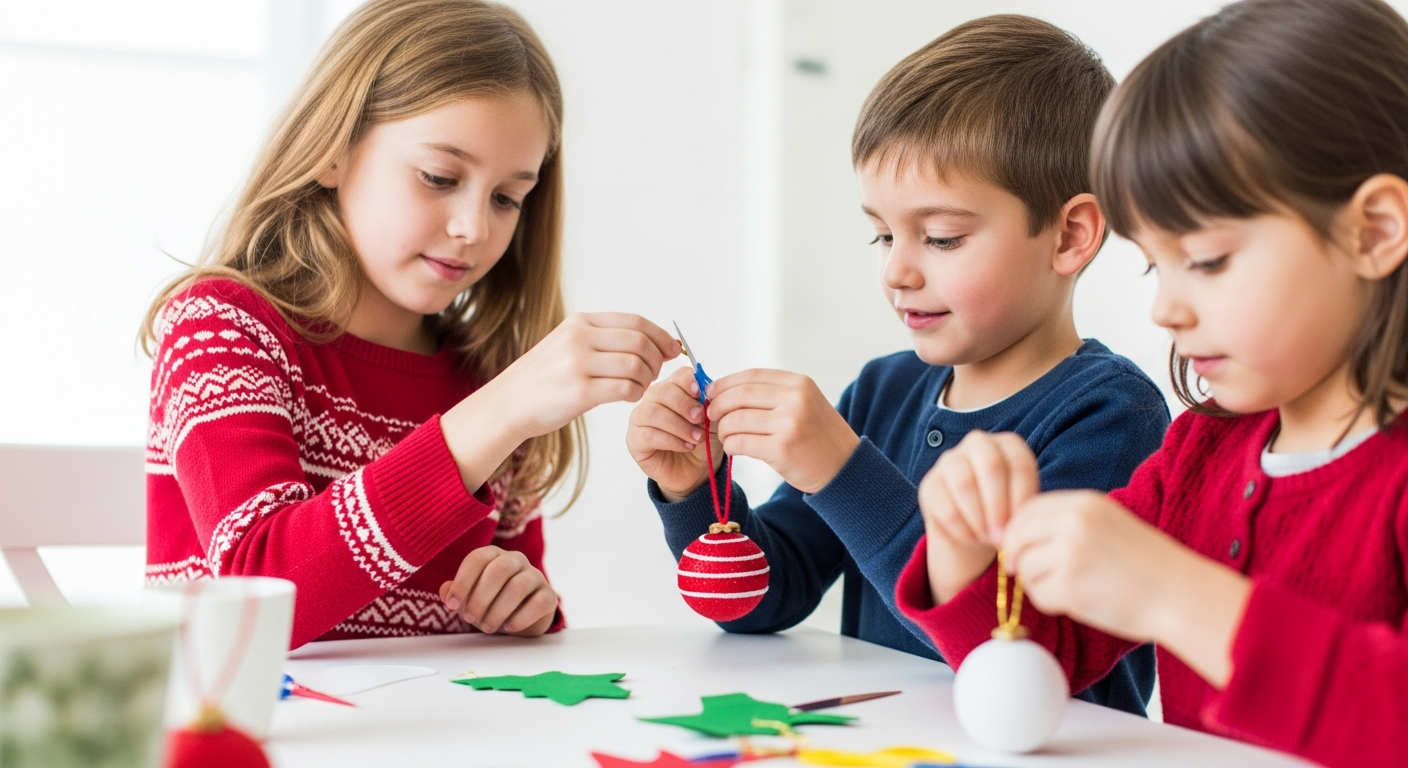
Table of Contents
- Introduction
- Why Crafting Christmas Ornaments Is More Than Just Fun
- Preparing for Your Crafting Adventure
- Our Favorite Easy Christmas Ornament Crafts for Kids
- Elevating Communication Through Crafting: How Speech Blubs Helps
- Making the Most of Your Speech Blubs Experience
- Beyond Ornaments: Everyday Opportunities for Language Growth
- Conclusion
- FAQ
Introduction
The holiday season often conjures images of twinkling lights, festive carols, and, for many families, a flurry of screen time as children seek entertainment amidst the excitement. But what if we told you that some of the most memorable and developmentally rich holiday experiences can happen right at your kitchen table, transforming simple craft supplies into cherished family treasures? Imagine a time when busy little hands are not just entertained, but actively engaged in building communication skills, fostering creativity, and strengthening family bonds. This blog post isn't just about making cute decorations; it's about harnessing the magic of the holidays to create meaningful, interactive experiences that boost your child's speech and language development. We'll explore a delightful array of easy Christmas ornament crafts for kids, detailing how each activity provides unique opportunities for language growth. You’ll discover how these hands-on projects, combined with targeted support from resources like Speech Blubs, can empower your child to speak their minds and hearts, filling your home with not just ornaments, but confident voices and joyful connections.

Why Crafting Christmas Ornaments Is More Than Just Fun
Crafting is often seen as a delightful pastime, a way to keep children occupied, especially during school breaks or festive periods. However, the benefits of engaging children in hands-on creative activities like making Christmas ornaments extend far beyond mere entertainment. These seemingly simple projects are powerful catalysts for cognitive development, emotional expression, and, critically, speech and language enhancement.
Developmental Benefits Beyond Expectations
When children manipulate materials – whether it’s rolling salt dough, threading beads, or cutting paper – they are honing essential fine motor skills. These small, precise movements are fundamental for tasks like writing, self-feeding, and even dressing. As they choose colors, design patterns, and decide how to assemble their creations, children are exercising their creativity and problem-solving abilities. They learn to adapt when a piece doesn't fit perfectly or when their initial idea needs modification. This process builds resilience and fosters a growth mindset, teaching them that mistakes are simply opportunities for new solutions. Furthermore, following multi-step instructions, even simple ones like "first glue, then glitter," strengthens their cognitive sequencing skills, which are crucial for academic learning and everyday routines.
Language and Communication Opportunities Bloom
This is where crafting truly shines as a developmental powerhouse, especially for children who are still developing their speech and language. Each step of an ornament craft is an invitation for conversation.
- Vocabulary Expansion: As you introduce materials like "yarn," "felt," "pinecone," or "glitter," your child learns new words in context. Describing the textures ("bumpy," "smooth," "sticky"), colors, and shapes ("round," "star," "long") expands their descriptive language.
- Following Instructions: Simple commands like "Pass me the scissors," "Put the glue on the star," or "Let’s count the pom-poms" reinforce their understanding and ability to follow directions, a foundational skill for listening and learning.
- Narration and Sequencing: Encourage your child to talk about what they are doing. "First, I'm cutting the paper. Then, I'm going to stick it here." This helps them practice narrating events in a logical sequence, developing story-telling skills.
- Expressing Preferences and Feelings: "Do you like the red glitter or the gold?" "How does it feel to make something beautiful?" These questions encourage them to articulate their preferences, thoughts, and emotions, fostering self-expression.
- Joint Attention and Social Reciprocity: Working together on a craft means focusing on the same activity, sharing tools, and responding to each other's ideas. This builds crucial social communication skills like turn-taking and shared focus.
Family Bonding and Tradition Building
Beyond the developmental gains, crafting Christmas ornaments creates invaluable family memories. The laughter, the shared focus, and the pride in a collaboratively made decoration weave a strong family tapestry. These ornaments, brought out year after year, become tangible reminders of shared experiences and evolving traditions. Each one tells a story, prompting reminiscing and further conversation, strengthening the emotional connections within the family.

Preparing for Your Crafting Adventure
A little preparation goes a long way in ensuring your crafting session is joyous and stress-free. Thinking ahead helps manage expectations, especially for younger children, and sets the stage for a positive, language-rich experience.
Setting Up a Safe and Organized Space
Choose an area that's easy to clean – a kitchen table covered with an old newspaper or a plastic tablecloth works wonderfully. Ensure good lighting and enough space for everyone to work comfortably. Keep all supplies within reach but organized, perhaps in separate containers, to avoid overwhelming your child and to make cleanup simpler. Discussing the "crafting rules" beforehand, like "we keep the glue on the paper" or "we share the crayons," introduces important social-emotional vocabulary and expectations.
Gathering Supplies: Common Household Items & Craft Store Essentials
You don't need to spend a fortune to create beautiful ornaments. Many wonderful crafts can be made with items you already have:
- Recyclables: Toilet paper rolls, cardboard scraps, bottle caps.
- Pantry Staples: Salt, flour, cinnamon, applesauce, pasta, cereal.
- Nature's Bounty: Pinecones, twigs, dried leaves, smooth pebbles (collected from a nature walk – another great language opportunity!).
- Basic Craft Supplies: Construction paper, child-safe scissors, glue sticks, liquid glue, markers, crayons, paint, yarn, string, glitter (use sparingly and with caution for younger children!).
- Optional Enhancements: Googly eyes, pipe cleaners, pom-poms, beads (larger ones for younger children).
Managing Expectations: It's About the Process, Not Perfection
For children, especially toddlers and preschoolers, the joy is in the doing, not in creating a Pinterest-perfect ornament. Embrace the "imperfect" and celebrate your child’s unique artistic expression. Focus your praise on their effort, their choices, and their enthusiasm. "Wow, you worked so hard gluing all those pieces!" or "I love the bright colors you chose!" This reinforces their confidence and fosters a love for creativity, rather than a pressure to achieve a certain outcome.
Tips for Different Age Groups
Tailoring activities to your child's developmental stage ensures engagement and reduces frustration.
- Toddlers (1-3 years): Focus on sensory exploration and simple actions like squishing dough, tearing paper, or sticking large pieces. Use heavy-duty, washable supplies. Language focus: single words, simple requests, naming.
- Preschoolers (3-5 years): Introduce cutting with child-safe scissors, painting, and more complex gluing. They can follow 2-3 step directions. Language focus: short phrases, descriptive words, sequencing.
- School-Aged (5+ years): They can handle more intricate tasks, independent cutting, and complex designs. Encourage them to plan their projects and problem-solve. Language focus: detailed narration, explaining steps, imaginative storytelling.
Remember, regardless of age, adult co-play and support are vital. This isn't just about supervision; it's about active participation, guiding, and facilitating those invaluable communication moments.
Our Favorite Easy Christmas Ornament Crafts for Kids
Now, let's dive into some specific craft ideas that are not only fun to make but also packed with opportunities to boost your child’s language skills. Each activity provides a unique way to engage their hands and minds.
Craft 1: Salt Dough Ornaments
Salt dough is a classic for a reason – it's incredibly versatile and uses basic pantry ingredients.
- Ingredients: 2 cups all-purpose flour, 1 cup salt, 1 cup warm water (adjust as needed).
- Instructions:
- Mix flour and salt in a large bowl.
- Gradually add warm water, mixing until a dough forms. Knead for 5-10 minutes until smooth and pliable. This is a great time to talk about "sticky," "smooth," and "kneading."
- Roll out the dough to about ¼ inch thick.
- Use cookie cutters (Christmas shapes like stars, trees, gingerbread men) to cut out ornaments.
- Make a small hole at the top of each ornament with a straw for hanging.
- Bake at 250°F (120°C) for 2-3 hours, or until hardened. Let cool completely.
- Once cool, decorate with paint, glitter, or markers.
- Language Opportunities:
- Vocabulary: Flour, salt, dough, mix, roll, cut, bake, cool, decorate, sticky, smooth, hard.
- Sequencing: "First, we add flour. Next, salt. Then, water."
- Action Verbs: Knead, roll, cut, paint, sprinkle.
- Descriptive Words: "Is the dough soft or hard?" "What shape is this cookie cutter?"
Craft 2: Pinecone Critters and Snowflakes
Bring nature indoors with these charming ornaments.
- Instructions:
- Collect pinecones (another fantastic language-rich activity: a nature walk! Talk about "crunchy leaves," "tall trees," "brown pinecones").
- For Critters: Glue googly eyes, felt ears, pom-pom noses, and pipe cleaner antlers to the pinecones to create reindeer, owls, or squirrels. Talk about animal sounds and characteristics.
- For Snowflakes: Paint pinecones white or silver. Dust with glitter. Tie a ribbon for hanging.
- Glue a loop of twine or ribbon to the top for hanging.
- Language Opportunities:
- Nature Vocabulary: Pinecone, twig, leaf, tree, bark, crunchy, bumpy.
- Animal Names & Sounds: Reindeer (snort), owl (hoot), squirrel (chatter).
- Spatial Concepts: "Glue the eyes on top," "Put the ribbon around."
- Descriptive Words: "Spiky," "soft" (for pom-poms), "sparkly."
Craft 3: Yarn Wrapped Star Ornaments
Simple, colorful, and great for fine motor skills.
- Instructions:
- Cut star shapes (or other simple shapes like circles or hearts) from cardboard.
- Make a small hole at the top for hanging.
- Tie the end of a piece of yarn to the cardboard shape.
- Show your child how to wrap the yarn tightly around the cardboard, covering it completely.
- Once covered, tie off the end of the yarn and trim any excess.
- Language Opportunities:
- Colors: "Which color yarn should we use?" "Red, green, or blue?"
- Spatial Concepts: "Wrap around," "Go over and under."
- Action Verbs: Wrap, tie, snip.
- Quantity: "Do you need more yarn?" "We have enough."
Craft 4: Handprint/Footprint Ornaments
These make precious keepsakes and are perfect for discussing body parts.
- Instructions:
- Use salt dough (from Craft 1) or air-dry clay. Roll it out.
- Carefully press your child's hand or foot into the dough/clay to make an imprint.
- Cut around the imprint, leaving a border. Make a hole for hanging.
- Bake or air-dry according to instructions.
- Decorate: Paint them, write the year, add glitter.
- Language Opportunities:
- Body Parts: Hand, fingers, thumb, foot, toes.
- Action Verbs: Press, print, cut.
- Memory & Storytelling: "Remember when your hand was this small?" "What was your favorite part of making this?"
- Descriptive Words: "Tiny," "big," "our family's handprint."
Craft 5: Pasta & Cereal Ornaments
Economical and fun for patterning and fine motor practice.
- Instructions:
- Gather various shapes of pasta (e.g., penne, rotini, elbow macaroni) and O-shaped cereals.
- Optional: Dye the pasta by placing it in a Ziploc bag with rubbing alcohol and food coloring. Shake well, then spread on parchment paper to dry. Talk about "mixing colors."
- Thread pasta and cereal onto pipe cleaners or string to create necklaces or wreaths.
- Shape pipe cleaner creations into stars or candy canes.
- For stringing, tie one end of the string to a large bead or button to prevent items from slipping off.
- Language Opportunities:
- Shapes: "What shape is this pasta?" "Circle," "tube."
- Colors: Naming dyed pasta colors.
- Counting: "How many pieces of pasta have you strung?"
- Patterning: "Let's do red, blue, red, blue."
- Fine Motor Descriptions: "Thread," "poke," "string."
Craft 6: Cinnamon Applesauce Ornaments
These smell incredible and are a lovely sensory experience.
- Ingredients: 1 cup applesauce, 1 cup ground cinnamon.
- Instructions:
- Mix applesauce and cinnamon in a bowl until a stiff dough forms. You might need to add a tiny bit more applesauce or cinnamon to get the right consistency. Talk about the "smell" and "texture."
- Roll out the dough to about ¼ inch thick.
- Use cookie cutters to cut out shapes. Make a hole for hanging.
- Place on a baking sheet and bake at 200°F (90°C) for 2-3 hours, or until hardened. You can also air-dry for 2-3 days, flipping occasionally.
- Once cool, you can decorate them or leave them natural for a rustic look.
- Language Opportunities:
- Sensory Vocabulary: "Smells yummy!" (though not for eating!), "spicy," "sweet," "soft," "crumbly."
- Sequencing: "What do we do after we mix?"
- Prediction: "What do you think our ornament will smell like when it's done?"
Craft 7: Toilet Paper Roll Reindeer/Snowmen
A fantastic way to use recycled materials.
- Instructions:
- Paint empty toilet paper rolls brown for reindeer or white for snowmen.
- For Reindeer: Glue googly eyes, a red pom-pom nose, and pipe cleaner antlers to the top. Talk about reindeer characteristics.
- For Snowmen: Glue googly eyes, an orange construction paper carrot nose, and draw buttons. Add cotton balls for a "snowy" effect.
- Punch a hole at the top and thread string for hanging.
- Language Opportunities:
- Recycling Concepts: "We are reusing this!" "It used to be a toilet paper roll."
- Animal/Character Names: Reindeer, snowman.
- Descriptive Features: Antlers, nose, buttons, eyes.
- Action Verbs: Paint, glue, draw.
Craft 8: Pom-Pom or Cotton Ball Snowmen
Soft, fluffy, and simple for little hands.
- Instructions:
- Glue three different-sized white pom-poms (or cotton balls) together to form a snowman body. Discuss "big," "medium," "small."
- Add googly eyes, tiny black beads (for older kids), or drawn eyes for the face.
- Cut tiny strips of felt for a scarf or construction paper for a hat.
- Glue a loop of string to the back for hanging.
- Language Opportunities:
- Size Concepts: "Which pom-pom is the biggest?" "Let's put the smallest one on top."
- Textures: "Soft," "fluffy."
- Weather Vocabulary: Snow, cold, snowman.
Craft 9: Popsicle Stick Snowflakes/Stars
A classic craft that teaches geometry and patterns.
- Instructions:
- Glue several popsicle sticks together in a star or snowflake pattern. For a snowflake, start with two sticks crossed in an 'X', then add another in the middle to form an asterisk shape.
- Let the glue dry completely.
- Paint the snowflake white, silver, or blue. Add glitter.
- Glue a loop of string to one point for hanging.
- Language Opportunities:
- Shapes: Star, triangle, cross.
- Counting: "How many sticks did we use for our snowflake?"
- Spatial Concepts: "Cross the sticks," "glue them together."
- Descriptive Words: "Symmetrical," "pointy."
Craft 10: Nature Ornaments (Leaves, Twigs, Berries)
Connect with nature and create beautiful, earthy ornaments.
- Instructions:
- Go on a nature walk to collect small twigs, colorful dried leaves, small acorns, or safe, non-toxic berries (like holly berries, but ensure children understand they are not for eating).
- Arrange your collected items on a piece of cardboard or a small wooden disc.
- Glue them down firmly.
- Add a loop of twine or ribbon for hanging.
- Language Opportunities:
- Nature Vocabulary: Acorn, berry, twig, leaf, forest, path.
- Textures: Rough, smooth, prickly.
- Colors: Describe the colors of the leaves and berries.
- Storytelling: "What did we see on our nature walk?" "Tell me about this twig you found."
Elevating Communication Through Crafting: How Speech Blubs Helps
While crafting offers incredible organic opportunities for language development, sometimes parents need a little extra support to guide and enhance their child’s communication journey. This is precisely where Speech Blubs comes in. We understand that every child deserves the chance to speak their minds and hearts, and our mission is to provide an immediate, effective, and joyful solution for the 1 in 4 children who need speech support. Our company was born from the personal experiences of our founders, who all grew up with speech problems and created the tool they wished they had.
Think of crafting as a wonderfully rich environment for natural conversation, and Speech Blubs as a powerful partner that provides structured, scientifically-backed exercises to reinforce and expand those skills. For example, if your child is practicing sounds and words while making a "pinecone owl" and saying "hoot, hoot," they can then reinforce those "H" sounds and animal names in a fun, interactive way with the Speech Blubs app.
Our unique approach focuses on video modeling, where children learn by watching and imitating their peers – real kids just like them – rather than cartoon characters. This taps into mirror neurons, making learning natural and highly engaging. It’s "smart screen time" that actively builds complex communication skills, unlike passive viewing (like cartoons) which often doesn't stimulate active speech. Instead of your child zoning out, they are prompted to participate, imitate, and interact, transforming screen time into a dynamic learning session.
We believe in the power of connection. Speech Blubs is designed to be a tool for family connection, not a replacement for it. Imagine the joy of making a handprint ornament together, talking about "hands" and "fingers," and then transitioning to the app to practice those words and sounds in a playful, guided environment. It’s a seamless blend of hands-on creativity and targeted speech development.
Ready to see the difference Speech Blubs can make? Download Speech Blubs and start your journey towards clearer, more confident communication today. You can find us on the Apple App Store or the Google Play Store. If you're unsure if your child could benefit from our app, why not take our quick 3-minute preliminary screener? It involves 9 simple questions and provides an assessment and a next-steps plan, along with a free 7-day trial.
Making the Most of Your Speech Blubs Experience
We are committed to providing an effective and affordable solution for families seeking to empower their children's speech. Transparency in our pricing and value is key to building trust. When you choose Speech Blubs, you're not just getting an app; you're investing in a comprehensive tool designed with scientific principles and a deep understanding of child development, all backed by research that places us in the top tier of speech apps worldwide. You can explore more about our methodology and its effectiveness on our research page.
We offer two main subscription plans to fit your family's needs:
- Monthly Plan: For $14.99 per month, you get access to our core speech and language activities. This plan is flexible but offers fewer long-term benefits.
- Yearly Plan: Our best value, at just $59.99 per year. This breaks down to an incredible $4.99 per month, allowing you to save 66% compared to the monthly option.
The Yearly Plan isn't just cheaper; it's designed to provide the most comprehensive support for your child's development. Here’s what you get exclusively with the Yearly Plan:
- A 7-day free trial: Experience the full power of Speech Blubs before committing. The Monthly plan does not include this trial.
- The extra Reading Blubs app: An additional app dedicated to early literacy skills, perfectly complementing the speech development in Speech Blubs.
- Early access to new updates: Be among the first to experience new features and content.
- 24-hour support response time: Get faster assistance whenever you need it.
We strongly encourage families to choose the Yearly plan. It’s the clearest path to unlocking the full suite of our award-winning features, gaining access to a free trial, and securing the best possible value for your child’s speech journey. Imagine the confidence and joy you’ll see in your child as they progress, as countless other parents have witnessed. Don't just take our word for it; read what other parents are saying about their child's success with Speech Blubs on our testimonials page.
Ready to empower your child's communication? Take the first step and create your account and begin your 7-day free trial today. Remember to select the Yearly plan to get the free trial and all the exclusive benefits!
Beyond Ornaments: Everyday Opportunities for Language Growth
The principles of using hands-on activities to boost language don't end with Christmas ornaments. Carry this spirit of interactive learning into all aspects of your child's day.
- Reading Together: Make reading an interactive experience. Point to pictures, ask "What do you see?" or "What do you think happens next?"
- Singing Songs and Nursery Rhymes: Repetitive songs are excellent for rhythm, rhyme, and memory, all foundational to language.
- Daily Routines: Turn getting dressed, mealtime, or bath time into language opportunities by narrating actions, asking questions, and describing sensations. "Let's put on your red shirt!" "Is the water warm?"
- Imaginative Play: Engage in pretend play, creating narratives and characters. This is where children practice applying learned vocabulary and sentence structures in creative contexts.
By weaving language-rich interactions into everyday moments, you're building a strong foundation for communication. And remember, Speech Blubs is always here to supplement these efforts, offering structured, engaging practice that reinforces these vital skills. Our main Speech Blubs homepage is a great place to explore all the resources we offer to support your child's speech and language journey.
Conclusion
Creating Christmas ornaments with your children offers a magical blend of festive fun and invaluable developmental benefits. From honing fine motor skills and sparking creativity to, most importantly, fostering rich opportunities for speech and language growth, these crafts are more than just decorations – they're stepping stones to confident communication and cherished family traditions. By actively engaging with your child during these activities, describing, questioning, and narrating, you're building foundational language skills in the most joyful way imaginable.
And when you're looking for an engaging, scientifically-backed way to further support your child's speech journey, Speech Blubs is here. Our unique video modeling methodology and commitment to "smart screen time" complement these hands-on activities, empowering children to speak their minds and hearts. Don't let another holiday season pass without embracing the full potential of these heartwarming traditions for your child's growth.
Ready to fill your home with laughter, learning, and beautifully crafted memories? Download Speech Blubs and start your 7-day free trial today. Be sure to choose the Yearly plan to unlock the full suite of features, including the extra Reading Blubs app and priority support, all while saving 66%. Give your child the gift of a confident voice this holiday season!
FAQ
Q1: How can crafting specifically improve my child's speech and language development?
A1: Crafting provides numerous opportunities for language growth by introducing new vocabulary (materials, actions, descriptions), practicing following multi-step instructions, encouraging narration of steps, and fostering social communication through shared focus and conversation. When children articulate their choices, describe colors, or ask for help, they are actively using and refining their language skills.
Q2: What age is Speech Blubs best for?
A2: Speech Blubs is designed for children typically aged 1 to 8 years old who need support with speech and language development. Our activities are tailored to various developmental stages, offering engaging exercises for toddlers just starting to babble, preschoolers expanding their vocabulary, and school-aged children working on articulation and sentence structure.
Q3: How is Speech Blubs different from other apps?
A3: Speech Blubs stands out with its unique video modeling methodology, where children learn by imitating real kids, activating mirror neurons for natural and effective learning. We focus on "smart screen time" that requires active participation, unlike passive viewing apps. Our content is carefully crafted to be engaging, scientifically backed, and designed to support family connection rather than replace it.
Q4: What's the best way to try Speech Blubs and experience its full value?
A4: The best way to experience Speech Blubs and its full value is by choosing our Yearly plan. This plan includes a 7-day free trial, access to the extra Reading Blubs app, early access to new updates, and 24-hour support response time. It's also our most cost-effective option, breaking down to just $4.99 per month. Simply download the app from the Apple App Store or Google Play Store and select the Yearly plan to begin your free trial.
About the author