
Crafting Joy: Easy DIY Kids Crafts for Communication & Fun
 By Speech Blubs Team•Jan 13, 2026•21 min.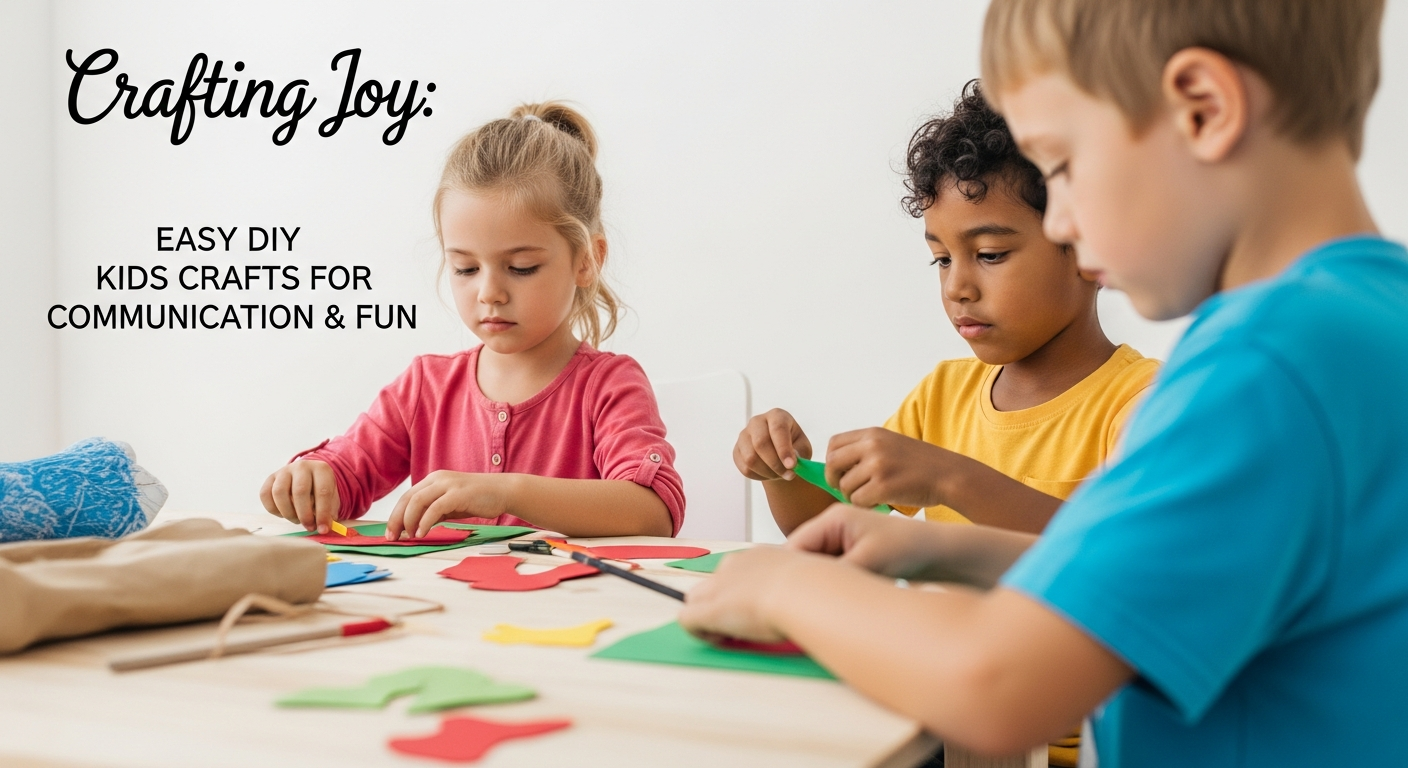
Table of Contents
- Introduction
- The Magic of Easy DIY Kids Crafts: More Than Just Fun
- Crafting a Connection: How DIY Activities Boost Communication Skills
- Essential "Around the House" Supplies for Endless Fun
- 25+ Easy DIY Kids Crafts for Every Age and Stage
- Making Craft Time Smart Screen Time: Empowering Communication with Speech Blubs
- Choosing Your Journey with Speech Blubs: Value and Features
- Beyond the Craft Table: Sustaining Communication Growth
- Conclusion
- FAQ
Ever noticed how a simple cardboard box can transform into a spaceship, a castle, or a talking robot in the hands of a child? There's an undeniable magic in creating something from scratch, especially when it involves little hands and big imaginations. In a world brimming with digital distractions, the timeless appeal of hands-on activities, particularly easy DIY kids crafts, remains a powerful way to engage, educate, and connect with our children. This post isn't just about making pretty things; it's about unlocking a world of developmental benefits, fostering creativity, and most importantly, nurturing crucial communication skills through the simple act of crafting. We'll explore why embracing easy DIY kids crafts is a game-changer for your family, delve into a treasure trove of budget-friendly ideas, and reveal how these joyful activities lay a foundation for strong speech and language development, beautifully complemented by tools like Speech Blubs.

Introduction
In a world that often pulls us in a million different directions, finding simple, engaging ways to connect with our children and support their growth is paramount. The solution often lies not in expensive toys or elaborate outings, but in the magic we can create right at home. Easy DIY kids crafts offer a unique blend of fun, learning, and interaction, proving that the most valuable experiences often stem from the simplest materials. From developing fine motor skills to sparking imaginative play, these activities provide a fertile ground for children to explore, express, and, crucially, communicate. This article will guide you through the incredible benefits of crafting with everyday items, present a diverse collection of easy-to-implement craft ideas for various age groups, and illustrate how these creative endeavors naturally boost speech and language development. We'll also show you how Speech Blubs, a powerful tool rooted in scientific methodology, can seamlessly integrate with and amplify these hands-on learning moments, helping your child speak their mind and heart with confidence.
The Magic of Easy DIY Kids Crafts: More Than Just Fun
Crafting with children isn't merely a way to fill an afternoon; it's a holistic developmental powerhouse disguised as play. When children engage in easy DIY kids crafts, they are simultaneously refining a multitude of skills that are essential for their overall growth.
Boosting Foundational Development
- Fine Motor Skills: The act of cutting, gluing, drawing, tearing, and molding all contribute to the development of fine motor skills. These are the small muscle movements, especially in the hands and fingers, that are crucial for tasks like writing, buttoning clothes, and self-feeding.
- Cognitive Development: Following instructions, problem-solving (e.g., "How do I make this stick here?"), sequencing steps, and understanding cause and effect ("If I mix these colors, what happens?") are all cognitive processes actively engaged during crafting.
- Creativity and Imagination: With a blank slate and a pile of materials, children are free to invent, adapt, and express their unique ideas. DIY crafts encourage thinking outside the box and transforming ordinary objects into extraordinary creations.
- Sensory Exploration: Many crafts involve touching different textures (bumpy, smooth, squishy), smelling various materials (glue, paint), and seeing vibrant colors, providing rich sensory input that aids brain development.
Practical Benefits for Busy Families
For parents, the appeal of easy DIY kids crafts extends beyond developmental gains. They offer practical solutions for everyday challenges:

- Budget-Friendly Entertainment: You don't need to spend a fortune on specialized supplies. Most DIY crafts utilize items already found around the house, like paper rolls, cardboard boxes, old newspapers, and fabric scraps. This makes creativity accessible to everyone.
- Screen-Free Engagement: In an increasingly digital world, hands-on crafts provide a welcome break from screens, encouraging direct interaction with materials and caregivers.
- Bonding Opportunities: Crafting together creates a shared experience, fostering communication, laughter, and lasting memories between parents and children. It's a fantastic way to spend quality time together, working towards a common goal.
- Reducing Boredom: Having a repertoire of easy crafts means you're always ready to combat the dreaded "I'm bored!" cry with a constructive and engaging activity.
The Communication Connection
Perhaps one of the most significant, yet often underestimated, benefits of easy DIY kids crafts is their profound impact on speech and language development. Every snip, glue, and brushstroke can be a conversational prompt, a new vocabulary word, or an opportunity to practice expressive language.
For example, when a child is making a paper plate fish, a parent can ask, "What color scales will your fish have?" or "Where does a fish live?" These interactions naturally build vocabulary, sentence structure, and comprehension. At Speech Blubs, our mission is to empower children to "speak their minds and hearts," and we understand that communication blossoms in joyful, interactive environments like these. Our founders, who grew up with speech problems themselves, created Speech Blubs to be the tool they wished they had—an immediate, effective, and joyful solution for the 1 in 4 children who need speech support, blending scientific principles with play. We believe that engaging in activities like easy DIY kids crafts, followed by targeted practice with our app, provides a powerful, comprehensive approach to speech development. If you're wondering how these activities translate into tangible communication gains, consider taking our quick 3-minute preliminary screener to get an assessment and a next-steps plan for your child's communication journey.
Crafting a Connection: How DIY Activities Boost Communication Skills
The interaction inherent in crafting provides a natural, low-pressure environment for language to flourish. Here’s how easy DIY kids crafts can supercharge your child’s communication skills:
Vocabulary Expansion
As you craft, you introduce a wealth of new words.
- Colors: "Let's use the red paper and the blue paint."
- Shapes: "Cut out a circle for the head and two triangles for the ears."
- Actions: "We need to glue, cut, fold, draw, paint, mix, tear."
- Textures: "This cotton ball is so soft and fluffy."
- Sizes: "Do you want a big pom-pom or a tiny one?"
- Descriptive Words: "This glitter is so sparkly! The paint is sticky."
Following Directions
Craft projects naturally involve multi-step instructions, which are vital for auditory processing and comprehension. "First, glue the eyes, then draw the smile, and finally, add the whiskers." Breaking down instructions and having your child repeat them helps reinforce these skills.
Expressive Language and Storytelling
Once a craft is complete, the real language fun can begin. A toilet paper roll animal becomes a character in a story, a paper plate mask inspires dramatic play, and a handmade puppet can "talk" about its day. This encourages:
- Narrative Skills: Creating stories about their creations.
- Role-Playing: Using different voices and practicing social scripts.
- Describing: Explaining what they made and how they made it.
- Emotional Expression: Talking about how their craft makes them feel or what their craft character feels.
Turn-Taking and Social Skills
Crafting often involves sharing materials and taking turns with tools, which are fundamental social skills. "My turn to cut, then your turn to glue." This collaborative aspect also builds patience and cooperation.
For a parent whose 3-year-old "late talker" loves animals, making a simple paper plate lion offers a perfect opportunity to practice consonant-vowel sounds like "roar" and "mane." As you glue the yarn for the mane, you can emphasize the "m" sound. Afterward, your child can take their new lion friend to our app, where the "Animal Kingdom" section features peers demonstrating clear pronunciations of animal sounds and names. This video modeling approach, where children learn by watching and imitating their peers, is at the heart of our scientifically-backed methodology. Our app provides a screen-free alternative to passive viewing, transforming screen time into "smart screen time" that actively builds communication skills and fosters family connection.
Essential "Around the House" Supplies for Endless Fun
One of the greatest joys of easy DIY kids crafts is their reliance on readily available, often recycled, materials. No need for a special trip to the craft store! Start gathering these common household items, and you'll be ready for spontaneous creativity:
The "Must-Have" Core Collection:
- Paper Products:
- Construction Paper: Various colors for cutting, folding, and gluing.
- White Printer Paper: For drawing, painting, and basic paper crafts.
- Paper Plates: Excellent base for masks, animals, or decorative items.
- Toilet Paper/Paper Towel Rolls: Versatile for characters, binoculars, or building blocks.
- Newspapers/Magazines: For collages, tearing practice, or protective coverings.
- Cardboard (from delivery boxes): Sturdy base for larger projects, structures, or cutting shapes.
- Adhesives & Tools:
- Kid-Safe Glue Sticks & Liquid Glue: Essential for sticking things together.
- Child-Safe Scissors: For cutting paper and other soft materials.
- Tape (Masking, Scotch): Quick fixes and alternative joining methods.
- Coloring & Drawing:
- Crayons, Markers, or Colored Pencils: For adding detail, color, and drawing.
- Kid-Safe Paint (Tempera or Washable): For broader strokes and vibrant colors.
- Paint Brushes: Various sizes for different effects.
The "Nice-to-Have" Bonus Additions:
- Googly Eyes: Instantly brings characters to life (though drawing eyes works just as well!).
- Pom-Poms: Adds texture and color to creatures.
- Pipe Cleaners: Flexible for arms, legs, antennae, or abstract sculptures.
- Yarn/String: For hair, weaving, hanging, or making outlines.
- Popsicle Sticks: Great for puppets, building structures, or reinforcing paper.
- Buttons, Beads, Pasta (uncooked): For decorating, counting, sorting, and fine motor practice.
- Fabric Scraps/Felt: Adds texture, warmth, and different cutting experiences.
- Nature Finds: Leaves, small sticks, pebbles, flowers (collected on a walk!).
- Empty Plastic Bottles/Containers: Building blocks, shakers, or bases for sculptures.
Having a dedicated "craft bin" where you store these items makes it easy to pull out supplies whenever inspiration strikes.
25+ Easy DIY Kids Crafts for Every Age and Stage
Here's a curated list of easy DIY kids crafts, designed to be engaging and beneficial for various developmental stages, along with tips on how to integrate communication practice.
Toddler-Friendly Crafts (Ages 1-3)
These crafts focus on sensory exploration, basic actions, and simple vocabulary. Adult supervision and assistance are key.
- Paper Plate Animals:
- Materials: Paper plates, crayons/markers/paint, construction paper scraps, glue.
- How-to: Decorate a paper plate to look like an animal (e.g., lion with yarn mane, frog with paper eyes).
- Communication Focus: Practice animal sounds ("roar," "ribbit"), names ("lion," "frog"), and colors used. "Where's the lion's mouth?"
- Crayon Melt Art:
- Materials: Broken crayons, wax paper, iron (adult only).
- How-to: Shave or break crayons into small pieces, place between wax paper, and iron gently to melt.
- Communication Focus: Discuss colors, the transformation (solid to liquid), and descriptive words like "warm," "smooth," "colorful."
- Pasta Necklaces:
- Materials: Cooked (and dried) or uncooked pasta shapes, yarn/string, kid-safe paint (optional).
- How-to: Thread pasta onto yarn. Toddlers can paint pasta first.
- Communication Focus: Practice "thread," "put on," "take off." Count the pasta pieces. Name shapes ("tube," "wheel"). Discuss patterns.
- Cotton Ball Clouds:
- Materials: Blue construction paper, cotton balls, glue.
- How-to: Glue cotton balls onto blue paper to make clouds.
- Communication Focus: Describe "soft," "fluffy," "white." Talk about the weather, sky, rain.
- Leaf Rubbings:
- Materials: Leaves, paper, crayons (peeled).
- How-to: Place a leaf under paper, rub crayon over it to reveal texture.
- Communication Focus: Use words like "texture," "bumpy," "smooth," "veins." Name the parts of a leaf.
- DIY Shakers:
- Materials: Empty plastic bottles/containers, rice/beans/small beads, tape, decorating supplies.
- How-to: Fill bottle with items, seal tightly with tape, decorate.
- Communication Focus: Explore "loud," "quiet," "shake," "music." Discuss sounds.
Preschool & Early Elementary Crafts (Ages 3-6)
These crafts involve more steps, encourage imaginative play, and build on early literacy skills.
- Toilet Paper Roll Animals/Characters:
- Materials: Toilet paper rolls, paint/markers, construction paper, glue, googly eyes.
- How-to: Transform rolls into animals, people, or fantasy creatures.
- Communication Focus: Encourage role-play and storytelling with the finished characters. Ask, "What does your character say?" or "Where does it live?"
- Paper Bag Puppets:
- Materials: Paper bags, markers, construction paper, yarn, fabric scraps, glue.
- How-to: Decorate a paper bag to make a puppet.
- Communication Focus: Perfect for storytelling, practicing dialogue, and developing character voices. Ask, "What's your puppet's name? What does it like to do?"
- Salt Dough Creations:
- Materials: Flour, salt, water, paint (after baking/drying).
- How-to: Mix flour, salt, water to form dough, sculpt shapes, bake or air dry, then paint.
- Communication Focus: Discuss "mixing," "kneading," "baking." Name shapes and colors. Imagine scenarios for their creations.
- Q-Tip Painting:
- Materials: Paper, paint, Q-tips.
- How-to: Dip Q-tips in paint to create dots or designs.
- Communication Focus: Focus on precision words like "dot," "dab," "tiny." Discuss patterns and colors.
- Nature Collages:
- Materials: Paper, glue, collected nature items (leaves, twigs, small flowers).
- How-to: Glue natural items onto paper to create a picture or abstract design.
- Communication Focus: Describe findings: "crinkly leaf," "smooth stone," "pointy stick." Talk about the outdoor adventure.
- Recycled Robot/Car:
- Materials: Cardboard boxes, toilet paper rolls, bottle caps, glue/tape, paint/markers.
- How-to: Assemble various recycled items to build a robot or vehicle.
- Communication Focus: Name parts ("head," "wheels," "antenna"). Discuss functions ("My robot can fly!"). Problem-solve together: "Where should the door go?"
- Sticker Scene Creations:
- Materials: Paper, various stickers (animals, people, objects).
- How-to: Create a scene or story using stickers on paper.
- Communication Focus: Develop spatial awareness ("on," "under," "next to"). Practice narrative by describing the scene or telling a story about the stickers.
Elementary Age Crafts (Ages 6-10)
These crafts often involve multi-step processes, more independence, and can lead to more complex storytelling or functional creations.
- Origami Animals/Shapes:
- Materials: Square paper.
- How-to: Follow step-by-step instructions to fold paper into various forms.
- Communication Focus: Practice sequential language ("first," "next," "then," "finally"). Learn geometric terms ("fold in half," "crease," "diagonal").
- Cardboard Box Forts/Houses:
- Materials: Large cardboard boxes, scissors (adult help needed), tape, decorating supplies.
- How-to: Cut and tape boxes together to create a play space.
- Communication Focus: Excellent for planning and problem-solving language. Discuss design, size, and purpose. "We need a door here and a window there." "How will we make it strong?"
- DIY Board Games:
- Materials: Cardboard, markers, paper, small game pieces (buttons, pebbles).
- How-to: Design and create a simple board game with rules.
- Communication Focus: Practice explaining rules, turn-taking, and fair play. Develop critical thinking and descriptive language for game elements.
- Yarn Wrapped Letters/Numbers:
- Materials: Cardboard cut-outs of letters/numbers, yarn, glue.
- How-to: Wrap yarn around cardboard shapes, securing with glue.
- Communication Focus: Reinforce letter and number recognition. Practice letter sounds. Discuss colors and textures.
- Tie-Dye (Water Gun Method):
- Materials: White fabric (t-shirt), fabric dyes, rubber bands, water guns, plastic bags.
- How-to: Twist/bunch fabric, secure with rubber bands, squirt dyes with water guns, let sit, rinse.
- Communication Focus: Discuss colors, patterns ("swirl," "stripe"). Predict outcomes. Explain the process.
- Bubble Painting:
- Materials: Liquid dish soap, water, food coloring, straws, paper.
- How-to: Mix soap, water, and food coloring in shallow bowls. Blow through a straw to make bubbles, then press paper onto the colored bubbles.
- Communication Focus: Describe the process and results: "bubbly," "foamy," "burst." Discuss colors and abstract art.
- Fingerprint Art:
- Materials: Washable paint, paper.
- How-to: Use fingerprints to create creatures, flowers, or patterns. Add details with markers.
- Communication Focus: Spark imagination. Create stories about the characters made from fingerprints.
- Homemade Playdough:
- Materials: Flour, salt, cream of tartar, oil, water, food coloring (optional).
- How-to: Mix ingredients to make soft, pliable dough.
- Communication Focus: Practice following a recipe. Discuss sensory qualities: "squishy," "soft," "warm." Use action verbs: "roll," "knead," "press."
- Pet Rocks:
- Materials: Smooth rocks, paint, googly eyes, glue.
- How-to: Wash rocks, paint them, and add features to create pet rocks.
- Communication Focus: Encourage personification and storytelling. "What's your rock's name? What does it like to eat?"
- Paper Plate Masks:
- Materials: Paper plates, elastic string, paint/markers, construction paper, glue, glitter.
- How-to: Decorate paper plates to create masks of animals, superheroes, or fantasy characters. Cut out eye holes and attach elastic.
- Communication Focus: Engage in dramatic play, character description, and emotional expression. "How does your mask make you feel?"
- Popsicle Stick Crafts:
- Materials: Popsicle sticks, glue, paint/markers, embellishments.
- How-to: Build houses, frames, or character puppets by gluing popsicle sticks together.
- Communication Focus: Discuss construction, shapes, and structural integrity. "How can we make this stronger?"
- Construction Paper Jellyfish:
- Materials: Construction paper (various colors), scissors, glue stick, yarn/ribbon.
- How-to: Cut a semi-circle for the head, then cut long strips for tentacles. Curl tentacles with scissors or wrap around a pencil. Glue everything together.
- Communication Focus: Describe the parts of a jellyfish, talk about the ocean, use words like "wavy," "floating," "colorful."
Making Craft Time Smart Screen Time: Empowering Communication with Speech Blubs
While hands-on crafts are invaluable, pairing them with a scientifically-backed speech therapy tool can amplify their impact. At Speech Blubs, we believe in "smart screen time" – an active, engaging experience that facilitates learning, unlike passive viewing. Our app is not a replacement for connection but a powerful tool to foster it.
Imagine your child has just finished crafting a colorful paper plate fish. Now, they can open Speech Blubs to our "Wonderful World" or "Animal Kingdom" sections, where they'll find videos of real children pronouncing words like "fish," "swim," and "ocean" with clarity. Our unique video modeling methodology leverages mirror neurons, allowing children to learn by watching and imitating their peers. This peer-to-peer interaction is incredibly motivating and effective, helping children grasp complex communication skills in a joyful way.
Speech Blubs offers thousands of engaging activities, from sound practice to early reading, all designed to reduce frustration and build confidence in young communicators. It’s a powerful supplement to the hands-on learning you facilitate through easy DIY kids crafts, providing structured practice in a playful environment. Our app supports parents by offering an immediate, effective solution born from our founders' personal experiences with speech challenges. We are committed to providing a comprehensive resource that helps children develop key foundational skills, building a love for communication and fostering joyful family learning moments.
Ready to see the difference for yourself? You can download Speech Blubs today from the Apple App Store or get it on Google Play Store to start your child's journey to clearer communication.
Choosing Your Journey with Speech Blubs: Value and Features
We believe in transparency and providing maximum value to families. When you choose Speech Blubs, you're not just getting an app; you're gaining a partner in your child's communication journey. We offer two main subscription plans designed to fit your needs:
- Monthly Plan: For $14.99 per month, you get access to our core speech and language activities.
- Yearly Plan: For just $59.99 per year, this plan is by far the best value, breaking down to only $4.99 per month.
The Yearly Plan is truly the superior choice, offering significant savings and exclusive features that enhance your child's learning experience:
- Save 66%: The yearly subscription offers substantial savings compared to paying monthly.
- 7-Day Free Trial: You get a full week to explore all premium features and ensure Speech Blubs is the right fit for your child, completely risk-free. The Monthly plan does not include this trial.
- Extra Reading Blubs App: Access our companion Reading Blubs app, designed to further support early literacy skills, at no additional cost. This is a valuable addition for comprehensive language development.
- Early Access to New Updates: Be the first to enjoy new activities, features, and improvements as soon as they are released.
- 24-Hour Support Response Time: Get priority support from our dedicated team whenever you need assistance or have questions. The Monthly plan does not include these expedited support benefits.
We designed the Yearly Plan to give your family the most comprehensive and supportive experience possible. Why not take advantage of the full suite of features and the peace of mind that comes with a longer commitment?
Ready to unlock a world of communication for your child? Create your account and begin your 7-day free trial today. Remember to select the Yearly plan to get the free trial and all the incredible exclusive benefits. We're confident you'll love what you see!
Beyond the Craft Table: Sustaining Communication Growth
Engaging in easy DIY kids crafts is a fantastic starting point, but sustaining communication growth requires ongoing effort and a supportive environment.
- Consistency is Key: Regular exposure to language-rich activities, whether crafting or using an app like Speech Blubs, helps reinforce learning and build confidence.
- Patience and Encouragement: Every child develops at their own pace. Celebrate small wins, encourage effort over perfection, and maintain a positive, playful attitude.
- Adult Interaction: Remember that crafts are not just busy-work; they are opportunities for interaction. Talk, ask questions, describe, and model language naturally. Your engagement is the most powerful tool.
- Integrate with Daily Life: Look for communication opportunities throughout your day – during mealtime, bath time, or walks. The skills learned through crafts and Speech Blubs can be applied everywhere.
We are incredibly proud of the impact Speech Blubs has had on countless families. Don't just take our word for it; see what other parents are saying about their child's success with Speech Blubs. Their stories highlight the power of combining playful learning with targeted speech support. Our commitment to providing an effective and joyful solution is unwavering, and we are continually improving our app based on scientific insights and user feedback.
Conclusion
Easy DIY kids crafts offer a treasure trove of benefits, enriching your child's development from fine motor skills and creativity to crucial cognitive and communication abilities. They are a delightful, budget-friendly way to foster imaginative play, build strong family bonds, and create a language-rich environment right in your home. By transforming everyday items into objects of wonder, you provide countless opportunities for your child to learn new words, follow directions, express themselves, and build confidence in their voice.
When these hands-on activities are paired with the intentional, science-backed approach of Speech Blubs, the potential for communication growth is truly limitless. Our app serves as a powerful supplement, providing targeted practice through engaging video modeling, ensuring that your child can effectively speak their mind and heart. We are dedicated to offering an immediate, effective, and joyful solution for families, making "smart screen time" a meaningful part of their developmental journey.
Don't let another day pass without exploring the magic of crafting and the power of guided speech support. Transform playtime into learning time and witness your child's communication flourish.
Ready to embark on this exciting journey? Start your 7-day free trial today and give your child the gift of confident communication. Remember to choose the Yearly plan for the best value, including the free trial, the Reading Blubs app, and exclusive support! Download Speech Blubs on the Apple App Store or Google Play Store to get started!
FAQ
Q1: What age group are these easy DIY kids crafts best suited for?
A1: Many of the crafts listed are adaptable for toddlers (1-3 years old) with adult assistance, preschoolers (3-6 years old) with some guidance, and elementary-aged children (6-10 years old) with increasing independence. We've structured the ideas to offer options across these developmental stages, focusing on age-appropriate skills and complexity.
Q2: How do crafts specifically help with speech development?
A2: Crafts provide a natural, interactive environment for language. They introduce new vocabulary (colors, actions, textures), require following multi-step directions (improving comprehension), encourage descriptive language, and foster storytelling and role-play with finished creations, all of which are crucial for speech and language development.
Q3: How does Speech Blubs integrate with these hands-on craft activities?
A3: Speech Blubs acts as a powerful complement. After a craft session, you can use the app to reinforce new vocabulary or sounds learned during crafting. For instance, if you made an animal craft, your child can practice animal sounds and names in the app's "Animal Kingdom" section, seeing peers demonstrate clear pronunciations through our unique video modeling. This makes screen time active and beneficial.
Q4: Why should I choose the Yearly plan for Speech Blubs?
A4: The Yearly plan offers the best value at $59.99/year (just $4.99/month), saving you 66% compared to the monthly plan. It also includes exclusive benefits like a 7-day free trial, access to our Reading Blubs app, early access to new updates, and 24-hour priority customer support, ensuring you get the most comprehensive and supportive experience for your child's communication journey.
About the author