
Crafting Joy: Easy, Quick Crafts for Kids to Spark Creativity and Connection
 By Speech Blubs Team•Jan 13, 2026•18 min.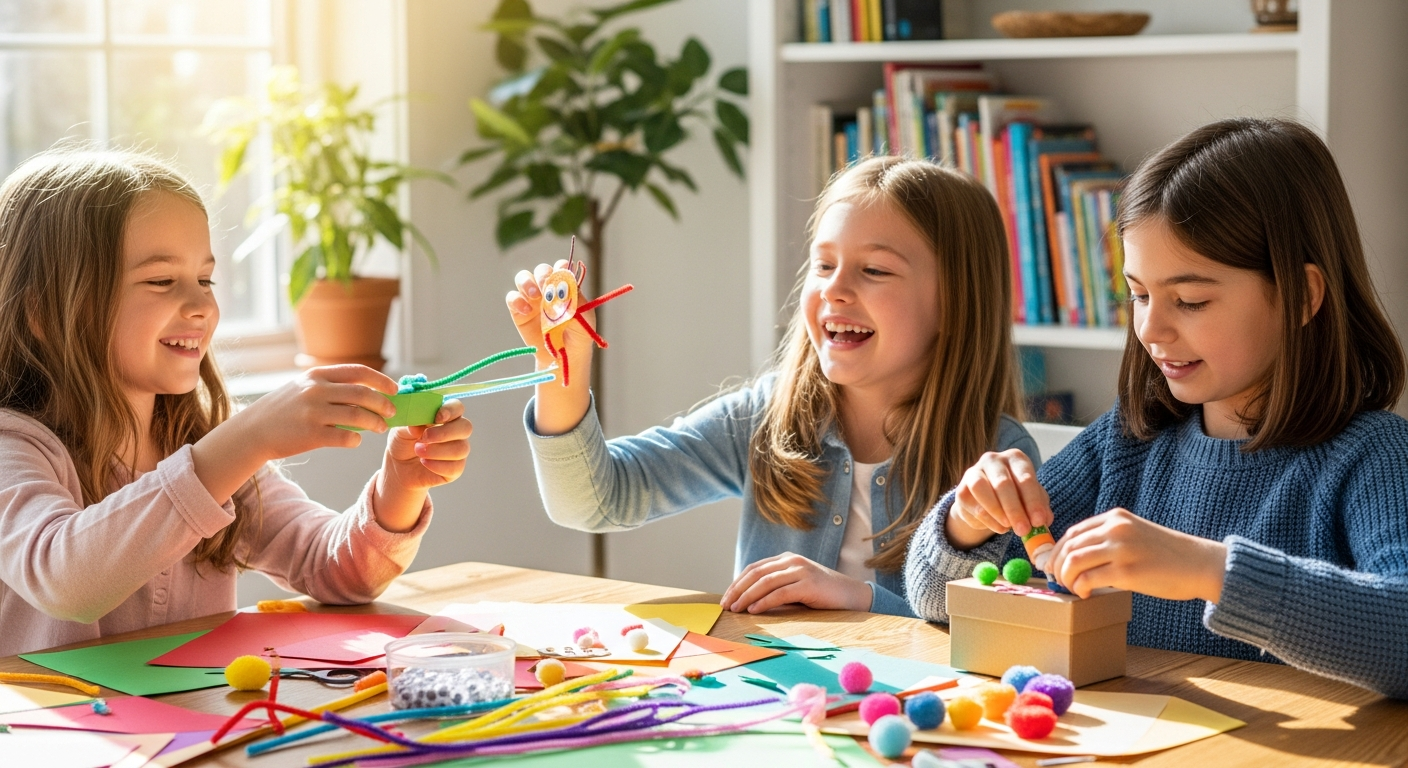
Table of Contents
- Introduction
- Why Easy, Quick Crafts Are a Parent's Best Friend
- Crafting Adventures: Easy & Quick Project Ideas
- Integrating Crafts with Speech & Language Development
- Maximizing the Experience: Tips for Parents
- The Value of Speech Blubs: An Investment in Your Child's Future
- Conclusion
- Frequently Asked Questions
Is the phrase "I'm bored!" echoing through your home more often than you'd like? Do you find yourself constantly searching for engaging activities that don't involve endless screen time or elaborate preparations? You're not alone. Many parents seek creative outlets that are both fun for their children and manageable for busy schedules, especially when unexpected indoor days arise. The good news is that sparking your child's imagination and keeping their little hands busy doesn't require a craft store haul or hours of meticulous planning.
This post is your ultimate guide to a treasure trove of easy, quick crafts for kids that utilize common household items and minimal effort. We'll dive into projects that go beyond simple entertainment, fostering crucial developmental skills and creating cherished family moments. From whimsical paper creations to purposeful DIYs, these activities are designed to build confidence, encourage self-expression, and even enhance early communication skills. Get ready to transform everyday materials into extraordinary adventures, all while nurturing your child's growth and strengthening your bond.

Introduction
Ever wonder how a cardboard tube or a paper plate can become a gateway to improved communication? It might sound surprising, but simple, hands-on activities like crafting are powerful catalysts for language development and cognitive growth in children. Beyond the sheer fun of creating, engaging in crafts helps children develop fine motor skills, follow instructions, understand spatial relationships, and articulate their ideas and choices – all foundational elements for confident speaking.
In this blog post, we will explore a wide array of easy, quick crafts for kids, focusing on projects that are not only enjoyable but also naturally encourage communication. We'll share practical ideas that require minimal supplies, often using items you already have around the house. Our goal is to empower you with activities that turn craft time into "smart screen time," blending scientific principles of learning with joyful play. You'll discover how these simple projects can open up conversations, build vocabulary, and even lay the groundwork for more complex communication skills. We believe that empowering children to "speak their minds and hearts" begins with engaging, interactive experiences, and crafting offers a wonderful path to achieve just that.
Why Easy, Quick Crafts Are a Parent's Best Friend
In a world filled with endless distractions, finding activities that capture and hold a child's attention can feel like a monumental task. This is where easy, quick crafts shine. They offer immediate engagement without the lengthy setup or complicated steps that can quickly lead to frustration for both children and adults.
The Power of Simplicity and Accessibility
One of the greatest advantages of easy crafts is their reliance on readily available materials. Think toilet paper rolls, paper plates, old newspapers, construction paper, glue, and markers. This accessibility means you can often launch into a creative project on a whim, transforming a "nothing to do" moment into a "let's create something amazing" opportunity. This spontaneous creativity fosters a sense of resourcefulness in children, teaching them that beauty and fun can be found in the everyday.

Nurturing Essential Skills Through Play
Crafting is far more than just "keeping kids busy." It's a rich learning environment where children develop a wide range of critical skills:
- Fine Motor Skills: Cutting, gluing, painting, tearing, and molding all strengthen the small muscles in the hands and fingers, which are crucial for handwriting, self-care, and precise movements.
- Problem-Solving: Deciding how to attach two pieces of paper, choosing the right colors, or figuring out how to make a character stand up all involve mini problem-solving challenges.
- Following Instructions: Listening to or reading craft steps, then executing them in sequence, hones a child's ability to follow directions – a vital skill for both academic success and daily life.
- Creativity and Imagination: Crafts provide a blank canvas for children to express their unique ideas, experiment with materials, and bring their imaginative worlds to life.
- Language Development: This is where crafts truly intersect with our mission at Speech Blubs. Describing their creations, asking for specific materials, explaining their process, and engaging in imaginative play with their finished products all provide natural opportunities for speech and language practice.
The Joy of Togetherness and Connection
Crafting is inherently a social activity. It invites parents and caregivers to sit alongside their children, collaborate, offer encouragement, and share in the joy of creation. These moments of shared focus and positive interaction build stronger family bonds and create lasting memories. It's a powerful screen-free alternative to passive viewing, promoting genuine connection.
For instance, a parent whose 4-year-old is learning new action verbs could work on a "flying saucer craft." As they cut, paste, and decorate, the parent can narrate: "We're cutting the paper, now we're gluing it together. Soon our saucer will be flying high!" This integrated approach makes learning natural and fun.
Ready to transform your home into a hub of creativity and communication? Let's dive into some fantastic easy and quick craft ideas!
Crafting Adventures: Easy & Quick Project Ideas
These crafts are designed to be low-stress, high-fun, and incredibly effective at fostering development. We've categorized them to help you find the perfect fit for your child's interests and available supplies.
Whimsical Wonders: Paper & Cardboard Creations
Paper is perhaps the most versatile craft material, often readily available in any home.
- Paper Plate Animals: Turn simple paper plates into lions, fish, or even Captain America's shield. Kids can paint, cut out features, and glue on googly eyes (or draw them!).
- Communication Boost: Discuss animal sounds, colors, and body parts. "What sound does our paper plate lion make?" "Can you find the blue fish?"
- Toilet Paper Roll Critters: Empty toilet paper rolls are perfect for creating owls, Olaf, or ladybugs. Paint them, add construction paper wings or ears, and let imaginations soar.
- Communication Boost: Engage in pretend play with the finished characters, developing narrative skills and character voices. For a child working on consonant-vowel sounds, making an owl can lead to practicing "hoo hoo."
- Paper Chains & Garlands: Simple strips of paper, glued or stapled together, can create colorful chains for decoration or festive garlands (think snowmen, trees, or hearts).
- Communication Boost: Practice color names, counting the links, and describing patterns ("red, blue, red, blue").
- Origami Fun: Even simple origami folds, like a basic paper hat or boat, introduce children to following sequential instructions and spatial reasoning.
- Communication Boost: Verbally walk through the steps, using directional words like "fold up," "turn over," "crease down."
- Paper Plate Spin Art: A paper plate, some washable paint, and a little spinning action (you can use a salad spinner or simply spin by hand) create mesmerizing abstract designs.
- Communication Boost: Describe the colors mixing, the patterns forming, and the action verbs "spin," "drip," "mix."
- Mail a Hug: Use a simple printable pattern to create a paper hug that can be mailed to loved ones. This heartwarming craft combines creativity with empathy.
- Communication Boost: Talk about who they are sending the hug to, what they want to say, and discuss feelings of love and connection.
Upcycled Art: Transforming Household Items
Give new life to items that might otherwise end up in the recycling bin.
- Cereal Box Mini-Storage: Cut cereal boxes into small storage containers. Kids can decorate them with duct tape, paint, or markers.
- Communication Boost: Label the boxes with what goes inside ("markers," "blocks," "cars"), prompting early literacy and organizational language.
- Painted Jars for Organizing: Transform glass jars (with adult supervision for painting) into colorful holders for pencils, small toys, or craft supplies.
- Communication Boost: Discuss sorting and categorization. "Which jar is for the red pencils? Which is for the blue?"
- Recycled Guitar: A shoebox and rubber bands can become a functional, decorated guitar.
- Communication Boost: Explore sounds, rhythms, and make up songs together. "What sound does the guitar make? Can you strum?"
- Cardboard Tube Telescope: Decorate a paper towel or toilet paper roll to create a telescope for backyard adventures.
- Communication Boost: Encourage descriptive language about what they "see" through their telescope, fostering imaginative storytelling.
- Monster Puppets from Socks: Old socks, googly eyes, yarn, and fabric scraps can quickly become unique monster puppets.
- Communication Boost: Develop characters, create puppet shows, and practice different voices, which is excellent for articulation and social-emotional learning.
Sensory & Creative Exploration: Beyond Paper
These crafts engage multiple senses and offer a different kind of creative experience.
- Homemade Clay/Finger Paint/Sidewalk Chalk: Using simple kitchen ingredients, you can create safe, non-toxic art supplies.
- Communication Boost: Talk about textures ("squishy," "smooth"), colors, and the process of mixing and creating. "How does the clay feel?" "What color are you making?"
- S'more Love for Neighbors: Create campfire art using twigs, paint for flames, cotton balls for marshmallows, and brown paper for graham crackers. Deliver with real s'mores ingredients.
- Communication Boost: Discuss kindness, community, and the process of giving. "Who are we making this for? Why are we sharing s'mores?"
- Painted Rocks as Reward Tokens: Paint rocks with different colors, assigning each color to a desired behavior. Kids earn rocks for good behavior and place them in a jar for a reward.
- Communication Boost: Talk about target behaviors, positive reinforcement, and counting the rocks. "You used your inside voice! What color rock do you get?"
- Beachy Creature Feet (Flip-Flops): Decorate plain flip-flops with craft foam, scissors, and glue.
- Communication Boost: Discuss colors, shapes, and what kinds of "creatures" they are making. "Is your creature a crab or a fish?"
The Speech Blubs Difference: Supporting Communication Through Play
At Speech Blubs, we understand that every moment is a learning opportunity. Our mission is to empower children to "speak their minds and hearts" by providing an immediate, effective, and joyful solution for the 1 in 4 children who need speech support. Our founders experienced speech problems themselves, inspiring them to create the tool they wished they had.
Our app utilizes a unique "video modeling" methodology, where children learn by watching and imitating their peers. This approach is scientifically backed and highly engaging. Imagine a child who loves animals making a paper plate animal craft. They can then open Speech Blubs to our Animal Kingdom section and practice the sounds and words of that very animal by watching other children. This synergy between hands-on crafting and interactive app play creates a truly immersive and effective learning experience.
Whether your child is a "late talker" or simply needs a boost in vocabulary, Speech Blubs offers a powerful supplement to their development journey. Our app provides a screen-free alternative to passive viewing, making it "smart screen time" that actively builds communication skills and strengthens family connection. We blend scientific principles with play, ensuring that learning is always an adventure. To see how other parents are transforming their child's communication journey, explore our testimonials.
Integrating Crafts with Speech & Language Development
The true magic of crafts for language development lies in the interaction surrounding the activity. It's not just about the finished product, but the rich communication opportunities that emerge throughout the process.
Pre-Crafting: Planning and Vocabulary Building
Before you even start cutting or gluing, engage your child in planning.
- "What are we making today?" Discuss the project, introducing new vocabulary related to the craft (e.g., "origami," "collage," "sculpture").
- "What supplies do we need?" Go on a "scavenger hunt" for materials, naming each item as you find it: "We need scissors, glue, blue paper, and markers." This helps with object identification and categorization.
- "What colors will you use?" Encourage color choices and descriptions. "I think I'll use sparkly pink for my monster!"
During Crafting: Descriptive Language and Sequencing
As you craft together, keep the conversation flowing naturally.
- Describe actions: "I'm cutting the paper," "You're gluing the eyes," "We're folding it in half." Use a variety of verbs.
- Comment on attributes: "This paper feels smooth," "That's a bright red," "Look at the spiky edges." Expand adjective use.
- Ask open-ended questions: Instead of "Do you like it?", try "What's your favorite part about your creation?" or "Tell me about your robot."
- Practice sequencing: "First, we cut. Next, we glue. Then, we decorate." This reinforces understanding of order and helps with storytelling later on.
- Relate to Speech Blubs activities: If you're making an animal, transition to the Speech Blubs app to practice animal sounds and names using our video modeling technique. It’s a perfect bridge from hands-on play to targeted speech practice. Our app has even been proven to be one of the best apps for speech development, receiving a high score on the MARS scale, a testament to our research-backed methodology.
Post-Crafting: Storytelling and Expressive Language
Once the masterpiece is complete, the learning doesn't stop!
- "Tell me a story about your craft." Encourage imaginative play and narrative development. Your child's cardboard tube telescope could take them to a planet of singing aliens!
- Display and discuss: Find a special place for their artwork. "Where should we hang your beautiful paper rainbow?" This validates their efforts and encourages them to talk about their creation with others. You can even decorate clothespins for an "art wall" to display all their creations!
- Review vocabulary: Recap the new words learned during the activity.
For parents who are uncertain about their child's speech development, we offer a quick 3-minute preliminary screener. It involves 9 simple questions and provides an assessment and next-steps plan, along with a free 7-day trial of Speech Blubs. It’s a valuable tool to guide your next steps in supporting your child’s communication.
Maximizing the Experience: Tips for Parents
To make your crafting adventures truly successful and beneficial, keep these tips in mind:
- Embrace the Mess (Within Reason): Creativity can be messy, and that's okay! Lay down newspaper or a washable tablecloth. Focus on the process, not just the pristine outcome.
- Prioritize Safety: Always supervise children, especially with scissors, glue, or small items. Choose kid-safe, non-toxic materials.
- Adapt to Age and Skill Level: Modify crafts to suit your child. A younger child might enjoy simply tearing paper and gluing it down, while an older child can follow more complex instructions. The ideas shared here are generally appropriate for ages 3-10, with modifications.
- Focus on the Process, Not Perfection: The goal is exploration, learning, and fun, not a museum-quality piece. Celebrate effort and creativity, not just flawless execution.
- Encourage Independence: Offer choices and let your child take the lead as much as possible. This builds confidence and ownership.
- Be a Partner, Not a Director: Sit alongside your child, participate, and model curiosity. This strengthens your bond and creates a positive learning environment.
- Incorporate Music and Movement: Play some kid-friendly music during craft time to add another sensory layer and keep energy levels high. Sing songs about colors or shapes!
- Document the Journey: Take photos or videos of your child crafting and with their finished pieces. These are precious memories and can be wonderful conversation starters later.
Remember, every time you sit down to craft with your child, you're doing more than just making a pretty object; you're building a foundation for learning, connection, and confident communication.
The Value of Speech Blubs: An Investment in Your Child's Future
We believe in making high-quality speech and language support accessible and enjoyable for every family. At Speech Blubs, we've carefully crafted our app to be a powerful, engaging tool that complements your efforts at home. Our commitment to blending scientific principles with joyful play means that our app provides one-of-a-kind "smart screen time" experiences that truly make a difference.
When considering Speech Blubs, we want to be transparent about our plans and what they offer:
- Monthly Plan: For $14.99 per month, you get access to our core app features.
- Yearly Plan: The Best Value! At just $59.99 per year, this plan breaks down to only $4.99 per month – a remarkable 66% savings compared to the monthly option.
The Yearly Plan isn't just cheaper; it comes packed with exclusive, high-value features designed to maximize your child's progress:
- A 7-Day Free Trial: Try before you commit! This allows you and your child to experience the full benefits of Speech Blubs risk-free.
- The Extra Reading Blubs App: Double the learning fun! This bonus app further supports early literacy skills.
- Early Access to New Updates: Be the first to enjoy new features and content.
- 24-Hour Support Response Time: Get your questions answered quickly and efficiently.
The Monthly plan, unfortunately, does not include these additional benefits. We strongly encourage you to choose the Yearly plan to unlock your free 7-day trial and access the full suite of features that will empower your child to speak their minds and hearts. It's an investment in their confidence, communication, and a lifetime of joyful learning.
Conclusion
Engaging in easy, quick crafts for kids is far more than just a way to pass the time; it's a dynamic pathway to fostering creativity, developing essential skills, and strengthening the bond you share with your child. From the simple act of cutting paper to the imaginative play that follows, each craft session is rich with opportunities for learning, problem-solving, and, most importantly, communication. These hands-on activities provide a joyful, screen-free alternative that naturally encourages children to express themselves, build vocabulary, and practice critical speech and language skills in a fun, pressure-free environment.
Remember, the goal isn't to create perfect masterpieces, but to revel in the process, celebrate your child's unique ideas, and engage in meaningful interactions that empower them to "speak their minds and hearts." As you explore the world of crafting, you'll find that these simple moments of shared creation lay a strong foundation for a lifetime of confident communication.
Ready to unlock your child's full communication potential? Begin your journey today! Download Speech Blubs on the Apple App Store or Google Play Store. For the best value and access to all our incredible features, remember to choose the Yearly Plan to get your free 7-day trial and the bonus Reading Blubs app. Let's create, connect, and communicate together!
Frequently Asked Questions
Q1: What age group are these easy crafts suitable for?
A1: Most of the easy, quick crafts mentioned in this post are suitable for children between the ages of 3 and 10. The beauty of these activities is their adaptability. For younger children, you can simplify steps, focus on basic actions like tearing and gluing, and provide more hands-on assistance. Older children can follow more complex instructions, add intricate details, and take more creative liberties. Adult supervision is always recommended, especially when using scissors or glue.
Q2: What if my child isn't interested in crafting? How can I encourage them?
A2: It's common for children to have varying interests. If your child seems hesitant, try these strategies:
- Start small: Begin with a very quick, simple project that has an immediate, satisfying outcome.
- Offer choices: Let them pick the craft from a few options, or choose the colors and materials.
- Connect to their interests: If they love dinosaurs, find a dinosaur-themed craft. If they love cars, make a car!
- Focus on the process, not the product: Emphasize the fun of creating, not just the finished piece. Join in and model enthusiasm.
- Integrate play: Turn the craft into a prop for imaginative play afterwards, which can be highly motivating.
- Keep it low-pressure: There's no right or wrong way to craft. Let them experiment.
Q3: How can I make crafts specifically beneficial for my child's speech development?
A3: To maximize speech benefits, make communication an integral part of the crafting process:
- Narrate your actions: "I am cutting the blue paper."
- Ask open-ended questions: "What do you want to add next?" "Tell me about your monster."
- Introduce new vocabulary: Use descriptive words for colors, textures, and shapes.
- Practice sequencing: "First, we glue, then we paint."
- Encourage sound imitation: If making an animal, practice its sound.
- Use Speech Blubs as a complement: After making a themed craft (e.g., animals, vehicles), open the Speech Blubs app to practice related words and sounds through our video modeling activities.
Q4: I'm concerned about my child's speech development. What's the best first step?
A4: If you have concerns about your child's speech or language development, we recommend taking our quick 3-minute preliminary screener. It asks 9 simple questions and provides an assessment along with a personalized next-steps plan. This is a great way to gain clarity and understand how Speech Blubs can support your child. The screener also gives you access to a free 7-day trial of our app, allowing you to explore its benefits firsthand.
About the author