
Crafting Joy: Fun DIY Christmas Crafts for Kids That Spark Communication
 By Speech Blubs Team•Dec 22, 2025•18 min.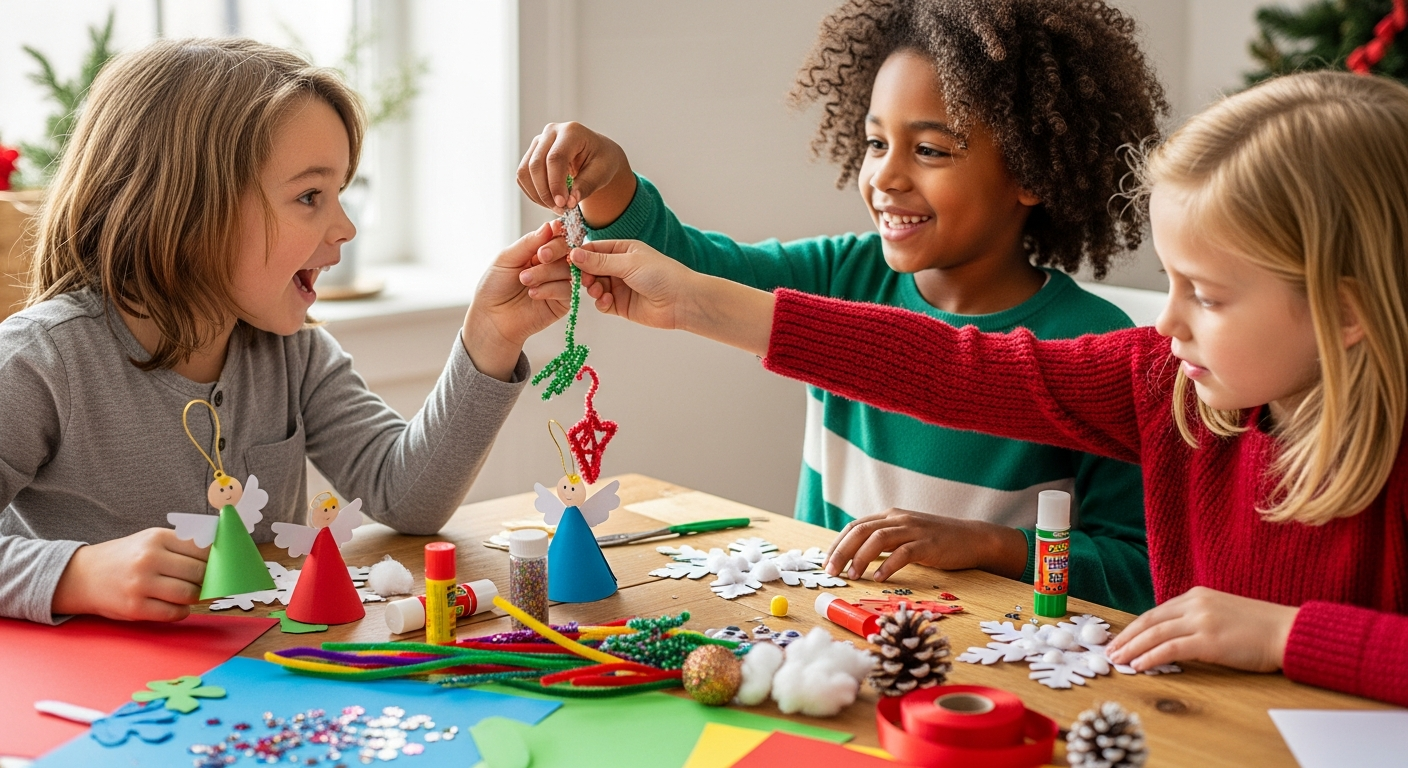
Table of Contents
- The Magic of Making: Why Christmas Crafts Are More Than Just Fun
- A Dozen Dazzling DIY Christmas Crafts for Kids
- Creating a Communication-Rich Crafting Environment
- Speech Blubs: A Partner in Your Child's Communication Journey
- Conclusion
- Frequently Asked Questions
The magic of Christmas often lives in the sparkle in a child's eyes, the scent of gingerbread, and the shared moments of family joy. But what if those moments could also be powerful catalysts for your child's communication development? For many parents, the holiday season can bring a mix of excitement and the familiar anxieties around a child's speech journey. Imagine transforming simple festive activities into rich opportunities for language growth, reducing frustration, and building confidence. This post aims to guide you through a wonderland of fun DIY Christmas crafts for kids, showing you how these creative endeavors not only fill your home with holiday cheer but also naturally nurture your child's ability to express themselves. We'll explore a variety of age-appropriate projects, delve into their developmental benefits, and discover how these hands-on experiences lay a beautiful foundation for clearer, more confident speech, much like the interactive, smart screen time experiences we champion at Speech Blubs.

The Magic of Making: Why Christmas Crafts Are More Than Just Fun
Engaging in creative activities, especially during the holidays, offers a treasure trove of benefits that extend far beyond simply keeping little hands busy. When children dive into the world of DIY Christmas crafts, they're not just creating a festive decoration; they're building crucial developmental skills that directly impact their communication abilities.
Fine Motor Skill Development
Crafting is a fantastic workout for tiny fingers and hands. Activities like cutting with safety scissors, gluing small items, threading beads, shaping dough, or even peeling stickers all require precision and control. These actions strengthen the small muscles in the hands, wrists, and fingers, which are the very same muscles needed for clear speech articulation. Just as an athlete trains their body, a child strengthens their oral motor skills through play and focused activities. Developing fine motor skills also helps with handwriting, self-feeding, and dressing – all part of a child's growing independence.
Cognitive Growth and Problem Solving
Every craft project presents a mini-challenge. "How do I make this piece stick here?" "What color should I use next?" "How can I make my snowman stand up?" These questions encourage children to think critically, experiment, and solve problems creatively. They learn about cause and effect, sequence (first, then, next), and spatial awareness. This cognitive engagement is vital for developing stronger language processing skills, as language itself is a complex system of problem-solving. Understanding patterns, following instructions, and completing multi-step tasks are all cognitive achievements that underpin effective communication.
Language and Communication Opportunities
Perhaps the most direct benefit to speech development comes from the sheer volume of language opportunities that crafting provides.
- Vocabulary Expansion: As you work together, you'll naturally use descriptive words for colors, shapes, textures (fuzzy, smooth, sticky, bumpy), actions (cut, glue, paint, sprinkle), and objects (star, tree, snowflake).
- Following Instructions: Simple multi-step instructions ("First, cut the paper; then, glue it here") help children practice auditory processing and sequencing.
- Storytelling and Description: Children can talk about what they're making, describe their process, or even tell a story about their finished craft. "This is Santa's sleigh, and he's going to deliver presents to all the good children!"
- Asking and Answering Questions: Crafts open the door for natural questions and answers, fostering conversational turn-taking.
- Social Interaction: Crafting together with siblings or parents encourages sharing, negotiating, and expressing needs and preferences.
For a child who might be a "late talker" or struggling with expressive language, describing the steps of making a glittery ornament ("Look, we're pouring the glitter!") can be a fantastic, low-pressure way to practice new words. Similarly, naming the colors of paint or the texture of cotton balls while making a "Santa beard" offers concrete vocabulary practice. This kind of interactive engagement is at the heart of our mission at Speech Blubs: to empower children to speak their minds and hearts by blending scientific principles with joyful play.

Emotional and Social Development
Crafting can be a deeply satisfying experience, boosting a child's self-esteem and confidence. Seeing their finished creation, no matter how imperfect, gives them a sense of accomplishment. It teaches patience, perseverance, and the value of effort. When children feel confident in their creations, they often feel more confident in expressing themselves verbally. Sharing their work with others also fosters social skills and pride.
A Dozen Dazzling DIY Christmas Crafts for Kids
Let's dive into some fantastic, easy-to-make crafts that are perfect for kids of various ages and offer rich opportunities for communication and learning. Remember, the goal isn't perfection, but participation and the joy of creation!
1. Salt Dough Ornaments
Salt dough is wonderfully versatile and uses common kitchen ingredients.
- Materials: 1 cup flour, 1/2 cup salt, 1/2 cup water. Optional: cookie cutters, straws (for hanging holes), paint, glitter, ribbon.
- Instructions: Mix flour, salt, and water until a dough forms. Knead for 5-10 minutes. Roll out the dough (about 1/4 inch thick) and use cookie cutters to create shapes. Use a straw to make a hole for hanging. Bake at 250°F (120°C) for 2-3 hours, or until hardened. Once cooled, children can paint and decorate them.
- Speech Blubs Connection: This craft is excellent for vocabulary around textures ("smooth," "sticky," "hard"), actions ("mix," "roll," "cut," "paint"), and shapes. For a child learning to identify and name objects, you can point to the "star," "tree," or "bell" cookie cutters and encourage imitation. Our "Object Naming" activities in Speech Blubs use video modeling to show real children naming everyday items, creating a powerful link between the physical world of crafting and the digital world of interactive learning.
2. Pinecone Critters and Ornaments
Nature provides the best craft supplies!
- Materials: Pinecones, googly eyes, cotton balls, small pom-poms, craft glue, glitter, ribbon.
- Instructions: Collect pinecones during a nature walk (another great language opportunity!). Let children glue googly eyes to create pinecone "owls" or "squirrels." They can add cotton balls for snow, pom-poms for hats, or sprinkle with glitter for a festive touch. Attach a ribbon for hanging.
- Speech Blubs Connection: This craft encourages describing attributes like "prickly," "brown," "soft," "shiny." The act of finding pinecones and then transforming them can lead to imaginative storytelling about the little creatures.
3. Paper Plate Santa or Reindeer
Simple materials for big creativity!
- Materials: Paper plates, cotton balls, red/brown construction paper, googly eyes, red pom-pom (for Santa's nose), glue, scissors.
- Instructions: For Santa: Paint the plate pink/peach for the face. Glue cotton balls around the edge for the beard and hat trim. Cut a red triangle for the hat and glue it on. Add googly eyes and a red pom-pom nose. For Reindeer: Paint the plate brown. Add googly eyes, a red pom-pom nose (Rudolph!), and cut brown paper antlers.
- Speech Blubs Connection: Ideal for practicing body parts ("eyes," "nose," "beard," "antlers"), colors, and the sounds associated with these characters ("Ho ho ho!" or "Prancer!"). For children focusing on facial feature identification, our "Guess the Face" activities provide interactive practice with peer models.
4. Handprint and Footprint Art
A timeless keepsake that's easy to make.
- Materials: Washable paint, sturdy paper or canvas, markers, glitter.
- Instructions: Paint your child's hand or foot and press it onto paper. Once dry, transform the prints: a green handprint can be a Christmas tree (add glitter "ornaments"), a white footprint can be a snowman, or a white handprint with a red thumb can be Santa.
- Speech Blubs Connection: Talk about body parts ("hand," "foot," "fingers," "toes"), colors, and the transformation ("It's not just a handprint, it's a tree!"). This activity builds awareness of self and body, which can be connected to our "My Body" sections in the app.
5. Popsicle Stick Christmas Trees
A classic craft that allows for endless decoration.
- Materials: Green popsicle sticks (or paint regular ones green), craft glue, small pom-poms, sequins, glitter, star stickers.
- Instructions: Glue three popsicle sticks into a triangle shape for the tree. Glue a brown popsicle stick at the bottom for the trunk. Let children decorate with pom-poms as ornaments, sequins as lights, and a star on top.
- Speech Blubs Connection: Focus on shapes ("triangle," "rectangle"), colors, counting ("How many pom-poms did you use?"), and descriptive language ("sparkly," "colorful," "tall"). These foundational concepts are crucial for later academic success and are often incorporated into our early learning modules.
6. Paper Chain Countdown
A simple, repetitive craft perfect for practicing patterns and counting.
- Materials: Red and green construction paper, scissors, glue or tape.
- Instructions: Cut strips of red and green paper. Form a loop with one strip and glue/tape the ends. Thread the next strip through the first loop, then glue/tape its ends. Continue, alternating colors, to create a long chain. Remove one link each day to count down to Christmas.
- Speech Blubs Connection: Excellent for practicing "first, then, next," "more," "less," colors, and counting aloud. The repetitive nature can be soothing and provide many opportunities for practicing specific words or phrases. For children working on sequencing, this provides a tangible, visual aid.
7. Cotton Ball Snowmen
Sensory and fun!
- Materials: Blue or black construction paper, cotton balls, craft glue, googly eyes, small orange paper triangle for nose, black marker for mouth/buttons.
- Instructions: Have children glue cotton balls onto the paper to form a snowman shape. Add googly eyes, an orange paper triangle for the nose, and draw a mouth and buttons with a marker.
- Speech Blubs Connection: This craft is fantastic for exploring sensory words ("soft," "fluffy," "sticky"), spatial concepts ("on," "under," "next to"), and describing size ("big," "small").
8. DIY Christmas Cards
A personalized gift that encourages creativity and thoughtful messaging.
- Materials: Cardstock, markers, crayons, stickers, glitter, ribbons, photos, glue.
- Instructions: Fold cardstock in half. Let children decorate the front with drawings, stickers, and glitter. Inside, they can draw pictures for family members or, with your help, write simple messages.
- Speech Blubs Connection: This project provides a context for discussing family members, expressing feelings ("love," "happy"), and understanding the concept of giving. Talking about who the card is for and what message to convey encourages planning and expressive language.
9. Pasta Ornaments
Textured and unique.
- Materials: Various pasta shapes (wagon wheels, farfalle, penne, macaroni), craft glue, glitter, spray paint (gold, silver), string or ribbon.
- Instructions: Have children glue pasta shapes onto a cardboard cutout (star, tree) or directly onto each other to create unique designs. Once dry, you can spray paint them a uniform color (adult supervision needed for spray painting!) and then children can add glitter. Loop a string for hanging.
- Speech Blubs Connection: This introduces vocabulary around shapes ("round," "tube"), textures ("bumpy," "smooth"), and actions ("glue," "spray," "decorate"). You can also categorize pasta types, working on early classification skills.
10. Q-tip Snowflakes
A fine motor challenge with beautiful results.
- Materials: Q-tips, craft glue, blue or black construction paper.
- Instructions: Cut some Q-tips in half. Have children glue whole Q-tips and half Q-tips onto the paper to create snowflake designs.
- Speech Blubs Connection: Excellent for fine motor control, counting, and practicing spatial words like "across," "together," "apart." Discussing the pattern of a snowflake offers a great way to talk about symmetry and natural wonders.
11. Cereal Box Gingerbread House
A simpler, edible-free alternative to the traditional gingerbread house.
- Materials: Empty cereal boxes (various sizes), brown paint, white paint pen or white puffy paint, craft glue, pom-poms, sequins, cotton balls, small candy wrappers (clean and empty).
- Instructions: Paint cereal boxes brown. Once dry, use white paint or a paint pen to draw "icing" details like outlines, windows, and doors. Children can then glue on pom-poms, sequins, cotton balls (for snow), or even clean, empty candy wrappers for colorful "decorations."
- Speech Blubs Connection: This craft involves planning ("What should we put here?"), describing locations ("on the roof," "next to the door"), and using imaginative language to describe their dream gingerbread house. It also allows for talking about shapes and sizes of the boxes.
12. "Stained Glass" Tissue Paper Ornaments
Bright and beautiful, letting light shine through.
- Materials: Wax paper, various colors of tissue paper (cut into small squares or shapes), glue stick, black construction paper, scissors, string.
- Instructions: Cut two pieces of wax paper to the same size (e.g., 6x6 inches). Have children stick tissue paper pieces onto one sheet of wax paper using a glue stick. Place the second sheet of wax paper on top and press firmly. Cut a simple shape (star, circle, tree) from black construction paper, creating a frame. Glue the "stained glass" sheet inside the frame. Punch a hole and add a string.
- Speech Blubs Connection: Focus on colors, shapes, light ("bright," "shiny"), and actions ("cut," "glue," "press"). This craft naturally encourages questions about what happens when light shines through, fostering curiosity and expressive language.
Creating a Communication-Rich Crafting Environment
Making crafts isn't just about the finished product; it's about the process and the conversations it sparks. Here’s how you can maximize the speech and language benefits of your DIY Christmas crafting sessions:
1. Preparation and Planning
- Involve Your Child: Before starting, talk about what you're going to make. "Today, we're making a snowman! What do we need?" Let them help gather materials. This introduces new vocabulary and helps them anticipate the steps.
- Visual Aids: For younger children or those with language delays, show pictures of the finished craft or the materials. "We need blue paper and white cotton balls for our snowman."
2. During the Crafting Process
- Narrate and Describe: Be your child's personal commentator! "Now we're cutting the paper. Snip, snip, snip! You're gluing the red pom-pom right on the snowman's nose!" This models language in context.
- Ask Open-Ended Questions: Instead of "Do you want more glue?" try "What do you need next?" or "Tell me about your star."
- Expand on Their Words: If your child says "Car," you can respond, "Yes, a red car! It's going fast!"
- Encourage Imitation: For specific target sounds or words, gently encourage repetition. If they are making a reindeer, you might make a "Neigh!" sound and see if they imitate. This is the very essence of video modeling – children learn by watching and imitating their peers, a method scientifically proven to be highly effective. We apply this principle across all our engaging activities.
- Focus on the Process, Not Perfection: Praise effort and creativity, not just the outcome. "You worked so hard on that!" or "I love your colorful choices!"
- Take Turns: If your child is working on conversational skills, explicitly practice turn-taking. "My turn to put glue, then your turn to add glitter!"
- Sensory Language: Encourage touching and describing. "How does the cotton feel? Soft? Fluffy?"
- Problem-Solving Talk: If something doesn't go as planned, use it as a learning opportunity. "Oh, the glitter is everywhere! What can we do to clean it up?"
3. After the Craft is Done
- Display and Discuss: Show off their creations! Talk about them with other family members. "Look what [Child's Name] made! Can you tell Grandma about your sparkly tree?"
- Storytelling: Encourage your child to tell a story about their craft. "What adventures will your pinecone owl have?"
Speech Blubs: A Partner in Your Child's Communication Journey
At Speech Blubs, we understand that every child's journey to confident communication is unique. Our mission, born from the personal experiences of our founders who faced speech challenges themselves, is to provide an immediate, effective, and joyful solution for the 1 in 4 children who need speech support. We believe in empowering children to "speak their minds and hearts" by blending scientific principles with play into one-of-a-kind "smart screen time" experiences.
While hands-on crafts are invaluable for gross and fine motor skills and tactile learning, Speech Blubs complements this beautifully by offering a screen-free alternative to passive viewing like cartoons. Our app provides a powerful tool for family connection, where children learn by watching and imitating their peers through our unique video modeling methodology. Whether your child is learning first words, struggling with articulation, or building conversational skills, our app offers engaging activities that are both fun and backed by science.
For a parent whose 3-year-old is a "late talker" and might struggle with frustration, combining a playful craft activity like making a paper plate reindeer with Speech Blubs can be incredibly effective. While crafting, you can focus on naming colors and parts of the reindeer. Then, transition to the app's "Animal Kingdom" section, where they can watch and imitate peers saying "reindeer" or "nose," reinforcing those words in a motivating, interactive environment.
Unsure if your child could benefit from a structured, playful approach to speech development? Take our quick 3-minute preliminary screener to get a simple assessment and a personalized next-steps plan. It involves just 9 simple questions and can offer valuable insights.
Unlock the Full Potential with Speech Blubs
We are committed to making effective speech support accessible and affordable. We offer two main subscription plans for Speech Blubs:
- Monthly Plan: For $14.99 per month.
- Yearly Plan: Our most popular and highly recommended option at just $59.99 per year. This breaks down to an incredible value of only $4.99 per month, allowing you to save 66% compared to the monthly subscription!
The Yearly Plan is truly the best choice, not just for the significant cost savings, but also because it includes exclusive, high-value features designed to maximize your child's progress:
- A 7-day free trial: Experience the full range of Speech Blubs activities before committing.
- The extra Reading Blubs app: Enhance literacy skills alongside speech development with this bonus app.
- Early access to new updates: Be the first to enjoy new features and content.
- 24-hour support response time: Get prompt assistance whenever you need it.
The Monthly plan does not include these invaluable benefits. We encourage you to choose the Yearly plan to get the free trial and the full suite of features, setting your child up for the most comprehensive and joyful speech journey.
Conclusion
This holiday season, let your home be filled not just with the scent of pine and cinnamon, but also with the joyful sounds of your child's blossoming communication. Engaging in fun DIY Christmas crafts for kids offers a unique blend of creative expression, skill development, and precious family bonding. From strengthening fine motor skills to expanding vocabulary and fostering imaginative storytelling, these activities provide a rich foundation for clearer, more confident speech. By embracing the process over the product, narrating steps, and asking open-ended questions, you can transform simple craft sessions into powerful language-building opportunities.
And as you embark on these festive creative adventures, remember that Speech Blubs is here to support your child's communication journey every step of the way. Our scientifically backed, play-based approach, centered on peer video modeling, makes learning to speak an engaging and empowering experience. Ready to combine the magic of holiday crafting with a proven path to confident communication?
Download Speech Blubs on the App Store or Google Play to begin your 7-day free trial today. For those accessing from a desktop, you can also create your account directly on our website and unlock the full suite of features, including the bonus Reading Blubs app, by selecting our Yearly plan. Let's empower your child to speak their mind and heart this Christmas and all year long!
Frequently Asked Questions
Q1: What age group are these Christmas crafts suitable for?
A1: The crafts listed are generally adaptable for toddlers (with significant adult supervision), preschoolers, and early elementary school children. Many require fine motor skills, so adjust expectations and involvement based on your child's developmental stage. Simple crafts like handprint art or gluing large items are great for younger children, while older kids can handle more intricate cutting and detailed decorating.
Q2: How can I make these crafts less messy?
A2: Mess is often part of the fun, but you can minimize it! Lay down newspapers, old tablecloths, or plastic sheets. Use shallow containers for paint and glue. Consider washable markers and paints. Disposable plates or muffin tins can hold small craft items. For glitter, try doing it over a tray or even outside! Emphasize a "cleanup time" as part of the activity.
Q3: My child gets frustrated easily when crafting. How can I help them enjoy it more?
A3: Focus entirely on the process, not the perfection of the outcome. Offer plenty of praise for their effort and choices, rather than the final look of the craft. Simplify steps, provide lots of choices, and step in to assist when needed without taking over. If frustration mounts, take a break or switch to a less challenging activity. Remember, the goal is shared enjoyment and communication, not a museum-worthy piece.
Q4: How do Christmas crafts specifically help with speech development?
A4: Christmas crafts offer numerous opportunities for speech development. They naturally introduce a wide range of vocabulary (colors, shapes, textures, actions), encourage following instructions, and provide contexts for asking and answering questions. Describing their creations, planning steps, and discussing holiday themes all foster expressive language, storytelling, and conversational skills. The fine motor work also strengthens the muscles used in articulation. It's a hands-on way to make language learning fun and contextual.
About the author