
Crafting Love: Easy Valentine's Day Crafts for Kids
 By Speech Blubs Team•Jan 13, 2026•17 min.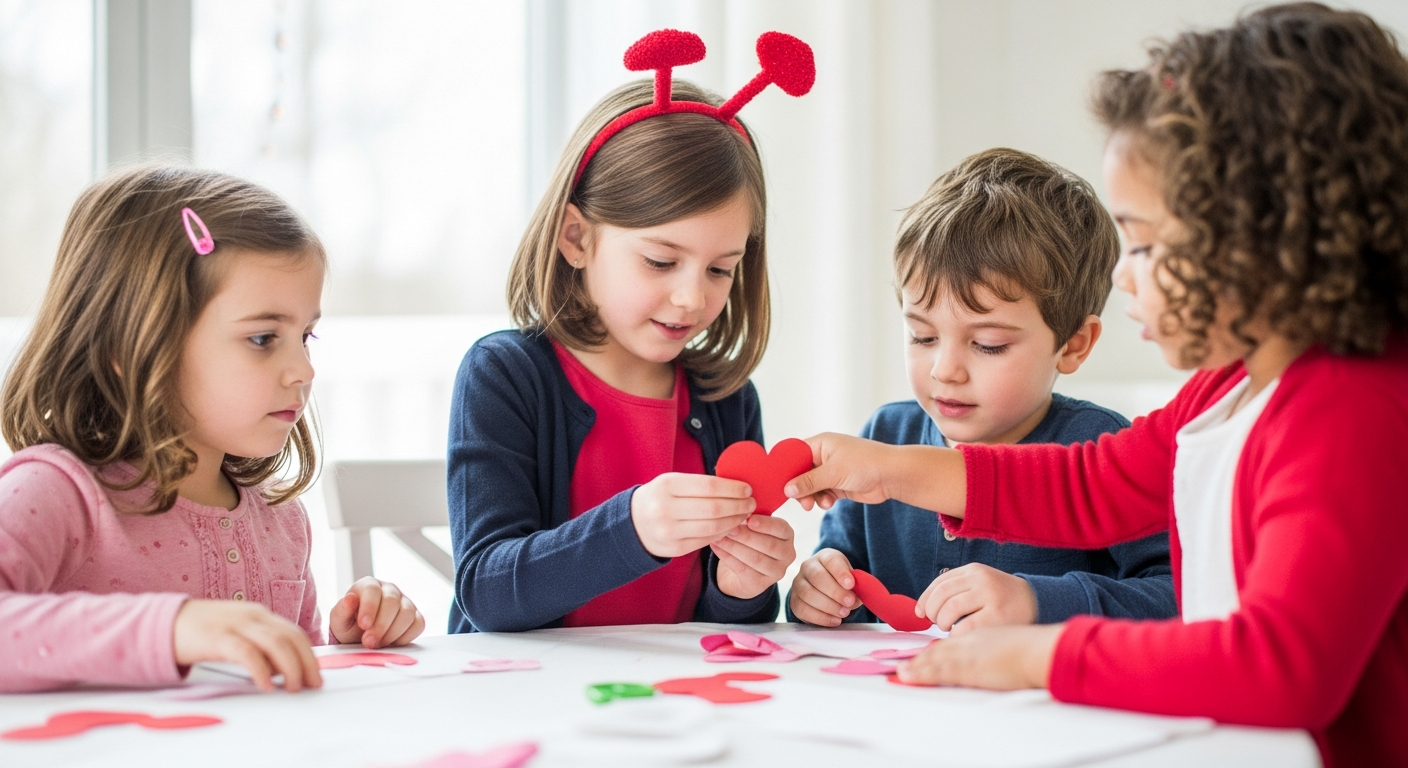
Table of Contents
- Introduction
- Why Crafts Are More Than Just Fun: A Developmental Boost
- The Power of Crafting for Communication Development
- Easy Valentine's Day Crafts for Toddlers & Preschoolers
- Easy Valentine's Day Crafts for Elementary Age Kids
- Beyond the Craft: Turning Art into Language Opportunities
- Speech Blubs: Your Partner in the Communication Journey
- Conclusion
- Frequently Asked Questions
Introduction
Ever noticed the special sparkle in your child's eyes when they hand you a handmade creation, beaming with pride? Valentine's Day isn't just for adults; it's a magical time for children to express affection, kindness, and creativity through the joy of crafting. Beyond being a delightful way to celebrate the season of love, engaging in arts and crafts offers a treasure trove of developmental benefits, from honing fine motor skills to sparking imaginative play and, crucially, fostering robust communication.
In this comprehensive guide, we'll dive into a world of easy Valentine's Day crafts suitable for children of all ages, from the wobbly hands of toddlers to the imaginative minds of elementary students. We’ll explore simple, engaging projects that require minimal supplies and offer maximum fun, all while highlighting how these activities can be transformed into powerful opportunities for language and speech development. Our goal is to show you how everyday crafting can become a joyful pathway to stronger connections and unlock your child's full expressive potential, helping them to "speak their minds and hearts."

Why Crafts Are More Than Just Fun: A Developmental Boost
At first glance, crafts might seem like just a fun way to pass the time or create a pretty decoration. However, for children, crafting is a deeply enriching experience that touches upon multiple areas of development. It’s a multi-sensory journey that engages their minds and bodies in profound ways.
Sensory Exploration
Children learn by doing, and their hands are often their first tools for understanding the world. Crafting provides a rich landscape for sensory exploration:
- Touch: The stickiness of glue, the smoothness of paper, the squishiness of playdough, the rough texture of glitter.
- Sight: A kaleidoscope of colors, intricate patterns, and the transformation of materials.
- Smell: The faint scent of paint, the sweetness of chocolate playdough. These sensory inputs are vital for brain development, helping children to interpret and categorize information about their environment.
Fine Motor Skills and Hand-Eye Coordination
Many crafts involve precise movements that are essential for developing fine motor skills. Activities like cutting with child-safe scissors, peeling stickers, drawing lines, stamping shapes, and threading beads all require small muscle control and coordination between what the eyes see and what the hands do. These skills are foundational for later tasks such as writing, dressing, and self-feeding, building confidence and independence in daily life.
Cognitive Development and Problem-Solving
Crafts are mini-projects that require planning, sequencing, and problem-solving. Children learn to follow instructions, anticipate steps, and adapt when things don't go exactly as planned. "What happens if I use this color?" "How do I make these pieces stick together?" These questions encourage critical thinking and spatial reasoning.
Emotional Expression and Connection
Creating something with their own hands allows children to express their feelings, ideas, and individuality. When they make a Valentine for a loved one, they are learning about gratitude, empathy, and the joy of giving. It’s a tangible way for them to show affection and build meaningful connections with family and friends.

The Power of Crafting for Communication Development
Perhaps one of the most exciting aspects of crafting is its incredible potential to supercharge speech and language development. Every snip, glue, and dab can become a moment for communication. Just as our mission at Speech Blubs is to empower children to speak their minds and hearts, we also understand that every interaction is a chance to grow. Our app, born from the personal experiences of our founders who grew up with speech problems, helps children through our unique video modeling methodology, where they learn by watching and imitating their peers. Similarly, crafting provides a hands-on, imitative, and interactive learning experience that naturally sparks language.
Vocabulary Expansion
Crafting is a vocabulary builder's paradise!
- Nouns: Names of materials (paper, glue, glitter, pipe cleaner), colors (red, pink, purple), shapes (heart, circle, square).
- Verbs: Action words like "cut," "glue," "paint," "draw," "stamp," "stick," "fold," "tear," "mix."
- Adjectives: Descriptive words like "sticky," "shiny," "soft," "hard," "big," "small," "pretty," "colorful." Children learn these words in context, making them more memorable and easier to apply.
Descriptive Language and Concepts
Encourage your child to describe their creations. "Tell me about your heart." This prompts them to use adjectives and expand on their ideas. You can introduce concepts like "before" and "after," "first," "next," and "last" as you follow the steps of a craft. Spatial concepts like "on," "under," "inside," and "outside" can be explored as they arrange pieces.
Sequencing and Storytelling
Crafts naturally involve a sequence of steps. Talking through these steps ("First, we cut the paper. Next, we put the glue on.") helps children develop sequencing skills, which are crucial for narrative development and understanding stories. When a craft results in a character, like a "love bug" or an "elephant Valentine," it opens the door to imaginative play and storytelling. "What is your love bug's name? What does it like to do?"
Social Interaction and Pragmatics
When you craft together, you're engaging in a conversation. You take turns, ask questions, and offer help. This practices the give-and-take of social communication. Giving a handmade Valentine to someone involves social pragmatics – knowing what to say and how to express gratitude or affection. For children learning to express themselves, this low-pressure, joyful context can build immense confidence.
Ready to explore more ways to boost your child's language development? Our app provides an immediate, effective, and joyful solution for the 1 in 4 children who need speech support. Download Speech Blubs on the App Store or Google Play to begin!
Easy Valentine's Day Crafts for Toddlers & Preschoolers
For our youngest crafters, the focus is on process over product, sensory exploration, and simple, repetitive actions. These crafts are designed to be low-prep, high-fun, and provide ample opportunities for early language development.
1. Heart Stamps
- What you need: Toilet paper rolls or potatoes, paint (washable!), paper.
- How to make it: Slightly flatten one side of a toilet paper roll and then gently bend the opposite side inwards to form a heart shape. Dip into paint and stamp! For potato stamps, cut a potato in half and carve a simple heart shape into the cut surface.
- Language Fun: Focus on repetitive sounds like "stamp, stamp, stamp!" Name colors as you use them ("red heart, pink heart"). Talk about the action: "Dip, stamp, lift!" For a toddler just starting to vocalize, stamping "red heart" repeatedly with a parent helps reinforce the connection between the object, color, and sound.
2. Tissue Paper Suncatchers or Wreaths
- What you need: Contact paper or clear self-adhesive shelf liner, colorful tissue paper (cut or torn into small pieces), paper plate (for wreath).
- How to make it: For suncatchers, stick one piece of contact paper to a window, sticky side out. Let your child tear and stick tissue paper pieces onto it. Cover with another piece of contact paper. For wreaths, cut the center out of a paper plate. Let your child glue torn tissue paper pieces around the remaining ring.
- Language Fun: Tearing tissue paper is fantastic for fine motor skills and can be accompanied by sounds like "rip, rip!" Name colors as they choose them: "What color is this? Yellow! Can you say 'yellow'?" Describe the textures: "Soft, crinkly."
3. Handprint/Fingerprint Heart Art
- What you need: Construction paper, washable paint.
- How to make it: Paint your child's hand (or just their fingers for smaller prints) and create prints on paper. You can arrange two handprints to form a heart shape. Fingerprint heart trees involve making small fingerprint hearts around a drawn or painted tree trunk.
- Language Fun: Talk about body parts: "My hand!" "Big hand, small hand." Count fingers. Discuss the feeling of the paint: "Cold, squishy." For a child learning basic vocabulary related to body parts or colors, pairing this craft with interactive sections in Speech Blubs can be very effective, building confidence and expanding their world of words.
4. Valentine Slime
- What you need: Clear glue, liquid starch or contact lens solution + baking soda, food coloring, glitter, small heart confetti.
- How to make it: Follow a simple slime recipe. Mix glue with food coloring and glitter. Add solution gradually, mixing until it forms slime.
- Language Fun: This is a sensory delight! Describe the textures: "Squishy, gooey, sticky, stretchy!" Use action words: "Mix, stretch, pull, poke." Ask open-ended questions: "What does it feel like?" "What can you do with it?"
5. Cereal Hearts
- What you need: Pipe cleaners, O-shaped cereal.
- How to make it: Bend a pipe cleaner into a heart shape. Let your child thread cereal pieces onto the pipe cleaner.
- Language Fun: This is excellent for fine motor skills and counting! "One cereal, two cereal..." Name colors if using colored cereal. Talk about the "crunchy" sound of cereal.
Crafting with toddlers and preschoolers isn't about perfection; it's about exploration, sensory input, and those precious moments of connection that naturally spark language. Embrace the mess, celebrate the effort, and let their little voices shine!
Easy Valentine's Day Crafts for Elementary Age Kids
As children grow, their fine motor skills become more refined, and their ability to follow multi-step instructions and engage in more complex creative thinking expands. These crafts offer engaging challenges while still being achievable and fun.
1. DIY Cards & Letters
- What you need: Construction paper, markers, crayons, stickers, glitter glue, scissors.
- How to make it: Encourage children to design their own unique cards for friends, family, or even local nursing home residents. They can cut out heart shapes, fold paper, and decorate with their favorite supplies.
- Language Fun: This is a fantastic opportunity for expressive writing and practicing social pragmatics. "What do you want to tell Grandma?" "Who will get this card?" Discuss thoughtful messages and the joy of making someone happy. For a child who struggles with expressing emotions verbally, creating a "rock of love" with a painted kind message offers a non-pressured way to articulate positive feelings, which can then be discussed and expanded upon.
2. Heart Windsocks
- What you need: Construction paper, ribbon or string, streamers, glue, scissors.
- How to make it: Take a piece of construction paper and glue it into a cylinder. Cut out many small paper hearts and glue them onto the cylinder. Attach streamers to the bottom and a string to the top for hanging.
- Language Fun: Following multi-step instructions is key here. Practice sequencing words: "First, you glue the paper into a circle. Then, you add the hearts." Describe the motion of the windsock: "It will blow in the wind, up and down!"
3. 3D Paper Hearts & Garlands
- What you need: Construction paper, scissors, glue or stapler, thread.
- How to make it: Cut several strips of paper. Bend them into heart shapes and staple or glue them together, layering them to create a 3D effect. String multiple 3D hearts together to make a garland.
- Language Fun: This craft introduces spatial vocabulary ("over, under, inside, outside") and concepts of dimension. Discuss symmetry and patterns. "We have a long garland now!"
4. Air-Dry Clay Hearts
- What you need: Air-dry clay, heart cookie cutters (optional), paint, glitter, magnets (optional).
- How to make it: Children can shape the clay into hearts, use cookie cutters, or create textured patterns. Let it dry, then paint and decorate. Attach a magnet to the back for a homemade fridge magnet!
- Language Fun: Imaginative play takes center stage. "This heart will hold my secret treasures." Describe the clay: "soft, squishy, then hard." Talk about the transformation from wet to dry.
5. Mosaic Hearts
- What you need: Cardboard or construction paper, various colored paper scraps (construction paper, magazine cut-outs), glue.
- How to make it: Draw a large heart on a piece of cardboard. Children can tear or cut small pieces of colored paper and glue them onto the heart, creating a mosaic effect.
- Language Fun: This activity hones fine motor skills and encourages discussion of colors, patterns, and shapes. "We need a red piece here, next to the pink one." "Can you find a square piece?"
6. Water Bottle Love Bugs
- What you need: Empty water bottles, craft paint, pipe cleaners, googly eyes, construction paper, glue.
- How to make it: Paint the water bottles. Once dry, add googly eyes, pipe cleaner antennae, and paper heart wings or feet.
- Language Fun: This is a fantastic way to encourage creative problem-solving and character development for storytelling. "What does your love bug eat?" "Where does it live?" Naming parts of the bug and describing its features boosts descriptive vocabulary.
Unsure if your child could benefit from a little extra support? Take our quick 3-minute preliminary screener to get a simple assessment and a free 7-day trial. It’s a great first step in understanding your child's communication needs.
Beyond the Craft: Turning Art into Language Opportunities
The moment the glue dries and the paint is put away, the communication opportunities don't end—they just begin! Here's how to maximize language development after the crafting is complete:
- Describe the Process: Ask your child to recount the steps they took. "What did we do first?" "What happened next?" This reinforces sequencing and narrative skills. Use pictures if they need visual cues.
- Talk About the Finished Product: Encourage them to describe their creation. "Tell me about your heart suncatcher." "What's your favorite part?" Ask open-ended questions that go beyond a simple "yes" or "no."
- Express Feelings: Prompt them to talk about how they felt while making the craft and how they feel about giving it to someone. "How did you feel when you finished your card?" "Are you excited to give this to Grandma?"
- Gift-Giving and Social Communication: Practice saying "Happy Valentine's Day," "Thank you," or "I made this for you." These social phrases are crucial for building confident communicators.
- Role-Playing and Imaginative Play: If they've made characters or masks, use them for imaginative play. Create stories together using their new creations as props. This fosters creativity and expands their ability to create narratives.
Our mission at Speech Blubs is to empower children to "speak their minds and hearts," and integrating joyful crafts into their routine is a beautiful way to achieve this. By actively engaging with your child during and after crafting, you create an environment rich in language and connection.
Speech Blubs: Your Partner in the Communication Journey
We understand that every child's communication journey is unique, and sometimes, a little extra support can make a world of difference. At Speech Blubs, we are deeply committed to providing an immediate, effective, and joyful solution for the 1 in 4 children who need speech support. Our company was born from the personal experiences of our founders, who all grew up with speech problems and created the tool they wished they had – a powerful resource blending scientific principles with play into one-of-a-kind "smart screen time" experiences.
While crafts provide wonderful opportunities for hands-on learning, Speech Blubs offers a complementary approach to reinforce and expand on these foundational skills. Through our unique "video modeling" methodology, children learn by watching and imitating their peers, providing a screen-free alternative to passive viewing (like cartoons) and a powerful tool for family connection. This scientific method helps children build confidence, reduce frustration, and develop key foundational communication skills. You can explore more about our research and scientific backing on our website.
Transparent Pricing for Every Family
We believe in making high-quality speech and language support accessible. We offer two main subscription plans, designed to fit your family’s needs:
- Monthly Plan: For $14.99 per month, you get access to the core Speech Blubs app. This plan is flexible, but it doesn't include some of our most valuable features.
- Yearly Plan: The Best Value! For just $59.99 per year, which breaks down to an incredible $4.99 per month, you save a significant 66% compared to the monthly plan. The Yearly plan is truly the best choice, offering superior value and exclusive benefits that are crucial for long-term progress:
- 7-Day Free Trial: Experience the full power of Speech Blubs before committing.
- The Extra Reading Blubs App: Unlock an entire additional app dedicated to early literacy, phonics, and reading skills, working hand-in-hand with speech development.
- Early Access to New Updates: Be the first to try new features and content.
- 24-Hour Support Response Time: Get your questions answered quickly and efficiently by our dedicated support team.
The Monthly plan does not include these fantastic benefits, making the Yearly plan the clear choice for families looking for comprehensive support and the most bang for their buck.
Ready to give your child the gift of confident communication and joyful learning? Create your account and begin your 7-day free trial today! Make sure to select the Yearly plan to unlock all the premium features and incredible value. You can also learn more about our mission and values and read testimonials from other parents who have seen amazing progress with Speech Blubs.
Conclusion
Valentine's Day crafts offer a beautiful blend of creativity, connection, and crucial developmental benefits for children. From simple heart stamps for toddlers to elaborate 3D creations for older kids, each project is an opportunity to strengthen fine motor skills, boost cognitive abilities, and most importantly, foster vibrant communication. By engaging with your child during these activities—talking about colors, describing textures, sequencing steps, and encouraging storytelling—you’re not just making a craft; you’re building a foundation for confident self-expression.
We believe that every child deserves the chance to "speak their minds and hearts." Incorporating easy Valentine's Day crafts into your family routine, alongside supportive tools like Speech Blubs, creates a comprehensive and joyful approach to nurturing your child's growth. The confidence they gain from expressing themselves, whether through a handmade card or a newly spoken word, is a gift that lasts far beyond any holiday.
Don't let another Valentine's Day pass without unlocking your child's full potential. Give them the gift of communication and creativity this year. Download Speech Blubs on the App Store or Google Play and start your 7-day free trial today! Remember to choose the Yearly plan to save 66% and access exclusive features like the Reading Blubs app and priority support. We're here to support every step of your child's communication journey.
Frequently Asked Questions
1. How can crafts specifically help with my child's speech development?
Crafts provide a natural, hands-on environment for language learning. As children engage with materials, they learn new vocabulary (colors, shapes, textures, action verbs), practice descriptive language ("The glue is sticky!"), develop sequencing skills by following steps ("First, we cut; then, we glue"), and engage in social interaction and storytelling about their creations. These experiences reinforce concepts and words in a meaningful, memorable way.
2. What if my child isn't interested in crafts?
It's common for interests to vary! Start small and keep it low-pressure. Offer choices of activities or materials, focus on the process rather than a perfect end product, and keep sessions short. Incorporate their existing interests – if they love animals, try animal-themed Valentine crafts. Remember, the goal is connection and engagement, not necessarily artistic mastery. Sometimes, simply talking about the materials or showing curiosity about what they want to do can spark interest.
3. Are these Valentine's Day crafts suitable for children with special needs?
Absolutely! Many of these crafts are highly adaptable. You can modify materials (e.g., using larger, easier-to-grip items), simplify steps, provide more hand-over-hand assistance, or focus solely on sensory exploration. The benefits of fine motor skill development, sensory input, and communication opportunities are universal and can be tailored to meet individual needs and abilities, fostering a sense of accomplishment and joyful participation.
4. How does Speech Blubs complement these crafting activities?
Speech Blubs acts as a powerful supplement to real-world activities like crafting. While crafts provide practical language practice, our app uses engaging video modeling to introduce and reinforce specific sounds, words, and concepts. For example, after making a "red heart," your child could practice saying "red" in the app's color section. It balances hands-on play with targeted, "smart screen time" exercises, offering a joyful solution that supports overall communication development and builds confidence, allowing children to practice skills learned in context and apply them in new ways.
About the author