
Crafty Creations: Easy Toilet Paper Roll Crafts for Kids
 By Speech Blubs Team•Jan 13, 2026•18 min.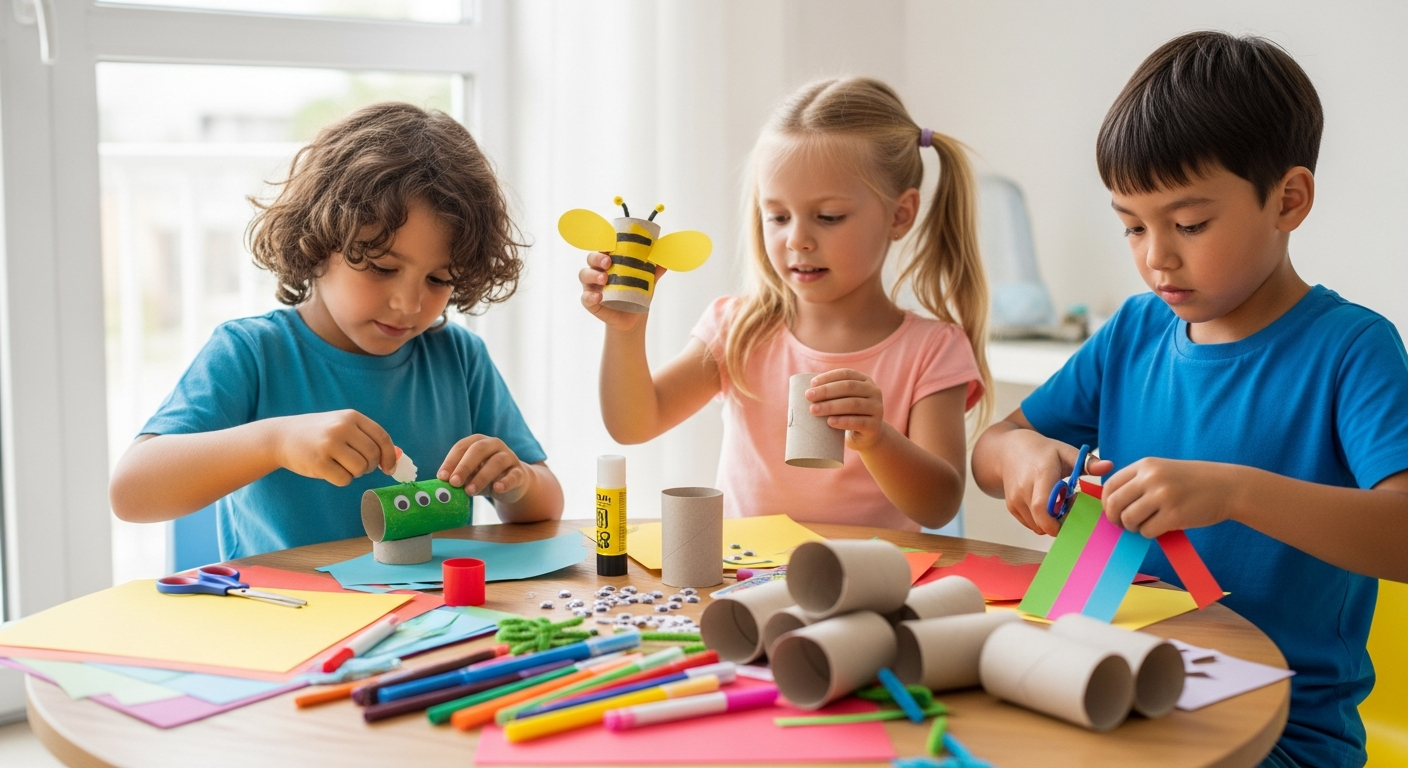
Table of Contents
- Introduction
- The Humble Toilet Paper Roll: A Treasure Trove of Potential
- Beyond Boredom: How Crafts Boost Development
- Our Favorite Easy Toilet Paper Roll Crafts for Kids
- Making the Most of Craft Time: Tips for Parents
- When to Seek Additional Support
- FAQ
- Conclusion
Ever noticed how a child can find endless fascination in the simplest things? A stick becomes a magic wand, a cardboard box transforms into a spaceship, and an empty toilet paper roll holds the potential for a thousand adventures. It’s this innate ability to see possibilities in the ordinary that makes childhood so magical, and it’s why we, at Speech Blubs, are passionate about fostering environments where every child feels empowered to explore, create, and communicate.
For parents, it can sometimes feel like a challenge to keep those curious minds engaged without relying solely on screens. But what if we told you that the answer might be sitting in your recycling bin right now? Toilet paper roll crafts for kids are a timeless, budget-friendly, and incredibly versatile way to ignite imagination, refine essential developmental skills, and create cherished memories. This post isn't just a list of fun projects; it's a deep dive into how these humble cardboard tubes can become powerful tools for learning, especially in areas like fine motor development, vocabulary expansion, and, yes, even speech and language growth. Join us as we explore how to turn everyday recyclables into masterpieces that do more than just entertain – they educate, inspire, and help your child speak their minds and hearts.

Introduction
Picture this: you’ve just finished a roll of toilet paper, and before it even hits the recycling bin, your child’s eyes light up. "Can I have that?" they ask, already envisioning its next life as a rocket, a monster, or maybe even a tiny house for a beloved toy. This spontaneous creativity is a testament to the boundless imagination children possess, and it offers a golden opportunity for parents to engage in enriching activities together. In a world brimming with elaborate toys and digital distractions, the simple cardboard tube stands as a humble, yet powerful, testament to the magic of DIY play.
This blog post will guide you through an exciting array of easy toilet paper roll crafts for kids, suitable for various ages and interests. Beyond the sheer fun, we’ll delve into the significant developmental benefits these crafts offer, from boosting fine motor skills – crucial for everything from writing to speech articulation – to expanding vocabulary and nurturing storytelling abilities. Our aim is to provide you with practical ideas and insightful tips, showing how these accessible projects can serve as joyful catalysts for cognitive and linguistic growth. By the end, you’ll see that transforming a toilet paper roll isn't just about making something new; it's about building foundational skills and fostering a love for communication, one sticky, glitter-filled craft at a time.
The Humble Toilet Paper Roll: A Treasure Trove of Potential
Few household items are as universally available and as surprisingly versatile as the empty toilet paper roll. Often discarded without a second thought, these cardboard tubes are, in fact, an incredible resource for creativity, learning, and sustainable living. They cost nothing, making them an ideal crafting material for every family, regardless of budget. Beyond the financial aspect, using recycled materials like toilet paper rolls instills an early appreciation for recycling and environmental responsibility in children, teaching them that "waste" can be reimagined and given new life.

What truly elevates the toilet paper roll from trash to treasure, however, is its inherent adaptability. Its cylindrical shape is a perfect base for countless creations – from animals and characters to vehicles and functional organizers. It’s sturdy enough to hold paint and glue, yet flexible enough to be cut, bent, and molded into various forms. This combination of accessibility, eco-friendliness, and sheer creative potential makes toilet paper rolls a prime candidate for engaging, educational, and fun craft sessions that benefit children in myriad ways, extending far beyond just keeping their hands busy.
Beyond Boredom: How Crafts Boost Development
Crafting with toilet paper rolls is far more than just a pastime; it's a dynamic learning experience. As children snip, glue, paint, and decorate, they are actively developing a spectrum of skills that are foundational for their overall growth, including crucial aspects of speech and language development. These activities provide a fantastic, hands-on way for children to engage with their world, solve problems creatively, and express themselves.
Sparking Imagination and Storytelling
When a child transforms a simple cardboard tube into a roaring lion, a soaring rocket, or a mystical unicorn, they’re doing more than just assembling materials; they’re engaging in imaginative play. This process is deeply linked to narrative development, which is essential for strong communication skills. As they build their creations, children often narrate their actions, describe their characters, and even develop elaborate backstories.
For instance, if your child is making a toilet paper roll puppet, you might hear them say, "This is King Lion, and he is very brave! He lives in a big, tall castle." This natural storytelling helps them practice sentence structure, expand their vocabulary, and understand narrative sequences—beginning, middle, and end. You can encourage this by asking open-ended questions: "What adventure will your lion go on today?" or "Who are your monster's friends?" This kind of interactive play is incredibly valuable, providing a rich context for language use. At Speech Blubs, we believe in this power of play. Our unique video modeling methodology, for example, encourages children to learn new sounds and words by watching and imitating their peers, much like they might imitate character voices or actions during imaginative play with their own crafted creations. It’s a powerful tool for building confidence and a love for communication.
Honing Fine Motor Skills for Clearer Speech
The intricate movements involved in toilet paper roll crafts – cutting shapes with scissors, carefully applying glue, peeling stickers, painting details, or threading pipe cleaners – are all excellent exercises for developing fine motor skills. These are the small, precise movements of the hands and fingers that are vital not just for writing and self-care but also for the complex coordination required for clear speech.
Think about it: the same dexterity and muscle control used to hold a paintbrush or manipulate a tiny pom-pom are also essential for controlling the tongue, lips, and jaw to produce distinct sounds. Children who struggle with fine motor skills might also face challenges with oral motor control, impacting their articulation. By engaging in crafts, they strengthen these critical muscles and improve hand-eye coordination. For a parent whose child might be a "late talker," or struggling with certain sounds, creating a toilet paper roll 'bee' and carefully gluing on its wings can be paired with practicing the "bzzzz" sound, or making a 'robot' while repeating "r-r-r-robot." This makes the learning process engaging and fun, reducing frustration for both child and parent. Our approach at Speech Blubs aligns perfectly with this holistic view of development, offering "smart screen time" experiences that complement hands-on activities, fostering a foundation for joyful and effective communication.
Building Vocabulary and Following Directions
Crafting sessions are natural opportunities for vocabulary expansion. As you gather materials, discuss colors, shapes, textures, and actions ("cut," "glue," "fold," "paint"). Introduce new words like "cylinder" for the roll itself, "texture" for different papers, or "decorate" for adding embellishments.
Furthermore, following multi-step instructions during a craft project significantly boosts a child's receptive language skills. "First, get the blue paint, then dip your brush, and finally, paint the body of the bird." Breaking down instructions helps children understand sequencing and develop their listening comprehension. This active participation, guided by an adult, turns passive observation into an engaged learning experience. This is a core value we uphold at Speech Blubs: our app encourages active participation over passive viewing, just as a parent guides a child through a craft, using precise language and prompting. These skills are invaluable for children as they learn to understand and articulate complex ideas, paving the way for them to express their thoughts and feelings with clarity.
Our Favorite Easy Toilet Paper Roll Crafts for Kids
Ready to transform those unassuming cardboard tubes into works of art and learning? Here’s a curated list of easy toilet paper roll crafts for kids, each with a little note on how to maximize its developmental benefits. Remember, adult co-play and support are key to making these activities truly enriching!
Toilet Paper Roll Animals: A Wild Adventure
Animals are always a hit with kids, and toilet paper rolls make fantastic bases for a whole menagerie.
- Chirping Birds:
- Craft: Paint rolls vibrant colors, add paper wings, beaks, and googly eyes. Attach a loop of string to hang them.
- Speech & Play Tip: Practice bird sounds ("chirp, chirp!"), describe colors ("red bird," "blue wings"), and use action words ("flying," "flapping"). For a child struggling with sound repetition, having the bird "sing" a new sound can make it fun.
- Roaring Lions:
- Craft: Paint yellow/orange, add a fringed paper mane, ears, and facial features.
- Speech & Play Tip: Encourage loud "ROAR!" sounds, practice "L" words ("lion," "mane," "long"), and talk about where lions live.
- Buzzing Bees:
- Craft: Paint yellow and black stripes, add paper wings and antennae.
- Speech & Play Tip: Make "bzzzz" sounds, count the stripes, talk about flowers, and introduce the concept of "honey." This is a playful way to target labial sounds like 'b'.
- Fluttering Butterflies:
- Craft: Decorate rolls with bright paint or paper, then attach colorful paper wings.
- Speech & Play Tip: Describe patterns and colors on the wings. Use words like "flutter," "transform," and discuss the butterfly life cycle simply.
- Squeaky Mice:
- Craft: Paint grey, add paper ears, string tail, and whiskers.
- Speech & Play Tip: Practice "squeak, squeak" sounds. Talk about what mice eat, and simple prepositions ("under the table," "on the floor").
Magical Characters & Storybook Friends
These crafts are perfect for bringing beloved stories to life or inventing entirely new characters.
- Fairy Tale Princesses/Knights:
- Craft: Decorate with fabric scraps, glitter, paper crowns, and markers.
- Speech & Play Tip: Create dialogues for your characters. Practice greetings, role-playing, and describing their royal attire or brave adventures.
- Silly Monsters:
- Craft: Use wild colors, multiple googly eyes, pipe cleaner arms, and felt tongues.
- Speech & Play Tip: Encourage descriptive language ("hairy monster," "one big eye," "friendly monster"). Ask about their favorite food or what makes them giggle.
- Superheroes:
- Craft: Paint in bold colors, add a cape, mask, and emblem.
- Speech & Play Tip: Invent superhero names (great for alliteration!) and superpowers. Discuss actions like "flying," "saving," and "helping."
- Nutcracker Soldiers:
- Craft: Paint vibrant soldier uniforms, add paper hats and hair.
- Speech & Play Tip: Discuss uniforms, drums, and marching. Listen to classical music and march to the beat, coordinating movement with language.
- The Very Hungry Caterpillar:
- Craft: Paint multiple rolls green, attach them together, and add antennae and eyes.
- Speech & Play Tip: Re-tell the story, counting the foods the caterpillar eats. Practice the days of the week and descriptive words like "hungry," "small," "big."
Everyday Objects & Whimsical Creations
From useful items to imaginative tools, these crafts prove the versatility of a toilet paper roll.
- Binoculars:
- Craft: Glue two rolls together, attach a string, and decorate.
- Speech & Play Tip: Go on a "safari" or "treasure hunt" around the house or yard. Use descriptive words for what you "see" ("I see a fuzzy cat!" "I see a tall tree!").
- Race Cars:
- Craft: Cut out a cockpit, paint, and attach bottle caps or cardboard circles for wheels.
- Speech & Play Tip: Make car sounds ("vroom, vroom!"), talk about colors, count wheels, and have "races," using words like "fast," "slow," "go," "stop."
- Pom-Pom Shooters:
- Craft: Attach a balloon (cut and tied) to one end, decorate the roll, and use pom-poms as "ammunition."
- Speech & Play Tip: Practice cause and effect ("pull back, then pop!"). Count the pom-poms and describe trajectories ("up," "down," "far").
- Bird Feeders:
- Craft: Smear rolls with peanut butter, roll in birdseed, and string them up outside.
- Speech & Play Tip: Observe the birds that visit. Discuss colors, sizes, and sounds of the birds, connecting action to language.
- Stacked Sculptures:
- Craft: Cut rolls into rings, paint various colors, and stack them onto a stick or dowel.
- Speech & Play Tip: Focus on color identification, counting, and pattern recognition. Use words like "stack," "tall," "short," "on top," "under." This is especially good for developing spatial awareness and related vocabulary.
Holiday & Seasonal Fun
Celebrate special occasions with these themed toilet paper roll crafts.
- Easter Bunnies:
- Craft: Paint white, grey, or brown, add tall paper ears, cotton ball tails, and facial features.
- Speech & Play Tip: Practice "hop, hop" sounds, talk about spring, and describe Easter traditions.
- Spooky Bats:
- Craft: Paint black, add paper wings and googly eyes.
- Speech & Play Tip: Make "whoosh" sounds, talk about Halloween, and use words like "night," "fly," "dark."
- Reindeer:
- Craft: Paint brown, add pipe cleaner antlers, googly eyes, and a red pom-pom nose.
- Speech & Play Tip: Sing carols, talk about Santa and sleighs. Practice animal sounds for other reindeer or "jingle, jingle" for sleigh bells.
- Frankenstein's Monster:
- Craft: Paint green, add paper hair and bolts on the side.
- Speech & Play Tip: Practice making "grrr" sounds, talk about different emotions (scary, silly), and discuss body parts.
- Turkey:
- Craft: Paint brown, add colorful paper feathers, a wattle, and beak.
- Speech & Play Tip: Discuss Thanksgiving, count the feathers, and make "gobble, gobble" sounds.
- Leprechauns:
- Craft: Paint green, add a paper hat, beard, and buckle.
- Speech & Play Tip: Talk about St. Patrick's Day, rainbows, and finding "gold" (yellow items).
- Polar Bears:
- Craft: Paint white, add ears, and facial features.
- Speech & Play Tip: Discuss winter animals, habitats, and practice "brrr" sounds.
- Walrus:
- Craft: Paint brown, add big paper tusks and whiskers.
- Speech & Play Tip: Talk about ocean animals and use action verbs like "swim" and "wade."
- Pumpkin Patch:
- Craft: Paint rolls orange, add green paper stems, and carve/draw faces.
- Speech & Play Tip: Discuss autumn, count pumpkins, and describe different facial expressions.
- Snowmen:
- Craft: Paint white, add paper scarves, buttons, and carrot noses.
- Speech & Play Tip: Talk about winter activities, cold weather, and using words like "melt" and "build."
Making the Most of Craft Time: Tips for Parents
To truly unlock the developmental potential of these easy toilet paper roll crafts for kids, your active participation and mindful interaction are invaluable. Here's how to make every crafting session a rich learning opportunity:
- Encourage Conversation: Don't just facilitate the craft; talk through it! Describe what you're doing, what your child is doing, and what's happening. "I'm cutting the blue paper," "You're gluing the eyes," "The monster is getting a big smile!" This provides a running commentary that models language.
- Ask Open-Ended Questions: Instead of "Do you like it?" ask "What's your favorite part?" or "Why did you choose that color?" This encourages more than a yes/no answer and prompts descriptive language and critical thinking.
- Focus on the Process, Not Perfection: The goal is exploration and learning, not a Pinterest-perfect outcome. Celebrate your child's effort and creativity, even if the end result is a bit wonky. This fosters confidence and reduces the pressure to perform.
- Let Children Lead: Offer choices and follow your child's interests. If they want to paint a bunny purple, let them! This empowers them to take ownership of their creation and develops their decision-making skills.
- Connect to Real-World Concepts: If you're making a toilet paper roll rocket, talk about space, planets, and astronauts. If it's an animal, discuss its habitat, sounds, and food. This broadens their general knowledge and vocabulary.
- Incorporate Sensory Exploration: Discuss how different materials feel ("sticky glue," "smooth paper," "bumpy glitter"). This builds sensory vocabulary and awareness.
- Use Descriptive Language: Be specific with your words. Instead of "put the paper here," say "Place the red, sparkly paper on top of the lion's head." This introduces richer vocabulary naturally.
Integrating these hands-on activities with tools like Speech Blubs creates a comprehensive approach to fostering communication skills. While you're enjoying screen-free bonding over crafts, you can also consider how Speech Blubs offers a complementary "smart screen time" experience, turning learning into play that further empowers children to grow confidently. If you're unsure where your child stands developmentally, our quick 3-minute preliminary screener can provide a simple assessment and a free 7-day trial to explore how we can support your child's journey.
When to Seek Additional Support
While engaging in fun, interactive crafts and using educational apps like Speech Blubs can significantly boost a child's communication skills, it's also important for parents to recognize when additional, professional support might be beneficial. Sometimes, a child's speech and language development may require the guidance of a speech-language pathologist.
If you have concerns about your child's communication, such as difficulty with certain sounds, limited vocabulary, trouble forming sentences, or challenges in understanding what is said to them, don't hesitate to consult your pediatrician or a speech therapist. Early intervention can make a significant difference.
At Speech Blubs, we are committed to providing an immediate, effective, and joyful solution for the 1 in 4 children who need speech support. Our founders, all of whom grew up with speech problems, created the tool they wished they had—a blend of scientific principles and play in one-of-a-kind "smart screen time" experiences. We serve as a powerful supplement to a child's overall development plan and, when applicable, professional therapy. Our unique approach utilizes video modeling, where children learn by watching and imitating their peers, fostering a love for communication and building confidence. We pride ourselves on offering a screen-free alternative to passive viewing, promoting active engagement and family connection.
We've seen countless children make incredible progress, and you can read their success stories and testimonials here.
FAQ
Q1: What are the basic materials needed for toilet paper roll crafts?
A: The beauty of toilet paper roll crafts is their simplicity! You'll mainly need empty toilet paper rolls, child-safe scissors, glue (school glue or glue sticks work great), markers or crayons, and construction paper. Beyond that, anything goes: googly eyes, pipe cleaners, pom-poms, yarn, glitter, fabric scraps, or even natural elements like leaves and twigs can add wonderful creative flair.
Q2: Are these crafts suitable for all age groups?
A: Yes, these crafts are highly adaptable for a wide range of ages! Younger children (toddlers and preschoolers) will enjoy painting, gluing large pieces, and tearing paper, with adult assistance for cutting. Older children can handle more intricate cutting, detailed decorating, and multi-step projects independently. The key is to select projects appropriate for their developmental stage and always ensure adult supervision, especially with scissors or small embellishments.
Q3: How do these crafts specifically help with speech and language development?
A: Toilet paper roll crafts offer numerous benefits for speech and language. They improve fine motor skills, which are foundational for oral motor control and articulation. They expand vocabulary as you discuss colors, shapes, textures, and actions involved in crafting. They foster narrative skills and imagination through pretend play with the finished creations, encouraging children to tell stories and engage in dialogue. Additionally, following multi-step instructions enhances receptive language and sequencing abilities.
Q4: How can I keep my child engaged during a crafting session?
A: To keep your child engaged, offer choices (let them pick the animal or colors), focus on the process rather than a perfect outcome, and allow for creative freedom. Talk with them throughout the activity, asking open-ended questions about what they're making and why they're choosing certain elements. Short, frequent crafting sessions (15-30 minutes) can also be more effective than one long one, especially for younger children. Most importantly, make it a shared, joyful experience.
Conclusion
As we've explored, those humble cardboard tubes tucked away in your recycling bin are far more than just waste; they are gateways to imaginative play, crucial skill development, and cherished moments of connection. From honing fine motor skills essential for clearer speech to expanding vocabulary and fostering a love for storytelling, easy toilet paper roll crafts for kids offer a rich, accessible, and incredibly fun way to support your child's growth. Each snip, glue, and dab of paint contributes to building confidence, sparking curiosity, and empowering them to express themselves more fully.
At Speech Blubs, our mission is to empower children to speak their minds and hearts, and we believe that every joyful learning experience, whether screen-based or hands-on, plays a vital role in that journey. Our app provides "smart screen time" that complements these creative activities, offering a scientifically-backed, engaging solution for speech and language development.
Ready to embark on a journey of discovery and communication with your child? Why not combine the joy of crafting with the proven benefits of Speech Blubs? Experience the difference our app can make by starting your 7-day free trial today. We highly recommend choosing the Yearly plan to get the best value, saving you 66% compared to the Monthly plan. With the Yearly plan, you'll not only pay just $4.99/month (vs. $14.99/month) but also unlock exclusive benefits like the extra Reading Blubs app, early access to new updates, and 24-hour support response time. The Monthly plan does not include these valuable features.
Don't wait to ignite your child's communication potential. Download Speech Blubs on the App Store or Get Speech Blubs on Google Play and choose the Yearly plan to begin your free trial and unlock a world of confident communication for your child.
About the author