
Crafty Fun: Easy Projects for Kids to Learn & Play
 By Speech Blubs Team•Jan 13, 2026•24 min.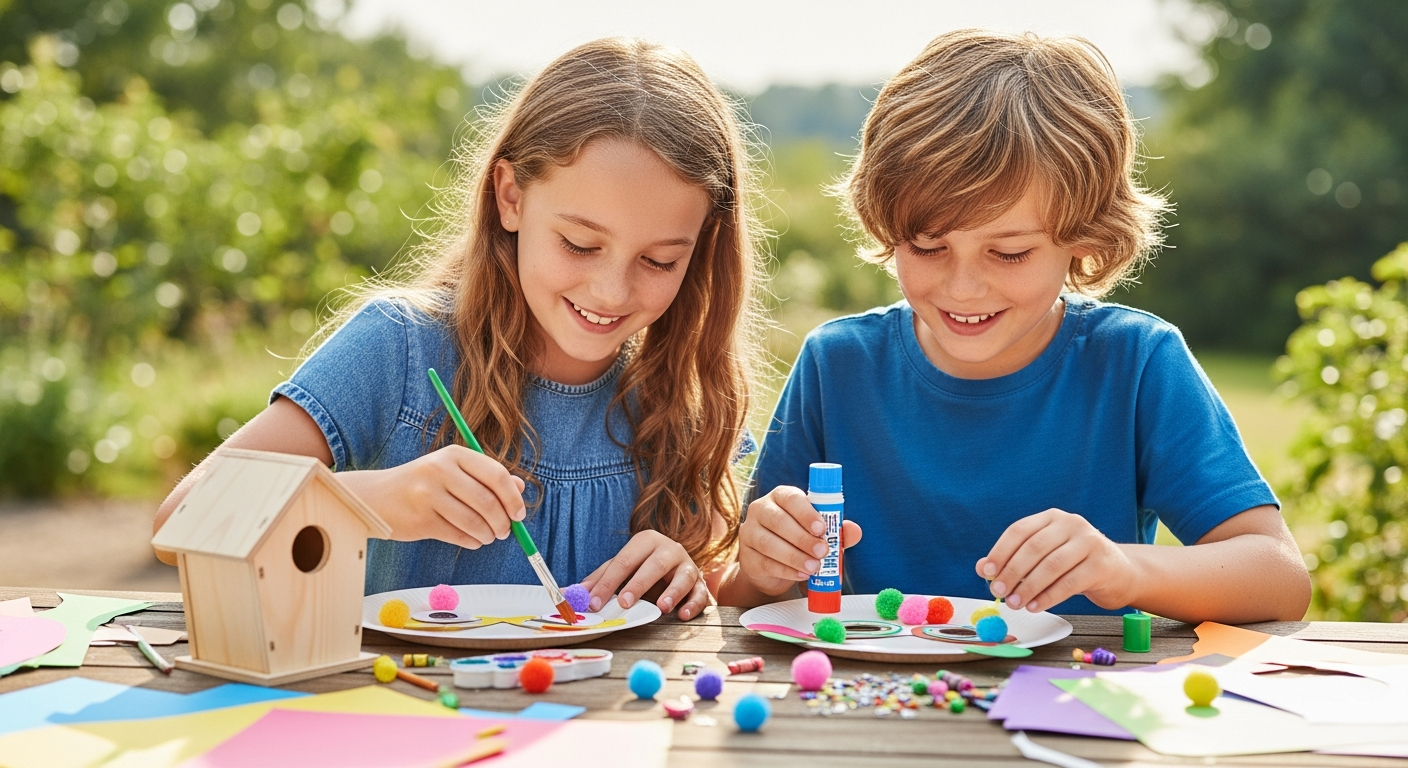
Table of Contents
- Introduction
- Why Easy Crafts Are More Than Just Fun: Developmental Benefits
- Getting Started: Your Essential "Easy Craft" Toolkit
- Our Favorite Easy Craft Projects to Spark Speech & Joy
- Integrating Speech Blubs for Enhanced Communication
- Making Craft Time a Success: Tips for Parents
- Conclusion
- FAQ: Your Crafting Questions Answered
Does the thought of a rainy afternoon or a long weekend filled with "I'm bored!" laments fill you with dread? It’s a common parent challenge: how to keep little minds and hands happily occupied without relying solely on passive screen time. The good news is, the answer often lies right in your own home, tucked away in the recycling bin, the junk drawer, or the craft cupboard. Easy craft projects for kids are not just a fantastic way to banish boredom; they are powerful, playful tools for fostering crucial developmental skills, especially in language and communication.
At Speech Blubs, we understand the incredible power of play in a child's journey to "speak their minds and hearts." Our mission, born from our founders' personal experiences with speech challenges, is to provide immediate, effective, and joyful solutions for children needing speech support. We've seen firsthand how blending scientific principles with engaging activities can unlock a child’s potential, and crafting is a perfect example of this. In this comprehensive guide, we'll dive into why easy crafts are invaluable for your child's growth, share a treasure trove of simple ideas using everyday materials, and show you how to seamlessly weave in language-boosting opportunities, often with a little help from our unique "smart screen time" approach.

Introduction
In a world brimming with digital distractions, finding hands-on activities that truly engage children and support their development can feel like a quest. Yet, the simplest materials—paper, glue, empty boxes—hold the potential for hours of creative exploration and significant learning. Far from being just a way to pass the time, easy craft projects for kids are a vibrant playground for their burgeoning minds, fostering everything from fine motor skills to complex cognitive abilities.
But beyond the tangible creations, these projects offer a unique, informal setting for language development. Every snip, glue, and swirl of paint is an opportunity for conversation, instruction-following, and imaginative storytelling. This post will explore the profound benefits of incorporating simple crafts into your child’s routine, provide a wealth of accessible project ideas that require minimal supplies and effort, and reveal how these joyful moments can be amplified to nurture your child's communication skills, building confidence and reducing frustration along the way. Get ready to transform everyday items into developmental goldmines, turning simple playtime into powerful learning experiences that lay the groundwork for a lifetime of confident communication.
Why Easy Crafts Are More Than Just Fun: Developmental Benefits
Crafting is often seen simply as a creative outlet, a way to make something pretty. However, for growing children, it's a multi-faceted learning experience that contributes significantly to their overall development. When kids engage in easy craft projects, they're not just making art; they're building a foundation of skills essential for learning, problem-solving, and effective communication.
Boosting Fine Motor Skills and Hand-Eye Coordination
Think about the intricate movements involved in cutting with scissors, gluing small pieces, or drawing a detailed picture. These actions are vital for developing fine motor skills—the coordination of small muscles, especially in the hands and fingers. Strong fine motor skills are prerequisites for tasks like writing, buttoning clothes, and even eating independently. Hand-eye coordination also gets a major workout as children learn to direct their hands precisely based on what their eyes see, crucial for sports, reading, and many daily activities. Crafting offers a low-pressure environment for children to practice and refine these essential skills, setting them up for success in school and beyond.

Nurturing Creativity and Problem-Solving
There’s no "right" way to make a paper plate monster or decorate a recycled robot. This freedom allows children to experiment, make choices, and express their unique ideas. When faced with a crafting challenge—like how to attach a wobbly head or make a specific color—they engage in problem-solving. They might try different glues, adjust angles, or mix paints, learning through trial and error. This process isn't just about finishing the craft; it's about developing flexible thinking and innovative approaches, skills that are invaluable in every aspect of life. Crafting encourages children to think outside the box, transforming ordinary materials into extraordinary creations, fostering a sense of artistic accomplishment.
Sparking Language and Communication
This is where easy crafts truly shine as a powerful ally in speech and language development. Every step of a craft project is ripe with opportunities for communication:
- Following Instructions: "First, cut the paper; then, glue the eyes." This sequence helps children understand and process multi-step directions, a foundational skill for listening comprehension.
- Descriptive Language: "Look at the shiny glitter! This paint is sticky and blue." Parents and caregivers can model rich vocabulary, encouraging children to describe textures, colors, shapes, and actions.
- Asking and Answering Questions: "What color should we use next?" "Where does the arm go?" These interactions promote conversational turn-taking and question-forming skills.
- Storytelling and Imagination: A crafted puppet isn't just a toy; it's a character in a story waiting to be told. Children can invent narratives, describe their character's adventures, and practice expressing emotions through their creations. This imaginative play is a cornerstone of advanced language use and social-emotional development.
- Social Interaction: Crafting together provides a natural setting for sharing, collaborating, and communicating needs or ideas with siblings or parents. It teaches negotiation and teamwork.
At Speech Blubs, we recognize that fostering communication happens best in engaging, interactive environments. Just as our app utilizes video modeling to show children their peers making sounds and words, crafting provides a hands-on, multi-sensory experience that reinforces these linguistic concepts in a fun, natural way.
Cultivating Patience and Focus
Completing a craft project, even an easy one, requires sustained attention and effort. Children learn to focus on a task, manage their impulses, and persist even when things get a little tricky. The step-by-step nature of many crafts helps children develop patience, understanding that the final product takes time and effort. This ability to concentrate and persevere is a critical skill for academic success and future challenges.
Emotional Expression and Confidence Building
Art is a powerful medium for emotional expression. Children can channel their feelings—joy, frustration, excitement—into their creations. The act of making something tangible, something they can hold and be proud of, builds immense self-esteem. When a parent praises their child's efforts and creativity, it reinforces their sense of accomplishment and encourages further exploration. This positive feedback loop is crucial for developing confidence not just in artistic abilities but in their ability to tackle new challenges and communicate their ideas.
By embracing easy craft projects, we offer children a joyful pathway to developing a wide array of skills, from the practical to the profoundly communicative.
Getting Started: Your Essential "Easy Craft" Toolkit
One of the greatest joys of easy craft projects is that they truly live up to their name – easy on the wallet and easy to gather supplies for. You don't need a dedicated craft room or fancy art store purchases. Many of the most engaging and developmentally rich projects can be made with items you likely already have lying around your home. Our philosophy at Speech Blubs is to make learning accessible and fun, and that extends to suggesting activities that don't add stress to a parent's day.
Before we dive into specific project ideas, let's look at the basic, versatile supplies that form the backbone of countless easy crafts. Embrace the beauty of repurposing and remember that creativity thrives on constraint!
The Must-Haves (You Probably Already Own Most):
- Paper, Paper, Everywhere:
- Construction Paper (Assorted Colors): The MVP of crafting! Perfect for cutting, folding, tearing, and adding vibrant colors.
- White Printer Paper or Cardstock: Great for drawing, painting, or providing a sturdy base.
- Newspaper/Magazine Scraps: Excellent for collages, paper mache, or protecting surfaces during messy projects.
- Paper Plates: So versatile! They can become masks, animals, suncatchers, or bases for sculptures.
- The Stick & Snip Crew:
- Kid-Safe Scissors: Essential for developing fine motor skills. Make sure they're appropriate for your child's age and hand size.
- Glue Sticks/Liquid Glue: For adhering pieces together. Glue sticks are often less messy for younger children.
- Tape (Masking, Scotch, or Duct Tape): Great for quick fixes, building, or adding decorative elements.
- Color & Design Arsenal:
- Crayons, Markers, Colored Pencils: Fundamental for adding color, detail, and expression to any project.
- Kid-Safe Paint (Washable Tempera or Watercolor): Opens up a world of color mixing and sensory exploration. Don't forget brushes!
- Recycled Riches:
- Toilet Paper/Paper Towel Rolls: Transform into animals, binoculars, castles, or storage.
- Cardboard Boxes (Cereal, Tissue, Shipping): The ultimate building blocks for robots, houses, cars, or mini-storage containers.
- Plastic Bottles/Jars: Can become vases, shakers, or elements in sensory bottles.
- Old Socks: Perfect for making simple puppets.
The Optional (But Fun!) Extras:
- Googly Eyes: Instantly brings any creation to life!
- Pom-Poms: Adds texture and color, great for sensory play.
- Pipe Cleaners/Chenille Stems: Bendable and fuzzy, perfect for limbs, antennae, or abstract sculptures.
- Yarn/String: For hanging, weaving, or adding hair/details.
- Cotton Balls: Great for clouds, snow, or fluffy animal textures.
- Natural Elements: Leaves, small twigs, pebbles collected from outside.
The beauty of this toolkit is its flexibility. Don’t feel pressured to buy everything at once. Start with what you have, and let your child's imagination dictate what else might be fun to incorporate. Remember, the goal is not perfection, but participation, exploration, and the joyful process of creation!
Our Favorite Easy Craft Projects to Spark Speech & Joy
Now that your essential craft toolkit is ready, let's dive into some specific, easy craft projects that are not only fun but also fantastic for stimulating language, creativity, and fine motor skills. For each idea, we'll highlight how it connects to developmental growth and how you can naturally weave in conversation and learning. Remember, the key is interaction—talk about what you're doing, ask open-ended questions, and encourage your child's descriptions!
Paper Plate Powerhouses: Simple Shapes, Big Ideas
Paper plates are arguably one of the most versatile craft supplies. Their circular shape is a perfect starting point for endless transformations.
- Paper Plate Animals: Turn a plain paper plate into a roaring lion, a colorful fish, or a chattering monkey. Kids can paint the plate, add cut-out features, or glue on yarn for manes and tails.
- Speech Connection: As you create, name the animal, describe its features ("a yellow lion," "a striped fish," "a brown monkey with a long tail"). Practice animal sounds ("roar," "mew," "oink") and actions ("swim," "fly," "run"). This is a wonderful way to introduce or reinforce vocabulary, much like our Animal Kingdom section in Speech Blubs where children learn by imitating peers making animal sounds and words.
- Paper Plate Masks: Cut out eyeholes and let your child decorate a paper plate to become their favorite superhero, a funny monster, or a friendly animal. Attach elastic or a stick.
- Speech Connection: Encourage role-playing! What does the monster say? How does the superhero talk? Practice different voices, express emotions ("happy mask," "silly mask"), and tell short stories using the masks.
- Paper Plate Story Discs: Divide a paper plate into segments. In each segment, draw or glue a picture representing a part of a story. Punch a hole in the center and use a brad to attach a spinner.
- Speech Connection: This is fantastic for narrative skills. Spin the disc and create a story based on the pictures. Encourage sequence words ("first," "next," "then," "finally") and descriptive language to elaborate on each part of the tale.
Recycled Wonders: Giving New Life to Everyday Items
Repurposing household waste into craft materials teaches children about sustainability while fueling their imagination.
- Toilet Paper Roll Creatures/Binoculars: Empty toilet paper or paper towel rolls can become anything from silly monsters and friendly animals to sturdy binoculars. Paint them, add googly eyes, pipe cleaner limbs, or construction paper details. For binoculars, simply glue two rolls together and add a string.
- Speech Connection: When making creatures, invent names and personalities. For binoculars, go on a "safari" around the house or yard. "What do you see? I see a fluffy cat! I hear a loud bird." Use action verbs and descriptive adjectives.
- Cereal Box Mini-Storage/Recycled Guitar: Cut cereal boxes into smaller sections to create mini-storage bins for craft supplies or small toys. Decorate with paper, paint, or duct tape. Or, use a shoebox, rubber bands, and a paper towel roll to construct a simple guitar.
- Speech Connection: For storage, practice sorting and categorizing vocabulary ("Put the red crayons in this box," "These are all the small pieces"). With the guitar, explore music-related sounds and words ("strum," "sing," "loud," "soft," "rhythm").
- Painted Jars/Bottle Vases: Clean glass jars or plastic bottles can be painted and decorated to hold flowers, pencils, or small treasures.
- Speech Connection: Talk about the colors, the patterns, and the purpose of the jar. "We're painting a beautiful rainbow vase for the pretty flowers."
Sensory & Texture Adventures: Engaging All the Senses
Crafts that involve different textures and sensory input are particularly stimulating for language development, as they offer concrete experiences to attach words to.
- Homemade Playdough/Slime: Make your own non-toxic playdough or slime using simple kitchen ingredients. Kids can squish, roll, and shape it.
- Speech Connection: Describe the sensory experience: "It's squishy and soft!" "This slime is stretchy." Use action verbs: "roll it," "pat it," "cut it." Ask questions: "How does it feel?" "What are you making?"
- Salt Painting: Draw a picture with glue on paper, then sprinkle salt over the glue. Once dry, use liquid watercolors or diluted food coloring dropped onto the salt. The colors will spread.
- Speech Connection: Talk about the magic of the colors spreading: "Look how the blue runs into the yellow!" Discuss color names, cause-and-effect ("When we drop the paint, it spreads").
- Bubble Painting: Mix dish soap, water, and non-toxic paint. Kids blow bubbles through a straw onto paper, creating unique patterns.
- Speech Connection: Use action words like "blow," "pop," "float." Describe the colors and patterns formed. "I see big bubbles and small bubbles!"
- Hot Rock Crayon Art: (Adult supervision required for heating rocks.) Heat smooth rocks in the oven, then let children draw on them with crayons. The crayons will melt into vibrant, flowing designs.
- Speech Connection: Discuss textures and temperatures: "The rock feels warm and smooth." Describe the melting process: "The crayon is melting! It's becoming liquid!"
Nature's Gifts: Bringing the Outdoors In
Connecting with nature through crafts is not only grounding but also introduces a rich vocabulary related to the natural world.
- Leaf Rubbings & Collages: Collect leaves of various shapes and sizes. Place a leaf under paper and rub a crayon over it to reveal its texture. Use collected leaves to create collages, adding glue, glitter, or paint.
- Speech Connection: Name different leaf shapes, sizes, and colors. Talk about where the leaves came from and the different seasons. Describe textures ("crinkly," "smooth," "bumpy").
- Pinecone Animals: Use pinecones as the body for animals like owls, hedgehogs, or squirrels. Add googly eyes, felt ears, and pipe cleaner limbs.
- Speech Connection: Identify the animal, describe its habitat, and make its sounds. Talk about the pinecone's texture and how it feels.
- DIY Bird Feeders: Spread peanut butter (or a nut-free alternative) on pinecones or toilet paper rolls, then roll them in birdseed. Hang them outside with string.
- Speech Connection: Discuss the birds you hope to attract, their colors, sounds ("chirp"), and what they eat. Use action words: "spread," "roll," "hang," "eat." This is a wonderful opportunity to learn about local wildlife.
Building & Constructing: Shapes, Sizes, and Spatial Awareness
These crafts help children understand spatial relationships, geometry, and basic engineering concepts.
- Popsicle Stick Structures: Use craft sticks and glue to build fences, houses, or abstract sculptures.
- Speech Connection: Count the sticks, name shapes ("square," "triangle," "rectangle"), and use prepositions ("on top," "underneath," "next to"). Describe the building process and what they are creating.
- Block Printing: Cut simple shapes from foam sheets (e.g., craft foam or recycled foam trays). Dip them in paint and stamp designs onto paper.
- Speech Connection: Talk about the shapes, colors, and the repeating patterns. "We're making a circle pattern! Now a square!"
- String Puppet Plane/Monster Puppets: Make a simple marionette using cardboard and string, or transform an old sock into a monster puppet with googly eyes, yarn, and fabric scraps.
- Speech Connection: This is fantastic for storytelling, character development, and using different voices. Manipulating the puppet helps with understanding cause-and-effect and motor planning, which links to speech articulation. Give the puppet a name, a unique voice, and a story to tell!
These easy craft projects are more than just activities; they are invitations to learn, explore, and communicate. By embracing them, you’re not just occupying your child’s time; you’re enriching their world and nurturing their potential.
Integrating Speech Blubs for Enhanced Communication
As you engage in these wonderful craft projects, you'll naturally find countless opportunities to boost your child's communication skills. Talking about colors, shapes, actions, and stories during crafting is incredibly valuable. At Speech Blubs, we believe in supporting parents with powerful tools that complement these real-world learning experiences, transforming ordinary screen time into "smart screen time."
Our mission is to empower children to speak their minds and hearts, and we do this by blending scientific principles with joyful, engaging play. Speech Blubs was born from the personal experiences of our founders, who wished for a more accessible and fun speech support tool when they were growing up with speech problems. We are committed to providing an immediate, effective, and joyful solution for the 1 in 4 children who need speech support, and our app is designed to be a powerful, screen-free alternative to passive viewing experiences like cartoons.
Our unique video modeling methodology is at the heart of our approach. Children learn by watching and imitating their peers, not animated characters. This mirror neuron activation helps children understand the mouth movements and sounds necessary for speech, making complex communication skills more attainable. Imagine this: your child is crafting a magnificent paper plate lion, practicing "roar" and "mane." Afterwards, they can reinforce these sounds and words by interacting with the "Animal Kingdom" section in Speech Blubs, seeing other children making the very same sounds. This creates a powerful, multi-sensory learning loop that solidifies new vocabulary and articulation.
How Speech Blubs Works in Harmony with Crafting:
- Reinforcing Vocabulary: If you make a "blue bird" craft, you can then find "blue" and "bird" activities in Speech Blubs, watching and imitating peers to strengthen their understanding and pronunciation.
- Practicing Sounds and Articulation: Many crafts involve specific objects or actions that target particular sounds. For example, making a "snake" with playdough offers a chance to practice the 's' sound, which can then be reinforced through specific 's' sound activities within the app.
- Following Directions: The app’s interactive prompts help children practice listening and following instructions, a skill directly transferable to craft projects.
- Encouraging Expression: Through the app's engaging activities, children gain confidence in their voice, making them more likely to share stories and ideas about their craft creations.
We strive to create a powerful tool for family connection, turning screen time into an active, shared learning adventure. You play alongside your child, guiding and celebrating their progress.
Unlocking the Full Potential: Our Pricing Plans
We believe in transparency and providing value to families. When you choose Speech Blubs, you’re investing in your child’s future communication. We offer two main subscription plans designed to fit your family’s needs, with a clear best value option:
- Monthly Plan: For those who prefer flexibility, our Monthly plan is available at $14.99 per month.
- Yearly Plan: For the best value and full access to all our features, we highly recommend our Yearly plan at $59.99 per year. This breaks down to just $4.99 per month, allowing you to save 66% compared to the monthly option!
The Yearly Plan’s Superior Value:
Choosing the Yearly plan isn’t just about saving money; it’s about unlocking the complete Speech Blubs experience and additional high-value benefits:
- 7-Day Free Trial: Only the Yearly plan includes a 7-day free trial, giving your family a full week to explore all the features and see the magic of Speech Blubs firsthand before committing.
- Exclusive Reading Blubs App: The Yearly plan grants you access to our additional Reading Blubs app, further enhancing your child's literacy journey.
- Early Access & Priority Support: You'll receive early access to new updates and features, ensuring your child always benefits from our latest innovations. Plus, you’ll get 24-hour support response time for any questions or assistance you might need.
The Monthly plan, while flexible, does not include these fantastic benefits. We want you to experience the full power and value of Speech Blubs, which is why we encourage you to choose the Yearly plan.
Ready to empower your child's voice? Download Speech Blubs on the App Store or Google Play to get started with your 7-day free trial by selecting the Yearly plan. Alternatively, you can create your account and begin your free trial today on our website. If you're unsure if your child could benefit from speech support, take our quick 3-minute preliminary screener to receive a simple assessment and a personalized next-steps plan. Many parents have already seen incredible success; you can read their testimonials here.
Making Craft Time a Success: Tips for Parents
Engaging in easy craft projects with your children is a rewarding experience for everyone involved. To ensure these moments are as joyful and beneficial as possible, here are some practical tips for parents:
- Embrace the Mess: Creativity often comes with a bit of chaos. Lay down newspaper, an old tablecloth, or even a large cardboard box to contain spills and glue. Focus on the process, not just a pristine outcome, and remember that mess means active engagement!
- Focus on the Process, Not Just the Product: The goal isn't to create a museum-worthy masterpiece. It's about the exploration, the learning, the sensory experience, and the conversation that happens along the way. Celebrate your child's effort and unique vision, rather than comparing it to an example.
- Keep Supplies Accessible and Organized: Having a designated "craft corner" or a portable caddy with basic supplies makes impromptu crafting sessions much easier. Utilizing those cereal box mini-storage containers you made can be a fun way to keep things tidy!
- Talk, Talk, Talk! This is your golden opportunity for language development. Narrate your actions ("I'm cutting the red paper slowly"), describe colors, shapes, and textures ("This glue is sticky!"), ask open-ended questions ("What happens if we mix these colors?"), and encourage your child to explain their choices.
- Allow for Child-Led Creativity: Offer a starting point or a suggestion, but let your child take the lead. If they want to make a purple cat with five eyes, encourage it! Their imagination is boundless, and supporting their ideas builds confidence and ownership.
- Set Realistic Expectations: Not every craft will be a hit, and that's okay. Some days, your child might only engage for five minutes. On other days, they might spend an hour absorbed in a project. Follow their cues and avoid forcing participation. The key is to make it a positive, enjoyable experience.
- Join In the Fun: Children learn best by imitation and shared experience. Sit down with them, make your own craft, and show your enthusiasm. These shared moments create lasting memories and strengthen your bond.
By keeping these tips in mind, you can create a nurturing environment where your child can explore their creativity, develop essential skills, and grow their confidence in communication, one easy craft project at a time.
Conclusion
Easy craft projects for kids are a true gift, offering a vibrant blend of fun, learning, and connection. We've explored how these simple activities, often using everyday items, are instrumental in developing crucial fine motor skills, fostering creativity, building problem-solving abilities, and cultivating patience. Most importantly, they provide a natural, engaging platform for language and communication development, nurturing your child’s ability to follow instructions, describe their world, tell stories, and express their unique ideas.
At Speech Blubs, we are deeply committed to empowering every child to "speak their minds and hearts." We believe that combining the hands-on magic of crafting with the interactive, scientifically-backed approach of our app creates a powerful synergy. While your child busily glues and paints, their imagination soars, and their vocabulary expands. With Speech Blubs, they can then reinforce those new sounds and words through our unique video modeling, watching and imitating peers in a "smart screen time" experience that complements their hands-on learning. This holistic approach ensures that communication development is both joyful and effective.
Ready to embark on a journey of creative discovery and confident communication with your child? We invite you to experience the full potential of Speech Blubs. Unlock a world where speech development is integrated into fun, engaging play.
To get the most value and all the exclusive features, including a 7-day free trial and the Reading Blubs app, we highly recommend choosing our Yearly plan. At just $59.99 per year (saving you 66% compared to monthly), it's the best choice for comprehensive support.
Don't wait to empower your child's voice and create countless joyful learning moments. Download Speech Blubs from the App Store or Google Play today and select the Yearly plan to begin your free trial. Alternatively, sign up for your free trial on our website and start building a brighter, more confident future for your child, one craft and one word at a time.
FAQ: Your Crafting Questions Answered
Q1: What age are these easy craft projects suitable for?
A1: The projects listed are generally suitable for children aged 2-10, with modifications for complexity. Younger children will need more direct adult supervision and assistance with cutting and gluing, while older children can tackle projects with more steps and express greater independence in their design choices. The key is to adapt the project to your child's current skill level and interests.
Q2: How can I make craft time less messy?
A2: Mess is often part of the fun, but it can be managed! Lay down newspaper, an old shower curtain, or a plastic tablecloth to protect surfaces. Use smocks or old clothes for your child. Keep wet wipes or a damp cloth nearby for quick cleanups. For very young children, consider "no-mess" crafts like drawing with water on dark paper or using large stickers. Focusing on one type of material at a time can also help contain the spread.
Q3: My child loses interest quickly. How can I keep them engaged?
A3: Short attention spans are normal! Keep craft sessions brief and flexible, following your child's lead. Offer choices within a project (e.g., "Do you want to use blue or green paint?"). Talk about what you're making and ask open-ended questions to encourage conversation. Break down longer projects into smaller, manageable steps. Remember, the process is more important than the finished product, so celebrate their participation, however short.
Q4: How does crafting specifically help with speech development?
A4: Crafting creates a rich, interactive environment for language. It helps with following multi-step instructions ("First cut, then glue"), expanding vocabulary through describing colors, shapes, textures, and actions, and encouraging storytelling ("What is your monster doing?"). It also fosters social interaction and conversational turn-taking. This hands-on experience provides concrete context for words, making it easier for children to understand and use new language, which can then be reinforced with tools like Speech Blubs' video modeling.
About the author