
Crafty Reindeer Fun: Easy Projects for Kids
 By Speech Blubs Team•Jan 13, 2026•21 min.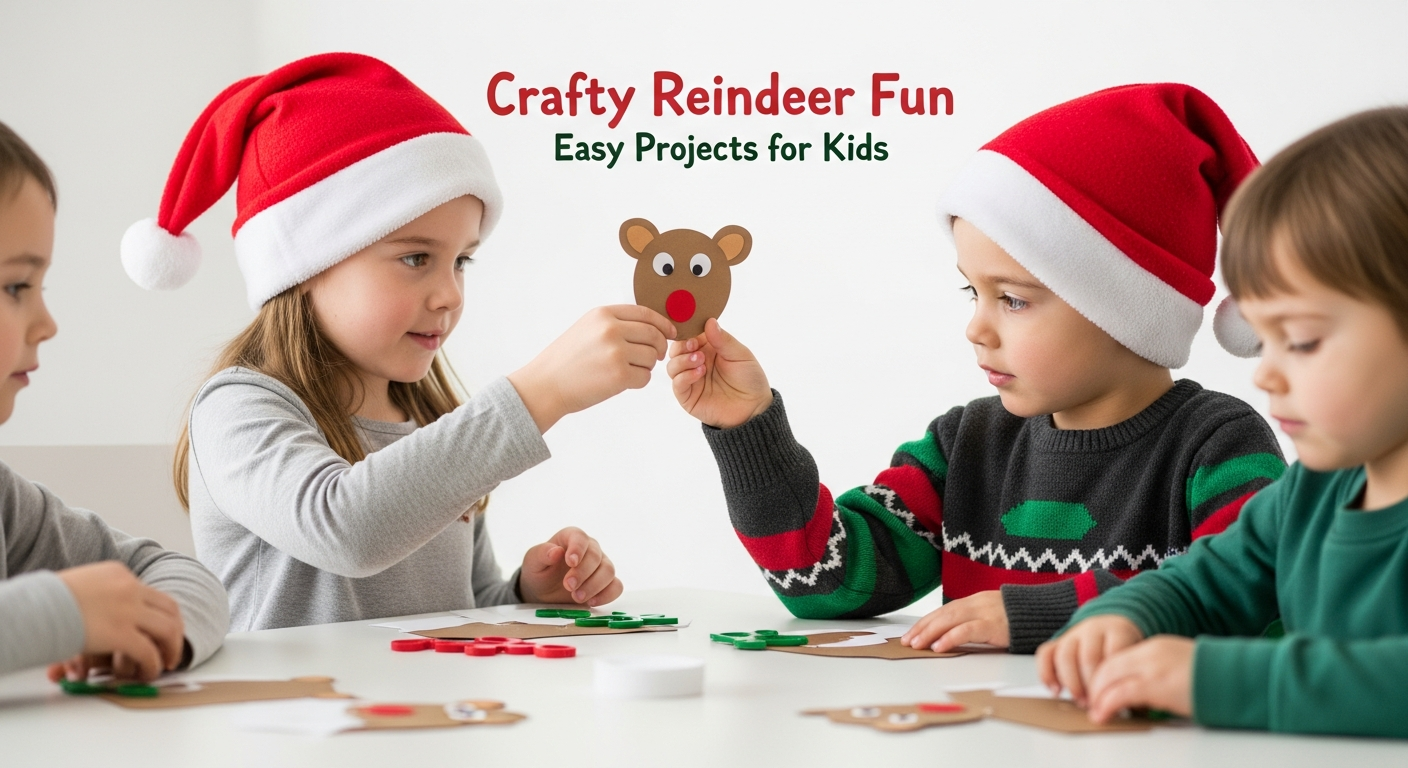
Table of Contents
- Why Reindeer Crafts are More Than Just Fun
- A Sleigh Full of Easy Reindeer Craft Ideas
- Boosting Language and Connection with Speech Blubs
- Investing in Your Child's Communication Journey
- Conclusion: Crafting a Brighter Future for Communication
- Frequently Asked Questions (FAQ)
As the festive season twinkles into view, a magical transformation often sweeps through our homes. Lights appear, carols fill the air, and children's eyes sparkle with anticipation. But beyond the glitter and the gifts, there's a deeper magic at play: the power of shared experiences and creative expression. Have you ever noticed how a simple craft project can ignite a child's imagination, spark lively conversations, and bring the whole family closer? We certainly have, and that's why we at Speech Blubs believe in the profound connection between playful activities, like making an easy reindeer craft, and a child's overall development, especially their communication skills.
This post isn't just about glue and googly eyes; it's about unlocking a world of learning and connection through the joy of creating. We’ll guide you through a sleigh-full of easy reindeer crafts perfect for kids of all ages, turning simple materials into opportunities for growth. More importantly, we'll explore how these hands-on activities are powerful catalysts for developing essential communication skills, fostering confidence, and creating cherished family memories. Get ready to transform everyday materials into enchanting reindeer, all while nurturing your child's ability to express their minds and hearts.

Why Reindeer Crafts are More Than Just Fun
The magic of a reindeer craft extends far beyond the finished product. These seemingly simple projects are miniature workshops for a child's developing brain, offering a rich environment for learning, exploration, and skill-building. For parents eager to support their child's communication journey, crafts provide a natural, low-pressure setting to practice crucial language and motor skills.
Fostering Communication Through Play
When children engage in crafting, they're not just making something; they're immersed in a dynamic communication ecosystem. Think about the language opportunities: naming colors ("This is brown paint!"), identifying shapes ("Can you find a circle for the nose?"), following multi-step directions ("First, we cut, then we glue."), and describing textures ("The pom-pom is so soft!"). These interactions build vocabulary, improve comprehension, and encourage expressive language in a way that feels completely natural and fun.
For a parent whose 3-year-old "late talker" loves animals, preparing an easy reindeer craft can be a fantastic way to introduce new words related to the craft itself and to animals. While making a fluffy cotton ball reindeer, you might prompt, "What sound does a reindeer make? Maybe 'jingle, jingle'!" or focus on the actions: "We are sticking the cotton. We are gluing the eyes." These simple, repetitive phrases provide valuable language models. At Speech Blubs, we understand the power of imitation and visual cues, which is why our app utilizes a unique video modeling methodology, where children learn by watching and imitating their peers, much like they learn by watching a parent craft.
Developing Essential Skills
Beyond direct language practice, reindeer crafts are fantastic for honing a wide range of developmental skills:
- Fine Motor Skills: Cutting with scissors, squeezing glue bottles, peeling stickers, and placing small googly eyes all strengthen the tiny muscles in a child’s hands and fingers. These skills are critical precursors to writing, drawing, and even precise articulation of speech sounds.
- Cognitive Development: Following instructions, problem-solving when something doesn't quite fit, understanding cause and effect (glue makes things stick!), and recognizing patterns are all significant cognitive boosts.
- Creativity and Imagination: Crafts provide a blank canvas for children to express themselves, explore new ideas, and bring their unique visions to life. This creative freedom can also encourage imaginative storytelling around their finished reindeer.
- Social-Emotional Growth: Working on a craft together promotes turn-taking, sharing materials, and patience. The sense of accomplishment a child feels upon completing a project can significantly boost their self-esteem and confidence, encouraging them to try new things and "speak their minds and hearts," a core mission at Speech Blubs.
We understand that finding engaging, effective ways to support your child's development can sometimes feel overwhelming. That’s why we’ve dedicated ourselves to blending scientific principles with play, creating "smart screen time" experiences that are far from passive. Just as crafting fosters family connection, our app is designed to be a powerful tool for interactive learning, an excellent screen-free alternative to passive viewing. Our mission is to provide an immediate, effective, and joyful solution for the 1 in 4 children who need speech support, and we firmly believe that hands-on activities like these crafts are a wonderful complement to a child's overall communication journey.

A Sleigh Full of Easy Reindeer Craft Ideas
Let's dive into some wonderfully easy and engaging reindeer crafts that you can create with your children. Each one offers unique opportunities for developmental growth and festive fun!
1. The Classic Cardboard Tube Reindeer
This craft is a timeless favorite, transforming a simple cardboard tube into a charming reindeer.
Materials Needed:
- Cardboard tubes (from paper towels or toilet paper)
- Brown paint (tempera or puffy paint for added texture)
- Paintbrush
- Brown pipe cleaners
- Googly eyes
- Red pom-poms (for Rudolph, of course!)
- Craft glue or tape
- Hole punch (optional)
Step-by-Step Creation & Developmental Benefits:
- Prepare the Tube: If using paper towel rolls, cut them to desired lengths. This step allows for discussion about "long" and "short" and develops scissor skills (with adult supervision).
- Paint it Brown: Children can paint the cardboard tube brown. Discuss the color "brown" and perhaps different shades. If making puffy paint (mix shaving cream, white glue, and brown tempera paint), the sensory experience of the thick paint adds another layer of engagement, perfect for sensory exploration and fine motor control. "We're spreading the paint!"
- Antler Attachment: Once the paint dries, an adult can poke two holes near the top of the tube with a hole punch or sharp object. Children can then thread brown pipe cleaners through the holes, twisting them into antler shapes. This is fantastic for fine motor skills, bilateral coordination, and following multi-step instructions ("Push it through the hole, then twist it").
- Add Features: Glue on googly eyes and a bright red pom-pom for the nose. Talk about "eyes" and "nose," and the different sizes and colors. The act of carefully placing small objects refines the pincer grasp.
Language Focus: Action verbs (cut, paint, poke, thread, twist, glue), colors (brown, red), body parts (eyes, nose, antlers), size concepts (long, short, big, small).
2. Simple Triangle Reindeer Craft
This geometric reindeer is super easy and great for teaching shapes!
Materials Needed:
- Brown paper (cut into a large triangle for the head)
- Lighter brown paper strips (for antlers)
- Googly eyes
- Red pom-poms or red buttons (for the nose)
- Craft glue
Step-by-Step Creation & Developmental Benefits:
- Triangle Base: Start with a pre-cut brown triangle. Ask your child, "What shape is this? It's a triangle!"
- Antler Assembly: Children can glue strips of lighter brown paper near the top of the triangle for antlers. Discuss "strips," "long," "short," and "up." This helps with spatial reasoning.
- Face Details: Glue on googly eyes and a red pom-pom or button for the nose. This reinforces facial feature vocabulary and fine motor precision.
Language Focus: Shapes (triangle, strip), colors (brown, red), prepositions (on top, near), vocabulary (antlers, eyes, nose).
3. Personal Touch: Handprint Reindeer
Handprint crafts are wonderful keepsakes and involve a delightful sensory experience.
Materials Needed:
- Construction paper (brown for the head, white for the background)
- Brown acrylic paint
- Googly eyes
- Red pom-pom
- Craft glue
- Scissors (adult use)
Step-by-Step Creation & Developmental Benefits:
- Reindeer Head: An adult can cut a simple reindeer head shape from brown construction paper.
- Handprint Antlers: Dip your child's hands into brown paint and press them onto the white paper, positioned behind the reindeer head. These become the antlers! This sensory experience is often a favorite, and discussing the feeling of the paint ("wet," "cold," "gooey") can be excellent for descriptive language.
- Facial Features: Once dry, glue googly eyes and a red pom-pom for the nose. You can even add rosy cheeks with a dab of pink paint.
Language Focus: Body parts (hand, fingers, eyes, nose, cheeks), descriptive words (wet, cold, gooey, soft, round), action verbs (dip, press, glue). This is also a fantastic opportunity for children to express pride in their "special hands" that made the craft.
4. Popsicle Stick Reindeer Creations
Popsicle sticks are versatile and offer a different kind of tactile engagement.
Materials Needed:
- Popsicle sticks
- Brown acrylic paint
- Paintbrush
- Googly eyes
- Red pom-poms
- Pipe cleaners (brown or sparkly)
- Craft glue (hot glue for adult use for assembly)
- Optional: glitter, cardstock for backing
Step-by-Step Creation & Developmental Benefits:
- Paint the Sticks: Children can paint popsicle sticks brown. This is a simple, repetitive action that builds hand strength and color recognition. Adding glitter when wet can be a fun sensory addition.
- Form the Shape: Once dry, an adult can help hot glue three sticks together to form a triangle, or simply line them up. If making a triangle, discuss the shape again.
- Create Antlers: Cut pipe cleaners into pieces and bend them into antler shapes, then glue or tape them to the back. This requires more fine motor control and spatial planning.
- Add Face: Glue on googly eyes and a red pom-pom. If using a cardstock backing, children can glue the brown cardstock to the back of the sticks to create a solid "face" for the eyes and nose.
Language Focus: Counting (number of sticks), colors (brown, red, glitter), textures (rough, smooth, sparkly), shapes (triangle, straight), action verbs (paint, glue, bend, cut). For children who may struggle with multi-step instructions, using popsicle sticks in a craft provides a clear, sequential task to follow, which can be reinforced through verbal prompts.
5. Playful Paper Plate Reindeer Mask
This craft transforms a paper plate into a fun mask, perfect for imaginative play!
Materials Needed:
- Paper plate
- Brown acrylic paint
- Paintbrush
- Brown construction paper (for antlers)
- Red pom-pom
- Craft glue
- Scissors (adult use for cutting the mask opening)
- Popsicle stick or wooden dowel (for holding the mask)
Step-by-Step Creation & Developmental Benefits:
- Paint the Plate: Have your child paint the paper plate brown.
- Antler Tracing: Trace your child's hands on brown construction paper and cut them out – these are the antlers! This adds a personal touch and reinforces body awareness.
- Mask Opening: Once the plate is dry, an adult cuts out eyeholes (or a larger opening if it’s a full-face mask).
- Assemble: Glue the handprint antlers to the top of the plate, and a red pom-pom in the center for the nose.
- Handle: Hot glue a popsicle stick to the back for a handle.
Language Focus: Body parts (hands, eyes, nose), descriptive words (round, sticky, big), action verbs (paint, trace, cut, glue, hold), imaginative play language ("I'm a reindeer!"). This craft naturally encourages pretend play, which is crucial for developing narrative skills and social communication.
6. Recycled Paper Bag Reindeer
A great way to use everyday items and create a cute decoration!
Materials Needed:
- Paper bags (lunch bag size)
- Newspaper or crumpled paper (for stuffing)
- Scrapbook paper or construction paper (for features)
- Googly eyes
- Red pom-pom
- Craft glue or glue stick
- Tape
- Optional: mini craft lights for antlers
Step-by-Step Creation & Developmental Benefits:
- Stuff the Bag: Have your child help stuff the paper bag with crumpled newspaper. This is a great bilateral activity and good for hand strength. "We are stuffing the bag!"
- Form the Head: Fold the top of the bag over and tape it down to form the reindeer's head shape.
- Cut Features: Children can help cut shapes for eyes, ears, and antlers from scrapbook or construction paper. This is excellent practice for scissor skills and identifying shapes.
- Assemble Face: Glue or tape the eyes, ears, antlers, and a red pom-pom nose onto the bag. Adding small craft lights to the antlers can add a magical touch.
Language Focus: Prepositions (inside, on top), action verbs (stuff, fold, cut, glue, tape), adjectives (crumpled, shiny, soft), sequencing (first, next, last).
7. Textured Rice Sensory Reindeer
This craft is a wonderful sensory experience with a beautiful visual outcome.
Materials Needed:
- White paper (for background)
- Brown construction paper (for reindeer shape)
- Colored rice (brown and rainbow, if desired)
- Craft glue
- Googly eyes
- Red pom-pom
- Scissors (adult use)
- Ziplock bags, acrylic paint, parchment paper (for coloring rice)
Step-by-Step Creation & Developmental Benefits:
- Color the Rice (Adult Prep): Place rice in ziplock bags with a few drops of acrylic paint. Shake well, then spread on parchment paper to dry. This is a fun sensory experience in itself, but best done beforehand.
- Reindeer Outline: An adult cuts a reindeer shape from brown construction paper and glues it onto the white background paper.
- Glue and Sprinkle: Children apply glue to the reindeer shape, then sprinkle brown colored rice over the glue. The tactile experience of the rice is engaging. "Feel the crunchy rice!"
- Details: Add googly eyes and a red pom-pom. If using rainbow rice, sprinkle it on the antlers for a festive touch.
Language Focus: Sensory words (crunchy, rough, smooth, sticky), colors (brown, rainbow), action verbs (sprinkle, glue, shake), descriptive language about the texture and appearance of the craft. Sensory crafts can be particularly calming and focusing for some children, making them more receptive to language prompts.
8. Holiday Ornament Reindeer
Create a personalized ornament to hang on your tree!
Materials Needed:
- Clear plastic or glass ornaments
- Small brown pom-poms or brown shredded paper (for stuffing)
- Brown scrapbook paper or cardstock (for antlers)
- Googly eyes
- Red pom-pom
- Hot glue (adult use)
- Sharpie (optional, for smile)
Step-by-Step Creation & Developmental Benefits:
- Stuff the Ornament: Help your child push brown pom-poms or shredded paper into the clear ornament. This is great for fine motor skills and hand-eye coordination. "We're filling the ornament!"
- Antler Creation: An adult can cut small antler shapes from brown paper and hot glue them to the top of the ornament.
- Face Details: Hot glue googly eyes and a red pom-pom for the nose. A small smile can be drawn with a Sharpie.
Language Focus: Prepositions (in, on top), colors (brown, red), descriptive words (clear, shiny, round), action verbs (push, fill, glue, hang). This craft also introduces the concept of giving and decorating, fostering social-emotional learning.
9. Sponge Painting Reindeer
A simple and effective method for younger children to create art.
Materials Needed:
- Sponge
- Brown acrylic paint
- White paper
- Adult scissors and marker (for sponge prep)
- Googly eyes
- Red pom-pom
- Craft glue
- Brown marker (for antlers)
Step-by-Step Creation & Developmental Benefits:
- Sponge Prep: An adult draws a simple triangle or reindeer-head shape on a sponge and cuts it out.
- Stamp Away: Children dip the sponge into brown paint and stamp it onto white paper to create reindeer "heads." This is a fun, repetitive action that builds wrist strength and introduces stamping as an art technique.
- Details: Once the paint dries, glue on googly eyes and a red pom-pom nose. Use a brown marker to draw antlers.
Language Focus: Action verbs (dip, stamp, draw, glue), shapes (triangle), colors (brown, red), descriptive words (wet, sticky). The simplicity of this craft makes it perfect for toddlers and preschoolers who are just beginning to develop their fine motor control and understanding of cause and effect.
10. Toilet Paper Roll Reindeer Trio
Extend the cardboard tube idea by creating a whole family of reindeer, or add other characters!
Materials Needed:
- Toilet paper rolls
- Brown acrylic paint
- Googly eyes
- Red pom-poms
- Brown pipe cleaners
- Small buttons or beads
- Craft glue
- Scissors (adult use)
Step-by-Step Creation & Developmental Benefits:
- Paint the Rolls: Children paint the toilet paper rolls brown. You can encourage different shades of brown for a varied reindeer family.
- Antlers: Once dry, an adult can make small slits at the top of the rolls, or punch holes. Children can insert pipe cleaners and shape them into antlers.
- Face & Details: Glue on googly eyes and a red pom-pom nose. You can also glue small buttons down the front to mimic a festive sweater, adding more opportunities for counting and color identification.
Language Focus: Counting (one, two, three rolls), colors (brown, red), action verbs (paint, cut, insert, shape, glue), concepts of "family" (mommy, daddy, baby reindeer). This allows for imaginative play and storytelling about the reindeer family.
Boosting Language and Connection with Speech Blubs
While these easy reindeer crafts are fantastic for hands-on learning, they also open doors to continued language development, which is where Speech Blubs shines as a complementary tool. Our mission at Speech Blubs is to empower children to "speak their minds and hearts," and we do this by transforming screen time into "smart screen time" – an engaging, interactive experience built on scientific principles.
Imagine this: You've just finished creating a beautiful reindeer craft. Your child is beaming with pride. This is the perfect moment to transition to an interactive communication session. For children who thrive on visual learning and imitation, Speech Blubs' unique video modeling methodology allows them to watch and imitate their peers, making learning new sounds and words feel like a fun game. We know firsthand the challenges children and families face when speech development needs support, as our company was born from the personal experiences of our founders, who all grew up with speech problems and created the tool they wished they had.
How Speech Blubs Can Help
- Targeted Practice: If your child is struggling with specific sounds or words, like those related to animals or colors (many found in these crafts!), Speech Blubs offers engaging activities to practice these. For example, after making a brown reindeer, you can explore the "Animal Kingdom" section of our app to practice saying "reindeer" or other animal sounds and names.
- Vocabulary Expansion: Our app is packed with thousands of words across various categories, helping children expand their vocabulary in a joyful and interactive way.
- Confidence Building: Just like completing a craft builds confidence, successful communication experiences within Speech Blubs reduce frustration and encourage children to keep trying.
- Family Connection: Our app isn't just for kids; it's a powerful tool for family connection, offering prompts and activities that encourage parents to play and learn alongside their children, extending the interactive learning from crafting into digital play.
We are committed to providing an immediate, effective, and joyful solution for the 1 in 4 children who need speech support. Our robust research and positive testimonials from countless parents highlight the effectiveness of our approach, which has earned us a top-tier rating on the MARS scale for health apps. You can read more about our scientific methodology and success stories on our Research page and Testimonials page.
Unsure if Speech Blubs is right for your child? We’ve made it easy to find out. Take our quick 3-minute preliminary screener – it involves just 9 simple questions and provides an assessment and a next-steps plan. This is a perfect first step to understanding how Speech Blubs can support your child's unique communication journey.
Investing in Your Child's Communication Journey
At Speech Blubs, we believe that every child deserves the opportunity to communicate effectively and joyfully. That's why we offer flexible plans designed to fit your family's needs. We encourage you to explore our subscription options to find the best fit for your child's communication growth:
- Monthly Plan: For just $14.99 per month, you can access our core features and a wide range of engaging activities.
- Yearly Plan: The Best Value! Our Yearly Plan is an exceptional value at only $59.99 per year, which breaks down to an incredible $4.99 per month! This is a massive savings of 66% compared to the monthly plan.
Choosing the Yearly plan isn't just about saving money; it unlocks a suite of exclusive, high-value features that significantly enhance your child's learning experience:
- 7-Day Free Trial: The Yearly plan includes a full 7-day free trial, giving you ample time to explore all the amazing features and see the positive impact on your child. The Monthly plan does not include this free trial.
- The Extra Reading Blubs App: Exclusively with the Yearly plan, you gain access to our companion Reading Blubs app, further supporting your child's literacy development.
- Early Access & Priority Support: Yearly subscribers receive early access to new updates and features, ensuring your child always has the latest and greatest content. You also benefit from a 24-hour support response time, so help is always just a day away.
We highly recommend the Yearly plan to get the most out of your Speech Blubs experience, including the free trial and the full suite of features designed to empower your child's communication journey.
Conclusion: Crafting a Brighter Future for Communication
From the joy of transforming a simple cardboard tube into a festive reindeer to the pride of seeing a child articulate a new word, the journey of communication development is filled with small, significant victories. Easy reindeer crafts are more than just holiday activities; they are powerful tools for fostering fine motor skills, expanding vocabulary, encouraging imagination, and building confidence—all essential building blocks for effective communication. These hands-on experiences create rich opportunities for connection, turning everyday moments into cherished memories and learning adventures.
As you embark on these creative endeavors with your children, remember that every snip, glue, and dab of paint is contributing to their growth. And when you're looking for an immediate, effective, and joyful way to support and enhance their communication journey, Speech Blubs is here to help. Our app complements these hands-on activities by providing engaging "smart screen time" that encourages imitation and practice, ultimately empowering your child to "speak their minds and hearts."
Ready to dive into a world where crafting, play, and learning converge? Start your child's communication adventure today! Download Speech Blubs on the App Store or Google Play and begin your 7-day free trial. Remember to choose the Yearly plan to unlock the free trial, the bonus Reading Blubs app, and exclusive features—the best value for your child's ongoing development. You can also create your account on our website to get started! Let's craft, connect, and communicate!
Frequently Asked Questions (FAQ)
Q1: What age group are these easy reindeer crafts suitable for?
A1: These crafts are designed to be adaptable for a wide range of ages. Younger children (toddlers and preschoolers) will enjoy the sensory aspects and simple actions like painting and gluing with adult supervision. Older children (kindergarten and early elementary) can take on more complex tasks like cutting and detailed assembly, and will also enjoy the imaginative play that follows. Always adjust the complexity and supervision level to your child's developmental stage.
Q2: How do crafts specifically help with speech development?
A2: Crafts aid speech development in multiple ways. They provide opportunities to practice vocabulary (colors, shapes, materials, actions like "cut," "glue," "paint"), follow multi-step instructions (improving comprehension), use descriptive language ("soft," "sticky," "shiny"), and engage in turn-taking conversations. The fine motor skills developed through crafting (cutting, squeezing, placing small items) are also foundational for oral motor control and articulation. Engaging in these activities in a fun, low-pressure environment can significantly boost a child's confidence in expressing themselves.
Q3: What if my child gets frustrated during a craft?
A3: Frustration is a natural part of learning! When your child gets frustrated, take a deep breath and offer supportive, empathetic language. You can say, "This part is tricky, isn't it? Let's try it together," or "It's okay to feel frustrated. Sometimes crafts can be a little hard. How about we try a different step, or take a short break?" Focus on the effort, not just the outcome. Remember, the process is often more important than the perfect finished product. The goal is joyful engagement, not perfection. You can always simplify the steps or offer more hands-on assistance.
Q4: How does Speech Blubs integrate with hands-on activities like crafting?
A4: Speech Blubs acts as a powerful complement to hands-on activities like crafting by providing targeted practice and reinforcement for communication skills. While crafting, children develop motor skills and engage in verbal exchanges. Afterwards, Speech Blubs can help solidify new vocabulary or sounds through its engaging video modeling and interactive exercises. For example, if your child learned new animal sounds while making a reindeer, they can continue practicing those sounds in our "Animal Kingdom" section. Our app helps extend the learning from "screen-free" activities into "smart screen time," creating a holistic approach to language development that encourages children to speak their minds and hearts. Visit our homepage to learn more about our comprehensive approach.
About the author