
Creative and Educational Toddler Valentine Activities for Early Learning
 By Speech Blubs Team•Mar 25, 2026•13 min.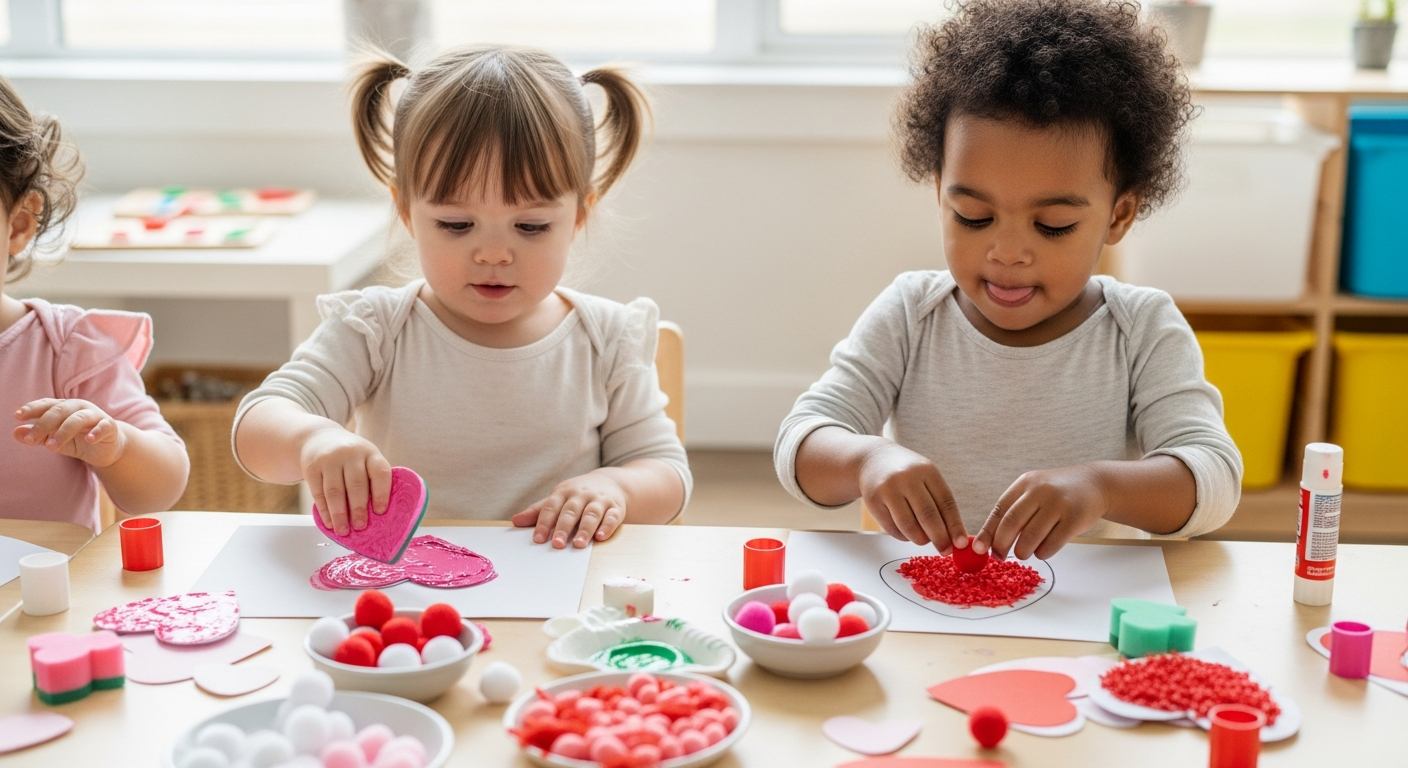
Table of Contents
- Introduction
- Why Toddler Valentine Activities Matter for Development
- Sensory Play: Exploring Love Through Touch
- Fine Motor Fun: Strengthening Tiny Hands
- Integrating Speech and Language Skills
- Creative Arts and Crafts: Expressing the Heart
- Gross Motor Games: Moving with Love
- The Speech Blubs Approach: More Than Just an App
- Value and Pricing: Investing in Your Child's Future
- Setting Realistic Expectations
- Summary of Toddler Valentine Activities
- Conclusion
- Frequently Asked Questions
Introduction
Did you know that a toddler’s brain creates up to one million new neural connections every single second? In these early years, every interaction, every tactile sensation, and every new word is a building block for their future. However, for many parents, the period following the high-energy excitement of the winter holidays can feel like a bit of a developmental "slump." Valentine’s Day often arrives as a quiet, abstract concept that toddlers don’t quite understand yet. Is it about candy? Is it about cards? At Speech Blubs, we believe it is the perfect opportunity to help children "speak their minds and hearts" through purposeful play.
The goal of this post is to transform Valentine’s Day from a "Hallmark holiday" into a powerhouse of developmental growth. We will explore a wide range of toddler valentine activities—from sensory bins that stimulate the nervous system to fine motor crafts that prepare small hands for writing. More importantly, we will show you how to narrate these activities to boost your child’s vocabulary and communication skills. Whether your child is a "late talker" or hitting every milestone on time, these activities are designed to foster joy, connection, and foundational learning. Our thesis is simple: when we blend the science of play with the warmth of the holiday, we create "smart" moments that help children flourish.

Why Toddler Valentine Activities Matter for Development
For a two or three-year-old, "love" is an abstract concept. They feel it, but they can’t always define or describe it. Engaging in toddler valentine activities provides a concrete way to explore these big emotions. By using hearts, the color red, and themes of friendship, we are giving them a visual and physical vocabulary for their feelings.
Beyond the emotional aspect, these activities target specific developmental domains:
- Sensory Processing: Touching different textures like rice, oobleck, or sticky paper helps toddlers regulate their sensory systems.
- Fine Motor Skills: Squeezing clothespins or threading beads strengthens the intrinsic muscles of the hand, which are essential for self-feeding and, eventually, writing.
- Speech and Language: Every activity is an opportunity for "focused stimulation"—repeating target words like "heart," "red," "sticky," or "more."
- Cognitive Matching: Sorting hearts by size or color builds the mathematical foundation for pattern recognition.
At Speech Blubs, our mission is to provide an immediate, effective, and joyful solution for the 1 in 4 children who need speech support. We know that the best learning happens when a child is engaged and having fun with their favorite person—you.
Sensory Play: Exploring Love Through Touch
Sensory play is often the "gateway" to learning for toddlers. When a child’s hands are busy, their brain is open to receiving new information. Here are some of our favorite sensory-focused toddler valentine activities.
1. The Classic Valentine’s Sensory Bin
Sensory bins are a staple in early childhood education for a reason. To create a Valentine’s version, dye white rice or chickpeas using red and pink food coloring. Add small heart-shaped trinkets, scoops, and silicone muffin liners.
- Speech Tip: Use "action words" while they play. Say, "Scoop the rice," "Pour the heart," or "Hide the red bead."
- Speech Blubs Connection: If your child loves the tactile nature of this bin, they might enjoy the "Living Pictos" section of our app, which uses vibrant visuals to represent these same everyday objects.
2. Candy Heart Oobleck
Oobleck is a non-Newtonian fluid (made from cornstarch and water) that acts like a solid when squeezed and a liquid when released. Add purple or pink dye and drop in some conversation hearts.

- Developmental Benefit: This is excellent for children who are "sensory seekers." The resistance of the oobleck provides proprioceptive input, which can be very calming.
- Activity Idea: Watch the candy hearts "melt" or disappear into the goo, then "rescue" them.
3. Love Potion Bubble Foam
Mix water, dish soap, and a little food coloring with a hand mixer until it forms stiff peaks. Place it in a large bin with plastic hearts.
- Why it works: It’s "clean" messy play. Toddlers love the airy texture, and it’s a great way to practice words like "bubbles," "pop," and "soft."
Fine Motor Fun: Strengthening Tiny Hands
Fine motor skills involve the coordination of small muscle movements. These toddler valentine activities are designed to challenge the "pincer grasp" and hand-eye coordination.
4. Heart Beading and Lacing
Using large wooden heart beads or even cut-out cardboard hearts with holes punched in them, encourage your toddler to thread them onto a lace or pipe cleaner.
- Expert Insight: For a child who struggles with frustration, start with pipe cleaners, as they are stiff and easier to guide through holes than floppy string.
- Vocabulary: Focus on "through," "on," and "pull."
5. Heart Sticker Color Match
Draw several large hearts on a piece of paper in different colors (red, blue, yellow). Give your toddler a sheet of "dot stickers" and have them place the stickers inside the matching colored heart.
- Real-World Scenario: For a parent whose 3-year-old "late talker" is just starting to identify colors, this activity provides a low-pressure way to practice. You can say, "Where does the red sticker go? Yes, on the red heart!"
6. Clothespin "Heart Clip"
Take a heart-shaped box or a piece of sturdy cardboard cut into a heart. Give your toddler clothespins and show them how to "pinch" them onto the edge.
- The "Why": Squeezing a clothespin uses the same muscles needed to hold a pencil correctly later in life. If the clothespins are too hard to squeeze, let your child pull them off after you’ve clipped them on—this still builds strength!
Integrating Speech and Language Skills
At Speech Blubs, our company was born from the personal experiences of our founders, who all grew up with speech problems. We created the tool we wished we had: one that blends scientific principles with play. When you engage in these activities, you are the primary "model" for your child.
Using Video Modeling at Home
Our unique approach teaches complex communication skills through "video modeling," where children learn by watching and imitating their peers. You can mirror this during your Valentine’s activities.
- Try this: Sit face-to-face with your child while doing a craft. Over-exaggerate your mouth movements as you say words like "Heart" (open wide for the 'H') or "Pink" (press lips for the 'P').
- Scientific Basis: This activates "mirror neurons" in the brain, making it easier for children to mimic sounds. To understand more about the science behind this, you can read our Research Page.
7. Heart Letter Puzzles
Cut a large heart out of construction paper and write a letter on it. Cut the heart in half using a zig-zag or wavy line. Have your child find the two pieces that fit together.
- Modification: If your child is younger, just focus on matching colors or shapes rather than letters.
Creative Arts and Crafts: Expressing the Heart
Art is a powerful way for toddlers to communicate without words. These toddler valentine activities focus on the process rather than the final product.
8. "Love to Pieces" Gluing
This is a fantastic "wet glue" introduction. Have your child rip up scraps of red, pink, and white construction paper. Ripping paper is actually a great fine motor exercise! Then, let them glue the pieces onto a large heart template.
- Speech Blubs Tip: If your child gets frustrated with the glue sticking to their fingers, use a paintbrush to apply the glue. This keeps the sensory input manageable while still achieving the goal.
9. Heart Stamp Playdough
Make a batch of soft, homemade playdough. Provide heart-shaped cookie cutters or stamps.
- Scenario: If your toddler loves animals, use the "Animal Kingdom" section of our app to find the "pig" or "cat." Then, make playdough "cookies" for the animals! This bridge between digital learning and physical play is what we call "smart screen time."
10. Sticky Heart Wall
Tape a piece of contact paper (sticky side out) to the wall. Draw a large heart on the back or place a paper heart behind it. Let your toddler stick bits of tissue paper, feathers, or foam shapes onto the sticky surface.
- The Benefit: Working on a vertical surface (the wall) is excellent for shoulder stability and core strength, which are indirect contributors to fine motor control.
Gross Motor Games: Moving with Love
Toddlers have a lot of energy. Incorporating movement into your toddler valentine activities ensures that they are learning with their whole bodies.
11. Heart Hopscotch
Tape paper hearts to the floor in a path. Encourage your child to jump from "heart to heart."
- Language Integration: Every time they land, say a word. "Jump! Love! Jump! Heart!" This rhythm helps with the prosody of speech.
12. Valentine’s Day "Scavenger Hunt"
Hide foam hearts around the room. Give your toddler a basket and ask them to find "all the red hearts" or "the big heart."
- Building Confidence: This activity builds "receptive language" (the ability to understand instructions). When they find a heart, celebrate their success to build their confidence in communication.
The Speech Blubs Approach: More Than Just an App
While these physical activities are vital, we know that modern parents also need digital tools that actually contribute to their child's development. We provide a screen-free alternative to passive viewing (like cartoons) and a powerful tool for family connection. Unlike apps that just entertain, Speech Blubs is designed to be a co-play experience.
If you are unsure where your child stands developmentally, we recommend starting with our quick 3-minute preliminary screener. It involves 9 simple questions and provides you with an assessment and a personalized next-steps plan.
Authentic Success
Don’t just take our word for it. Our methodology has helped thousands of families find their voice. You can read stories from parents who have seen real progress in our Testimonials section. We focus on fostering a love for communication, building confidence, and reducing the frustration that often comes with speech delays.
Value and Pricing: Investing in Your Child's Future
We want to be transparent about how you can access the full suite of Speech Blubs tools to supplement your toddler’s learning journey. While we offer a variety of free resources on our Main Homepage, our premium plans unlock the most value.
- Monthly Plan: $14.99 per month. This is a great way to try the app and see how your child responds to our peer-led video modeling.
- Yearly Plan (Best Value): $59.99 per year. This breaks down to just $4.99 per month, saving you 66% compared to the monthly plan.
Why the Yearly Plan is the clear choice:
- 7-Day Free Trial: You can explore everything for a full week at no cost.
- Reading Blubs: This plan includes our companion app, Reading Blubs, which helps transition speech skills into early literacy.
- Exclusive Updates: Get early access to new activities and updates.
- Priority Support: Enjoy a 24-hour response time from our dedicated support team.
The monthly plan does not include the free trial, the Reading Blubs app, or early access features. To give your child the most comprehensive support, we highly recommend the Yearly plan.
Setting Realistic Expectations
It is important to remember that every child develops at their own pace. Engaging in toddler valentine activities or using the Speech Blubs app is not a "magic wand" that results in public speaking overnight. Instead, look for the "small wins":
- Your child making eye contact while you do a craft together.
- A new attempt at a sound like "m" for "more."
- Less frustration when they want to tell you something.
- An increased interest in "mirroring" your facial expressions.
These activities are powerful supplements to a child’s overall development plan and, when applicable, professional therapy. By creating joyful family learning moments, you are laying the groundwork for a lifetime of confident communication.
Summary of Toddler Valentine Activities
To make your Valentine’s planning easier, here is a quick checklist of the activities we covered:
Activity CategorySpecific IdeaPrimary Skill
Sensory
Rice Bin / Oobleck
Tactile Processing
Fine Motor
Beading / Clothespins
Hand Strength
Cognitive
Heart Letter Puzzles
Matching/Literacy
Art
"Love to Pieces" Gluing
Creative Expression
Gross Motor
Heart Hopscotch
Balance/Coordination
Conclusion
Valentine’s Day is about more than just chocolate; it’s about the connection we share with those we love most. By engaging in these toddler valentine activities, you are turning a simple holiday into an opportunity for profound growth. From the sensory squish of oobleck to the focused effort of threading beads, you are helping your child build the skills they need to "speak their minds and hearts."
We invite you to make this journey even more impactful by joining the Speech Blubs family. Our "smart screen time" experiences are designed to be used alongside these physical activities to create a holistic learning environment.
Ready to get started? Create your account and begin your 7-day free trial today. For the best experience and the full suite of features—including our Reading Blubs app—be sure to select the Yearly Plan.
You can also download Speech Blubs on the App Store or find us on the Google Play Store to begin your journey immediately. Let's make this Valentine's Day the start of a beautiful new chapter in your child's communication journey.
Frequently Asked Questions
What age is best for these Valentine activities?
Most of these activities are designed for toddlers aged 2 to 4. However, they can easily be modified. For younger toddlers, focus on simple sensory play like the rice bin. For older preschoolers, you can introduce more complex tasks like letter matching or using safety scissors to cut their own hearts.
My child still puts everything in their mouth. Are these safe?
Safety is always the priority. If your child is still in the "mouthing" phase, stick to taste-safe sensory bins (like plain cooked pasta dyed with food coloring) and avoid small beads or candy hearts. Always supervise your child closely during any activity involving small parts or glue.
How long should I spend on an activity with my toddler?
Toddlers have famously short attention spans—often only 3 to 5 minutes per year of age. Don’t be discouraged if they only want to play with the sensory bin for five minutes. The goal is the quality of the interaction, not the duration of the play. If they are engaged for even a few minutes, the "learning" is happening!
Can these activities help if my child has a speech delay?
Yes! Activities that involve sensory input and fine motor work are often used by Speech-Language Pathologists (SLPs) to engage children and encourage vocalization. By narrating the actions and using apps like Speech Blubs to provide peer models, you are creating a language-rich environment that supports speech development.
About the author