
Creative and Fun Toddler Boy Crafts for Active Minds
 By Speech Blubs Team•Feb 20, 2026•16 min.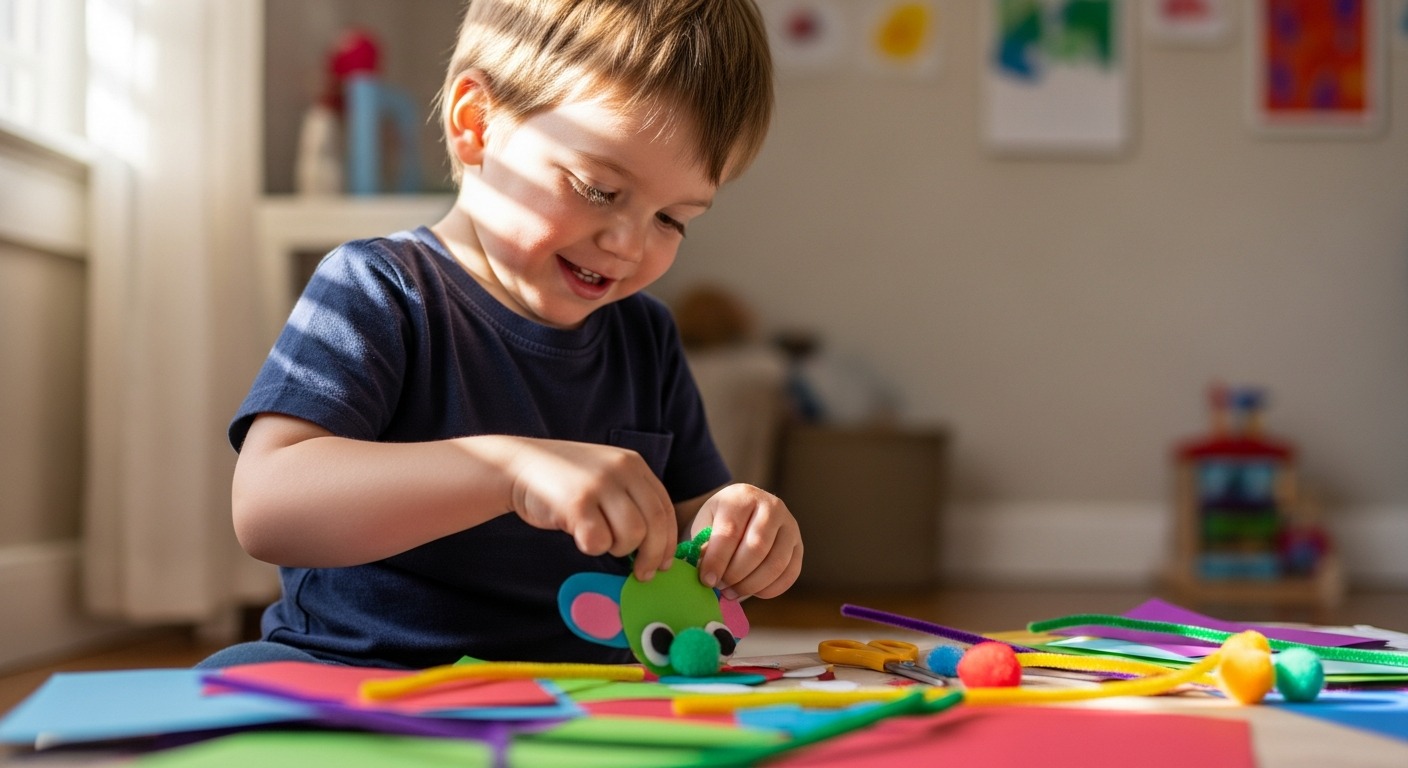
Table of Contents
- Introduction
- The Developmental Power of Crafting
- Sensory Crafts: Messy, Exploratory, and Fun
- Nature-Inspired Crafts for Little Explorers
- Vehicle and Movement-Based Crafts
- Fine Motor Skill Builders
- Setting Realistic Expectations
- Making the Most of "Smart Screen Time"
- Choosing the Right Plan for Your Family
- Practical Scenarios: Connecting Crafts to Speech Blubs
- A Note on Adult Co-Play
- Summary of Key Takeaways
- Conclusion
- Frequently Asked Questions
Introduction
Did you know that by the age of three, a child’s brain has formed about 1,000 trillion connections—twice as many as an average adult? This period of explosive growth is the perfect time to introduce activities that challenge those tiny neurons, and nothing does that quite like the world of arts and crafts. When we see our little boys dive into a pile of construction paper or get elbow-deep in finger paint, we aren't just seeing a mess; we are witnessing the architectural development of their future communication and cognitive skills.
The transition from a baby to a toddler is a whirlwind of "firsts." It’s the first time they grip a chunky crayon, the first time they realize they can stick two pieces of paper together with glue, and the first time they see their own imagination come to life on the kitchen table. These moments are magical, but for many parents, they can also feel a bit overwhelming. Which crafts are age-appropriate? How do we manage the mess? And most importantly, how do these activities help our children learn to speak their minds and hearts?

In this guide, we will explore a wide variety of toddler boy crafts designed to engage active minds and busy hands. We’ll cover everything from sensory-rich painting to nature-inspired projects, all while explaining the developmental benefits behind the fun. Our mission at Speech Blubs is to empower children to communicate effectively, and we believe that play-based learning is the most joyful way to achieve that. By the end of this article, you’ll have a toolbox full of ideas to foster your child’s creativity, build their confidence, and create lasting family memories.
The Developmental Power of Crafting
Before we dive into the glitter and glue, it’s important to understand why we prioritize these activities. Crafting is more than a way to pass a rainy afternoon; it is a foundational pillar of child development. For a toddler boy, whose energy levels often seem boundless, crafts provide a constructive outlet for that physical vigor while honing specific skills.
Fine Motor Skill Mastery
Every time your toddler picks up a small bead, tears a piece of tissue paper, or tries to use safety scissors, they are strengthening the small muscles in their hands and fingers. These fine motor skills are the precursors to writing, buttoning a shirt, and even using a fork. When we encourage these movements through play, we are preparing them for the more "formal" tasks of childhood.
Language and Vocabulary Building
Crafting is a naturally social activity. As you work together, you’ll find yourself narrating the process: "Look at the sticky glue," "Can you find the blue truck?" or "We are squishing the playdough." This constant stream of descriptive language helps expand your child’s vocabulary. It provides a concrete context for abstract words, making it easier for them to grasp meanings.
At Speech Blubs, we leverage this same principle through our "video modeling" methodology. In our app, children learn by watching and imitating their peers, which is the most natural way for humans to acquire language. Just as they watch you to learn how to hold a paintbrush, they watch the kids in our app to learn how to form sounds and words. You can download Speech Blubs on the App Store or Google Play to see this methodology in action.

Emotional Regulation and Patience
Let’s be honest: crafting takes patience. Waiting for glue to dry or trying to get a sticker off its backing can be frustrating for a two-year-old. However, navigating these small challenges in a supportive environment helps children develop resilience and problem-solving skills. It turns frustration into a sense of accomplishment once the project is finished.
Sensory Crafts: Messy, Exploratory, and Fun
Toddler boys often thrive on sensory input. They want to touch, smell, and sometimes (to our chagrin) taste everything. Sensory crafts are designed to satisfy this curiosity in a safe and educational way.
1. The Edible Yogurt Paint Experience
For the "mouther" who still tries to taste his art supplies, yogurt paint is a game-changer. Simply take plain Greek yogurt and mix in a few drops of food coloring. This creates a vibrant, creamy "paint" that is completely safe if a little ends up in their mouth.
- Developmental Tip: Use this time to practice color names. If your toddler is a "late talker" who loves snacks, this activity creates a high-motivation environment to practice words like "more," "blue," or "yum."
2. Shaving Cream "Mud" and Construction Zones
If you have a toddler who is obsessed with excavators and dump trucks, this is the craft for them. Fill a shallow tray with shaving cream and add a few drops of brown paint or cocoa powder to create "mud." Let them drive their toy trucks through the mixture, creating tracks and "building" structures.
- Speech Connection: This is the perfect time to model "action" words. As the truck moves, say "Go, go, go!" or "Stop!" When the truck gets stuck, say "Oh no! Stuck!" These simple, repetitive sounds are the building blocks of early speech. For more ideas on how to use play to spark speech, check out our research page to see the science behind our approach.
3. Bubble Wrap Stomp Painting
Tape a long piece of butcher paper to the floor and cover your toddler’s feet (or shoes) in bubble wrap. Dip the bubble-wrapped feet in washable paint and let them "stomp" out a masterpiece. The popping sound of the bubbles provides excellent auditory feedback, and the physical movement keeps them engaged.
Nature-Inspired Crafts for Little Explorers
There is something inherently calming about taking the crafting process outdoors. Nature provides an endless supply of free, beautiful materials that stimulate the imagination.
4. Leaf Letter Collages
Go on a "nature walk" in your backyard or a local park. Encourage your toddler to collect leaves of different shapes, sizes, and colors. Back at home, draw a large version of the first letter of their name on a piece of cardboard. Help them glue the leaves onto the letter.
- The "Why": This helps with letter recognition and introduces the concept that symbols (like letters) have meaning. It also encourages "pincer grip" development as they pick up individual leaves.
5. Painted Rock "Pets"
Rocks are a toddler boy’s best friend. Have them find a few smooth stones and let them paint them with bright colors. Once dry, you can add "googly eyes" to turn them into pet rocks.
- Real-World Scenario: Imagine a parent whose 3-year-old is obsessed with animals. After painting a "rock dog," they can head over to the "Animal Kingdom" section of the Speech Blubs app to practice the "woof woof" sound. This connection between a physical craft and digital "smart screen time" reinforces the learning experience.
6. Nature Suncatchers
Using clear contact paper and a paper plate with the center cut out, your toddler can "stick" flower petals, grass, and thin leaves onto the sticky surface. Hang it in a window and watch how the light transforms their finds. This is a low-mess way to explore the outdoors from the comfort of your kitchen.
Vehicle and Movement-Based Crafts
Many toddler boys are naturally drawn to things that go. Incorporating their love for cars, planes, and trains into crafting is a surefire way to keep their attention.
7. Toy Car Track Art
Instead of using brushes, use the wheels of toy cars as paint applicators. Roll the cars through different colors of paint and then "drive" them across a large sheet of paper. The different tire treads create fascinating patterns.
- Speech Blubs Integration: This activity mirrors the "Beep Beep" section in our app. By combining the physical play of driving cars with the video modeling in the app, you are providing a multi-sensory learning experience that helps solidify new words in your child’s mind.
8. The "Everything" Cardboard Box Car
Never underestimate the power of a large cardboard box. Help your toddler "paint" their car with markers or tempera paint. You can use paper plates for wheels and a plastic lid for a steering wheel.
- Co-Play Note: This is an excellent opportunity for "smart screen-free" time that focuses on imaginative play. Sit inside the box with them and pretend to go on a trip to the grocery store or the zoo. Ask questions like, "Where should we go next?" to encourage their budding communication skills.
Fine Motor Skill Builders
As your toddler approaches age three, they are ready for crafts that require a bit more precision. These activities are excellent for preparing them for preschool.
9. Pasta Necklaces (and Sorting)
Using large, dry pasta (like rigatoni or penne), have your toddler paint the pieces different colors. Once dry, help them thread the pasta onto a piece of yarn or a shoestring.
- Skill Check: Threading is a complex task for a toddler. It requires hand-eye coordination and a lot of focus. Don’t worry if they get frustrated at first; focus on the process rather than the final necklace. You can also use the painted pasta for sorting games (e.g., "Put all the red ones in this bowl").
10. Sticky Wall Masterpieces
Tape a large sheet of contact paper to the wall, sticky side out. Give your toddler a bowl of "bits"—scraps of construction paper, bits of yarn, buttons, and felt shapes. They can stick and re-stick the items to the wall to create a constantly evolving mural.
- Expert Tip: Vertical surfaces are actually better for developing shoulder and wrist stability than flat tables. This "sticky wall" is a fantastic way to build the strength needed for future writing.
Setting Realistic Expectations
It is vital to remember that at this age, art is about the process, not the product. Your toddler’s "tree" might look like a green blob, and their "car" might just be a series of frantic scribbles. That is perfectly okay! Our goal isn't to raise the next Picasso by age three; it's to foster a love for exploration and confidence in their own abilities.
Avoid making guaranteed claims about what a craft will "fix." For instance, a craft won't "cure" a speech delay overnight. Instead, view these activities as a powerful supplement to your child’s overall development plan. When you combine physical crafting with a tool like Speech Blubs, you are creating a "joyful family learning moment" that reduces frustration and builds foundational skills.
If you are concerned about your child's milestones, we recommend taking our quick 3-minute preliminary screener. It involves 9 simple questions and provides an assessment and next-steps plan to help you understand where your child is on their journey.
Making the Most of "Smart Screen Time"
In today’s world, screens are inevitable, but they don't have to be passive. At Speech Blubs, we distinguish between "passive viewing" (like watching cartoons) and "smart screen time." Our app is designed to be an interactive tool that encourages your child to get off the screen and engage with the world.
Our founders grew up with speech problems themselves and created the tool they wished they had. We use peer-to-peer video modeling because children are more likely to attempt a sound when they see another child doing it. This scientific principle, linked to "mirror neurons" in the brain, is what makes our app so effective for the 1 in 4 children who need speech support.
After a morning of toddler boy crafts, spending 10-15 minutes on Speech Blubs can be a wonderful way to wind down while still stimulating the brain. See what other parents are saying about this approach on our testimonials page.
Choosing the Right Plan for Your Family
We want to be completely transparent about our pricing so you can make the best choice for your family's needs. We offer two main paths:
- Monthly Plan: At $14.99 per month, this is a great way to test the waters if you're looking for short-term support.
- Yearly Plan (Best Value): Our yearly plan is $59.99 per year, which breaks down to just $4.99 per month. This is a 66% savings compared to the monthly rate.
Why choose the Yearly Plan? Beyond the significant cost savings, the Yearly plan is designed to provide a comprehensive developmental experience. It includes:
- A 7-day free trial: You can explore all the features before committing.
- The Reading Blubs app: An extra app specifically designed to help your child transition from speaking to reading.
- Priority Support: You’ll get a 24-hour response time from our support team.
- Early Access: Be the first to try new updates and features.
The monthly plan does not include the free trial, the Reading Blubs app, or early access features. To give your child the full suite of tools they need to succeed, we highly recommend the Yearly plan. Ready to get started? Create your account and begin your 7-day free trial today.
Practical Scenarios: Connecting Crafts to Speech Blubs
To help you see how this works in real life, let’s look at a few common scenarios:
Scenario A: The "Active Stomper" If your toddler boy loves the Bubble Wrap Stomp craft we mentioned earlier, he is likely a kinesthetic learner. After he finishes his painting, open the "Lion's Roar" section of Speech Blubs. The physical energy he used for stomping can be channeled into making big, loud "Roar!" sounds along with the kids on the screen.
Scenario B: The "Quiet Observer" If your child prefers the focused nature of the Pasta Necklace craft, he might be more of a visual learner. Once his necklace is done, try the "Colors" section of the app. You can point to the pasta he just painted and match it to the colors being shown on the screen, reinforcing the vocabulary in a calm, focused environment.
Scenario C: The "Late Talker" For a parent whose child is mostly using gestures rather than words, the "First Words" section of Speech Blubs is a great companion to the Yogurt Paint activity. As you both "paint" with your fingers, use the app to model simple words like "Hi," "Apple," or "Ball." The combination of the sensory experience and the peer modeling is incredibly powerful for encouraging those first spoken words.
A Note on Adult Co-Play
While it might be tempting to set up a craft and then step away to fold laundry, the real magic happens during co-play. Your presence is the most important ingredient in any activity. When you sit on the floor, get your hands messy, and engage in the "back-and-forth" of communication, you are showing your child that their ideas and their voice matter.
This is why we frame Speech Blubs as a tool for family connection. It’s not a "digital babysitter"; it’s an invitation for you and your child to laugh, imitate, and learn together. Whether you are building a cardboard box car or practicing sounds on the app, you are building a bridge of communication that will last a lifetime.
Summary of Key Takeaways
- Process Over Product: Focus on the joy of creating rather than the finished result.
- Sensory Play is Learning: Messy crafts like shaving cream mud are essential for brain development and language modeling.
- Nature is a Classroom: Use free outdoor materials to build fine motor skills and letter recognition.
- Vehicles Motivate: Use your child’s interests (like cars and trucks) to keep them engaged in crafting.
- Smart Screen Time Matters: Use tools like Speech Blubs to supplement physical play and provide peer-based video modeling.
- Consistency is Key: Whether it's crafting for 20 minutes a day or using Speech Blubs for 10 minutes, regular engagement yields the best results.
Conclusion
The journey of toddlerhood is a beautiful, messy, and rapid adventure. By introducing toddler boy crafts into your daily routine, you are doing so much more than keeping your little one busy. You are providing the sensory input, motor challenges, and language-rich environment they need to flourish. At Speech Blubs, we are honored to be a part of that journey with you. Our founders’ personal experiences and our scientifically-backed methodology are all geared toward one goal: helping your child speak their mind and heart with confidence.
Don't wait to start building these foundational skills. You can begin fostering a love for communication and creativity right now. We invite you to download Speech Blubs on the Google Play Store or the App Store and see the difference that "smart screen time" can make. Remember to choose the Yearly plan to unlock the 7-day free trial, the Reading Blubs app, and the best overall value for your family. Let’s turn those "terrible twos" into a time of "terrific talk" together!
Frequently Asked Questions
1. How do I manage the mess when doing crafts with a toddler boy?
The best way to manage mess is to prepare the environment beforehand. Use a large "messy mat" or an old shower curtain on the floor. If the weather is nice, take the craft outside. Keeping a container of baby wipes or a damp cloth nearby for quick clean-ups helps reduce the stress of the mess. Remember, the mess is often where the most learning happens!
2. My toddler has a short attention span. How can I get him to finish a craft?
It is completely normal for a toddler to only engage with an activity for 5 to 10 minutes. Don't force them to finish. Instead, follow their lead. You can leave the craft out (if safe) and see if they want to come back to it later. Often, breaking a craft into small steps over the course of a day is more effective than trying to do it all at once.
3. Are these crafts safe for toddlers who still put things in their mouths?
Many of the crafts we suggested, like the yogurt paint or the nature collage, are designed with safety in mind. However, always supervise your child closely. Avoid small parts like beads or sequins if your child is a "mouther," and always use non-toxic, washable materials specifically labeled for young children.
4. How can I tell if a craft is helping my child's speech?
Look for "communicative intent." Is your child pointing to a color they want? Are they making "vroom vroom" sounds while they paint with cars? Are they looking at you and smiling when they finish a task? These are all signs of developing communication. While a craft doesn't replace therapy, it provides the social context where speech can naturally emerge. For a more formal look at their progress, our preliminary screener is a great tool.
About the author