
Creative Arts and Crafts for Toddler Growth and Joy
 By Speech Blubs Team•Feb 23, 2026•15 min.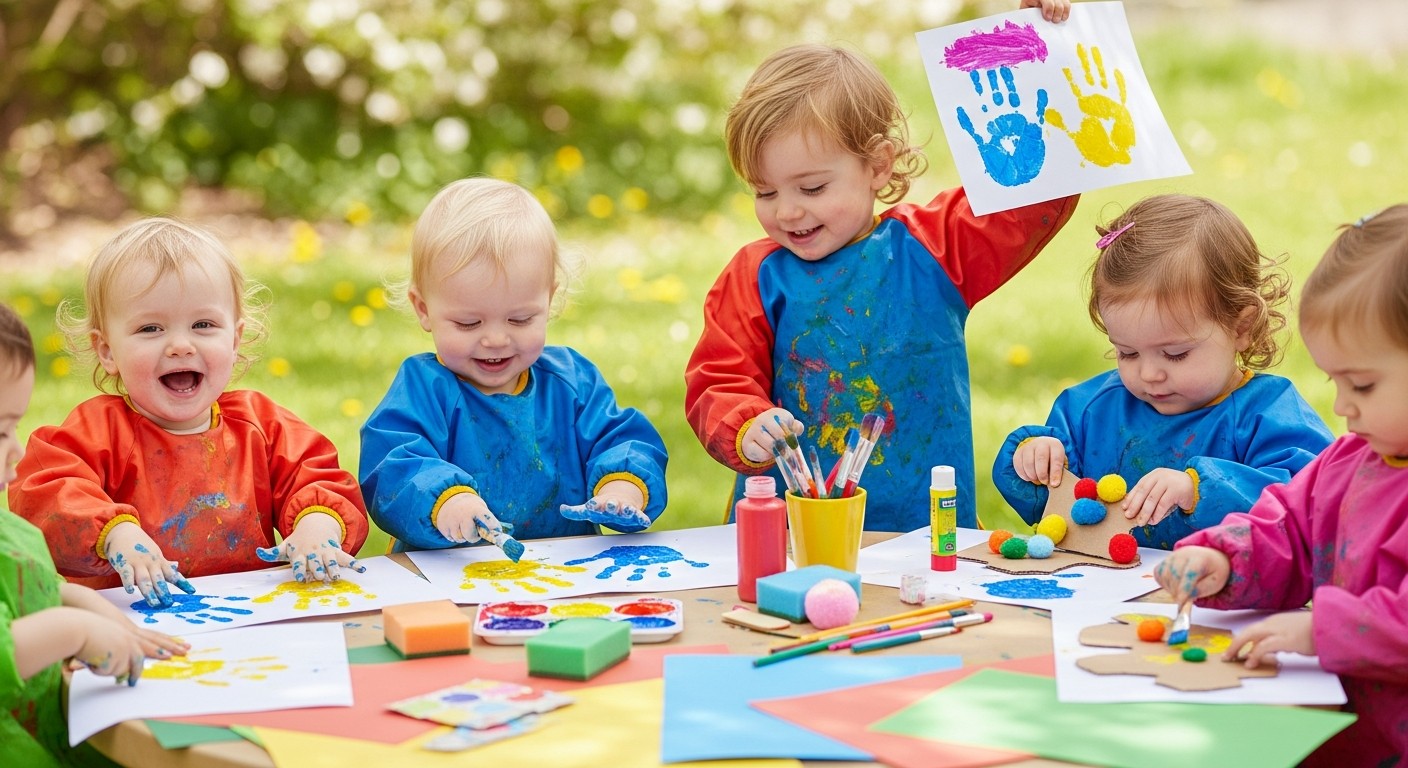
Table of Contents
- Introduction
- The Importance of Process Over Product
- Developmental Benefits of Creative Play
- Top Low-Mess Arts and Crafts for Toddler Success
- Connecting Physical Crafts to Smart Screen Time
- Nature-Inspired Arts and Crafts for Toddler Explorers
- Understanding the "Speech Blubs" Difference
- Planning for Success: The Best Value for Your Family
- Seasonal Crafts to Keep the Spark Alive
- Setting Realistic Expectations
- How to Maximize Arts and Crafts for Toddler Language
- Frequently Asked Questions
- Conclusion
Introduction
Have you ever watched a two-year-old discover that pressing a paint-covered thumb onto a piece of paper leaves a bright, blue mark? Their eyes widen, a tiny gasp escapes their lips, and suddenly, they are no longer just a toddler—they are a creator. This moment of pure, unadulterated wonder is the heartbeat of early childhood development. It isn't just about the mess on their hands or the smudge on your kitchen table; it is about the spark of a new neural connection forming in their brain.
In this post, we will explore the vibrant world of arts and crafts for toddler development, focusing on how these activities foster essential communication skills, fine motor strength, and emotional confidence. We will dive into low-mess strategies for busy parents, sensory-rich projects that engage all five senses, and how you can bridge the gap between physical play and digital learning. Our goal is to show you how creative play serves as a primary building block for your child to eventually speak their mind and heart.

At Speech Blubs, we believe that every interaction is an opportunity for growth. Whether your child is painting with water or mimicking a peer on a screen, they are learning the complex dance of human communication. By the end of this article, you will have a toolkit of practical activities and a deeper understanding of how to support your child’s journey toward confident self-expression.
The Importance of Process Over Product
When we think about arts and crafts for toddler aged children, it is easy to get caught up in the desire for a "refrigerator-worthy" masterpiece. However, the most important lesson for any caregiver to embrace is that the process is infinitely more valuable than the finished product. For a toddler, art is an exploration of "what happens if?"
What happens if I mix the yellow and blue? What happens if I squeeze this glue bottle too hard? What happens if I use a leaf instead of a brush? This experimentation is the foundation of scientific thinking and problem-solving. When we focus on the result, we accidentally put pressure on the child to perform. When we focus on the process, we give them the freedom to learn.
This philosophy mirrors our approach at Speech Blubs. We don’t expect a child to master a complex word on the first try. Instead, we celebrate the attempt, the imitation, and the joy of making sounds. Our mission is to provide an immediate, effective, and joyful solution for the 1 in 4 children who need speech support, and that starts with fostering a love for discovery. If you are curious about where your child stands in their development, you can take our quick 3-minute preliminary screener to get a simple assessment and start your journey with a free 7-day trial.
Developmental Benefits of Creative Play
The benefits of engaging in arts and crafts for toddler development are vast and interconnected. It isn't just "busy work"; it is "brain work."
Fine Motor Skill Development
Every time a child picks up a crayon, tears a piece of tissue paper, or peels a sticker, they are strengthening the tiny muscles in their hands and wrists. These are the same muscles they will eventually use to hold a pencil in school, button their coat, and use a fork. Developing a strong pincer grip (using the thumb and index finger) is a major milestone that crafts support naturally.

Language and Vocabulary Expansion
Art is a language-rich environment. While your child is crafting, you have a golden opportunity to narrate their actions. "You are using the sticky glue," or "Look at that bright, round circle!" This "parallel talk" introduces adjectives, action verbs, and spatial concepts (on top, under, beside) in a context that makes sense to them.
For a parent whose 3-year-old "late talker" loves animals, the "Animal Kingdom" section of our app offers a fun, motivating way to practice "moo" and "baa" sounds, which can then be reinforced by making a cotton-ball sheep or a paper-plate cow. This connection between a visual model and a tactile activity is incredibly powerful.
Cognitive and Sensory Regulation
Sensory play—such as feeling the squish of playdough or the coolness of water—helps children learn to process sensory information. For many toddlers, especially those who may feel overwhelmed by loud noises or bright lights, the rhythmic and predictable nature of crafting can be very grounding. It builds focus and increases their "attention stamina," which is the ability to stay with a task from start to finish.
Top Low-Mess Arts and Crafts for Toddler Success
We know that "mess" is often the biggest barrier for parents. You want your child to be creative, but you don't always have the time for a two-hour cleanup. Here are five low-mess activities that provide all the developmental benefits without the stress.
1. The Sticky Wall (Contact Paper Art)
This is a favorite among child development experts. Tape a piece of clear contact paper to a wall or a low table, sticky side out. Provide your toddler with "bits" to stick on: tissue paper squares, feathers, felt scraps, or even dried leaves.
- Why it works: It develops hand-eye coordination as they place and remove items.
- Language Tip: Use words like "sticky," "stuck," "pull," and "push."
2. Water Painting
Give your child a small cup of water and a few different-sized paintbrushes. Let them "paint" on a piece of dark-colored construction paper or, if the weather is nice, on the sidewalk or the side of the house.
- Why it works: It’s completely mess-free! As the water dries, the "painting" disappears, which fascinates toddlers and encourages them to start again.
- Language Tip: Talk about "wet" and "dry" or how the sun "hid" the picture.
3. Tempera Paint Sticks
If you haven't discovered paint sticks yet, they are a game-changer. They look like large glue sticks but are filled with vibrant, solid tempera paint. They glide onto paper like butter and dry almost instantly.
- Why it works: You get the bold colors of paint without the spills or the need for water cups and brushes.
- Language Tip: Focus on color identification and "fast" vs. "slow" strokes.
4. Interactive "Foam" or Sensory Bins
Using a large plastic bin is the best way to contain sensory play. You can use "Incredible Foam" (a non-drying, bead-like material) or simply fill a bin with dry oats or rice and hide small plastic animals inside.
- Why it works: Keeping the play inside the bin creates a physical boundary for the mess.
- Language Tip: Use the "Animal Kingdom" or "Toy Box" themes in Speech Blubs to identify the objects they find in the bin. To see how other families have used these strategies, check out our parent testimonials.
5. Edible "Paint" for Young Toddlers
For children who still put everything in their mouths, you can use plain Greek yogurt tinted with a drop of food coloring or smashed berries.
- Why it works: It removes the safety worry, allowing the child to explore the texture freely.
- Language Tip: Describe the tastes and textures—"cold," "smooth," or "sweet."
Connecting Physical Crafts to Smart Screen Time
At Speech Blubs, we advocate for "smart screen time." We know that in today’s world, screens are a part of life, but they don’t have to be a passive experience like watching cartoons. Our app is designed to be a "screen-free alternative" in spirit—it’s an active, participatory tool that encourages children to get off the device and start interacting with the world.
Our unique approach is rooted in video modeling. This is a scientifically proven method where children learn by watching and imitating their peers. When a child sees another child on the screen making a "pop" sound with their lips, their "mirror neurons" fire, making it much more likely that they will try to copy that sound.
Our method is backed by science, placing us in the top tier of speech apps worldwide with a high rating on the MARS scale. You can read more about the scientific methodology that drives our app.
How to Pair the App with Arts and Crafts
You can use the app as an "art invitation." For example:
- Watch: Open the "Nature" section in Speech Blubs and watch children make the sounds of the wind or rain.
- Do: Go for a "nature walk" in your backyard and collect leaves to make a nature collage.
- Reflect: Come back and look at the "Nature" section again, talking about the items you found.
This creates a powerful loop of learning: Visual (app) -> Tactile (craft) -> Social (talking with you). To start this journey, download Speech Blubs on the App Store or find us on the Google Play Store.
Nature-Inspired Arts and Crafts for Toddler Explorers
The natural world is the ultimate art supply store. Best of all, it’s free! Nature-based crafts encourage toddlers to observe details in their environment, fostering a sense of curiosity and environmental stewardship.
Leaf Rubbings
This is a classic for a reason. Place a leaf under a piece of paper and have your child rub a large crayon (with the wrapper removed) sideways over the top.
- The Learning Moment: This helps toddlers understand textures (bumpy vs. smooth) and the concept of "hidden" things appearing.
Rock Painting
Finding the "perfect" rock is an activity in itself. Once you have a few, use the paint sticks mentioned earlier to decorate them.
- The Learning Moment: Rocks have weight and temperature. Discussing how the rock feels "heavy" or "cold" builds a rich sensory vocabulary.
Suncatchers with Pressed Flowers
Use two pieces of contact paper to sandwich small, flat flowers or colorful autumn leaves. Cut them into circles and tape them to a sunny window.
- The Learning Moment: This teaches the concept of light and transparency. As the sun shines through, the colors change, providing a beautiful visual reward for their hard work.
Understanding the "Speech Blubs" Difference
Our company was born from a place of deep empathy. Our founders all grew up with speech problems and created the tool they wished they had as children. We aren't just an app; we are a community dedicated to helping your child find their voice.
When you choose Speech Blubs, you are choosing a tool designed to foster family connection. We always frame our activities with the understanding of adult co-play. The app isn't meant to be a "babysitter"; it’s a catalyst for you and your child to laugh, play, and learn together.
We provide a powerful supplement to professional therapy or a stand-alone tool for general development. While we don't suggest guaranteed outcomes—every child develops at their own beautiful pace—we focus on building the foundational skills: confidence, imitation, and a love for communication.
Planning for Success: The Best Value for Your Family
We want to be transparent about our pricing so you can make the best choice for your family's needs. We offer two primary ways to access the full world of Speech Blubs:
- Monthly Plan: $14.99 per month. This is a great way to test the waters if you aren't sure yet.
- Yearly Plan: $59.99 per year.
Why the Yearly Plan is the clear best choice: The Yearly plan isn't just more affordable—it breaks down to just $4.99 per month, saving you 66% compared to the monthly rate. But the value goes beyond the price. The Yearly plan includes exclusive, high-value features that the Monthly plan does not:
- 7-Day Free Trial: You get a full week to explore every corner of the app for free.
- Reading Blubs: You get access to our second app, Reading Blubs, which focuses on early literacy and phonics.
- Priority Support: You receive 24-hour support response times and early access to all new content updates.
We encourage you to create your account and begin your 7-day free trial today by choosing the Yearly plan. It is the most comprehensive way to support your child’s development.
Seasonal Crafts to Keep the Spark Alive
Keeping the activities fresh is key to maintaining a toddler's interest. Here are a few seasonal ideas to try throughout the year:
Winter: Shaving Cream "Snow"
Spray a little shaving cream on a tray and let your child "draw" in it with their fingers. It feels like cold snow and smells clean!
- Connection: This is perfect for practicing the "S" sound for "Snow" or "Slime."
Spring: Coffee Filter Butterflies
Use washable markers to color on a coffee filter, then spray it with a little water. Watch the colors bleed together (chromatography!). Once dry, pinch the middle with a clothespin to make a butterfly.
- Connection: Use this to talk about the lifecycle of a butterfly, matching the "B" sounds they might be practicing in the app.
Summer: Ice Painting
Freeze water with food coloring in ice cube trays. Put a craft stick in each one as it freezes. Once solid, let your child "paint" on paper with the melting ice.
- Connection: This is a great way to discuss temperatures and states of matter—ice "melts" and becomes "water."
Fall: Pumpkin Seed Sorting
After carving a pumpkin, wash and dry the seeds. Let your child glue them onto a drawing of a pumpkin.
- Connection: This is a fantastic "pincer grip" exercise, as those tiny seeds require a lot of focus to pick up.
Setting Realistic Expectations
It is important to remember that toddlerhood is a marathon, not a sprint. Some days, your child will be fully engaged in arts and crafts for 20 minutes; other days, they will be done in 30 seconds. Both are perfectly normal!
Our goal at Speech Blubs is to reduce the frustration that often comes with communication delays. By providing joyful, playful learning moments, we help build the confidence a child needs to keep trying. Whether they are imitating a peer in our app or showing you a painting they made, they are communicating. Celebrate every tiny win.
"Art is not what you see, but what you make others see." — For a toddler, art is how they make you see their world.
How to Maximize Arts and Crafts for Toddler Language
To get the most out of these activities, keep these three strategies in mind:
- Wait and See: Before telling your child what to do, wait 10 seconds. See how they interact with the materials first. This gives them agency and encourages independent thought.
- Offer Choices: "Do you want the red paint or the blue paint?" This gives them a sense of control and requires them to use their communication skills (pointing or speaking) to make a choice.
- Model, Don't Correct: If they say "gwoo" for "glue," don't tell them they are wrong. Instead, just model the correct word: "Yes, that is the glue!"
By integrating these simple habits, you turn a simple craft session into a high-level speech therapy session at home.
Frequently Asked Questions
What are the best arts and crafts for toddlers who don't like getting their hands dirty?
For "sensory-averse" children, start with tools that create a barrier between them and the material. Paint sticks, brushes with long handles, or even putting paint inside a sealed Ziploc bag for "finger painting through the plastic" are great options. Gradually introducing textures through these tools can help them become more comfortable over time.
At what age should I start introducing arts and crafts to my child?
You can start as early as 12 to 15 months with simple, high-contrast activities like water painting or using large, triangular crayons that are easy to grip. Always ensure materials are non-toxic and supervise closely to prevent choking hazards.
How can I encourage my child to talk more during craft time?
Use the "Who, What, Where" method. Ask simple questions like, "Who is in the picture?" "What is the bunny doing?" or "Where should we put the sticker?" If they aren't speaking yet, narrate their actions for them to provide the linguistic input they need.
Is it okay if my toddler’s art doesn’t look like anything?
Absolutely! This is called "scribbling" or "exploratory art," and it is a vital stage of development. It shows that your child is learning how their physical movements create marks on a page. The goal is the movement and the discovery, not a recognizable image.
Conclusion
Arts and crafts for toddler aged children provide a window into their developing minds. These activities are more than just a way to fill an afternoon; they are the tools through which children explore their environment, build physical strength, and begin the lifelong journey of communication. By focusing on the process, embracing the occasional mess, and narrating the experience, you are giving your child the greatest gift possible: the confidence to "speak their minds and hearts."
We are here to support you every step of the way. Whether through our research-backed video modeling or our community of parents who share their success stories, Speech Blubs is your partner in your child's growth.
Ready to see the difference for yourself? Download Speech Blubs on the App Store or Google Play to begin. For the best value, make sure to sign up for our Yearly plan to unlock your 7-day free trial, the Reading Blubs app, and early access to our latest updates. Let’s start creating, playing, and speaking together!
About the author