
Creative Candy Cane Toddler Craft Ideas for Holiday Joy
 By Speech Blubs Team•Feb 20, 2026•15 min.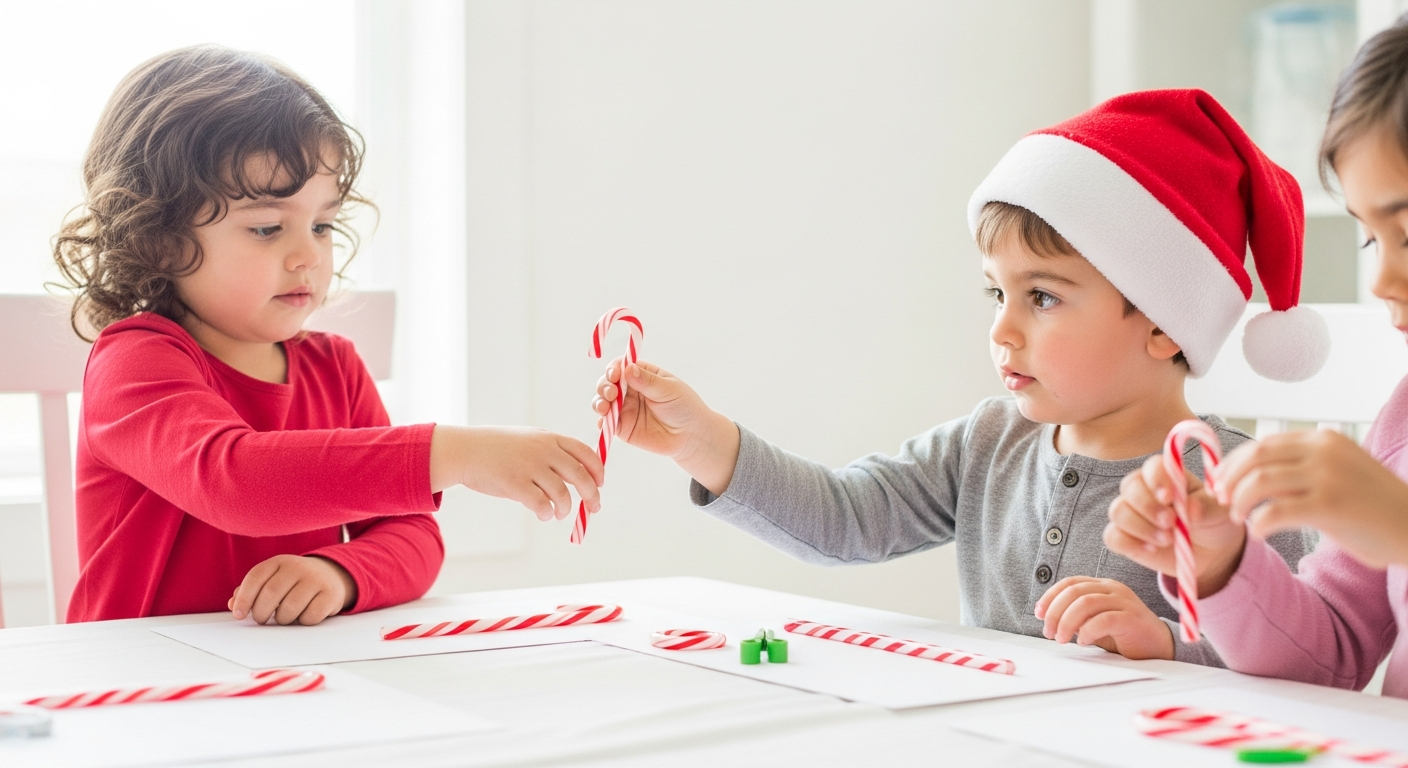
Table of Contents
- Introduction
- The Power of Creative Play in Early Development
- Why Sensory Crafting Supports Speech
- The Classic Candy Cane Collage Craft
- Beaded Candy Cane Ornaments for Fine Motor Skills
- Sensory Cotton Ball Candy Canes
- Tape Resist Candy Cane Art
- Our Mission: Empowering Every Child
- Practical Scenarios: Connecting Play to Speech
- Choosing the Right Tools for Your Child
- More Candy Cane Inspired Activities
- Making the Most of "Smart Screen Time"
- Educational Benefits Checklist
- Integrating Speech Blubs into Your Daily Routine
- Summary of Key Takeaways
- Conclusion
- Frequently Asked Questions
Introduction
Have you ever noticed how a simple red-and-white striped candy cane can light up a toddler's face with pure wonder? There is something truly magical about the holiday season, but for many parents, it also brings a desire to connect, teach, and create lasting memories. You might find yourself wondering how to turn these festive moments into opportunities for your child to grow and develop. That is exactly what we are exploring today.
In this guide, we are diving deep into the world of the candy cane toddler craft. We will cover a variety of hands-on activities—from sensory-rich collages to fine-motor-building beaded ornaments—that are perfect for little hands. More importantly, we will discuss how these simple acts of "smart screen time" and physical play can support your child's communication journey. At Speech Blubs, we believe in empowering children to "speak their minds and hearts," and the holidays provide the perfect backdrop for this mission.

Our goal is to provide you with practical, joyful solutions for fostering language development through play. Whether your child is a "late talker" or simply hitting their developmental milestones, these crafts offer a bridge to new vocabulary, better coordination, and a lot of family fun. By the end of this post, you will have a toolkit of holiday activities and a better understanding of how tools like the Speech Blubs app can supplement your child's progress.
The Power of Creative Play in Early Development
When we think about a candy cane toddler craft, we aren't just looking at a piece of paper with some glue on it. We are looking at a multi-sensory experience that engages a child's brain in several ways simultaneously. For a toddler, the world is a giant laboratory. Every time they touch a fuzzy cotton ball or feel the sticky texture of glue, they are gathering data.
For children who may need a little extra support in their speech journey—about 1 in 4 children, according to current statistics—these tactile experiences are vital. When a child is physically engaged, they are often more relaxed and open to practicing new sounds. For example, as you work on a craft together, you might naturally say, "Look, red! Sticky glue! Push down!" These simple descriptors are the building blocks of language.
At Speech Blubs, we understand this connection deeply. Our company was born from the personal experiences of our founders, who all grew up with speech problems themselves. They created the very tool they wished they had as children—one that blends scientific principles with the joy of play. This same philosophy applies to holiday crafting. It’s about creating a "smart screen time" experience where digital learning meets real-world interaction.
Why Sensory Crafting Supports Speech
You might be wondering, "How does making a paper candy cane help my child talk?" The answer lies in the way children process information. Sensory play—play that involves touch, sight, and even smell—helps build nerve connections in the brain’s pathways.

- Vocabulary Expansion: During a candy cane toddler craft, you are naturally using words like "stripe," "curve," "pattern," "rough," and "smooth."
- Following Directions: Simple prompts like "First, put the glue on, then the paper" help toddlers practice receptive language skills.
- Joint Attention: Crafting requires you and your child to look at the same object and communicate about it, which is a foundational skill for all social interaction.
If you are curious about where your child stands in their communication journey, we recommend taking our quick 3-minute preliminary screener. It involves just 9 simple questions and provides you with a helpful assessment and a next-steps plan to support your little one’s growth.
The Classic Candy Cane Collage Craft
This is perhaps the most versatile candy cane toddler craft because you can use whatever you have lying around the house. The goal here isn't a perfect ornament; it's the process of exploration.
Materials You Will Need:
- White cardstock or heavy paper
- Red materials (yarn, ribbon, buttons, sequins, or tissue paper)
- Non-toxic white glue or a glue stick
- Safety scissors (for adult use or supervised practice)
How to Create the Collage:
- Prepare the Base: Cut out a large candy cane shape from the white cardstock. If your toddler is older, they can try to help guide the paper while you cut.
- Set the Stage: Place your red embellishments in small bowls. This makes it easier for tiny fingers to pinch and grab, which is excellent for fine motor development.
- Apply the Glue: Let your child spread the glue. Don't worry about the mess! This is a great time to practice the word "sticky."
- Decorate: Encourage your child to place the red items on the white base. Talk about the colors as you go. "Where does the red go? On the white!"
The Speech Blubs Connection:
While you are crafting, you can use the Speech Blubs app to reinforce these concepts. For a child who loves colors, the "Color Wise" section in our app provides a fun, motivating way to practice the words "red" and "white" alongside their peers. Our unique video modeling methodology allows children to watch other kids making the sounds and facial movements associated with these words, which triggers their own "mirror neurons" and encourages imitation.
Beaded Candy Cane Ornaments for Fine Motor Skills
This craft is a favorite for older toddlers and preschoolers because it results in a sturdy ornament they can actually hang on the tree.
Materials You Will Need:
- Red and white plastic pony beads
- Red or white pipe cleaners (chenille stems)
Instructions:
- Start the Pattern: Bend the end of a pipe cleaner so the beads don't slide off.
- Model the Sequence: Show your child how to put one red bead, then one white bead. This introduces the concept of patterning—a precursor to both math and language structure.
- Let Them Bead: As they slide the beads on, practice the sounds "shhh" (for the sliding sound) or "pop" (when the bead hits the bottom).
- Finalize the Shape: Once the pipe cleaner is full, bend the other end to secure the beads and curve the top into a "J" shape.
Expert Tip: If your child gets frustrated with the pattern, don't force it. Let them put on whatever colors they like. The goal is to build confidence and reduce frustration, not to achieve a perfect pattern.
Sensory Cotton Ball Candy Canes
For younger toddlers who are still exploring textures, the cotton ball version of the candy cane toddler craft is a sensory delight.
Materials:
- Red construction paper
- Cotton balls
- Glue
Steps:
- Cut a candy cane shape out of the red paper.
- Have your child pull the cotton balls apart to make them "fluffy." This is a wonderful tactile exercise.
- Apply glue in stripes across the red paper.
- Have the child press the white "fluff" onto the glue.
As you do this, you can focus on the contrast between "soft" (the cotton) and "hard" (the table). Exploring opposites is a fantastic way to build a descriptive vocabulary. Our research-backed methods show that when children engage multiple senses, they are more likely to retain the new words they are hearing.
Tape Resist Candy Cane Art
This is a "magic" craft that toddlers find fascinating. It requires a bit of prep from the adult but offers a high-reward "reveal" at the end.
Steps:
- On a piece of white paper, use painter's tape or masking tape to create the stripes of a candy cane.
- Let your child paint the entire paper red. They can use sponges, fingers, or brushes.
- Once the paint is dry, peel away the tape to reveal the crisp white stripes underneath.
The act of peeling the tape is often a toddler's favorite part. You can practice the word "open" or "wow!" during the reveal. This type of activity fosters a love for communication because it creates a shared moment of excitement.
Our Mission: Empowering Every Child
At Speech Blubs, we believe that every child deserves the chance to express themselves. We know that the journey isn't always easy. For parents who see their child struggling to communicate, the holidays can sometimes feel overwhelming. You might see other children at holiday parties talking up a storm and feel a pang of worry.
We want you to know that you are not alone. Our app was designed to be a powerful tool for family connection, providing a screen-free alternative to passive viewing like cartoons. Instead of just watching a screen, your child is interacting with "video models"—real children who show them how to form words. This peer-to-peer learning is at the heart of our scientific methodology.
Whether you're using our app or sitting on the floor making a candy cane toddler craft, the most important thing is the "joyful family learning moment" you are creating. We don't promise that your child will be giving public speeches in a month, but we do focus on building the foundational skills and confidence needed for long-term success.
Practical Scenarios: Connecting Play to Speech
Let’s look at a real-world example. Imagine a parent whose 3-year-old "late talker" is obsessed with the holiday season but gets frustrated when they can't ask for a treat. During a candy cane crafting session, the parent can use the "Yummy Time" section of the Speech Blubs app to look at different foods.
When the child sees a peer in the app making the "m-m-m" sound for something delicious, they are more likely to try that sound themselves while looking at their craft. This transition from the "smart screen" to the physical activity creates a holistic learning environment. You can see how this has worked for thousands of families by reading our parent testimonials.
Choosing the Right Tools for Your Child
We are committed to providing an immediate, effective solution for speech support. While there are many ways to support your child, we believe that a combination of physical play and targeted digital tools is the most effective approach for the modern family.
Transparent Pricing for Families
To help you make the best decision for your family, we want to be transparent about our options. We offer two main plans:
- Monthly Plan: $14.99 per month. This is a great way to test the waters.
- Yearly Plan: $59.99 per year. This is our best value, breaking down to just $4.99 per month.
When you choose the Yearly Plan, you aren't just saving 66%. You also get access to exclusive features that the monthly plan does not include:
- A 7-day free trial so you can explore everything risk-free.
- Access to our Reading Blubs app, which helps transition speech skills into early literacy.
- Early access to all new updates and features.
- Priority 24-hour support response time from our team.
We encourage you to create your account and start your free trial today. Selecting the yearly option ensures your child has a consistent, year-long resource to support their development through every season, not just the holidays.
More Candy Cane Inspired Activities
If you’ve finished your candy cane toddler craft and still have energy, here are a few more quick ideas to keep the momentum going:
- Candy Cane Hunt: Hide real or paper candy canes around the living room. Use "preposition words" like under the pillow, on the chair, or behind the curtain.
- Scented Playdough: Make white and red playdough scented with peppermint extract. The smell adds another sensory layer that can help with memory and word association.
- The "J" Trace: Use a tray of salt or sugar and have your child practice drawing the letter "J" (for Jesus or just for the candy cane shape). This is great for early pre-writing skills.
Making the Most of "Smart Screen Time"
We often hear from parents who are worried about screen time. We agree that passive scrolling or watching mindless cartoons isn't ideal for a developing brain. That’s why we created "smart screen time."
Our app is designed to be used with an adult. When you sit down with your child and open Speech Blubs, you are co-playing. You are watching the video models together, mimicking the sounds together, and then bringing those sounds into your physical activities like your candy cane toddler craft.
This approach turns the tablet from a "babysitter" into a "communication bridge." It’s a tool that facilitates interaction rather than replacing it. You can find more about our story and our approach on our main homepage.
Educational Benefits Checklist
As you work through these crafts, keep this checklist in mind to see the "hidden" learning taking place:
- Bilateral Coordination: Using both hands together to tear paper or string beads.
- Hand-Eye Coordination: Placing a sticker or button exactly where the glue is.
- Self-Regulation: Waiting for glue to dry or taking turns with the red markers.
- Cognitive Flexibility: Understanding that a candy cane can be made of paper, beads, or even fruit loops!
Integrating Speech Blubs into Your Daily Routine
The best way to see progress is through consistency. Just as you might make a tradition of crafting every Sunday in December, try making Speech Blubs a part of your daily "together time."
- Morning Sound Warm-up: Use the app for 5-10 minutes after breakfast to practice facial movements.
- Mid-day Craft: Use the concepts from the app in a physical activity like the ones we’ve discussed.
- Evening Review: Look at the "badges" your child has earned in the app and talk about the new words they’ve practiced.
Ready to see how Speech Blubs can fit into your life? Download the app on the Google Play Store to get started.
Summary of Key Takeaways
Crafting with your toddler is about so much more than the final product. A candy cane toddler craft is a gateway to:
- Developing essential fine motor and sensory skills.
- Building a robust vocabulary through descriptive play.
- Reducing communication frustration by providing visual and tactile cues.
- Creating joyful family moments that build a child's confidence.
By combining these physical activities with a dedicated tool like Speech Blubs, you are providing your child with a comprehensive support system. Our methodology, based on video modeling and the science of mirror neurons, is designed to make learning to speak a fun, low-pressure experience.
Conclusion
The holiday season is a time for connection, and there is no better way to connect with your toddler than through the shared joy of creation. Whether you are ripping up red construction paper for a mosaic or stringing red and white beads onto a pipe cleaner, you are doing the important work of helping your child find their voice.
Remember, at Speech Blubs, we are here to support you every step of the way. We want to help your child "speak their minds and hearts" so they can fully participate in all the magic this season has to offer. Don't wait to start this journey.
Ready to give your child the gift of communication? Download Speech Blubs on the App Store or sign up on our website to begin your 7-day free trial. We highly recommend choosing our Yearly Plan to receive the best value, including the Reading Blubs app and 24-hour support, all for just $4.99 per month. Let's make this holiday season the start of something wonderful for your child's development!
Frequently Asked Questions
1. What is the best age to start a candy cane toddler craft?
Most of the crafts mentioned, like the cotton ball or collage crafts, are perfect for children as young as 18 months with close adult supervision. Beaded crafts are better suited for children aged 3 and up due to the small parts. Always tailor the activity to your child's specific motor skills and interests.
2. How can I encourage my "late talker" to speak during crafting?
Focus on "parallel talk." Instead of asking them questions (which can cause pressure), simply narrate what you are doing. "I am putting the red paper on. Now you are putting the white paper on. Stick, stick, stick!" This provides a rich language model without the stress of a required response.
3. Does the Speech Blubs app replace professional speech therapy?
No, Speech Blubs is a powerful supplement to a child's overall development plan. It is designed to be used alongside professional therapy or as a proactive tool for parents who want to support their child's language journey at home. It fosters a love for communication and builds foundational skills in a joyful, play-based way.
4. Why is the Yearly Plan recommended over the Monthly Plan?
The Yearly Plan offers the most comprehensive support for your child. Not only is it 66% cheaper than the monthly option, but it also includes a 7-day free trial, the Reading Blubs app for literacy, and priority support. It ensures your child has the tools they need for long-term progress beyond just the holiday season.
About the author