
Creative Christmas Crafts for Kids & Language Fun
 By Speech Blubs Team•Dec 22, 2025•23 min.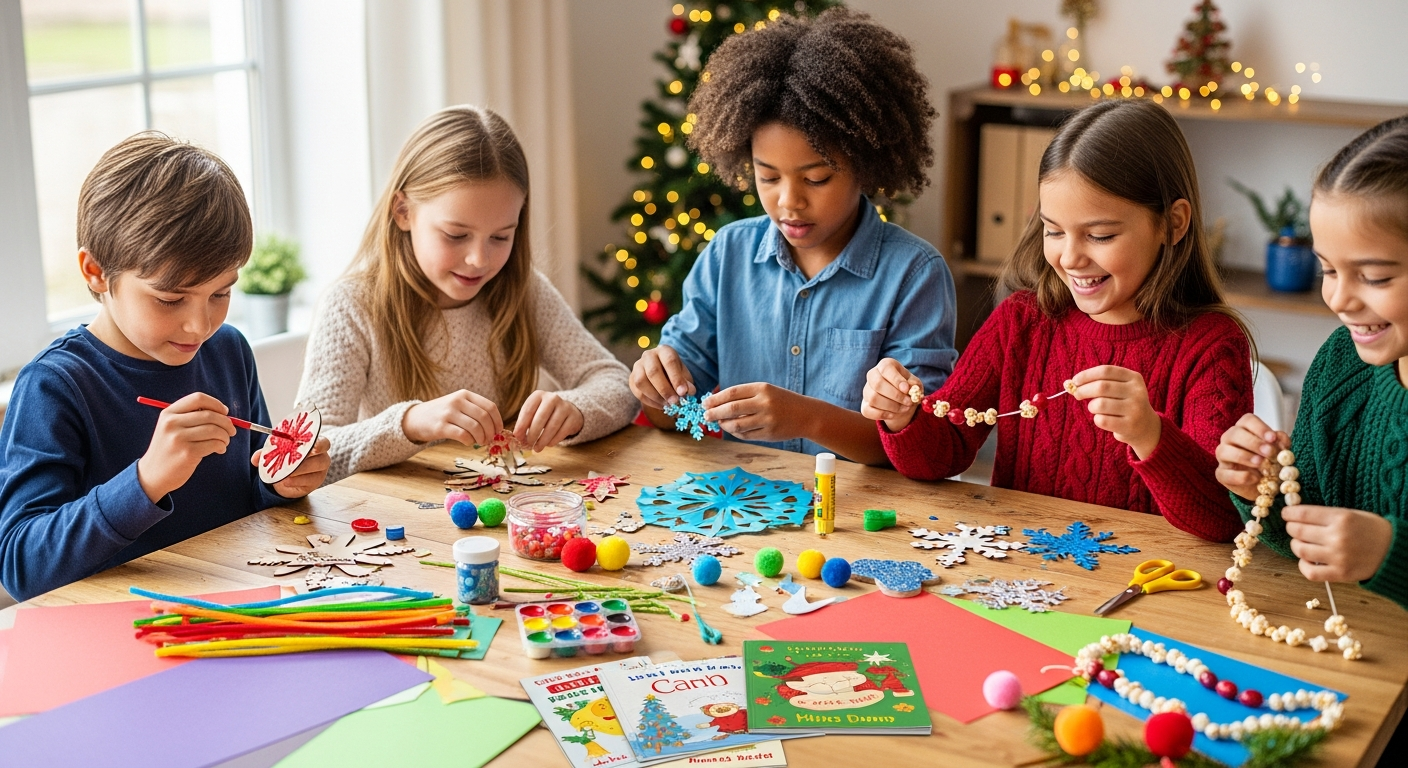
Table of Contents
- Introduction
- Why Crafting is a Language Powerhouse
- Essential Tips for Language-Rich Crafting
- Delightful Christmas Crafts for Kids & Speech Growth
- Integrating Speech Blubs for Enhanced Learning
- Making the Most of Your Speech Blubs Experience
- Conclusion
- Frequently Asked Questions (FAQ)
Introduction
The air is crisp, carols fill the background, and a unique sense of wonder descends upon children as the holiday season approaches. For many families, this is a magical time of year, filled with traditions, cozy moments, and the joy of anticipation. Yet, beneath the tinsel and twinkling lights, these festive moments offer incredible, often overlooked, opportunities for growth, especially in the realm of speech and language development. Imagine turning a simple crafting session into a vibrant language lesson, where every snip of the scissors, every dab of glue, and every choice of color becomes a chance to learn new words, practice sounds, and build confidence.
This blog post isn't just about sharing fun Christmas crafts for kids; it's about transforming holiday activities into powerful vehicles for communication. We’ll explore how engaging in hands-on festive projects can naturally encourage children to expand their vocabulary, follow directions, describe their creations, and express their ideas. More than just pretty decorations, these crafts provide tangible, multisensory experiences that are ideal for fostering language skills. We'll show you how to maximize these moments, turning everyday holiday preparations into joyful, language-rich adventures that deepen family bonds and support your child's developmental journey.

Why Crafting is a Language Powerhouse
Crafting is far more than just a creative outlet for children; it’s a dynamic, multisensory experience that inherently stimulates speech and language development. From the moment a child starts planning a project to the final touches, they are immersed in a world ripe with communication opportunities.
- Sensory Exploration and Vocabulary Expansion: As children touch different textures (rough pinecones, soft cotton balls, sticky glue), see various colors, and even smell the distinct scents of craft materials, they are building a rich sensory vocabulary. Describing these sensations – "This glitter is sparkly!" or "The dough feels smooth!" – directly enhances their expressive language.
- Following Directions (Receptive Language): Every craft involves a sequence of steps, from "first, get the paper" to "then, cut along the line." This process is a fantastic way for children to practice listening comprehension and follow multi-step directions, strengthening their receptive language skills.
- Describing the Process and Product (Expressive Language): Crafting provides countless natural prompts for speaking. Children can narrate their actions ("I'm gluing the eyes on"), describe the colors and shapes they're using, and proudly talk about their finished masterpiece ("Look at my beautiful tree!"). This encourages them to construct sentences, use descriptive adjectives, and articulate their thoughts.
- Social Interaction and Turn-Taking: When crafting with a parent or caregiver, children engage in dialogue, ask for help ("Can I have the red paint?"), and share their ideas. This interaction promotes crucial social communication skills like turn-taking in conversation, active listening, and responding appropriately.
- Fine Motor Skills Connection to Speech Development: While seemingly unrelated, developing fine motor skills (like cutting, gluing, and drawing) actually supports speech development. The same neural pathways involved in precise hand movements are often linked to the complex motor planning required for speech articulation. Strengthening one can positively impact the other.
- The Role of Play in Learning: Most importantly, crafting is play. And play is a child's natural language of learning. When learning is fun and engaging, children are more motivated to participate, experiment, and communicate, leading to more effective and lasting skill acquisition.
At Speech Blubs, we deeply understand the power of combining play with purposeful learning. Our mission is to empower children to speak their minds and hearts, and activities like crafting are perfect complements to the "smart screen time" experiences our app provides. We believe in harnessing a child's natural curiosity and joy to foster communication skills, creating not just decorations, but foundational building blocks for expressive, confident voices.

Essential Tips for Language-Rich Crafting
To truly transform your Christmas crafting sessions into powerful language-learning opportunities, a little intentionality goes a long way. Here are our top tips:
- Narrate Everything: As you craft, talk about what you're doing. "I'm cutting the paper," "Now, I'm gluing the cotton ball to make Santa's beard," "You chose the sparkly green glitter!" This provides a constant stream of language input, associating words with actions and objects.
- Ask Open-Ended Questions: Instead of "Do you like this?", try "What do you want to do next?" "How does that feel?" "Tell me about your snowflake." Open-ended questions encourage more than a simple "yes" or "no" answer, prompting children to use descriptive language and form more complex sentences.
- Model Language: Use clear, simple sentences, slightly above your child's current language level. If your child is using single words, model two-word phrases. If they’re using phrases, model short sentences. For example, if they say "red," you can say, "Yes, red paint!" or "That's a big red circle."
- Praise Effort, Not Perfection: Focus on your child's participation, creativity, and attempts at communication, rather than the aesthetic outcome of the craft. "I love how you chose those colors!" or "You worked so hard on that!" boosts confidence and encourages continued engagement.
- Follow Their Lead: While you might have a craft idea in mind, allow your child to make choices and guide parts of the process. This fosters independence and provides natural opportunities for them to express preferences and negotiate.
- Connect to Real-World Concepts: Discuss what you'll do with the finished craft. "We'll hang this ornament on the tree!" or "This reindeer will go by the window." This helps children understand the purpose and value of their creations, enhancing their understanding of practical language.
- Integrate Movement and Sounds: Incorporate sound effects related to the craft. "Snip, snip, snip go the scissors!" or "Squeeze, squeeze, squeeze the glue!" Adding movement and sounds can make the experience more engaging and reinforce new vocabulary.
Remember, the goal isn't just to complete a craft, but to create a shared experience where language naturally blossoms. These practices lay the groundwork for a love of communication, helping children build confidence and reduce frustration as they discover their voice.
Delightful Christmas Crafts for Kids & Speech Growth
Ready to get creative? Here are some fantastic Christmas crafts that are not only fun but also packed with opportunities for speech and language development.
1. Handprint/Footprint Ornaments
There’s nothing quite like a personalized ornament to cherish for years to come. Handprint or footprint ornaments capture a moment in time and offer rich language-building potential.
- Description: Using salt dough, air-dry clay, or even paint on traditional ornaments, create a lasting impression of your child’s tiny hand or foot. Once dry, they can be painted and decorated.
- Materials: For salt dough: 1 cup flour, 1/2 cup salt, 1/2 cup water. Mixing bowl, rolling pin, cookie cutters (optional for shaping around prints), straw for making a hanging hole, paint, glitter, ribbon.
- Steps:
- Mix flour, salt, and water to form a firm dough.
- Roll out the dough to about 1/4 inch thick.
- Carefully press your child’s hand or foot into the dough to make a clear print.
- Use a cookie cutter or knife to shape around the print, if desired.
- Make a small hole at the top with a straw for hanging.
- Bake at 250°F (120°C) for 2-3 hours or air dry for 24-48 hours until hard.
- Once cooled and dry, paint and decorate!
- Speech Focus:
- Vocabulary: "Dough," "print," "press," "roll," "smooth," "hard," "soft," "sticky," "paint," "brush," "red," "green," "sparkle," "warm," "cool," "hang," "tree."
- Actions: "Mix," "knead," "push," "pull," "decorate," "dry," "bake."
- Body Parts: "Hand," "foot," "fingers," "toes," "palm."
- Following Directions: "First, mix the dough. Then, press your hand down. Next, we’ll paint it."
- Relatable Scenario: For a child working on consonant-vowel (CV) sounds like "ma," "pa," and "ba," encourage them to say "my hand," "big print," or "push down." You can model these sounds and words clearly. After making a handprint, imagine a child who is just starting to connect actions with words. We can transition to our app, where we use our unique video modeling methodology to show real children clearly articulating words like "hand" or "paint." This visual reinforcement helps cement the sounds and meaning, strengthening the concepts learned during crafting.
2. DIY Reindeer Food
A magical craft that helps children prepare for Santa’s reindeer and practices essential sequencing skills.
- Description: A simple mix of oats, glitter, and sprinkles, packaged in small bags, ready to be sprinkled outside on Christmas Eve.
- Materials: Rolled oats, edible glitter (optional), colorful sprinkles, small clear plastic bags or festive envelopes, stapler/ribbon.
- Steps:
- Pour oats into a bowl.
- Add glitter and sprinkles.
- Mix everything together.
- Scoop the mixture into small bags.
- Seal the bags with a stapler or tie with a ribbon.
- Speech Focus:
- Vocabulary: "Oats," "glitter," "sprinkles," "mix," "scoop," "bag," "magic," "reindeer," "fly," "eat," "hungry," "Christmas Eve."
- Sequencing: "First we pour the oats, then we mix the glitter, then we bag the food."
- Counting: "One scoop, two scoops," "How many sprinkles?"
- Imagination: "Where will the reindeer go? What will they do after they eat?"
- Speech Blubs Link: This craft naturally leads to talking about animals. After making reindeer food, transition to the "Animal Kingdom" section in Speech Blubs. Here, your child can watch peers make animal sounds and say animal names, reinforcing the sounds and words connected to the imaginary reindeer. This playful transition keeps the learning momentum going.
3. Paper Plate Christmas Characters (Santa, Reindeer, Snowman)
Paper plates are a versatile and inexpensive base for countless creative projects.
- Description: Transform plain paper plates into festive characters like Santa, a reindeer, or a snowman using various craft supplies.
- Materials: Paper plates, cotton balls, googly eyes, construction paper (red, brown, white, orange), glue, markers, pipe cleaners (for antlers).
- Steps (e.g., Santa):
- Paint the top half of a paper plate red for Santa's hat.
- Glue cotton balls along the bottom edge of the red paint for the hat's brim and on the bottom of the plate for Santa's beard.
- Draw or glue on eyes and a nose in the middle.
- Add pink cheeks with a crayon or marker.
- Speech Focus:
- Colors, Shapes, Sizes: "Red hat," "white beard," "round nose," "big eyes," "small mouth," "circle plate."
- Body Parts: "Eyes," "nose," "mouth," "ears," "beard."
- Describing: "My Santa has a fluffy beard," "He has a red hat and big eyes."
- Prepositions: "Put the nose on the plate," "The hat goes above the eyes," "The beard is under his mouth."
- Relatable Scenario: For a child who struggles with descriptive language or prepositions, crafting a paper plate Santa provides concrete examples. We encourage you to use "smart screen time" with Speech Blubs for reinforcement. For instance, the "Adjectives" or "Prepositions" sections in our app offer engaging video models where children demonstrate these concepts. They can watch and imitate, building their descriptive vocabulary to confidently talk about their own crafts.
4. Popsicle Stick Christmas Trees/Snowflakes
Simple, yet effective for developing fine motor skills and spatial reasoning, which are foundational for speech.
- Description: Glue popsicle sticks together to form geometric shapes like triangles for trees or intricate snowflake patterns.
- Materials: Popsicle sticks, glue, green paint (for trees), glitter, small beads, pompoms, sequins.
- Steps (e.g., Tree):
- Paint three popsicle sticks green. Let dry.
- Arrange them into a triangle shape and glue the ends together.
- Glue a short brown stick at the bottom for the trunk.
- Decorate with glitter, pompoms, or beads.
- Speech Focus:
- Counting: "One, two, three sticks make a triangle."
- Shapes: "Triangle," "star," "snowflake," "stick," "point."
- Actions: "Glue," "stick," "paint," "decorate," "arrange."
- Comparison: "This tree is tall, that one is small," "Mine has more glitter."
- Speech Blubs Link: These hands-on crafts are a powerful way to engage children's active learning. This aligns perfectly with the Speech Blubs approach. We pride ourselves on offering a screen-free alternative to passive viewing (like cartoons) by creating an interactive, engaging experience that requires participation, much like these crafts. It’s about active doing, not just passive watching.
5. Salt Dough Ornaments with Cookie Cutters
Another delightful way to use salt dough, focusing on shapes and textures.
- Description: Roll out salt dough and use festive cookie cutters to create various Christmas shapes.
- Materials: Salt dough (as above), Christmas-themed cookie cutters (stars, trees, bells, gingerbread men), rolling pin, paint, glitter, string for hanging.
- Steps:
- Prepare salt dough and roll it out evenly.
- Use cookie cutters to press out shapes.
- Make a small hole at the top of each ornament for hanging.
- Bake or air dry as per the handprint ornament instructions.
- Once dry, paint and decorate your festive shapes.
- Speech Focus:
- Shapes: "Star," "tree," "bell," "heart," "circle," "gingerbread man."
- Actions: "Roll," "cut," "press," "lift," "decorate," "hang."
- Sensory Words: "Smooth," "bumpy," "sticky," "soft," "hard."
- Size Comparison: "Big star," "little star," "Which one is bigger?"
- Speech Blubs Link: Crafting encourages children to make choices and express their preferences. At Speech Blubs, our mission is to empower children to speak their minds and hearts. By building a robust vocabulary and sentence structure, our app helps children articulate their creative ideas, making them more confident in communicating during activities like choosing cookie cutters or describing their favorite ornament.
6. DIY Garland (Popcorn, Cranberry, Paper Chains)
A collaborative craft perfect for practicing sequencing and counting.
- Description: Create a beautiful garland by stringing popcorn and fresh cranberries, or by making classic paper chains from colorful construction paper.
- Materials:
- Popcorn/Cranberry Garland: Popped popcorn (unsalted, unbuttered), fresh cranberries, sturdy needle (child-safe plastic needle for younger kids), strong thread or fishing line.
- Paper Chain: Strips of construction paper (various colors), glue stick or stapler.
- Steps (e.g., Popcorn & Cranberry):
- Carefully thread the needle with a long piece of thread.
- Alternate stringing popcorn and cranberries, being gentle with the popcorn.
- Tie knots at the ends to secure the items.
- Steps (e.g., Paper Chain):
- Cut construction paper into strips (e.g., 1 inch wide, 8-10 inches long).
- Form a loop with the first strip and glue/staple the ends together.
- Thread the next strip through the first loop, then glue/staple its ends.
- Continue, linking each new loop through the previous one.
- Speech Focus:
- Sequencing: "First we pop the corn, then we string it. Next, a cranberry." Or "Cut, then loop, then glue."
- Colors: "Red cranberries," "white popcorn," "green paper," "yellow paper."
- Actions: "String," "thread," "cut," "glue," "staple," "loop," "link."
- Counting: "How many pieces of popcorn? One, two, three..." "How many loops in our chain?"
- Length: "This is a long garland," "Make a short chain."
- Speech Blubs Link: For a child who might be a "late talker" and needs highly motivating activities, collaborative crafts like garland-making provide intrinsic motivation. Simultaneously, the fun, interactive activities in Speech Blubs, like the "Early Sounds" or "Action Words" sections, can provide foundational practice for sounds and verbs needed in words like "pop," "cut," or "string." This creates a bridge from playful interaction to targeted practice. You can easily download Speech Blubs on the App Store or Google Play to get started.
7. Pinecone Animals/Ornaments
Bring nature indoors with charming pinecone creations.
- Description: Collect pinecones and transform them into festive animals (owls, hedgehogs) or simply decorative ornaments using small embellishments.
- Materials: Pinecones (collected and cleaned), felt, googly eyes, small pompoms, pipe cleaners, glue, glitter, string for hanging.
- Steps (e.g., Pinecone Owl):
- Glue two googly eyes onto the upper part of the pinecone.
- Cut small felt shapes for wings and glue them to the sides.
- Cut a small triangle for a beak and glue it below the eyes.
- Optionally, glue pompoms or glitter for extra decoration.
- Speech Focus:
- Animals: Naming animals, making animal sounds ("Hoo-hoo" for an owl).
- Textures: "Prickly," "rough," "soft," "smooth," "fluffy."
- Colors, Sizes: "Brown pinecone," "green felt," "big eyes," "small nose."
- Describing the creative process: "I'm making a prickly owl!" "The wings are soft."
- Speech Blubs Link: Our app is meticulously built on scientific principles, ensuring effective learning. Just as handling pinecones engages multiple senses, Speech Blubs uses visual and auditory input (through our video modeling) to stimulate speech production. Children learn from watching and imitating real peers, a powerful, research-backed method.
8. Q-Tip Snowflakes
A unique and precise craft that hones fine motor skills and spatial language.
- Description: Glue Q-tips onto dark construction paper to form intricate snowflake patterns.
- Materials: Q-tips, dark blue or black construction paper, liquid glue, glitter (optional).
- Steps:
- Start by gluing a few Q-tips in the center of the paper to form a cross or star shape.
- Add more Q-tips radiating outwards, cutting them if necessary to create smaller branches for the snowflake.
- Discuss symmetry and patterns.
- Sprinkle with glitter for a frosty effect.
- Speech Focus:
- Shapes & Patterns: "Star," "point," "lines," "cross," "pattern," "symmetrical."
- Prepositions: "Glue above," "put next to," "place under," "outwards from the center."
- Counting: "How many Q-tips did you use on this branch?"
- Describing weather: "Cold," "snowy," "winter," "ice."
- Speech Blubs Link: At Speech Blubs, we are committed to empowering children to speak their minds and hearts, and activities like Q-tip snowflakes encourage careful observation and imaginative expression. Practicing descriptive words and prepositions within the app can further enhance a child's ability to articulate their ideas and observations from these detailed crafts.
9. Paper Roll Characters (Elves, Reindeer, Santa)
Recycle and create with empty paper rolls, fostering imaginative play.
- Description: Transform empty toilet paper or paper towel rolls into fun Christmas characters by decorating them with paper, markers, and other embellishments.
- Materials: Empty paper rolls, construction paper, glue, markers, cotton balls, googly eyes, pipe cleaners, small pompoms.
- Steps (e.g., Elf):
- Wrap the paper roll in green construction paper for the elf's body.
- Cut out a red triangle hat and glue it to the top.
- Add small ears on the sides.
- Draw a face or glue on googly eyes and a pompom nose.
- Add details like buttons or a belt.
- Speech Focus:
- Character Naming: "Elf," "reindeer," "Santa," "friend."
- Actions: "Cut," "wrap," "glue," "draw," "decorate," "wear."
- Role-playing: Use the finished characters for imaginative play, fostering dialogue and storytelling. "What does the elf say?" "Where is Santa going?"
- Colors & Clothing Vocabulary: "Green tunic," "red hat," "brown boots," "golden belt."
- Speech Blubs Link: Creating these characters naturally inspires storytelling and dramatic play. Speech Blubs supports this by building foundational vocabulary, helping children understand and use more complex sentence structures. This makes them more confident in developing narratives and expressing ideas with their newfound characters. Don't just take our word for it; see what other parents are saying about their child's success with Speech Blubs by reading our testimonials.
Integrating Speech Blubs for Enhanced Learning
While crafting provides incredible opportunities for organic language development, Speech Blubs offers a structured, joyful, and scientifically-backed way to reinforce and expand upon these skills. We know that many parents are looking for effective ways to support their child's speech, and our company was born from the personal experiences of our founders, who all grew up with speech problems and created the tool they wished they had. We are committed to providing an immediate, effective, and joyful solution for the 1 in 4 children who need speech support.
Here’s how our app becomes a powerful supplement to your holiday crafting adventures:
- Reinforcing "Smart Screen Time": Unlike passive cartoons, Speech Blubs provides "smart screen time" that actively engages your child. After a crafting session, instead of simply watching TV, your child can dive into the app to practice words, sounds, and concepts directly related to their craft. For example, if you made a "snowman" with paper plates, you can then switch to Speech Blubs’ "Sounds" section to practice the 's' sound, or the "Weather" section to talk about snow.
- Video Modeling: Learning from Peers: Our unique "video modeling" methodology is at the heart of Speech Blubs. Children learn by watching and imitating their peers, rather than animated characters. This is incredibly powerful for speech development because it uses mirror neurons in the brain, making imitation natural and effective. Imagine your child making a "star" ornament; they can then find "star" in the app and watch a peer clearly articulate the word, seeing the mouth movements and hearing the sound.
- Bridging Play to Purposeful Practice: Crafting ignites creativity and provides context; Speech Blubs offers the targeted practice.
- Scenario: For a child who struggles with specific sounds like 's' (e.g., in "snowman" or "star"), Speech Blubs offers dedicated sound practice sections. After making a "star," they can switch to the app to watch children clearly articulate the 's' sound in various contexts, providing a bridge from imaginative play to targeted articulation practice. Our mission is to provide an immediate, effective, and joyful solution for children needing speech support.
- Scenario: If your child loves making "reindeer" food and talking about animals, the app’s "Animal Kingdom" section provides a safe, engaging space to practice animal names and sounds. This deepens their connection to the vocabulary introduced during crafting.
- Fostering Family Connection: Speech Blubs is designed for co-play. Parents and children can explore the app together, just as they would craft together. This creates another avenue for joyful interaction, shared learning, and positive reinforcement, strengthening family bonds. We believe in providing powerful tools for family connection, not just independent screen time.
- Built on Scientific Principles: Our approach blends scientific principles with play. We are proud of our high MARS scale rating, a testament to the rigorous scientific backing of our methods. This ensures that while your child is having fun, they are also engaging in practices that genuinely support their developmental needs. You can learn more about the research behind our approach on our research page.
By seamlessly integrating these festive crafts with the interactive learning experiences of Speech Blubs, you can create a truly holistic and enjoyable language development journey for your child this holiday season.
Making the Most of Your Speech Blubs Experience
We believe every child deserves the opportunity to communicate their thoughts and feelings confidently. That’s why we’ve designed Speech Blubs to be an accessible, engaging, and effective tool for families. To help you get the most out of our app, we offer flexible subscription plans, with one standing out as the clear best value:
Our pricing structure is transparent and designed to give you options:
- Monthly Plan: For those who prefer a short-term commitment, the Monthly plan is available at $14.99 per month.
- Yearly Plan: For families committed to consistent language development, our Yearly plan is the superior choice at $59.99 per year. This breaks down to just $4.99 per month, representing an incredible 66% savings compared to the monthly option!
The Yearly plan isn't just cheaper; it's packed with exclusive, high-value features designed to supercharge your child's learning journey:
- 7-Day Free Trial: Only with the Yearly plan do you get a full 7-day free trial, giving you ample time to explore all the incredible features and see the magic of Speech Blubs firsthand.
- The Extra Reading Blubs App: As a Yearly subscriber, you gain access to our companion Reading Blubs app, further enhancing your child's literacy development.
- Early Access to New Updates: Be among the first to experience our latest features and content updates, ensuring your child always has fresh and engaging learning materials.
- 24-Hour Support Response Time: Our dedicated support team is there for you, with a guaranteed 24-hour response time for Yearly subscribers, ensuring any questions or concerns are addressed promptly.
The Monthly plan, unfortunately, does not include these exclusive benefits, making the Yearly plan the undeniable best choice for long-term value and comprehensive support.
We encourage you to experience the full potential of Speech Blubs. Take the first step today by choosing the Yearly plan to unlock your 7-day free trial and access our complete suite of features. It’s an investment in your child's future, fostering confidence, reducing frustration, and creating joyful learning moments that will last a lifetime.
Conclusion
The holiday season is a precious time for creating cherished family memories, and as we've explored, it's also a golden opportunity to nurture your child's speech and language development. By engaging in creative Christmas crafts for kids, you’re not just making decorations; you’re building vocabulary, strengthening comprehension, encouraging expressive language, and fostering vital social communication skills. These hands-on activities provide a rich, multisensory context for learning, turning every festive project into a joyful language adventure.
Remember, the goal is not perfection in crafting, but participation, exploration, and communication. Embrace the mess, encourage their unique ideas, and engage in constant conversation as you create together. When combined with the "smart screen time" of Speech Blubs, you provide a powerful, well-rounded approach to supporting your child’s growth. Our app’s unique video modeling, peer-to-peer learning, and engaging activities are designed to complement these real-world experiences, building confidence and empowering your child to speak their minds and hearts.
Ready to make this holiday season a time of joy, connection, and significant speech development? Start your 7-day free trial with Speech Blubs today! For the best value and access to all our premium features, including the extra Reading Blubs app and early updates, remember to choose the Yearly plan. You can also download Speech Blubs directly from the App Store or Google Play now to begin your family's journey toward confident communication!
Frequently Asked Questions (FAQ)
1. How do Christmas crafts specifically help with speech development?
Christmas crafts provide a rich, multi-sensory environment that naturally stimulates speech and language. They encourage vocabulary expansion (describing colors, textures, actions), promote receptive language skills (following multi-step directions), enhance expressive language (narrating the crafting process, describing the finished product), and foster social communication through interactive dialogue and turn-taking with caregivers.
2. What age groups are these crafts suitable for?
Many of these Christmas crafts can be adapted for a wide range of ages. Simple crafts like handprint ornaments or paper chains are great for toddlers and preschoolers (with adult supervision). Older children can handle more complex tasks like intricate pinecone animals or detailed paper plate characters. The key is to choose activities appropriate for your child's developmental stage and ensure adult co-play and support.
3. How does Speech Blubs fit into our crafting activities?
Speech Blubs perfectly complements crafting by providing targeted practice and reinforcement for the language skills used during these activities. For instance, after making a "star" craft, your child can practice the 's' sound or learn more descriptive words like "sparkly" within the app. Our unique video modeling methodology allows children to watch and imitate their peers, reinforcing vocabulary and articulation in a fun, interactive way. It transforms screen time into "smart screen time," connecting hands-on play with focused language development.
4. Can Speech Blubs replace professional speech therapy?
While Speech Blubs is a powerful, scientifically-backed tool for speech and language development, it is designed to be a supplemental resource. It is not intended to replace personalized professional speech therapy, especially for children with diagnosed speech disorders. We encourage parents who have concerns about their child's speech to consult with a qualified speech-language pathologist. Speech Blubs can be an excellent tool to use alongside professional guidance to reinforce skills and provide consistent practice in a joyful, engaging way. If you're unsure if your child could benefit from extra support, take our quick 3-minute preliminary screener to get an assessment and a next-steps plan.
About the author