
Creative Fun: Easy Kid Crafts to Do at Home
 By Speech Blubs Team•Jan 13, 2026•20 min.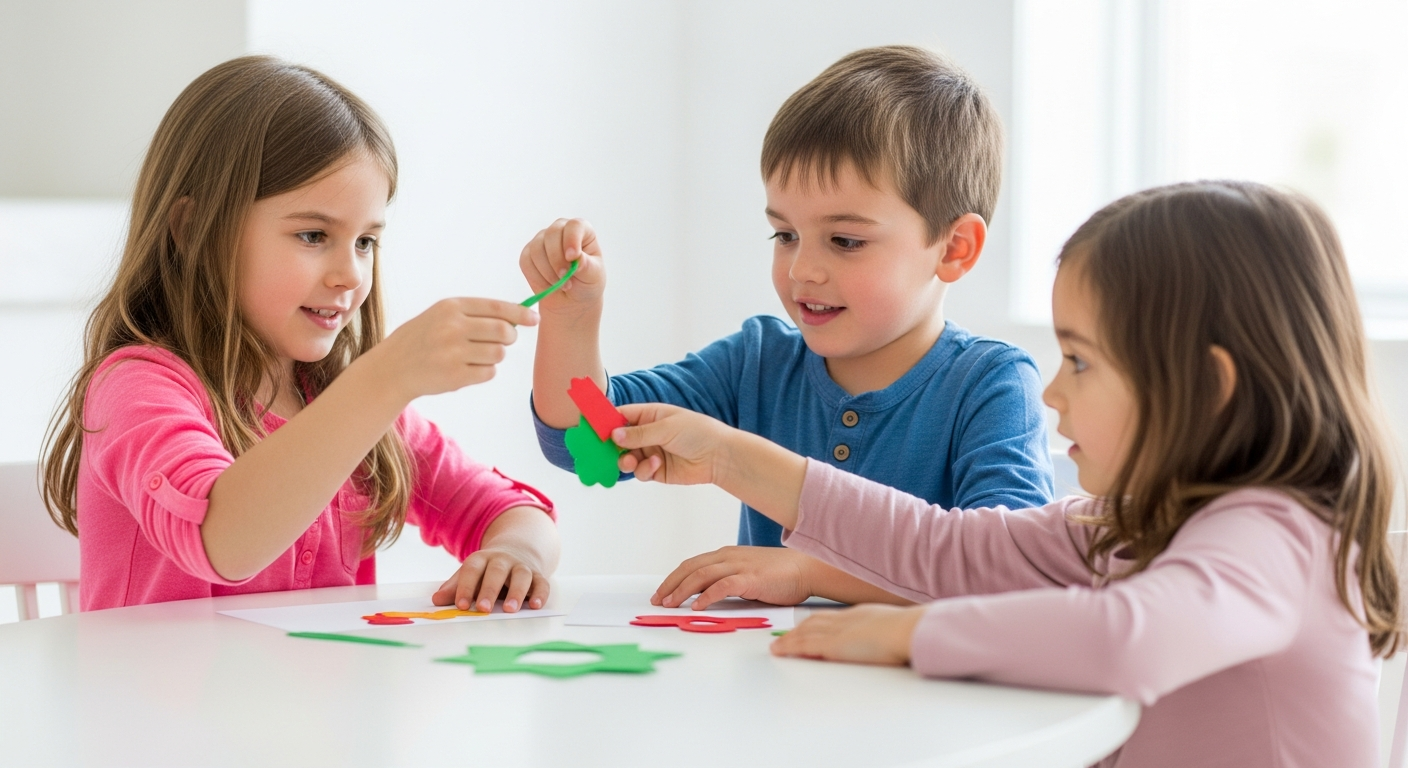
Table of Contents
- Introduction
- The Power of Hands-On Play: Why Crafts Matter
- Essential Household Supplies for Crafting Fun
- Easy Craft Ideas for Little Hands
- Boosting Communication Through Crafting
- Speech Blubs: Your Partner in Playful Communication
- Choosing Your Speech Blubs Journey: Plans & Value
- Conclusion
- Frequently Asked Questions (FAQ)
Picture this: The afternoon stretches out before you, the kids are starting to declare, “I’m bored!” and you’re wondering how to fill the hours without resorting to endless screen time. Sound familiar? Every parent has been there, longing for engaging activities that spark joy, foster learning, and don't require a trip to the specialty craft store. The good news is that the solution often lies right within your home, waiting to be transformed by imagination and a few simple supplies.
This post isn't just about keeping little hands busy; it's about unlocking a world where everyday objects become tools for creativity, learning, and invaluable communication practice. We'll dive into a treasure trove of easy kid crafts to do at home, all designed to be fun, accessible, and incredibly beneficial for your child's development. From boosting fine motor skills to encouraging descriptive language, these crafts offer a wonderful blend of play and learning. Here at Speech Blubs, we passionately believe in empowering children to speak their minds and hearts, and we know that hands-on activities like crafting are fantastic catalysts for building foundational communication skills in a joyful, natural way. Ready to transform household items into masterpieces and “I’m bored!” into “Look what I made!”? Let's get crafting!

Introduction
Ever wonder how a simple cardboard tube can become a space rocket or a sock can turn into a silly monster? The magic of easy kid crafts lies in their ability to ignite imagination and transform the mundane into the magnificent. For parents navigating the delightful chaos of childhood, finding engaging activities that are both educational and fun can feel like a quest. This blog post is your ultimate guide to a world of accessible, enjoyable crafts that use materials you likely already have around the house. We’re here to show you how everyday items can become powerful tools for creativity, fine motor skill development, and — perhaps most importantly — a springboard for communication.
Our purpose is to equip you with a diverse collection of craft ideas, complete with tips on how to integrate language and social learning seamlessly into each project. We'll explore why crafting is more than just a pastime, delving into its profound benefits for a child's overall development, especially their speech and language acquisition. By the end of this guide, you’ll be armed with a wealth of practical, no-fuss craft ideas and a deeper understanding of how these joyful moments contribute to your child's growth. And remember, for families seeking additional support in their child’s communication journey, tools like Speech Blubs offer scientifically-backed, playful approaches to speech development, providing a "smart screen time" alternative that complements hands-on activities. To learn more about how we blend scientific principles with play, visit our main website Speech Blubs.
The Power of Hands-On Play: Why Crafts Matter
Crafting is far more than just a way to pass the time; it's a foundational activity that supports a child's holistic development in incredible ways. When little hands cut, glue, draw, and build, they're not just making art—they're building essential skills that will serve them throughout their lives.
Fine Motor Skill Development
Think about all the intricate movements involved in crafting:

- Cutting with scissors: Develops hand-eye coordination and strengthens hand muscles.
- Gluing small pieces: Requires precision and control.
- Drawing and coloring: Enhances pencil grip and dexterity.
- Shaping clay or playdough: Builds finger strength and coordination.
These aren't just isolated skills; they are crucial for everyday tasks like dressing themselves, eating with utensils, and eventually, writing. Consistent practice with these fine motor actions through crafting lays a strong groundwork for future independence and academic success.
Cognitive Growth and Problem-Solving
Crafts often involve following instructions, planning steps, and adapting when things don't go exactly as expected. This encourages:
- Sequential thinking: "First, we draw the eyes, then we glue them."
- Problem-solving: "How can we make this piece stick?" or "What color should we use to represent the sky?"
- Spatial reasoning: Understanding how shapes and objects fit together.
- Creativity and imagination: Crafting provides a safe space for children to express their unique ideas, experiment with materials, and bring their imaginative worlds to life.
Emotional Expression and Confidence Building
Creating something with their own hands gives children a huge sense of accomplishment. Finishing a craft project, no matter how simple, boosts self-esteem and pride. It offers:
- A healthy outlet for emotions: Children can express feelings through colors, textures, and forms.
- A sense of mastery: Completing a project reinforces their capabilities.
- Opportunities for shared joy: Presenting their creations to family members fosters connection and validation.
Language and Communication Enrichment
This is where crafting truly shines as a powerful tool for speech development. Every step of a craft project is an opportunity for language learning:
- Vocabulary expansion: Naming colors, shapes, textures (e.g., "sticky glue," "rough sandpaper," "shiny glitter"), tools ("scissors," "paint brush"), and actions ("cut," "glue," "fold," "draw").
- Following directions: "First, get the red paper. Then, cut a circle."
- Descriptive language: Encouraging children to describe what they are making, what materials they are using, and how they feel about their creation. "My monster is green and fuzzy with big, googly eyes!"
- Storytelling: Creating characters or scenes from their crafts naturally leads to imaginative storytelling, building narrative skills.
- Turn-taking and social interaction: Crafting together fosters conversation, negotiation, and sharing materials, which are vital for social communication.
At Speech Blubs, we deeply understand the link between engaging activities and communication growth. Our mission, born from our founders' personal experiences with speech challenges, is to provide an immediate, effective, and joyful solution for the 1 in 4 children who need speech support. We believe in "smart screen time" experiences, which is why our app uses a unique "video modeling" methodology where children learn by watching and imitating their peers, much like they learn by watching you during a craft. This interactive approach makes learning communication skills fun and effective, complementing the hands-on learning from activities like crafting. To see how our scientifically-backed approach can empower your child, check out the research behind Speech Blubs.
Essential Household Supplies for Crafting Fun
One of the best parts about easy kid crafts is that you don't need fancy, expensive supplies. A quick rummage through your kitchen, recycling bin, or office drawer will often reveal a treasure trove of materials just waiting to be transformed. The beauty of using household items is that it teaches children resourcefulness and the joy of repurposing.
Must-Have Basics (You Probably Already Have These!)
- Paper: Printer paper, construction paper (any colors!), paper bags, newspaper, junk mail.
- Cutting Tools: Kid-safe scissors (for various age groups).
- Adhesives: Glue sticks, liquid white glue (PVA glue), masking tape, clear tape.
- Coloring Tools: Crayons, washable markers, colored pencils, sidewalk chalk.
- Recycled Cardboard: Cereal boxes, tissue boxes, paper towel rolls, toilet paper rolls, shipping boxes (perfect for building!).
- Plates & Cups: Paper plates, disposable cups (plastic or paper).
Optional Boosters (Add Extra Sparkle and Texture!)
- Paints: Washable tempera or acrylic paints (primary colors are enough, kids can mix!).
- Paint Brushes: Various sizes.
- Googly Eyes: Always a hit for bringing characters to life.
- Pom-poms & Pipe Cleaners: Great for adding texture, flexibility, and color.
- Yarn/String: For hanging, tying, or adding decorative elements.
- Natural Elements: Leaves, small sticks, pebbles (collected from outdoor adventures).
- Fabric Scraps: Old t-shirts, worn towels, felt scraps.
- Cotton Balls: For soft textures or cloud effects.
- Buttons: For decoration or sensory exploration (ensure they are large enough for younger children to avoid choking hazards).
Remember, the goal is creativity, not perfection. Embrace the materials you have, and let your child lead the way in choosing what to use. This freedom encourages independent thought and problem-solving, which are vital for communication development. For a family whose child is developing expressive language, simply naming each material as you gather it ("Here's the glue! Can you find the red paper?") can significantly boost vocabulary and listening skills.
Easy Craft Ideas for Little Hands
Now for the fun part! Here are some fantastic, easy kid crafts to do at home, broken down by type to help you get started. Each idea is designed to be low-fuss and high-fun, with a focus on encouraging speech and language development.
Paper Plate & Cardboard Tube Creations
These ubiquitous household items are incredibly versatile and perfect for imaginative play.
- Paper Plate Animals & Masks:
- How-to: Cut out a circle from a paper plate. Add ears, eyes, a nose, and mouth using construction paper, markers, or even bits of yarn. Turn it into a dog, cat, lion, or a fantastic monster! Cut out eye holes for a mask.
- Speech Blubs Connection: This is fantastic for descriptive language. "My lion has a fluffy brown mane!" or "My mask is silly with big, purple ears." For a child who is learning animal sounds, practicing "meow," "woof," or "roar" while holding their creation is highly motivating. Our "Animal Kingdom" section in Speech Blubs offers a perfect opportunity to practice these sounds and mimic actions by watching peers.
- Skills: Fine motor (cutting, gluing), creativity, imaginative play, vocabulary (animal names, body parts, colors, adjectives).
- Toilet Paper Roll Binoculars/Telescopes:
- How-to: Glue or tape two toilet paper rolls together. Decorate with paint, markers, or stickers. Attach a piece of string or yarn for a neck strap.
- Speech Blubs Connection: Encourages imaginative play and narration. "What do you see through your telescope? Do you see a star? A bird? A dinosaur?" This promotes asking and answering questions, as well as using imaginative vocabulary.
- Skills: Fine motor (gluing, decorating), imaginative play, vocabulary (space, exploration terms), descriptive language.
- Paper Plate Spin Art:
- How-to: Place a paper plate inside a salad spinner. Drip various colors of washable paint onto the plate. Spin it rapidly! The centrifugal force creates mesmerizing patterns.
- Speech Blubs Connection: Great for action words ("spin," "drip," "mix"), color identification, and expressing surprise ("Wow!," "Look!"). You can also discuss patterns and changes: "What happens when we spin the red and blue together?"
- Skills: Cause and effect, color recognition, fine motor, expressive language.
Nature Crafts
Bring the outdoors in and connect with the natural world through art.
- Painted Rocks:
- How-to: Collect smooth rocks from your garden or a park (ensure they are clean and dry). Use acrylic paints to decorate them with designs, animals, or messages. Seal with Mod Podge or clear varnish if desired.
- Speech Blubs Connection: Discuss where the rocks came from, their texture ("smooth," "bumpy"), and the colors used. Encourage your child to describe what they are painting. "I'm painting a red ladybug with black spots." You can then hide them around your neighborhood for others to find, promoting a sense of community and sharing ("Let's hide our pretty rocks for someone else to find!").
- Skills: Fine motor (painting), color recognition, descriptive language, turn-taking (if hiding rocks).
- Leaf Rubbings & Collages:
- How-to: Collect various leaves with interesting textures. Place a leaf under a piece of thin paper and rub a crayon (peeled of its wrapper) sideways over the paper to reveal the leaf's pattern. For collages, glue different leaves onto paper to create nature scenes or abstract art.
- Speech Blubs Connection: Talk about the different types of leaves, their shapes ("pointy," "round"), sizes ("big," "small"), and colors ("green," "brown," "yellow"). Use action words like "rub," "collect," "glue."
- Skills: Fine motor, observation, vocabulary (nature terms, adjectives), sensory exploration.
Recycled Art & Sensory Play
Give new life to discarded items and engage multiple senses.
- Shoebox Guitars:
- How-to: Use an empty shoebox for the body of the guitar. Cut a hole in the lid. Stretch several rubber bands around the shoebox, over the hole, to create "strings." Add a paper towel roll for the neck and decorate.
- Speech Blubs Connection: Explore concepts of sound ("What sound does your guitar make? Twang!"). Encourage singing and making up songs. This is an excellent way to practice vocalization and rhythm. "Can you strum your guitar?"
- Skills: Creativity, understanding sound, fine motor, imaginative play, musicality.
- Monster Puppets from Old Socks:
- How-to: Grab an old sock! Attach googly eyes, yarn for hair, felt scraps for teeth/tongues, and buttons for decoration using fabric glue or by sewing (for older kids/adults).
- Speech Blubs Connection: Create characters and tell stories! Use different voices for each monster. "What does your monster say? Does he say, Roar! or Grrr?" This is a fantastic exercise for developing narrative skills, character voices, and expressive language. For children working on specific sounds, designing a monster that uses those sounds (e.g., a "ssss-snake monster") can be highly motivating.
- Skills: Imaginative play, storytelling, character development, fine motor, vocabulary.
- Homemade Finger Paint:
- How-to: Mix 1/2 cup cornstarch, 1 cup cold water, and a few drops of food coloring for each color. Cook on medium heat, stirring until it thickens. Let cool. Store in airtight containers.
- Speech Blubs Connection: This sensory experience offers rich language opportunities. Describe the texture ("slippery," "smooth," "cold"), the colors, and the actions ("mix," "swirl," "paint"). Ask, "What are you painting?" or "How does it feel?"
- Skills: Sensory exploration, color mixing, fine motor, descriptive language, cause and effect.
- DIY Sidewalk Chalk:
- How-to: Mix equal parts plaster of Paris and water (e.g., 1 cup each). Add a few drops of liquid tempera paint or food coloring. Pour into molds (like toilet paper rolls lined with wax paper or silicone molds). Let dry for 24-48 hours.
- Speech Blubs Connection: Take the chalk outside and draw! Practice naming shapes, letters, numbers, and animals. "Can you draw a big, blue circle?" "Let's draw a red flower!" This combines gross motor movement with language practice.
- Skills: Color recognition, shape identification, letter/number recognition, fine motor (drawing), outdoor play.
Boosting Communication Through Crafting
Crafting isn't just about the end product; it's about the process and the rich opportunities for interaction and language development along the way. Here’s how you can maximize speech and language growth during your crafting sessions:
- Narrate Your Actions: As you craft, describe what you are doing using simple, clear sentences. "I am cutting the blue paper." "Now, I will glue the eyes on the monster." This provides excellent language models for your child to imitate.
- Encourage Imitation: Just like in our Speech Blubs app where children learn by observing and imitating their peers, you can encourage your child to imitate your actions and words. If you say, "Snip, snip, snip!" while cutting, they might pick up the sound or action.
- Ask Open-Ended Questions: Instead of "Do you like it?", try "What should we add next?" or "How does that feel?" or "Tell me about your masterpiece." These questions encourage more elaborate responses and critical thinking.
- Introduce New Vocabulary: Point out and name colors, shapes, textures, and tools. "This pom-pom is fluffy!" "Look at this long piece of string." Repeat new words multiple times for better retention.
- Practice Following Directions: Start with one-step directions and gradually move to two or three steps as your child progresses. "Get the glue stick." then "Get the glue stick and the red paper." This is crucial for listening comprehension.
- Describe Attributes and Functions: Talk about what something looks like (color, size, shape), feels like (smooth, rough, soft), and does (glues, cuts, paints). "The scissors cut the paper."
- Foster Storytelling: If you're making characters or scenes, ask your child to tell a story about them. "What is your bunny doing now?" "Where is your robot going?" This helps develop narrative skills and sequencing.
- Embrace the "Mistakes": Sometimes a craft won't turn out as planned. Use these moments as opportunities for problem-solving and flexible thinking. "Oh, the glue didn't hold! What else could we use?" This teaches adaptability, a key life skill.
By integrating these strategies, you're not just crafting; you're creating a language-rich environment that supports your child’s communication journey in a fun and engaging way. These shared moments of creative expression strengthen your bond and provide countless opportunities for learning and growth.
Speech Blubs: Your Partner in Playful Communication
At Speech Blubs, we understand that every child's communication journey is unique, and sometimes, a little extra support can make all the difference. That's why we’ve dedicated ourselves to empowering children to "speak their minds and hearts." Our company was born from the personal experiences of our founders, who all grew up with speech problems and wished for a fun, effective tool to help them. This personal connection drives our commitment to providing an immediate, effective, and joyful solution for the 1 in 4 children who need speech support.
We blend scientific principles with play into one-of-a-kind "smart screen time" experiences that are vastly different from passive viewing like cartoons. Our unique approach utilizes "video modeling" methodology, where children learn by watching and imitating their peers. This natural, engaging method taps into mirror neurons in the brain, making learning complex communication skills intuitive and fun. It's a powerful tool for family connection, offering interactive activities that you can do together, turning screen time into meaningful learning time.
If you're wondering whether your child could benefit from a structured, playful approach to speech development, we invite you to take our quick 3-minute preliminary screener. It involves 9 simple questions and provides an assessment along with a next-steps plan. This can give you valuable insights and lead you to a free 7-day trial of our app. Countless parents have seen wonderful progress with Speech Blubs; you can explore their experiences and read their testimonials here. We believe in providing realistic expectations: Speech Blubs fosters a love for communication, builds confidence, reduces frustration, develops key foundational skills, and creates joyful family learning moments. It is a powerful supplement to your child's overall development plan and, when applicable, professional therapy.
Choosing Your Speech Blubs Journey: Plans & Value
We believe in making effective speech support accessible and valuable for every family. When you choose to integrate Speech Blubs into your child's learning routine, you’re investing in a research-backed tool designed for joy and progress. We offer flexible plans, but one clearly stands out in terms of value and benefits.
Our pricing is straightforward:
- Monthly Plan: For $14.99 per month.
- Yearly Plan: For just $59.99 per year.
While the Monthly plan offers flexibility, we want to highlight the superior value of our Yearly plan. By choosing the Yearly plan, you instantly save 66% compared to the monthly subscription, breaking down to an incredibly affordable $4.99 per month. But the savings are just the beginning!
The Yearly plan is our best choice because it includes exclusive, high-value features designed to maximize your child's learning and your family's experience:
- 7-Day Free Trial: Only the Yearly plan comes with a full 7-day free trial, allowing you and your child to explore all the engaging activities and see the magic of video modeling firsthand before committing.
- Bonus Reading Blubs App: Gain access to our Reading Blubs app, providing even more educational content to support early literacy skills.
- Early Access to New Updates: Be among the first to experience new features and content as soon as they are released.
- 24-Hour Support Response Time: Our dedicated support team is there for you with priority assistance, ensuring any questions or concerns are addressed quickly.
It's important to note that the Monthly plan does not include these valuable benefits. For the fullest experience, the best value, and the opportunity to truly see the difference Speech Blubs can make, we wholeheartedly recommend the Yearly plan.
Ready to provide your child with joyful, effective speech support and unlock all these amazing features? We encourage you to start with the Yearly plan to get your 7-day free trial and the full suite of Speech Blubs features today. You can also download Speech Blubs on the App Store or Google Play Store and select the Yearly option to begin your free trial and access everything we have to offer.
Conclusion
The journey of childhood is filled with discovery, and some of the most profound learning experiences happen when children are engaged in hands-on creative play. Easy kid crafts to do at home offer a beautiful blend of entertainment, skill-building, and invaluable opportunities for communication development. From strengthening fine motor skills and sparking cognitive growth to fostering emotional expression and building confidence, crafting provides a rich tapestry of benefits. More importantly, it creates cherished moments for family connection, where conversation flows naturally, and imagination takes center stage.
We hope this guide has inspired you to look at your everyday household items with fresh eyes and embark on countless creative adventures with your little ones. Remember, every snip, glue, and scribble is not just art in the making, but a step forward in your child's developmental journey, especially their ability to express themselves.
At Speech Blubs, we are honored to be a part of that journey, offering "smart screen time" that complements these hands-on activities, empowering children to "speak their minds and hearts." By blending scientific methodology with joyful, interactive play, our app provides a powerful tool to foster communication skills and build confidence.
Ready to unlock a world of creative expression and communication for your child? Start your family’s adventure today! We highly recommend choosing our Yearly plan to get the most value, including a 7-day free trial, the Reading Blubs app, and priority support. You can begin by creating your account on our website or downloading the app directly from the Apple App Store or Google Play Store. Let’s make joyful learning moments together!
Frequently Asked Questions (FAQ)
Q1: What are the best age groups for these easy kid crafts?
A1: Most of the crafts listed are adaptable for children between 2 and 10 years old. Younger children will need more adult supervision and assistance with tasks like cutting, while older children can follow instructions more independently and add more intricate details. Always prioritize safety, especially with scissors and small objects.
Q2: How can I make crafting less messy?
A2: Designate a specific "craft zone" that is easy to clean, such as a kitchen table covered with a plastic tablecloth or old newspapers. Use washable paints and markers whenever possible. Keep wet wipes or a damp cloth nearby for quick cleanups. For very young children, consider "no-mess" crafts like sticker collages or drawing with water on a chalkboard.
Q3: What if my child isn't interested in a specific craft idea?
A3: Every child has unique interests! If a craft isn't capturing their attention, don't force it. Offer a few choices and let them pick. Focus on the process, not just the product. Sometimes, simply having the materials available and letting them explore freely can be more engaging than following a specific set of instructions. Remember, the goal is joyful engagement.
Q4: How do crafts truly help with speech development?
A4: Crafts create natural, motivating opportunities for communication. They encourage vocabulary expansion (naming colors, shapes, tools), following multi-step directions, describing actions and creations, asking and answering questions, and even storytelling. The interactive nature of crafting with a caregiver provides a language-rich environment where children can practice and refine their communication skills in a fun and low-pressure setting. This hands-on imitation and interaction perfectly complements methodologies like Speech Blubs' video modeling.
About the author