
Creative January Toddler Crafts for Indoor Winter Fun
 By Speech Blubs Team•Feb 23, 2026•14 min.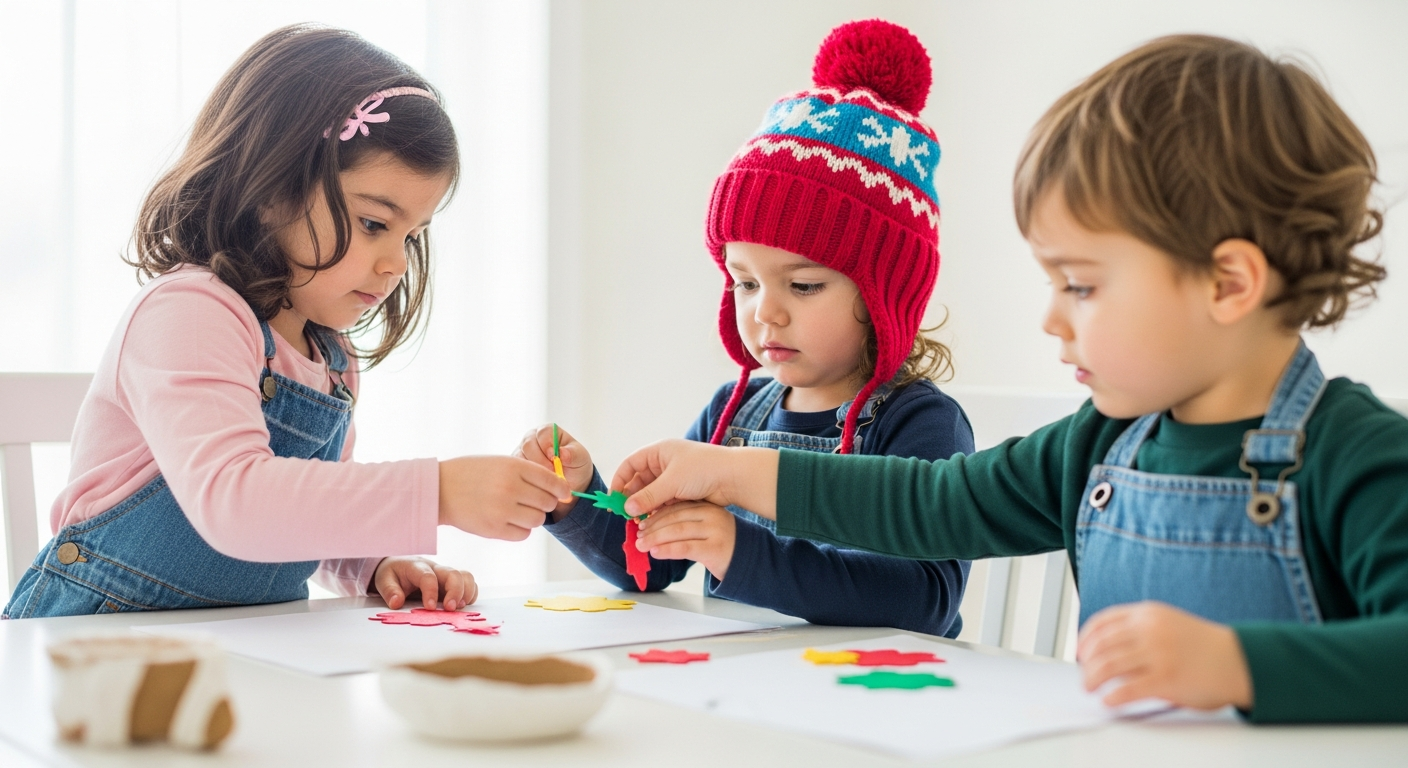
Table of Contents
- Introduction
- The Power of Process Art in Winter
- Snowman Crafts: Classic Winter Fun
- Snowflake and Ice Innovations
- Arctic Animal Adventures
- Cozy Indoor Comfort Crafts
- Using Speech Blubs as Your Crafting Companion
- Tips for Stress-Free Crafting
- The Connection Between Fine Motor Skills and Speech
- More Creative January Ideas
- A Note on Realistic Expectations
- Conclusion
- FAQs about January Toddler Crafts
Introduction
The glitter of the holiday season has settled, the decorations are back in their boxes, and the thermometer outside has taken a significant dip. If you are a parent or caregiver to a busy toddler, you know that January can sometimes feel like the longest month of the year. The days are short, the air is biting, and that boundless toddler energy seems to bounce off the living room walls. You might find yourself asking, "How do I keep my little one engaged when we are stuck indoors?" or "How can I turn this indoor time into a meaningful learning opportunity?"
At Speech Blubs, we understand these challenges because we’ve lived them. Our founders grew up with speech hurdles and created the very tools they wished they had—solutions that blend scientific principles with the pure joy of play. We know that the best learning happens when a child is having fun, feeling confident, and connecting with the people they love. That’s why we’ve curated this extensive list of January toddler crafts. These activities aren't just about making something pretty to hang on the fridge; they are designed to foster fine motor skills, encourage sensory exploration, and build the foundational communication skills your child needs to "speak their minds and hearts."

In this post, we will explore over 30 creative craft ideas specifically tailored for the winter season, ranging from fluffy snowmen to arctic animal adventures. We will also discuss how these tactile experiences pair perfectly with our "smart screen time" approach to help your child thrive. Our goal is to provide you with a roadmap for a joyful, productive January that turns "stuck inside" into "growing together."
The Power of Process Art in Winter
When we talk about January toddler crafts, we like to emphasize "process art." This means we focus more on the experience of creating rather than the final masterpiece. For a two- or three-year-old, the sensation of cold paint on their fingers or the sound of ripping paper is far more educational than perfectly placing a carrot nose on a snowman.
Crafting is a multi-sensory workout for a growing brain. When your child picks up a small pom-pom, they are practicing the pincer grasp, which is essential for later writing. When they describe the "sticky" glue or the "soft" cotton, they are expanding their descriptive vocabulary. At Speech Blubs, we advocate for this kind of holistic development. Our app uses video modeling, where children watch their peers perform speech exercises. This "kids teaching kids" methodology is rooted in science, specifically the activation of mirror neurons. You can mirror this approach during craft time—let your child watch you explore the materials first, then let them take the lead.
Snowman Crafts: Classic Winter Fun
Snowmen are the quintessential January craft. They are simple shapes that toddlers can easily recognize and recreate using household items.
1. The Puffy Paint Snowman
This is a sensory favorite. Mix equal parts white school glue and foaming shaving cream. The result is a thick, "puffy" paint that looks exactly like real snow.
- The Activity: Give your toddler a piece of blue construction paper and let them scoop the "snow" onto the page. They can use their hands or a thick brush.
- Speech Connection: As they work, practice the "S" sound. "S-s-s-snow!" or "S-s-s-sticky!"
- Speech Blubs Tip: For a child who loves tactile play, try the "Early Sounds" section of our app to find similar phonetic repetitions. You can download Speech Blubs on the App Store to start practicing today.
2. Cotton Ball Collage
This is excellent for fine motor control.

- The Activity: Draw three circles on a piece of paper. Have your child apply glue inside the circles and then press soft cotton balls onto the glue.
- The Challenge: If your toddler is older, give them a pair of plastic tweezers to pick up the cotton balls. This builds incredible hand strength.
3. Melted Snowman Art
Sometimes the best crafts happen when things "go wrong."
- The Activity: Tell your child the snowman stayed inside where it was too warm! Have them glue a hat, some buttons, and a construction paper nose onto a messy white paint splat.
- Scenario: For a parent whose 3-year-old "late talker" loves humor, this "melted" snowman offers a fun, motivating way to practice exclamations like "Oh no!" or "Uh-oh!" These simple functional words are huge milestones in early communication.
Snowflake and Ice Innovations
Snowflakes offer a great way to talk about shapes and "same versus different."
4. Tape Resist Snowflakes
This is a "magic" craft that toddlers find fascinating.
- The Activity: Use painter's tape to create a snowflake shape on a white piece of paper. Let your child paint over the entire page with blue watercolors or finger paint. Once it’s dry, peel away the tape to reveal the white snowflake underneath.
- The Value: This teaches patience and the concept of "hidden" versus "seen."
5. Coffee Filter Snowflakes
While traditional paper snowflakes require advanced scissor skills, coffee filters are much thinner and easier to manage.
- The Activity: Let your child color coffee filters with washable markers. Then, use a spray bottle or a wet paintbrush to dampen the filter. Watch the colors bleed and blend like ice crystals. Once dry, you can help them snip small edges to create a snowflake pattern.
- Science Integration: Our methodology at Speech Blubs is built on joyful discovery. If you’re curious about the science of how children learn through imitation and play, you can read more about our research-backed approach here.
Arctic Animal Adventures
January is the perfect time to introduce your toddler to creatures that love the cold.
6. Paper Plate Polar Bears
- The Activity: Use a white paper plate as the face. Let your child glue on two small circles for ears and a black pom-pom for a nose. For a "fuzzy" texture, they can glue torn bits of white tissue paper all over the plate.
- Speech Blubs Integration: In our "Animal Kingdom" section, children can learn to imitate animal sounds and movements. While making your polar bear, you can practice a big "Grrr!" or "Sniff-sniff." Learning through peer imitation is at the heart of what we do.
7. Handprint Penguins
- The Activity: Paint your child's palm and fingers black (leave the thumb out or paint it black too). Press it onto a piece of paper. The fingers become the penguin's tail/flippers. Once dry, add a white oval on the belly and a small orange triangle for a beak.
- Testimonial Moment: Many parents tell us that these handprint crafts become cherished keepsakes. As one parent noted on our reviews page, seeing their child’s confidence grow through both art and Speech Blubs has been a life-changing experience.
8. The Snowy Owl
- The Activity: Use a pinecone gathered from a winter walk. Have your child stuff small tufts of cotton wool between the scales of the pinecone. Add googly eyes and a small felt beak.
- Developmental Benefit: This activity is a fantastic sensory experience. The contrast between the rough pinecone and the soft cotton provides great tactile input for toddlers.
Cozy Indoor Comfort Crafts
When the wind is howling, crafts that focus on warmth and "hygge" are particularly comforting.
9. The Hot Cocoa Name Mug
- The Activity: Cut a large mug shape out of construction paper. Let your child decorate it with stickers or markers. Then, give them "marshmallows" (small white paper squares or real mini marshmallows).
- Learning Twist: Write one letter of your child’s name on each marshmallow. Help them glue the marshmallows onto the "cocoa" in the correct order.
- Screener Opportunity: If you find your child is struggling with following simple multi-step directions like this, it might be a good time for a check-in. You can take our quick 3-minute preliminary screener to see if your child could benefit from targeted speech support. It’s just 9 simple questions and provides a personalized next-steps plan.
10. Mitten Match-Up
- The Activity: Cut several pairs of mittens out of different colors of felt or cardstock. Decorate them with various patterns (stripes on one pair, dots on another).
- The Play: Hide the mittens around the room and have your toddler find them and "match" the pairs.
- Value: This builds visual discrimination skills and keeps them moving during an indoor day.
Using Speech Blubs as Your Crafting Companion
While we love hands-on January toddler crafts, we also recognize that parents need a break and children benefit from structured, high-quality digital engagement. We call this "smart screen time." Unlike passive cartoons, Speech Blubs is an interactive tool that requires your child to participate, imitate, and engage.
Our app is a powerful supplement to your child’s overall development plan. Whether your child is one of the 1 in 4 who needs extra speech support or they are simply a "late talker" who needs a confidence boost, our peer-led video modeling is designed to be effective and joyful. We recommend using the app together—watch the "video blubs" with your child, try the funny face filters together, and then transition into a craft inspired by what you saw.
Transparent Pricing for Families
We believe in building trust through transparency. We offer two main paths for families to join our community:
- Monthly Plan: $14.99 per month. This is a great way to try us out if you prefer a month-to-month commitment.
- Yearly Plan: This is our clear best-value choice at $59.99 per year. This breaks down to just $4.99 per month, saving you 66% compared to the monthly rate.
Why choose the Yearly Plan? Beyond the significant cost savings, the Yearly plan offers exclusive, high-value features that help your child progress even faster:
- A 7-day free trial so you can explore the full experience risk-free.
- Access to our Reading Blubs app, which focuses on the transition from speaking to reading.
- Early access to new updates and features.
- 24-hour support response time from our dedicated team.
The Monthly plan does not include the free trial, Reading Blubs, or priority support. To give your child the full suite of tools, we encourage you to sign up for the Yearly plan on our website.
Tips for Stress-Free Crafting
We know that "toddler craft" can sometimes be a synonym for "giant mess." Here are a few ways we keep things manageable:
- Embrace the Tray: Use a large baking sheet or a plastic tray to contain the glitter, glue, and paint. It defines the workspace for the toddler and makes cleanup a breeze.
- Co-Play is Key: These activities are designed for adult support. Your presence provides the "language bridge"—you are there to narrate what they are doing. "You are using the blue paint!" or "That cotton feels bumpy!"
- Keep it Short: A toddler’s attention span is typically 2-3 minutes per year of age. If they want to stop after five minutes, that’s okay! The goal is a joyful family learning moment, not a marathon session.
- Focus on the Foundation: Remember that you aren't aiming for a professional result. You are fostering a love for communication and building confidence. If the snowman has five eyes and no head, celebrate their creativity!
The Connection Between Fine Motor Skills and Speech
It might seem strange to link "gluing cotton balls" to "learning to talk," but in child development, these skills are closely intertwined. The part of the brain responsible for fine motor skills (the cerebellum) is also heavily involved in language processing. By engaging in these January toddler crafts, you are literally wiring your child's brain for communication.
When your child navigates the Speech Blubs app, they are also using fine motor skills to tap, swipe, and interact with the peer models. This combination of physical play and digital learning creates a robust environment for growth. Our mission is to empower children to speak their minds and hearts, and that starts with the very first "moo" during animal play or the first "brrr" while painting a snowflake.
More Creative January Ideas
11. Cardboard Tube Penguins
Don't throw away those toilet paper or paper towel rolls!
- The Activity: Paint the tube black, leaving a white oval for the belly. Glue on orange feet and a beak.
- The Play: Use these as characters for a "winter play" where they slide across a "table-top ice rink" (a piece of aluminum foil).
12. Sensory Snow Bin
If it’s too cold to play in the real snow, bring a little bit inside.
- The Activity: Fill a plastic bin with real snow (or "instasnow" powder). Add plastic arctic animals, measuring cups, and spoons.
- The Experience: Let your child explore the cold temperature with their hands. Use words like "frigid," "melting," and "chilly."
13. Winter Window Art
- The Activity: Give your child a damp sponge and some white tempera paint (or window markers). Let them paint "frost" and "snow" directly onto a glass door or window.
- The Cleanup: It’s easily washable and provides a huge canvas for their "big" arm movements, which is great for gross motor development.
A Note on Realistic Expectations
As a child development expert, I want to remind you that every child moves at their own pace. Some toddlers will dive into a bowl of puffy paint with both hands, while others might be more hesitant about the texture. Both are perfectly normal.
At Speech Blubs, we avoid overpromising. We don’t say "your child will be a public speaker in a month." Instead, we focus on the process: reducing frustration for the 1 in 4 children who need support, developing foundational skills, and creating those tiny, joyful "lightbulb moments." Whether you are using our app or making a handprint penguin, you are doing the important work of supporting your child’s development.
If you haven't yet, download Speech Blubs on Google Play to see how our peer-led models can spark a new level of engagement in your little one.
Conclusion
January doesn't have to be a month of cabin fever. With a few simple supplies like paper plates, glue, and a lot of imagination, you can turn these cold days into a season of incredible growth. These January toddler crafts are more than just a way to pass the time; they are a bridge to better communication, stronger motor skills, and deeper family connections.
By combining these hands-on activities with the scientific, peer-led methodology of Speech Blubs, you are giving your child a well-rounded foundation for success. Remember, our founders created this tool because they wanted every child to have the chance to be heard.
Ready to make this winter your child's most expressive season yet? We invite you to start your journey with us today. Choose the Yearly plan to receive your 7-day free trial, access to the Reading Blubs app, and the best possible value for your family.
Create your account and begin your 7-day free trial today!
Let’s turn this January into a month of "smiles, sounds, and smart screen time." We can’t wait to see what your little one creates!
FAQs about January Toddler Crafts
1. My toddler still puts everything in their mouth. Are these crafts safe?
Always prioritize safety. For "mouthers," skip the small buttons or beads and stick to edible-safe options. For example, use a mix of yogurt and food coloring for "paint," or use large marshmallows for the hot cocoa craft. Always supervise your child closely during any activity involving glue or small parts.
2. How can I make crafting less messy?
The "tray method" is your best friend. Use a rimmed baking sheet to contain paint and glitter. We also recommend "mess-free" options like contact paper collages, where the child sticks paper bits to the sticky side of clear contact paper—no glue required!
3. What if my child isn't interested in sitting down to craft?
That’s totally fine! Toddlers learn through movement. Try "action crafting" like the Mitten Match-Up game mentioned earlier, or tape a large piece of paper to the floor so they can crawl and paint at the same time. Speech Blubs is also a great "on-the-go" tool for kids who prefer to move while they learn.
4. How often should we do these activities?
There is no "right" frequency. Some families love a daily craft, while others prefer one big project on the weekend. The most important thing is the quality of the interaction. Even 10 minutes of focused co-play—whether through a craft or the Speech Blubs app—is incredibly beneficial for your child's development.
About the author