
Creative November Toddler Crafts for Autumn Fun
 By Speech Blubs Team•Feb 23, 2026•15 min.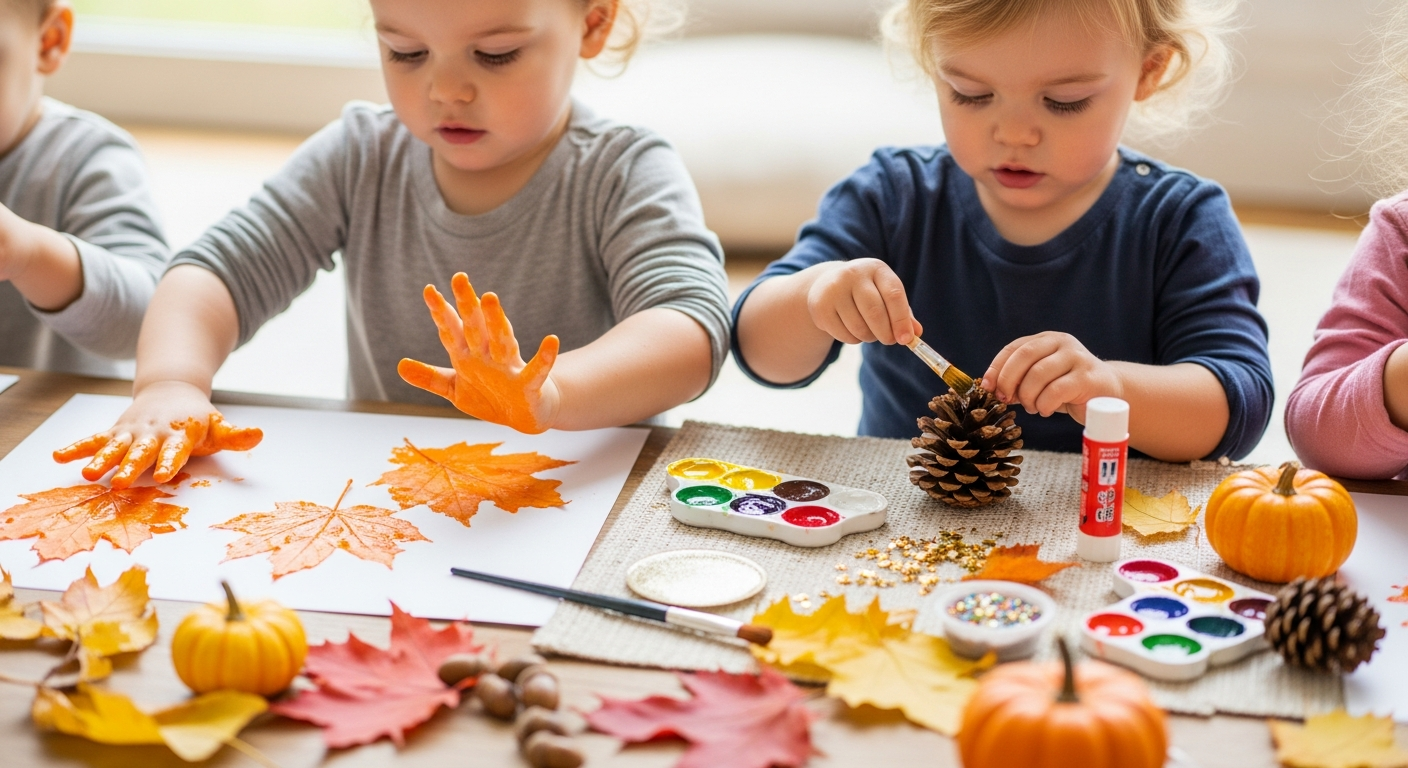
Table of Contents
- Introduction
- Why Crafting is Essential for Toddler Development
- Nature-Inspired November Toddler Crafts
- The Speech Blubs Philosophy: Smart Screen Time
- Thanksgiving and Gratitude-Themed Crafts
- Fine Motor and Sensory-Focused Activities
- Creating a Joyful Learning Environment
- Choosing the Right Tools for Your Family
- Practical Scenarios: Connecting Crafts to Speech Blubs
- Summary of Key Takeaways
- Conclusion
- Frequently Asked Questions
Introduction
Do you remember the specific, crisp scent of November air from your own childhood? Perhaps it was the smell of damp leaves on the sidewalk or the aroma of cinnamon and pumpkin wafting from the kitchen. For a toddler, November is a sensory wonderland. The world is changing colors, the air is getting chilly, and the anticipation of family gatherings begins to build. At Speech Blubs, we believe these seasonal shifts provide the perfect "communication windows"—moments where a child’s natural curiosity about the world can be harnessed to build language, confidence, and connection.
In this post, we are going to explore a wide variety of November toddler crafts that go far beyond just glue and glitter. We will look at how simple activities like leaf stamping, pinecone turkey making, and sensory corn painting can become powerful tools for developmental growth. We will also discuss how these hands-on activities pair perfectly with our "smart screen time" philosophy to create a balanced learning environment at home.

Our goal is to provide you with a month’s worth of inspiration that helps your little one "speak their mind and heart." Whether your child is just starting to mimic sounds or is already beginning to string sentences together, these crafts offer a joyful way to practice fine motor skills, expand vocabulary, and create lasting family memories. By the end of this article, you will have a full toolkit of ideas to make this November a month of breakthrough communication.
Why Crafting is Essential for Toddler Development
Before we dive into the specific November toddler crafts, it is important to understand the "why" behind the mess. For a two or three-year-old, the process of crafting is a full-body workout for the brain. It isn’t about the final product sitting on the mantel; it’s about the journey of getting there.
Fine Motor Skill Mastery
When your toddler picks up a small acorn or tries to squeeze a glue bottle, they are practicing the pincer grasp and strengthening the tiny muscles in their hands. These are the same muscles they will eventually use to hold a pencil, use a fork, and even button their own coat. November crafts often utilize natural materials like seeds and stems, which provide unique textures that challenge these emerging skills.
Language Expansion and Vocabulary
Crafting is a "language-rich" environment. Think about all the descriptive words you use during a simple project: sticky, crunchy, orange, bumpy, smooth, press, pull, pour. For a child who might be experiencing a speech delay, these concrete, hands-on experiences help bridge the gap between an object and its name.
If you are concerned about your child’s current milestones, you can take our quick 3-minute preliminary screener. It involves just 9 simple questions and provides you with a personalized assessment and a next-steps plan to support your child’s unique journey.
Emotional Regulation and Focus
Sitting down to complete a task—even one that only lasts ten minutes—helps toddlers develop "joint attention." This is the ability to focus on an object or task alongside another person. It is a foundational skill for all future learning and social interaction. Furthermore, the sensory nature of many November crafts, such as playing with dried corn or soft felt, can be incredibly grounding for children who easily become overstimulated.

Nature-Inspired November Toddler Crafts
November is the peak of the autumn season, making it the best time to bring the outdoors inside. Nature-based crafts are wonderful because they start with a "treasure hunt," which is an activity in itself!
1. The Leaf Monster Collage
This is a favorite among our community. Start by taking a walk and collecting the most colorful, strangely shaped leaves you can find.
- The Craft: Once home, give your toddler a piece of cardstock and some non-toxic glue. Let them glue the leaves down. Then, add googly eyes or draw "monster faces" on the leaves with markers.
- The Speech Connection: Use this time to practice facial feature vocabulary. "Where are the monster’s eyes? Where is his big mouth?" This mirrors the work we do in the Speech Blubs app, where children watch their peers make funny faces to encourage imitation and oral-motor movements.
2. Pinecone Turkeys
Pinecones are a staple of November. They have a fantastic "bumpy" texture that toddlers love to explore.
- The Craft: Use a large pinecone as the turkey's body. Tuck colorful fall leaves or scraps of construction paper into the scales to serve as "feathers." Use a small piece of orange felt for the beak.
- The Speech Connection: This is the perfect time to practice "animal sounds." As you build the turkey, encourage your child to say "Gobble, gobble!" If your child loves animals, our "Animal Kingdom" section in the app is a fantastic supplement, offering peer-led videos of kids making animal sounds that your toddler can imitate.
3. Acorn Origami (The Simplified Version)
While traditional origami is too complex for toddlers, a "crumple and fold" version is great for sensory play.
- The Craft: Give your child small squares of brown tissue paper. Show them how to crumple them into balls to represent acorns. You can then glue these into "caps" made from the bottoms of egg cartons painted brown.
- The Speech Connection: Focus on the concepts of "big" and "small." Compare a real acorn to the paper ones you are making. Using comparative language helps toddlers understand the relationships between objects.
The Speech Blubs Philosophy: Smart Screen Time
At Speech Blubs, we know that many parents feel a sense of "screen-time guilt." We want to change that narrative. Our mission is to empower children to "speak their minds and hearts" through what we call "smart screen time."
Our company was born from the personal experiences of our founders, who all grew up with speech problems themselves. They created the tool they wished they had—one that blends scientific principles with the joy of play. Unlike passive cartoons that a child simply watches, Speech Blubs is interactive.
We utilize a unique "video modeling" methodology. Scientific research (which you can read more about on our science and research page) shows that children are highly motivated by watching their peers. When a toddler sees another child on the screen successfully making a sound or saying a word, their "mirror neurons" fire, making them much more likely to attempt the sound themselves.
Using the app for 10-15 minutes after a crafting session can reinforce the concepts you just explored. For example, after making leaf monsters, you can open the app and find related words to practice together. It turns the screen into a powerful tool for family connection rather than a barrier.
Thanksgiving and Gratitude-Themed Crafts
As we move toward the end of the month, the focus naturally shifts to Thanksgiving. These crafts help toddlers begin to grasp the abstract concept of being "thankful" through concrete actions.
4. The Handprint Turkey Placemat
This is a classic for a reason—it creates a beautiful keepsake while being incredibly engaging for the child.
- The Craft: Paint your child's palm brown and their fingers various "fall colors" like red, orange, and yellow. Press their hand onto a piece of construction paper or a plain fabric placemat. Once dry, add a beak and an eye to the thumb (which acts as the turkey's head).
- The Speech Connection: Use this as a "Who?" activity. "Who made this handprint? [Child's Name] did! Who are we going to give this to? Grandma!" This helps with pronoun usage and identifying family members.
5. The "Thankful" Jar
Teaching a toddler to be grateful starts with identifying the things they love.
- The Craft: Decorate an old pasta jar with ribbons and stickers. Each day in November, ask your child one thing they like. It could be "milk," "my teddy," or "the park." Write it on a slip of paper and let them drop it in the jar.
- The Speech Connection: This builds categorization skills. You are helping your child categorize "things I like." It also encourages them to use their words to express their inner feelings—the very core of our mission to help kids speak their hearts.
6. Paper Plate Pilgrims and Turkeys
Paper plates are the unsung heroes of the crafting world. They are sturdy, cheap, and easy for small hands to hold.
- The Craft: Cut a paper plate in half to create the base for a turkey or a pilgrim hat. Toddlers can paint the plate or use "pom pom painting" (clipping a pom pom to a clothespin and dipping it in paint) to create texture.
- The Speech Connection: Focus on "action words." Dip, dab, paint, dry. Describe what your child is doing as they do it. This "parallel talk" is a proven technique for boosting language development in late talkers.
Fine Motor and Sensory-Focused Activities
Sometimes, the best "craft" is simply an invitation to play with materials. These activities focus on the sensory experience of November.
7. Lego-Stamped Indian Corn
If you have a LEGO lover in the house, this is a must-try.
- The Craft: Cut an oval shape out of yellow cardstock to represent an ear of corn. Instead of brushes, give your child a rectangular LEGO brick. They can dip the bottom of the brick (the part with the circles) into different colors of paint—brown, red, orange—and stamp it onto the paper to look like kernels of corn.
- The Speech Connection: This is great for color identification. "Can you find the red paint? Now let’s find the orange!"
8. Sensory Corn Bin
While not a "craft" that results in a finished product, a sensory bin is one of the most effective ways to encourage speech.
- The Activity: Fill a large plastic tub with dried corn kernels. Hide small toy animals or "treasures" like acorns inside. Give your child cups and spoons to scoop and pour.
- The Speech Connection: This is a goldmine for "functional language." Use words like in, out, under, more, all gone. These are the building blocks of early communication. If your child is struggling with these foundational sounds, you might find inspiration in our parent reviews and success stories, where many families share how sensory play combined with Speech Blubs helped their children find their voices.
Creating a Joyful Learning Environment
When you sit down to do these November toddler crafts, remember that your mood is the most important "material." Toddlers are like little sponges—they soak up your energy. If you are stressed about the glue on the carpet, they will feel that tension.
At Speech Blubs, we frame all our activities with an implicit understanding of adult co-play. Our app isn't meant to be a "digital babysitter." We want you to sit with your child, mimic the peer models together, and laugh at the funny filters. The same goes for crafting. Be present, be messy, and be encouraging.
We avoid making unsubstantiated claims or overpromising guaranteed outcomes. We don't say "your child will be a public speaker in a week." Instead, we focus on the beauty of the process. We are here to help you foster a love for communication, build your child’s confidence, and reduce the frustration that often comes when a child can't express what they want. These joyful family learning moments are where the real "magic" happens.
Choosing the Right Tools for Your Family
As you plan your November activities, we want to be transparent about how Speech Blubs can fit into your routine. We provide an immediate, effective, and joyful solution for the 1 in 4 children who need speech support.
To give your child the full experience, including all our specialized modules and our newest features, we recommend our Yearly plan. It is designed to grow with your child over time.
Our Pricing and Plans
- Monthly Plan: $14.99 per month. This is a great way to test the waters if you are looking for a short-term boost.
- Yearly Plan: $59.99 per year. This is our best value, breaking down to just $4.99 per month—less than the cost of a single craft kit!
Why the Yearly Plan is the Best Choice:
- 7-Day Free Trial: You can try the full version of the app for an entire week to see how your child responds to the video modeling.
- Reading Blubs Included: The yearly plan gives you access to our secondary app, Reading Blubs, which focuses on early literacy and phonics—the perfect next step after mastering basic speech sounds.
- Priority Support: You get a 24-hour support response time and early access to all new updates and content releases.
The Monthly plan does not include the free trial or the Reading Blubs app. To give your child the most comprehensive support, we encourage you to create your account and start your 7-day free trial on our web platform or through the app stores.
Practical Scenarios: Connecting Crafts to Speech Blubs
Let’s look at how you can practically use the app to enhance your crafting sessions.
- Scenario A: Your 2-year-old is a "late talker" who loves anything that moves. While making "Paper Plate Pilgrims," you notice they are struggling with the "p" sound in "plate" or "paint." After the craft, you can open the "Early Sounds" section of Speech Blubs. Find a peer model making the "p" sound (the "popping" sound). Your child sees another kid having fun popping their lips, making the sound feel like a game rather than a chore.
- Scenario B: Your 3-year-old is working on expanding their sentences. While doing "Corn Painting," you can use the app's "Colors" section. As the peer on the screen says "Yellow corn," you can point to your child's painting and say, "You made yellow corn, too!" This reinforces the connection between the digital learning and the physical world.
You can download Speech Blubs on the App Store or get it on Google Play to start these targeted practice sessions today.
Summary of Key Takeaways
November is a month of transition, and it offers endless opportunities for "smart play." By integrating these November toddler crafts into your daily routine, you are doing more than just occupying your child’s time. You are:
- Building foundational fine motor skills through sensory-rich materials.
- Expanding vocabulary by using descriptive language during play.
- Fostering emotional connection through shared activities and "joint attention."
- Empowering communication by pairing hands-on learning with the scientific methodology of video modeling.
Whether you are making "Leaf Monsters" or "Thankful Jars," the goal is to make communication a joyful, low-pressure experience. Speech development is a journey, and every small sound, every pointed finger, and every "gobble-gobble" is a step in the right direction.
Conclusion
We hope this guide to November toddler crafts has inspired you to grab some glue, head outside for a leaf hunt, and embrace the beautiful mess of autumn learning. At Speech Blubs, we are honored to be a part of your family’s journey. Our mission remains the same: to provide parents with the tools they need to help their children speak their minds and hearts with confidence.
Don't let the month slip by without taking advantage of these precious developmental windows. Ready to see the difference smart screen time can make?
Download Speech Blubs on the App Store or Google Play today. For the best value and the most comprehensive suite of tools—including the Reading Blubs app and a 7-day free trial—be sure to select the Yearly plan. Let’s make this November a month of "first words" and lasting memories!
Frequently Asked Questions
1. What are the best materials to keep on hand for November toddler crafts?
For November, we recommend having a "nature kit" ready. This includes non-toxic school glue, washable paints (in orange, red, yellow, and brown), paper plates, construction paper, and googly eyes. Additionally, keep a small basket for "nature treasures" like acorns, pinecones, and dried leaves that you collect on walks.
2. My toddler has a very short attention span. How can I get them to finish a craft?
It is perfectly normal for a toddler's attention to last only 5 to 10 minutes! Instead of focusing on "finishing," focus on the exploration. If they only want to glue two leaves and then run away, that’s okay. You can also break the craft into stages: collect leaves in the morning, glue them in the afternoon, and add eyes the next day.
3. Is Speech Blubs a replacement for traditional speech therapy?
No, Speech Blubs is a powerful supplement to your child’s overall development plan. While it is designed using clinical principles and video modeling, it works best when used alongside professional therapy (if needed) and active parent participation. It provides a way to practice the skills learned in therapy in a fun, home-based environment.
4. How does the "video modeling" in Speech Blubs help with crafting and language?
Video modeling works because toddlers are naturally inclined to imitate other children. When they see a peer on the screen making a sound or identifying a color that relates to their craft, they feel a social connection and a desire to "do what the other kid is doing." This boosts their motivation and makes language practice feel like play.
About the author