
Creative Palm Sunday Toddler Crafts for Early Learning
 By Speech Blubs Team•Feb 20, 2026•14 min.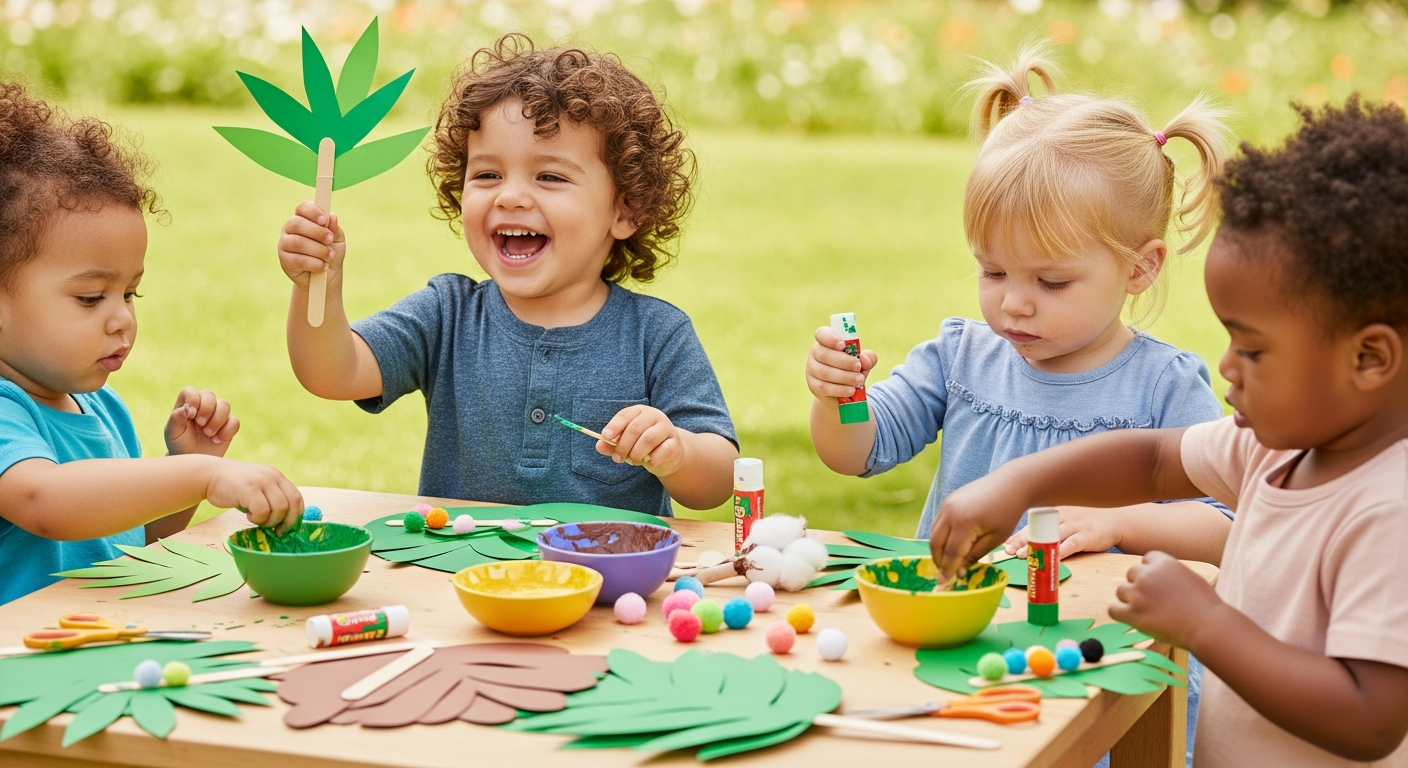
Table of Contents
- Introduction
- Why Hands-On Crafts Matter for Language Development
- The Speech Blubs Mission: Empowering Every Voice
- Fun and Simple Palm Sunday Toddler Craft Ideas
- Science-Backed Success: Why Video Modeling Works
- Interactive Palm Sunday Games to Boost Vocabulary
- Making the Most of Your Child’s Learning Journey
- Choosing the Best Plan for Your Family
- Frequently Asked Questions
- Conclusion
Introduction
Have you ever noticed how a toddler’s eyes light up when they get to touch, tear, and glue colorful paper? There is a profound magic in the way little hands explore the world, and as parents, we are always looking for ways to turn that curiosity into meaningful learning. Palm Sunday presents a beautiful opportunity to combine tradition with developmental growth. Whether you are looking for a simple Palm Sunday toddler craft to do at home or a way to engage a group of little ones in a Sunday School setting, these activities are more than just "busy work." They are foundational tools for communication, fine motor skills, and sensory processing.
In this blog post, we will explore a variety of engaging crafts—from handprint palm fronds to textured donkeys—that are specifically designed to be accessible for toddlers. More importantly, we will discuss how you can use these creative moments to foster language development. At Speech Blubs, our mission is to empower children to "speak their minds and hearts." We believe that every "Hosanna" shouted and every animal sound imitated during craft time is a step toward confident communication. We will walk you through step-by-step instructions, the science behind our unique "video modeling" approach, and how you can turn "screen time" into "smart screen time" that complements your child's hands-on play.

By the end of this guide, you will have a toolkit of activities that not only celebrate the holiday but also support your child's journey toward hitting their speech and language milestones.
Why Hands-On Crafts Matter for Language Development
For a toddler, the world is a giant classroom. When they participate in a Palm Sunday toddler craft, they aren't just making a decoration; they are engaging in a multi-sensory experience. Language is rarely learned in isolation. It is tied to actions, textures, sounds, and emotions.
When your child dips their hand in green paint to make a palm leaf, they are learning the concepts of "cold," "wet," "sticky," and "green." When they press their hand onto the paper, you have a perfect window to practice the "p" sound in "press" or the "h" sound in "hand." This is where the foundation of communication is built. At Speech Blubs, we understand that 1 in 4 children will need some form of speech support. Our company was born from the personal experiences of our founders, who all grew up with speech problems and created the tool they wished they had. We know that creating joyful, low-pressure environments for learning is the most effective way to help a child find their voice.
The Power of Sensory Play
Sensory play is a crucial component of early childhood development. It helps build nerve connections in the brain's pathways, which lead to the child's ability to complete more complex learning tasks. For a child who might be a "late talker," sensory-rich activities provide a non-verbal way to express themselves and interact with their environment before the words fully arrive.
For instance, consider a parent whose 3-year-old "late talker" loves animals. While making a donkey craft, the child is naturally motivated to practice "hee-haw" sounds or the "d" sound for "donkey." The 'Animal Kingdom' section within our app offers a fun, motivating way to reinforce these sounds through peers' faces and voices, creating a powerful link between the physical craft and digital learning.

The Speech Blubs Mission: Empowering Every Voice
We are committed to providing an immediate, effective, and joyful solution for families. We don’t just want to "fix" a delay; we want to foster a lifelong love for communication. Our approach is built on "smart screen time," which is a screen-free alternative to passive viewing like cartoons. Instead of your child zoning out to a show, they are actively participating, imitating, and engaging with other children.
Our unique methodology relies on "video modeling." This is a scientifically-proven technique where children learn by watching and imitating their peers. When a child sees another child making a sound or saying a word, it triggers "mirror neurons" in their brain, making them much more likely to try the sound themselves. This is the same principle we use when we encourage you to co-play during craft time. When you model the word "leaf" or the action "cut," your child is watching your mouth and your movements, learning how to replicate them. Our research page goes into detail about how this method places us in the top tier of speech apps worldwide, ensuring that the tools we provide are grounded in effective science.
Fun and Simple Palm Sunday Toddler Craft Ideas
Now, let’s get into the heart of the celebration. These crafts are designed with the youngest learners in mind, focusing on simplicity and engagement.
1. The Classic Handprint Palm Frond
This is perhaps the most beloved Palm Sunday toddler craft because it uses the child’s own hands as the template. It’s a wonderful way to track their growth year over year.
- Supplies: Green construction paper (or white paper and green paint/crayons), child-safe scissors, and a popsicle stick.
- The "Speech" Strategy: As you trace your child’s hand, talk through the process. Use repetitive phrases like, "Go around the finger," or "Tickle, tickle!" This builds vocabulary related to the body and spatial awareness.
- Instructions:
- Trace your child’s hand onto the green paper multiple times.
- Help them cut out the handprints (or do it for them if they are very young).
- Fan the handprints out and glue them to the top of a popsicle stick or a cardboard tube.
- Encourage your child to wave the "palm" and say "Hosanna!" or "Yay!"
If you aren't sure where your child stands with their verbal milestones, this is a great time to take our quick 3-minute preliminary screener. It involves 9 simple questions and provides an assessment and next-steps plan to help you support their development.
2. The Textured "Tea Leaf" Donkey
This craft is a fantastic sensory experience that uses common household items to create a unique texture.
- Supplies: A printout or drawing of a donkey, white glue, and a few dry tea bags (or coffee grounds).
- The "Speech" Strategy: This activity is all about textures. Use words like "bumpy," "rough," "sticky," and "smelly" (if the tea is fragrant). These descriptive words are essential for expanding a toddler’s expressive language.
- Instructions:
- Draw a simple donkey shape on a piece of cardstock.
- Let your child spread white glue all over the donkey's body.
- Open the tea bags and let the child sprinkle the dry leaves over the glue.
- Shake off the excess and admire the "furry" donkey!
Ready to see how video modeling can take this learning further? Download Speech Blubs on the App Store or Google Play to begin. Our app features many animal sounds that pair perfectly with this activity.
3. The Paper Plate Donkey Friend
Paper plates are a staple in the toddler crafting world because they are sturdy and easy for little hands to manipulate.
- Supplies: Two dessert-sized paper plates, grey paint, grey and black construction paper, and googly eyes.
- The "Speech" Strategy: Focus on parts of the face. "Where are the eyes?" "Where are the ears?" Asking these questions helps with receptive language (understanding) and encourages the child to point or name the features.
- Instructions:
- Paint the bottom of both plates grey.
- Fold one plate in half to create the "body."
- Cut the second plate to create a "head" shape and glue it to the body.
- Cut out long "ears" from the grey construction paper and "hooves" from the black.
- Glue on the eyes and ears.
4. Palm Frond Collage
For the youngest toddlers who may not be ready for structured shapes, a collage is a perfect way to explore colors and materials.
- Supplies: Large green paper, scraps of green fabric, tissue paper, and real leaves from the yard.
- The "Speech" Strategy: Use "choice-making" to encourage speech. "Do you want the green leaf or the soft fabric?" Giving two choices is a powerful way to reduce frustration and encourage a child to use their voice or a gesture to indicate their preference.
- Instructions:
- Provide a large piece of paper as the "base."
- Let the child glue various green materials onto the paper in any way they like.
- Talk about the different shades of green and the different "feels" of the materials.
Science-Backed Success: Why Video Modeling Works
At Speech Blubs, we don't just guess what works; we use scientific principles to build our "smart screen time" experiences. One of the reasons our app is so effective is that it mimics the way children naturally learn from one another. In the same way that your toddler might try to wave a palm branch after seeing you do it, they are more likely to try a new word after seeing a "friend" on a screen do it.
This peer-to-peer connection is at the heart of our methodology. When children see other children succeeding, it builds their confidence and reduces the pressure they might feel when an adult is prompting them. We’ve seen incredible results from this approach. Don't just take our word for it—see what other parents are saying on our testimonials page.
We emphasize that the app is a powerful supplement to a child's overall development plan. It is not a replacement for human interaction but a tool to enhance it. We always frame our activities with an implicit understanding of adult co-play. When you use the app with your child, you are there to cheer them on, repeat the words, and transition those digital lessons into the physical world—like during your Palm Sunday toddler craft sessions.
Interactive Palm Sunday Games to Boost Vocabulary
Crafting is only half the fun! Once the glue has dried, you can use your creations for interactive games that encourage movement and speech.
Pin the Cloak on the Donkey
This is a gentle variation of the classic party game that reinforces the Palm Sunday story.
- Tape your paper plate donkey or a large drawing of a donkey to the wall.
- Give your toddler a piece of fabric or a paper "cloak" with some tape on the back.
- Instead of blindfolding them (which can be scary for toddlers), just have them walk up and "give the donkey a coat."
- Language Goal: Practice prepositions like "on," "under," and "next to." Ask, "Can you put the cloak on the donkey?"
Palm Branch Relay Race
This is a great way to burn off some toddler energy while practicing turn-taking and simple instructions.
- Create two teams (even if it's just you and the toddler).
- Have the child run to a "finish line" while waving their handprint palm frond.
- When they get back, they "tag" you, and it’s your turn.
- Language Goal: Use "Go!" and "Stop!" These are vital functional words for toddlers to learn for both communication and safety.
To get the most out of these learning moments, we invite you to create your account and begin your 7-day free trial today. Access to our full suite of activities ensures that the learning doesn't stop when the craft is over.
Making the Most of Your Child’s Learning Journey
While these crafts are fun, we know that as a parent, your primary concern is your child's progress. It’s important to set realistic expectations. You won't see a "public speaker" in a month, and that’s okay! The goal of these activities—and of Speech Blubs—is to foster a love for communication, build confidence, and reduce frustration. By developing these foundational skills in a joyful environment, you are setting the stage for long-term success.
Creating Joyful Family Learning Moments
The best learning happens when children feel safe and happy. When you sit down to work on a Palm Sunday toddler craft, you are doing more than making art; you are creating memories. You are showing your child that their efforts are valued and that their voice matters.
We encourage you to follow your child’s lead. If they want to paint the donkey purple instead of grey, let them! If they would rather tear the green paper than cut it, that’s great fine motor practice too. The more they feel in control of the creative process, the more likely they are to engage verbally.
Choosing the Best Plan for Your Family
We want to be transparent and helpful as you decide how to best support your child. We offer two main plans to fit your family's needs:
- Monthly Plan: $14.99 per month. This is a great way to test the waters and see how your child responds to our video modeling approach.
- Yearly Plan: $59.99 per year. This is our best value choice, breaking down to just $4.99 per month (a savings of 66% compared to the monthly rate).
The Yearly plan is designed for families who are committed to seeing long-term progress. It includes several exclusive, high-value features that are not available in the monthly plan:
- A 7-day free trial so you can explore everything we have to offer risk-free.
- The extra Reading Blubs app, which helps transition speech skills into early literacy.
- Early access to all new updates and content.
- Priority 24-hour support response time to ensure you always have the help you need.
Download Speech Blubs on the Google Play Store to explore these features and see the difference a year of "smart screen time" can make.
Frequently Asked Questions
1. Is it okay if my toddler doesn't want to follow the craft instructions exactly? Absolutely! In fact, it's encouraged. Toddlers are in a stage of exploration. If they want to use the palm branches as "hats" or the donkey ears as "wings," they are still learning about shapes, functions, and symbolic play. Use their creativity as a conversation starter!
2. How can I encourage my "late talker" to participate in the "Hosanna" shouting? Start by making it a game of volume. Whisper "hosanna," then say it at a medium volume, then say it loudly. Children often love the "naughtiness" of being allowed to be loud. If they aren't ready for the word, encourage a simple "Yay!" or a rhythmic clap.
3. What if my child has a short attention span for crafting? Toddlers typically have an attention span of about 2–5 minutes per year of age. Don't feel pressured to finish a craft in one sitting. You can do the "painting" part in the morning and the "gluing" part after a nap. Keep it stress-free for both of you.
4. How does the Speech Blubs app work alongside these physical crafts? Think of the app as a digital "peer group." If you are making a donkey craft, you can open the app to the section with animal sounds. Your child can watch other kids make the "hee-haw" sound, which provides the visual and auditory modeling they need to try it themselves with their new craft.
Conclusion
Palm Sunday is a time of celebration, and there is no better way to celebrate than by supporting your child's developing voice. From the tactile joy of a "tea leaf" donkey to the pride of waving a handprint palm frond, every Palm Sunday toddler craft you create together is a building block for their communication skills.
At Speech Blubs, we are honored to be a part of your family's journey. We believe in the power of play, the importance of science-backed methods, and the incredible potential of every child to "speak their minds and hearts." Whether you are dealing with a speech delay or simply want to give your child a head start, our "smart screen time" experiences are designed to bring joy and effectiveness into your home.
Are you ready to see your child blossom? Choose our Yearly plan today to get your 7-day free trial, the bonus Reading Blubs app, and full access to our peer-led learning world. It’s the most cost-effective way to provide your child with the consistent support they need to thrive.
About the author