
Creative Toddler Arts and Crafts for Early Development
 By Speech Blubs Team•Feb 23, 2026•15 min.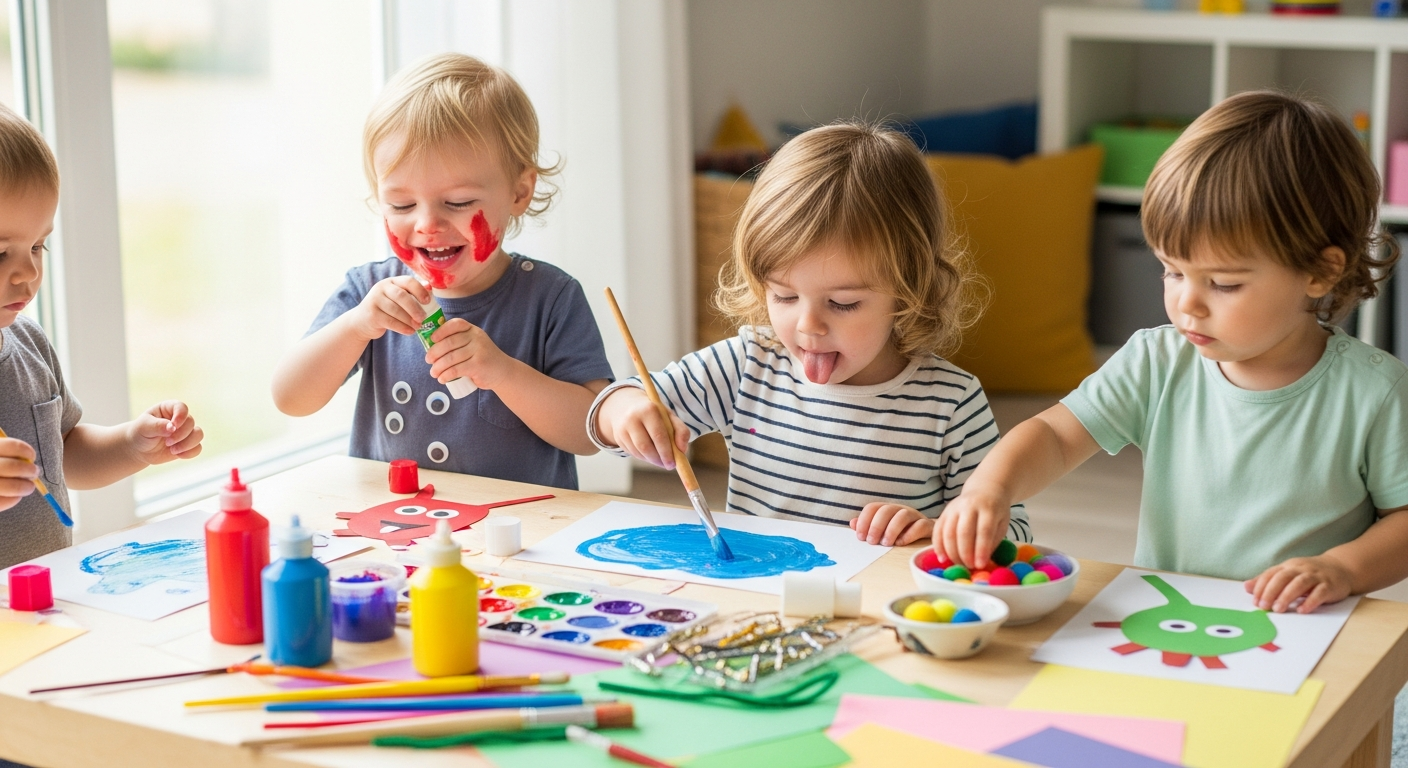
Table of Contents
- Introduction
- The Power of Process Art in Toddlerhood
- Connecting Crafting to Communication
- Seasonal Toddler Arts and Crafts Ideas
- Low-Mess Art Activities for Busy Days
- Essential Supplies for Your Toddler’s Art Station
- The Speech Blubs Difference: Smart Screen Time
- Practical Scenarios: Bridging the Gap
- Transparent Value: Choosing the Right Plan
- Tips for a Stress-Free Crafting Experience
- Conclusion
- FAQ
Introduction
Have you ever watched a toddler discover a bottle of glue for the first time? It usually starts with a single, tentative drop, followed quickly by a look of pure wonder—and then, almost inevitably, a sticky handprint on the kitchen table. While the mess might make us reach for the wet wipes, that moment represents something far more profound than just a cleanup project. It is the sound of a young mind making connections, the feeling of tiny fingers building strength, and the beginning of a lifelong journey of self-expression.
At Speech Blubs, our mission is to empower every child to "speak their minds and hearts." We believe that communication isn't just about the words we say; it's about the joy of sharing our world with others. Our founders grew up with speech challenges themselves, and they created the tools they wished they had—tools that blend scientific principles with the pure, unadulterated fun of play. This blog post is designed to show you how toddler arts and crafts can be a powerful catalyst for language development, sensory exploration, and family bonding.

In the following sections, we will explore a variety of low-mess and sensory-rich craft ideas, discuss the "why" behind the benefits of creative play, and provide practical tips on how to use these activities to support your child’s communication journey. We’ll also show you how our unique "smart screen time" approach can complement these hands-on activities to create a holistic learning environment. Ultimately, we want to help you turn everyday crafting moments into joyful milestones of growth.
The Power of Process Art in Toddlerhood
When we talk about toddler arts and crafts, it is essential to focus on the process rather than the product. For a two or three-year-old, the goal isn't to create a museum-worthy masterpiece; it’s about the squish of the paint between their fingers, the "snip-snip" sound of safety scissors, and the discovery that mixing yellow and blue makes green.
Building Foundational Skills
Creative activities are like a full-body workout for a toddler’s developing brain. When your child picks up a small bead or peels a sticker, they are refining their fine motor skills. These tiny movements are the literal building blocks for future skills like writing and even the complex muscle coordination required for clear speech.
Fostering Confidence and Reducing Frustration
Many children experience "communication frustration" when they can't quite find the words to express their big feelings. Art provides a non-verbal outlet. By successfully sticking a feather onto a paper plate, a child builds a sense of "I can do it!" autonomy. This confidence often spills over into their verbal attempts. We see this daily at Speech Blubs, where our "video modeling" methodology helps kids see their peers successfully navigating new sounds, which in turn boosts their own courage to try.
Creating Joyful Family Moments
The best part of toddler arts and crafts is the shared experience. It’s a chance to put down our phones, get on the floor, and enter our child’s world. This screen-free alternative to passive viewing creates "joint attention"—a critical stage in language development where both the parent and child are focused on the same object or task.

Connecting Crafting to Communication
At Speech Blubs, we use science-backed methods to help children overcome speech delays and build confidence. One of our core pillars is peer-led video modeling. We’ve found that children are far more likely to imitate a sound or a word when they see another child doing it. You can apply this same logic to your craft time.
The "Talk-Aloud" Strategy
While you are crafting, narrate everything you are doing. If you are making a paper plate lion, don’t just sit in silence. Say, "I am painting the lion's mane yellow. Yellow! Can you say yellow? Now let’s give him a big ROAR!"
This type of "smart play" is exactly what we facilitate in our app. For a parent whose 3-year-old "late talker" loves animals, the "Animal Kingdom" section in Speech Blubs offers a fun, motivating way to practice "moo" and "baa" sounds. You can then transition from the screen to the craft table by making a cotton-ball sheep together, reinforcing the sounds they just practiced with their digital "Blub" friends.
If you are curious about where your child stands in their development, you can take our quick 3-minute preliminary screener. It involves 9 simple questions and provides an assessment and a next-steps plan to help you support your little one’s journey.
Seasonal Toddler Arts and Crafts Ideas
Variety is the spice of life—and of learning! Rotating your craft activities by season keeps things fresh and helps your child learn about the world around them.
Spring: Sensory Exploration
- Textured Bunnies: Use cotton balls or even a mix of flour and water (for a safe, "puffy" paint) to create a fuzzy bunny. This is a fantastic sensory experience. As your child touches the "fur," use descriptive words like soft, white, and bumpy.
- Paper Cup Flowers: Use colorful paper cups and let your child "plant" them in a cardboard box "garden." This is great for practicing prepositions: "The flower is in the box. Now it is out!"
Summer: Bright and Bold
- Paper Plate Suns: This is a classic for a reason. Have your child paint a plate yellow and then use clothespins or strips of paper for the rays. Squeezing clothespins is an incredible way to build the hand strength needed for later tasks.
- Water Painting: If you want a zero-mess activity, give your toddler a cup of water and a paintbrush and let them "paint" the driveway or the side of the house. It’s magical to them as the "paint" disappears in the sun!
Fall: Nature’s Bounty
- Leaf Letters: Go on a nature walk together and collect colorful leaves. When you get home, help your child glue them onto a large cutout of the first letter of their name. This combines physical activity, nature appreciation, and early literacy.
- Paint-Blowing Trees: Use a straw to blow drops of red, orange, and yellow paint across a piece of paper to create "autumn leaves." This isn't just fun—it’s excellent oral-motor exercise, which helps with the breath control needed for speech.
Winter: Indoor Wonders
- Shaving Cream Snowmen: Spray some unscented shaving cream on a tray and let your toddler "draw" snowmen in it. It’s a wonderful tactile experience that is easy to wipe clean.
- Paper Plate Ornaments: Give your child a paper plate, some stickers, and some washable markers. Let them go to town! This is a great way to practice the names of shapes and colors.
Low-Mess Art Activities for Busy Days
We know that as parents, you don't always have the energy for a glitter-and-paint explosion. That’s why "low-mess" options are essential tools in your parenting toolkit.
1. Dot Markers
Dot markers are a staple in many households because they provide the vibrant color of paint without the drips. They are easy for small hands to grip and encourage "poking" motions that develop hand-eye coordination. You can even find "dot marker" printables online that help with shape and color recognition.
2. Sticky Walls (Contact Paper)
Tape a piece of clear contact paper to the wall, sticky side out. Give your toddler a bowl of "bits"—scraps of construction paper, feathers, yarn, or felt shapes. They can stick and unstick the items to their heart's content. This is a "vertical" activity, which is great for developing shoulder stability.
3. Washi Tape Art
Washi tape is colorful, easy to tear, and—most importantly—easy to peel off most surfaces. Let your child decorate a piece of cardboard or even an old shoe box with different patterns of tape. It's a great way to practice "pulling" and "tearing" motions.
4. Magic Water Mats
These mats allow children to draw with water-filled pens. As the water dries, the image disappears, leaving a clean slate for more drawing. This is the ultimate "smart screen time" alternative when you need fifteen minutes of quiet but don't want to worry about markers on the sofa.
Essential Supplies for Your Toddler’s Art Station
Building a small "art trolley" or dedicated drawer can make crafting a seamless part of your daily routine. Here are our top recommendations for a toddler-friendly art kit:
- Washable Everything: Look for "washable" labels on markers, crayons, and paints. It will save your sanity!
- Chunky Crayons: Egg-shaped or triangular crayons are easier for toddlers to hold before they develop a "pincer" grasp.
- Safety Scissors: Look for plastic-bladed scissors that only cut paper, not skin or hair.
- Glue Sticks: These are much easier for toddlers to manage than liquid glue and significantly less messy.
- Play Dough: Whether store-bought or homemade, play dough is the king of sensory play. It builds hand strength and allows for endless imaginative "cooking" or "building."
- Recyclables: Never throw away an egg carton or a toilet paper roll! These are the "loose parts" that turn into binoculars, caterpillars, or spaceships in the hands of a creative toddler.
The Speech Blubs Difference: Smart Screen Time
While hands-on toddler arts and crafts are vital, we also recognize that screens are a part of modern life. Our goal at Speech Blubs is to provide a "smart" alternative to passive cartoons. Instead of your child zoning out to repetitive animations, they engage with real children.
Scientific Methodology
Our app is built on the concept of video modeling. When children see other children making sounds, their "mirror neurons" fire. This is a scientific way of saying that their brains are practicing the action just by watching it. Our methodology is backed by research and has earned us high ratings on the MARS scale, placing us in the top tier of educational apps worldwide. You can read more about the science behind our method on our research page.
Family Connection
We don't want the app to be a digital babysitter. We designed it to be a tool for family connection. Use the "Face Filters" together to turn into a lion or a monkey, and then carry that play over to your craft table. This "co-play" is where the real magic happens.
Many parents have shared how this approach has changed their lives. One parent noted, "My son was so frustrated because he couldn't tell us what he wanted. After using Speech Blubs and doing the suggested activities together, his confidence skyrocketed." You can read more stories like this on our testimonials page.
Practical Scenarios: Bridging the Gap
To help you see how toddler arts and crafts can integrate with your daily routine and the Speech Blubs app, let’s look at a few relatable scenarios.
Scenario 1: The Animal Lover
If your child is obsessed with "Old MacDonald," head to the "Animal Kingdom" section of the app. Watch the "Cow" video together. Practice the "Moo" sound. Afterward, grab a paper plate and some black paint. Have your child paint "spots" on the cow. Every time they make a spot, encourage them to say "Moo!" This links the auditory sound, the visual image, and the physical action.
Scenario 2: The Color Explorer
Use the "Color This!" section in the app to learn about the color red. Then, gather some red items from around the house—a red sock, a red toy car, a red apple. Create a "Red Collage" by gluing red scraps of paper and these items (if flat enough) onto a large sheet of paper. This reinforces the concept of "redness" in multiple contexts.
Scenario 3: Building Confidence
If your child is shy about speaking, use the "Face Filters" in Speech Blubs to make it a game. When they see themselves on camera with a funny hat or animal ears, they often forget their inhibitions and start vocalizing. Follow this up with a "Dress Up" craft where you make your own masks out of paper plates and elastic.
Transparent Value: Choosing the Right Plan
We believe in being transparent with our community. We want to provide an effective, joyful solution that is accessible to the 1 in 4 children who need speech support. To give your child the best start, we offer two main subscription options.
The Monthly Plan
At $14.99 per month, this is a great way to test the waters and see how your child responds to our video modeling methodology.
The Yearly Plan: The Best Value
For families committed to their child's developmental journey, our Yearly Plan is the clear winner. At $59.99 per year, the cost breaks down to just $4.99 per month—a savings of 66% compared to the monthly plan.
Beyond the cost savings, the Yearly Plan includes exclusive, high-value features that the Monthly plan does not:
- A 7-Day Free Trial: Try everything risk-free before you commit.
- Reading Blubs: Our companion app designed to help toddlers and preschoolers bridge the gap between speech and early literacy.
- Priority Support: Enjoy a 24-hour support response time.
- Early Access: Be the first to try our new updates and features.
We encourage you to choose the Yearly plan to unlock the full suite of tools and ensure your child has everything they need to flourish. Create your account and start your 7-day free trial today.
Tips for a Stress-Free Crafting Experience
To make toddler arts and crafts a joy rather than a chore, keep these final tips in mind:
- Prepare the Space: Lay down an old shower curtain or a plastic tablecloth. It’s much easier to shake off the mess outside than to scrub the grout.
- Keep it Short: A toddler’s attention span is short. If they are "done" after five minutes, that’s okay! The goal is the quality of the interaction, not the length of time.
- Offer Choices: "Do you want to use the red marker or the blue marker?" Giving choices builds autonomy and encourages language use.
- Embrace the Imperfection: If the "sun" looks like a yellow blob and the "bunny" has three ears, celebrate it anyway. The pride they feel in their creation is more important than anatomical accuracy.
- Clean Up Together: Even the cleanup can be a learning moment. "Let’s put the markers in the box. Goodbye, markers!"
Conclusion
Toddler arts and crafts are more than just a way to pass a rainy afternoon. They are a gateway to language, a playground for the senses, and a foundation for lifelong confidence. By combining hands-on creativity with the "smart screen time" of Speech Blubs, you are giving your child a rich, multi-dimensional learning environment.
Remember, every "moo," every "ooh," and every sticky glue-covered handprint is a step toward your child speaking their mind and heart. We are honored to be a part of that journey with you.
Ready to see the difference for yourself? Download Speech Blubs on the App Store or Google Play Store to begin your journey. Don't forget to select the Yearly plan to take advantage of the 7-day free trial, the Reading Blubs app, and the best overall value for your family!
FAQ
1. What age can toddlers start doing arts and crafts?
Most children are ready to explore basic art materials around 18 months. At this stage, it’s all about sensory exploration—feeling the texture of finger paint or the stickiness of a sticker. As they approach age 2 and 3, they develop the motor skills for more structured tasks like using glue sticks or safety scissors. Always supervise your child closely to ensure they don't put small parts or art supplies in their mouths.
2. How do arts and crafts help with speech delay?
Art activities encourage "joint attention," where you and your child focus on the same task. This is the perfect environment for language modeling. By narrating the process (e.g., "I see a blue circle!"), you provide a rich vocabulary in a low-pressure setting. Additionally, activities like blowing through a straw or making animal sounds while crafting help develop the oral-motor strength and breath control needed for speech.
3. I’m worried about the mess. Are there truly "mess-free" options?
Absolutely! If you aren't in the mood for a big cleanup, try water-painting mats, "sticky walls" using contact paper, or magic water pens. Even "paint sticks" or "dot markers" are much cleaner than traditional liquid paint. You can also utilize "smart screen time" with the Speech Blubs app for an engaging, interactive, and completely mess-free educational experience.
4. Why should I choose the Yearly plan for Speech Blubs?
The Yearly plan offers the most comprehensive support for your child’s development. Not only does it save you 66% (costing only $59.99/year, which is $4.99/month), but it also includes the Reading Blubs app to help with early literacy. You also get a 7-day free trial to ensure it's the right fit for your family, plus early access to new content and faster support response times.
About the author