
Creative Toddler Craft with Pipe Cleaners Ideas
 By Speech Blubs Team•Feb 20, 2026•13 min.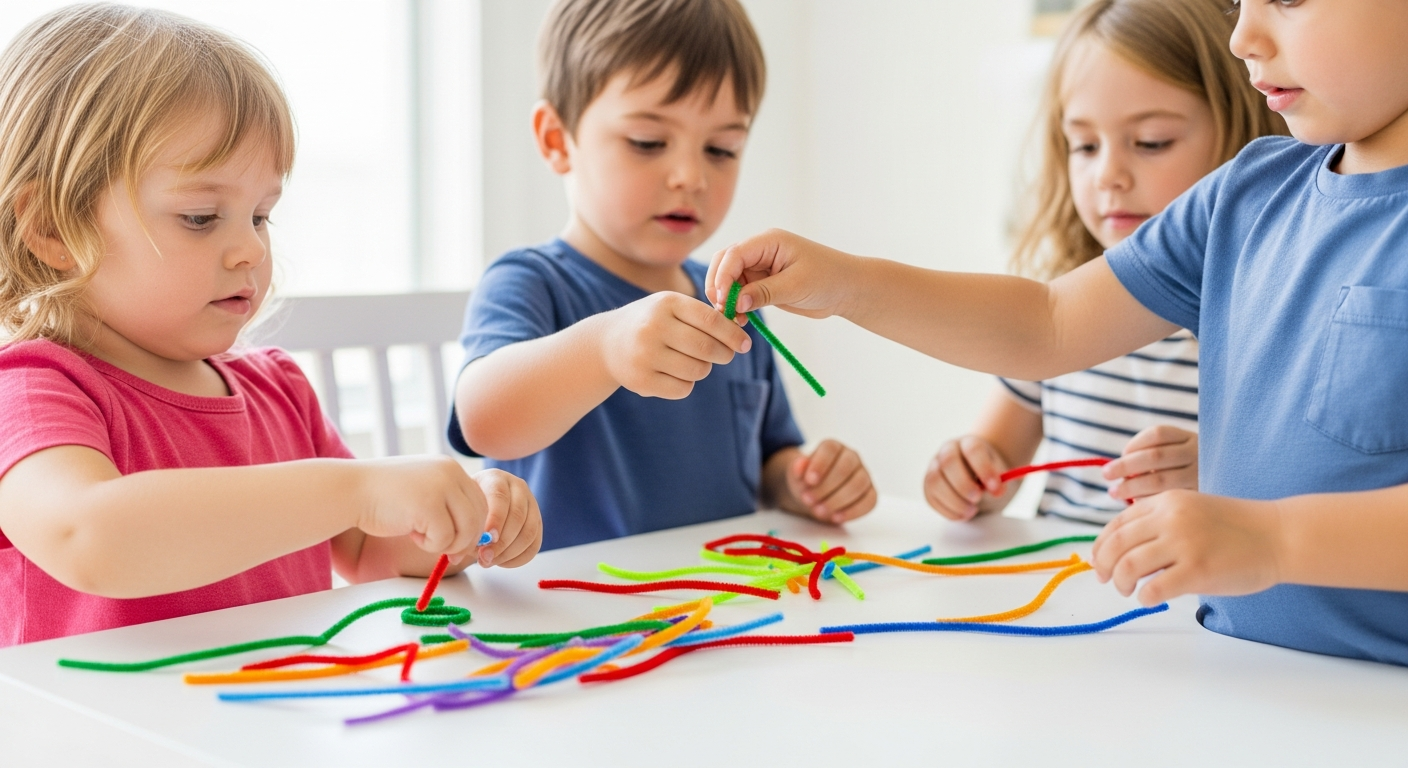
Table of Contents
- Introduction
- The Power of Tactile Play
- Why Every Toddler Needs Pipe Cleaners
- Top Ideas for a Toddler Craft with Pipe Cleaners
- Connecting Crafting to Communication
- The Speech Blubs Methodology: Why it Works
- Empowering Your Child at Home
- Practical Tips for Your Crafting Session
- Frequently Asked Questions
- Conclusion
Introduction
Did you know that nearly 1 in 4 children will experience some form of speech or language delay during their early developmental years? As parents, we often find ourselves searching for the perfect balance between fun activities and meaningful learning. It is a common challenge: how do we keep a high-energy toddler engaged while also fostering the fine motor skills and communication milestones they need to thrive? At Speech Blubs, we understand this journey intimately because our founders grew up with speech hurdles themselves. We believe that the best learning doesn’t feel like work—it feels like play.
In this post, we are going to explore the wonderful world of the humble pipe cleaner. We will dive deep into why a simple toddler craft with pipe cleaners is a powerhouse for development, providing you with a variety of engaging activities that you can do right at your kitchen table. We’ll also discuss how these tactile experiences perfectly complement our "smart screen time" approach, helping your child build the confidence to speak their mind and heart. Our mission is to provide joyful solutions for families, blending scientific principles with the magic of curiosity. By the end of this guide, you will have a toolkit of screen-free activities and a clearer understanding of how to support your child's journey toward complex communication.

The Power of Tactile Play
Before we jump into the specific crafts, it is essential to understand why tactile play is so critical for your little one. Toddlers are like little scientists; they learn about the world by touching, pulling, twisting, and tasting. When a child engages in a toddler craft with pipe cleaners, they aren't just making a "decoration." They are building the neural pathways required for both physical dexterity and cognitive processing.
Fine Motor Skills and Brain Development
Fine motor skills involve the coordination of small muscles in the hands and fingers. These are the same muscles your child will eventually use to hold a pencil, button a shirt, and—most importantly for us—support the intricate movements required for clear speech. There is a strong link between manual dexterity and language development. As children learn to manipulate objects, they are also exercising the parts of the brain responsible for planning and executing complex sequences.
If you are ever unsure about where your child stands in their developmental journey, we recommend taking our quick 3-minute preliminary screener. It consists of 9 simple questions and provides you with a personalized assessment and next-steps plan to help you support your child’s unique needs.
Sensory Integration
Pipe cleaners, also known as chenille stems, offer a unique sensory experience. They are fuzzy, bendy, and sometimes even sparkly. For a toddler, the resistance of the wire inside the soft fuzz provides excellent proprioceptive input—the sense that tells our brain where our body parts are and how much force to use. This sensory feedback is calming for many children and helps them stay focused on the task at hand.
Why Every Toddler Needs Pipe Cleaners
As a child development expert, I often tell parents that the best "toys" are often the simplest ones. Pipe cleaners reign supreme in the world of toddler crafts for several reasons:
- Pliability: They are incredibly forgiving. If a toddler bends it the "wrong" way, they can simply straighten it out and try again. This reduces frustration and builds "growth mindset" confidence.
- Safety: While they have a wire center, most modern craft pipe cleaners are designed with rounded ends or can be easily tucked in to ensure safety.
- Low Mess: Unlike glitter or paint, pipe cleaners don't require a hazmat suit for your living room. They are the perfect "grab-and-go" activity for busy afternoons.
- Affordability: You can get a pack of 100 for just a few dollars, making it an accessible resource for every family.
Top Ideas for a Toddler Craft with Pipe Cleaners
Let’s get into the heart of the matter: the activities! Here are several ways to turn those colorful sticks into developmental milestones.

1. The Colander Threading Challenge
This is perhaps the most iconic pipe cleaner activity for toddlers. It requires nothing more than a kitchen colander and a handful of pipe cleaners.
How to do it: Simply set the colander upside down on the floor and show your toddler how to poke the pipe cleaners through the holes.
Why it works: This activity is a masterclass in hand-eye coordination. It requires the child to aim for a small target and use a "pincer grasp" to push the stem through. For a child who might be struggling with focus, this task is often deeply "meditative." You can turn this into a language-building activity by saying, "In goes the blue one!" or "Push, push, push!"
2. Pipe Cleaner Animal Kingdom
For a parent whose 2-year-old "late talker" loves animals, creating a pipe cleaner zoo is a fantastic way to encourage vocalization.
How to do it:
- The Spider: Twist four pipe cleaners together in the middle to create eight legs. Bend the ends so the spider can "stand."
- The Snake: Simply coil a pipe cleaner around a finger or a pencil to create a spiral shape. Add googly eyes if you have them!
- The Caterpillar: Thread colorful beads onto a pipe cleaner and bend the ends to keep them secure.
The Speech Blubs Connection: While you build these animals, you can mirror the activities found in the "Animal Kingdom" section of our app. As your child bends their pipe cleaner snake, you can practice the "Ssssss" sound together. Our research-backed methodology shows that when children see their peers making these sounds through video modeling, they are much more likely to imitate them.
3. Rainbow Color Matching
Color recognition is a major milestone for toddlers and preschoolers. Using a toddler craft with pipe cleaners to teach colors makes the concept tangible.
How to do it: Take a piece of cardboard or foam and poke several holes in it. Circle each hole with a different colored marker. Ask your child to find the red pipe cleaner and put it in the "red house."
Why it works: It combines categorization with motor skills. As they search for the "yellow" stem, they are practicing visual discrimination.
4. Beaded Jewelry and "Bejeweled" Rings
Toddlers love "wearable" art. It gives them a sense of pride to show off what they’ve made.
How to do it: Give your child large, colorful plastic beads (ensure they are age-appropriate to prevent choking hazards) and let them thread them onto a pipe cleaner. Once full, twist the ends together to make a bracelet or a small circle for a ring.
Language Prompt: Ask your child, "Who is this bracelet for?" or "Tell me about these colors!" This encourages them to form simple sentences and share their thoughts with you.
Connecting Crafting to Communication
At Speech Blubs, we don't just want children to make crafts; we want them to "speak their minds and hearts." Every toddler craft with pipe cleaners is an opportunity for a conversation.
Building Vocabulary
When you are crafting, use descriptive words. Don't just say "Give me that." Say, "Can you hand me the fuzzy, orange pipe cleaner?" This exposes your child to adjectives and helps them expand their receptive vocabulary.
Reducing Frustration
Many speech delays lead to frustration because the child cannot communicate their needs. By engaging in a shared activity like crafting, you are creating a "joint attention" environment. This means you and your child are focused on the same thing at the same time. This shared focus is the foundation of all human communication. It builds a bridge of connection that makes learning to speak feel less like a chore and more like a shared joy.
We’ve seen countless families find success with this approach. You can read some of their stories on our testimonials page, where parents share how our blend of play and science helped their children find their voices.
The Speech Blubs Methodology: Why it Works
You might wonder how a physical craft relates to a digital app. The answer lies in our unique "video modeling" approach. In Speech Blubs, children watch videos of other children—not cartoons or adults—performing speech exercises.
The Mirror Neuron Effect
Science tells us that when children watch their peers, their "mirror neurons" fire. This makes them feel like they are the ones doing the action. It is the same reason why your toddler might try to mimic you when you are cooking or, indeed, when you are twisting a pipe cleaner. By using a toddler craft with pipe cleaners alongside our app, you are providing a multi-sensory learning environment. They see the peer on the screen, they hear the sound, and then they use their hands to create something related to that sound.
Smart Screen Time vs. Passive Viewing
We are firm believers in "smart screen time." Unlike passive cartoons that can sometimes lead to a "zombie-like" state, Speech Blubs is designed to be interactive. It is a tool for family connection. We always encourage parents to sit with their children while using the app, just as they would during a craft session. This co-play reinforces the learning and makes the experience much more effective.
Empowering Your Child at Home
Our company was born from the personal experiences of our founders, who all grew up with speech problems. They created the tool they wished they had—a solution that is immediate, effective, and, most importantly, joyful. We know that the journey can be long, but we are here to support you every step of the way.
Choosing the Right Plan for Your Family
We want to be transparent and helpful as you decide how to integrate Speech Blubs into your routine. We offer two main paths:
- Monthly Plan: This is available for $14.99 per month. It provides full access to our speech therapy activities.
- Yearly Plan: This is our best value option at $59.99 per year, which breaks down to just $4.99 per month.
We highly recommend the Yearly Plan not just for the 66% savings, but because it includes exclusive, high-value features that support your child's entire literacy journey. When you choose the Yearly plan, you receive:
- A 7-day free trial so you can explore the app risk-free.
- The Reading Blubs app, which helps transition your child from speaking to reading.
- Early access to new updates and features.
- Priority 24-hour support response time from our dedicated team.
The Monthly plan does not include the free trial or the Reading Blubs app, so the Yearly plan truly is the most comprehensive way to empower your child's development. You can create your account and begin your 7-day free trial today to see the difference for yourself.
Practical Tips for Your Crafting Session
To make your "toddler craft with pipe cleaners" session as successful as possible, keep these tips in mind:
- Follow Their Lead: If your child wants to turn the pipe cleaner into a "microphone" instead of a "flower," let them! The goal is engagement and communication, not a perfect Pinterest result.
- Describe Everything: Act like a sports commentator. "Oh, I see you are twisting the red and white ones together! It looks like a candy cane!"
- Wait for a Response: After you ask a question or make a comment, give your child at least 5 to 10 seconds to respond. Toddlers often need extra time to process language and formulate their thoughts.
- Incorporate the App: After making a pipe cleaner bee, open the Speech Blubs app and find the bee in the "Animal Kingdom" section. Practice the "Bzzz" sound together while holding your craft.
Frequently Asked Questions
1. At what age can my child start doing pipe cleaner crafts? Most children can start exploring pipe cleaners around the age of 18 months to 2 years, always with adult supervision. At this age, they may simply enjoy the texture or "threading" them into a colander. As they get closer to age 3 or 4, they will begin to have the dexterity to create more recognizable shapes like circles or simple animals.
2. How do I prevent the ends of the pipe cleaners from being sharp? This is a common concern! The easiest way to handle this is to take a small pair of pliers (or even just your fingers) and fold the very tip of the wire back over itself, pressing it firmly into the "fuzz." This creates a rounded, soft end. Alternatively, you can tuck the ends into a bead or a piece of foam.
3. My child isn't interested in crafts; they just want to move around. What should I do? That is perfectly normal! Some children are "kinesthetic learners." You can make the craft part of a larger game. For example, hide the pipe cleaners around the room and have a "scavenger hunt." Once they find one, they have to bring it back and "thread" it into the colander before finding the next one. This incorporates movement into the fine motor task.
4. Can pipe cleaner crafts really help with my child's speech delay? While crafts alone are not a replacement for professional therapy, they are a powerful supplemental tool. They foster the fine motor skills, joint attention, and vocabulary building that are foundational for speech. When used in conjunction with a tool like Speech Blubs, which utilizes scientifically-proven video modeling, you are creating a rich environment for language to flourish.
Conclusion
A simple toddler craft with pipe cleaners is more than just a way to pass a rainy afternoon. It is a vibrant, tactile opportunity to build the foundational skills your child needs to "speak their minds and hearts." Whether you are threading a colander to build dexterity or creating a fuzzy animal kingdom to practice new sounds, you are providing your child with the "smart screen-free" time that fosters genuine growth.
At Speech Blubs, we are honored to be a part of your family’s journey. We believe in creating joyful learning moments that reduce frustration and build confidence for both the child and the parent. We don't promise overnight miracles, but we do promise a process rooted in science, empathy, and fun.
Ready to take the next step in supporting your child’s communication skills? We invite you to join our community of over 4 million families. Choose our Yearly plan to get the best value, including the 7-day free trial and the Reading Blubs app.
Download Speech Blubs on the App Store or get it on Google Play today. Let's start building, bending, and—most importantly—talking together!
About the author