
Creative Toddler Dance Activity in School Ideas
 By Speech Blubs Team•Feb 23, 2026•12 min.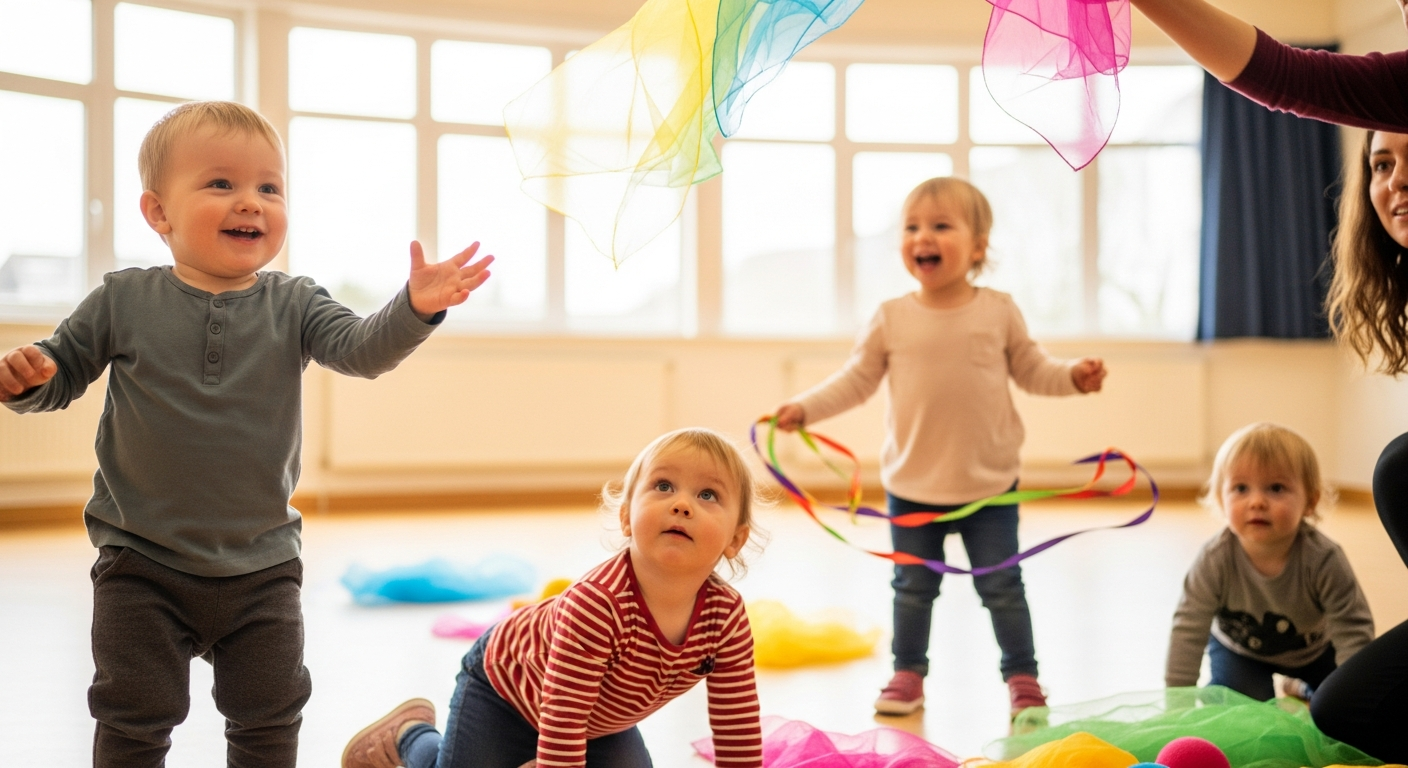
Table of Contents
- Introduction
- The Power of Movement in Early Education
- Setting the Stage for Dance in the Classroom
- 5 Engaging Toddler Dance Activities for School
- Beyond the Classroom: Connecting with Family
- Understanding Smart Screen Time
- Practical Tips for Implementation
- Why the Yearly Plan is the Best Choice
- Conclusion
- Frequently Asked Questions
Introduction
Did you know that by the age of three, a child’s brain is twice as active as an adult’s brain? During these formative years, every wiggle, jump, and spin is more than just cute—it is a vital building block for cognitive and physical development. When we see a classroom of little ones bouncing to a beat, we aren't just seeing play; we are witnessing the foundation of rhythm, social coordination, and even language acquisition. At Speech Blubs, we believe that movement and communication go hand-in-hand, which is why finding the right toddler dance activity in school is so essential for early childhood educators and parents alike.
This blog post explores a variety of engaging, research-backed dance activities specifically designed for the school setting. We will delve into how these activities support gross motor skills, emotional regulation, and even speech development. We’ll also show you how to blend these physical moments with "smart screen time" to create a holistic learning environment. Our goal is to provide you with a toolkit of joyful movement strategies that foster confidence and a love for learning in every child.

The Power of Movement in Early Education
When we think about a toddler dance activity in school, it’s easy to focus on the physical exercise. While burning off energy is certainly a plus, the benefits run much deeper. Movement-based learning enhances what experts call "executive function." This includes working memory, mental flexibility, and self-control. When a child has to remember a sequence of steps or stop moving when the music ends, they are practicing high-level brain functions that will eventually help them solve math problems and navigate social complexities.
At Speech Blubs, our mission is to empower children to "speak their minds and hearts." Our company was born from the personal experiences of our founders, who all grew up with speech problems and created the tool they wished they had. We know that for the 1 in 4 children who need speech support, traditional methods can sometimes feel like work. By integrating dance and movement, we turn learning into a joyful, immediate, and effective experience.
Dance allows children to express themselves before they even have the words to do so. It reduces frustration by providing an outlet for emotions and helps build the foundational skills needed for complex communication. To see how your child is currently progressing, you can take our quick 3-minute preliminary screener. This simple assessment involves 9 questions and provides a next-steps plan to support your child’s unique journey.
Setting the Stage for Dance in the Classroom
Before diving into specific activities, it’s important to create an environment where a toddler dance activity in school can thrive. Toddlers need boundaries to feel safe, but they also need enough space to explore their physical limits.
Creating a Safe Zone
Clear a large area in the classroom, ensuring there are no sharp corners or tripping hazards. Use "place markers" like colorful tape or rubber dots on the floor. This gives each child a sense of personal space and security, helping them stay organized while they move.

Establishing a Routine
Preschoolers thrive on predictability. Start every dance session with a consistent "warm-up" song and end with a "cool-down" ritual. This helps children transition their energy levels and understand the expectations of the classroom.
The Teacher’s Role
As an educator, your enthusiasm is contagious. We recommend "co-play," where the adult moves alongside the children. This isn't just about being a good sport; it's about modeling. Our methodology is built on the concept of "video modeling," where children learn by watching and imitating their peers and mentors. This activates "mirror neurons" in the brain, making it easier for them to pick up new skills. You can read more about the research behind our method, which places Speech Blubs in the top tier of speech apps worldwide.
5 Engaging Toddler Dance Activities for School
1. The Wiggle and Freeze Challenge
This is a classic for a reason. It is the ultimate tool for teaching impulse control and auditory processing.
- How to play: Play an upbeat, kid-friendly track. Encourage the children to wiggle their whole bodies. At random intervals, stop the music and shout "Freeze!" Everyone must stay as still as a statue.
- Speech Connection: While frozen, you can ask the children to make a specific facial expression or a simple sound. For example, "Freeze like a happy lion and say 'Roar!'"
- Pro Tip: If a child struggles to stay still, have them freeze in a specific pose, like a "ball" or a "tree," to give them a physical goal to focus on.
2. Animal Adventure Dance
This activity is perfect for building vocabulary and practicing animal sounds, which are often the first building blocks of speech.
- How to play: Call out different animals and have the children move like them. "Stomp like an elephant," "Hop like a bunny," or "Slither like a snake."
- Integrating Speech Blubs: For a child who loves animals, the "Animal Kingdom" section of our app offers a motivating way to practice these sounds. After the physical activity, you can use the app to let the children watch their peers make the "Moo" or "Baa" sounds, reinforcing what they just did with their bodies.
- Why it works: It combines gross motor movement with imaginative play, which is how toddlers learn best.
3. The Mirror Dance
This activity focuses on social-emotional learning and visual tracking.
- How to play: Pair the children up or have the whole class face you. Move slowly and deliberately—raising an arm, tapping a toe, or nodding your head—and have the children "mirror" your movements in real-time.
- Developmental Benefit: This fosters a sense of connection and requires deep focus. It’s an excelente way to practice non-verbal communication.
- Expert Insight: This is essentially "live modeling." By following your lead, children are strengthening the neural pathways used for imitation, which is a key precursor to verbal language.
4. Prop Play: Scarves and Ribbons
Adding a tactile element can make a toddler dance activity in school much more engaging for sensory seekers.
- How to play: Give each child a lightweight silk scarf or a ribbon wand. Play flowing, melodic music and encourage them to make "big circles" or "waves" in the air.
- Educational Twist: Ask the children to "draw" the first letter of their name in the air with their scarf. This bridges the gap between physical movement and early literacy.
- Safety Note: Always ensure ribbons are short enough to avoid tangling and that scarves are used under close supervision.
5. Emoji Emotion Dance
Helping toddlers identify and express emotions is a key part of classroom management and social development.
- How to play: Hold up a picture of an emoji (Happy, Sad, Angry, Excited). Ask the children to dance in a way that shows that feeling.
- The Outcome: A "sad" dance might be slow and low to the floor, while an "excited" dance involves lots of jumping and spinning.
- Connecting with Speech Blubs: Our app features many activities that focus on facial expressions and emotional labeling. By combining the app with this dance, you’re helping children connect their internal feelings with outward expression and vocabulary.
Beyond the Classroom: Connecting with Family
We believe that the best learning happens when school and home are in sync. Our app is designed to be a powerful tool for family connection, providing a screen-free alternative to passive viewing like cartoons. Instead of just sitting and watching, children are invited to interact, imitate, and participate.
Many parents have shared how this approach has changed their lives. You can read our heart-warming testimonials to see how other families have found success. Whether your child is a "late talker" or just needs a little extra boost in confidence, movement-based learning is a wonderful place to start.
To bring this joyful learning into your daily routine, download Speech Blubs on the App Store or Google Play Store to begin your journey.
Understanding Smart Screen Time
You might wonder how a digital tool fits into a curriculum focused on physical movement. At Speech Blubs, we distinguish between "passive screen time" and "smart screen time."
- Passive Screen Time: Watching cartoons or videos where the child is a silent observer. This has been shown to have little to no educational benefit for toddlers and can sometimes even delay speech development.
- Smart Screen Time: Interactive experiences that require the child to participate. Our app uses video modeling—real children speaking to your child. This triggers the natural desire to imitate.
When you use a toddler dance activity in school followed by a short session with Speech Blubs, you are reinforcing the same developmental pathways. The dance builds the physical confidence, and the app provides the specific speech targets. It’s a win-win for the child’s overall development.
Practical Tips for Implementation
If you are a teacher or a parent implementing these activities, here are a few things to keep in mind:
- Keep it Short: Toddlers have a limited attention span. A dance session should last between 10 to 15 minutes.
- Focus on the Process, Not Perfection: It doesn't matter if a child can't do a perfect "pirouette." What matters is that they are moving, laughing, and trying.
- Manage Transitions: Use a specific "clean-up" song to signal the end of dance time. This helps prevent meltdowns when the fun music stops.
- Incorporate "Reading Blubs": For those looking to expand into literacy, our Yearly plan includes the "Reading Blubs" app, which is a fantastic next step after mastering basic communication sounds.
Why the Yearly Plan is the Best Choice
We want to make our tools as accessible as possible while providing the highest value for your child’s growth. We offer two main subscription paths to fit your needs:
- Monthly Plan: For $14.99 per month, you get full access to the Speech Blubs app and its library of 1,500+ activities.
- Yearly Plan: This is our most popular and high-value option at $59.99 per year. This breaks down to just $4.99 per month, saving you 66% compared to the monthly rate.
The Yearly Plan includes exclusive features not available on the monthly plan:
- A 7-day free trial to explore everything we offer.
- The extra Reading Blubs app to support early literacy.
- Early access to new updates and features.
- 24-hour support response time for any questions you might have.
We encourage you to create your account and begin your 7-day free trial today to see the difference for yourself.
Conclusion
A toddler dance activity in school is more than just a break in the day; it is a vital opportunity for growth. By integrating music, movement, and imitation, we provide children with the tools they need to flourish both physically and communicatively. At Speech Blubs, we are honored to be part of that journey, helping your little ones find their voices through play and "smart screen time."
Remember, the goal isn't to turn every toddler into a professional dancer or a public speaker overnight. Instead, we are fostering a love for communication, building foundational skills, and creating joyful moments of connection.
Ready to unlock your child's full potential? Choose the Yearly plan for the best value and get started with a 7-day free trial. Download Speech Blubs on the Google Play Store or the Apple App Store today and let the dancing—and the talking—begin!
Frequently Asked Questions
1. What are the main benefits of a toddler dance activity in school?
Dance activities support a wide range of developmental milestones. Physically, they improve gross motor skills, balance, and coordination. Cognitively, they enhance executive functions like working memory and impulse control (especially in games like "Freeze Dance"). Socially, dancing in a group helps toddlers learn about personal space, turn-taking, and following instructions.
2. How can I start a dance program if I have no formal training?
You don't need to be a professional dancer! Toddlers respond to energy and enthusiasm. Start with simple movement songs (like "The Wheels on the Bus"), use colorful props like scarves to spark imagination, and most importantly, dance along with them. Using a structured tool like Speech Blubs can also provide inspiration for sounds and themes to incorporate into your dance sessions.
3. Can dance activities really help with speech delays?
Yes! Movement and speech are closely linked in the brain. Rhythm and beat help children understand the "cadence" of language. Activities that involve animal sounds or emotional expression allow children to practice vocalizations in a low-pressure, fun environment. While dance is a powerful supplement, we always recommend it be used alongside professional therapy if a significant delay is present.
4. How do I manage a classroom of toddlers who all want to move in different directions?
The key is structure and boundaries. Use floor markers (like tape or mats) to define "home bases" for each child. Use clear, simple instructions and visual aids. Establishing a routine—warm-up, activity, cool-down—helps children understand the flow of the lesson and reduces chaos. Consistent "start" and "stop" signals (like pausing the music) are essential tools for classroom management.
About the author