
Creative Toddler Dinosaur Crafts for Language Growth
 By Speech Blubs Team•Feb 20, 2026•13 min.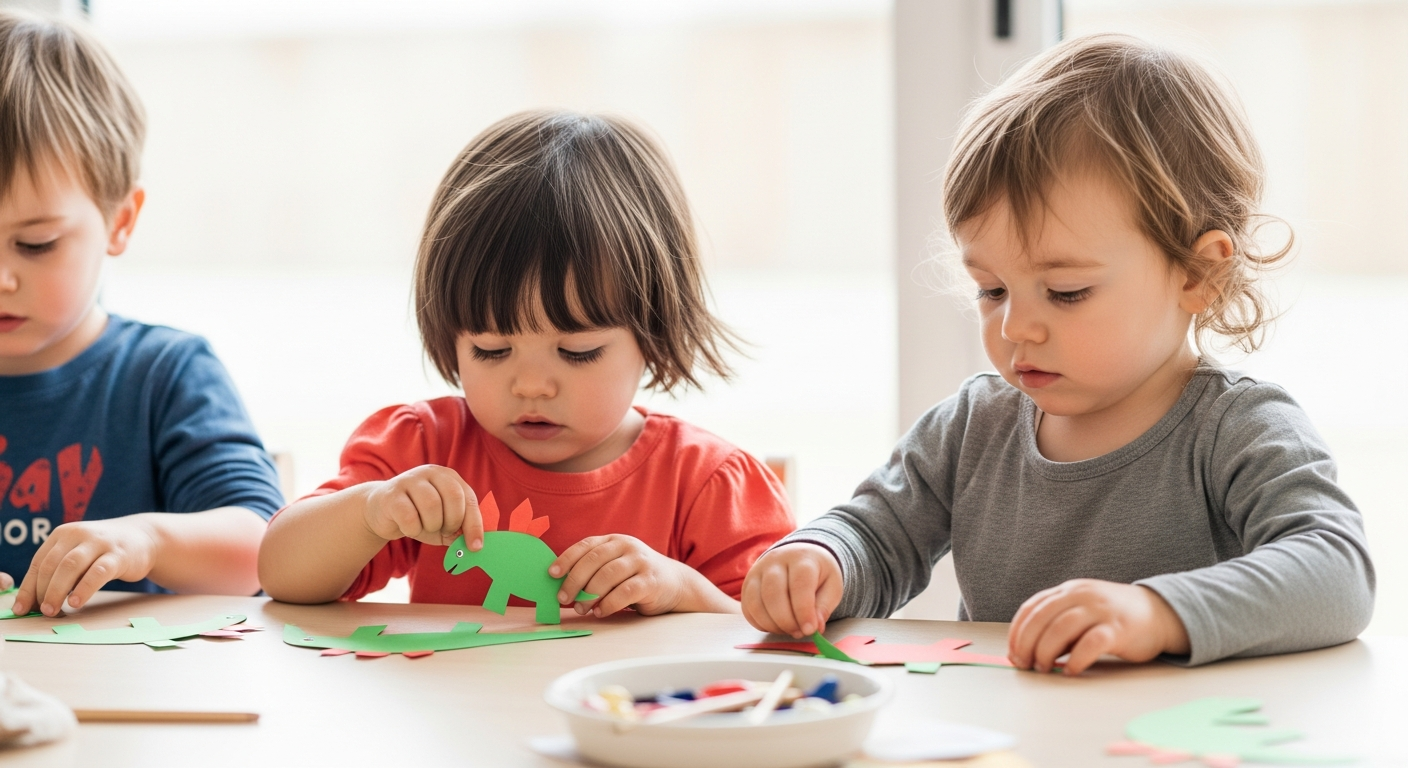
Table of Contents
- Introduction
- Why Toddlers Are Obsessed With Dinosaurs
- The Link Between Dino Play and Speech Development
- 10 Creative Toddler Dinosaur Crafts to Try at Home
- Maximizing Learning During Craft Time
- Using Speech Blubs to Support Prehistoric Play
- Conclusion
- Frequently Asked Questions
Introduction
Did you know that many developmental psychologists refer to a child’s obsession with prehistoric creatures as an "extreme intense interest"? If your living room is currently a graveyard of plastic T-Rex figurines and your toddler insists on "roaring" instead of saying "hello," you are witnessing a powerful cognitive milestone. These intense interests, which often peak between the ages of two and six, are linked to increased information processing, better persistence, and enhanced linguistic skills. At Speech Blubs, we believe in meeting children exactly where their passions lie. Our mission is to empower children to speak their minds and hearts by transforming these natural fascinations into opportunities for connection and communication.
In this post, we will explore why dinosaurs are such a foundational tool for early development and provide ten engaging, hands-on toddler dinosaur crafts that you can do at home. We will also discuss how to weave speech-building strategies into your crafting sessions and how our "smart screen time" approach can supplement your child’s learning journey. By the end of this guide, you will have a prehistoric toolkit of activities designed to foster fine motor skills, expand vocabulary, and create joyful family memories. Our goal is to show you how a simple paper plate and some green paint can become a bridge to your child’s next big "aha!" moment in communication.

Why Toddlers Are Obsessed With Dinosaurs
It is no accident that dinosaurs are a staple of childhood. For a toddler, a dinosaur represents a unique blend of "real" and "fantasy." They were once real, breathing animals, yet they are now mythical enough to spark endless imagination. From a developmental perspective, dinosaurs offer a structured way for kids to categorize information. Learning the difference between a "long neck" (Brachiosaurus) and a "three-horn" (Triceratops) helps toddlers develop early scientific thinking and categorization skills.
Furthermore, dinosaurs give children a sense of power. In a world where toddlers are the smallest people in the room, playing with a giant, "scary" T-Rex allows them to explore themes of strength and control in a safe environment. We often see this reflected in their speech. A child might struggle to say "please" or "thank you," but they will move mountains to pronounce the four syllables of "Ste-go-sau-rus" because it matters to them. This intrinsic motivation is exactly what we tap into at Speech Blubs. We were founded by people who grew up with speech challenges themselves, and we created the tool we wished we had—one that turns learning into play.
The Link Between Dino Play and Speech Development
Crafting isn't just about the finished product; it's about the conversation that happens during the process. When you sit down to work on toddler dinosaur crafts, you are creating a "communication temptation." You have the glue, the scissors, and the glitter—all things your child wants. This setup naturally encourages them to use their words to request, describe, and comment.
We utilize a methodology called "video modeling," which is the cornerstone of our app. In our digital experience, children watch their peers perform speech exercises, which triggers "mirror neurons" in the brain. You can replicate this concept during craft time. By modeling the actions—"I am cutting the green paper" or "I am sticking the eye on"—you are providing a linguistic map for your child to follow. If you are ever unsure if your child’s speech is on track while they engage in these activities, you can take our quick 3-minute preliminary screener to get a simple assessment and a free 7-day trial. It involves just nine simple questions and provides a helpful next-steps plan.

10 Creative Toddler Dinosaur Crafts to Try at Home
1. The Classic Paper Plate-a-saurus
This is a favorite for its simplicity and the way it utilizes everyday household items. It’s a fantastic way to practice color recognition and "action" words.
- Materials: Paper plates, paint, construction paper, scissors, and glue.
- How-to: Cut a paper plate in half. Let your child paint the curved side (the "back" of the plate). While it dries, cut out a head, tail, and four legs from construction paper.
- Speech Tip: Use this time to practice spatial words. "The head goes on the front," "The tail goes on the back," or "The legs go under the body." For a parent whose 3-year-old "late talker" loves big movements, have the paper plate dino "stomp" across the table while saying "stomp, stomp, stomp!"
2. Handprint Dinosaurs
Handprint art is a wonderful way to track how much your little "paleontologist" has grown. It also provides a unique sensory experience.
- Materials: Non-toxic washable paint, heavy paper, and googly eyes.
- How-to: Paint your child’s palm and fingers. Press the hand down sideways on the paper. The thumb becomes the neck/head, and the four fingers become the legs.
- Speech Tip: This is a perfect activity for practicing body parts and counting. Count the "legs" (fingers) together: "One, two, three, four!"
3. Salt Dough Dinosaur Fossils
This activity bridges the gap between craft and science experiment. It is tactile, messy, and incredibly rewarding.
- Materials: 2 cups flour, 1 cup salt, 1 cup water, and plastic dinosaur toys.
- How-to: Mix the ingredients to form a dough. Roll into small balls and flatten them. Have your child press the feet or bodies of their plastic dinosaurs into the dough to create an "impression." Bake at a low temperature (200°F) for two hours until hard.
- Speech Tip: Focus on descriptive adjectives. Is the dough "squishy" or "hard"? Is the fossil "deep" or "flat"? You can find more about how these types of sensory activities support brain development on our research-backed methodology page.
4. Toilet Paper Roll Brachiosaurus
The "long neck" dinosaur is a toddler favorite. This craft helps with fine motor coordination as they learn to balance the long neck.
- Materials: Empty toilet paper rolls, paint, and cardboard scraps.
- How-to: Paint the roll a solid color. Cut two slits at the top of the roll and slide in a long cardboard "neck" with a head attached.
- Speech Tip: Practice the "L" sound with "long" and "large." If your child is using Speech Blubs, they might recognize these shapes from our "Animal Kingdom" or "Dino" sections, where they can see peers making similar shapes with their mouths.
5. Dino Sensory Bin with "Lava"
Sensory bins are excellent for open-ended play, which is a key driver of spontaneous language.
- Materials: A plastic tub, dried beans or rice (for dirt), orange felt (for lava), and small dino figures.
- How-to: Fill the bin with the "dirt" and "lava." Hide the dinosaurs and have your child "rescue" them.
- Speech Tip: Use verbs! The dinosaurs can "hide," "run," "jump," and "eat." This mimics the joyful, play-based learning we prioritize at Speech Blubs to ensure screen time remains an active, rather than passive, experience.
6. Bubble Wrap Dinosaur Printing
Don't throw away that shipping plastic! Bubble wrap makes the perfect "scaly" skin texture for a dinosaur.
- Materials: Bubble wrap, paint, and dinosaur cutouts.
- How-to: Paint the bubble wrap, then press a dinosaur-shaped piece of paper onto it. Lift it up to reveal a cool, patterned "skin."
- Speech Tip: Focus on the "P" sound. "Pop, pop, pop" the bubbles, then "Press" the paper. These explosive sounds are often some of the first that toddlers master.
7. Pasta-saurus Skeletons
For older toddlers, using dry pasta to create a skeleton is a great lesson in anatomy and patience.
- Materials: Black construction paper, white glue, and various dry pasta shapes (macaroni, spaghetti, penne).
- How-to: Draw a basic dinosaur outline. Have your child "build" the bones by gluing pasta inside the outline.
- Speech Tip: Discuss the concept of "inside" and "outside." "The bones are inside our bodies!"
8. Paper Bag Dino Puppets
Puppetry is one of the most effective ways to encourage a child to speak. Sometimes, it’s easier to talk "through" a puppet than to speak directly to an adult.
- Materials: Brown or colored paper lunch bags, markers, and construction paper.
- How-to: The bottom flap of the bag is the dinosaur’s face. Glue on eyes and "teeth" inside the fold so when the bag opens, the dino "talks."
- Speech Tip: Have the dinosaur ask your child questions. "What is your name?" or "Do you like leaves?" This encourages turn-taking in conversation, a vital social-communication skill.
9. Frozen Dino Eggs
This is a "cool" summer activity that teaches cause and effect.
- Materials: Balloons, small plastic dinosaurs, and water.
- How-to: Stuff a dino into a balloon, fill it with water, and freeze. Once frozen, peel off the balloon. Let your child use warm water or a small "hammer" to get the dino out.
- Speech Tip: "Cold," "Ice," "Melt," and "Gone!" are great functional words to use during this activity.
10. Clothespin Stegosaurus
This craft is a powerhouse for strengthening the "pincer grasp," which is essential for eventually holding a pencil.
- Materials: Cardboard cutout of a dinosaur body (without spikes) and wooden clothespins.
- How-to: Have your child clip the clothespins along the dinosaur’s back to represent the bony plates.
- Speech Tip: Practice "Up" and "Down" as they clip the plates on. If your child is enjoying these successes, you can see how other families have used similar play-based strategies by reading our reviews and testimonials.
Maximizing Learning During Craft Time
While the crafts themselves are fun, the magic happens in the interaction. At Speech Blubs, we view our app as a supplement to these real-world moments—a "smart screen time" tool that gives you new ideas and helps your child practice sounds they can use while they play. We recommend a "co-play" approach. Sit on the floor, get your hands dirty, and let your child lead the way.
If your child is a "late talker," don't feel pressured to make them repeat words perfectly. Instead, focus on building their confidence. When they roar, roar back! When they point to the green paint, say, "Oh, you want the green paint. Here is the green paint." This "narration" technique provides a rich linguistic environment without the pressure of a "test."
Our founders, who dealt with their own speech hurdles, designed our app to be a joyful solution for the 1 in 4 children who need speech support. We don't want to replace your face-to-face time; we want to give you the tools to make that time even more productive. Whether you are using the app to learn new animal sounds or using it as a reward after finishing a beautiful "Pasta-saurus," the goal is always the same: helping your child speak their mind and heart.
Using Speech Blubs to Support Prehistoric Play
Integrating technology into your toddler's routine doesn't have to be a passive experience. Unlike cartoons that offer one-way stimulation, Speech Blubs is designed for interaction. Our video modeling technique shows real children making sounds and saying words, which encourages your child to do the same. It’s like having a digital playmate who is also a speech expert.
For example, if you are working on the Paper Bag Dino Puppet, you might first open the Speech Blubs app and look at the "Animal Kingdom" or "First Words" sections. Seeing another child say "Roar" or "Big" on the screen can give your toddler the confidence to try those sounds with their new puppet. This connection between the digital world and the physical craft reinforces the learning and makes it stick.
We offer two main ways to join our community. Our Monthly plan is $14.99 per month, which is great for a short-term boost. However, the majority of our families choose the Yearly plan, which is the best value at $59.99 per year—breaking down to just $4.99 per month.
When you choose the Yearly plan, you get:
- A 7-day free trial to explore everything we offer.
- The Reading Blubs app included at no extra cost to help with early literacy.
- Early access to all new updates and features.
- Priority 24-hour support response time.
The Monthly plan does not include these extra benefits, making the Yearly plan the clear choice for families committed to their child's long-term developmental success. You can start your journey by downloading Speech Blubs on the App Store or finding us on the Google Play Store.
Conclusion
Toddler dinosaur crafts are more than just a way to pass a rainy afternoon; they are a gateway to language, cognitive growth, and emotional bonding. By leaning into your child's "extreme intense interest" in the prehistoric world, you are providing them with the motivation they need to explore new sounds, words, and concepts. From the sensory squish of salt dough fossils to the imaginative dialogue of a paper bag puppet, every craft is an opportunity for your child to find their voice.
At Speech Blubs, we are honored to be a part of your family’s journey. Our blend of scientific principles and joyful play is designed to foster a love for communication and build the confidence your child needs to thrive. We don't promise overnight miracles, but we do promise a tool that makes the process of learning to talk a fun, family-centered adventure.
Ready to take the next step in supporting your child’s communication skills? Visit our homepage to learn more about our story and our method. For the best experience and the most comprehensive set of tools, we encourage you to sign up for our Yearly plan. You'll get a 7-day free trial, access to Reading Blubs, and the peace of mind that comes with a scientifically-backed support system.
Begin your adventure today by creating an account or downloading the app from the Apple App Store. Let’s help your little one roar with confidence!
Frequently Asked Questions
1. Are these dinosaur crafts safe for 2-year-olds?
Yes, all the crafts listed can be adapted for 2-year-olds with adult supervision. We recommend using non-toxic, washable paints and being mindful of small parts (like googly eyes or small pasta) that could be choking hazards. Always choose "child-safe" scissors or do the cutting yourself while your toddler focuses on the painting and gluing.
2. My child isn't talking much yet. Should I wait to do these crafts?
Actually, this is the perfect time to start! Crafting provides a low-pressure environment where your child can hear you model language. Even if they aren't speaking back yet, they are "inputting" all the vocabulary and concepts you are sharing. Pair these activities with the Speech Blubs app to provide peer-led video modeling, which can often spark that first "roar" or word.
3. How long should a typical crafting session last?
For toddlers, attention spans are usually between 5 to 15 minutes. Don't feel discouraged if they want to stop before the craft is "finished." The value is in the process, not the final product. You can always set the craft aside and come back to it later when they have more energy.
4. What is the benefit of the Yearly plan over the Monthly plan?
The Yearly plan is our most popular option because it offers the best value—saving you 66% compared to the monthly rate. Most importantly, it includes the Reading Blubs app and a 7-day free trial, allowing you to fully integrate our tools into your child's daily routine. It’s a comprehensive solution for parents who want to see steady, joyful progress in their child’s communication and literacy skills.
About the author