
Creative Toddler Easter Crafts for 2 Year Olds
 By Speech Blubs Team•Feb 20, 2026•15 min.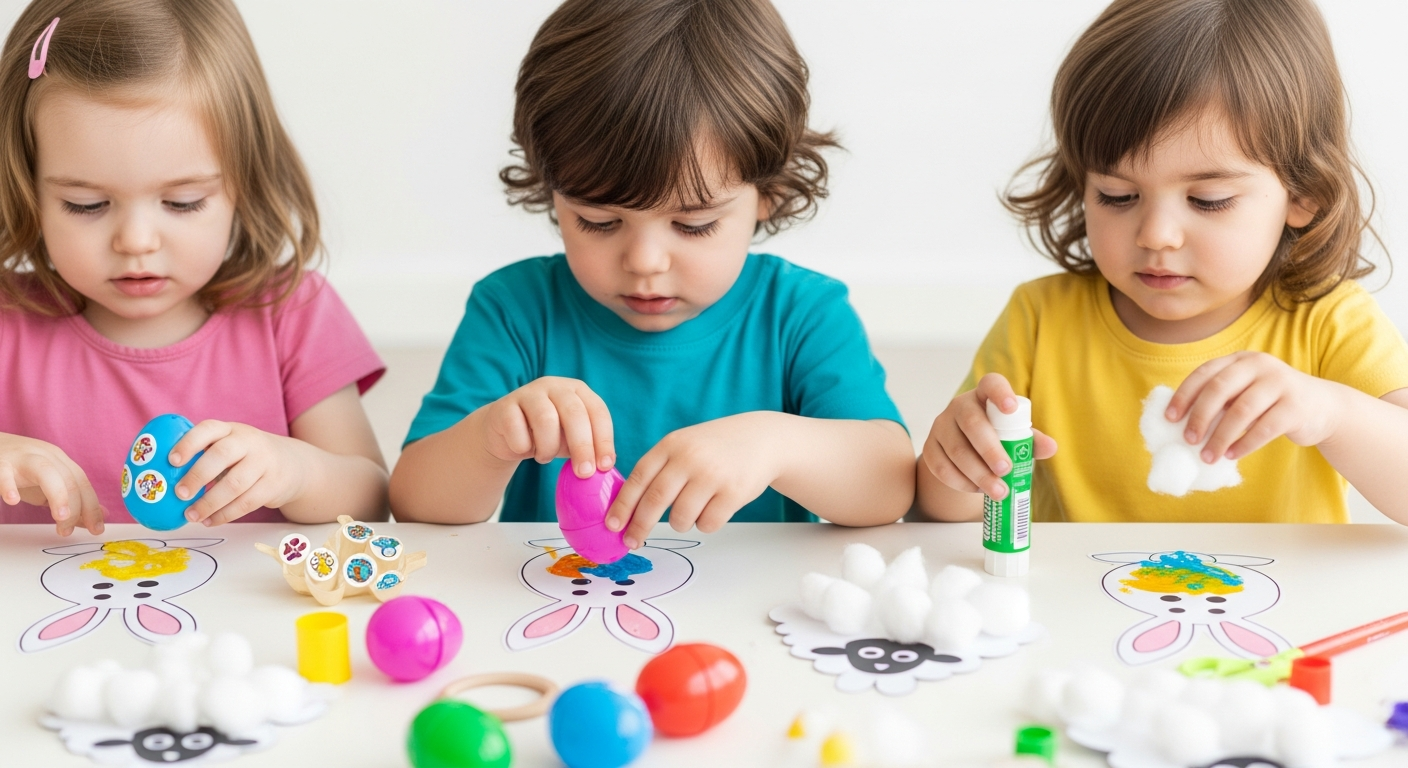
Table of Contents
- Introduction
- Why Crafting is a Speech and Motor Powerhouse
- Safety and Preparation: The Stress-Free Setup
- 10 Engaging Toddler Easter Crafts for 2 Year Olds
- Making the Most of "Smart Screen Time"
- Why Science-Backed Play Matters
- Choosing the Right Plan for Your Family
- Tips for Encouraging Speech During Easter Activities
- Essential Vocabulary for Your Easter Crafting Session
- FAQs About Toddler Easter Crafts and Development
- Conclusion
Introduction
Did you know that by age two, a child’s brain is roughly 75% of its adult size, and they are experiencing a massive "explosion" of language and motor development? This rapid growth makes every interaction an opportunity for learning. As spring begins to bloom and Easter egg hunts appear on the horizon, you might be looking for ways to engage that boundless toddler energy while fostering new skills. Crafting with a two-year-old isn't about creating a museum-worthy masterpiece; it’s about the process of exploration, the joy of messy hands, and the incredible language building that happens when we play together.
In this post, we will explore a variety of toddler Easter crafts for 2 year olds that are designed to be simple, safe, and sensory-rich. We will also discuss how these activities can be used as a springboard for speech development, helping your little one move from simple babbles to meaningful communication. At Speech Blubs, our mission is to empower children to speak their minds and hearts. We believe that holiday traditions are the perfect backdrop for this journey. By the end of this article, you’ll have a toolkit of festive activities and a clear understanding of how to integrate "smart screen time" to support your child’s blossoming voice.

Whether you are a seasoned "crafty parent" or someone who hasn't touched a glue stick since grade school, our goal is to help you create joyful family learning moments that reduce frustration and build confidence for both you and your child.
Why Crafting is a Speech and Motor Powerhouse
Before we dive into the glitter and glue, it’s important to understand why we advocate for these activities. For a two-year-old, "toddler Easter crafts for 2 year olds" are more than just a way to pass the time before Sunday brunch.
Building Fine Motor Skills
At age two, children are working hard on their "pincer grasp" and hand-eye coordination. Activities like tearing tissue paper, squeezing glue bottles, or holding a chunky potato stamp require significant effort and focus. These same muscles used for grasping and squeezing are foundational for the dexterity needed later in life, and the focus required for these tasks helps build the attention spans necessary for complex communication.
Vocabulary Expansion
Crafting provides a natural environment for teaching "action words" (verbs) and "describing words" (adjectives). Think of the rich vocabulary available: sticky, wet, bright, soft, squish, pull, cut, hop, yellow, and fuzzy. When you narrate your child’s actions—"You are squeezing the green paint!"—you are providing them with the linguistic labels for their physical experiences. This is a core part of how we approach learning at Speech Blubs, emphasizing the connection between seeing, doing, and saying.
Reducing Frustration Through Success
Many two-year-olds experience "toddler tantrums" because their desire to communicate exceeds their physical ability to produce words. By engaging in successful, low-pressure crafts, we build their confidence. When a child sees that they can create something—a purple egg or a cotton-ball sheep—they feel a sense of agency. This confidence often carries over into their attempts to speak.
Safety and Preparation: The Stress-Free Setup
We know that crafting with a toddler can feel daunting. The vision of paint on the carpet is enough to make anyone stick to plain crackers and cartoons. However, with a little preparation, you can keep the mess contained and the fun front-and-center.

- Define the Space: Use a dedicated "messy mat" or even an old shower curtain liner on the floor. High chairs are also great for keeping two-year-olds (and the paint) in one spot.
- Choose Non-Toxic Materials: At this age, everything still occasionally goes in the mouth. Ensure all paints, glues, and markers are labeled non-toxic and washable.
- Set Realistic Expectations: Your toddler might only want to craft for five minutes. That’s okay! It’s about the quality of the interaction, not the length of the activity.
- Embrace the "Process over Product" Mentality: If their bunny has three eyes and no ears, it’s still a perfect bunny.
If you are ever unsure where your child stands in their developmental journey, we recommend taking our quick 3-minute preliminary screener. It consists of 9 simple questions and provides an assessment and next-steps plan to help you support your child's specific needs.
10 Engaging Toddler Easter Crafts for 2 Year Olds
Here are ten tried-and-true Easter crafts specifically curated for the limited attention spans and developing skills of two-year-olds.
1. Potato Stamp Easter Eggs
This is a classic for a reason. It uses items you likely already have in your pantry and produces instant results.
- Materials: Large potatoes, washable paint, paper.
- The Adult’s Job: Cut the potato in half and carve simple patterns like stripes or zig-zags into the flat surface.
- The Toddler’s Job: Dip the potato into a shallow tray of paint and stamp it onto the paper.
- Speech Connection: As your child stamps, practice the "P" sound for "Pop!" or "Push!"
Practical Scenario: For a parent whose toddler loves food, the "Yummy Time" section of our app can be a great companion here. After stamping with potatoes, you can watch peer-led videos of other children saying "Potato" or "Eat," reinforcing the connection between the craft and real-world objects.
2. Dot Marker Easter Chicks
Dot markers (bingo daubers) are perfect for tiny hands that haven't yet mastered a tripod grip on a crayon.
- Materials: Yellow dot markers, paper with a large circle drawn on it, orange paper scraps, googly eyes.
- Instructions: Have your child fill in the circle with yellow dots. Once dry, help them glue on a small orange triangle for a beak and two eyes.
- Speech Connection: Practice the "Chirp, chirp!" sound. In the Speech Blubs "Animal Kingdom" section, children can watch their peers making bird sounds, which encourages them to imitate through our unique video modeling methodology.
3. Coffee Filter Suncatchers
This activity introduces the concept of color mixing and absorption.
- Materials: Coffee filters cut into egg shapes, washable markers, a spray bottle with water.
- Instructions: Let your toddler scribble all over the coffee filter with various colors. Then, let them spray the filter with water and watch the colors bleed together.
- Speech Connection: Use descriptive words like "wet" and "dry."
4. Shaving Cream Marbled Eggs
This is a high-sensory activity that toddlers find absolutely fascinating.
- Materials: Shaving foam (non-menthol), food coloring or liquid watercolors, cardstock egg cutouts, a tray.
- Instructions: Fill a tray with shaving foam. Drop colors on top and swirl with a stick. Press the paper egg into the foam, lift, and scrape off the excess foam to reveal the marbled pattern.
- Speech Connection: This is great for "Ooh!" and "Aah!" sounds. Sensory play is a powerful way to stimulate the brain and encourage spontaneous vocalizations.
5. Cotton Ball Easter Bunny
Texture is a huge hit for two-year-olds.
- Materials: Paper plate, glue, lots of cotton balls, pink paper for ears.
- Instructions: Spread glue over the plate (or let the toddler do it with a brush) and have them stick cotton balls all over to make a "fluffy" bunny.
- Speech Connection: Talk about the word "soft." Compare the soft cotton to a hard table or a rough piece of paper.
6. Tissue Paper "Stained Glass" Eggs
This helps with the pincer grasp as they pick up small pieces of paper.
- Materials: Contact paper (sticky back plastic), colorful tissue paper squares, cardstock border in an egg shape.
- Instructions: Place the egg border on the sticky side of the contact paper. Let your child stick the tissue paper squares inside the border until the egg is filled. Cover with another piece of contact paper and hang it in the window.
- Speech Connection: Focus on color identification. "Can you find a blue square?"
7. Salt Dough Keepsake Eggs
These can be saved as ornaments for years to come.
- Materials: 1 cup flour, 1/2 cup salt, 1/2 cup water.
- Instructions: Mix the dough, roll it out, and use an egg-shaped cutter (or a glass) to make shapes. Let your toddler press their thumb into the dough. Bake at a low temperature until hard, then paint.
- Speech Connection: Use "push" and "pull" while working the dough.
8. Cardboard Tube "Grass" and Egg Holder
Repurposing household items is great for teaching sustainability and creativity.
- Materials: Toilet paper or paper towel tubes, green paint, safety scissors (for adult use).
- Instructions: Have the toddler paint the tube green. Once dry, the adult cuts small slits at the top to look like grass. It can now hold a plastic or dyed egg.
- Speech Connection: Practice "Up" and "Down" as you place the egg in the holder.
9. Handprint Chick Cards
Grandparents love these!
- Materials: Yellow paint, white cardstock, markers.
- Instructions: Paint your child's hand yellow and press it onto the cardstock. Once dry, the fingers look like feathers, and the palm is the body. Add a beak and eyes.
- Speech Connection: Count the "feathers" (fingers) together: "One, two, three, four, five!"
10. Sticky Wall Easter Tree
If you want to keep your toddler standing and moving, this is the one.
- Materials: A large piece of contact paper taped to the wall (sticky side out), paper egg cutouts.
- Instructions: Draw a simple tree outline on the wall or just let the sticky surface be the "magic wall." Let your toddler stick their decorated paper eggs onto the wall and pull them off.
- Speech Connection: Use "On" and "Off." These spatial prepositions are vital for early language development.
Making the Most of "Smart Screen Time"
We often hear from parents who feel guilty about screen time. At Speech Blubs, we want to change that narrative. There is a vast difference between a child passively watching a loud, fast-paced cartoon and "smart screen time" that invites them to participate.
Our app was created by founders who grew up with speech problems themselves. They built the tool they wished they had—one that blends scientific principles with the joy of play. Our methodology centers on video modeling. When children see other children (not cartoons or adults) performing a task or saying a word, their "mirror neurons" fire. This creates a natural urge to imitate their peers.
While you are working on your "toddler Easter crafts for 2 year olds," you can use Speech Blubs as a powerful supplement. For example:
- Before Crafting: Watch the "Animal Kingdom" section to see kids pretending to be bunnies. This sets the stage for the craft and gets those speech muscles warming up.
- During a Break: If your toddler becomes frustrated with a sticky mess, take a three-minute break to play a "face filter" game in the app. This builds confidence and resets their mood.
- After Crafting: Use the "First Words" section to practice the names of the colors you just used.
Unlike passive entertainment, Speech Blubs is a screen-free alternative in spirit—it’s an active tool for family connection. We encourage parents to co-play, laugh at the silly filters together, and celebrate every new sound your child makes. You can download Speech Blubs on the App Store or Google Play to begin your journey today.
Why Science-Backed Play Matters
You might wonder, "Is a simple app really that effective?" Our approach is backed by science, and we are proud to be a highly-rated tool in the speech therapy community. We don't promise overnight miracles—every child develops at their own pace. Instead, we focus on:
- Fostering a love for communication: We want kids to want to talk because it’s fun, not because they are being pressured.
- Building foundational skills: Imitation is the precursor to language. By focusing on imitation first, we build the bridge to words.
- Empowering parents: We provide you with the tools to be your child’s best teacher.
See what thousands of other families are saying about their journey by visiting our testimonials page.
Choosing the Right Plan for Your Family
We believe in transparency and providing the best possible value for our community. We offer two main ways to join the Speech Blubs family:
- Monthly Plan: $14.99 per month. This is a great way to test the waters.
- Yearly Plan: $59.99 per year. This is our most popular and highest-value option.
When you choose the Yearly plan, you aren't just saving 66% (breaking down to only $4.99/month). You also unlock a suite of premium features that are not included in the monthly plan:
- 7-Day Free Trial: Try everything risk-free before your subscription begins.
- Reading Blubs App: Access to our additional app designed to bridge the gap between speaking and early literacy.
- Priority Support: 24-hour response time for any questions you have.
- Early Access: Be the first to try new updates and sections before they are released to the general public.
To get the full suite of features and the best price, we recommend signing up for the Yearly plan via our web account creation page.
Tips for Encouraging Speech During Easter Activities
While your hands are covered in yellow paint making chicks, keep these three strategies in mind:
1. The Power of the Pause
When you ask a question like "What color is this?", wait. Count to five in your head. Toddlers need much more time than adults to process a question and formulate a response. Giving them that silence creates a space they feel compelled to fill.
2. Follow Their Lead
If your child is more interested in the way the glue feels on their fingers than in sticking cotton balls to the paper, talk about the glue! "Oh, sticky fingers! Sticky, sticky, sticky." Communication is most effective when it centers on what the child is already focused on.
3. Use Self-Talk and Parallel Talk
Self-talk is when you describe what you are doing: "I am cutting the paper. Snip, snip, snip." Parallel talk is when you describe what they are doing: "You are picking up the blue egg. You are putting it in the basket." This constant stream of narrated language provides a rich linguistic environment without the pressure of a direct "say this" command.
Essential Vocabulary for Your Easter Crafting Session
To help you narrate your crafting session, here is a list of words and sounds to emphasize:
- Nouns: Egg, bunny, chick, bird, grass, flower, sun, basket, paint, paper, glue.
- Verbs: Hop, jump, stick, cut, push, pull, paint, wash, dry, see, look.
- Adjectives: Soft, fluffy, sticky, wet, bright, colorful, big, little, happy.
- Exclamations/Sounds: "Pop!", "Ooh!", "Yay!", "Chirp!", "Boing!", "Uh-oh!"
Integrating these words into your play helps your child understand that language is a tool for describing their world and their experiences.
FAQs About Toddler Easter Crafts and Development
1. My 2-year-old won't sit still for crafts. Is this normal?
Absolutely! Most two-year-olds have an attention span of about 3 to 6 minutes. Don't force them to stay. Let them come and go. You can leave the craft station set up (in a safe place) so they can return to it when they feel inspired. The goal is positive association, not completion.
2. What if my child tries to eat the craft materials?
This is why we prioritize non-toxic, edible-safe, or household items. If your child is in a heavy "mouthing" phase, stick to activities like the "Baking Soda Eggs" or plain water painting on colored construction paper. Always supervise your child closely during any activity with small parts or liquids.
3. How do these crafts specifically help with speech delays?
Crafts encourage sensory integration and fine motor control, both of which are linked to the areas of the brain responsible for language. More importantly, they provide a low-stress environment for "joint attention"—when you and your child are both focused on the same thing. Joint attention is the foundation of all human communication.
4. Can an app really replace a speech therapist?
No, and we don't aim to! Speech Blubs is a powerful supplement to professional therapy and overall developmental play. If your child has a diagnosed delay, our app is an excellent tool to use between therapy sessions to keep the momentum going. We always recommend consulting with a professional if you have concerns about your child's milestones.
Conclusion
Easter is a season of new beginnings, and there is no better time to start a new journey with your child’s communication skills. These toddler Easter crafts for 2 year olds are more than just cute decorations for your fridge; they are the building blocks of confidence, motor skills, and a growing vocabulary. By focusing on the joy of the process and using tools like video modeling to encourage imitation, you are giving your child the gift of self-expression.
At Speech Blubs, we are honored to be part of your family’s story. We invite you to move beyond passive screen time and embrace a solution that is effective, joyful, and backed by science.
Ready to see your child "speak their mind and heart"?
Begin your journey today by downloading the Speech Blubs app on Google Play or the App Store. For the best experience, we highly recommend the Yearly Plan, which includes a 7-day free trial, the Reading Blubs app, and exclusive early access to our latest features. Let’s make this Easter a season of breakthrough moments and joyful connections!
About the author