
Creative Toddler Fall Art Crafts for Seasonal Fun
 By Speech Blubs Team•Feb 20, 2026•15 min.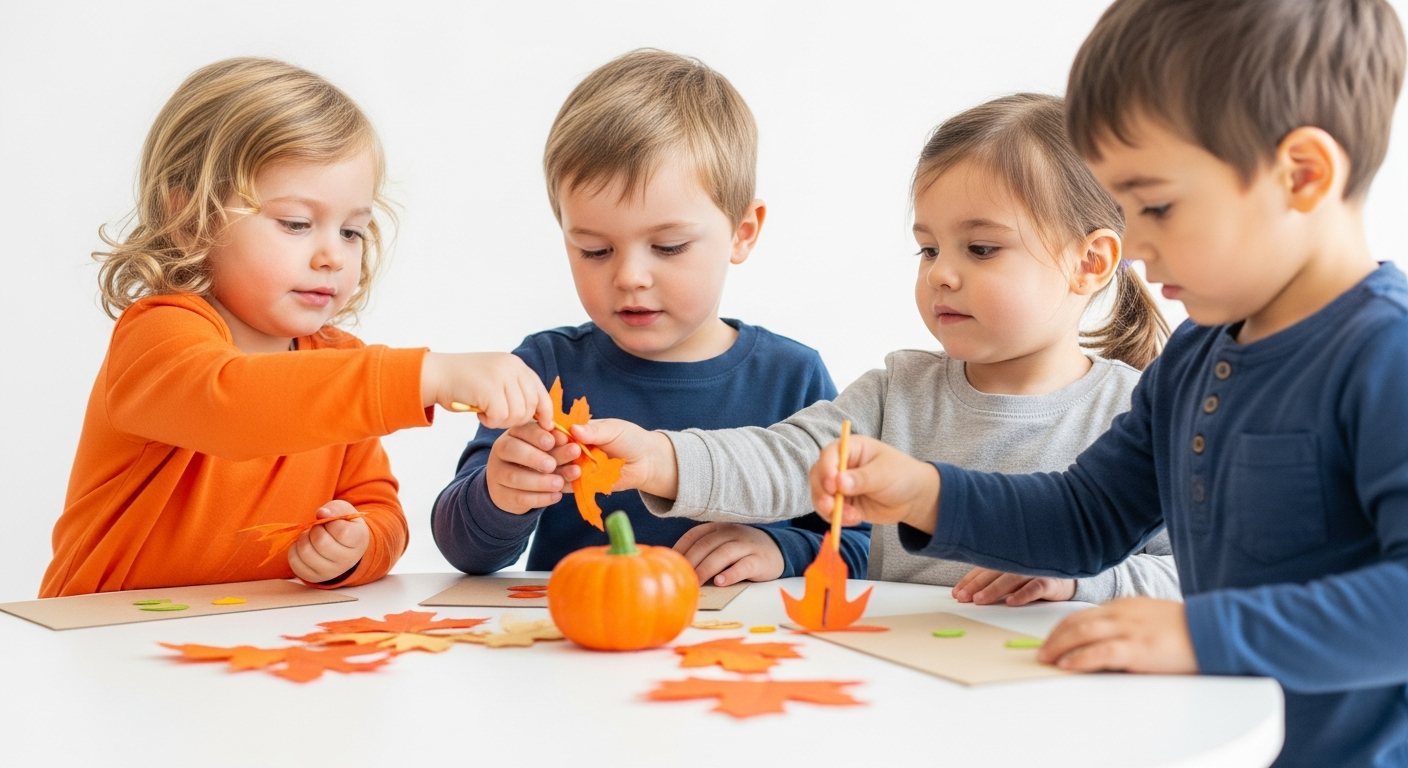
Table of Contents
- Introduction
- The Developmental Magic of Fall Crafting
- Nature-Based Toddler Fall Art Crafts
- Sensory Art for Little Hands
- Fine Motor "Smart Play" Activities
- Integrating "Smart Screen Time" with Crafting
- Choosing the Right Path for Your Child's Speech Journey
- Tips for a Stress-Free Crafting Session
- Expanding Language During Crafting
- Frequently Asked Questions
- Conclusion
Introduction
Did you know that the simple act of tearing a piece of orange construction paper or dipping a leaf in paint can actually be a building block for your child's first words? It might seem like a messy afternoon of "toddler fall art crafts" is just about keeping those little hands busy, but for us at Speech Blubs, we see it as a vibrant laboratory for language development. When your child reaches for a "sticky" leaf or describes a "bumpy" pumpkin, they aren't just making art; they are expanding their world and finding new ways to express their hearts and minds.
At Speech Blubs, our mission is to empower children to speak their minds and hearts. This mission is deeply personal to us, as our founders grew up navigating their own speech challenges and eventually created the very tool they wished they had as kids. We believe in "smart screen time" that encourages active participation, and we know that the best learning happens when play and science intersect. Fall provides the perfect backdrop for this journey. The changing colors, unique textures, and crisp air offer a sensory-rich environment that naturally encourages communication.

In this guide, we will explore a wide variety of toddler fall art crafts that are designed to be fun, accessible, and developmentally stimulating. We’ll look at how these activities foster fine motor skills, build vocabulary, and create those joyful family moments that are so essential for a child’s confidence. Whether you are looking for a screen-free afternoon activity or a way to supplement your child's speech journey, these crafts offer a powerful way to connect.
Our goal is to help you navigate this beautiful season with practical advice and realistic expectations. While we don't promise that a single craft session will lead to public speaking, we do know that fostering a love for communication through joyful play is the strongest foundation you can build. If you're curious about where your child stands in their development, you can take our quick 3-minute preliminary screener to receive an assessment and a next-steps plan.
The Developmental Magic of Fall Crafting
Before we dive into the glue and glitter, it is important to understand why "toddler fall art crafts" are so beneficial. From a speech-language perspective, art is a "multi-sensory" experience. This means it engages multiple senses at once—touch, sight, and even smell—which helps the brain create stronger neural pathways for learning.
Fine Motor Skills and Speech
There is a fascinating link between the fine motor skills used in crafting and the oral motor skills used in speaking. The same areas of the brain that control the small muscles in the hands are closely related to the areas that control the muscles of the mouth, tongue, and lips. When your toddler practices the "pincer grasp" to pick up a small acorn or uses their fingers to smear paint, they are strengthening the neural connections that will eventually help them articulate complex sounds.
Vocabulary Building in the Great Outdoors
Fall is a season of descriptive language. Think about the words we use: crunchy, gold, chilly, smooth, prickly, harvest, breeze. When you engage in toddler fall art crafts, you have a natural opportunity to "narrate" the experience. This "parallel talk"—where you describe what you and your child are doing—is a core strategy we use in our scientific methodology.

Confidence and Reducing Frustration
For many "late talkers," frustration often stems from an inability to communicate their needs or ideas. Art provides an alternative outlet for expression. When a child successfully creates something, it builds their "communicative confidence." They see that they can have an impact on the world, which reduces frustration and makes them more willing to try new verbal challenges.
Nature-Based Toddler Fall Art Crafts
One of the best things about autumn is that the best crafting supplies are often sitting right in your backyard or at the local park. These nature-based activities encourage children to explore their environment and bring the beauty of the outdoors inside.
1. The Classic Leaf Rubbing
This is a nostalgic favorite for a reason. It is simple, requires minimal supplies, and the "reveal" of the leaf's veins always feels like magic to a toddler.
- Materials: Fresh fallen leaves (various shapes and sizes), thin white paper, and large crayons with the wrappers removed.
- The Process: Place a leaf vein-side up under the paper. Show your child how to use the side of the crayon to rub over the leaf.
- Speech Connection: Use this time to talk about "under" and "over." Ask your child, "Is the leaf hiding?" and "Look, the lines appear!" This encourages the use of action verbs and prepositions.
2. Bark and Leaf Owls
Owls are a quintessential fall animal, and they are incredibly fun to recreate using bits of nature. For a child who loves animals, this is a great way to practice animal sounds.
- Materials: Small pieces of bark, dried leaves, googly eyes, and non-toxic glue.
- The Process: Use a large piece of bark or a piece of cardboard as the body. Glue two leaves on the sides for wings and use smaller leaf bits for ears.
- Speech Connection: Much like the "Animal Kingdom" section of the Speech Blubs app, you can use this craft to practice "Hoo-hoo!" sounds. Imitation is a key part of our video modeling approach, where kids learn best by watching and mimicking.
3. Nature Printing with Apples and Corn
Stamping is an excellent activity for toddlers because it provides immediate feedback and requires a "press and release" motion that is great for motor control.
- Materials: Apples cut in half, ears of corn (dried or fresh), and fall-colored tempera paint (red, orange, yellow).
- The Process: Dip the flat side of the apple or the cob of the corn into the paint and press it onto paper. The corn creates a wonderful "bumpy" texture that looks like Indian corn.
- Speech Connection: This is the perfect time to focus on the "p" sound in "press" or "p-p-paint." You can also talk about "more" paint or "all done," which are foundational functional communication phrases.
Sensory Art for Little Hands
Sensory play is at the heart of early childhood development. By engaging a child's sense of touch, we help them regulate their emotions and focus their attention on the task at hand.
4. Sticky Fall Tree (Contact Paper Art)
This is a mess-free way to explore the concept of "sticky" and "smooth." It’s also a beautiful way to decorate a window.
- Materials: Clear contact paper, tissue paper squares in fall colors, and a brown paper trunk.
- The Process: Tape a piece of contact paper (sticky side out) to a wall or window. Place the "trunk" at the bottom. Let your child press the tissue paper "leaves" onto the sticky surface.
- Speech Connection: Narrate the sensation: "Oh, it's sticky! My finger is stuck!" This helps children learn adjectives through direct experience. If you want to see how other parents have used sensory play to help their children flourish, check out our parent testimonials.
5. Pumpkin Guts Sensory Bag
For toddlers who might be "sensory defensive" and don't like getting their hands messy, a sensory bag is a perfect compromise.
- Materials: A large Ziploc bag, the "guts" and seeds from a pumpkin, and some packing tape.
- The Process: Scoop the insides of a pumpkin into the bag and seal it tightly with tape. Your child can squish and move the seeds around without getting their hands dirty.
- Speech Connection: Talk about the "cold" or "squishy" feeling. You can even draw a face on the outside of the bag with a permanent marker to make it look like a Jack-o'-lantern, practicing parts of the face like "eyes," "nose," and "mouth."
Fine Motor "Smart Play" Activities
Building precision in the hands is a great way to prepare for the precision needed in speech. These crafts focus on small movements and concentration.
6. Cotton Swab Pointillism
Inspired by the art style of pointillism, this activity uses cotton swabs to create "dots" that look like autumn leaves.
- Materials: Cotton swabs, fall-colored paint, and a drawing of a bare tree trunk.
- The Process: Show your child how to dip the swab in paint and make "dot, dot, dot" leaves on the branches.
- Speech Connection: The repetitive nature of "dot, dot, dot" is excellent for rhythm and phonetic practice. It mimics the repetitive sounds we often use in the "Early Sounds" section of our app to help children find their voice.
7. Washi Tape Patterned Pumpkins
Washi tape is a fantastic tool for toddlers because it is easy to tear and reposition, reducing the frustration that can come with traditional tape or glue.
- Materials: Cardboard pumpkin cutouts and various rolls of fall-themed washi tape.
- The Process: Let your child pull, tear, and stick strips of tape across the pumpkin in any pattern they like.
- Speech Connection: Focus on the "t" sound in "tape" and "tear." You can also practice "on" and "off." These small words are the building blocks of early sentences.
Integrating "Smart Screen Time" with Crafting
At Speech Blubs, we are often asked about the role of technology in a child's development. We believe there is a massive difference between passive viewing (like sitting a child in front of cartoons) and "smart screen time." Our app is designed to be a tool for family connection, not a replacement for it.
Video Modeling: Watching Kids Learn
Our unique approach uses "video modeling." Scientific research shows that children are highly motivated by watching their peers. In the Speech Blubs app, children see other kids making sounds, performing actions, and using words. This triggers "mirror neurons" in the brain, making them much more likely to imitate what they see.
You can use this same principle during your "toddler fall art crafts" sessions. If your child is struggling to figure out how to use a glue stick, instead of just doing it for them, show them a video of another child doing it, or model it yourself while they watch closely. By downloading Speech Blubs on Google Play, you can find inspiration for sounds and words to practice while you craft.
Creating Joyful Family Moments
The most important ingredient in any craft is you. Co-playing with your child, following their lead, and sharing in their excitement is what truly drives development. When you sit down to work on "toddler fall art crafts," you are sending a message that their ideas and their expressions are valuable. This emotional security is the fertile ground where language grows.
Choosing the Right Path for Your Child's Speech Journey
We understand that every child's path is unique. Whether your child is hitting their milestones on time or you feel they might need a little extra support, having the right tools can make all the difference. Our founders created Speech Blubs to be an immediate, effective, and joyful solution for the 1 in 4 children who need speech support.
Transparent Pricing for Families
We want to be a partner in your child’s development, which is why we offer flexible options to fit your family's needs. To build a foundation of trust, we are always transparent about our pricing:
- Monthly Plan: $14.99 per month. This is a great way to explore the app and see how your child responds to our video modeling method.
- Yearly Plan (Best Value): $59.99 per year. This breaks down to just $4.99 per month, saving you 66% compared to the monthly option.
Why choose the Yearly Plan? Beyond the significant cost savings, the Yearly plan is designed to provide a comprehensive learning experience. It includes:
- A 7-day free trial so you can explore all features risk-free.
- Access to our Reading Blubs app, which extends the learning from speech to early literacy.
- Early access to all new updates and content.
- 24-hour support response time from our dedicated team.
The Monthly plan does not include the free trial, the Reading Blubs app, or priority support. We highly recommend starting with the Yearly plan to give your child the full suite of "smart screen time" benefits. Ready to get started? You can create your account and begin your 7-day free trial today.
Tips for a Stress-Free Crafting Session
We know that "toddler fall art crafts" can sometimes feel daunting. The potential for mess and the short attention spans of toddlers can be a challenge. Here are a few tips to keep things joyful:
- Embrace the Process, Not the Product: Your toddler’s leaf might not look like a masterpiece, and their pumpkin might have tape in weird places. That’s okay! The goal is the exploration and the conversation, not a perfect decoration.
- Keep it Short: Toddlers have an attention span of about 5–10 minutes for focused tasks. If they want to move on after five minutes of painting, let them! You can always come back to it later.
- Prepare the Space: Lay down an old sheet or perform your crafts at a child-sized table that is easy to wipe down. Having everything ready before you invite your child to the table will help keep their focus.
- Use it as a Supplement: These crafts are a wonderful way to reinforce what you might be working on in professional speech therapy or within the Speech Blubs app. If the app's "Animal Kingdom" taught them the word "Fox," try making a leaf fox that afternoon!
Expanding Language During Crafting
As you work on these "toddler fall art crafts," you can use specific language stimulation techniques to help your child grow.
The "Ouch" Strategy (Playful Obstruction)
Sometimes, giving your child everything they need at once can actually limit their need to talk. Try "forgetting" to give them the glue or the next leaf. When they realize something is missing, it creates a "communicative temptation" for them to ask for it. Even a simple gesture or a "muh" for "more" is a win!
Expansion and Recasting
If your child says a single word, like "Leaf!", you can expand on it by saying, "Yes, a big red leaf!" If they make a mistake, like saying "Wook, a pookin!" you can "recast" it correctly without criticizing them: "Yes, look at that beautiful pumpkin!" This provides a correct model without making them feel self-conscious.
Frequently Asked Questions
1. What are the best "toddler fall art crafts" for an 18-month-old?
At this age, sensory-based activities that don't require high precision are best. Finger painting with fall colors, squishing "pumpkin guts" in a sensory bag, or sticking tissue paper onto contact paper are all excellent choices. These activities focus on cause-and-effect and basic sensory exploration.
2. How do these crafts actually help with speech delay?
Crafting helps by building fine motor skills related to speech, expanding vocabulary through sensory experiences, and providing a low-pressure environment for communication. It also encourages imitation and joint attention—the ability to focus on an object with another person—which is a foundational skill for all language.
3. Can I do these crafts if I’m not "artistic"?
Absolutely! Toddlers don't care about artistic perfection; they care about the experience and your engagement. Most of the crafts we’ve discussed, like leaf rubbing or apple stamping, require no drawing or painting skills at all. The beauty of "process art" is that there is no wrong way to do it.
4. When should I use Speech Blubs alongside these activities?
Speech Blubs is a powerful tool to use before or after crafting. You might watch the "Autumn" or "Nature" sections of the app to learn names of objects, then go outside to find them and bring them back for a craft. This connects the digital learning to the real world, making the concepts more concrete for your child.
Conclusion
The transition into autumn is a wonderful time to slow down and connect with your little one. Through these "toddler fall art crafts," you aren't just creating seasonal decor; you are building a bridge to better communication. From the "dot-dot-dot" of a cotton swab to the "crunch" of a dried leaf, every moment is an opportunity for your child to find their voice and share their world with you.
At Speech Blubs, we are honored to be a part of that journey. We believe that every child deserves the chance to speak their mind and heart, and we are committed to providing you with the tools to make that happen. Remember, progress is a journey of small, joyful steps. By blending scientific principles with the simple magic of play, you are giving your child the best possible start.
Ready to take the next step in your child's development? We invite you to join our community. Choose the Yearly plan today to unlock our full suite of features, including the Reading Blubs app and a 7-day free trial. It’s the best value for your family and the most comprehensive support for your child’s growth.
Download Speech Blubs on the App Store or get it on Google Play to begin your adventure today. Happy crafting!
About the author